
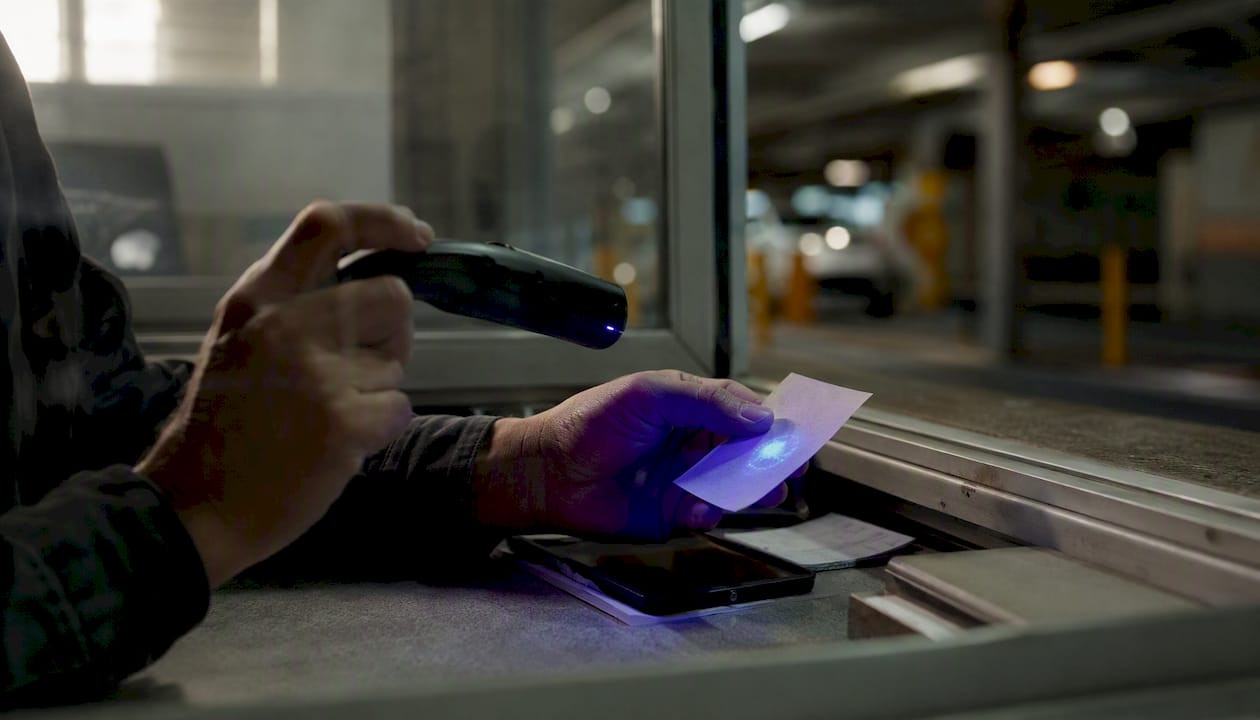
Fluorescent Security Inks for Parking and Valet Tickets
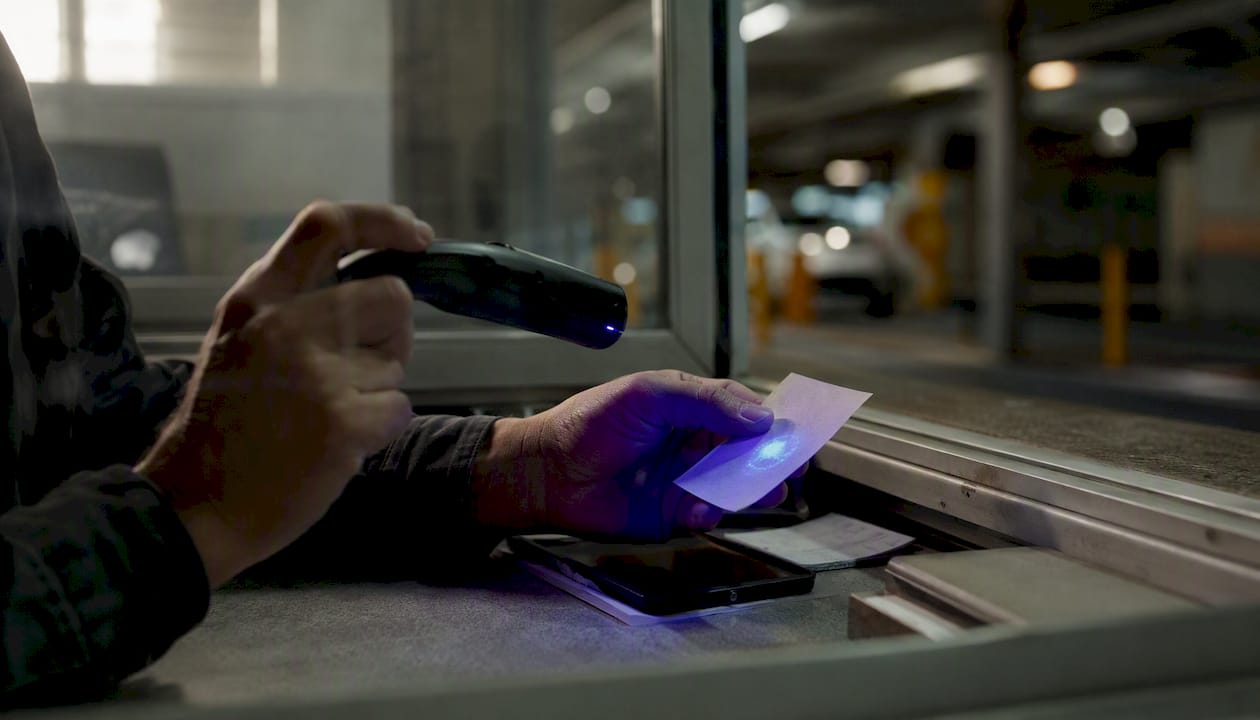
Fluorescent security inks, the industry term for UV-reactive covert inks applied to parking and valet tickets, are worth adding to your ticket spec if your operation faces moderate-to-high fraud risk. They fluoresce under a specific excitation wavelength, stay invisible in daylight, and let staff verify authenticity in seconds. The right first step: request a printed proof from your supplier, run a 365 nm handheld check, and confirm the emission curve before committing to a production run. Caymil Printing Co. supports exactly that process, from sample tickets to compatibility testing.
Key Takeaways
Fluorescent security inks are a cost-effective, fast-to-verify deterrent for parking and valet operations when specified correctly and paired with the right detection tools.
| Point | Details |
|---|---|
| Specify 365 nm excitation | Request spectral emission curves and confirm 365 nm compatibility before approving any ink. |
| Use a two-tier verification workflow | Combine rapid blacklight scans at every handoff with periodic handheld spectral spot-checks. |
| Screen printing is the preferred method | Thicker ink films from screen printing maximize fluorescence brightness and durability on ticket stock. |
| Request MSDS and compliance docs | Require TSCA and RoHS statements plus rub and lightfastness test reports as QA acceptance conditions. |
| Caymil for sample-tested tickets | Caymil delivers custom parking and valet tickets with fluorescent security inks and proof-testing support nationwide. |
Table of Contents
- How fluorescent parking inks work
- Security strengths and realistic limitations for parking tickets
- How to verify tickets efficiently in parking and valet operations
- Materials and printing methods that work with fluorescent security inks
- Specification checklist for ordering fluorescent security inks
- Durability, environmental safety, and U.S. compliance
- Cost and lead-time expectations for fluorescent ink tickets
- How Caymil delivers fluorescent security inks on parking and valet tickets
- An experienced buyer’s perspective on when fluorescent ink is worth it
- Caymil custom tickets with fluorescent security features
- Sources
- FAQ
How fluorescent parking inks work
A fluorescent security ink absorbs energy at one wavelength (the excitation source) and re-emits it as visible light at a longer wavelength (the emission). The result is a mark that glows under the right light source and disappears under ordinary room lighting.
Three excitation bands matter most for parking ticket applications:
- 365 nm UV (professional-grade): produces the strongest fluorescence contrast and is the standard for security verification. Handheld 365 nm tools outperform 395 nm devices when detecting faint or covert inks.
- 395 nm UV (consumer-grade): lower cost, widely available, but generates a visible purple glow that reduces contrast on subtle marks.
- Blue-light (450 nm) excitable pigments: a newer option where the ink shows no fluorescence under 365 nm UV but glows distinctly under blue light, adding a second verification channel that most forgers won’t anticipate. A 2024 study confirmed a PBDFA pigment that produces green fluorescence under 450 nm while remaining non-fluorescent under standard 365 nm UV, complicating forgery attempts for anyone relying on common UV lamps alone.
Varnish overlays and low nanoparticle concentrations can make inks nearly invisible even under casual UV inspection. Colloidal nanoparticle-based inks at concentrations as low as 0.1% v/v remain detectable by a wavelength-selective sensor while appearing blank to the naked eye.
Pro Tip: Ask your ink supplier for the full spectral emission curve and a Material Safety Data Sheet (MSDS) before approving any ink. A curve showing the emission peak tells you exactly which detection device to specify.
Common detection tools:
- 365 nm UV lamp or flashlight (recommended for security use)
- 395 nm consumer UV flashlight (budget option, lower accuracy)
- Handheld wavelength-selective readers (highest assurance)
- Smartphone camera with UV filter (field backup only)
Security strengths and realistic limitations for parking tickets
Fluorescent inks deter casual forgery and support fast on-the-spot checks, but they are not a complete anti-counterfeiting solution against a determined forger with access to UV-reactive materials.
Strengths:
- Fast visual verification at drop-off or pick-up, no equipment beyond a UV lamp
- Minimal staff training required; UV verification delivers immediate, accurate, non-invasive results suited to high-turnover valet stations
- Covert marking that guests and casual forgers cannot see in daylight
- Low-cost add-on relative to the fraud risk it mitigates
- Compatible with sequential numbering and barcoded valet tickets for layered authentication
Limitations:
- Monochromatic emissions can be imitated if a forger sources matching UV-reactive ink
- Visible-light copying risks remain if the fluorescent mark is not covert enough
- Direct thermal roll tickets are usually incompatible with fluorescent security inks unless specially engineered
- Rare-earth or nanoparticle inks carry higher material costs and longer lead times
- Standard fluorescent inks alone are insufficient for high-value or high-volume fraud targets
When to layer features: for operations with elevated fraud risk, combine fluorescent inks with wavelength-selective readers, microprinting, and sequential numbering. For the highest-risk environments, add a digital barcode layer so a scan confirms both the physical ink and the ticket record simultaneously.
How to verify tickets efficiently in parking and valet operations
The recommended field workflow is a two-tier check: a rapid blacklight scan at every handoff, plus periodic spectral spot-checks with a handheld reader or lab test.
Verification tools and trade-offs:
- 365 nm UV lamp: best fluorescence accuracy, recommended for all security checks
- 395 nm UV flashlight: lower cost, acceptable for high-volume screening where faint inks are not the primary mark
- Handheld wavelength-selective sensor: highest assurance, appropriate for supervisor spot-checks or high-value operations
Staff verification workflow:
- At ticket handoff, pass a 365 nm UV lamp across the security mark zone.
- Confirm the expected fluorescent color and pattern appear.
- If the mark is absent, faint, or the wrong color, flag the ticket and set it aside.
- A supervisor runs a handheld wavelength-selective check on flagged tickets.
- Log any discrepancies with ticket number, date, and shift.
- Review logs weekly to identify patterns or repeat incidents.
Pro Tip: Keep a laminated “ground-truth” sample sheet at each verification station: an authenticated ticket with its documented emission color and pattern. Staff can compare any suspect ticket against it in under five seconds.
Materials and printing methods that work with fluorescent security inks
Screen printing and sheet-fed offset with varnish overlays are the most reliable methods for embedding fluorescent security inks on parking tickets. Screen printing produces thicker ink films that increase fluorescence brightness and durability, and industry guidance recommends silk screens below 200 mesh for optimal color development.
Substrate and process compatibility:
- Screen printing: preferred; thicker deposits maximize fluorescence intensity
- Flexographic printing: viable for moderate ink weights; confirm mesh and viscosity with your supplier
- Sheet-fed offset with varnish overlay: reliable for coated stocks; varnish can enhance covertness
- Direct thermal rolls: generally incompatible; heat-sensitive coatings interfere with fluorescent pigments. See thermal roll ticket limitations before specifying.
- Thermal-transfer: limited compatibility; test required
- Multi-part carbonless tickets: compatible when the fluorescent mark is applied to the top ply; confirm varnish does not bleed through to carbon layers
Varnish overlays improve covertness but can reduce emission intensity if applied too heavily. Always request a printed proof on your exact ticket stock to confirm detectability after varnish.
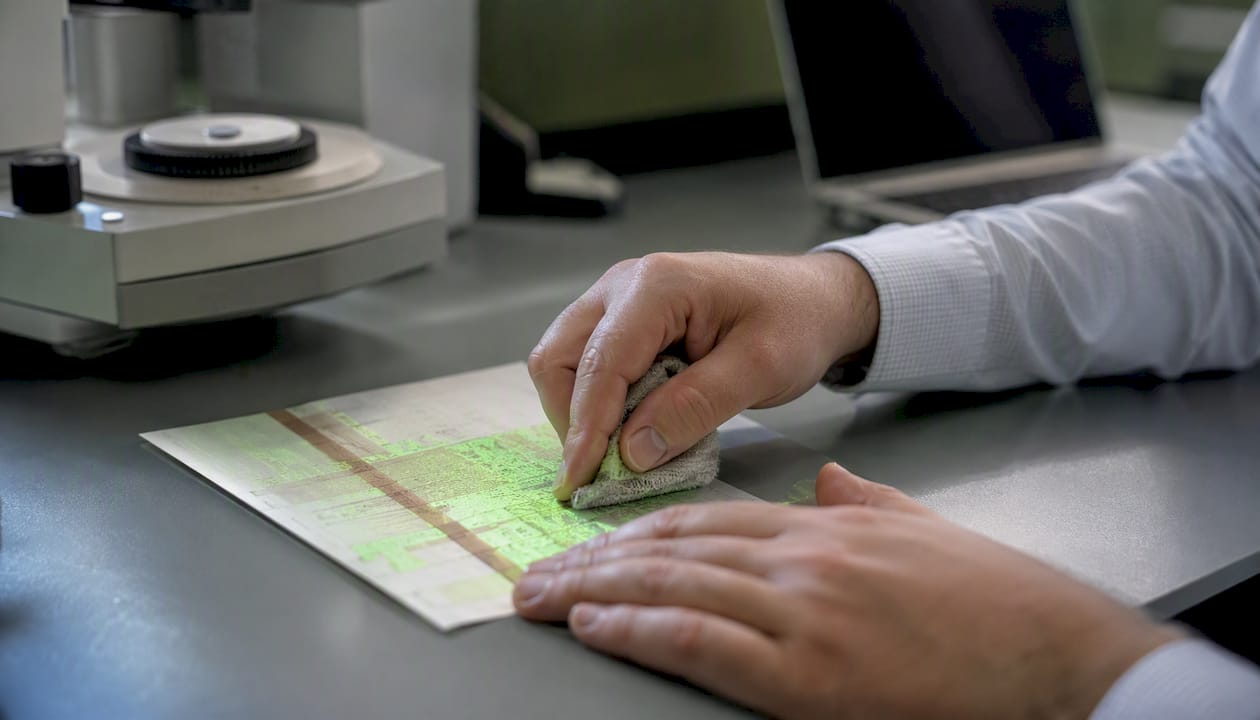
Pro Tip: Before approving production, run abrasion (rub resistance) and photostability (lightfastness) checks on your proof tickets. Parking tickets endure handling, moisture, and sun exposure; an ink that fades or rubs off within weeks defeats the security purpose.
Specification checklist for ordering fluorescent security inks
When issuing an RFP or production spec, request every item below from your supplier to avoid ambiguity and establish testable acceptance criteria.
Technical and QA items to request:
- Excitation wavelength(s) (specify 365 nm, 395 nm, or blue-light 450 nm)
- Emission peak(s) and full spectral emission curve
- Recommended detection equipment model or type
- Ink transparency under daylight (confirm visually invisible)
- Varnish compatibility and effect on emission intensity
- Abrasion/rub resistance test results (ASTM or equivalent)
- Photostability/lightfastness test results
- MSDS/SDS for each ink component
- RoHS and TSCA compliance statements
- Minimum order quantities and production lead times
Sample acceptance process:
- Request 50–100 proof tickets printed on your exact stock.
- Run 365 nm handheld checks across multiple lighting conditions (indoor, outdoor, direct sun).
- Send a batch for spectral verification or request the supplier’s emission curve documentation.
- Perform rub and photostability tests on the proofs.
- Accept production only on a documented pass of all criteria above.
Place covert marks in a consistent zone away from barcode and magnetic stripe areas to avoid read interference and to speed up staff verification at the handoff point.
Durability, environmental safety, and U.S. compliance
Request an MSDS/SDS, RoHS and TSCA compliance statements, and photostability and abrasion test reports from your ink supplier before purchase. Storing these documents with your purchase orders protects your organization if a compliance question arises later.
Safety items to confirm:
- Chemical hazard data and recommended PPE for print-shop staff
- Disposal instructions for ink waste and solvent-based carriers
- VOC content for solvent-based inks (relevant to facility air-quality requirements)
- TSCA inventory status for any novel nanoparticle or rare-earth pigment components
Durability expectations: under typical parking and valet use, a well-formulated screen-printed fluorescent mark on a coated ticket stock should retain detectability through normal handling. Lightfastness and rub resistance vary by ink chemistry; solvent-based formulations generally outperform water-based ones in outdoor or high-humidity environments. Review ticket paper stock and longevity guidance when selecting your substrate.
Pro Tip: Require supplier-provided rub and lightfastness test reports as a formal QA acceptance condition in your purchase order. A supplier who cannot provide them is a supplier worth reconsidering.
Cost and lead-time expectations for fluorescent ink tickets
Cost drivers are ink chemistry, print method, order volume, and pre-production testing. Standard fluorescent pigments cost less than nanoparticle or rare-earth formulations, and screen printing adds a pass versus standard offset.
Key cost factors:
- Specialty pigment cost (standard fluorescent vs. nanoparticle/rare-earth)
- Varnish or overlay costs for covert applications
- Additional print passes required for security layers
- Minimum order quantities (custom runs typically require higher minimums)
- Sample testing and lab verification fees
Typical timeline estimates (vary by supplier capacity):
- Sample proofs: 1–2 weeks
- Testing and QA review: 1–2 weeks
- Production run: 2–4 weeks for custom orders
Smaller operations can phase in fluorescent features on a subset of tickets, such as VIP valet or permit hang tags, to control initial cost while evaluating the security benefit before a full rollout.
How Caymil delivers fluorescent security inks on parking and valet tickets
Caymil produces custom and stock parking and valet tickets with fluorescent security ink options and supports sample spectral testing and compatibility checks before production. With operations since 1937 and compatibility across Amano, TIBA, SKIDATA, FLASH Parking, Scheidt & Bachmann, and Flowbird systems, Caymil handles the full specification process.
Caymil capabilities relevant to your spec:
- Compatibility testing with major PARCS systems for machine-issued ticket formats
- Multi-part carbonless ticket printing with fluorescent marks on specified plies
- Varnish overlays for covert security applications
- Sequential numbering and barcode integration alongside fluorescent marks
- Sample spectral verification support on request
Ordering steps:
- Submit your spec: excitation wavelength, emission requirements, ticket format, and substrate. Caymil’s team confirms compatibility and recommends ink options.
- Receive 50–100 proof tickets. Run your on-site 365 nm handheld checks or send proofs for spectral validation.
- Approve and place the production order. Standard custom lead time is 2–4 weeks after proof approval.
Save your MSDS, spectral emission documentation, and proof-approval records with your purchase order for compliance and reorder reference.
An experienced buyer’s perspective on when fluorescent ink is worth it
The operations that get the most from fluorescent security inks are mid-size hotels, casino valet programs, and municipalities where fraud risk is real but not so severe that it demands a full digital overhaul. For those buyers, a covert UV mark on a 2-part or 4-part valet ticket is a low-cost, fast-to-deploy deterrent that staff can verify without slowing down a busy drop-off lane.
Where the conventional wisdom goes wrong is in treating fluorescent inks as either a complete solution or not worth the effort. Neither is accurate. A single monochromatic fluorescent mark, verified only with a consumer 395 nm flashlight, offers modest protection. The same ink verified with a 365 nm lamp and paired with sequential numbering and a barcode raises assurance considerably, at a fraction of the cost of a full ticketless system.
The practical pilot approach: add fluorescent marks to one ticket type, equip two or three staff members with 365 nm handhelds, and run the two-tier verification workflow for 60 days. The data from that pilot, specifically whether staff flag discrepancies and whether the verification step fits the operational pace, tells you whether to expand the feature or layer in additional security. Ticketless systems solve a different problem and are worth evaluating separately, but they don’t eliminate the use case for physical tickets in operations where guest experience or system constraints require them.
Caymil custom tickets with fluorescent security features
Caymil is the direct-to-procurement source for parking and valet tickets with built-in fluorescent security inks, serving operations across the United States since 1937. Where other routes require sourcing ink, substrate, and print separately, Caymil delivers a tested, production-ready ticket with the security feature already integrated and sample-verified.
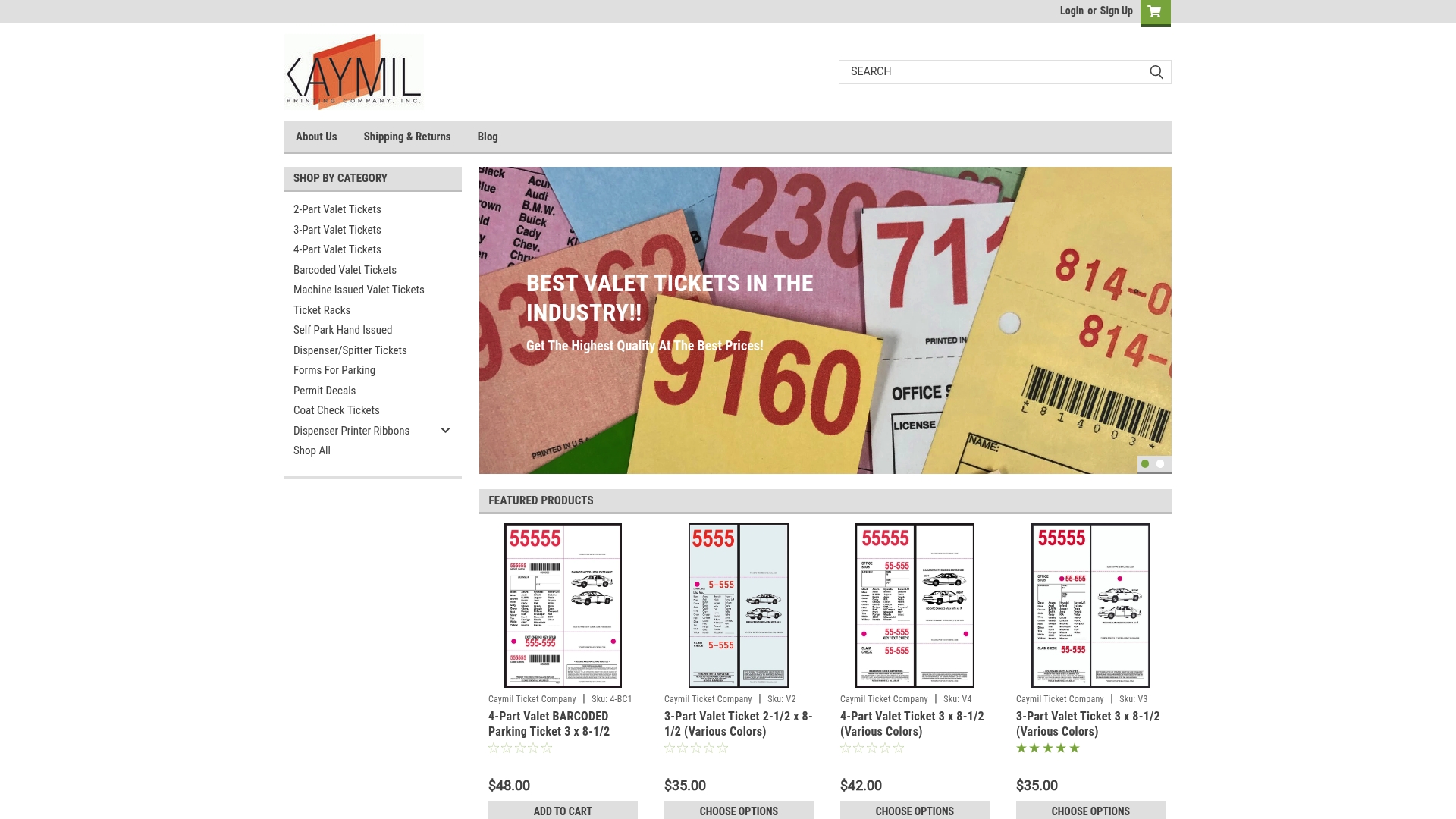
For procurement teams coming from this article: Caymil handles the full spec, from excitation wavelength confirmation to proof testing and MSDS documentation, so your team receives a ticket that passes verification on day one. Multi-part carbonless formats, barcoded tickets, and PARCS-compatible machine-issued formats are all available with fluorescent security options. Request your proof tickets and start the sample verification process at Caymil’s parking forms and ticket catalog.
Sources
- RSC article on colloidal nanoparticle-based security inks (2021)
- Springer article on blue-light excitable fluorescent inks (2024)
- How to Use a UV Ink Detection Flashlight: Step-by-Step Guide - Tank007
- Anti-counterfeiting function of fluorescent ink in ticket printing - LauerInk
FAQ
What are fluorescent security inks on parking tickets?
Fluorescent security inks are covert UV-reactive inks applied to parking and valet tickets that fluoresce under a specific excitation wavelength (typically 365 nm UV) and remain invisible in ordinary daylight, allowing staff to verify ticket authenticity quickly.
Which UV lamp wavelength is best for verifying parking tickets?
A 365 nm professional UV lamp gives the strongest fluorescence contrast and is the recommended choice for security verification; 395 nm consumer lamps cost less but produce lower contrast on faint or covert marks.
Can fluorescent inks be used on thermal roll parking tickets?
Direct thermal roll tickets are generally incompatible with fluorescent security inks because heat-sensitive coatings interfere with pigment performance; screen-printed or sheet-fed offset tickets on coated stock are the reliable alternatives.
How does Caymil support fluorescent ink ticket orders?
Caymil produces custom parking and valet tickets with fluorescent security ink options, provides sample proof tickets for on-site 365 nm verification, and supplies MSDS and spectral documentation to support procurement QA requirements.
When should a parking operation combine fluorescent inks with other security features?
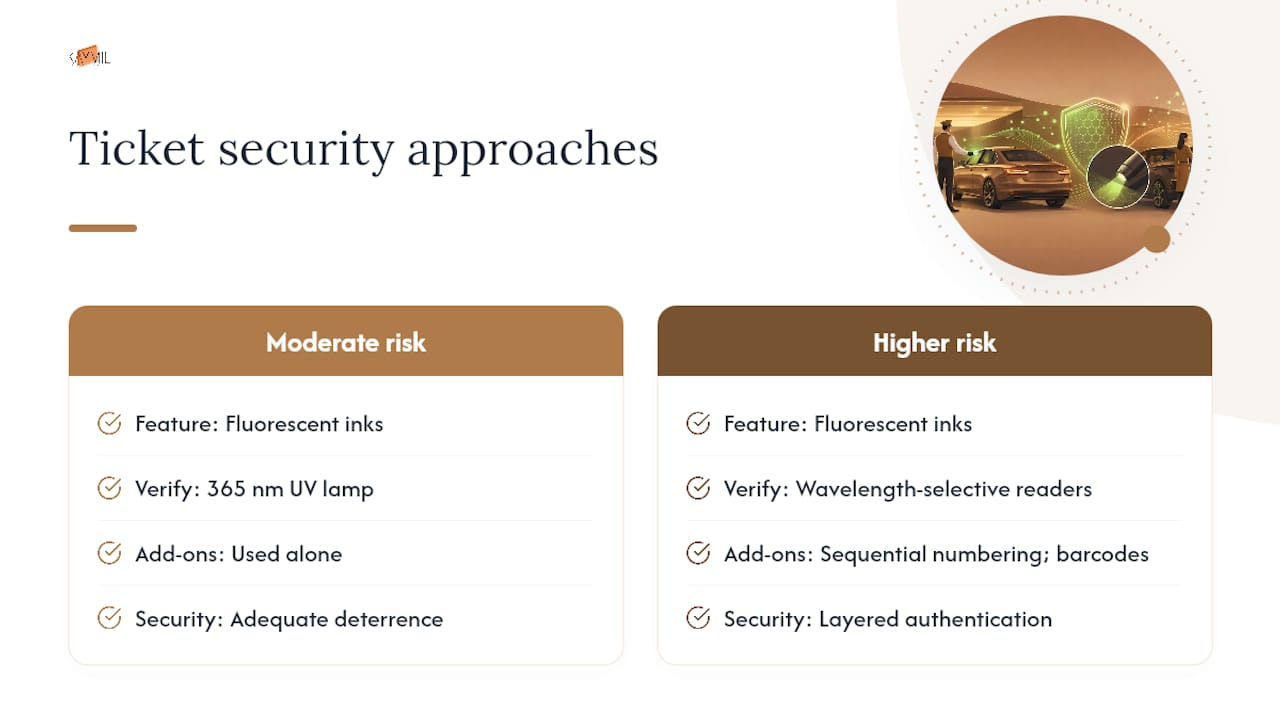
For moderate fraud risk, fluorescent inks alone with a 365 nm lamp provide adequate deterrence; for higher-risk operations, combine them with sequential numbering, barcodes, and wavelength-selective readers for layered authentication.