
How to Set Up a Valet Ticket System in 2026
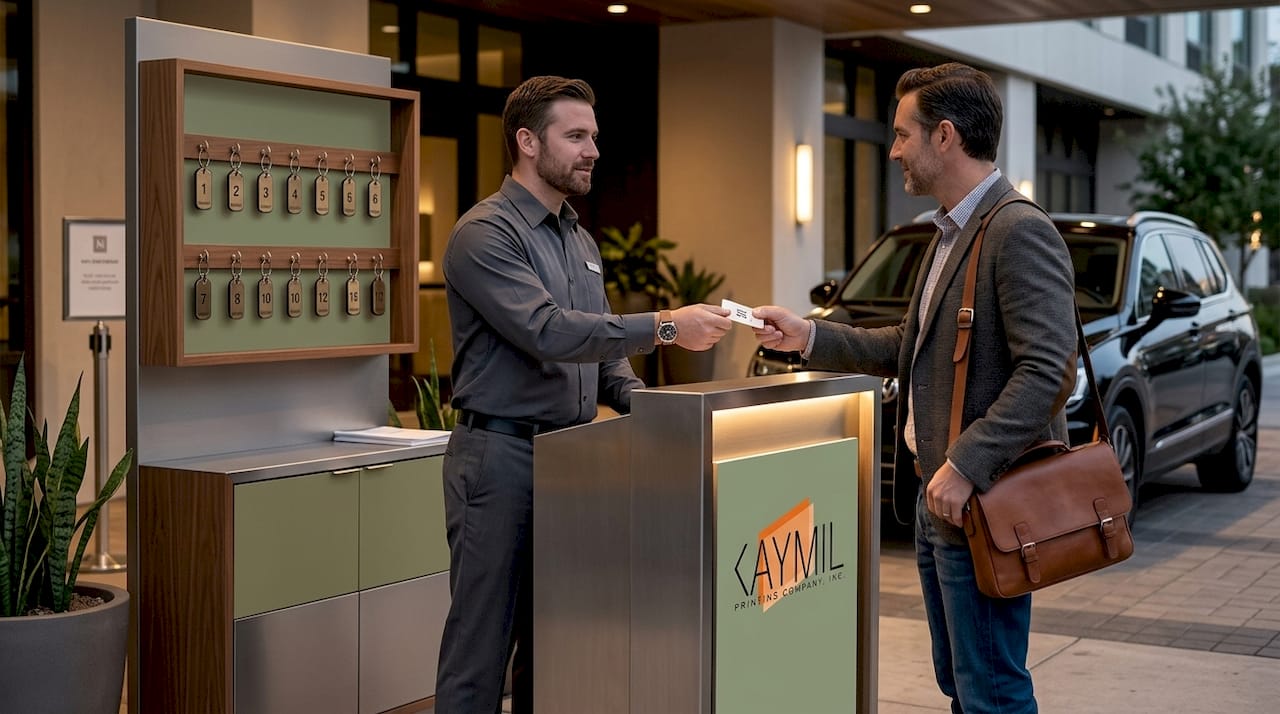
A valet ticket system is defined as the organized process of issuing numbered claim checks, tracking vehicle keys, and managing retrieval workflows to control every car that enters and exits a valet operation. Whether you manage a hotel drop-off lane, a casino entrance, or a high-volume event venue, the ticketing method you choose determines how fast guests get their cars back and how well your staff controls liability. Modern systems range from multi-part carbonless tickets to fully cloud-based mobile apps, and the best operations often run both in parallel. Getting the setup right from the start prevents the costly mistakes that erode guest trust and inflate operating costs.
What components do you need to set up a valet ticket system?
A functioning valet ticket system requires four core components: physical tickets or a digital ticketing platform, a key management solution, a staffing structure, and an integration layer connecting ticketing to payment or property management.
Physical tickets vs. digital platforms
Paper tickets remain the most reliable fallback in any operation. Multi-part carbonless formats, such as 2-part, 3-part, and 4-part valet tickets, give the guest one stub, the attendant a second copy, and the key board a third. Barcoded tickets add a scan layer that feeds directly into software, cutting manual data entry. Barcode valet tickets are particularly effective in high-volume casino and hotel environments where speed and accuracy are non-negotiable.
Digital platforms, including mobile apps and cloud-based dashboards, allow attendants to photograph vehicles, log damage notes, and send SMS retrieval alerts from a tablet or smartphone. App-based systems reduce retrieval times from 9 to 12 minutes on paper down to 4 to 6 minutes. That difference translates directly into shorter curb queues and higher guest satisfaction scores.
Key management and storage
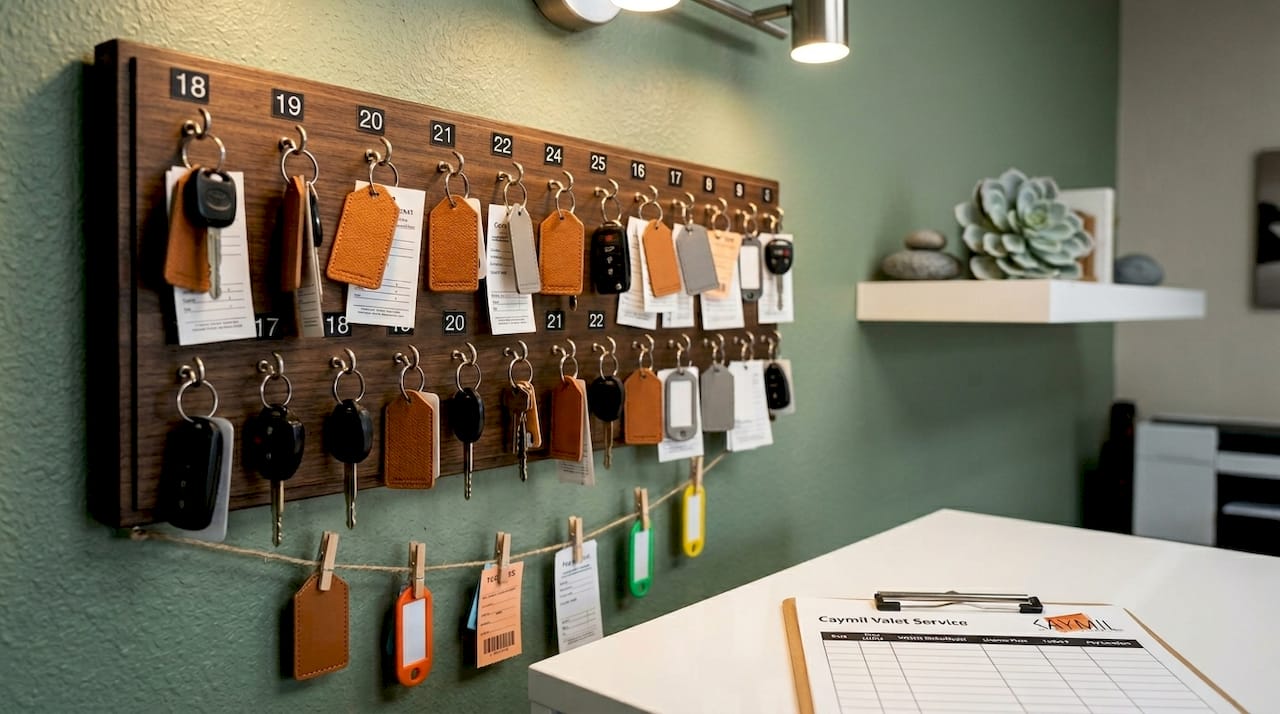
Key management is an asset custody problem, not just an organizational one. RFID key vaults reduce key losses from roughly 10 sets per day to fewer than 1 per month. A secure key board with numbered hooks that match ticket numbers is the minimum standard for any paper-based setup. Digital operations should log every key handoff with a timestamp and staff ID to create a chain-of-custody record.
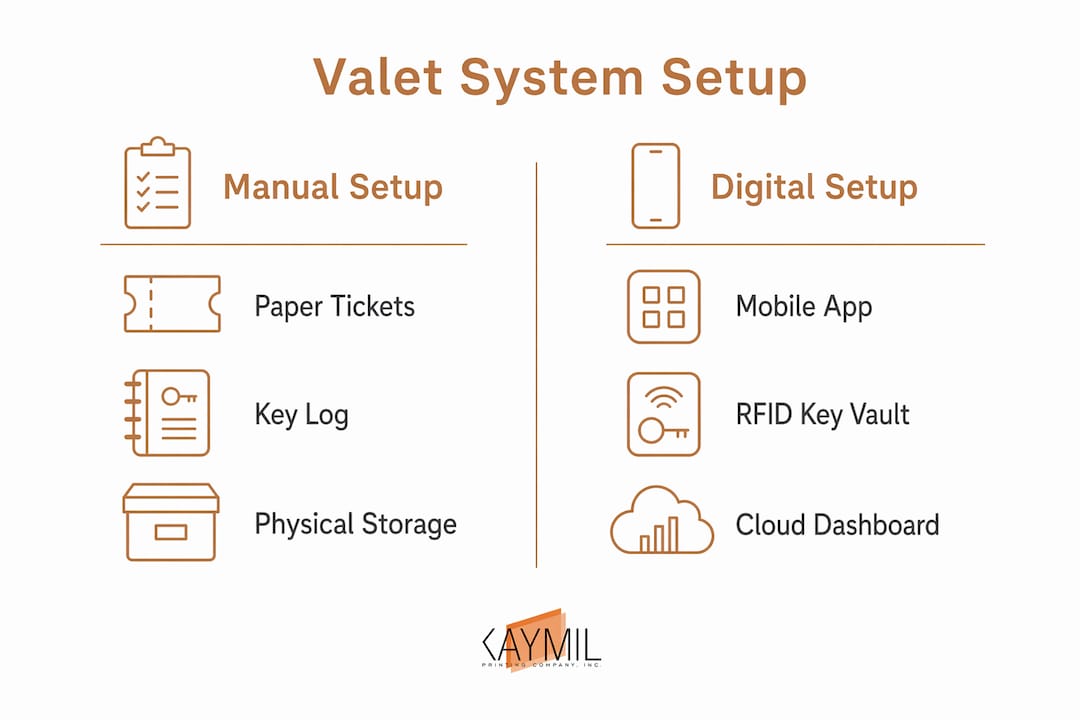
Comparison: manual vs. digital setup requirements
| Component | Manual (paper) setup | Digital setup |
|---|---|---|
| Tickets | Multi-part carbonless or barcoded stock | Mobile app or cloud platform |
| Key management | Numbered key board with hooks | RFID vault or digital key log |
| Payment processing | Separate POS terminal | Integrated in-app payment |
| Staff tools | Ticket rack, pen, radio | Tablet or smartphone |
| Offline capability | Always available | Requires offline mode |
Pro Tip: Order tickets with sequential numbering and your facility’s logo pre-printed. Custom branding on tickets reduces fraud and makes reconciliation faster because every number in the sequence is accountable.
How to implement a valet ticket system step by step
Setup follows a logical sequence. Skipping steps, particularly the physical layout assessment, is the most common reason new systems underperform.
-
Assess your parking layout and traffic flow. Map the drop-off lane, key storage location, and parking zones before selecting any software or ticket format. Physical lot design must precede software automation because software multiplies but cannot fix foundational layout problems.
-
Choose your ticketing method. Decide between paper only, digital only, or a hybrid approach. Most high-volume facilities benefit from a hybrid: paper tickets as the primary claim check and a digital platform for vehicle tracking and SMS alerts.
-
Select and configure your software. Cloud-based valet platforms can be configured for a new location in under 5 minutes, though full integration with a property management system or POS terminal typically takes 9 to 10 weeks. Budget software costs at roughly 1 to 3 percent of operating expenses.
-
Set up key management. Install a numbered key board or RFID vault at the attendant station. Assign each parking space or zone a number that matches the ticket sequence. Every key handoff must be logged with a staff ID and timestamp.
-
Define staff roles. Assign a greeter to issue tickets and photograph vehicles at the drop-off lane, runners to park and retrieve cars, and a lead to manage the key board and monitor the queue. Clear role separation prevents ticket handling errors.
-
Integrate payment and POS systems. Connecting valet software to PMS and POS terminals eliminates manual billing errors and centralizes revenue data. This step is critical for hotel and casino valet ticket program setups where charges post directly to a guest folio.
-
Train staff and run a live test. Conduct a full dry run with real vehicles before opening day. Test ticket issuance, key logging, retrieval requests, and payment processing under simulated peak conditions.
Pro Tip: Print a laminated quick-reference card for each staff role and post it at the attendant station. New hires get up to speed faster, and experienced staff make fewer errors during surges.
What best practices improve valet efficiency and guest experience?
Operational efficiency in a valet system depends on three factors: staffing ratios, parking zone strategy, and real-time queue management. Getting all three right simultaneously is what separates a smooth operation from a congested one.
Staffing ratios that work
A ratio of 1 valet per 15 to 20 cars during steady flow is the operational standard. During peak surges, scaling to 3 to 4 valets improves parking revenue by 12 to 30% and guest satisfaction by 14 to 25%. These numbers reflect the direct relationship between wait time and perceived service quality.
Duration zoning for faster retrievals
Duration zoning means parking short-stay vehicles in spaces closest to the exit. This strategy reduces retrieval drive distance by up to 40%, cutting average wait times without adding staff. Assign zones by expected stay length at ticket issuance: dinner guests in Zone A, hotel overnight guests in Zone C.
Real-time queue and retrieval management
- Use SMS or app-based retrieval requests so runners start pulling cars before guests reach the curb.
- Monitor the key board in real time to identify which vehicles are in high-demand zones.
- Conduct daily ticket and key audits to catch discrepancies before they become disputes.
- Digital ticketing reduces lost ticket incidents to under 0.5% and cuts disputed damage claims by up to 80% through photo documentation.
- Maintain offline capability in any digital platform. Systems that buffer data and sync on reconnection prevent service interruptions during cellular outages.
Pro Tip: The most efficient valet operations run silently. If your staff is constantly on the radio, your ticketing and retrieval workflow has a gap. Redesign the process so the ticket number alone communicates everything a runner needs.
How to troubleshoot common valet ticket system problems
Every valet operation encounters the same core failure points: lost tickets, key mismatches, technology downtime, and curb congestion. Knowing the fix before the problem occurs is what keeps guest experience intact.
Lost tickets and key mismatches
Lost tickets are the most frequent guest complaint in paper-based systems. The fix is a secondary lookup method: license plate number, guest name, or phone number logged at ticket issuance. Digital systems handle this automatically, but paper operations need a written log at the attendant station as a backup.
Key mismatches happen when staff skip the key board log during a rush. Enforce a rule that no key moves without a logged handoff, regardless of how busy the lane is. Treating key management as a chain-of-custody workflow is the standard that expert valet managers apply to reduce liability.
Technology downtime
App and connectivity failures are inevitable. Any digital valet ticket system must have an offline mode that continues logging transactions locally and syncs when connectivity returns. Pre-printed paper tickets stored at every station serve as the ultimate fallback. Never launch a digital-only system without a paper backup supply on hand.
Curb congestion and bottlenecks
Congestion at the drop-off lane is almost always a staffing or zoning problem, not a ticketing problem. If ticket issuance is slow, add a dedicated greeter whose only job is to issue tickets and photograph vehicles. If retrieval is slow, review your zone assignments and runner-to-car ratios.
The operations that fail are not the ones that chose the wrong software. They are the ones that deployed software on top of a broken physical workflow and expected technology to compensate.
Continuous improvement through metrics
Track average retrieval time, lost ticket rate, and damage claim frequency weekly. These three metrics reveal where the system is breaking down. Set a target retrieval time under 5 minutes and a lost ticket rate under 1%, then adjust staffing, zoning, or ticket format until you hit both.
Key takeaways
A well-configured valet ticket system requires the right physical tickets, a disciplined key management protocol, and a digital platform with offline resilience to deliver consistent guest experience at any volume.
| Point | Details |
|---|---|
| Choose the right ticket format | Multi-part carbonless or barcoded tickets give you a paper trail and scan capability simultaneously. |
| Key management is chain of custody | Log every key handoff with a timestamp and staff ID to reduce losses and liability. |
| Duration zoning cuts wait times | Park short-stay vehicles near the exit to reduce retrieval distance by up to 40%. |
| Digital systems need offline mode | Platforms that buffer and sync data prevent service gaps during connectivity failures. |
| Staffing ratios drive revenue | Scaling to 3 to 4 valets during peak surges can improve revenue by up to 30%. |
Why physical operations must come before software
The most persistent mistake I see when facilities set up a valet ticket system is deploying software before the physical operation is disciplined. A cloud platform will not fix a poorly designed drop-off lane or a key board that nobody consistently uses. Software multiplies what is already working. It does not replace the fundamentals.
The second mistake is choosing complexity over clarity. The best valet systems I have observed operate almost silently. Attendants know their roles, tickets move through a predictable sequence, and guests rarely wait more than four minutes. That silence is the result of deliberate process design, not expensive technology. A simple 3-part carbonless ticket with sequential numbering and a well-trained team will outperform a sophisticated app deployed on a chaotic operation every time.
For casino valet ticket program setups and large hotel operations, integration with PMS and POS systems is genuinely worth the 9 to 10 week implementation timeline. The revenue data alone justifies the effort. But for smaller event venues and standalone parking facilities, a hybrid approach, quality printed tickets paired with a lightweight mobile app, delivers 80% of the benefit at a fraction of the cost and complexity. Start with the physical workflow. Get the tickets right. Then layer in technology.
— Richard
How Caymil supports your valet ticketing setup
Caymil Printing Co. has manufactured valet parking tickets since 1937, and the product line covers every format a parking facility manager or event coordinator needs to build a reliable system.
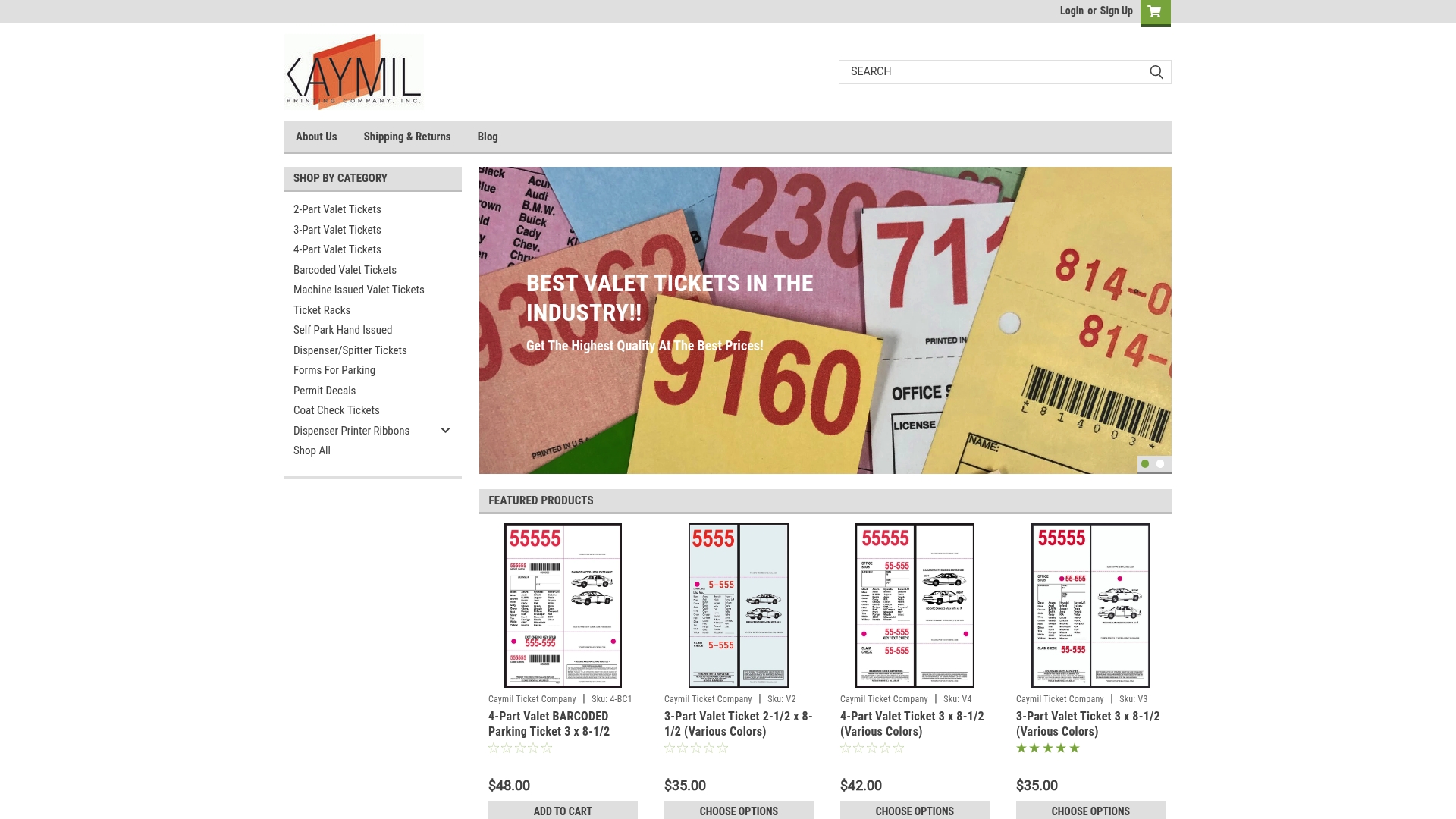
Caymil’s machine-issued valet tickets are built for high-speed dispensers and continuous-use environments, while the 2-part, 3-part, and 4-part carbonless formats give operations a durable paper trail at every stage of the valet parking workflow. Barcode valet parking tickets integrate directly with scanning systems for faster reconciliation and reduced manual entry. Every ticket is available with sequential numbering, custom logos, security features, and color coding to match your facility’s branding. Caymil ships nationwide with millions of tickets in stock, so you can order the right format and receive it fast, without waiting on a long production run.
FAQ
What is a valet ticket system?
A valet ticket system is the structured process of issuing numbered claim checks to guests, logging vehicle and key information, and managing retrieval to control every car in a valet operation. It includes physical tickets, key storage, and optionally a digital tracking platform.
How does a valet ticket system improve turnaround time?
App-based valet systems reduce average vehicle retrieval times from 9 to 12 minutes on paper down to 4 to 6 minutes by enabling SMS retrieval requests and real-time runner dispatch before guests reach the curb.
What ticket format works best for valet operations?
Multi-part carbonless tickets, such as 2-part or 3-part formats, are the standard for paper-based operations because they give the guest, the attendant, and the key board each a copy. Barcoded tickets add a scan layer for digital reconciliation.
How does valet ticket reconciliation work?
Reconciliation matches every issued ticket number against a returned stub and a logged key handoff. Digital systems automate this process; paper systems require a daily count of issued versus returned tickets to identify discrepancies.
Do valet systems need to work without internet?
Yes. Any digital valet platform deployed in a real operation must include an offline mode that logs transactions locally and syncs when connectivity is restored, preventing service interruptions during cellular outages.