

Parking ticket security: How to prevent fraud and protect revenue

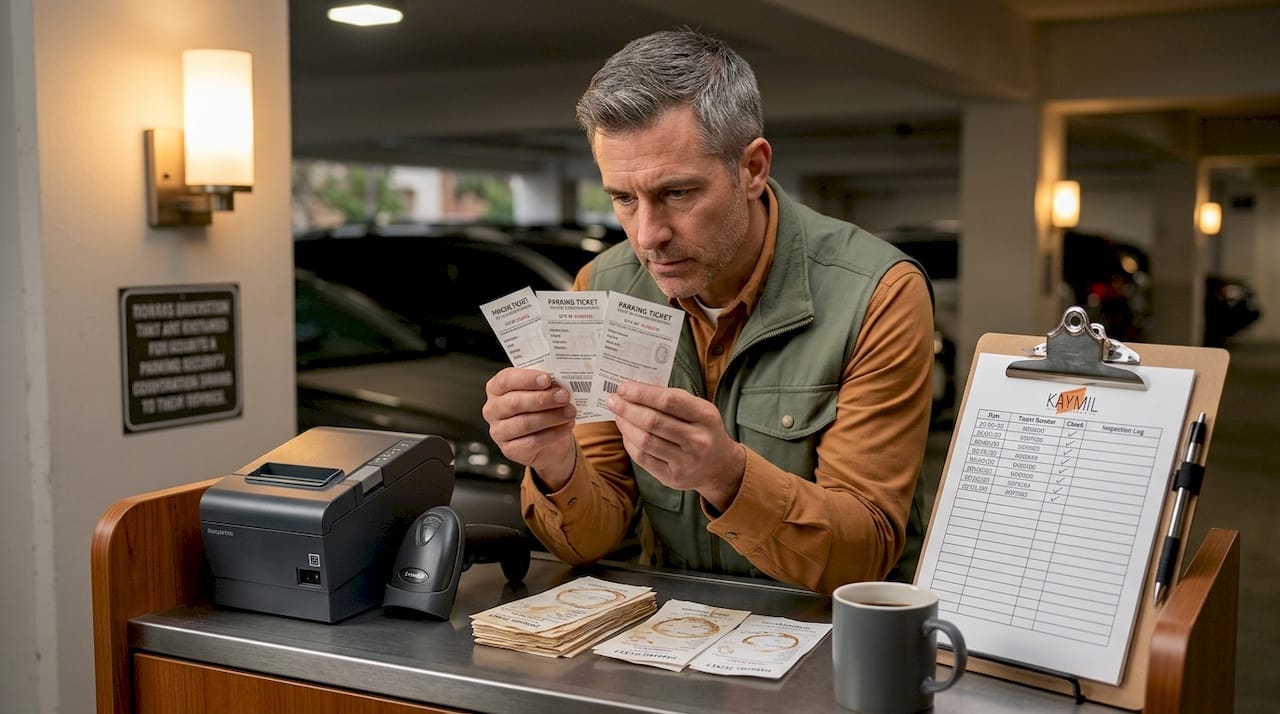
Parking ticket fraud has grown more sophisticated, and the stakes are real for operators managing high-volume garages, valet programs, hotel lots, and casino facilities. Fraud scenarios around parking ticketing commonly target QR-code payment flows, including placing fraudulent QR codes on legitimate parking equipment to redirect users to third-party payment sites. Physical counterfeiting, serial number manipulation, and ticket duplication add even more pressure on parking managers. The good news is that a well-chosen mix of physical and digital security features can close most of those gaps and keep your operation protected.
Table of Contents
- Evaluating security criteria for parking tickets
- Top physical anti-counterfeit features
- QR codes: Powerful tool or security risk?
- Secure software and operational controls
- Feature comparison: Matching security to your operation
- Our take: Why layered security is non-negotiable
- Explore advanced parking ticket solutions
- Frequently asked questions
Key Takeaways
| Point | Details |
|---|---|
| Layered protection | Combine physical, digital, and operational security features for maximum fraud resistance. |
| QR risk awareness | QR codes must be verified via official databases and monitored for tampering. |
| Operational controls | Back-end access controls, encrypted storage, and secure support procedures are essential for robust ticket management. |
| Best-in-class physical features | Rely on watermarks, holograms, barcodes, and serial numbers to make tickets difficult to counterfeit. |
| Situation-specific choices | Adapt your mix of security features to fit the unique risks and compliance needs of hospitality, casino, or transportation operations. |
Evaluating security criteria for parking tickets
With parking fraud evolving, it helps to start with a clear framework before selecting features. Not every security measure fits every operation. A municipality issuing citations has very different priorities than a casino with valet lanes, and a hospital parking deck faces different risks than an airport transit hub.
The most effective security strategies combine multiple layers working together. As security-aware operators know, a layered approach pairs physical anti-counterfeit markers such as watermarks, holograms, and serial numbers with verification mechanisms that bind each ticket to an official record, along with secure ticket management software controls.
When assessing your fraud risk profile, consider these criteria:
- Physical counterfeit risk: How easy is it to copy or replicate your current tickets using standard printing equipment?
- QR code payment fraud: Does your ticketing system use scannable payment links? If so, have those codes been audited recently?
- Serial number integrity: Are your ticket numbers sequential and tracked against a database to flag gaps or duplicates?
- Access controls: Who can issue, void, or modify ticket records in your software system?
- Compliance requirements: Some environments, such as law enforcement or government parking, carry regulatory requirements around encryption and data storage.
Starting with a formal risk assessment lets you prioritize spending on features that address the most likely threats at your specific location. Reviewing the parking ticket technology blog from time to time keeps you current as fraud patterns shift.
Pro Tip: Conduct a brief audit quarterly. Walk your facility, check for any stickers placed over QR codes, look at ticket dispensers for signs of tampering, and review your software access logs. Most fraud is caught early through routine checks, not major investigations.
Top physical anti-counterfeit features
Once you understand the core criteria, the next step is choosing physical features that make tickets genuinely difficult to duplicate. Fraudsters targeting physical tickets rely on two main methods: copying visible design elements with inkjet or laser printers, and sourcing blank stock that resembles legitimate inventory. The right physical features defeat both approaches.
Common physical security features used to protect parking tickets include watermarks, holograms and foil stamps, unique barcodes and QR codes linked to an issuing database, and sequential serial number sequences. Here is how each one performs in practice:
- Watermarks: Embedded during paper manufacturing, watermarks are nearly impossible to replicate on standard office printers. They are invisible in normal light but appear clearly when held to a light source. They are a reliable baseline for any operation.
- Holograms and foil stamps: These require specialized die-stamping equipment to produce, making them one of the most effective anti-counterfeit tools available for parking tickets. They are especially valuable in high-revenue environments like casino valet lanes or major event parking.
- Sequential serial numbers: Every ticket in a batch receives a unique, sequential number that feeds directly into your management system. If a number appears twice or a gap exists in the sequence, it flags immediately. This is an underrated tool for auditing revenue integrity.
- Barcodes and QR codes: When properly linked to a live database, a unique barcode or QR code makes duplication detectable on the first scan. Custom barcode ticket rolls can be formatted to match specific system requirements, ensuring tight integration between physical tickets and your backend software.
- Thermal printing: Thermal-printed tickets resist ink smearing and are harder to alter than standard inkjet-printed formats. However, thermal paper is sensitive to heat, so storage conditions matter for long-term legibility.
| Feature | Counterfeit difficulty | Cost level | Best suited for |
|---|---|---|---|
| Watermark | High | Low | All operations |
| Hologram/foil stamp | Very High | Medium | Casino, hotel, valet |
| Sequential serial numbers | Medium | Very Low | Garages, municipalities |
| Database-linked barcode | High | Low to Medium | Automated parking systems |
| Thermal printing | Medium | Low | Enforcement, field issuing |
Operators running Amano, TIBA, SKIDATA, or FLASH Parking equipment have specific ticket format requirements. Reviewing the available system ticketing options that match those machines ensures security features are fully compatible with your hardware.
Pro Tip: Combining at least three physical features, such as a watermark, sequential serial number, and a database-linked barcode, creates a verification chain that is extremely difficult to break without leaving obvious evidence of tampering.
QR codes: Powerful tool or security risk?
Among all physical features, QR codes deserve special attention because they serve a dual role. Properly implemented, they speed up vehicle retrieval, payment processing, and validation workflows. Poorly secured, they become one of the easiest attack surfaces for fraud.
The threat is direct and documented. Fraud scenarios around parking ticketing commonly involve placing fraudulent QR codes on legitimate parking equipment to redirect users to third-party payment sites. The fraudster simply prints a sticker with a malicious QR code and places it over the legitimate one on a parking meter, ticket dispenser, or valet station. Customers scan it without question and enter payment information on a fake site.
“Some jurisdictions explicitly state that legitimate parking citations may not include a QR code for payment, and verification should be done via official databases or portals rather than by trusting the ticket’s instructions.” Officials urge Houston drivers to watch out for scam parking tickets
This has real implications for how parking managers design their ticketing workflows. Here are the most important steps for secure QR code implementation:
- Audit QR codes daily. Before the first vehicle enters your facility, have a staff member scan every publicly visible QR code to confirm it routes to the correct, official destination.
- Use dynamic QR codes tied to unique ticket records. Static QR codes that link to a general payment page are easier to spoof. A dynamic code that encodes a unique ticket ID and validates against your database is far more resistant to substitution.
- Apply tamper-evident labels over QR codes on fixed equipment. If a sticker is placed over your label, it damages the underlying surface when removed, making the tampering obvious.
- Educate customers. Post clear signage telling customers what your official payment URL looks like and instructing them to check the address bar before entering payment details.
- Train every team member. Attendants and cashiers should know the signs of QR code fraud and have a clear reporting procedure when something looks off.
For operations using FLASH Parking systems, reviewing the security features embedded in FLASH parking tickets provides a useful baseline for what proper QR code integration looks like within a managed system.
The takeaway is this: QR codes are not inherently insecure. They become a risk when they are implemented as static, unverified links or when staff and customers are not trained to spot substitution fraud.
Secure software and operational controls
Beyond visible features, it is the underlying technology and processes that ultimately shield your revenue from sophisticated threats. Physical ticket security is only as strong as the software and operational procedures that support it.
“Parking ticketing solutions also emphasize back-end and operational controls, including encrypted storage and strict access controls, as part of security for ticket management systems.” PTTS Beta Ready
Here are the core software and operational controls that every parking manager should have in place:
- Encrypted ticket record storage: All ticket data, including issuance time, location, serial number, and payment status, should be stored in an encrypted database. This prevents unauthorized modification and supports audit trails.
- Strict access control policies: Limit who can issue, void, or modify ticket records. Role-based access means a cashier can process payments but cannot delete records, while a supervisor can review but not override enforcement logs without a second approval.
- Temporary access for support personnel: When third-party vendors or IT support need access to your system, that access should be time-limited and logged. Permanent access credentials for outside parties create unnecessary exposure.
- Audit log review: Your system should maintain a timestamped log of every action taken on each ticket record. Review these logs regularly for anomalies, such as a ticket being voided shortly after issuance by the same operator.
- Tamper-resistant field printers: For enforcement and citation teams operating in the field, rugged thermal printers produce legible citations quickly within patrol and enforcement workflows, supporting tamper-resistant printing that holds up to scrutiny in adjudication.
Operations running SKIDATA hardware can explore the SKIDATA ticket options that are designed to integrate with back-end access control and data management features built into that platform.
Software controls are most effective when they are paired with regular staff training. Technology alone cannot compensate for operators who share login credentials, skip log reviews, or fail to report anomalies. Operational discipline and technical controls need to reinforce each other.
Feature comparison: Matching security to your operation
Now that each feature has been examined individually, a direct comparison helps clarify which combination makes the most sense for your specific environment. Not every hotel valet operation needs the same security stack as a government-issued citation program.
A practical layered approach combines physical anti-counterfeit markers with database-backed verification and software access controls. The table below maps the most important features against operational environment and fraud profile.
| Security feature | Hospitality/Hotel | Casino valet | Transit/Municipality | Key limitation |
|---|---|---|---|---|
| Watermark | Recommended | Recommended | Recommended | Requires specialty paper sourcing |
| Hologram/foil stamp | Highly recommended | Essential | Optional | Higher per-ticket cost |
| Sequential serial numbers | Recommended | Recommended | Recommended | Must tie to active database |
| Database-linked barcode | Essential | Essential | Essential | Requires integrated software |
| Dynamic QR codes | Optional | Optional | Use with caution | Susceptible to substitution fraud |
| Encrypted record storage | Required | Required | Required | Needs IT infrastructure |
| Role-based access controls | Recommended | Essential | Required | Requires staff training |
For hospitality and casino environments, a combination of hologram or foil stamps, sequential serial numbers, and database-linked barcodes provides the strongest physical security with visible deterrence. Guests and staff can both quickly identify a legitimate ticket.
For transit and municipal operations, encrypted records and role-based access controls take priority since those environments carry compliance obligations and face legal scrutiny during adjudication. Referencing a secure airport parking transfer guide illustrates how high-traffic transport hubs apply layered verification to reduce fraud exposure.
The right combination is not necessarily the most expensive one. It is the one that addresses your specific fraud profile without creating friction in daily operations.
Our take: Why layered security is non-negotiable
Here is an honest observation drawn from decades of working with parking operations across every major vertical. Many managers invest in one strong security feature and treat it as a complete solution. That is the most common mistake we see.
A watermark on its own stops basic counterfeiting but does nothing against QR code substitution fraud. A sophisticated hologram protects against physical duplication but offers no protection if your software access controls are weak and an insider can void records at will. Even a perfectly integrated database-linked barcode system is vulnerable if staff are not trained to spot a sticker placed over a legitimate QR code.
What truly protects parking revenue is the combination of visible deterrents that discourage opportunistic fraud, invisible technical controls that detect sophisticated fraud, and educated staff who act as the final verification layer. None of those three components can carry the load alone.
The parking fraud insights available from operators who have dealt with real incidents tell a consistent story: fraud adapts. When one attack vector gets closed, another opens. A layered security approach is not just best practice. It is the only approach that remains effective as tactics evolve.
The uncomfortable truth is that security updates are not a one-time investment. They require periodic reassessment, staff retraining, and willingness to upgrade ticket stock or software when vulnerabilities appear. Operators who treat security as a fixed solution rather than an ongoing discipline are the ones most likely to face revenue loss or customer trust damage down the line.
Explore advanced parking ticket solutions
Caymil Printing Co. has been manufacturing secure, customizable parking tickets since 1937, and the product line reflects the full range of security features covered in this article.
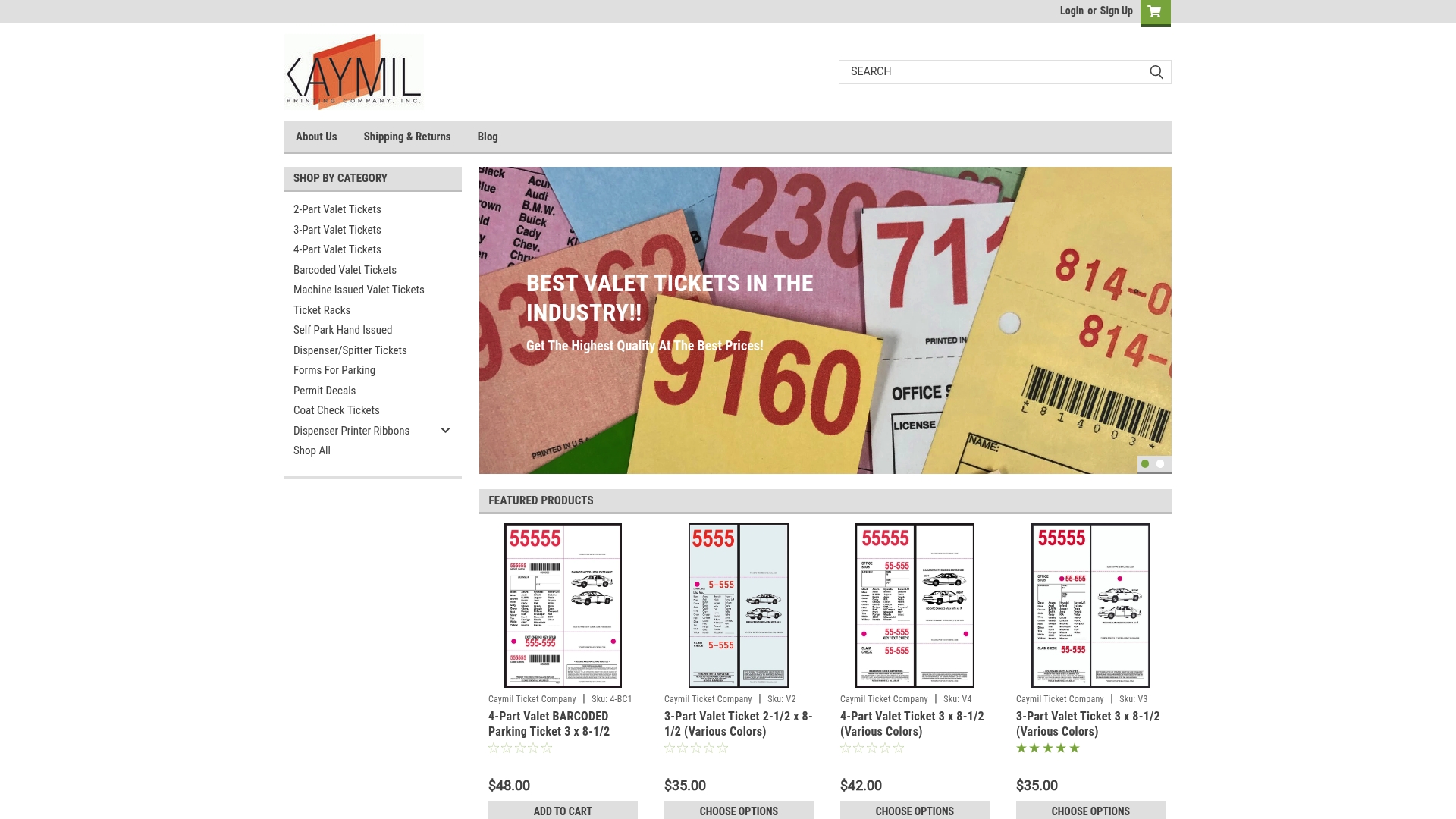
Whether your operation needs sequential serial numbers, database-linked barcodes, watermarked stock, or hologram printing, Caymil delivers customized solutions built to match your system and your fraud profile. You can browse available secure parking ticket forms to find formats suited for hotel, garage, and municipal applications, or review machine issued valet tickets for high-volume hospitality environments. For casino and valet operations requiring integrated verification, barcoded valet tickets provide the database-linked security that modern fraud threats demand. Fast nationwide shipping and millions of tickets in stock mean your operation does not have to wait to upgrade its security posture.
Frequently asked questions
What is the most effective physical security feature for parking tickets?
Watermarks and holograms are widely considered most effective for anti-counterfeit protection because both are very difficult to replicate using standard printing equipment, and holograms in particular require specialized manufacturing tools.
How can parking managers prevent QR code payment fraud?
Managers should scan all publicly visible QR codes daily to confirm they route to the correct official destination, and customers should be educated that QR-code payment fraud commonly involves sticker substitution on legitimate parking equipment.
Do all legitimate parking tickets have QR codes?
No. Some cities explicitly confirm that legitimate parking citations do not include QR codes for payment, and drivers should always verify citations through the official portal rather than trusting links on the ticket itself.
What operational controls help secure ticket management systems?
Encrypted storage and strict access controls are essential; support personnel should receive only temporary, time-limited access, and all system actions should be logged and reviewed regularly for anomalies.
Are thermal field printers secure for operational ticket issuing?
Yes. Rugged thermal printers produce legible, tamper-resistant citations quickly within patrol and enforcement workflows, making them a reliable component of a secure operational ticketing process.
Recommended
- Blog - Caymil Printing Co., Inc.
- Parking Ticket Paper: Stock, Thermal Rolls, and What Really Lasts - Caymil Printing Co., Inc.
- Parking Ticket Rolls – Custom, Barcode & Automated Parking System Tickets | Caymil Printing - Caymil Printing Co., Inc.
- Why Quality Valet Parking Tickets Matter More Than You Think - Caymil Printing Co., Inc.