
The role of ticket dispensers in parking: A manager’s guide
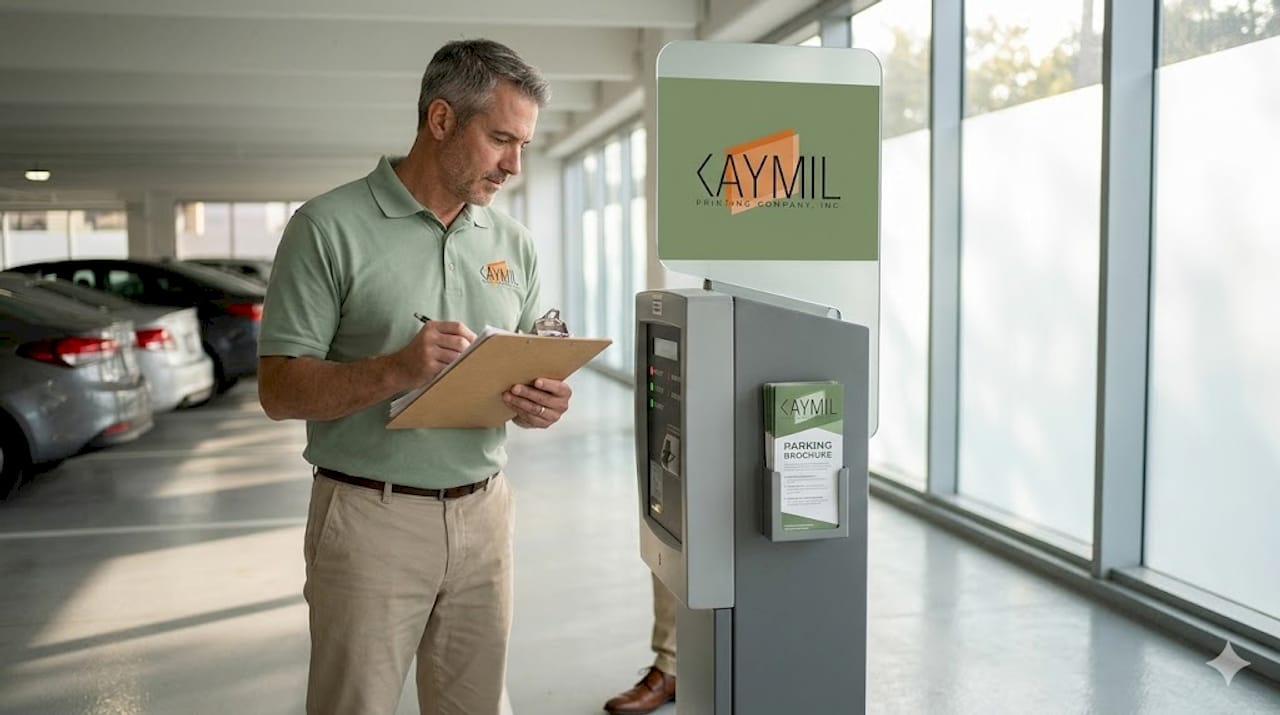
Ticket dispensers are one of the most underestimated pieces of hardware in any parking operation. Most managers focus on gate controllers, payment kiosks, and software dashboards, yet the role of ticket dispensers in parking is what makes every other piece of that system work. Without a functioning dispenser issuing accurate, properly encoded entry credentials, the entire workflow from vehicle arrival to fee collection starts to break down. This guide covers how dispensers fit into modern parking access systems, what technical standards matter most, and how to manage them to protect your facility’s revenue.
Table of Contents
- How ticket dispensers fit into modern parking systems
- Operational impact of ticket dispensers on traffic flow and facility throughput
- Technical essentials: tickets, encoding, and integration for revenue control
- Evolving roles: ticket dispensers within multi-method parking access systems
- Practical tips for managing ticket dispensers to maximize revenue and reduce downtime
- Why viewing ticket dispensers as a system node, not standalone hardware, is key to parking success
- Find reliable ticket dispenser solutions and custom ticket supplies
- Frequently asked questions
Key Takeaways
| Point | Details |
|---|---|
| Integral system component | Ticket dispensers are critical hardware integrated with gates and software to accurately log vehicle entry and fees. |
| Impact on throughput | A malfunctioning dispenser causes entrance congestion, reducing parking facility efficiency and customer satisfaction. |
| Technical standardization | Consistent ticket size, notch, and encoding type prevent jams and scanning errors, ensuring smooth operation. |
| Complementary technology | Dispensers work alongside LPR, RFID, and mobile entry systems, serving as reliable fallback credentials. |
| Operational maintenance | Proactive monitoring of dispenser health metrics is essential to minimize downtime and protect revenue streams. |
How ticket dispensers fit into modern parking systems
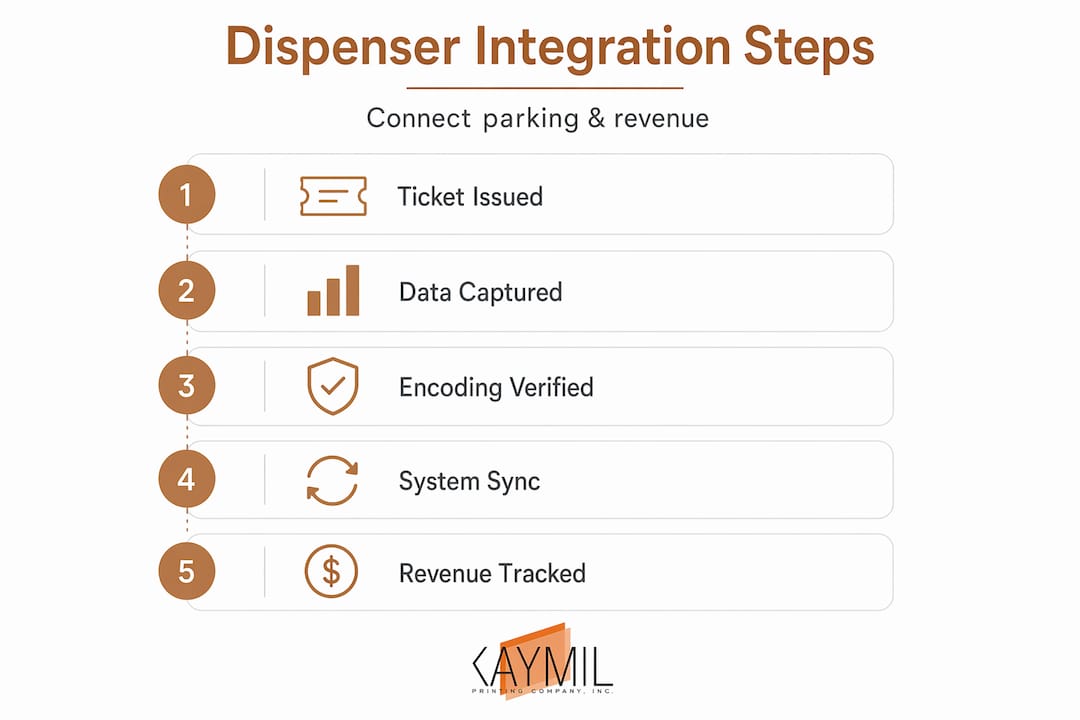
A ticket dispenser is not a printer that happens to sit at your facility entrance. It is the first point of data capture in your entire parking access and revenue control system, commonly referred to as PARCS (Parking Access and Revenue Control System). Everything downstream, including fee calculation, gate release, and audit reconciliation, depends on what that dispenser records and encodes at the moment a vehicle enters.
When a driver pulls up and presses the button, the dispenser does several things at once. It timestamps the entry, encodes that timestamp onto the ticket (via barcode or magnetic stripe), and logs the transaction in the central system. As part of an integrated entry/exit workflow, entry times are logged, fees are calculated at exit, and digital records cut fraud. That last point matters more than many operators realize. Paper tickets with no digital counterpart can be forged, reused, or backdated. The pairing of physical ticket and digital session record is what closes that loophole.
Key functions dispensers perform within a PARCS:
- Entry logging: Records the exact time a vehicle enters the facility
- Fee calculation foundation: Provides the timestamp against which exit time is measured
- Fraud mitigation: Creates a digital record that validates the physical ticket at exit
- Gate trigger: Signals the entry gate controller to lift the barrier after ticket issuance
- System audit support: Feeds transaction data into revenue reports and reconciliation tools
For operators managing parking system ticket integration across platforms like Amano, TIBA, or SKIDATA, the dispenser is also the physical interface between your hardware and software layers. A mismatch in ticket spec or encoding can cause the entire session to fail to log correctly.
Operational impact of ticket dispensers on traffic flow and facility throughput
Picture a busy Friday evening at a 600-space urban garage. If the entry lane dispenser jams at 5:45 PM, that lane backs up into the street within minutes. Drivers leave. Revenue disappears. Staff scramble. The importance of ticket dispensers becomes painfully clear in moments like these, and the consequences reach further than a single shift.
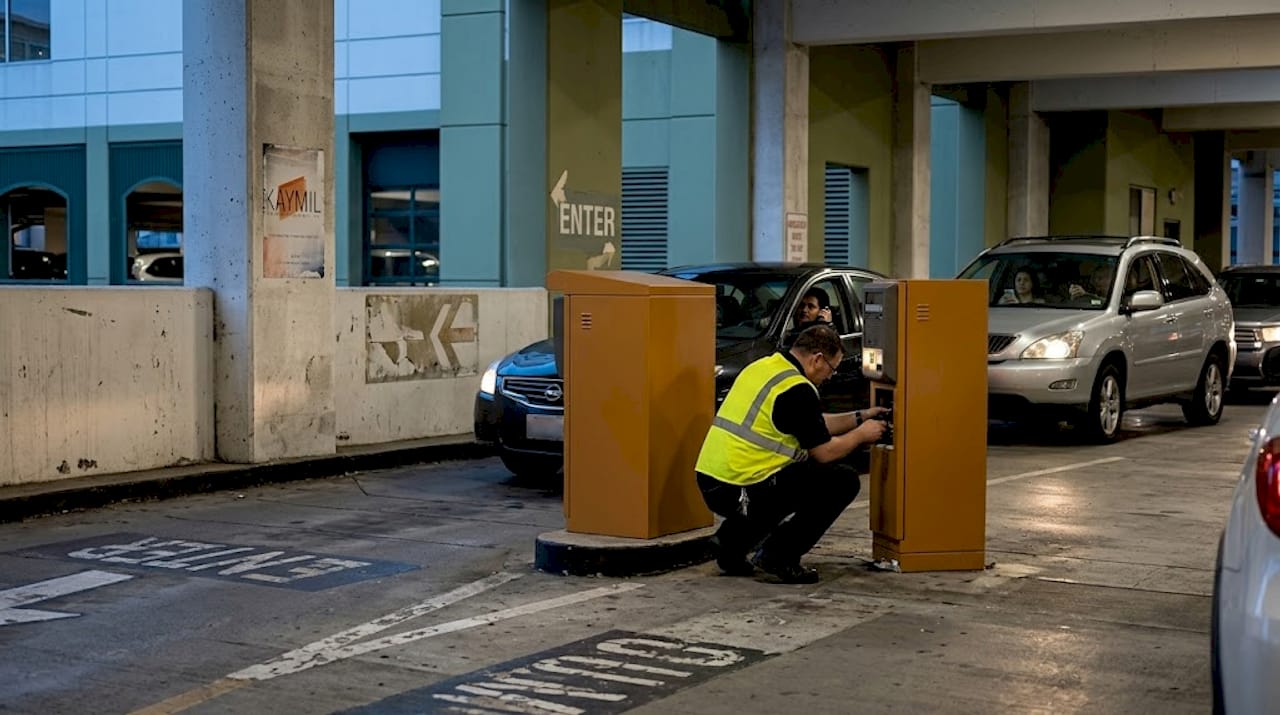
When dispensers stop working, vehicles queue at entrances and staff must intervene, disrupting operations. That intervention is costly in ways that don’t always show up in obvious reports. Staff pulled to manage a jammed lane are not available for payment kiosks, exit lanes, or customer service. The ripple effect touches every part of your operation.
Dispenser design directly affects how often these interruptions happen. Features that reduce downtime include:
- Heavy-duty feed mechanisms that handle thermal ticket stock without curling or jamming
- Low-paper alerts that notify staff before the roll runs out rather than after
- Weatherproof housings for surface lot or covered-but-exposed installations
- Anti-vandalism casings that resist tampering at unstaffed entry points
- Compatibility with your specific gate controller to prevent communication errors
“The efficiency of parking ticket machines depends less on their speed and more on their reliability. A dispenser that issues 200 tickets per hour but jams twice a day costs more in operational disruption than one that issues 150 per hour and runs all week without intervention.”
Pro Tip: Track dispenser jam incidents in your daily operations log. If a single unit is jamming more than once per week, the issue is almost certainly ticket stock incompatibility or a worn feed roller, both of which are correctable before they cause a full failure.
For managers also running valet operations, note that valet ticket dispensers carry the same operational weight. A manual valet ticket that can’t be read at retrieval creates the same bottleneck a jammed automated dispenser does: a frustrated customer and a delayed vehicle.
Technical essentials: tickets, encoding, and integration for revenue control
The physical ticket is not a commodity. Its dimensions, core material, notch placement, coating type, and encoding format determine whether your dispenser feeds reliably, whether your scanners read accurately, and whether your exit kiosks reconcile correctly. Getting the ticket spec wrong is one of the most common and most avoidable causes of revenue leakage.
Here is a practical order of operations for getting ticket stock right:
- Confirm your dispenser model’s exact ticket specification including width, length, and notch position before ordering stock
- Identify your encoding type: barcode (1D or 2D), magnetic stripe, or both for hybrid systems
- Verify thermal paper grade if your dispenser uses heat-sensitive printing to avoid fading before exit scan
- Match ticket stock to exit reader specifications to prevent scan failures that require manual overrides
- Order consistent stock from a single source to eliminate batch variability in thickness or coating
Standardizing ticket stock and dispenser settings prevents scan failures and reconciliation problems, and aligning encoding types across entry and exit devices avoids disputes. That last phrase covers a real operational scenario: if your entry dispenser encodes a barcode but your exit reader is calibrated for magnetic stripe, every transaction requires a manual override. Those overrides are revenue risk points.
| Encoding type | Best use case | Key advantage | Key limitation |
|---|---|---|---|
| Barcode (1D) | Standard PARCS systems | Low cost, widely compatible | Can smear if ticket surface is damaged |
| Barcode (2D/QR) | High-volume garages | Stores more data per ticket | Requires compatible scanner hardware |
| Magnetic stripe | Legacy systems, high security | Durable encoding, hard to replicate | Higher ticket cost, requires reader upkeep |
| Hybrid barcode/mag | Mixed or multi-tenant facilities | Maximum compatibility | Most expensive ticket format |
Pro Tip: When ordering custom parking ticket rolls for automated systems, always request a sample batch first and run it through your actual dispenser at operating speed. Bench testing alone won’t catch feed issues that only appear at high volume.
Evolving roles: ticket dispensers within multi-method parking access systems
License plate recognition (LPR), RFID transponders, and mobile entry apps are reshaping how regular parkers access facilities. It is tempting to see these technologies as making ticket dispensers obsolete. They don’t, and most experienced operators know this well.
Ticket dispensers serve as control credentials even when LPR, RFID, and mobile entry are in use, providing a fallback for one-time or unregistered users within integrated PARCS workflows. In practical terms, this means any occasional visitor, hotel guest, event attendee, or first-time parker who hasn’t registered a plate or downloaded an app still needs a credential at entry. The dispenser handles every one of those users without friction.
| Access method | Best suited for | Requires pre-registration | Works for one-time users |
|---|---|---|---|
| Ticket dispenser | All user types | No | Yes |
| LPR | Frequent parkers, subscribers | Yes | Limited |
| RFID transponder | Monthly permit holders | Yes | No |
| Mobile app | Tech-comfortable users | Yes | Yes (with setup) |
The role of automated ticketing in parking is not diminishing. It is shifting toward serving as a universal access layer, one that sits beneath every other system and ensures no vehicle is left without a credential simply because their plate isn’t in the database or their phone battery is dead.
The benefits of ticket dispensers in this context are straightforward:
- They do not require any advance action from the driver
- They function during network outages (with local timestamp encoding)
- They support validation workflows for retail, hotel, or hospital parking
- They provide a physical audit trail that digital-only systems cannot always replicate
For facilities that rely on barcoded valet tickets alongside automated lanes, the same principle applies. The barcode on a physical ticket is still the most universally readable credential across legacy and modern systems alike.
Practical tips for managing ticket dispensers to maximize revenue and reduce downtime
Understanding how ticket dispensers work is only half the job. Keeping them working is the other half, and it is where most revenue protection happens in daily operations.
Dispenser health indicators are KPIs for revenue assurance, since throughput loss affects collections directly. Every vehicle that can’t enter because a dispenser is down represents lost fee revenue. At a facility charging $15 for a standard stay, even a 20-minute lane closure during peak hours can mean hundreds of dollars in lost transactions.
Operational best practices for managing dispensers:
- Check paper supply at shift change rather than waiting for a low-paper alert, especially on high-volume days
- Inspect feed rollers weekly for wear or debris buildup that causes inconsistent feeding
- Clean sensor windows monthly to prevent false “ticket present” errors that block issuance
- Keep a backup ticket roll on-site at all times to avoid waiting on a supply delivery during peak periods
- Log every jam event with time, lane, and resolution method so patterns become visible over weeks
Pro Tip: Work with your ticket stock supplier to establish a scheduled delivery program tied to your average weekly usage. Running out of ticket stock is entirely preventable with basic consumption tracking, yet it remains one of the top causes of unplanned lane closures at garages nationwide.
Reviewing your parking ticket paper stock choices is also part of dispenser management. Thermal paper that degrades quickly in heat or humidity will produce barcodes that fail to scan at exit, forcing manual overrides and creating reconciliation gaps.
Why viewing ticket dispensers as a system node, not standalone hardware, is key to parking success
Here is an uncomfortable truth that rarely comes up in hardware purchasing conversations: a well-built, properly maintained dispenser can still fail your facility if it isn’t fully integrated into your central PARCS software. The dispenser is one node in a data chain. If that chain has gaps, your revenue assurance program has gaps.
Revenue control depends more on end-to-end data continuity than on dispenser hardware alone, which frames it as one node needing tight integration with gates and central software. We’ve seen facilities invest in premium dispenser hardware and still report significant reconciliation discrepancies because the entry data wasn’t mapping cleanly to exit transactions. The hardware was fine. The integration wasn’t.
What this means practically is that purchasing decisions for ticket dispensers should always involve your PARCS software provider, not just your equipment vendor. Ask how entry sessions are created, how they are stored, and how they are matched at exit. Ask what happens to session data during a network interruption. Ask how manual overrides are logged and reported. These questions reveal whether you’re buying a node in a functional system or a standalone device that will require constant manual reconciliation.
There is also a staff dimension to this. The best-integrated parking system in the world still depends on staff who understand that a jammed dispenser is not just a customer service problem. It is a data event. Every vehicle that bypasses the dispenser and enters without a ticket is a transaction that will never be billed. Training staff to treat dispenser events as revenue events changes how quickly issues get escalated and resolved.
The functionality of parking dispensers, when managed this way, becomes a genuine competitive advantage. Facilities that treat their dispensers as integral system components run tighter operations, close more revenue, and build better audit trails than those that treat them as interchangeable hardware.
Find reliable ticket dispenser solutions and custom ticket supplies
Applying the practices in this guide starts with having the right ticket stock for your equipment.
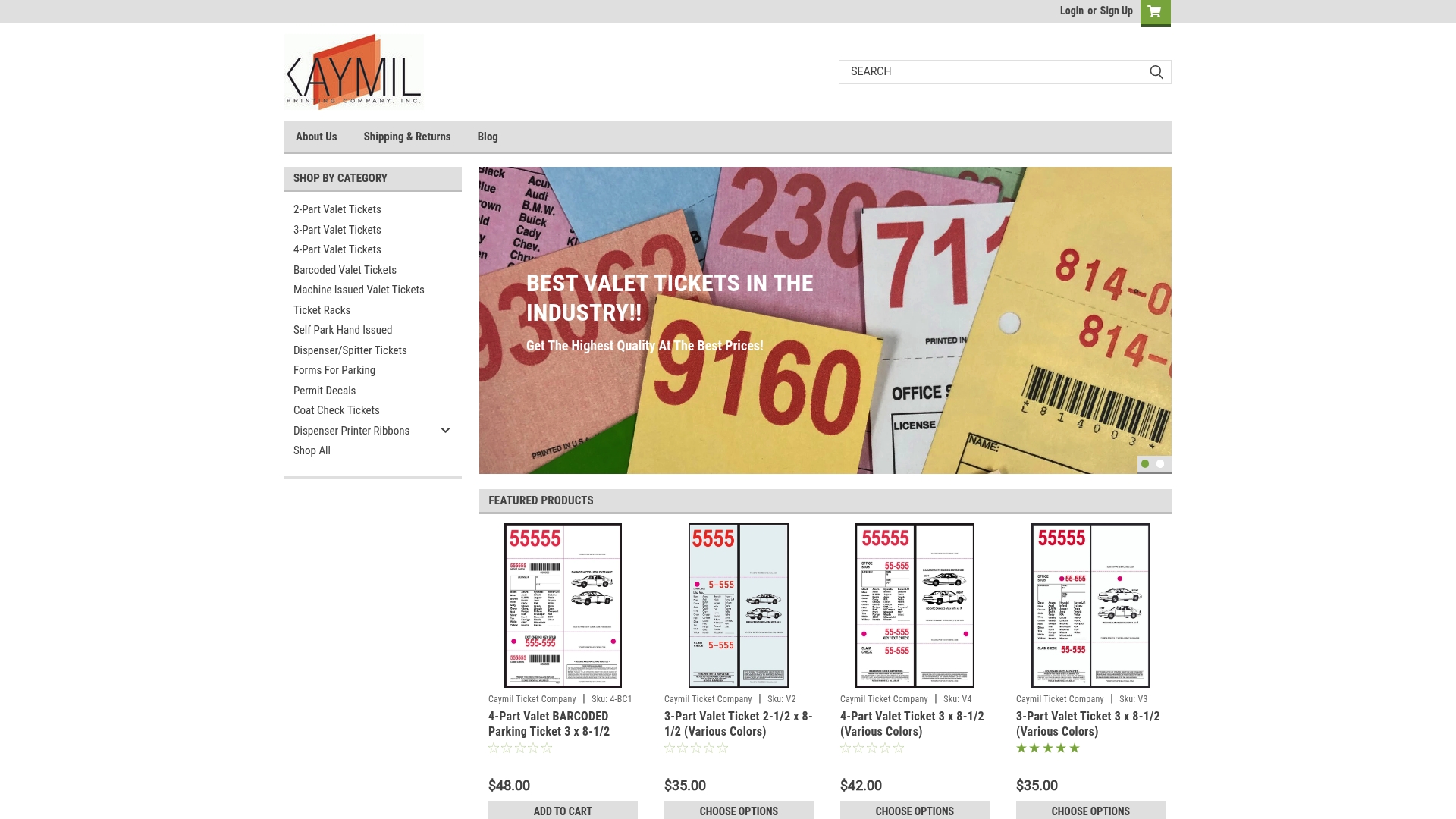
Caymil Printing Co. has manufactured and supplied dispenser-compatible parking tickets since 1937, serving garages, municipalities, hotels, hospitals, and commercial operators across the United States. Whether your facility runs barcode spitter tickets, magnetic stripe formats, or hybrid systems, Caymil offers dispenser-ready spitter tickets built to exact machine specifications for major PARCS platforms. Explore the full range of parking forms and ticketing supplies designed to reduce jams, improve scan accuracy, and keep revenue flowing. For facilities managing multiple entry points or high-volume lanes, ticket racks and storage solutions help ensure stock is always accessible and properly stored. Fast nationwide shipping and millions of tickets in stock mean you won’t face a supply gap when it matters most.
Frequently asked questions
What is the main purpose of a ticket dispenser in parking systems?
A ticket dispenser issues a time-stamped entry ticket that logs vehicle entry, enabling accurate fee calculation at exit and improving revenue tracking. As part of an integrated parking workflow, the system logs entry time at ticket issuance and calculates fees after scanning at exit.
How does dispenser malfunction affect parking facility operations?
Dispenser failures cause vehicle queues at entrances, frustrate drivers, and require staff intervention, reducing throughput and potentially lowering revenue. When dispensers stop working, vehicles line up at entrances and staff must intervene, leading to operational disruption.
Can ticket dispensers work alongside modern access technologies like LPR or RFID?
Yes, dispensers often act as reliable fallback credentials for unregistered or one-time users within integrated multi-method parking access systems. Ticketing complements LPR, RFID, and mobile while providing a fallback for unregistered vehicles.
What ticket types are commonly used with dispensers?
Barcode tickets are most common, but magnetic stripe tickets are also used depending on the PARCS platform. Most modern systems use barcode tickets to track vehicle entry, and standardizing ticket size and encoding is critical for system reliability.
How can parking operators minimize revenue loss due to dispenser issues?
By monitoring indicators like paper supply and jam frequency, operators can address problems before they cause lane closures that disrupt vehicle entry recording and fee collection. Dispenser health metrics are a KPI for revenue assurance, as throughput loss reduces collections.