
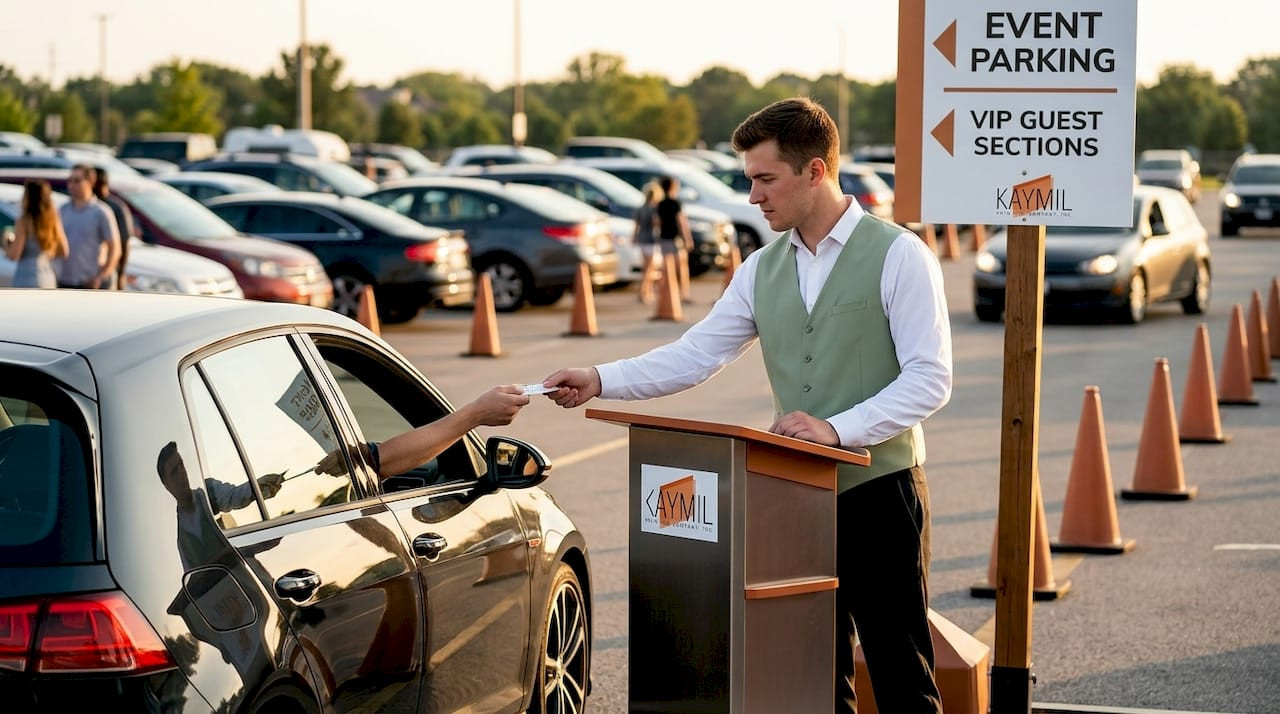
What is an event parking ticket? The pro’s guide
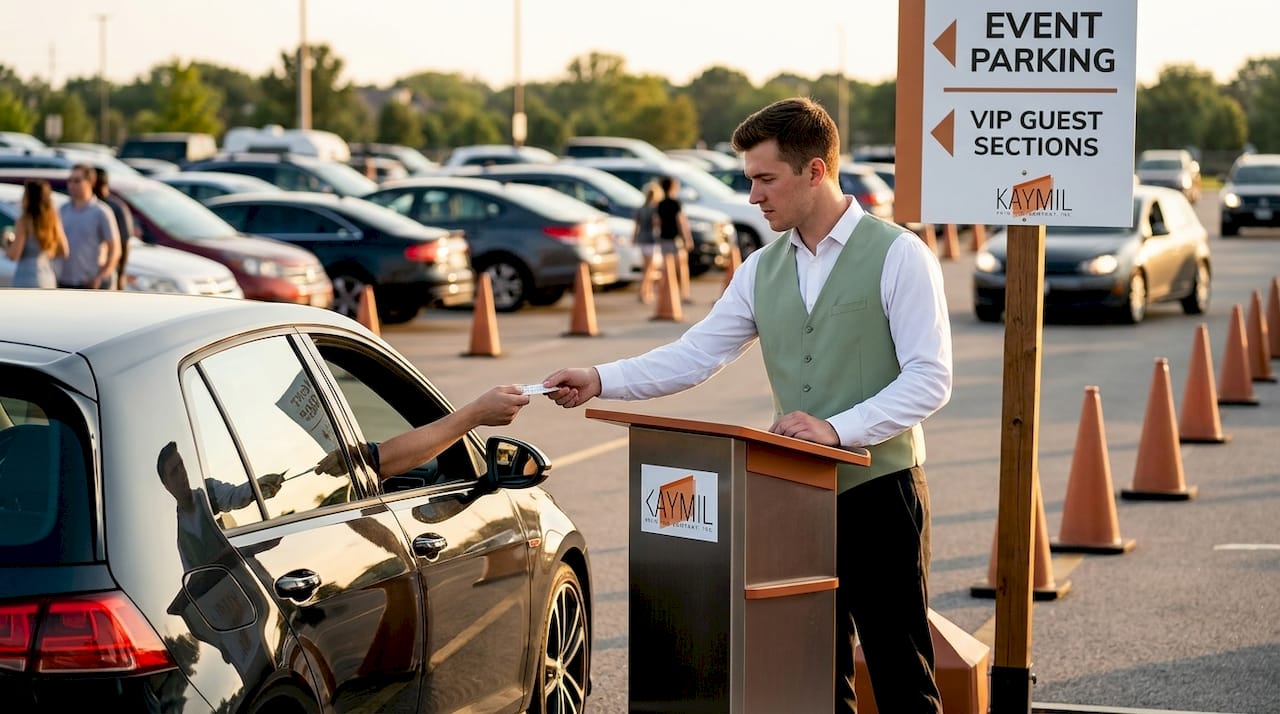
Some drivers actively calculate whether a parking fine costs less than an event parking fee, and in certain cities, they are correct. That reality exposes a fundamental problem: event parking tickets are too often treated as simple payment receipts rather than the operational tools they actually are. Understanding what is an event parking ticket, how it functions within a broader parking management system, and how to implement one correctly can mean the difference between a smooth event exit flow and a parking lot full of frustrated guests and missing keys.
Table of Contents
- Defining event parking tickets and their role in event management
- How event parking rates impact ticketing and enforcement strategies
- Modern digital solutions for event parking ticket management
- Regulatory and operational considerations for event parking tickets
- Implementing an efficient event parking ticket system
- Why most event parking ticket systems miss the mark — and what truly works
- Enhance your event parking with Caymil’s customized ticket solutions
- Frequently asked questions
Key Takeaways
| Point | Details |
|---|---|
| Event parking tickets defined | They track vehicles and keys, prevent disputes, and facilitate smooth vehicle retrieval during events. |
| Surge pricing impact | Event parking fees often surge before events, affecting ticket cost and enforcement strategies. |
| Digital ticket advantages | Virtual permits enhance tracking, reduce printing, and improve management efficiency. |
| Regulatory coordination | Early engagement with city agencies is crucial to avoid operational and legal challenges. |
| Proper implementation | Numbering, color-coding, and staff training optimize ticket system success. |
Defining event parking tickets and their role in event management
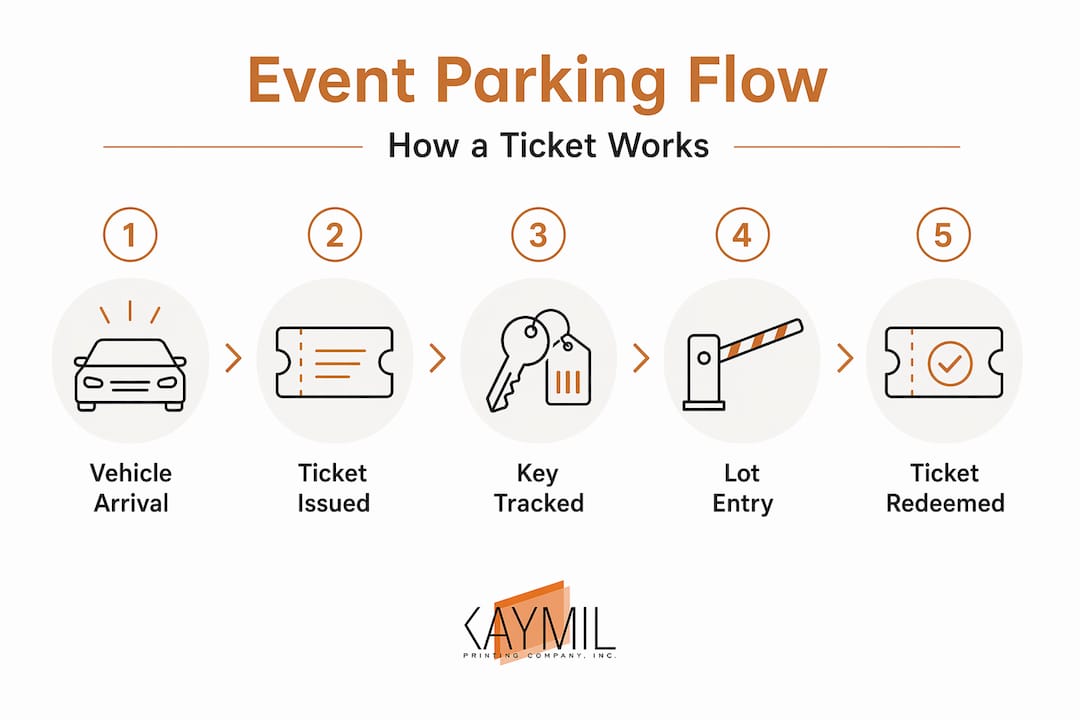
An event parking ticket is a document or digital credential issued to a vehicle at a ticketed event, serving as the primary record for vehicle access, key storage, fee collection, and retrieval authorization. That last part is what most people miss. Parking tickets are critical operational tools that prevent disputes over vehicle damage and provide a structured method for tracking vehicles and keys during high-volume events.
The format varies based on operational complexity. Here is how the most common ticket styles break down:
- 3-part tickets: One stub stays with the driver, one goes on the vehicle, and one is filed at the key rack. Ideal for mid-sized events with moderate vehicle volume.
- 4-part tickets: Adds a fourth copy for payment processing or a secondary record at the attendant booth. Common in valet-managed lots at stadium events.
- 5-part tickets: Used in high-security or high-volume scenarios where an additional audit trail is required, such as hospital valet or casino drop-off zones.
Each part of the ticket carries sequential numbering, and that number is the operational backbone. When a key is placed on hook 247 of a rack, it corresponds directly to ticket 247 in the guest’s hand. This sounds obvious, but the moment a team skips sequential discipline, retrieval time spikes and disputes begin. Understanding valet ticket basics helps clarify how this structure directly reduces guest wait times.
Color-coding adds another layer of control, especially for multi-day events or venues with multiple lots. Assigning a distinct color to each day or zone prevents a Friday ticket from being honored on Saturday, and it allows attendants to visually confirm zone compliance without scanning every ticket. For large events, this is not optional. It is a prerequisite for operational integrity.
Now that you understand the importance of event parking tickets, let’s explore how event parking rates influence ticketing and enforcement.
How event parking rates impact ticketing and enforcement strategies
Pricing is where event parking gets complicated for operators. Event parking rates frequently use flat-fee surge pricing starting about two hours before events, lasting four to six hours, with costs ranging from $5 to $90 based on venue and demand. A $40 flat rate for a three-hour parking window is not unusual near major arenas or festival grounds.

The enforcement problem that creates is real. When municipal parking fines in a given area run lower than the authorized event parking fee, some drivers make a calculated gamble. As reported in San Diego coverage, parking violation costs can be lower than authorized event parking fees, leading some drivers to risk fines instead of paying. That behavior creates three problems: lost revenue, unmanaged vehicle placement, and gaps in your key and vehicle tracking records.
| Rate scenario | Typical cost | Enforcement challenge |
|---|---|---|
| Flat-fee surge (2 hrs before event) | $15 to $90 | High evasion risk near low-fine zones |
| Municipal street parking fine | $35 to $65 | May cost less than event fee |
| Towing and impound fee | $150 to $400+ | Deters only after the fact |
| Late retrieval fee (valet) | $25 to $75 extra | Adds conflict at pickup |
The table above makes one thing clear: enforcement is expensive and reactive. A well-designed ticketing strategy addresses this proactively by pairing custom barcode parking tickets with access control gates that prevent unpaid exit. The ticket becomes a control point, not just a record.
Understanding the pricing context clarifies why ticketing systems must integrate enforcement and user experience options effectively.
Modern digital solutions for event parking ticket management
Digital transformation in parking is not new, but adoption at the event level still lags behind what the technology supports. Modern event parking management utilizes QR-code reservations and virtual permits, eliminating physical tickets and enabling real-time vehicle occupancy tracking.
Here is a practical implementation sequence for integrating digital ticketing at events:
- Select a platform with pre-event reservation capability. Guests receive a QR code at purchase that serves as their event parking pass.
- Integrate with your access control gate. The QR code opens the entry gate, timestamps entry, and logs the license plate if you have camera integration.
- Enable mobile payment at the lane or in advance. This eliminates cash handling errors and reduces attendant bottlenecks at peak arrival.
- Use real-time occupancy dashboards. Staff can redirect vehicles before the lot reaches capacity rather than after.
- Archive digital records automatically. Every transaction, entry, and exit is logged without a paper trail that can be lost, damaged, or misread.
Virtual permits reduce printing costs, which matters when you are running 5,000-vehicle event parking operations repeatedly across a season. They also eliminate the physical handling errors that come with pre-printed tickets distributed in bulk. However, digital and physical systems are not mutually exclusive. Machine-issued valet tickets can generate barcodes on demand at the entry point, giving you the accountability of a physical record with the scan-and-track efficiency of digital management. Barcoded valet tickets provide the same integration path for venues that operate hybrid systems.
Pro Tip: Plan for integration with parking lot access control and mobile payment systems during your site assessment phase, before the event schedule is finalized. Changes made after a contract is signed with a parking operator are costly and often compromise your preferred ticket format.
Having covered technology advances, let’s examine regulatory and operational nuances affecting event parking ticket strategies.
Regulatory and operational considerations for event parking tickets
Regulations governing event parking are frequently underestimated, and the consequences can be severe. Event organizers must coordinate with city agencies early to avoid vendor ticketing and chaotic loading zones. Managing curb space around a large event requires permits for temporary no-parking zones, loading zone adjustments, and sometimes traffic control agreements that take weeks to finalize.
Here is what strong operational planning looks like for event parking ticket management:
- Complete a site assessment at least 60 days before the event to identify curb conflicts, loading zones, and pedestrian flow.
- Submit permit applications to the city transportation or public works department with enough lead time to allow revisions.
- Coordinate with parking enforcement to clarify which zones are privately managed and which are under municipal control.
- Establish a clear chain of custody for physical tickets, including who issues, collects, and archives them.
- Synchronize ticket numbering with key storage from the first vehicle. Strict synchronization of ticket numbering with key storage is critical at large-scale events to prevent bottlenecks.
| Factor | Vendor-managed ticketing | Event parking operator ticketing |
|---|---|---|
| Permit responsibility | Vendor, often unfamiliar with local rules | Operator, experienced with municipal process |
| Risk of ticketing conflict | High without direct city coordination | Lower with pre-event permit alignment |
| Ticket format control | Variable, inconsistent | Standardized by operator |
| Key management accountability | Often absent | Built into ticketing workflow |
Valet ticket operations in managed event environments benefit significantly from this structured approach. Reviewing parking ticket systems that align with your access hardware is an equally important step.
Pro Tip: Engage city traffic engineers and parking enforcement officials at least 45 to 60 days before the event. Last-minute permit changes are not just inconvenient. They can invalidate your entire curb management plan and leave your ticketing team operating without legal authority.
Equipped with operational insights, you can now implement effective event parking ticket systems tailored to your venue’s needs.
Implementing an efficient event parking ticket system
Translating planning into execution requires a structured process. Follow these steps to build a ticket system that holds up under real event conditions:
- Assess event size and duration first. A 500-vehicle, single-evening event needs a different ticket format than a 3,000-vehicle multi-day festival.
- Choose ticket format based on operational requirements. Multi-part carbonless tickets for valet operations, machine-issued for gated lots, and digital QR permits for pre-paid reservations.
- Assign sequential numbering blocks to each zone or lot. Zone A might use 1 to 500, Zone B uses 501 to 1000. This prevents duplication without printing separate ticket runs.
- Apply color-coding by day, zone, or vehicle type. Color is a visual shortcut for attendants under time pressure.
- Brief all staff on ticket handling before the first vehicle arrives. Staff confusion during peak arrival is the single fastest way to lose ticket accountability.
There is also a legal nuance that is frequently overlooked. Private parking operators may send notices that look like government citations, but their legal enforceability is limited compared to municipal tickets. If your venue uses a private parking management company, your guests should understand that unpaid notices from that company are not equivalent to government-issued fines. Communicating this clearly protects your event reputation and reduces dispute escalations.
A pre-event checklist should include ticket inventory count, key rack capacity verification, attendant-to-vehicle ratio, payment terminal testing, and a defined dispute resolution process. Reviewing your parking ticket system design in advance and confirming machine ticket implementation settings prevents the majority of launch-day failures.
With a practical plan in place, let’s share a fresh perspective on common pitfalls and overlooked opportunities in event parking ticketing.
Why most event parking ticket systems miss the mark — and what truly works
After decades of supplying ticketing solutions to venues, valet operators, and parking management companies across the country, one pattern stands out: most event parking problems are not ticketing problems. They are coordination problems that ticketing gets blamed for.
Operators invest heavily in ticket design, asking about color options, paper weight, and carbonless copy count, while the actual failure point is that no one called the city’s traffic engineering office until two weeks before the event. As documented in real event planning conflicts, many organizers underestimate the complexity of temporary loading zones, leading to vendor ticketing and enforcement conflicts due to insufficient planning and coordination.
The second underappreciated failure is the gap between digital promises and operational reality. Venues adopt QR-code parking systems without integrating them into key management for valet operations. The QR code handles payment. The physical ticket still handles the key. When those two systems do not communicate, you get the worst of both worlds: digital records that do not match physical key counts and retrieval times that are just as slow as the old paper-only system.
A well-coordinated ticketing system reduces complaints and improves customer satisfaction dramatically. The ticket format matters less than the operational discipline behind it.
The legal dimension around private enforcement notices is another area where reputational damage accumulates quietly. Guests who receive a notice that resembles an official citation feel misled, and that perception attaches to your event, not to the parking company. Reviewing best valet practices and building clear guest communication into your parking plan addresses this before it becomes a problem.
The most effective event parking systems share three qualities: early municipal coordination, disciplined ticket-to-key synchronization, and staff training that matches the technological complexity of the system in place. None of those are ticketing issues. They are management issues that the right ticket system supports.
Enhance your event parking with Caymil’s customized ticket solutions
Choosing the right ticket format is the foundation of an accountable event parking operation. Caymil Printing Co. has manufactured high-quality parking and valet ticketing solutions since 1937, offering pre-numbered, color-coded, and fully customizable ticket sets for events of every scale.
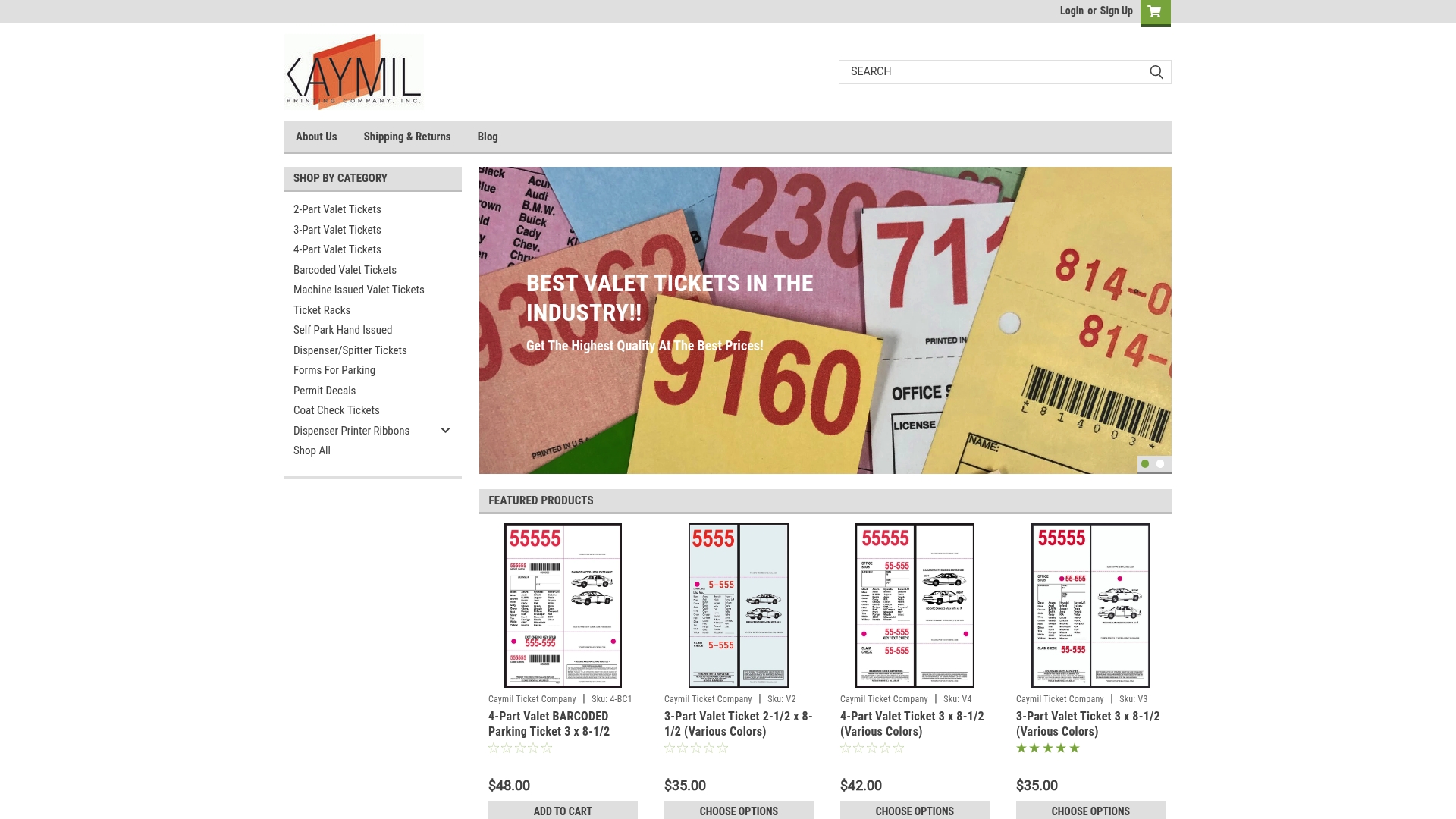
Caymil’s 3-part valet parking tickets and 4-part valet parking tickets are built for durability in high-volume event conditions, with carbonless copy clarity and sequential numbering that holds up from the first car to the last. For venues running gated lots or hybrid digital operations, machine issued valet tickets provide barcode-ready formatting compatible with major parking systems. Caymil also supplies key racks and attendant accessories that support organized key management from arrival through vehicle retrieval. With millions of tickets in stock and nationwide shipping, Caymil delivers what your event needs, on time and to spec.
Pro Tip: Contact Caymil directly to discuss your event volume, lot configuration, and any system compatibility requirements. Custom print runs with your branding, numbering sequences, and preferred formats are available with lead times that fit real event planning schedules.
Frequently asked questions
What exactly is an event parking ticket?
An event parking ticket is a document or digital permit issued to manage vehicle access and track parking during an event, functioning as the operational record for key storage, fee collection, and vehicle retrieval. Parking tickets are critical operational tools for vehicle and key tracking during events.
How do surge pricing event parking rates affect ticket costs?
Surge pricing typically activates about two hours before an event begins, and fees can range from $5 to $90 depending on venue size and demand, sometimes exceeding local parking fines and creating enforcement compliance challenges.
Are digital event parking tickets legally equivalent to printed ones?
Legal enforceability depends on local regulations, not the format. Digital parking tickets and virtual permits enable real-time tracking and reduce physical handling errors, but their enforceability is governed by the same rules that apply to their paper counterparts.
What are the risks of ignoring coordination with city agencies in event parking?
Without early coordination, event organizers face vendor ticketing issues, unapproved loading zones, and enforcement conflicts. Event organizers must coordinate with city agencies early to avoid these outcomes, which can escalate into significant operational and financial penalties.
Can private parking companies legally issue event parking tickets?
Private companies can send unpaid fee notices, but private parking tickets are private enforcement actions with limited legal force compared to municipal tickets, and guests should be informed of that distinction clearly.