

Common Valet Ticketing Mistakes Operators Must Fix

Common valet ticketing mistakes are specific errors in ticket handling, payment processing, vehicle documentation, and hardware management that directly undermine operational efficiency and guest satisfaction. These mistakes are not minor inconveniences. Manual paper ticketing alone generates a 0.5% dispute rate and consumes roughly 80 administrative hours per 10,000 vehicles, adding approximately $1,800 in labor costs every month. For valet managers running high-volume operations at hotels, hospitals, or event venues, that number compounds fast. Understanding where these errors originate is the first step toward fixing them.
1. Common valet ticketing mistakes that cost operators the most
The five most damaging valet ticketing errors share one trait: they are preventable. Each one creates a chain reaction of wasted time, guest friction, and revenue loss. Knowing them by name gives you a clear target.
Manual paper ticket handling remains the most widespread problem in valet ticket management. Staff write information by hand, tickets get lost or smudged, and reconciliation becomes a daily grind. The result is disputes, delayed checkouts, and frustrated guests.

Failure to maintain payment hardware is the second major error. Outdated or poorly serviced contactless readers reject valid transactions, forcing staff to handle payments manually and creating bottlenecks at peak hours.
Inadequate vehicle documentation at arrival is the third. Without a consistent check-in process, damage disputes become difficult to resolve fairly. Both the operator and the guest lose confidence in the process.
Buying hardware before defining workflows is a less obvious but equally costly mistake. Operators purchase ticket dispensers or kiosks without first mapping out how tickets will move through their operation. The result is a system that does not match actual needs.
Relying on technology without written policies rounds out the top five. Software and hardware cannot compensate for undefined rules. When staff have no clear procedure for lost tickets or rental vehicles, they improvise, and those workarounds break audit trails.
Pro Tip: Before purchasing any ticketing hardware or software, write out your full ticket lifecycle on paper first. Map every step from vehicle arrival to key return. Gaps in that map are where errors will occur.
2. How manual paper ticket systems increase costs and disputes
Standard paper-based operations require about 30 seconds of manual handling per vehicle for reconciliation and reporting. That figure sounds small until you run the math at scale.
At 10,000 vehicles per month, those 30 seconds add up to more than 80 administrative hours. At a typical labor rate, that translates to roughly $1,800 in monthly costs that never appear on a ticket price. These are hidden costs buried in staff time, not line items on an invoice.
Disputes compound the problem. A lost or illegible paper ticket creates an immediate conflict between the guest and the attendant. Without a clear record, the operator either absorbs the cost of goodwill resolution or risks a negative review. Neither outcome is free.
Digital ticketing systems address this directly. Barcode valet parking tickets create a scannable, sequential record that eliminates handwriting errors and speeds up vehicle retrieval. The data is searchable, auditable, and far less likely to disappear into a coat pocket.
Pro Tip: Track your dispute rate monthly. If it exceeds 0.5% of total vehicles processed, your ticket handling process needs a structural fix, not just retraining.
| Problem | Impact | Solution |
|---|---|---|
| Lost paper tickets | Disputes, delayed retrieval, guest frustration | Sequential numbered or barcoded tickets |
| Handwriting errors | Mismatched vehicle records, wrong car retrieved | Machine-issued or printed ticket formats |
| Manual reconciliation | 80+ admin hours per 10,000 vehicles | Digital logging with automated reporting |
| No audit trail | Unresolvable disputes, liability exposure | Time-stamped digital or carbonless multi-part tickets |
3. What technology challenges cause valet ticketing errors
Outdated payment hardware is one of the most underestimated sources of valet ticketing errors. Unmaintained contactless payment systems reject up to 10% of transactions. That rejection rate forces staff to handle payments manually, slows exit lanes, and creates guest complaints that have nothing to do with the quality of the valet service itself.
Several technology-related failure points appear consistently across valet operations:
- Outdated firmware on payment kiosks causes transaction failures that look like guest error but are actually system failures.
- Ticket dispensers without routine calibration jam or misprint, creating unreadable tickets that staff then replace by hand.
- No mobile or QR code backup option means a single hardware failure shuts down the entire payment process.
- Weather exposure without proper housing degrades outdoor hardware faster than expected. Environmental factors like heat, humidity, and rain cause device failures that compromise ticket readability and payment processing.
- Software updates deferred too long create compatibility gaps between the ticketing system and payment processors, leading to silent failures that only surface during audits.
64% of guests in major urban centers prefer app-based, contactless, or automated ticketing over manual methods. That preference is not just about convenience. It reflects a real expectation that valet operations will function without friction. Operators who cannot meet that expectation lose repeat business.
The fix is not always a full system replacement. A scheduled maintenance calendar for all hardware, combined with a mobile payment backup, eliminates most technology-driven errors without major capital investment.
4. How inconsistent vehicle documentation leads to disputes
Photographic documentation at vehicle check-in is the single most effective tool for resolving damage disputes. The Hotel Facility Guide’s 2026 standard identifies photographing all sides and the roof of every vehicle with time stamps on arrival as the gold standard for protecting both the guest and the operator.
“Time-stamped arrival photos document pre-existing conditions and protect guest relationships. When a dispute arises, the photo record resolves it in seconds rather than days.” — Hotel Facility Guide, Hotel Valet Parking Operations 2026
Without that documentation, a scratch discovered at pickup becomes a he-said-she-said situation. The operator has no defense, and the guest has no confidence. Even when the damage existed before arrival, the absence of proof makes the operator liable in practice if not in law.
Best practices for vehicle documentation include:
- Photograph all four sides and the roof of every vehicle before the attendant moves it.
- Use a time-stamped system that logs photos automatically to a cloud record or management platform.
- Train every attendant to complete the photo process before accepting the keys, without exception.
- Define a clear dispute resolution workflow that includes a goodwill resolution path for ambiguous cases.
- Store records for a minimum of 90 days to cover delayed damage claims.
Operators who treat documentation as optional will face avoidable disputes. Those who build it into the check-in process as a non-negotiable step protect their operation and their guest relationships simultaneously.
5. What operational policies improve valet ticket management
Automation amplifies broken workflows when operational policies and exception handling are not clearly defined before system implementation. This is one of the most expensive mistakes valet managers make. They invest in technology expecting it to fix process problems, and instead it makes those problems faster and harder to reverse.
Clear, written ticketing policies are the foundation of a reliable valet operation. Follow these steps to build them:
- Document the full ticket lifecycle. Write out every step from vehicle arrival to key return. Include who is responsible at each stage and what the handoff looks like.
- Define exception handling explicitly. Specify the exact procedure for lost tickets, rental vehicles, vehicles with pre-existing damage, and after-hours retrievals. Ticketing policies that lack exception paths cause staff to develop inconsistent workarounds that damage audit trails.
- Communicate policies in writing to all staff. Post procedures at the podium and include them in onboarding. Verbal training alone does not create consistent behavior.
- Audit ticket records weekly. Review sequential ticket numbers for gaps, check that all vehicles have corresponding documentation, and flag any manual overrides for review.
- Run a continuous improvement cycle. After each audit, identify the top two or three recurring errors and update the written policy to address them. Policies that never change do not reflect operational reality.
Purchasing a parking payment system is a 10-year commitment. Recurring software, processing, and maintenance costs often exceed the upfront investment. Operators who define their workflows before selecting hardware avoid buying systems that cannot support their actual processes. That sequence, policy first and then technology, is the most reliable path to a ticketing operation that works consistently.
Pro Tip: Set up a parking facility audit using your ticket records at least once per quarter. Sequential numbering gaps and manual overrides are the fastest indicators of where your process is breaking down.
Key takeaways
Valet ticketing errors in ticket handling, documentation, and hardware management cost operators measurable labor hours, dispute resolution time, and guest trust every month.
| Point | Details |
|---|---|
| Manual tickets carry hidden costs | Paper handling adds 80+ admin hours and $1,800 in labor per 10,000 vehicles monthly. |
| Hardware maintenance prevents rejections | Unmaintained contactless systems reject up to 10% of transactions, creating bottlenecks. |
| Photo documentation resolves disputes | Time-stamped arrival photos are the industry standard for protecting operators and guests. |
| Policy must precede technology | Automating undefined workflows amplifies errors rather than eliminating them. |
| Audit trails require structured tickets | Sequential numbering and multi-part formats create the records needed for accountability. |
Why I think most valet operations fix the wrong problem first
Most valet managers I have seen reach for a technology solution the moment ticketing errors become visible. A new kiosk, a new app, a new printer. The instinct is understandable. Technology feels like a decisive answer.
The real problem is almost always upstream. The workflow was never written down. The exception handling was never defined. Staff were trained verbally and then left to interpret edge cases on their own. When you automate that environment, you get faster errors, not fewer.
The costs hiding in manual processes are also consistently underestimated. Eighty administrative hours per month does not sound alarming until you realize that is two full work weeks of staff time spent on reconciliation alone. That time has a dollar value, and it compounds every month the process goes unchanged.
My honest recommendation: spend two hours mapping your ticket lifecycle on paper before you spend a dollar on new hardware. Then identify where your policies have gaps. Fix those gaps first. The technology investment will perform far better when it is built on a process that actually works.
— Richard
Caymil’s ticketing solutions for valet operators
Valet managers who have identified gaps in their ticketing process need ticket formats that match their corrected workflows, not generic stock options.
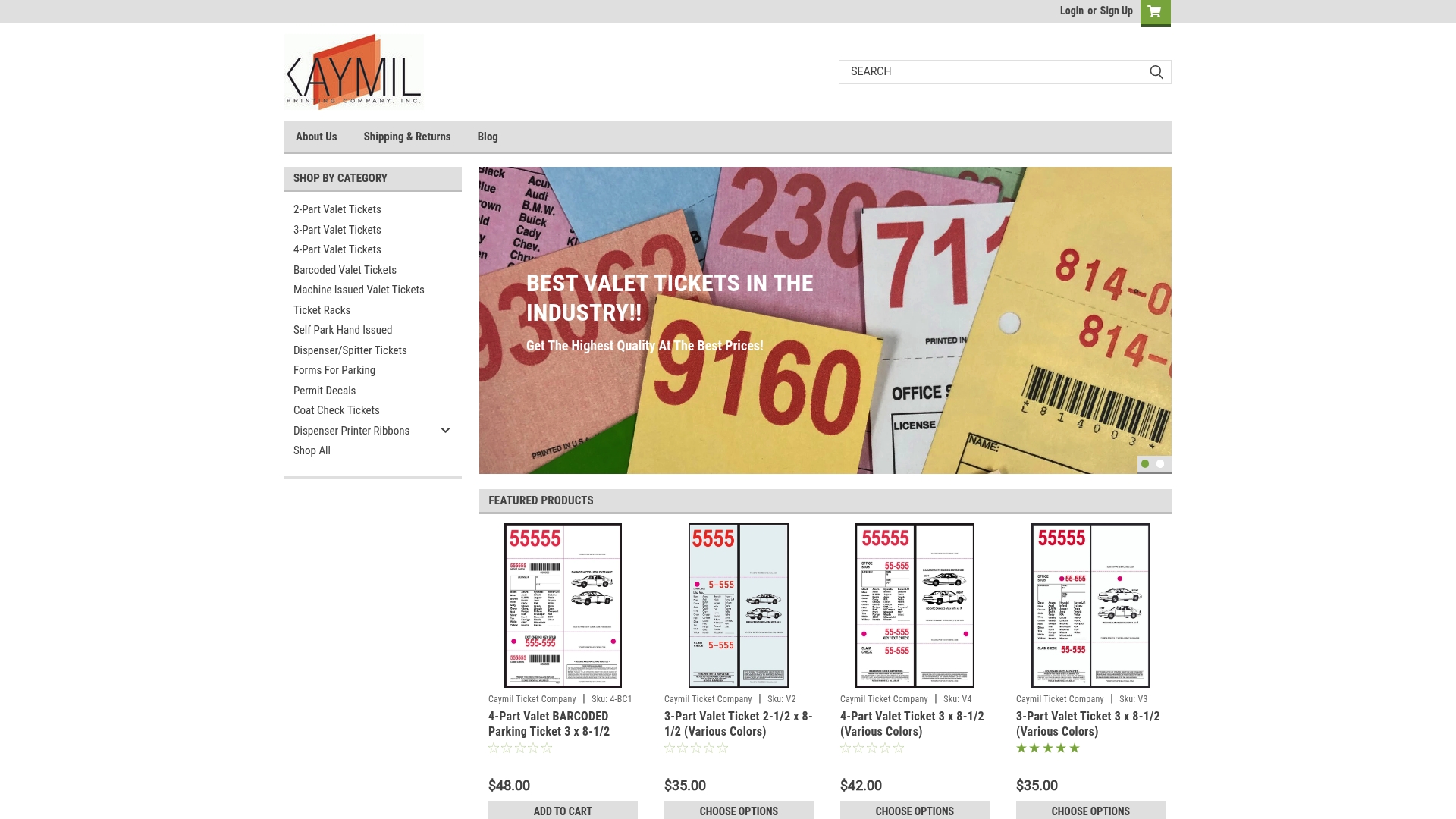
Caymil has manufactured custom valet ticketing solutions since 1937, with formats designed to reduce manual errors and speed up every stage of the valet process. From machine-issued valet tickets that eliminate handwriting errors entirely to 2-part carbonless valet tickets that create an instant duplicate record at check-in, Caymil’s product line covers the full range of operational needs. Options include sequential numbering, barcoding, custom branding, and multi-part carbonless formats compatible with major parking management systems. Operators can review the full range of parking forms and ticket formats to find the right fit for their operation’s volume and workflow requirements.
FAQ
What causes the most valet ticketing disputes?
Lost or illegible paper tickets are the leading cause of valet ticketing disputes. Without a clear record, operators cannot verify vehicle condition or confirm payment, which forces costly goodwill resolutions.
How many admin hours does manual valet ticketing require?
Manual paper ticketing requires approximately 80 administrative hours per 10,000 vehicles processed. That labor cost adds roughly $1,800 per month for high-volume operations.
What is the best way to prevent vehicle damage disputes?
Photographing all sides and the roof of every vehicle with time stamps at arrival is the industry standard for preventing damage disputes. These records resolve conflicts quickly and protect both the operator and the guest.
When should valet operators define ticketing policies?
Operational policies and exception handling must be defined before any technology is implemented. Automating an undefined workflow produces inconsistent results and breaks audit trails.
How do barcoded tickets reduce valet ticketing errors?
Barcoded tickets create a scannable, sequential record that eliminates handwriting errors and speeds up vehicle retrieval. They also produce an auditable data trail that paper tickets cannot match.