

Parking Facility Audit Using Tickets: 2026 Guide

A parking facility audit using tickets is the systematic reconciliation of parking transactions, payment settlements, and enforcement records to protect revenue and maintain operational integrity. Known formally as a parking revenue reconciliation audit, this process gives facility managers a clear, defensible picture of where money enters, where it exits, and where it disappears without explanation. Without it, decisions rest on flawed data that quietly erodes profitability. This guide walks through the tools, steps, and analytics that turn raw ticket data into a reliable management system for 2026 operations.
What data and tools do you need for a ticket-based parking facility audit?
A parking facility audit using tickets requires four core data sources before any reconciliation can begin: parking system transaction exports, payment processor settlement reports, bank deposit records, and citation or enforcement logs. Each source covers a different layer of the revenue cycle, and gaps in any one of them create blind spots that distort the final picture. Pulling all four together before starting the audit is the single most important preparation step.
Parking management systems like Amano, TIBA, SKIDATA, and FLASH Parking generate transaction exports that record every entry, exit, payment type, and ticket number. These exports are the foundation of the audit. Payment processor settlement reports from providers like Stripe, Heartland, or your gateway of choice show what was actually collected and what fees were deducted. Bank deposit records confirm that settled amounts landed in the correct account at the correct time.

For citation data, enforcement software with status tracking from issuance through payment and collections is the standard to aim for. Audit-ready enforcement records include photos, GPS coordinates, timestamps, and officer notes, all linked to individual citations. This level of detail makes discrepancy resolution far faster and more defensible.
The table below compares common audit tools by function and cost:
| Tool | Primary function | Cost tier |
|---|---|---|
| Parking system export (Amano, TIBA, SKIDATA) | Transaction data source | Included with system |
| Payment processor settlement report | Revenue collection verification | Included with processor |
| Microsoft Excel or Google Sheets | Manual reconciliation and variance tracking | Free |
| Enforcement software (T2 Systems) | Citation lifecycle tracking | Paid subscription |
| Reconciliation dashboard | Automated matching and flagging | Paid subscription |
Pro Tip: Free tools like spreadsheets combined with transaction exports and citation logs can uncover 80% of the insight you need without purchasing additional software. Start there before committing to a paid platform.
How to execute the parking audit process step by step
The parking revenue reconciliation audit follows a defined sequence: pull transaction data, compare it to settlement reports, reconcile to bank deposits, flag variances, and analyze citation lifecycle performance. Skipping steps or reordering them introduces errors that compound over time. The sequence below reflects best practice for daily audit execution.
Step 1: Pull the previous day’s transaction report. Export the full transaction log from your parking management system. This report should include total ticket count, payment types (cash, credit, validation, monthly permit), and gross revenue by category. Reviewing garage parking receipts alongside transaction exports helps verify that printed records match digital logs.
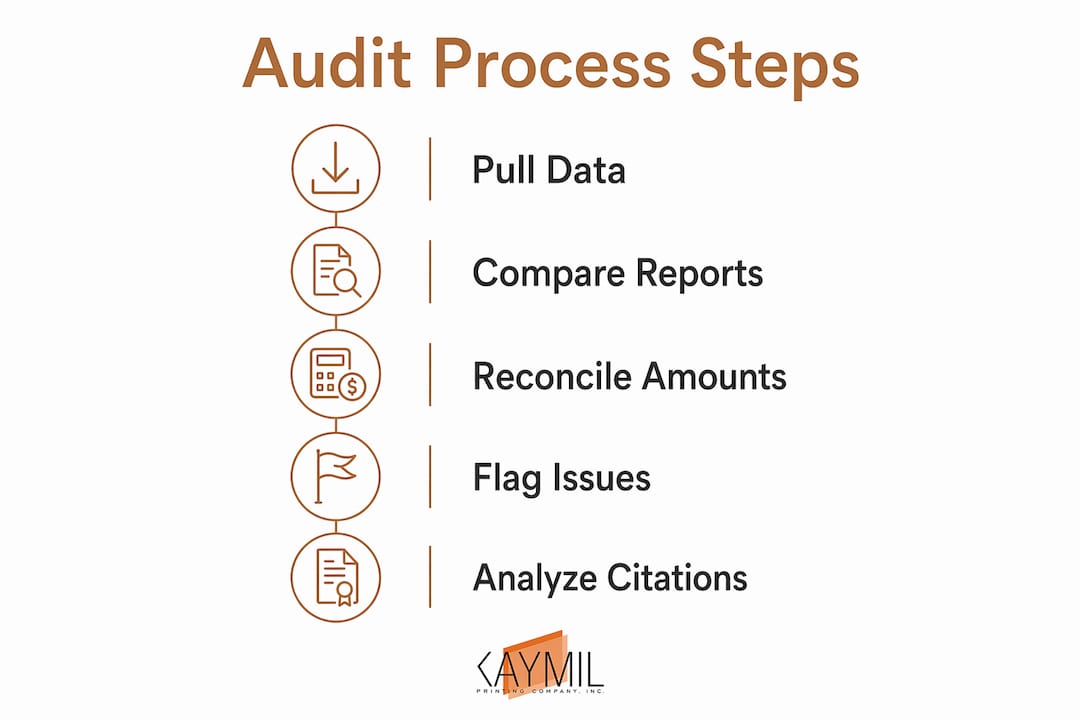
Step 2: Compare transaction data to payment processor settlement reports. Match the gross revenue figures from your parking system against the settlement detail from your payment processor. Verify that the number of transactions, total amounts, and fee deductions align. Discrepancies at this stage typically indicate processing errors, duplicate charges, or unposted refunds.
Step 3: Reconcile net processor amounts to bank deposits. After accounting for processor fees, the net settlement amount should match the bank deposit for the same period. Settlement lag of one to three business days is normal, but amounts must reconcile within that window. Document any timing differences with a clear explanation code.
Step 4: Flag discrepancies above threshold and document variances. Discrepancies exceeding $25 or 0.5% of daily revenue require a formal explanation and investigation. This threshold separates meaningful variances from routine rounding differences. Smaller variances should be batched and reviewed weekly rather than investigated individually, which keeps daily audit time manageable.
Step 5: Analyze citation lifecycle data. Review citation issuance counts, payment rates, appeal outcomes, and collections referrals. Revenue leakage occurs when citations are issued but never paid, and measuring ticket aging alongside collection timing reveals hidden losses that raw issuance volume alone cannot show. This step transforms the audit from a financial check into an operational performance review.
The table below summarizes each step and its primary output:
| Audit step | Data source | Output |
|---|---|---|
| Pull transaction report | Parking management system | Gross revenue by payment type |
| Compare to settlement report | Payment processor | Verified transaction totals |
| Reconcile to bank deposit | Bank statement | Confirmed net revenue |
| Flag and document variances | All sources | Explained discrepancy log |
| Analyze citation lifecycle | Enforcement software | Revenue leakage identification |
Pro Tip: Run the audit at the same time each morning using the previous day’s data. Routine, consistent time windows allow you to track the impact of pricing changes, enforcement shifts, and permit adjustments month over month.
Common challenges when troubleshooting audit discrepancies
Discrepancies in a parking facility audit rarely signal fraud on the first encounter. The most common causes are timing differences between transaction posting and bank settlement, voided tickets that were not removed from the transaction count, fee adjustments applied by the payment processor after the initial settlement, and settlement lag across banking days. Each of these has a straightforward explanation, but only if the audit trail is clean enough to trace it.
The critical discipline here is explanation codes. Every flagged discrepancy should carry a code such as “timing difference,” “void,” “chargeback,” or “settlement lag” before the audit file is closed. Without these codes, the same variance gets investigated repeatedly by different team members, wasting time and creating inconsistent records. Explanation codes are the difference between an audit trail and an audit pile.
Common causes of discrepancies to watch for:
- Voided or cancelled tickets still counted in transaction totals
- Credit card chargebacks posted after the original settlement period
- Validation tickets redeemed without corresponding revenue offset
- Cash shortfalls from manual collection points not reconciled daily
- Settlement lag causing deposits to appear in the wrong reporting period
- Fee adjustments from payment processors applied retroactively
Reconciliation is the unsexy but essential backbone of profitable parking management. Without it, every operational decision rests on revenue data that may be quietly wrong.
When a discrepancy cannot be explained by the codes above, the next step is reviewing the physical or digital ticket evidence. Immutable evidence linked to citations and tracked from issuance through collections gives auditors a clear chain of custody to follow. Peer review of flagged items by a second team member before escalation reduces false positives and builds internal audit credibility.
Pro Tip: Never close an audit period with unexplained variances. An unresolved discrepancy today becomes a pattern tomorrow, and patterns are far harder to unwind than individual errors.
How does ticket data analytics improve enforcement and revenue protection?
Tracking citation aging and collection rates is the most underused capability in parking enforcement management. Most operators measure enforcement volume, counting how many tickets were issued per shift or per location. Revenue leakage hides in citation aging and collection cycles, meaning that a facility issuing 500 citations per month but collecting on only 60% of them is performing worse than one issuing 300 citations with 90% collection. Volume without collection data misrepresents fiscal performance.
Cities that redesigned citation notices and prioritized collection outreach improved delinquent collection revenues by 3.8%. That figure represents real money recovered through process improvement rather than increased enforcement activity. For a facility generating $2 million annually in citation revenue, a 3.8% improvement equals $76,000 in recovered income.
The analytics benefits of a mature ticket data program include:
- Identifying high-aging citation cohorts before they reach collections write-off thresholds
- Mapping enforcement deployment to locations with the highest compliance probability
- Tracking appeal outcomes to identify officers or zones with elevated dispute rates
- Comparing citation payment rates by violation type to prioritize enforcement focus
- Using barcode ticket data to automate citation matching and reduce manual entry errors
Tickets issued with photos, GPS, and timestamps create transparent records that resolve disputes faster and reduce successful appeals. Fewer overturned citations means more collected revenue and a stronger audit position. The investment in audit-ready enforcement records pays back through both direct revenue recovery and reduced administrative overhead from contested citations.
Strategic enforcement deployment is the operational output of this analytics work. When ticket data shows that a specific zone generates high issuance volume but low payment rates, that is a signal to adjust the enforcement approach rather than simply issue more tickets. Data-driven enforcement focuses resources where compliance probability is high, which improves both revenue and community relations.
Key takeaways
A parking facility audit using tickets is only as reliable as the reconciliation discipline and citation lifecycle tracking behind it.
| Point | Details |
|---|---|
| Start with four data sources | Pull transaction exports, settlement reports, bank deposits, and citation logs before beginning any audit. |
| Apply a discrepancy threshold | Flag and document all variances above $25 or 0.5% of daily revenue with explanation codes. |
| Audit citation lifecycle, not just volume | Measure collection rates and citation aging to uncover revenue leakage that issuance counts hide. |
| Use audit-ready enforcement records | Photos, GPS, and timestamps linked to citations make discrepancy resolution faster and more defensible. |
| Build routine audit habits | Consistent daily timing and documentation turn audits into a reliable management system over time. |
Why the audit is the most underrated management tool you have
After years of working with parking operators across garage, valet, and event venue environments, one pattern stands out clearly. Facilities that treat the audit as a compliance checkbox consistently underperform those that treat it as a management instrument. The numbers in a well-run reconciliation tell you far more than whether the books balance. They reveal which enforcement zones are underperforming, which payment channels have friction, and which operational changes are actually moving revenue.
The technology has improved dramatically. Systems like T2 Systems and platforms compatible with SKIDATA or FLASH Parking now produce audit-ready data almost automatically. But automation does not replace judgment. A system can flag a $40 discrepancy; only an experienced manager knows whether that discrepancy is a timing artifact or the beginning of a cash handling problem. That interpretive layer is what separates a facility that runs clean audits from one that simply runs audits.
My strongest recommendation is to set your discrepancy threshold in writing, train your team on explanation codes, and review the citation lifecycle report monthly without exception. The managers who do this consistently find that their audits stop being reactive fire drills and start being predictive tools. They catch problems in days rather than quarters. And when a dispute or an external audit arrives, their records are defensible because the documentation habit was already in place.
The audit is not just a finance function. It is the clearest window into how your facility actually operates.
— Richard
Ticket products that support accurate audits and revenue control
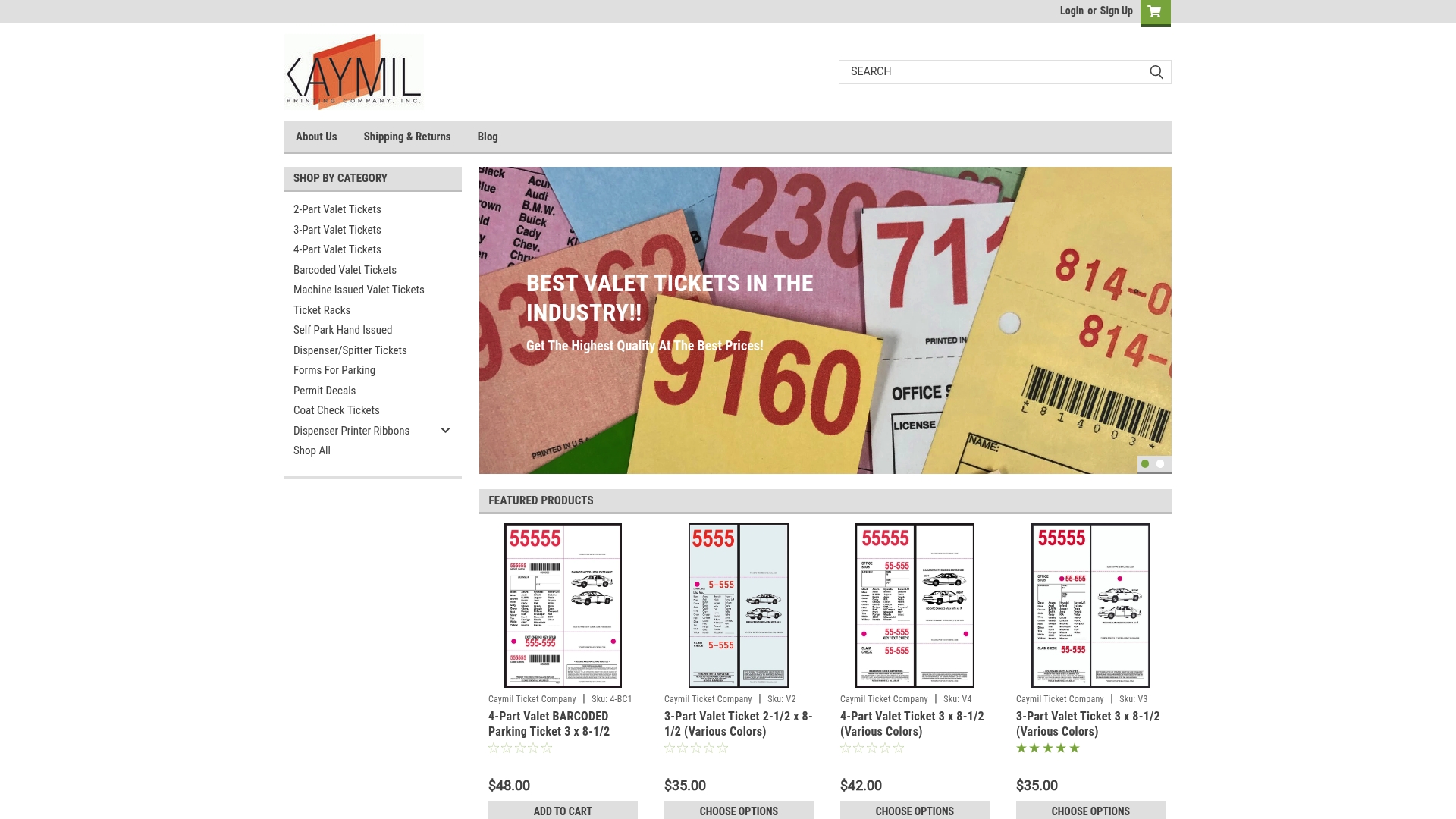
The quality of your ticket stock directly affects the accuracy of your audit trail. Caymil has manufactured parking and valet tickets since 1937, supplying facilities with products designed for traceability, durability, and compatibility with major parking systems including Amano, TIBA, SKIDATA, and FLASH Parking. Barcoded valet parking tickets automate transaction matching and reduce manual entry errors that create audit discrepancies. Multi-part carbonless formats like 2-part, 3-part, and 4-part valet tickets create built-in paper audit trails that support reconciliation at every stage. Caymil also supplies parking forms and enforcement records designed to meet the documentation standards that defensible audits require. Contact Caymil to find the right ticket format for your facility’s audit and revenue control needs.
FAQ
What is a parking facility audit using tickets?
A parking facility audit using tickets is the process of reconciling parking system transaction data, payment processor settlements, and bank deposits to identify revenue discrepancies and verify operational accuracy. It also includes analyzing citation lifecycle data from issuance through collections.
How often should a parking facility run a revenue audit?
Daily reconciliation of transactions and settlements is the standard practice, with citation lifecycle reviews conducted monthly. Consistent audit timing allows managers to track the impact of pricing, enforcement, and permit changes over time.
What discrepancy threshold should trigger an investigation?
Variances above $25 or 0.5% of daily revenue should be flagged and documented with an explanation code. Smaller variances can be batched and reviewed weekly.
How do barcode tickets improve audit accuracy?
Barcode tickets automate transaction matching between physical ticket records and digital system logs, reducing manual entry errors that create unexplained variances. They also support faster reconciliation when integrated with systems like Amano, TIBA, or SKIDATA.
What causes most parking revenue discrepancies?
The most common causes are timing differences between transaction posting and bank settlement, voided tickets counted in totals, payment processor fee adjustments, and cash shortfalls from manual collection points not reconciled daily.
Recommended
- Why barcode tickets make parking garages more efficient - Caymil Printing Co., Inc.
- Parking Garage Lost Ticket Fee Policy: Operator’s Guide - Caymil Printing Co., Inc.
- Parking ticket security: How to prevent fraud and protect revenue - Caymil Printing Co., Inc.
- Printed Parking Tickets: A Practical Guide for Operators - Caymil Printing Co., Inc.