
Direct Thermal vs Thermal Transfer: Which One You Need
Use direct thermal for short-life, mobile, high-speed labels like tickets and receipts. Use thermal transfer for labels that need to survive months or years of handling, moisture, or chemical exposure. The choice comes down to four factors: how long the label needs to last, what it will touch or endure, how much upkeep your printers can handle, and what you’re willing to spend on ribbons versus media.
That single trade-off drives almost every decision in ticketing, shipping, and asset management. Here’s what to weigh before you commit to either technology:
- Durability — does the label need to survive rain, chemicals, or a year on a shelf?
- Cost profile — media-only pricing versus media-plus-ribbon pricing over time
- Maintenance — how often you’re willing to swap printheads or clean rollers
- Substrate compatibility — paper only, or synthetics, foils, and textiles too
The rest of this guide breaks down how each method works, where it wins, and how to test before you buy in bulk.
Key Takeaways
Direct thermal suits short-life, high-speed labeling while thermal transfer suits labels that must survive time, exposure, or handling.
| Point | Details |
|---|---|
| Match technology to label life | Choose DT for labels under roughly six months of use and TTR for longer-lasting needs. |
| Weigh total cost, not sticker price | Factor ribbon overhead against DT’s higher per-unit media cost and reprint risk. |
| Printhead life favors TTR | Ribbon acts as a buffer that can extend printhead life versus abrasive DT media contact. |
| Test before bulk ordering | Print samples and expose them to real conditions before committing to a full run. |
| Caymil supplies both formats | Caymil stocks direct thermal rolls for fast ticketing and ribbon-based options for durable stock. |
Table of Contents
- Direct Thermal vs Thermal Transfer: How DT Printing Works
- Direct Thermal vs Thermal Transfer: How TTR Printing Works
- Direct Vs Transfer Printing: Comparing Cost, Speed, and Durability
- How Do I Choose Between Direct Thermal and Thermal Transfer?
- What Caymil Recommends for Ticketing and Parking Operations
- What Actually Matters When You’re the One Buying
- Get the Right Ticket Stock Without the Guesswork
- Sources
- FAQ
Direct Thermal vs Thermal Transfer: How DT Printing Works
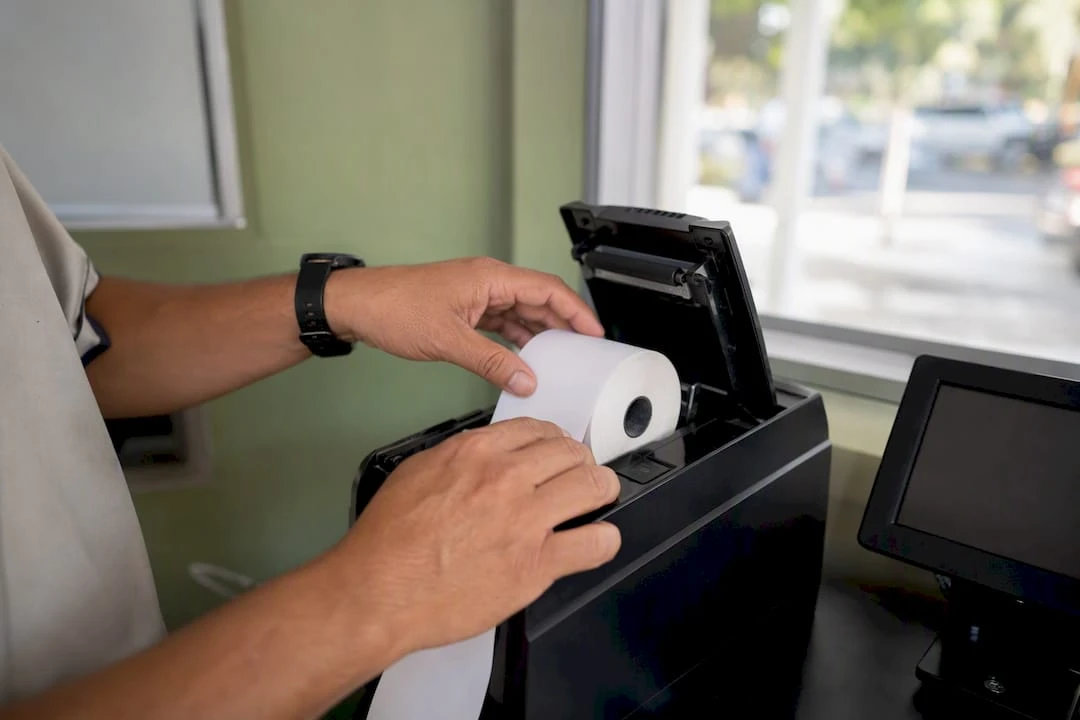
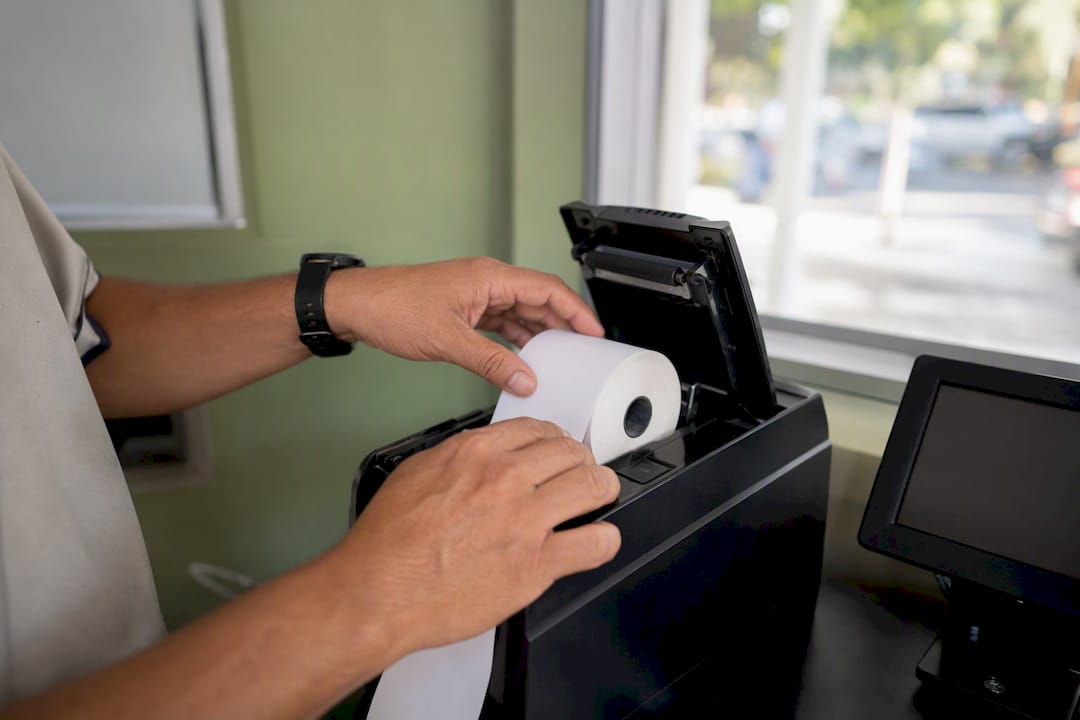
Direct thermal printing skips ink, toner, and ribbons entirely. The printer applies heat directly to chemically treated media, and the heat-reactive coating darkens wherever the printhead touches it. No consumable moves between the printhead and the label. That single fact explains most of DT’s strengths and every one of its weaknesses.
Advantages:
- Simpler mechanics. Fewer moving parts means fewer things break, and mobile valet printers built on direct thermal engines run reliably in a booth or a handheld unit all shift long.
- Faster output. DT printers commonly run at higher inches-per-second speeds than comparable TTR models, which matters when a line of cars is waiting for a ticket.
- Lower SKU count. You stock one item, the media, instead of managing separate ribbon and label inventories.
Limitations: Direct thermal media reacts to more than just the printhead. Heat, direct sunlight, friction, and many common chemicals can darken or fade the coating on their own, which is why Ricoh’s guidance points to direct thermal as a fit for applications with a usable life under roughly six months in typical conditions. Leave a DT parking ticket on a dashboard in July and you’ll see the effect firsthand. Per-unit media cost also tends to run higher than plain paper, and the chemical coating raises questions for operations chasing recycling goals.
These trade-offs make DT a strong match for mobile ticketing, shipping labels, and point-of-sale receipts, where the label’s job is done in days, not years.
Pro Tip: If your tickets get handled a lot before they’re scanned or redeemed, run a friction test first: rub a printed sample against fabric and see how much the image degrades before you commit to a full order.
Direct Thermal vs Thermal Transfer: How TTR Printing Works
Thermal transfer flips the mechanism. A heated printhead melts ink from a ribbon onto the label surface, bonding a durable image to the substrate rather than reacting the substrate itself. Because the ribbon carries the ink, the media underneath can be almost anything: coated paper, polyester, polypropylene, even fabric tags.
Ribbon chemistry determines what the label can survive:
- Wax ribbons are the economical choice for general-purpose paper labels that need moderate scuff resistance, like standard shipping labels.
- Wax-resin ribbons add better smudge and light chemical resistance, a common pick for labels that get handled in warehouses.
- Full resin ribbons hold up against solvents, extreme temperatures, and abrasion, which is why they show up on cable wraps, lab specimen tubes, and outdoor asset tags.
Advantages: Zebra’s technical comparison confirms that matched ribbon and media combinations produce sharper, longer-lasting images than direct thermal can achieve, with better resistance to moisture, UV exposure, and temperature swings. TTR also opens the door to synthetic substrates and, in some configurations, single-pass color, which DT cannot touch.
Limitations: Every ribbon roll is another consumable to track, order, and match correctly to its media. Get the pairing wrong (say, a wax ribbon on a synthetic label meant for a resin formula) and print quality or durability suffers immediately. That inventory overhead, plus somewhat slower throughput in some high-volume settings, is the price of the added durability.
Asset tags, outdoor signage, cold storage labels, and lab specimen tracking are where TTR earns its keep, since these applications demand labels that outlast the products or processes they track.

Direct Vs Transfer Printing: Comparing Cost, Speed, and Durability
Line the two technologies up side by side and the trade-offs get concrete fast.
Cost. Direct thermal printers often cost less upfront and have fewer parts to service, but the media itself runs pricier per label. Thermal transfer printers can carry a higher initial price and require you to buy ribbon on top of media, yet if a TTR label lasts three years outdoors instead of failing in three months, the ribbon overhead pays for itself. Run the math on your actual reprint rate, not just the sticker price of a roll.
Speed. DT printers commonly outrun TTR models on raw inches-per-second output, which is exactly why high-volume ticketing and receipt printing lean direct thermal. When a parking garage needs to issue a ticket every few seconds during a rush, that speed advantage is not a minor convenience.
Print quality. TTR generally delivers crisper barcode edges and finer detail, which matters for small-format labels packed with data or for branding elements where clarity reflects on your operation.
Durability. This is where the two technologies diverge most sharply:
- Direct thermal labels are best treated as short-term, with a functional life commonly under six months depending on exposure.
- Thermal transfer labels, when ribbon and media are properly matched, resist moisture, chemicals, UV light, and cold storage conditions well beyond that window.
- Cold storage and freezer applications almost always call for TTR, since DT media can struggle to darken properly at low temperatures.
Maintenance and printhead life. SATO’s white paper on the two technologies makes a point that surprises a lot of first-time buyers: the ribbon in a TTR printer acts as a buffer between the printhead and the media, which typically extends printhead life. Direct thermal printheads contact abrasive coated media directly, and depending on how rough that coating is, you may find yourself replacing printheads more often at high print volumes.
Sustainability. Neither option is free of trade-offs. TTR generates ribbon waste with every print run. DT eliminates that waste but uses a chemically coated media that raises its own recycling questions. If sustainability is a stated goal for your operation, weigh both sides rather than assuming one technology wins outright.
How Do I Choose Between Direct Thermal and Thermal Transfer?
Work through these questions before you order printers or a season’s worth of media:
- How long does the label need to survive? Days to a few months points to DT. Months to years points to TTR.
- What will the label be exposed to? Sunlight, moisture, freezer temperatures, or chemical contact all favor thermal transfer.
- What substrate do you need? Plain paper works for either; synthetics, foils, or fabric require TTR.
- What’s your print volume and required speed? High-speed, high-volume ticketing usually favors DT’s throughput.
- How much resolution or branding detail matters? Fine barcodes, small fonts, or logo detail favor TTR’s sharper output.
- What’s your maintenance capacity? If you can’t service printheads often, TTR’s ribbon buffer reduces that burden.
- What’s your budget window? Compare total cost over the label’s real lifespan, not just the upfront roll price.
A quick decision flow: if the label’s life is under six months and speed matters more than surface resistance, go direct thermal. If the label faces exposure, needs to last beyond six months, or requires a specific branding standard, go thermal transfer.
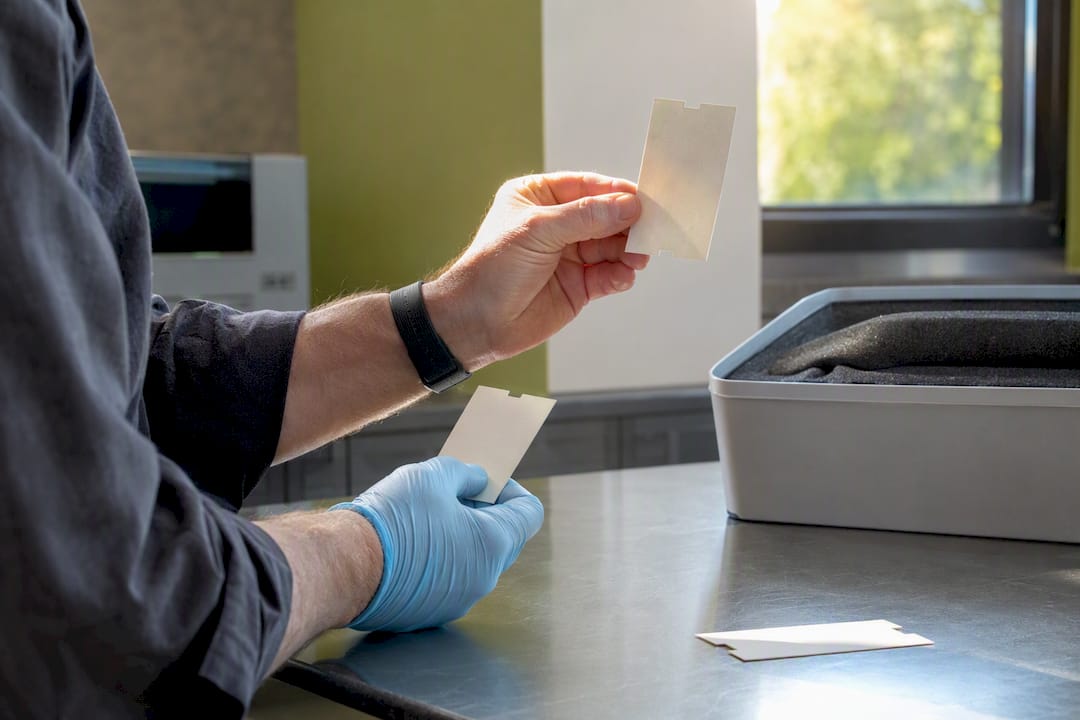
Before committing to a full order, test media and ribbon combinations under your actual conditions rather than trusting a spec sheet alone. Print a small batch, then subject samples to whatever your labels will realistically face: a freezer, direct sun on a dashboard, or a scan gun after a day in someone’s pocket. Confirm the barcode still scans afterward.
Pro Tip: Keep a simple log of which ribbon SKU pairs with which media SKU for each printer model you run. It sounds tedious until the day someone orders the wrong ribbon and a batch of labels comes out streaked.
What Caymil Recommends for Ticketing and Parking Operations
Caymil has manufactured ticketing supplies since 1937, and that history shapes a practical view on media selection. For high-volume valet and parking operations running compatible systems like TIBA, Amano, SKIDATA, and Flowbird, stock thermal rolls built for direct thermal printing usually make sense: tickets are issued fast, handled briefly, and discarded within the same day or week.
For longer-lived items, permit hang tags, coupon books meant to last a season, or branded stock that needs sharper logo reproduction, Caymil points customers toward heavier stock or dispenser ribbon options built for thermal transfer durability. Caymil also stocks valet manager thermal rolls sized for common machine-issued formats, so operators can match consumables to their printer model without guesswork.
What Actually Matters When You’re the One Buying
Most comparisons treat direct thermal and thermal transfer as a simple durability tradeoff, and that’s true as far as it goes. What gets underweighted is printhead economics. A parking operation issuing thousands of tickets a week will feel a shortened printhead lifespan long before it feels the cost difference between media and ribbon. That’s the calculation worth running first, not last.
My default is straightforward: reach for thermal transfer whenever a label has to survive handling, weather, or time, and reserve direct thermal for anything that does its job in a day or two. Test every new media and ribbon pairing before a full rollout, keep a written record of what’s matched to what, and track printhead swaps over time so patterns show up before they become expensive. Where linerless or lower-waste options exist for your volume, they’re worth a look too.
— Richard
Get the Right Ticket Stock Without the Guesswork
Caymil supplies both direct thermal rolls and thermal transfer compatible stock built specifically for parking, valet, and event ticketing, so you’re not stuck choosing between a generic office supplier’s paper and a specialty print shop’s minimums. If this guide told you your operation needs fast-issuing direct thermal rolls for a busy valet stand, Caymil’s machine-issued valet tickets are built for exactly that workflow and compatible with the major parking systems most garages already run. If durability and branding matter more, options like barcode valet parking tickets and multi-part ticket formats give you sharper output without switching suppliers mid-season.
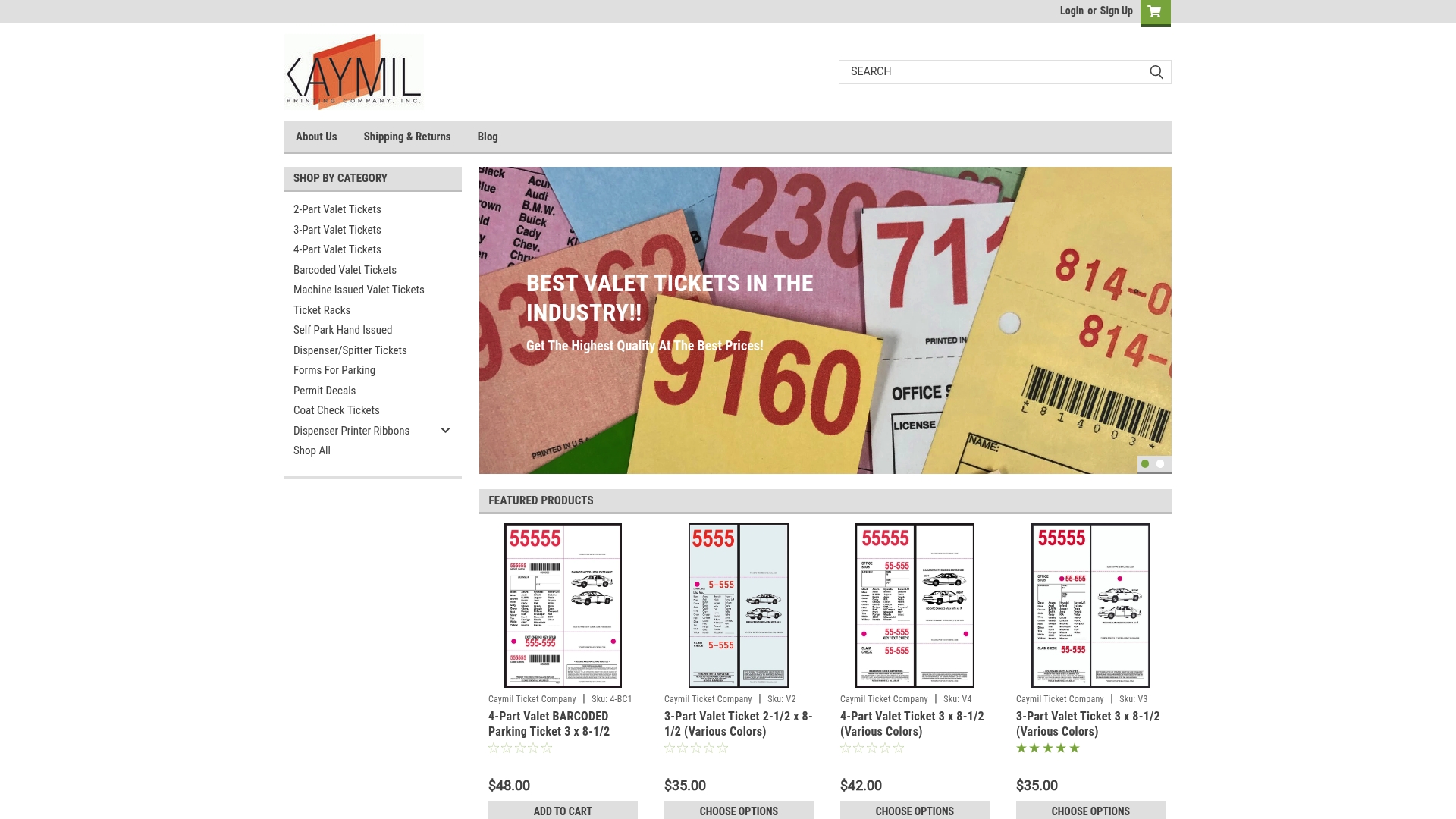
For readers still narrowing down formats, Caymil’s forms for parking page lays out the full range of stock and custom options by application. Request a sample of the media type this guide pointed you toward, and confirm it prints, scans, and holds up before you commit to a full order.
Sources
For technical detail on printhead care and media compatibility, see Zebra, Ricoh, SATO, and Avery. For supplier specs, browse Caymil’s parking ticket paper guide.
- What Is the Difference Between Direct Thermal and Thermal Transfer Printing? | Zebra
- Choosing between DT & TTR - Ricoh Electronics, Inc.
- Thermal Transfer vs. Direct Thermal: Five Key Considerations | SATO
FAQ
How Can You Tell If a Label Is Direct Thermal or Thermal Transfer?
Scratch the printed surface with a fingernail: direct thermal labels typically darken or blacken where scratched because the coating itself reacts to friction, while thermal transfer labels show no such reaction since the image sits on top as transferred ink.
Can You Use Direct Thermal Labels in a Thermal Transfer Printer?
Yes, most thermal transfer printers can print on direct thermal media by disabling the ribbon mechanism, though the reverse isn’t true: TTR labels won’t print correctly in a printer with no ribbon supply.
Are Zebra Printers Direct Thermal or Thermal Transfer?
Zebra manufactures both direct thermal and thermal transfer printer models, and many of its industrial and desktop printers support either mode depending on configuration and ribbon installation.
What Are the Disadvantages of Thermal Transfer?
Thermal transfer requires ongoing ribbon purchases matched correctly to your media, adds ribbon waste to your consumables stream, and can run slower than direct thermal in some high-throughput printing scenarios.
Is Direct Thermal or Thermal Transfer Better for Parking Tickets?
For fast-issuing valet and garage tickets meant to be used within hours or days, direct thermal is generally the better fit, while permits or tickets that need to last through a season point toward thermal transfer stock.