

Flowbird Ticket Media: 7 Go Live Checks for Operators (Caymil fit)

Flowbird’s platform supports thermal paper tickets, QR codes, contactless EMV/NFC cards and mobile wallets, and closed-loop smartcards, all readable through the same validator fleet. Before signing any deployment agreement, operators need to confirm three things: validator and ticket vending machine compatibility with each media type in use, Open Payment readiness on the payment processing side, and settlement terms covering merchant fees, reporting, and dispute handling.
TL;DR:
- Most operators run two to three media types simultaneously, such as thermal tickets, QR codes, and contactless cards, to ensure fallback options.
- Validators like the Axio 4 support multiple media and require connectivity options like Ethernet or 4G for mobility and reliability.
- Open Payment strategies involve settlement delays, interchange fees, and dispute processes that operators must carefully plan and manage.
- Physical ticket stock must meet precise dimension, encoding, and security criteria; off-the-shelf supplies risk scan failures and should be tested in advance.
- Operators must verify certifications like EMVCo and PCI PTS, and establish clear security, fallback, and repair procedures before deployment.
Table of Contents
- Flowbird Ticket Media Types: Which One Fits Your Operation
- Hardware and Validators: What Specs Actually Matter
- How Does Open Payment Work for Flowbird Operators?
- Integration and Compatibility: What to Request From Vendors
- Security, Compliance, and Privacy: What Operators Must Confirm
- Managing Passenger Adoption: Fallbacks and Staff Training
- Procurement Specs: How Caymil’s Products Fit Flowbird Deployments
- Readiness Checklist Before Go-Live
- Procurement Lessons From the Ticket Supply Side
- Ordering Flowbird-Compatible Ticket Media From Caymil
- Sources
- FAQ
Flowbird Ticket Media Types: Which One Fits Your Operation
Every Flowbird deployment starts with a media decision, and that decision drives hardware, staffing, and cost for years afterward.
Thermal paper tickets remain the workhorse for gated garages and visitor parking. They print fast, cost little per unit, and work when a smartphone battery dies or a rider has no data connection. The tradeoff is physical stock management: thermal rolls degrade in heat and direct sunlight, and low-quality stock fades within weeks.
QR codes work well for event parking and short-term visitor flows where a printed or emailed code speeds up validation without requiring a bankcard tap.
Contactless EMV/NFC cards and mobile wallets suit high-frequency riders on rail and bus lines where tap-and-go speed matters more than a printed receipt.
Smartcards still make sense for closed transit networks with loyalty programs or subsidized fare tiers that need account-based tracking.
Most operators end up running two or three media types at once:
- Thermal paper for gated garage entry and exit
- QR or contactless for validated street parking and event lots
- Smartcards for recurring transit riders on fixed routes
Mixed-media setups create a fallback path when digital validation fails. This matters more than most procurement teams initially assume.
Hardware and Validators: What Specs Actually Matter
The Axio 4 validator anchors most modern Flowbird deployments. It reads EMV contactless cards, scans QR codes, and runs on a color touchscreen that most riders navigate without staff assistance. Connectivity options include Ethernet, 4G, WiFi, and Bluetooth, which matters more than it sounds. A validator that only supports Ethernet is a validator you cannot move without an electrician.
For ticket vending machines, check three specs before anything else:
- High-capacity thermal printer rolls that reduce mid-shift reloading
- Card acceptance covering both chip-and-PIN and contactless
- Modular components that support tool-free swaps in the field
On-board validators for buses need the same media flexibility but tighter power and heat tolerances, since they run continuously in a moving vehicle rather than a climate-controlled kiosk.
Pro Tip: Ask any vendor for a mean-time-to-repair figure tied to their modular replacement design, not just a warranty period. A device that swaps a failed reader module in minutes beats one with a longer warranty but a two-week repair cycle.
Flowbird’s modular, tool-free maintenance design exists specifically to cut that repair window down in high-traffic terminals.
How Does Open Payment Work for Flowbird Operators?
Open Payment lets riders tap a contactless bankcard, smartphone, or smartwatch directly at the validator instead of buying a separate ticket. The system automatically calculates the best available fare for that rider’s trip pattern, which removes the guesswork that keeps casual riders away from transit apps. Adoption tends to run high among people who ride occasionally: a significant share of non-regular users choose Open Payment when it’s offered, since they’d rather tap a card they already carry than download an app for one trip.
Operators need to plan around three operational realities:
- Settlement and clearing cycles. Bankcard transactions clear through card networks on their own schedule, not the operator’s, which affects cash flow reporting.
- Interchange fees and fare capping. Best-fare logic depends on scheme rules that vary by card network, so reconciliation reports need to match those rules line by line.
- Dispute handling. A rider who disputes a fare charge goes through the card issuer, not the transit agency, which means support staff need a documented escalation path.
Open Payment reduces physical ticket stock costs over time, but most agencies still run hybrid ticketing during the transition rather than cutting paper cold.
Integration and Compatibility: What to Request From Vendors
Before signing anything, ask for a written integration map showing exactly how ticket media data flows from validator to back office to your finance system.
Flowbird’s back office, called CloudFare, manages both account-based and card-based ticketing and includes remote asset monitoring across single-mode and multimodal networks. That monitoring capability is worth testing directly, since a validator that silently drops offline for six hours is worse than one that fails loudly.
Confirm these items during procurement:
- API access points for CloudFare and how they map to your existing revenue system
- Whether your setup runs account-based flows, card-based flows, or both simultaneously
- Physical ticket format compatibility, including sample tickets tested on your actual hardware
- Data export formats for reconciliation between CloudFare and your finance platform
- Telemetry reporting frequency for remote asset monitoring
Request sample tickets and run them through your production hardware before acceptance testing closes. A format mismatch discovered after go-live costs far more to fix than one caught in a two-week pilot.
Security, Compliance, and Privacy: What Operators Must Confirm
Two certifications matter more than any vendor brochure claim. EMVCo certification confirms a contactless reader correctly processes chip-based payment cards according to the global payment network standard. PCI PTS (PIN Transaction Security) certification confirms the physical device resists tampering and protects cardholder data at the point of capture. Neither certification is optional if you’re accepting bankcard payments at the validator.
Mobile ticketing carries privacy exposure that generic e-tickets don’t. Because mobile tickets tie validation to a specific device, the system can collect device identifiers, location data, and entry timestamps tied to an individual rider, not just an anonymous ticket number.
Build these into your vendor contract:
- Written security attestations naming the exact certifications held, with expiration dates
- Breach notification timelines, not vague “prompt notification” language
- Data minimization commitments limiting what rider data the vendor retains and for how long
- Indemnity terms covering liability if a data exposure originates from vendor infrastructure
A note on scope: neither certification eliminates risk entirely. They confirm the device meets an industry baseline, not that your specific deployment is immune to fraud or breach.
Managing Passenger Adoption: Fallbacks and Staff Training
Riders resist switching from paper to mobile more than most rollout plans account for. Research on innovation resistance theory identifies a strong “tradition barrier,” where riders prefer a familiar ticket counter even when the digital option is objectively faster.
Three moves reduce that friction:
- Run a phased rollout by corridor or lot rather than switching an entire network overnight, so staff can troubleshoot at a manageable scale.
- Keep visible fallback signage at every validator explaining what to do when a tap or scan fails, so a stalled gate doesn’t become a stalled line.
- Train frontline staff on both media before launch, not after the first complaint call comes in.
Pro Tip: Track fallback usage rate as a KPI, not just adoption rate. A high fallback rate three months post-launch tells you where the hardware or the messaging still isn’t working.
Procurement Specs: How Caymil’s Products Fit Flowbird Deployments
Turning validator specs into a purchase order means giving your ticket supplier exact numbers, not general descriptions.
Request these details in writing before ordering physical stock:
- Ticket dimensions matched to your specific dispenser or validator slot
- Print type (thermal versus offset) matched to your printer hardware
- Barcode placement and symbology confirmed against your scanner’s read zone
- Encoding format for any magnetic stripe or sequential numbering used for audit trails
Caymil manufactures barcode and thermal ticket stock built to these exact specifications, along with machine-issued formats designed for roll-fed dispensers common in gated facilities. Sequential numbering and custom security features protect revenue tracking even when a garage is running physical tickets as a fallback rather than a primary media.
Ask for sample tickets before committing to a production run, and keep a spare-stock buffer sized to your busiest 30-day period, not your average month.
Readiness Checklist Before Go-Live
Run through this list before signing off on any Flowbird ticket media deployment:
- Acceptance test every media type on production hardware, not a demo unit.
- Confirm sample tickets validate correctly across every validator model in the fleet.
- Get a written mean-time-to-repair commitment tied to modular part replacement.
- Confirm merchant fee structure and settlement schedule for Open Payment transactions.
- Document the dispute handling path for card-based fare disputes.
- Obtain security attestations naming EMVCo and PCI PTS certifications with dates.
- Approve a documented fallback procedure for validator or network outages.
| Checklist Area | Confirm Before Go-Live |
|---|---|
| Hardware | Sample tickets validated on production units |
| Payment | Settlement schedule and merchant fees documented |
| Security | EMVCo and PCI PTS attestations on file |
| Operations | Written fallback procedure approved by staff |
Procurement Lessons From the Ticket Supply Side
Operators tend to spec the software and treat the physical ticket as an afterthought, then get surprised when a barcode won’t scan or a roll won’t fit a printer tray. The fix is boring but effective: request exact dimensional tolerances and encoding formats in writing before the first production run, not after a failed pilot.
Balance the digital rollout with a physical fallback that’s actually tested, not assumed. Two contract phrases worth adding: “sample validation required before acceptance” and “breach notification within 72 hours.”
— Richard
Ordering Flowbird-Compatible Ticket Media From Caymil
Some suppliers provide the physical side of Flowbird deployments: thermal roll tickets, barcode tickets, and machine-issued formats built to the exact dimensions and print specifications required by validators and dispensers. Off-the-shelf ticket stock from a generic printer can risk a scan failure at the gate; suppliers building to the validator’s read zone and printer tolerances from the start reduce this risk.
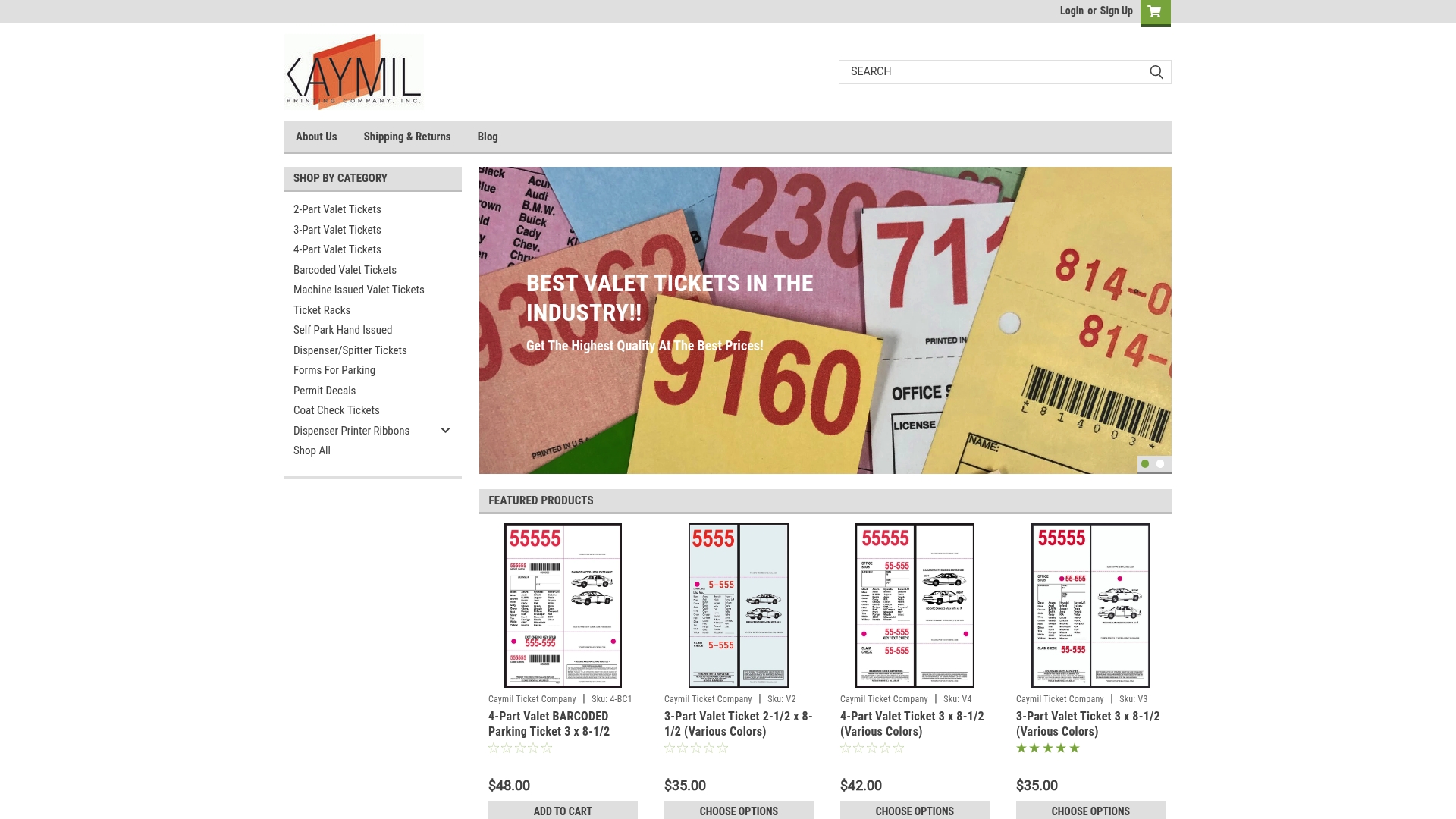
Sequential numbering, custom barcoding, and security printing can be requested to keep physical fallback reliable even as digital adoption grows. If you’re specifying a new Flowbird rollout or replacing worn stock on an existing one, request sample tickets and a custom quote through Caymil’s parking ticket forms page or check the machine-issued valet ticket options built for roll-fed dispensers in gated facilities.
Sources
- Equipment - Flowbird
- Exploring the factors of using mobile ticketing applications: Perspectives from innovation resistance theory
FAQ
Is Flowbird a Legitimate Company?
Yes. Flowbird is an established transport and parking technology provider whose equipment, Open Payment system, and CloudFare back-office platform are documented directly on its own product pages.
Can Riders Use Flowbird Tickets Without a Mobile App?
Yes. Flowbird media includes thermal paper tickets, QR codes, and contactless bankcard taps through Open Payment, none of which require installing a dedicated app.
What Company Operates Flowbird’s Ticketing Systems?
Flowbird is the technology vendor that manufactures the validators, ticket vending machines, and back-office software; individual transit agencies and parking operators own and run the deployments.
How Does Flowbird’s Ticketing System Work Day to Day?
Riders tap a contactless card, scan a QR code, or insert a thermal ticket at a validator, which checks fare validity and reports usage data back to the CloudFare platform for reconciliation and remote asset monitoring.
What Physical Ticket Stock Works Best as a Flowbird Fallback?
Thermal roll tickets and barcode tickets sized to your specific dispenser, like the formats Caymil manufactures for machine-issued setups, give operators a reliable fallback when digital validation is unavailable.