

Ticket Media in Parking Systems: A Complete Guide

Parking ticket media refers to the physical or digital tokens that manage vehicle access, record session data, and support payment validation within parking management systems. Parking tickets provide session timestamps, unique identifiers, and validation status, making them the operational backbone of any gated or controlled parking facility. Their role in parking systems spans entry control, fraud prevention, revenue tracking, and customer communication. Caymil Printing Co. has manufactured these products since 1937, with compatibility across major parking system brands including Amano, TIBA, SKIDATA, FLASH Parking, Scheidt & Bachmann, and Flowbird.
The primary ticket media types used across U.S. parking operations include:
- Custom printed paper tickets for single-use entry and exit control
- Magnetic stripe tickets for legacy systems requiring encoded session data
- Barcode and QR code tickets for automated scanning and high-throughput lanes
- Thermal tickets issued by machine-dispensing “spitter” units at entry points
- Multi-part carbonless tickets for valet operations requiring duplicate records
- Validation tickets for merchant-sponsored or discounted parking programs
- Hybrid tickets combining printed barcodes with magnetic encoding for dual-reader systems
Table of Contents
- 1. What types of ticket media do parking systems use?
- 2. How does ticket media improve parking operations?
- 3. Ticket media as an advertising channel in your parking facility
- 4. How to choose and customize ticket media for your parking system
- 5. Where is ticket media used across different parking environments?
- 6. What does the future of parking ticket media look like?
- Custom parking tickets built for your system
- Key Takeaways
- FAQ
1. What types of ticket media do parking systems use?
Parking operators work with a wider range of ticket media formats than most realize, and the right choice depends heavily on the equipment already in place.
Custom printed paper tickets remain the most common format in U.S. parking garages. They are cost-effective, compatible with thermal dispensers, and easy to customize with barcodes, sequential numbering, and facility branding. Thermal paper tickets require no ink ribbon, which reduces maintenance at the dispenser.
Magnetic stripe tickets encode session data directly onto a ferromagnetic strip. They are standard in many older PARCS (Parking Access and Revenue Control Systems) installations and remain in active use at airports, hospitals, and urban garages that have not yet migrated to barcode-first workflows.
Barcode and QR code tickets have become the preferred format for new installations. Barcode tickets enable faster scanning, reduce manual errors, and integrate directly with major system controllers for automated validation. QR codes extend this capability to mobile validation scenarios.
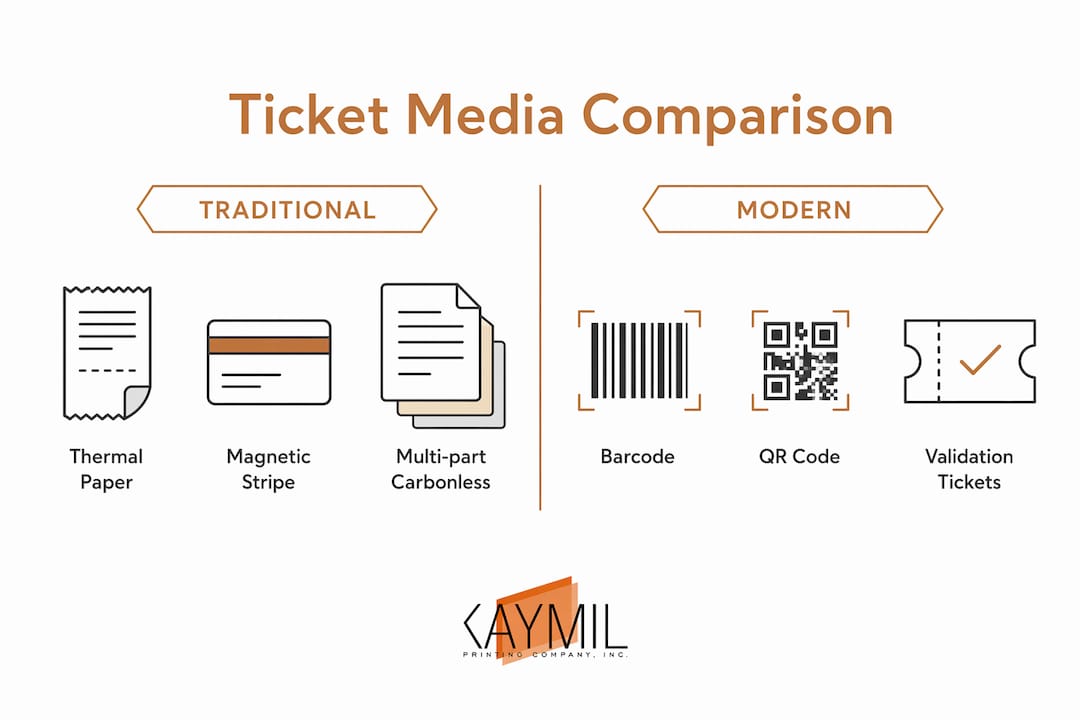
Multi-part carbonless valet tickets serve a different operational purpose entirely. A two-part or four-part ticket gives the attendant, the driver, and the facility each a copy, creating an auditable paper trail for every vehicle movement.
| Ticket Type | Primary Use | Key Feature | Typical Environment |
|---|---|---|---|
| Thermal paper | Entry/exit control | No ink required | Garages, lots |
| Magnetic stripe | Legacy session encoding | Encoded data strip | Airports, hospitals |
| Barcode | Automated validation | Fast scan, low error | High-volume garages |
| QR code | Mobile and kiosk validation | Dual-use (print + phone) | Mixed-use facilities |
| Multi-part carbonless | Valet tracking | Duplicate records | Hotels, casinos, events |
| Validation ticket | Merchant-sponsored parking | Discount authorization | Retail, healthcare |
2. How does ticket media improve parking operations?
Physical ticket media does more than grant access. It feeds the entire parking management workflow from entry through exit, audit, and reporting.
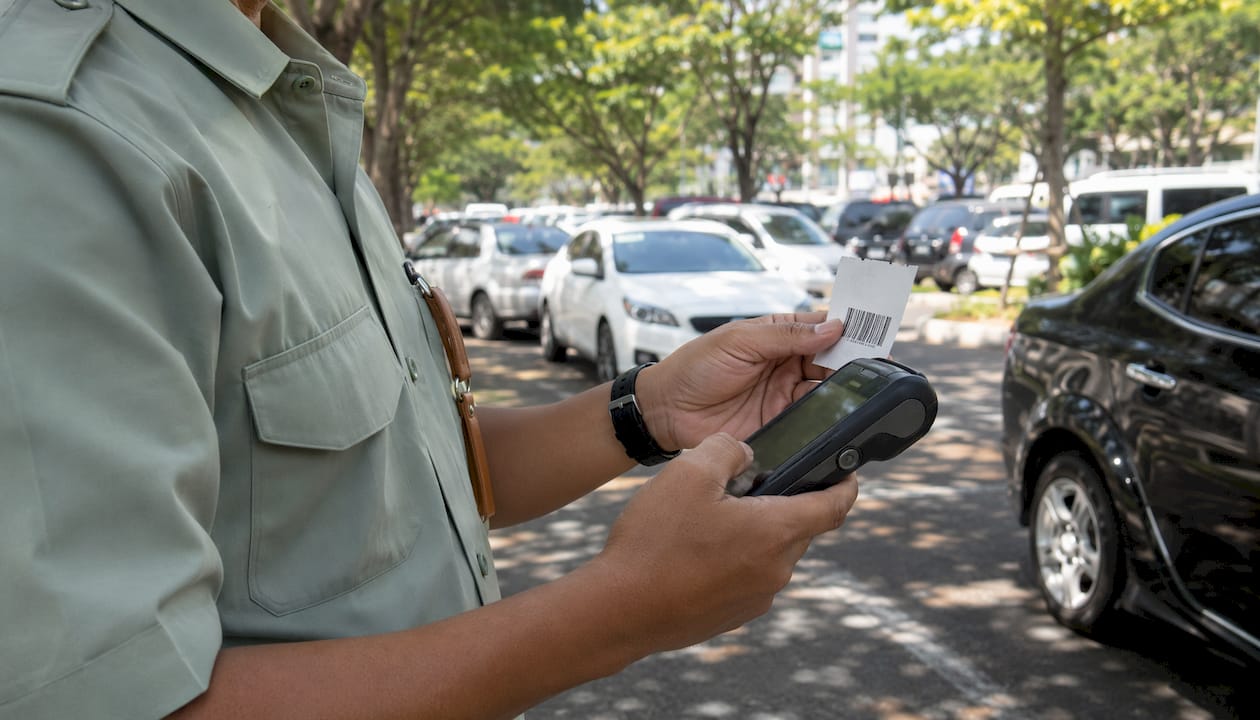
At entry, a dispensed ticket captures a timestamp and unique session ID the moment a vehicle arrives. Validated tickets log time-stamped unique identifiers that are essential for session reconciliation and operational monitoring. At exit, the same ticket confirms payment status and triggers the gate. That closed loop is what makes revenue control reliable.
Ticket validators extend this function into the facility itself. A validator captures the credential, interprets the encoded data, evaluates payment or eligibility rules, and logs the outcome for audit. Ticket validators prevent fraud by ensuring tickets are used only once and are valid, while also reducing wait times through automated scanning.
Magnetic stripe media requires additional upkeep. Operators running legacy mag stripe systems need regular head cleaning and media quality checks to prevent validation failures and equipment downtime. Skipping that maintenance is one of the most common causes of ticket jams and lane blockages in older facilities.
Key operational benefits of well-managed ticket media include:
- Entry/exit throughput maintained through reliable dispensing and scanning
- Fraud prevention via unique ticket IDs, sequential numbering, and validation logging
- Audit readiness with time-stamped session records tied to each ticket
- Payment accuracy through integration with rate engines and back-office platforms
- Security features such as void pantographs and UV-reactive inks on custom printed tickets
Pro Tip: When transitioning from magnetic stripe to barcode media, run both formats in parallel for at least 60 days to catch any edge cases in your validator’s fallback workflow before fully decommissioning the mag stripe readers.
3. Ticket media as an advertising channel in your parking facility
Physical parking tickets reach a captive audience at a moment of high attention. Research by Ticketmedia shows that 96% of users value receipts for personal or tax records, making the back of a parking ticket one of the most consistently read surfaces in any marketing mix.
That exposure translates directly into promotional opportunity. Operators can print branded messaging, discount offers, loyalty program details, or QR codes linking to digital campaigns on every ticket issued. The cost per impression is low because the ticket is already being printed for operational reasons.
Effective ticket advertising strategies include:
- Promotional offers tied to adjacent retail, dining, or hotel amenities
- Loyalty program enrollment with a printed QR code or short URL
- Seasonal campaigns rotated across ticket print runs without changing the ticket format
- Wayfinding and facility information that reduces customer service calls
- Sponsor branding for municipalities or event venues with advertising partnerships
Caymil supports multiple design variations within a single print run, so operators can test different offers across the same ticket batch and measure which message drives the strongest response.
4. How to choose and customize ticket media for your parking system
Selecting the right ticket media starts with your existing equipment. Compatibility with your PARCS brand, whether Amano, TIBA, SKIDATA, or Flowbird, determines the physical dimensions, media thickness, and encoding format your tickets must meet.
Beyond compatibility, the key considerations are:
- Durability relative to your facility’s environment (outdoor lots need weather-resistant stock)
- Security features such as sequential numbering, void patterns, or UV ink to deter counterfeiting
- Customization depth including logo placement, color, and multi-part formats for valet operations
- Environmental impact as operators increasingly evaluate biodegradable or recycled paper stocks
- Legacy media support if your system still runs magnetic stripe readers alongside barcode scanners
Custom ticket features including multipart formats, sequential numbering, and branded graphics support valet management, session tracking, and a professional facility image. For valet operations specifically, a two-part or four-part carbonless ticket creates the accountability chain that protects both the operator and the vehicle owner.
Troubleshooting common issues is easier when ticket stock is sourced from a manufacturer who understands your system. Ticket jams often trace back to incorrect media thickness or curl from humidity. Validation failures on barcode tickets usually point to print density or barcode quiet zone violations. Working with an experienced supplier eliminates most of these problems before they reach the lane.
5. Where is ticket media used across different parking environments?
The application of parking ticket media varies considerably by facility type, and each environment places different demands on the product.
Airport parking relies heavily on thermal barcode tickets issued at entry and validated at pay stations before exit. High daily volume means ticket stock must be consistent in quality and available in large quantities without supply interruptions.
Hotel and casino valet operations depend on multi-part carbonless tickets. A four-part valet ticket gives the driver a claim stub, the attendant a work copy, and the cashier and management each a record. This format is standard at properties where vehicle accountability and guest experience are both priorities.
Hospital and healthcare facilities use validation tickets extensively. A patient or visitor receives a ticket at entry, gets it validated at a service desk, and exits at a reduced or zero cost. The validation ticket must carry clear authorization markings that the exit reader can confirm.
Municipal and event parking often uses simpler single-part thermal tickets with sequential numbering for revenue auditing. Event venues may add sponsor branding or promotional messaging to the ticket back.
University and commercial garage operators frequently run hybrid environments where monthly permit holders use hang tags or RFID while transient parkers receive barcode tickets at entry. The ticket media must integrate cleanly with both access channels.
6. What does the future of parking ticket media look like?
Physical ticket media is not disappearing, but its role is shifting. Hybrid parking systems increasingly combine license plate recognition with ticket-based fallback, so a ticket is dispensed only when the LPR camera fails to read a plate. That model reduces ticket volume without eliminating the need for reliable ticket stock.
Digital-native m-tickets offer stronger fraud resistance than static PDF e-tickets, but physical ticket media retains advantages as a stable, non-duplicable asset in environments where mobile adoption is incomplete or unreliable connectivity makes app-based validation impractical.
The near-term trends shaping ticket media procurement include:
- Eco-friendly substrates such as recycled thermal paper and biodegradable stocks gaining traction among operators with sustainability mandates
- QR code integration replacing magnetic stripe as the default encoding method in new PARCS installations
- Shorter print runs with faster turnaround as operators move toward just-in-time inventory rather than warehousing large ticket quantities
- Ticket-as-data-capture becoming more deliberate, with operators designing ticket formats to feed analytics platforms with richer session metadata
The facilities that manage this transition well will treat ticket media not as a commodity consumable but as a configurable operational asset.
Custom parking tickets built for your system
Caymil has manufactured parking and valet ticket media since 1937, and that depth of experience shows up in the details that matter to operators: correct media thickness for your dispenser, barcode specifications that pass your validator’s scan, and print quality that holds up in a high-humidity garage or an outdoor surface lot.
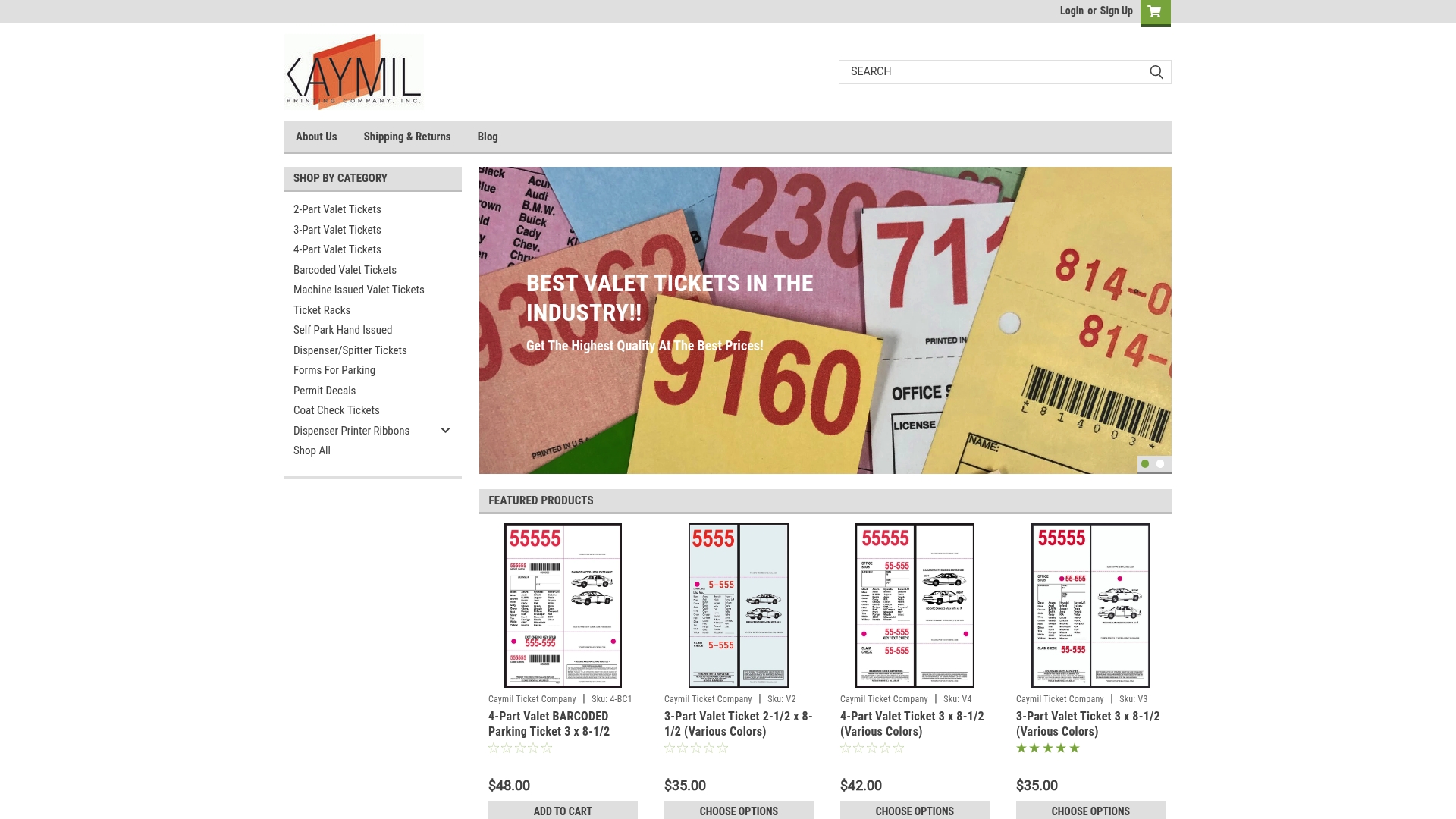
Whether you need thermal spitter tickets for a high-volume garage, barcoded valet tickets for a hotel operation, or fully custom printed stock with your facility’s branding and sequential numbering, Caymil stocks millions of tickets ready for fast nationwide shipping. Products are compatible with Amano, TIBA, SKIDATA, FLASH Parking, Scheidt & Bachmann, and Flowbird systems. Browse Caymil’s full range of parking forms and tickets or contact the team directly to spec a custom order for your facility.
Key Takeaways
Ticket media is the operational and marketing foundation of any physical parking system, and its value extends well beyond simple access control.
| Point | Details |
|---|---|
| Core operational role | Ticket media captures session timestamps and unique IDs that drive entry control, payment validation, and audit trails. |
| Advertising value | 96% of users value receipts, making printed tickets a high-engagement surface for promotional messaging |
| Compatibility matters | Ticket stock must match your PARCS brand’s media specs; Caymil products are confirmed compatible with Amano, TIBA, SKIDATA, and Flowbird. |
| Physical vs. digital | Physical tickets remain fraud-resistant and operationally reliable where mobile adoption or connectivity is inconsistent. |
| Caymil’s offering | Caymil has supplied custom parking and valet ticket media since 1937, with millions of units in stock and fast nationwide shipping. |
FAQ
What is ticket media in a parking system?
Ticket media is the physical or digital token, such as a printed barcode ticket or magnetic stripe card, that identifies a parking session, controls gate access, and records entry and exit data within a parking management system.
Why do parking operators still use printed tickets instead of going fully digital?
Physical tickets remain stable, non-duplicable assets that work without mobile connectivity or app adoption. They also serve as a fallback in hybrid LPR systems when plate recognition fails.
What ticket formats does Caymil supply for major parking systems?
Caymil manufactures thermal, barcode, magnetic stripe, multi-part carbonless, and validation tickets compatible with Amano, TIBA, SKIDATA, FLASH Parking, Scheidt & Bachmann, and Flowbird systems.
How can parking tickets be used for advertising?
The back of a parking ticket reaches a captive audience that actively reads the receipt. Operators can print promotional offers, loyalty program details, or QR codes on every ticket at no additional media cost.
What causes ticket jams and validation failures in parking lanes?
Ticket jams most often result from incorrect media thickness or humidity-induced curl. Barcode validation failures typically trace to insufficient print density or a barcode quiet zone that is too narrow for the scanner’s tolerance.
Recommended
- The role of ticket dispensers in parking: A manager’s guide - Caymil Printing Co., Inc.
- Printed Parking Tickets: A Practical Guide for Operators - Caymil Printing Co., Inc.
- Event Parking Ticket Types: A Planner’s 2026 Guide - Caymil Printing Co., Inc.
- Parking Machine Ticket: What Every Driver Should Know - Caymil Printing Co., Inc.