

Event Parking Ticket Types: A Planner’s 2026 Guide

Event parking ticket types are classifications of passes or permits that define vehicle access, pricing tiers, and validation methods for large-scale gatherings. Choosing the right format affects entry speed, revenue predictability, and guest satisfaction from the moment attendees arrive. Modern event parking now integrates digital tools, tiered pricing, and prepaid reservation systems as standard practice. Caymil has worked with event venues, valet operators, and parking managers since 1937, and the ticket format decisions made before an event open gates determine how smoothly everything runs on the day.
1. Top event parking ticket types explained
The industry recognizes several core categories of parking passes and permits, each designed for a specific access level, duration, or attendee profile. Understanding these categories is the foundation of any solid event parking ticket system setup.
Standard single-day general admission passes are the most common format. They grant access to a designated general lot for one calendar day and typically carry the lowest price point. Standard car pricing runs $10–$45 per transaction, with small service fees of $0.25–$3.73 added at checkout. That range reflects lot proximity and demand, not just event size.
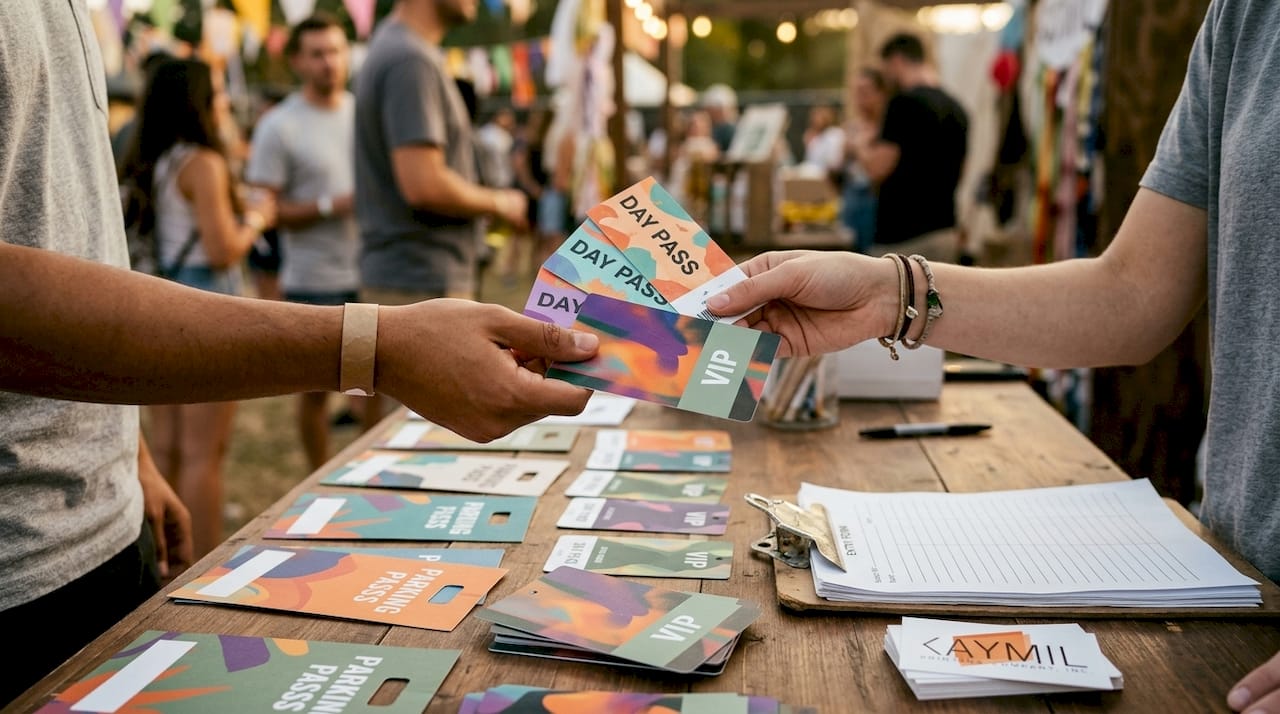
VIP and premium access passes grant entry to closer, higher-amenity lots and often include reserved or covered spaces. VIP premium access can reach $149 for multi-day or premium lot assignments. Event planners who offer tiered access see better guest satisfaction because VIP holders experience expedited entry and better amenities.
Multi-day and event duration passes cover consecutive days, making them the right choice for festivals, conventions, and multi-session conferences. They reduce daily transaction volume and simplify gate operations.
Accessible and ADA parking permits are a compliance requirement, not an optional add-on. Federal ADA standards mandate designated accessible spaces with proper signage and surface conditions. These passes must be clearly distinguishable from general admission tickets and validated separately.
- Single-day general admission: $10–$45, general lot access
- VIP and premium: up to $149, reserved or covered spaces
- Multi-day passes: flat rate covering full event duration
- ADA accessible permits: federally mandated, separate validation required
- Prepaid reservation passes: guaranteed spot, booked in advance
Pro Tip: Print ADA passes in a distinct color and include a sequential number for audit purposes. This prevents duplication and speeds up compliance checks at the gate.
2. How digital and contactless parking tickets improve event entry
Digital ticket formats have moved from optional to expected at high-volume events. The shift reduces paper handling, cuts entry wait times, and gives planners real-time data on lot occupancy.
QR code tickets are the most widely deployed digital format. Attendees receive a scannable code by email or app, and gate staff validate it with a handheld reader. QR code scanning and LPR permits reduce vehicle wait times and errors during entry compared to manual paper checks.
License plate recognition (LPR) permits take a different approach. The attendee registers a plate number at purchase, and cameras at the lot entrance confirm the match automatically. No physical ticket changes hands. This format works best for reserved premium lots where throughput speed matters most.
Contactless payment validation ties payment confirmation directly to gate access. Attendees pay by card or mobile wallet, and the system generates a validation record linked to their transaction. No separate ticket is needed.
Handheld parking solutions that sync offline data automatically maintain uninterrupted operations during peak arrival windows. At high-volume events, a single connectivity gap can back up hundreds of vehicles. Offline-capable handheld systems solve that problem by storing scan data locally and syncing when the connection restores.
Key benefits of digital and contactless formats:
- Faster gate throughput with no manual ticket inspection
- Real-time lot occupancy data for staff reallocation
- Reduced printing and distribution costs
- Integration with event ticketing platforms for bundled purchase
- Automatic audit trails for revenue reconciliation
Event parking management software integrates with ticketing platforms to enable prepaid reservations, which reduces congestion and increases revenue predictability before the event begins.
3. Comparing event parking ticket formats and their operational impact
Choosing between paper-based and digital formats is not a binary decision. Most large events run a hybrid approach, and the right mix depends on attendee demographics, venue infrastructure, and staff capability.
| Format | Validity period | Payment methods | Hardware required | Re-entry allowed |
|---|---|---|---|---|
| Paper general admission | Single day | Cash, card | None | No |
| Barcode paper ticket | Single day or multi-day | Card, mobile wallet | Barcode scanner | Configurable |
| QR code mobile ticket | Single day or multi-day | Card, mobile wallet | QR reader or smartphone | Configurable |
| LPR permit | Event duration | Card, mobile wallet | Camera system | Yes |
| Multi-part valet ticket | Per vehicle stay | Cash, card | None | N/A |
Paper tickets remain reliable where digital infrastructure is limited. Barcode scanning improves speed and accuracy over traditional paper methods, making barcoded paper a practical middle ground between fully analog and fully digital formats.
Multi-part valet tickets serve a different function. A 2-part valet ticket creates a split record: one part stays with the vehicle, one goes to the guest. This format is standard for hotel events, casino nights, and upscale venue operations where vehicle custody tracking matters.
Validity periods and re-entry policies shape the format decision significantly. Single-day passes with no re-entry work for concerts and sports events where attendees arrive and leave once. Multi-day passes with re-entry capability suit conventions and festivals where attendees come and go across sessions.
Pro Tip: Always confirm hardware compatibility before ordering tickets. Caymil produces tickets compatible with Amano, TIBA, SKIDATA, FLASH Parking, Scheidt & Bachmann, and Flowbird systems, so matching ticket format to your access control hardware avoids costly reprints.
4. Situational recommendations: Choosing the right parking passes for your event
Event scale, attendee profile, and venue layout each point toward a different combination of parking pass formats. There is no universal answer, but there are clear patterns.
Small events (under 500 vehicles) can run effectively on paper general admission passes with a simple cash or card payment at the gate. The operational overhead of a full digital system rarely justifies the cost at this scale. A numbered paper ticket with a stub for the attendee and a retained copy for the operator covers accountability without complexity.
Large events (500+ vehicles) require tiered access, prepaid reservations, and digital validation. Prepaid parking secures guaranteed spots and helps event planners forecast revenue and labor needs well before the event opens. Without prepayment, large events face unpredictable gate volume and staff allocation problems.
Situational format recommendations:
- Festivals and multi-day events: Multi-day passes with re-entry, LPR or QR validation, dynamic pricing by day
- Concerts and sports events: Single-day passes, tiered pricing by lot zone, prepaid reservations for premium lots
- Corporate conferences: Reserved passes with attendee name or plate registration, bundled with event registration
- Valet-served events: Multi-part valet tickets (2-part, 3-part, or 4-part) for full vehicle custody tracking
- Mixed-access venues: Combination of general admission, VIP, and ADA passes with color coding for fast visual identification
Zone-based pricing and bundled offers shape costs and are influenced by post-event exit ease and early-bird discounts. Offering an early-bird prepaid rate for general admission and a flat premium rate for VIP lots gives planners two revenue streams and reduces day-of gate congestion.
Dynamic pricing adjusts rates in real time based on remaining availability. This approach maximizes revenue from high-demand lots without requiring manual price changes. Planners using dynamic pricing should communicate rate ranges clearly at the point of sale to avoid attendee friction.
Park-and-ride options add a third tier for large venues with limited on-site capacity. A shuttle-linked remote lot pass at a lower price point captures price-sensitive attendees and reduces on-site congestion. This format requires coordination between the parking operator and shuttle schedule, but the congestion relief is measurable.
Key takeaways
The most effective event parking ticket system combines tiered access formats, digital validation, and prepaid reservations to control entry volume, protect revenue, and meet compliance requirements.
| Point | Details |
|---|---|
| Match format to event scale | Small events run well on paper passes; large events need digital validation and prepaid reservations. |
| Tiered access improves satisfaction | VIP and premium passes with expedited entry increase positive guest feedback and repeat attendance. |
| ADA compliance is mandatory | Accessible parking permits must meet federal standards and use distinct, sequentially numbered formats. |
| Digital formats reduce errors | QR codes and LPR permits cut wait times and manual mistakes at high-volume entry points. |
| Hardware compatibility matters | Ticket format must match access control hardware to avoid gate failures on event day. |
Why I think most planners underestimate the ticket format decision
Event planners spend months on programming, catering, and production. Parking tickets get decided in the final two weeks, and that sequencing creates real problems on event day.
The ticket format is not just a logistics detail. It is the first physical or digital touchpoint an attendee has with your event. A slow gate because of an incompatible barcode format, or a missing ADA designation that triggers a compliance complaint, sets the tone for everything that follows. I have seen well-produced events lose attendee goodwill in the first 15 minutes because the parking entry process was chaotic.
The insight that most planners miss is this: parking ticket data from each event is a planning asset for the next one. Scan timestamps, lot fill rates, and revenue by ticket category tell you exactly where to add capacity, adjust pricing, or change the access format. Planners who treat parking as a data source, not just a logistics function, improve every successive event.
Hybrid systems combining cloud and offline handheld operations best handle peak event volume without service disruption. That is the technology standard worth building toward. Avoid relying on a single system or a single connectivity path. The events that run smoothly are the ones where the parking team has a fallback for every failure point.
— Richard
Caymil’s custom event parking ticket solutions
Event planners who need reliable, print-ready parking ticket formats can find a full range of options through Caymil. Since 1937, Caymil has manufactured tickets built for the demands of high-volume event operations, from single-day general admission to multi-part valet formats.
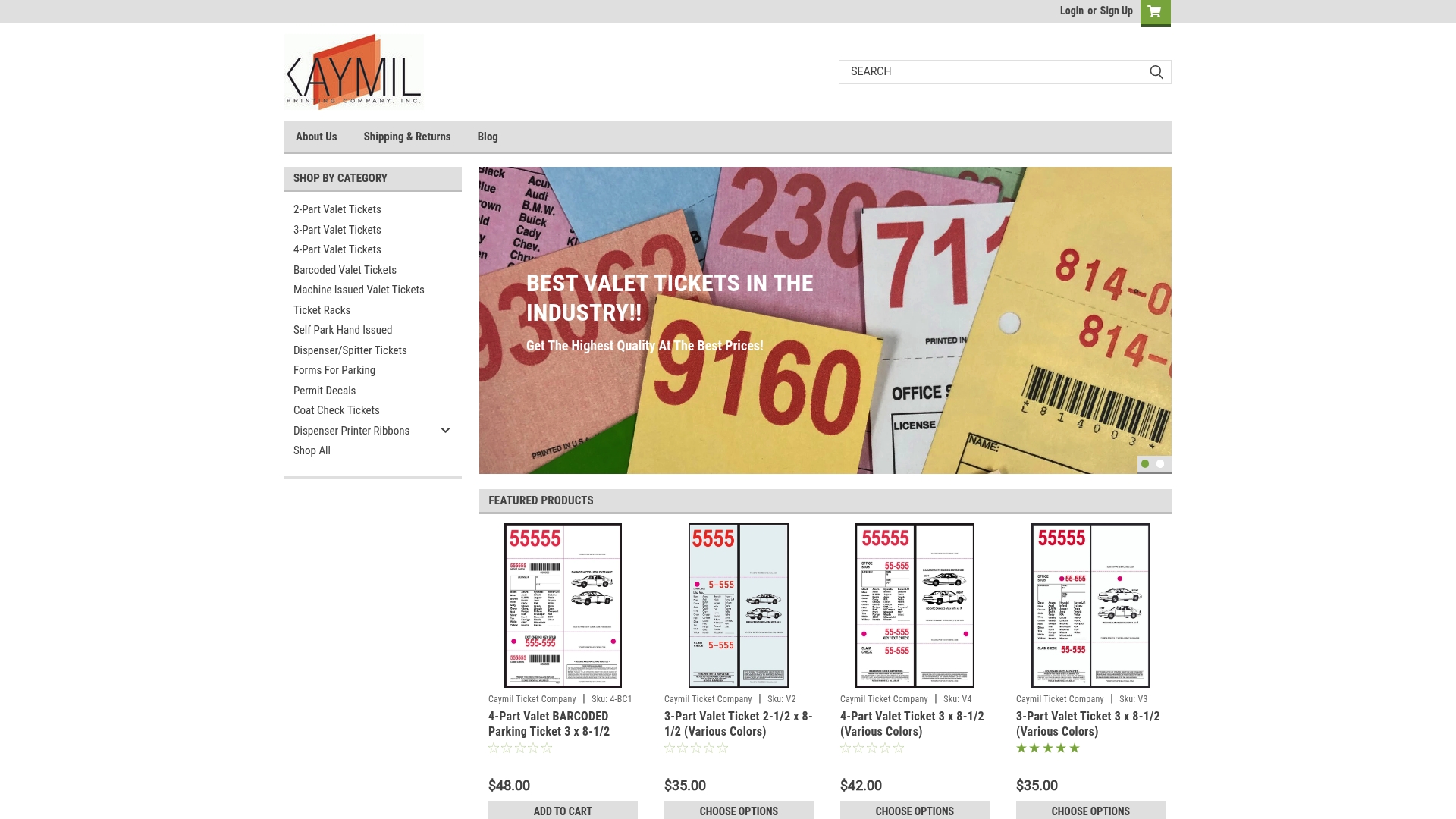
Caymil’s valet parking tickets come in 2-part, 3-part, and 4-part carbonless formats, giving event operators a split-record system for full vehicle custody tracking. For venues running automated entry systems, barcoded valet tickets and machine-issued tickets integrate directly with major access control hardware. Custom design options include sequential numbering, logos, security features, and color coding by access tier. Visit Caymil’s parking forms catalog to find the format that fits your event’s specific operational requirements.
FAQ
What are the main event parking ticket types?
The main types are single-day general admission passes, VIP and premium access passes, multi-day event duration passes, ADA accessible permits, and prepaid reservation passes. Each type defines a different access level, pricing tier, and validation method.
What is the difference between an event parking pass and a parking ticket?
A parking pass is typically a prepaid or pre-issued credential granting guaranteed access to a specific lot or zone. A parking ticket is a transaction-based document issued at the point of entry, often without advance reservation.
How does a digital parking ticket work at events?
A digital parking ticket delivers a QR code or plate registration to the attendee at purchase. Gate staff or automated readers validate the credential on arrival, eliminating the need for physical ticket exchange and reducing entry wait times.
What parking ticket format works best for valet operations?
Multi-part carbonless valet tickets, available in 2-part, 3-part, and 4-part formats, work best for valet operations. They create split records that track vehicle custody from drop-off through retrieval, which is the industry standard for hotel, casino, and upscale event valet services.
How should event planners price different parking ticket types?
Ticket pricing typically ranges from $10 for standard single-day spots to $149 for multi-day VIP premium access, with service fees of $0.25–$3.73 per transaction. Zone-based pricing, early-bird discounts, and dynamic rate adjustments are the most effective tools for maximizing revenue across ticket categories.
Recommended
- What is an event parking ticket? The pro’s guide - Caymil Printing Co., Inc.
- Parking Facility Audit Using Tickets: 2026 Guide - Caymil Printing Co., Inc.
- VIP Parking Pass Program Creation: 2026 Guide - Caymil Printing Co., Inc.
- Player Rewards Parking Ticket Program: A 2026 Guide - Caymil Printing Co., Inc.