

Player Rewards Parking Ticket Program: A 2026 Guide

A player rewards parking ticket program is a structured loyalty system that links a customer’s parking activity to redeemable benefits, discounts, and perks. Casino operators and parking lot managers use these programs to turn routine parking transactions into retention tools. When designed well, a parking ticket loyalty program reduces churn, increases visit frequency, and gives high-value guests a concrete reason to return. This guide covers everything you need to build or sharpen one, from foundational prerequisites to tier design, execution, and troubleshooting.
What does a player rewards parking ticket program require to launch?
Every successful loyalty rewards parking program starts with the right infrastructure. Without the correct tools in place, even a well-designed rewards scheme will fail at the point of execution.
The core system requirements include:
- Ticket validation technology: Barcode scanners, magnetic stripe readers, or license plate recognition (LPR) equipment to confirm parking activity automatically.
- Loyalty tracking software: A platform that records visits, calculates points, and manages tier status for each enrolled customer.
- POS and player database integration: Direct connection between the parking system and your casino’s player management system or hotel guest database.
- Staff training: Attendants must understand how to enroll guests, issue rewards tickets, and resolve validation issues on the spot.
- Branded parking tickets: Custom printed tickets that carry barcodes, sequential numbers, or magnetic stripes to feed data into your loyalty platform.
Automation is the single biggest factor separating high-performing programs from mediocre ones. DFW Airport uses license plate recognition and digital tools to automate validation and personalize the customer experience. That approach removes the manual steps that frustrate guests and create bottlenecks at exit lanes.
| System Component | Function | Priority Level |
|---|---|---|
| License plate recognition | Automates entry and exit validation | High |
| Barcode or magnetic stripe tickets | Links physical ticket to loyalty account | High |
| Player database integration | Enables automatic comping for known guests | High |
| Points management platform | Tracks balances, tiers, and redemptions | High |
| Digital communication tools | Sends balance updates and offers via SMS or email | Medium |

Pro Tip: Before purchasing any hardware, confirm compatibility with your existing parking system. Caymil manufactures tickets compatible with Amano, TIBA, SKIDATA, FLASH Parking, Scheidt & Bachmann, and Flowbird systems, which removes the guesswork on the ticketing side.
How do you design tier-based rewards that actually motivate customers?
Tier structure is the engine of any player rewards system. A flat rewards scheme treats a first-time visitor the same as a monthly regular. That is a missed opportunity.
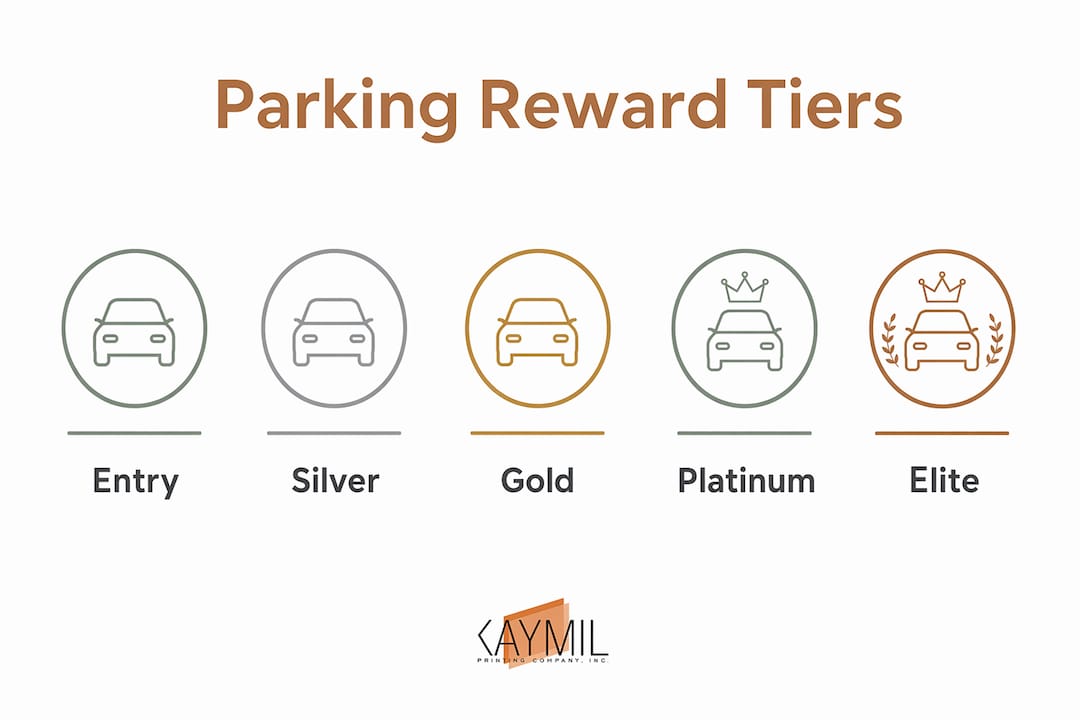
The most effective parking rewards schemes use four tiers:
- Entry level: Awarded on enrollment. Guests earn a base rate of points per dollar spent on parking. Small instant perks, like a one-time discount, encourage immediate engagement.
- Silver: Reached after a defined spend or visit threshold. Benefits include priority access lanes or a modest percentage discount on parking fees.
- Gold: Reserved for frequent visitors. Perks include complimentary parking on select days, early access to casino promotions, or hotel room upgrades.
- Platinum: The top tier for your highest-value guests. Benefits include fully comped parking, dedicated valet service, and direct integration with casino host programs.
Tiered loyalty programs that personalize offers based on user behavior significantly increase customer engagement beyond generic rewards. Tracking visit frequency and redemption preferences lets you customize offers at each tier rather than broadcasting the same deal to everyone.
Point expiration policy matters more than most operators realize. Offering smaller instant rewards alongside higher-tier incentives engages casual parkers who might otherwise disengage before reaching a meaningful threshold. Programs like SJC Park Perks keep points valid for three years, which removes the anxiety of losing accumulated value and encourages long-term participation.
Pro Tip: Tie your parking tier status directly to your casino’s existing player tier system. A guest who qualifies as a Gold player at the tables should not have to start from scratch in your parking rewards scheme. Shared tier recognition removes friction and signals that you value the whole guest relationship.
For casino operators, integrating parking rewards with casino player loyalty databases enables automatic parking comping for high-value patrons, eliminating manual validation entirely. That is the gold standard for hospitality operations.
Step-by-step: How do you implement and manage a parking rewards program?
Execution separates programs that grow from programs that stall. Follow these steps to launch and sustain your player loyalty incentives program.
Enrollment and ticket issuance
- Set up enrollment at entry points. Guests scan a loyalty card, enter a phone number, or use a casino player card at the parking kiosk or valet stand. The system links their identity to the ticket issued.
- Issue a branded rewards ticket. The ticket carries a barcode or sequential number tied to the guest’s loyalty account. Caymil’s barcoded valet parking tickets are built for exactly this kind of data-linked issuance.
- Automate point calculation at exit. When the guest pays or validates, the system calculates points earned and updates their balance in real time.
- Send a confirmation. A text or email confirming points earned closes the loop and reinforces the value of participation.
Ongoing management and promotion
- Audit your validation process monthly. Identify where guests abandon the redemption flow and fix those friction points first.
- Promote tier progress actively. Tell guests how many points they need to reach the next tier. Progress visibility drives behavior.
- Use digital channels for targeted offers. Send a bonus points promotion to Silver members who have not visited in 30 days. That kind of targeted outreach costs little and recovers lapsed guests.
- Train staff on exception handling. When a ticket fails to scan or a guest disputes their balance, staff need a clear resolution path that does not require a manager every time.
- Review redemption rates quarterly. Low redemption signals that rewards are either too hard to earn or not desirable enough. Adjust thresholds or add new perks before guests disengage entirely.
Card-linked reward programs paired with bank partnerships remove manual redemption steps, boosting user adoption compared to app-based manual systems. If your operation can support card-linked technology, it is worth the integration investment. Guests who do not have to think about redeeming rewards are far more likely to stay enrolled.
For operators building out their VIP parking pass program, the same enrollment and tier logic applies. The physical ticket remains the anchor of the transaction, which is why print quality and data accuracy on each ticket matter.
How do you troubleshoot common problems in a parking rewards program?
Even well-built programs hit friction points. Knowing the most common failure modes lets you fix them before they damage guest satisfaction.
- Ticket validation failures: Barcodes that do not scan at exit are the most common complaint. Use thermal-printed tickets with high-contrast barcodes and test scanners weekly. Caymil’s thermal tickets are printed on high-speed machines to maintain barcode clarity across every roll.
- Reward fatigue: Guests stop engaging when rewards feel out of reach. Clear expiration policies and multi-platform earning opportunities reduce fatigue and increase participation. Add a low-threshold instant reward to re-engage guests who have gone quiet.
- Database sync errors: When the parking system and the player database fall out of sync, guests lose points or receive incorrect tier status. Schedule automated reconciliation checks daily, not weekly.
- Staff inconsistency: If attendants enroll guests differently at each shift, data quality degrades fast. Standardize the enrollment script and post it at every valet stand and kiosk.
- Dispute resolution delays: Guests who wait more than 48 hours for a points correction will disengage. Transparent, digital-first parking rewards programs avoid the negative association of penalty disputes, improving brand loyalty. Build a self-service correction portal so guests can flag issues without calling a hotline.
“The biggest challenge in loyalty parking is removing manual ticket validation to reduce friction and increase participation. Automation is not a luxury. It is the baseline requirement for any program that expects sustained engagement.” — DFW Airport myDFW Rewards launch insights
Major parking operators have allocated millions in parking credits to address service failures and restore consumer trust. That scale of remediation is avoidable. Building transparency and automation into the program from day one costs far less than recovering from a trust deficit later.
Key Takeaways
A player rewards parking ticket program succeeds when it combines automated validation, tiered incentives, and direct integration with your existing player or guest database.
| Point | Details |
|---|---|
| Automation is non-negotiable | License plate recognition and card-linked tech remove friction and drive enrollment. |
| Tier design drives behavior | Four-tier structures with instant entry-level perks engage both casual and frequent guests. |
| Database integration is the core | Linking parking rewards to casino player databases enables automatic comping and eliminates manual steps. |
| Expiration policy affects retention | Multi-year point validity, like the three-year window used by SJC Park Perks, reduces reward fatigue. |
| Ticket quality anchors the system | Barcode clarity and data accuracy on every printed ticket determine whether the program functions at all. |
What I have learned from watching parking rewards programs succeed and fail
The programs that fail share one trait: they treat the parking ticket as an afterthought. Operators invest in software, train staff, and build beautiful tier structures, then issue tickets that cannot hold a reliable barcode or carry enough data fields to feed the loyalty platform. The physical ticket is not decoration. It is the first data capture point in the entire chain.
The programs that work understand that automation is the real product they are selling to guests. Nobody wants to fill out a form at the exit lane to claim a discount they earned three visits ago. Card-linked rewards paired with LPR technology deliver fully automated parking rewards, and that frictionless experience is what keeps guests enrolled long-term.
My honest recommendation: start with a two-tier program if you are launching from scratch. Entry and Gold. Get the integration right, prove the concept, then add tiers as your data matures. Operators who launch with four tiers on day one often find that the middle tiers go unoccupied because the thresholds were set without real visit-frequency data. Build from evidence, not assumptions.
The future of this space is card-linked and LPR-driven. The operators who invest in that infrastructure now will not be scrambling to retrofit it in two years when guest expectations have shifted further.
— Richard
Caymil’s ticketing solutions for your rewards program
Running a player rewards parking ticket program means every ticket issued must carry accurate data, scan reliably, and represent your brand. Caymil has manufactured custom parking and valet tickets since 1937, and that depth of experience shows up in print quality that holds up under high-speed machine issuance and real-world handling.
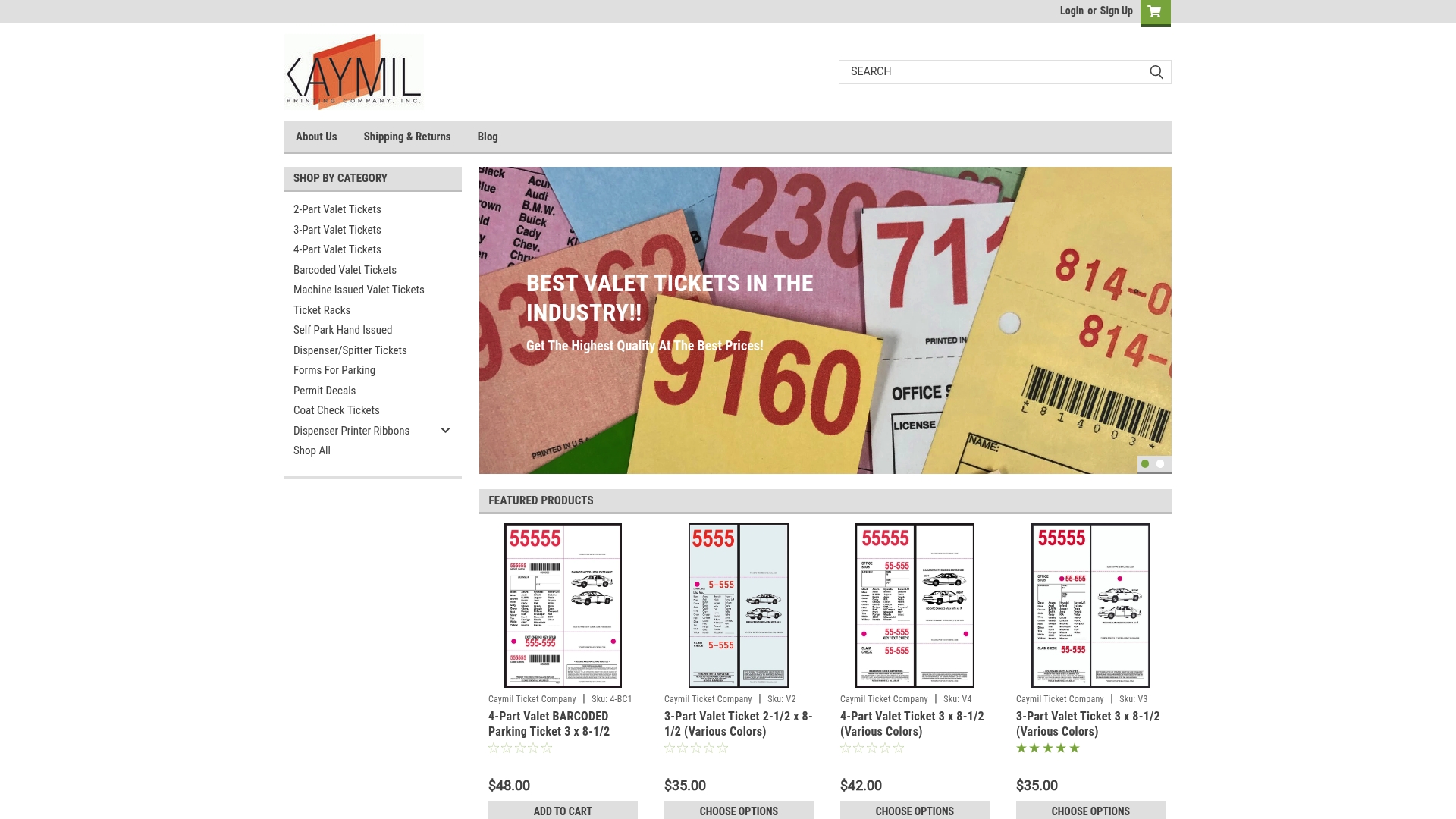
Caymil’s machine-issued valet tickets are built for high-volume operations that need barcodes, sequential numbering, and custom branding on every ticket. For operators who need multi-part carbonless formats for manual valet programs, Caymil’s parking forms and ticket products cover a full range of configurations. Custom colors, logos, and security features are available on both stock and fully customized orders, with fast nationwide shipping to keep your operation running without delays.
FAQ
What is a player rewards parking ticket program?
A player rewards parking ticket program is a loyalty system that links a guest’s parking activity to redeemable benefits such as discounts, comped parking, or tier-based perks. It typically integrates with a casino player database or hotel guest system to automate reward delivery.
How do parking rewards points get tracked?
Points are tracked through barcoded or magnetic stripe tickets that connect each parking transaction to a guest’s loyalty account. Automated systems update balances at exit, and guests receive confirmation via SMS or email.
What tier structure works best for casino parking rewards?
A four-tier structure covering entry, silver, gold, and platinum levels works well for most casino operations. Each tier should offer progressively stronger benefits, with instant low-threshold perks at entry to engage new enrollees immediately.
How do you reduce ticket validation friction in a rewards program?
License plate recognition technology eliminates the need for guests to present a physical ticket at exit. Card-linked rewards go one step further by applying discounts automatically based on qualifying spend, with no guest action required.
How long should parking rewards points remain valid?
Points should remain valid for at least two to three years. Programs like SJC Park Perks use a three-year validity window, which reduces reward fatigue and encourages guests to stay enrolled between visits.
Recommended
- VIP Parking Pass Program Creation: 2026 Guide - Caymil Printing Co., Inc.
- Sequential Numbering Parking Tickets: A Practical Guide - Caymil Printing Co., Inc.
- Parking Machine Ticket: What Every Driver Should Know - Caymil Printing Co., Inc.
- Custom Logo Parking Ticket Options for Operators - Caymil Printing Co., Inc.