
4 SKIDATA Ticket Media Types Operators Must Test (Caymil Samples)
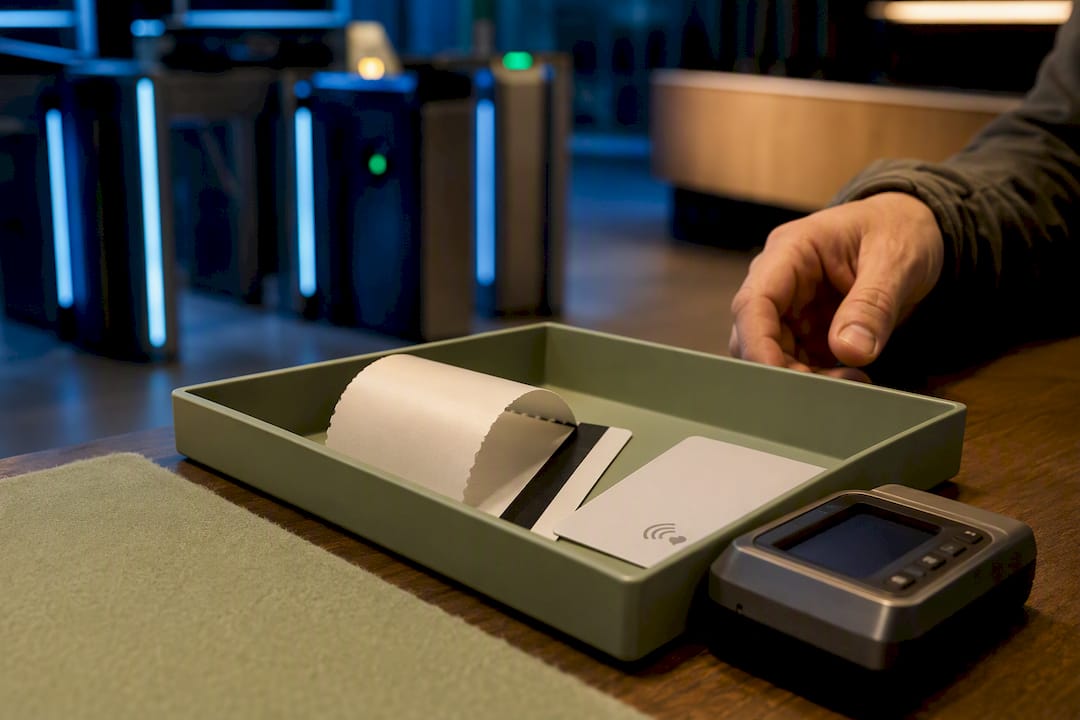
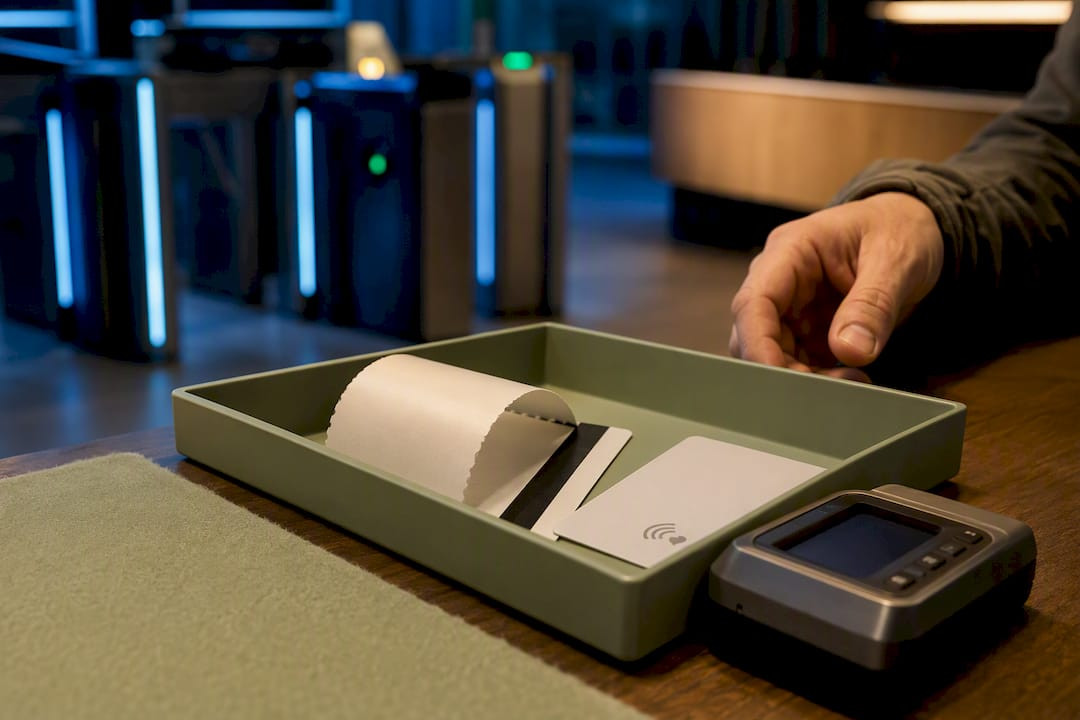
SKIDATA-compatible ticket media falls into four practical categories: single-use paper (including PVC-free stock), reusable plastic RFID keycards, magnetic-stripe and barcode tickets, and mobile eTickets using BLE or NFC. The right choice depends on how durable the media needs to be, what kind of guest experience you’re building, your sustainability targets, and what dispenser or reader hardware you already have installed.
TL;DR:
- Reusable RFID keycards offer long-term cost savings and durability but require precise dispenser compatibility and periodic cleaning.
- Mobile eTickets leverage Bluetooth or NFC for convenience but depend on device model, background permissions, and offline caching for reliable operation.
- Certified ticket producers are essential to meet SKIDATA specifications, ensuring media compatibility, warranty protection, and preventing reader damage.
- Physical ticket media, including paper and plastic cards, remain necessary for guests without smartphones or in high-volume access points needing reliable, immediate issuance.
- Caymil provides ready-to-ship SKIDATA-compatible tickets and custom proofs, supporting operations with quick turnaround and confirmed device-fit.
Table of Contents
- What Counts as SKIDATA Ticket Media?
- Physical Ticket Formats: Paper, Plastic Keycards, and Premium Materials
- RFID/NFC vs Magnetic Stripe vs Barcode: Which Carrier Technology Fits?
- How Does Mobile eTicketing Actually Work?
- Customization, Encoding, and Why Certified Producers Matter
- Implementation Checklist Before You Go Live
- Caymil’s Role in SKIDATA-Compatible Ticket Media
- Where Ticket Media Is Headed
- Order SKIDATA-Compatible Ticket Media From Caymil
- Sources
- FAQ
What Counts as SKIDATA Ticket Media?
Ticket media splits into two operational categories: single-use and reusable. Single-use tickets, whether paper, barcode, or magnetic stripe, get issued once and discarded. Reusable media, mostly RFID keycards, gets reloaded and reissued across a season or indefinitely.
That distinction drives almost every downstream decision. Single-use formats cost less per unit but generate more waste and require constant restocking. Reusable cards cost more upfront but amortize that cost across dozens or hundreds of uses, which matters for season-pass holders and staff access.
The access-control system and the operator split responsibilities differently depending on format:
- The SKIDATA reader/controller handles encoding logic, validation rules, and access decisions.
- The operator supplies compliant physical or digital media that meets the system’s technical specifications.
- Dispensers and printers on-site handle real-time issuance for walk-up sales.
- Back-office systems manage lifecycle: activation, deactivation, blacklisting lost cards, and reporting.
Guest flow suffers when media and hardware don’t match. A card that reads slowly at the turnstile creates a line; a ticket that jams a dispenser creates a bigger one. Format selection is as much an operations decision as a purchasing one.
Physical Ticket Formats: Paper, Plastic Keycards, and Premium Materials
Paper tickets remain the workhorse of high-volume, single-use access. Stock paper ticket rolls work for walk-up window sales, while custom-printed formats carry logos, sequential numbers, and barcodes for branded operations. PVC-free paper stock has become the default choice for operators trying to cut plastic waste without sacrificing print quality or scan reliability.
Plastic keycards, usually PET or PVC with an embedded RFID chip, serve reusable applications: season passes, employee badges, and multi-day visitor cards. They survive repeated swipes, cold weather, and rough handling far better than paper, which is why most reload-and-reuse programs standardize on them despite the higher per-unit cost.
Premium materials, including wooden keycards, show up mostly as a branding play. They photograph well and reinforce a sustainability message, but they carry a real trade-off: sourcing costs run higher, and encoding a wood-composite card reliably takes more manufacturing precision than a standard PET card.
A few operational realities to plan around:
- Paper rolls need dry, temperature-stable storage; humidity warps rolls and jams feed mechanisms.
- Plastic keycards need periodic reader-cleaning schedules since chip contacts and antenna coils degrade with heavy use.
- Dispenser compatibility isn’t universal. Roll diameter, core size, and perforation pitch must match the machine exactly.
- Replacement cycles for reusable cards typically run one to three seasons before chip failure rates climb.
Pro Tip: Request a physical sample roll or card batch before committing to a bulk order. A spec sheet can confirm dimensions on paper, but only a test run through your actual dispenser confirms real-world fit.
RFID/NFC vs Magnetic Stripe vs Barcode: Which Carrier Technology Fits?
Each carrier technology solves a different problem, and picking the wrong one shows up immediately at the gate.
- RFID/NFC offers the longest read range and the most reliable hands-free performance. The embedded chip stores an encoded ID that the reader validates against the access-control database, which is what makes reusable keycards work across multiple services (lifts, parking, food and beverage) on one card.
- BLE mobile passes push that convenience further. The phone communicates with the reader over Bluetooth without the guest pulling anything out of a pocket, though this requires the app running in the background and location services enabled.
- Magnetic stripe persists mainly where legacy readers are already installed or where operators need a low-cost, simple-to-encode option. Its failure mode is data corruption from repeated swipes, cold-weather brittleness, and susceptibility to magnetic interference from nearby electronics.
- Barcode and QR tickets are the cheapest single-use option and print on nearly any thermal or laser printer, but they’re more vulnerable to duplication and low-quality scan failures than encoded RFID chips.
Reader hardware matters as much as the media itself. Outdoor RFID readers exposed to snow, sun glare, or extreme cold perform differently than indoor units, so field testing under real conditions catches problems a spec sheet won’t.
How Does Mobile eTicketing Actually Work?
Mobile ticketing has moved from novelty to standard offering at large-scale venues, and the flow follows a consistent pattern across most implementations:
- Purchase. The guest buys a pass online or through a resort or venue app.
- Load. The ticket loads into the mobile app tied to that guest’s account.
- Activate. The app requires background Bluetooth and location permissions before the pass will function at a gate.
- Use. The guest walks through a BLE-enabled turnstile or scans a token generated within the app.
Vail Resorts’ My Epic app demonstrates this at scale, using BLE for hands-free lift access across multiple resorts, cutting down on physical card handling at high-traffic base areas. Device compatibility is the biggest operational headache: implementations like Ski amadé’s smartphone ticket system require specific OS versions and explicit background permissions, and they publish lists of incompatible phone models because older devices simply can’t maintain the Bluetooth connection reliably.
Offline resilience matters too. A guest without signal at altitude still needs a working pass, so most systems cache activation locally rather than requiring a live connection at the gate. Physical media coexists with mobile rather than replacing it. Guest-support desks field a predictable set of questions: app won’t activate, Bluetooth toggled off, phone battery died mid-day, or the account shows a valid pass but the gate won’t read it. Budget staff training time for exactly these scenarios before rollout.

Customization, Encoding, and Why Certified Producers Matter
Ordering media that actually works with a SKIDATA system means specifying more than a logo and a color scheme. The print and data layer needs sequential numbering for audit trails, a defined barcode symbology (Code 128 and QR are both common), preprinted ad space if you’re offsetting print costs with sponsorship, and clean perforation for tear-off stubs where applicable.
Encoding specifics matter just as much:
- RFID/NFC chips need a defined data structure the access controller can read; get this wrong and the card reads as invalid rather than denied.
- Magnetic-stripe tracks need to match the read head’s track configuration; most systems use Track 2, but confirm this against your specific hardware.
- Security features, hidden UV ink, micro-text, or void patterns, deter counterfeit attempts on high-value single-use tickets.
Working with a certified or qualified ticket producer isn’t a formality. SKIDATA maintains a partner list of qualified ticket producers specifically because media that doesn’t meet spec can void warranty coverage and cause reader damage the manufacturer won’t cover. Certified producers also supply spec sheets and certificate downloads your acceptance-testing team will need before signing off on a shipment. Caymil’s own technical breakdown of SKIDATA parking system tickets covers the specific dimensional and encoding tolerances that keep custom orders compatible from the first batch.
Implementation Checklist Before You Go Live
Rolling out new ticket media without a structured test plan is how operators end up with a jammed dispenser on opening day. Work through this sequence instead:
- Verify dispenser and printer fit. Confirm roll diameter, core size, and perforation pitch against manufacturer drawings before ordering production quantities.
- Test reader calibration. Run sample cards or tickets through every reader model on-site, not just one unit, since sensitivity varies by installation age.
- Confirm lead times and minimums. Custom-printed batches typically carry longer lead times than stock formats, so order buffer stock ahead of peak season.
- Plan storage conditions. Paper needs low humidity; plastic cards need to avoid extreme heat that can warp the RFID inlay.
- Script the reissue process. Define exactly how staff handle lost-card replacement and reactivation so front-line teams aren’t improvising during a rush.
Pro Tip: Run your acceptance test with the same staff who’ll operate the equipment daily, not just the installation technician. Front-line users catch usability problems that pass every technical spec check.
Caymil’s Role in SKIDATA-Compatible Ticket Media
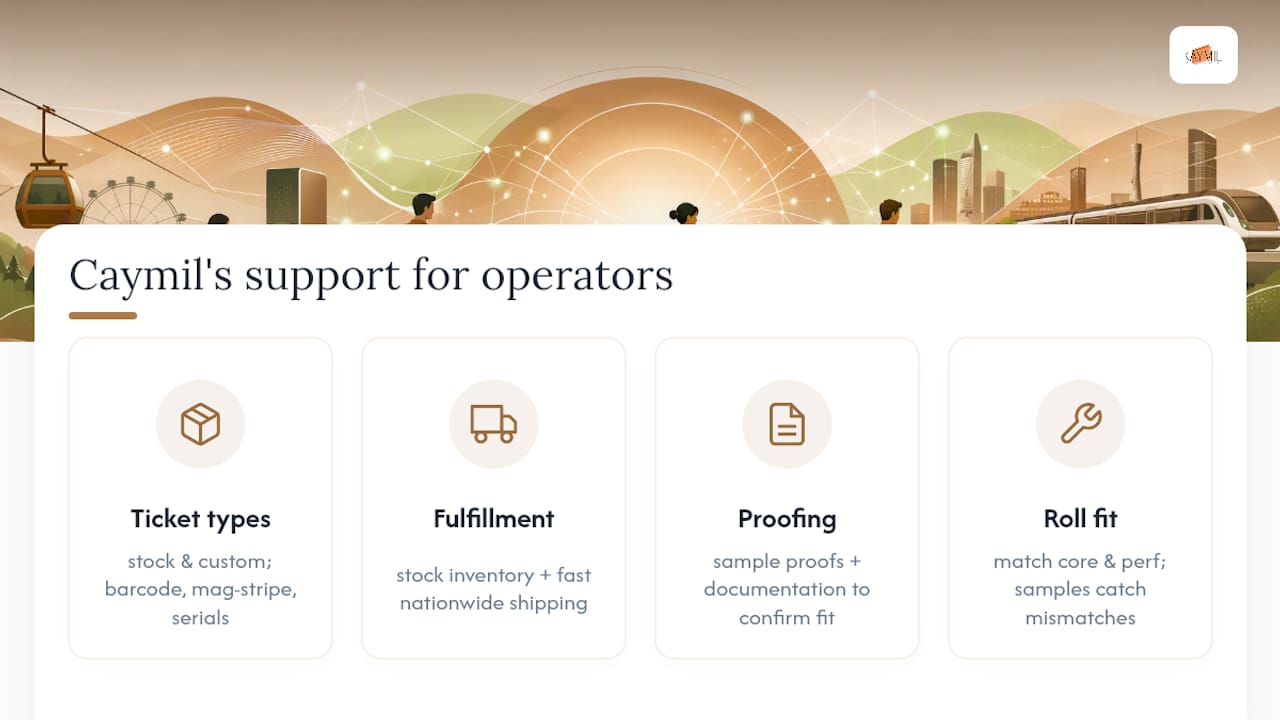
Caymil supplies SKIDATA-compatible stock and custom-printed ticket media, including sequential numbering, barcoding, magnetic-stripe encoding, and machine-issued roll formats built to dispenser-specific dimensions. Operators working against tight seasonal deadlines benefit from Caymil’s stocked inventory and fast nationwide shipping, which shortens the gap between order and installation compared to made-to-order-only suppliers.
Beyond stock product, Caymil supports the technical side of procurement with sample proofs and documentation that let engineering and operations teams confirm fit before committing to a production run. For dispenser roll formats specifically, matching core size and perforation pitch to the installed machine is non-negotiable, and getting a physical sample in hand catches mismatches a spec sheet alone can miss.
Where Ticket Media Is Headed
Mobile adoption keeps climbing, and BLE-based hands-free access will keep expanding at large venues. That doesn’t mean physical media disappears. Guests without compatible phones, staff who need durable multi-season badges, and walk-up sales at a ticket window still need paper or plastic in hand.
The smarter move is pairing certified media compatibility with a careful mobile pilot rather than a full cutover, and matching sustainability choices, PVC-free paper versus reusable cards, to your actual guest mix and lifecycle cost math rather than to a trend.
— Richard
Order SKIDATA-Compatible Ticket Media From Caymil
You can find SKIDATA-compatible ticket stock without the longer lead times and minimum-order friction that custom-only print shops often require. Browse Caymil’s parking and access forms for ready-to-ship stock formats, or check machine-issued valet ticket rolls if your operation runs dispenser-fed issuance.
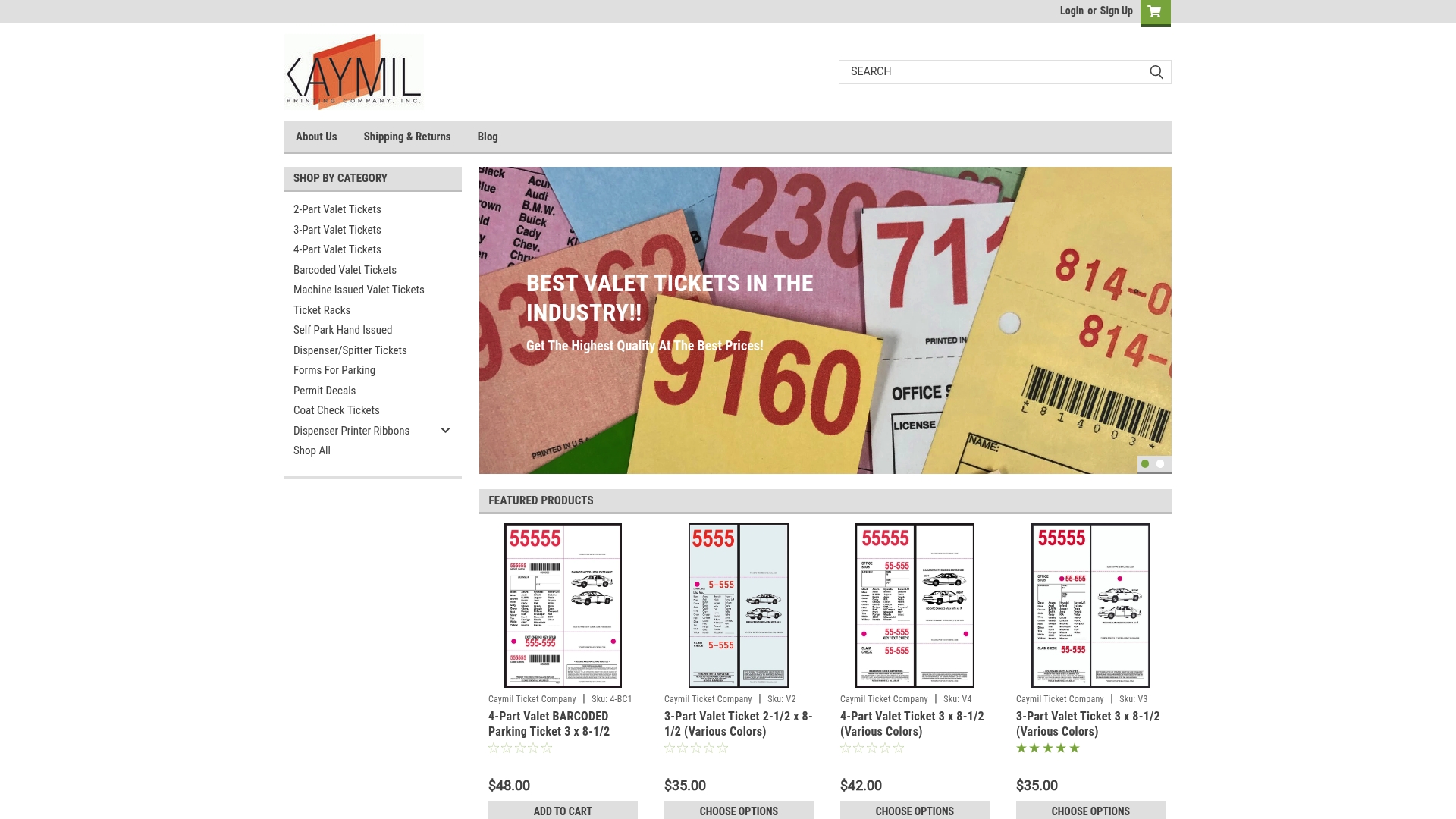
Before requesting a quote or sample proof, have four details ready: the exact ticket format (paper roll, keycard, or barcoded stock), the encoding requirement (magnetic track, RFID, or none), your dispenser or printer model, and your order quantity. Sample proofs and spec sheets can be requested to confirm dimensional and encoding compatibility before committing to a production run. If barcoded single-use tickets fit your operation better than encoded cards, the barcoded valet parking ticket line is worth reviewing alongside your SKIDATA hardware specs. Reach out with your dispenser model and quantity to get a proof started.
Sources
- My Epic app (Mobile Pass & Lift Ticket technology)
- Smartphone Ticket » Ski Ticket on Your Phone | Ski amadé
FAQ
What Ticket Media Works With SKIDATA Systems?
SKIDATA systems accept single-use paper (including PVC-free stock), reusable RFID/NFC plastic keycards, magnetic-stripe and barcode tickets, and mobile eTickets activated through BLE or NFC.
Do I Need a Certified Ticket Producer for SKIDATA Media?
Using a certified or qualified ticket producer protects warranty coverage, since SKIDATA’s own partner guidelines state the company isn’t responsible for hardware damage caused by media that doesn’t meet its specifications.
Can Mobile Tickets Replace Physical Ticket Media Entirely?
Not yet for most operations. Mobile passes require compatible phones, active Bluetooth and location permissions, and background app access, so physical media remains necessary for guests with incompatible devices or no smartphone at all.
How Does Caymil Support SKIDATA Ticket Media Orders?
Caymil stocks and custom-prints SKIDATA-compatible tickets, including magnetic-stripe, barcoded, and machine-issued roll formats, and provides sample proofs to confirm dispenser and encoding fit before production, as detailed in its SKIDATA parking ticket guide.
Are PVC-Free Paper Tickets Reliable for High-Volume Access Points?
Yes, PVC-free paper stock performs well for single-use passes at high volume when paired with proper dispenser calibration and dry storage conditions to prevent jamming.