
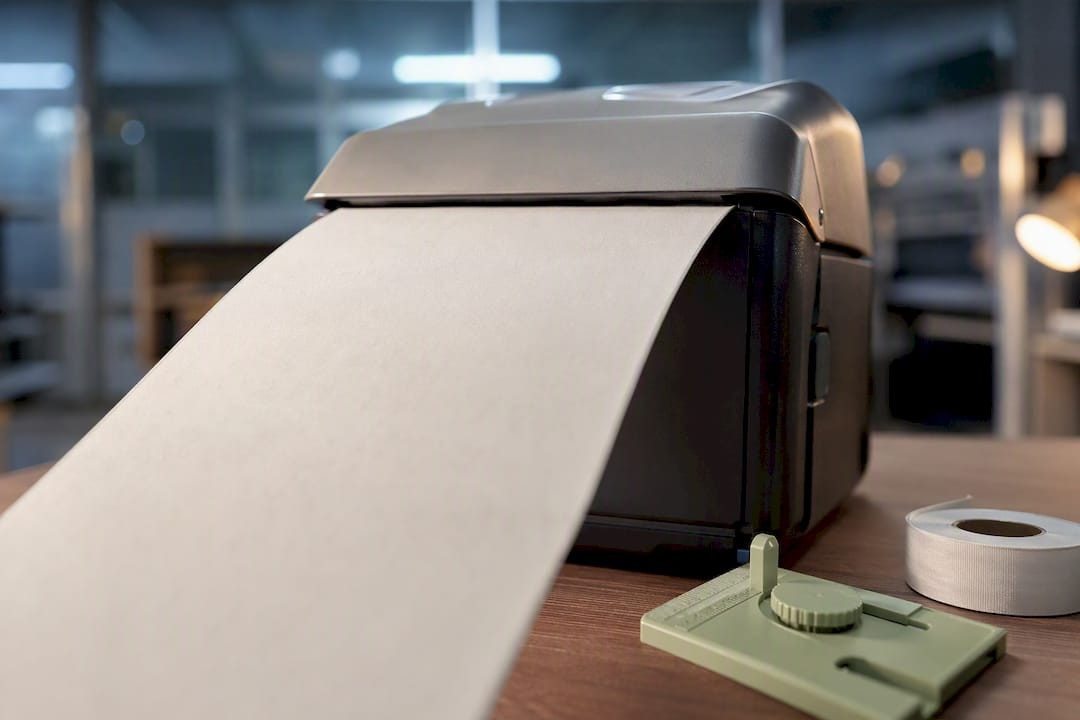
Avoid a 50 Foot Roll Mismatch: Flash Parking Ticket Media Specs
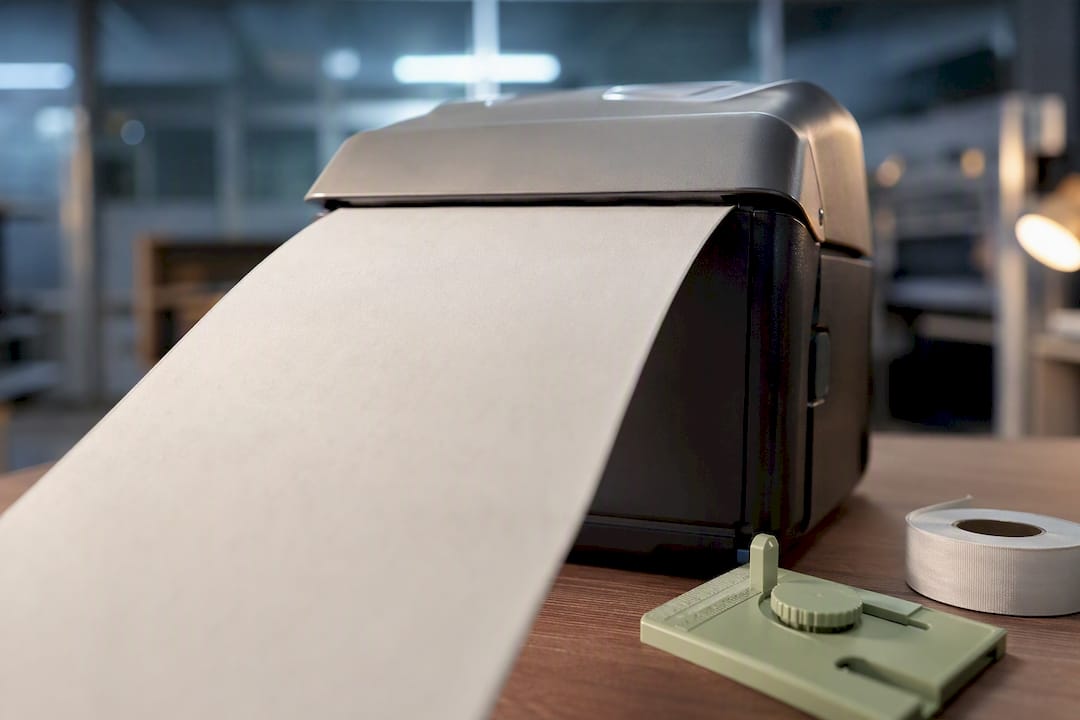
For operational uptime, order OEM-compatible, top-coated thermal rolls or the exact machine-issued ticket stock your printer manufacturer specifies. “Flash parking ticket media” refers to the physical ticket stock, thermal rolls, and machine-issued tickets used across parking systems, not a single product. When your operation requires scanning or duplicate copies, specify multi-part carbonless or barcoded stock instead. Both formats are available, designed to match major parking system specifications.
TL;DR:
- Compatibility with your specific printer model is critical; always test and confirm roll diameters, core sizes, and thermal grades before large orders.
- Top-coated thermal rolls provide better UV, moisture, and abrasion resistance, making them suitable for outdoor or high-traffic use cases.
- Choosing the correct media type, such as barcoded, multi-part, or magnetic stripe tickets, depends on your parking operation’s scanning and record-keeping needs.
- Small discrepancies in roll length or size, like 50 extra feet, can prevent equipment from functioning or cause jams, so precise measurements matter.
- OEM-approved, durable media, though sometimes more expensive upfront, reduces service calls and downtime, ensuring operational uptime.
Table of Contents
- What Specs Should You Put on a Flash Parking Ticket Media Purchase Order?
- Which Media Type Fits Which Parking Operation?
- Why Does Roll Size Compatibility Matter So Much?
- How Do Heat and UV Exposure Damage Ticket Media?
- Should You Stock Standard Ticket Inventory or Order Custom?
- What Causes Print Jams and Faded Tickets, and How Do You Fix Them?
- What Should Parking Operators Prioritize When Buying Ticket Media?
- Order Compatible Parking Ticket Stock From Caymil
- Sources
- FAQ
What Specs Should You Put on a Flash Parking Ticket Media Purchase Order?
A purchase order that skips specs invites the wrong shipment. Give your supplier these details up front and you eliminate most compatibility disputes before they start.
Mechanical dimensions:
- Roll or panel width (measured in inches, not estimated)
- Core size (inner diameter the roll winds around)
- Outer diameter and total roll length
- Ticket panel size for machine-issued or carbonless stock
Material and performance:
- Thermal grade (direct thermal vs. top-coated)
- UV and moisture resistance rating, if your printers sit outdoors
- BPA-free construction, increasingly requested by municipal and hospital buyers
Data and print requirements:
- Sequential numbering range and starting point
- Barcode symbology (Code 39, Code 128, or your system’s required format)
- Magnetic stripe encoding specs, if applicable
- Preprinted fields, logo placement, and color requirements
Packaging and logistics:
- Rolls or sets per case, cases per pallet
- Case labeling requirements for multi-site distribution
- Requested ship date and carrier preference
Send this list to your vendor before requesting a quote. It shortens the back and forth and reduces the odds of a shipment that arrives close but not compatible.
Which Media Type Fits Which Parking Operation?
Different workflows call for different ticket formats, and picking the wrong one creates friction at the point of service, not just at the printer.
- Thermal rolls for kiosks and pay stations. Self-service terminals that print continuously benefit from top-coated thermal rolls, which resist smudging from handling and fading from sun exposure through kiosk windows.
- Machine-issued “spitter” tickets for valet operations. Valet stands and gated garages that dispense tickets from a machine need stock sized to the dispenser’s feed mechanism, usually a narrower panel than pay-station rolls.
- Multi-part carbonless tickets for audit trails. Hotels, casinos, and airport valet operations that need a customer copy, an attendant copy, and an accounting copy rely on 2-part, 3-part, or 4-part valet ticket sets.
- Barcoded tickets for gate scanning and event reconciliation. Garages with automated exit gates or event venues tracking entry counts need barcode symbology matched to their scanner hardware.
- Magnetic-stripe tickets for legacy access control. Older gate systems and some validation setups still read stripe-encoded data, and that encoding has to match the reader’s tolerance exactly.
Match the format to how your attendants and equipment actually process a ticket, not to what looks similar to what you used last year.
Why Does Roll Size Compatibility Matter So Much?
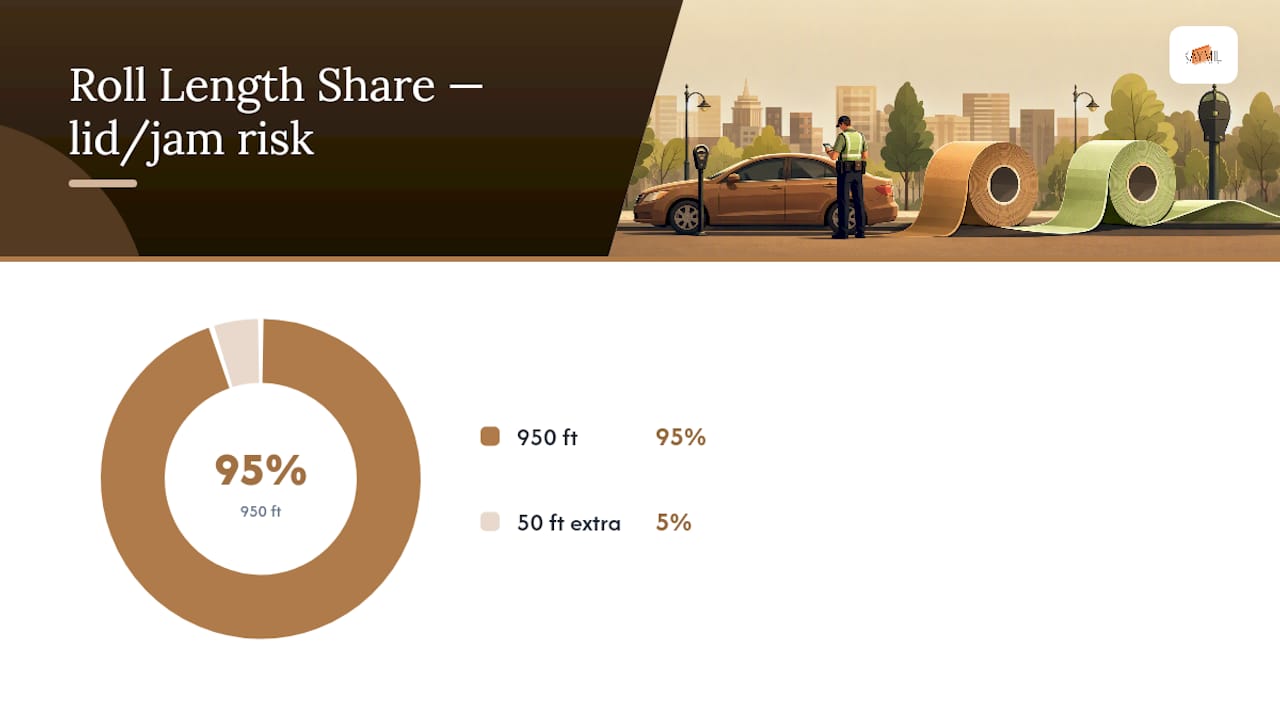
A roll that measures close to your printer’s spec but not exact can still shut your equipment down. Pay stations are engineered around a specific outer diameter, and swapping a 950 foot roll for a 1,000 foot roll can prevent the housing lid from closing or jam the feed path entirely. The extra 50 feet sounds trivial until it is pressing against the printer casing.
Thermal sensitivity matters just as much as physical fit. Media that runs hotter or cooler than your printhead expects causes uneven printing today and accelerated printhead wear over months, sometimes voiding a service agreement that requires OEM-approved consumables.
Before placing a bulk order, run these field checks:
- Measure your current roll’s outer diameter and core size directly, don’t rely on memory or an old invoice
- Test-fit one sample roll and confirm the housing lid closes without resistance
- Run a test print and check for consistent darkness across the full ticket width
- Confirm barcode or magnetic stripe alignment against your scanner or reader before committing to a full case order
Dispenser and spitter mechanisms add another layer: the spindle type and core design have to match the machine’s feed hardware, not just the paper grade.
Pro Tip: Keep one confirmed-compatible sample roll in a labeled envelope at each site. When a new shipment arrives, compare it against the sample before loading a single printer, not after you’ve already stocked the supply closet.
How Do Heat and UV Exposure Damage Ticket Media?
Direct thermal paper darkens when it gets hot, and that reaction doesn’t stop once the ticket leaves the printer. A ticket sitting on a dashboard or behind a windshield in summer can fade to illegible within hours, which becomes a real problem if that ticket is your only record of entry time for a billing dispute.
Common failure modes include:
- Overall darkening or blackening from prolonged heat exposure
- Fading of printed text and numbers under UV light
- Blurred or unreadable barcodes that fail scanner reconciliation
- Water spotting or smearing from humidity or rain exposure at outdoor kiosks
Top-coated thermal paper addresses most of this by adding a protective layer over the thermal coating, resisting UV, moisture, and abrasion that would otherwise degrade a standard roll. Combine that with a moisture-barrier lamination for tickets stored in vehicle cabins, and readability holds up far longer than uncoated stock. BPA-free formulations matter here too, both for environmental compliance and for archival stability if you retain tickets for accounting or legal records.
The math favors spending more up front: cheap, uncoated media frequently causes jams and maintenance calls that cost more in labor and downtime than the price difference between standard and top-coated rolls.
Should You Stock Standard Ticket Inventory or Order Custom?
Stock inventory works when your ticket needs no branding, no special numbering sequence, and no security features beyond what a generic roll already includes. Most single-site garages and simple pay stations fall into this category, and stock orders ship faster because there’s no proofing cycle.
Custom ordering becomes worth the added lead time when you need any of the following:
- Sequential numbering tied to your accounting or audit system
- Preprinted logos, venue branding, or terms and conditions
- Security inks, holograms, or watermarks to deter counterfeit tickets
- Multi-part carbonless sets for 2-part or 3-part valet operations
Multi-site operators should build in a reorder buffer, ordering before inventory drops below a two to three week supply, since custom proofing and print runs take longer than a stock reorder. When submitting numbering or barcode files, confirm the starting number and range with your vendor in writing, and always request a physical or digital proof before a full print run goes to press. A single transposed digit in a numbering sequence is far cheaper to catch on a proof than after 50,000 tickets are printed.
What Causes Print Jams and Faded Tickets, and How Do You Fix Them?
Most ticket printer service calls trace back to media, not the machine itself. Thermal printers are the single most common service item in pay stations, largely due to dust, humidity, and mismatched consumables.
- Jams: Usually caused by an incorrect roll diameter or core size. Swap to a confirmed-compatible roll and check the feed path for debris.
- Streaking or faded print: Often a thermal sensitivity mismatch or a worn printhead. Clean the head with an approved swab first; if streaking persists, the media grade is likely wrong for your printer.
- Rapid printhead wear: Almost always traced to non-OEM media running at the wrong temperature threshold.
Store rolls at moderate room temperature away from direct sunlight, and rotate stock on a first-in, first-out basis so older inventory doesn’t sit past its usable shelf life. If a jam or fading issue persists after a media swap and head cleaning, escalate to your vendor or a field technician rather than repeating the same fix.
Pro Tip: Offering an electronic receipt option where your system allows it can cut paper consumption significantly and extend the life of your printhead and cutter blade between service visits.
What Should Parking Operators Prioritize When Buying Ticket Media?
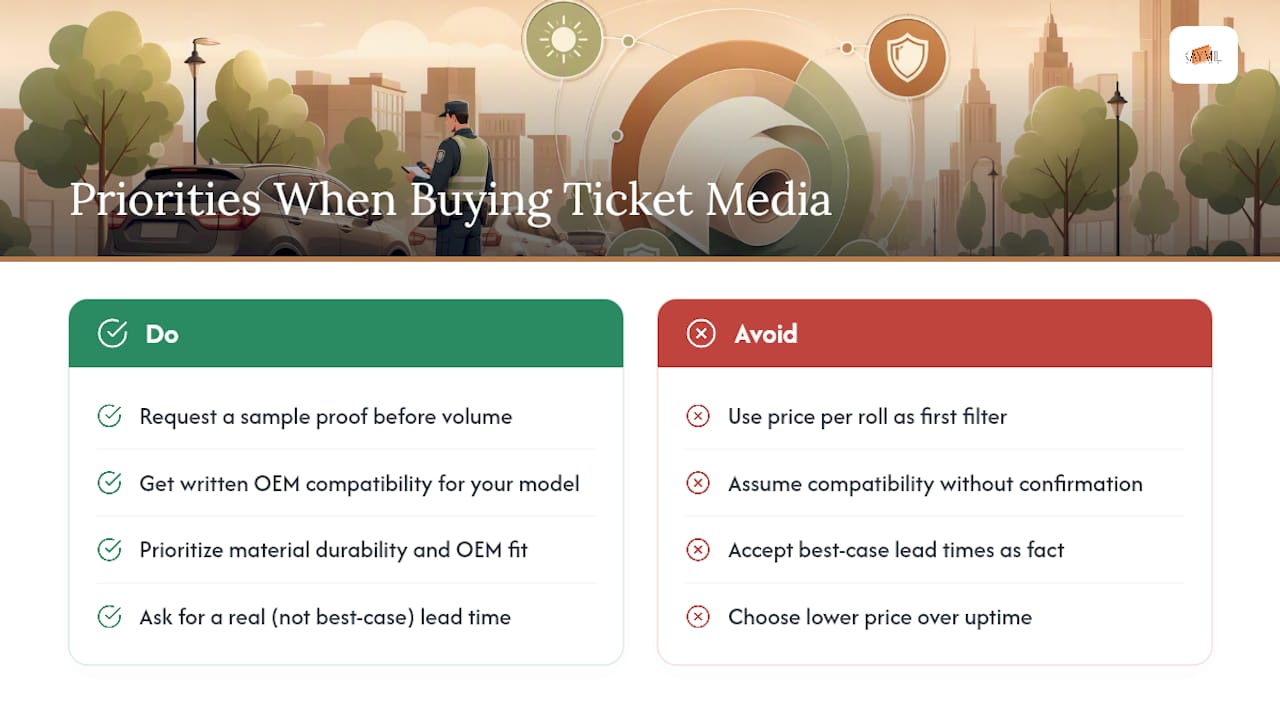
Price per roll is the wrong first filter. OEM compatibility and material durability determine whether that roll actually gets you through a billing cycle without a service call, and uptime consistently outweighs upfront material savings once you factor in labor and downtime.
A short vendor checklist works better than a spreadsheet of unit prices: request a sample proof before committing to volume, get written confirmation of OEM compatibility for your specific printer model, ask for a real lead time (not a best-case estimate), and confirm whether the supplier can drop-ship to multiple locations. Caymil has manufactured parking and valet ticket stock since 1937, with product lines built for compatibility across major systems including Amano, TIBA, SKIDATA, FLASH Parking, Scheidt & Bachmann, and Flowbird. That kind of specific compatibility history matters more than a lower per-thousand price when a mismatched roll takes a kiosk offline during a Saturday rush.
— Richard
Order Compatible Parking Ticket Stock From Caymil
Caymil manufactures the exact categories covered in this guide: machine-issued valet tickets, barcoded valet parking tickets, dispenser and spitter formats, and thermal rolls sized to match major OEM specifications. Every product line ships with the mechanical and material specs this guide walks through already built in, so you’re not guessing at core size or thermal grade when you place an order.
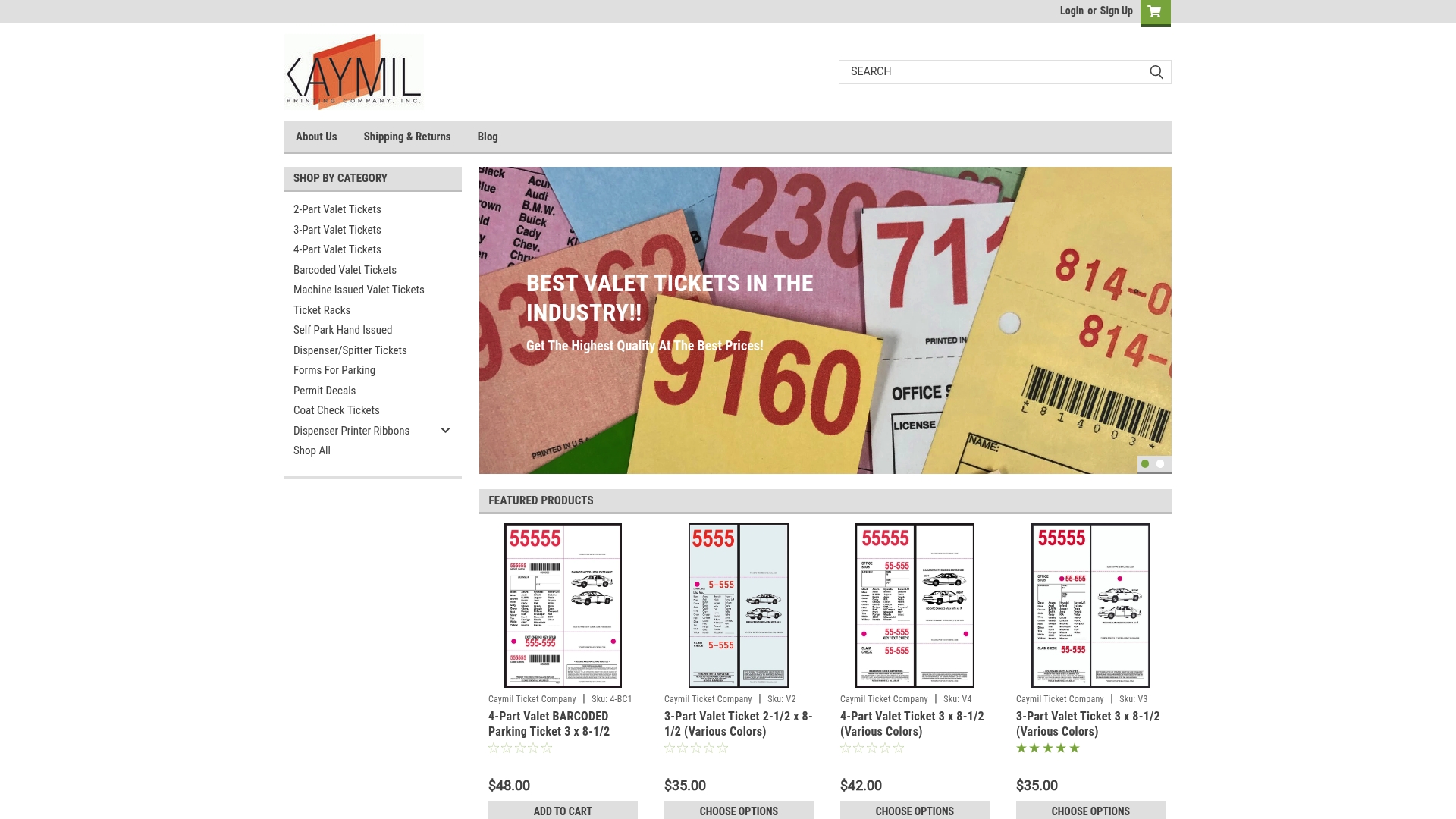
Caymil keeps stock inventory on hand for fast turnaround, alongside custom options for numbering, security features, logos, and multi-part sets when your operation needs them. Nationwide shipping covers single-site garages and multi-location fleets alike. Browse the full parking and valet ticket forms catalog, request a compatibility check against your printer model, or place a stock order directly to get media moving toward your loading dock this week.
Sources
- Pay & Display Roll Guide: 2.25 x 950 vs 1000 Thermal Paper - Northern Specialty Supplies, Inc.
- Receipt Printer Technology Lifecycle in Parking Pay Stations | Parking Payment Guide
- Kiosk
FAQ
What Does “Flash Parking Ticket Media” Mean for Buyers?
It refers to the physical ticket stock, thermal rolls, and machine-issued tickets used with parking management systems, covering formats like thermal rolls, carbonless multi-part sets, and barcoded or magnetic-stripe tickets.
What’s the Difference Between Standard and Top-Coated Thermal Rolls?
Top-coated rolls add a protective layer over the thermal coating that resists UV, moisture, and abrasion, making them the better choice for outdoor kiosks and vehicle-exposed tickets where standard rolls fade quickly.
Why Won’t a Different Roll Size Fit My Printer?
Pay stations are built around a specific outer diameter and core size; a roll that’s even 50 feet longer than spec, such as 1,000 feet instead of 950 feet, can prevent the housing lid from closing properly.
Should I Choose Barcoded or Magnetic-Stripe Tickets?
Barcoded tickets work best for modern gate scanning and event reconciliation, while magnetic-stripe stock still suits legacy access control systems that were built around stripe readers.
Does Caymil Offer Custom Ticket Printing?
Custom ticket stock with sequential numbering, barcoding, security features, and preprinted branding is available alongside stock inventory options, compatible with major parking systems.