
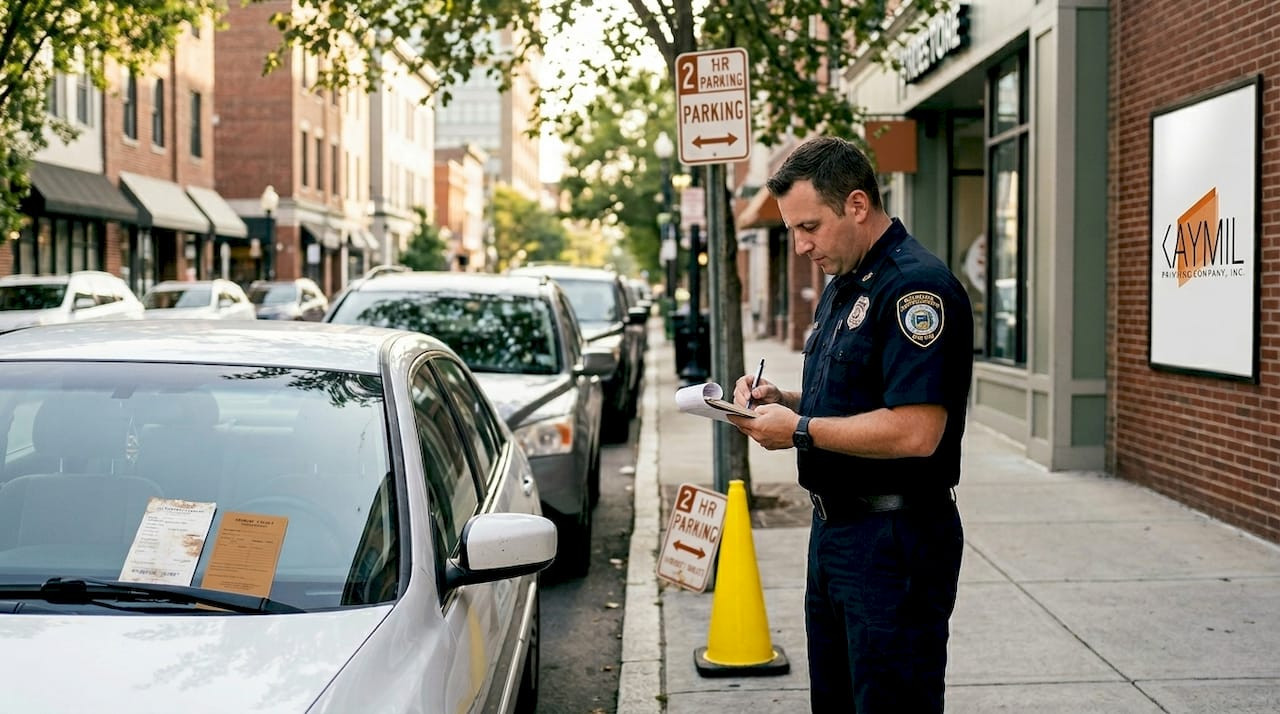
Parking Receipt vs Parking Ticket: Know the Difference
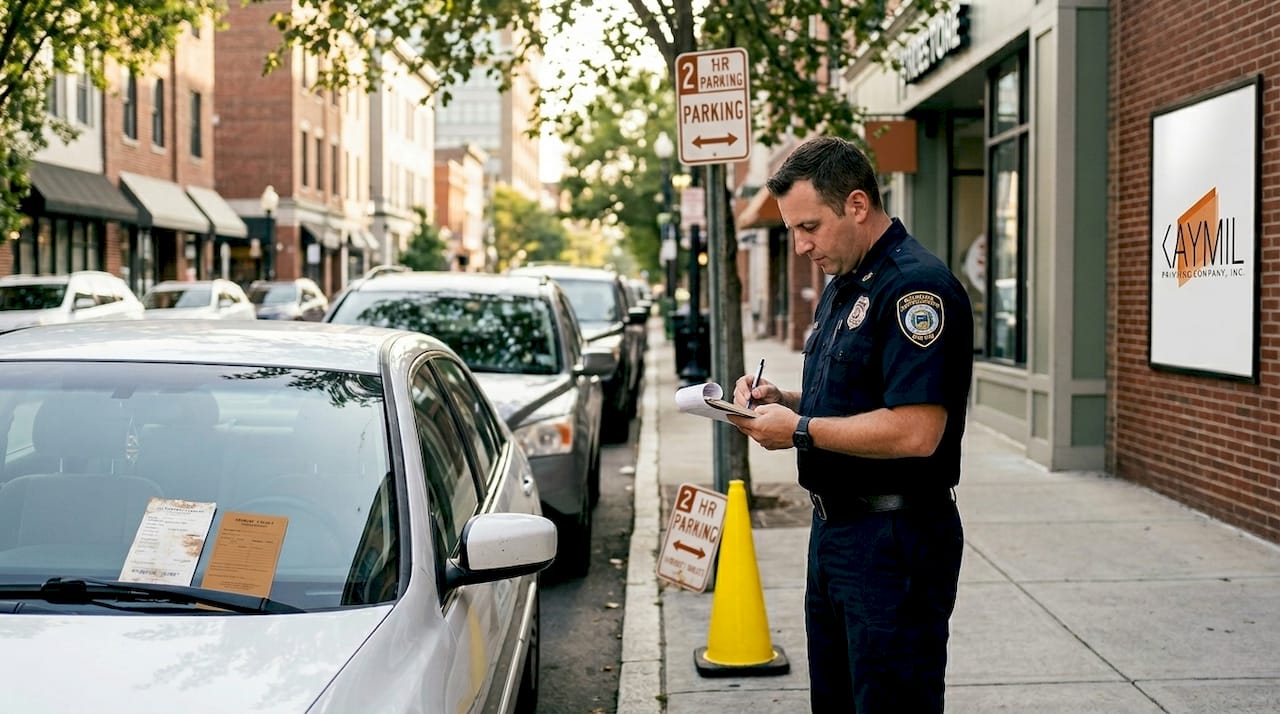
Mixing up a parking receipt and a parking ticket is more common than you might expect, and the consequences range from paying a fine you don’t actually owe to losing your right to appeal one you do. The parking receipt vs parking ticket distinction is not just semantic. These are fundamentally different documents with different legal weight, different issuing authorities, and completely different implications for your wallet and your records. Whether you manage a parking operation, handle corporate expense reports, or simply park in a city garage regularly, knowing exactly what each document means puts you in control.
Table of Contents
- Key takeaways
- Parking receipt vs parking ticket: core definitions
- Legal and financial consequences you need to understand
- How parking validation tickets work
- Private parking notices vs. official municipal tickets
- Practical tips for managing parking documents
- My perspective on parking document confusion
- Parking ticket and receipt solutions from Caymil
- FAQ
Key takeaways
| Point | Details |
|---|---|
| Tickets are penalties, receipts are proof | A parking ticket is a government-issued fine; a receipt confirms you paid for parking. |
| Validation is not free parking | Validation tickets reduce or waive fees as a business incentive, not an automatic customer right. |
| Receipts protect you in disputes | A valid receipt can help contest a ticket or support a reimbursement claim. |
| Private notices differ from official tickets | Private parking operator notices are civil matters, not criminal penalties enforced by the government. |
| Records prevent compounding costs | Keeping receipts, validation tickets, and ticket deadlines organized prevents late fees and escalation. |
Parking receipt vs parking ticket: core definitions
These three documents show up in the same physical spaces but serve entirely different purposes. Getting them confused leads to real problems.
A parking ticket is an official penalty document issued by a government authority, such as a city parking enforcement officer or a transit authority. It signals a violation, not a transaction. It carries a fine, a response deadline, and the legal weight of a government citation. Ignore it, and late fees escalate fines by 15% to 50% depending on the jurisdiction, with some cities tacking on flat fees between $20 and $50 if you don’t respond within 7 to 30 days.
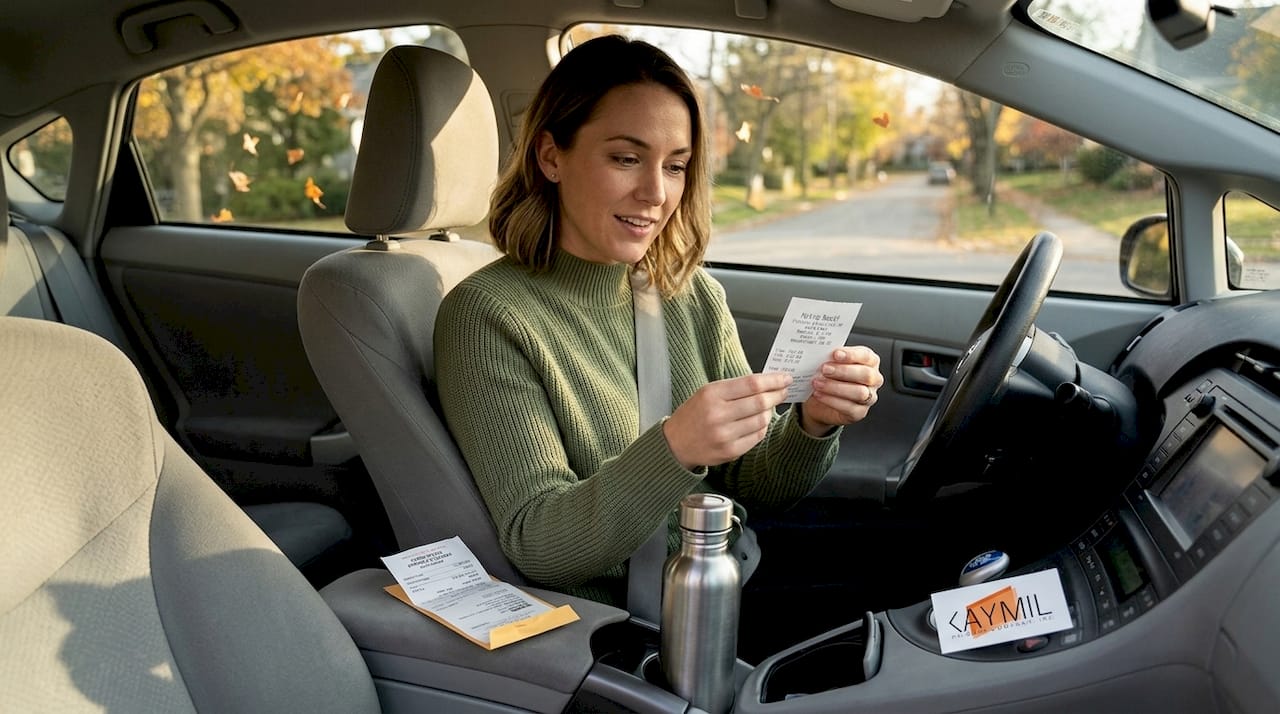
A parking receipt is proof of a completed, paid parking transaction. It is issued by a parking facility, kiosk, or operator after you pay. A receipt typically shows the location, date, time, rate, and payment method. It has no penalty attached. Its job is to confirm that money changed hands legitimately.
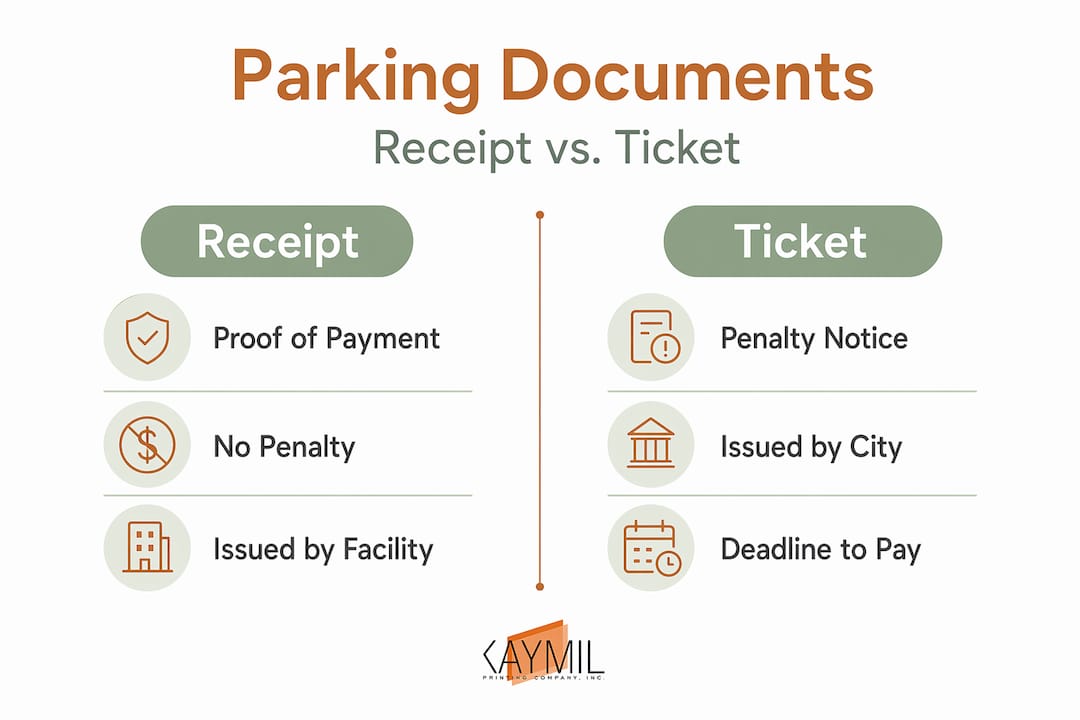
A parking validation ticket is a third category that trips people up the most. It is a business-issued document that discounts or fully waives parking fees as an incentive for customers. Validation discounts can range from 50% off to full coverage of the total parking cost, depending on the program.
Here is a quick comparison of all three:
| Document | Issued by | Purpose | Legal weight |
|---|---|---|---|
| Parking ticket | Government authority | Penalty for violation | Immediate legal obligation |
| Parking receipt | Parking facility/operator | Proof of payment | Evidence for disputes or reimbursement |
| Validation ticket | Business (hotel, casino, retailer) | Discount or fee waiver incentive | Contractual between business and operator |
Key elements you will find on each document:
- Parking ticket: citation number, violation code, fine amount, response deadline, vehicle information, and issuing officer details
- Parking receipt: transaction ID, facility name and location, entry and exit times, amount paid, and payment method
- Validation ticket: business name, validation code or stamp, coverage terms, and expiration conditions
Legal and financial consequences you need to understand
The consequences attached to a parking ticket operate on a strict timeline. Most jurisdictions give you 7 to 21 days to file an appeal, and appeals suspend late fees while the process runs, which typically takes up to 30 days. If your appeal is denied, you then have a secondary window, usually 7 to 30 days, to pay before additional fees apply.
Paying a ticket immediately, however, voids your right to appeal it. That distinction matters if you believe the ticket was issued in error, because payment is treated as an admission. Many urban areas now offer online payment portals that also allow you to initiate appeals digitally, which removes the excuse of not having time to respond.
This is where a parking receipt earns its value beyond expense tracking. If you received a ticket at a location where you had actually paid for parking, a timestamped receipt is your primary evidence in a dispute. The receipt proves the transaction occurred, when it occurred, and at what rate. Without it, your dispute rests on your word alone.
Here is how to approach a ticket dispute with a receipt in hand:
- Do not pay the ticket before attempting an appeal. Payment closes the case against you.
- Gather your parking receipt, transaction confirmation, and any photos of the payment kiosk or your parked vehicle.
- File your appeal within the jurisdiction’s stated deadline, referencing the receipt details directly.
- Keep copies of all submitted documents. Appeals can take time, and paper trails matter.
- If the appeal is denied, pay within the secondary deadline to avoid additional fees.
Pro Tip: For corporate travelers and business managers, keeping both receipts and formal invoices is the right practice. Receipts handle quick tracking; invoices provide the detailed billing required for corporate expense reports and audits.
How parking validation tickets work
Understanding how parking validation tickets work requires separating them from the concept of free parking entirely. Validation is a conditional discount, not a customer entitlement. A business, such as a hotel, restaurant, casino, or medical office, partners with a parking facility to offer reduced or waived parking fees to customers who meet certain conditions.
Validation is not automatic and requires customer action to redeem. You typically need to present your parking ticket to the business before leaving, and the business will stamp it, scan a code, or provide a paper validation ticket. That validated ticket then triggers the discount when you exit the facility.
Common parking validation ticket types and workflows include:
- Stamp validation: A business employee stamps your parking ticket directly. The stamp is read by the exit gate system.
- Sticker or label validation: A business provides an adhesive sticker to attach to your parking stub, encoding the discount information.
- Digital or code validation: Increasingly common in hotels and casinos, where staff enter a code into a system that credits your license plate or parking ticket barcode directly.
- Paper validation tickets: Separate printed tickets issued by the business that you present at the parking exit booth alongside your original entry ticket.
For hotels and casinos specifically, validation is part of the guest experience strategy. Hotel parking validation program setup typically involves the facility manager creating a validation account with the parking operator. That account is invoiced monthly, and the parking operator reconciles the validated tickets against the account balance. Since validation tickets act as cash equivalents, tight internal controls are non-negotiable to prevent misuse or fraud.
Pro Tip: If you manage a hotel or casino parking validation program, treat validation tickets the same way you treat gift cards. Assign them to specific departments, track issuance by staff member, and audit redemptions monthly against your parking operator invoice.
Private parking notices vs. official municipal tickets
Not everything that looks like a parking ticket carries the same force. Private parking notices, issued by private operators managing lots for shopping centers, apartment complexes, or commercial properties, are a fundamentally different beast from government-issued citations.
Private parking notices are civil disputes, not criminal penalties. A private operator cannot send your case to a government collection agency or add points to your license. They can pursue the debt in civil court, but enforcement typically requires a formal court judgment before any real consequences attach. The legal exposure is real but structurally different from a municipal ticket.
| Feature | Municipal parking ticket | Private parking notice |
|---|---|---|
| Issuing authority | Government agency | Private operator |
| Legal basis | Statutory violation | Contract/trespass |
| Enforcement path | Government collection, DMV holds | Civil court judgment required |
| Impact on vehicle registration | Possible DMV hold for unpaid tickets | Generally none without court order |
| Appearance | Official government letterhead | Often similar but lacks government seal |
When you receive a private parking notice, you should:
- Check whether the lot had clearly posted signage. Inadequate signage weakens the operator’s contractual claim.
- Verify the notice identifies the private company, not a government authority.
- Research the company before paying. Some private notices are unenforceable and deliberately designed to look official.
- If the notice is legitimate and you violated posted terms, weigh the cost of paying versus the slim but real possibility of a civil claim.
For businesses managing private parking, this distinction has direct operational implications. A well-designed ticket or notice, with clear branding, sequential numbering, and facility information printed clearly, reduces disputes and supports your position if a case does go to civil court.
Practical tips for managing parking documents
Good record keeping around parking documents saves money and stress. Most problems arise not from bad luck but from avoidable gaps in documentation.
- Always print your receipt at the kiosk. At many automated facilities, forgetting to print a receipt means the proof of payment is gone. Retrieving it later is often impossible, especially at high-volume urban garages.
- Photograph your parking setup. Before walking away from any paid street or garage spot, take a quick photo showing your vehicle, the meter or kiosk confirmation screen, and the surrounding signage. This takes ten seconds and provides evidence that no receipt can match.
- Note ticket response deadlines immediately. When you receive a parking ticket, write the response deadline somewhere you will see it. Calendar reminders take 30 seconds to set and prevent the 15% to 50% fine escalation that comes with missing deadlines.
- Organize validation tickets before you need them. Hotel guests and casino visitors often forget to get their ticket validated before leaving, then cannot return to the business. Treat validation like a coupon you need to use at the right moment, not after the fact.
- Use a dedicated folder or app for parking records. Corporate travelers especially benefit from a consistent system. A simple phone folder labeled “Parking” where you save receipt photos can make expense reporting significantly faster and cleaner.
Pro Tip: Businesses that issue their own parking tickets or validation credentials should work with a reliable printing partner to get barcoded parking tickets that integrate with automated systems. Barcodes reduce manual errors, speed up exit processing, and create an automatic audit trail for every transaction.
My perspective on parking document confusion
I have watched the same scenario play out more times than I can count. Someone receives what looks like a parking ticket, panics, and pays immediately without reading it carefully enough to realize it was a private notice with limited enforceability. They spent money they did not need to spend and lost the right to question a document that may not have been legitimate.
The reverse happens too. People assume the colorful slip on their windshield is promotional, ignore a real municipal citation, and get hit with escalating fines that eventually affect their vehicle registration.
What I have found is that most of this confusion comes down to document design and financial literacy, not bad intentions. When private notices are deliberately styled to look like government citations, and when parking receipts vary wildly in format from one facility to the next, it is not surprising that people mix them up. Technology has made this more complicated, not less. Digital receipts sent by email, license plate recognition systems, and mobile payment apps have removed the physical cue of holding a document and inspecting it.
My advice: slow down by thirty seconds every time you interact with a parking document. Read the issuing authority. Note the deadline. Print or save the receipt. Those small habits cost almost nothing and prevent the kind of costly, frustrating situations that are almost entirely avoidable.
— Richard
Parking ticket and receipt solutions from Caymil
For parking operators, hotels, casinos, and valet services, having the right printed documents is not just a convenience. It is part of how you protect revenue, prevent fraud, and give customers a clear, professional experience.
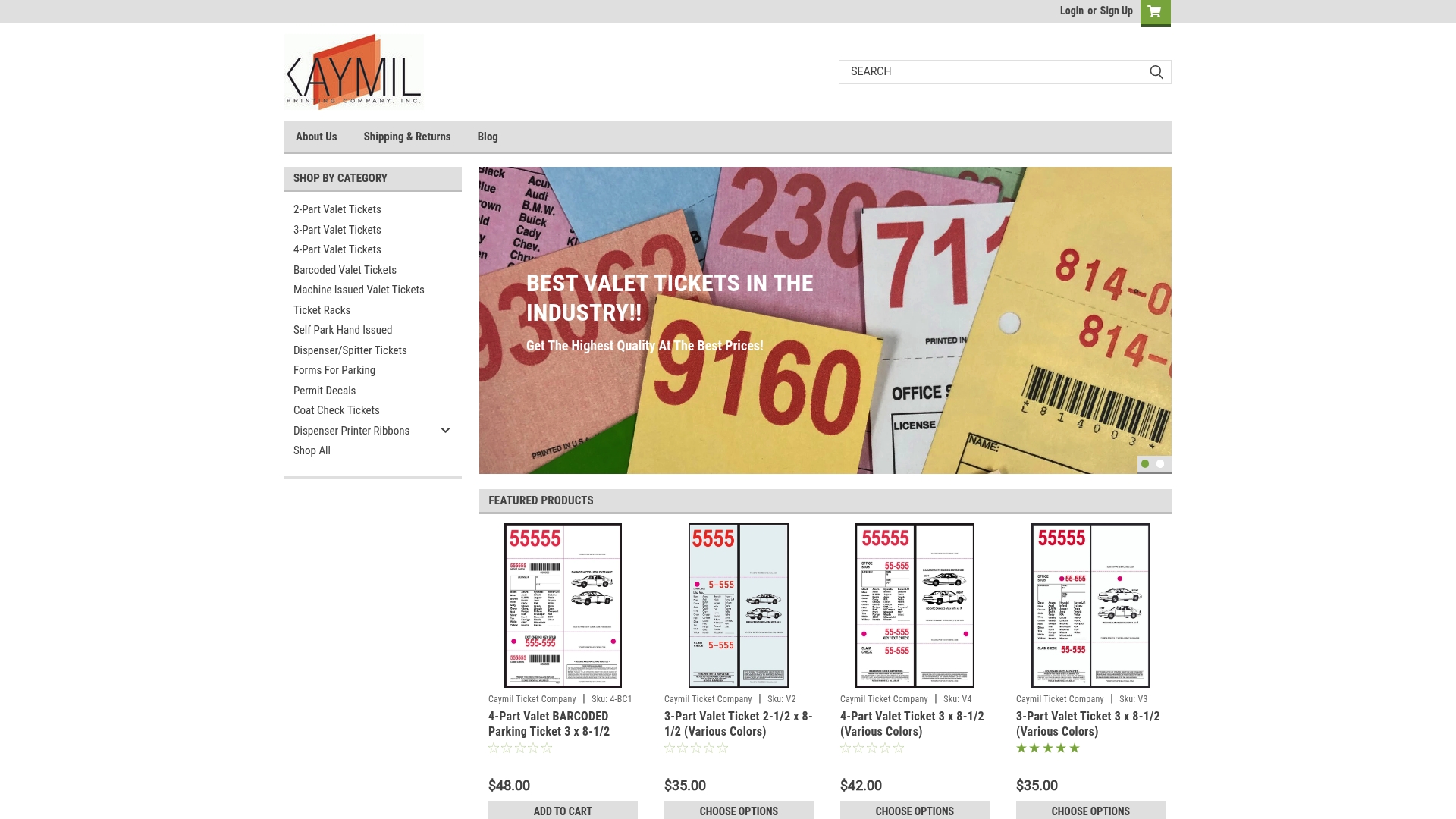
Caymil manufactures and supplies a full range of parking forms and tickets designed for real-world operations, from multipart carbonless valet tickets to thermal receipt rolls compatible with Amano, SKIDATA, TIBA, and Flowbird systems. Every product is available with sequential numbering, custom barcodes, security features, and your facility’s branding printed to spec. For valet operations specifically, Caymil’s line of multi-part valet tickets gives your team an immediate, reliable paper trail that holds up under heavy daily use. With fast nationwide shipping and millions of tickets in stock, Caymil makes it straightforward to keep your operation running without interruption.
FAQ
What is the difference between a parking receipt and a parking ticket?
A parking receipt is proof that you paid for parking at a facility. A parking ticket is a penalty issued by a government authority for a parking violation. They are issued by different entities, serve opposite purposes, and carry entirely different legal consequences.
How do parking validation tickets work?
Validation tickets are issued by a business to discount or waive a customer’s parking fee. The customer presents the validation at the parking exit, and the system applies the discount based on the business’s arrangement with the parking operator. Validation is conditional on customer action and is not applied automatically.
Can a parking receipt help you contest a parking ticket?
Yes. A timestamped parking receipt that shows valid payment at the time and location of a citation is strong evidence in a dispute. You should file your appeal before paying the ticket, since payment is typically treated as an admission and voids the appeal process.
Are private parking notices enforceable like municipal tickets?
No. Private parking notices are civil disputes, not government penalties. Enforcement requires a formal court judgment and cannot result in government collection action or DMV consequences without going through the civil court system first.
How long do you have to pay or appeal a parking ticket?
Most jurisdictions allow 7 to 21 days to file an appeal and 7 to 30 days to pay after a denied appeal before late fees apply. Late fees can increase the original fine by 15% to 50%, so acting within the stated deadline is critical.
Recommended
- Parking ticket security: How to prevent fraud and protect revenue - Caymil Printing Co., Inc.
- Garage parking receipt explained for facility managers - Caymil Printing Co., Inc.
- Why Quality Valet Parking Tickets Matter More Than You Think - Caymil Printing Co., Inc.
- Parking Ticket Paper: Stock, Thermal Rolls, and What Really Lasts - Caymil Printing Co., Inc.