

Parking Ticket Material Options: Top 10 for 2026

Choosing the wrong parking ticket material costs more than you’d think. Tickets that fade in direct sunlight, jam high-speed dispensers, or fall apart in rain don’t just create operational headaches. They undermine customer trust, create audit trail gaps, and generate reprint costs that quietly drain your budget. Parking ticket material options vary far more than most facility managers realize, ranging from standard thermal rolls to tear-resistant synthetic stocks and multi-part carbonless sets. This article breaks down the ten most relevant materials available today, what they’re best suited for, and how to match the right option to your specific operation.
Table of Contents
- Key Takeaways
- 1. Key criteria for evaluating parking ticket materials
- 2. Standard thermal paper
- 3. Premium coated thermal paper
- 4. Synthetic ticket stock (polyester and polypropylene)
- 5. Multi-part carbonless ticket stock
- 6. Barcode and QR code compatible materials
- 7. Custom printed and branded ticket stock
- 8. Security-featured ticket materials
- 9. Roll versus sheet ticket stock
- 10. Eco-friendly and recycled ticket stock
- Comparison of ticket materials across key attributes
- How to choose the right material for your operation
- My perspective on what parking managers get wrong
- Caymil’s parking ticket materials and solutions
- FAQ
Key Takeaways
| Point | Details |
|---|---|
| Thermal paper dominates volume operations | Fast printing and low unit cost make thermal the go-to for high-volume parking ticket options, but coating grade matters. |
| Synthetic stocks outperform paper in harsh climates | Polyester and polypropylene materials resist moisture and tearing where standard paper fails. |
| Multi-part tickets support complex tracking | Two-part, three-part, and four-part carbonless formats create simultaneous records for valet and cashier workflows. |
| Security features protect revenue | UV printing, watermarks, and serialization in durable ticket materials reduce fraud exposure at minimal added cost. |
| Material choice affects system compatibility | Not every stock works with every dispenser or printer; confirm compatibility before ordering at volume. |
1. Key criteria for evaluating parking ticket materials
Before selecting a material, you need a clear framework. The wrong starting point is asking “what’s cheapest per thousand?” The right question is “what does this ticket need to survive and do?”
Consider these six factors before committing to any stock:
- Durability: Will the ticket be exposed to rain, oil, direct sun, or heavy handling? Outdoor lots and valet operations require significantly more physical resilience than a covered garage.
- Printer and dispenser compatibility: Thermal paper is standard for machine-issued spitter tickets, but synthetic and coated stocks may require different printer heads or feed mechanisms. Always verify compatibility with your existing hardware.
- Cost at volume: Unit cost shifts dramatically between material types. Standard thermal rolls cost less upfront, but premium coated or synthetic options can reduce reprint rates and longer-term waste.
- Customization potential: Can the stock accommodate your logo, sequential numbering, barcodes, or UV security features? Not every material handles all printing methods equally well.
- Operational handling: Roll stock versus sheet stock affects how tickets feed through dispensers and how attendants handle them during busy periods. Ticket racks and dispensers reduce jams and misfeeds when matched to the correct roll diameter and core size.
- Sustainability: Eco-friendly ticket stock with recycled content is now widely available without sacrificing print quality, making it a realistic option for facilities with environmental reporting requirements.
Pro Tip: Before placing a bulk order, request a sample roll or sheet of each material you’re considering and run it through your actual dispensers and printers. Real-world testing catches feed issues that spec sheets never mention.
2. Standard thermal paper
Thermal paper is the most widely used substrate for parking tickets in the United States. A heat-sensitive coating activates when it passes through a thermal print head, producing fast, inkless output. That speed and simplicity is why it dominates machine-issued spitter systems across garages and lots of every size.
The limitation is coating quality. Budget-grade thermal paper fades significantly when exposed to sunlight, heat, or even prolonged contact with plasticizers in wallets and dashboards. For tickets that need to remain legible for weeks or months, such as monthly permit validations or dispute records, a premium-grade thermal stock with a top-coat treatment is worth the added cost per unit.
3. Premium coated thermal paper
Premium thermal stocks add a topcoat over the heat-sensitive layer, providing meaningful resistance against moisture, UV exposure, and smudging. For outdoor surface lots where tickets sit on dashboards or under windshield wipers, this upgrade matters.
The print quality is also noticeably sharper, which benefits barcode and QR code readability. Since dynamic QR codes have become standard in 2026 for scan-and-go entry and exit systems, a clean, high-contrast print surface directly affects scan success rates. A failed scan at a gate creates a queue and an unhappy customer.
4. Synthetic ticket stock (polyester and polypropylene)
When durability is the primary concern, synthetic materials are the answer. Polyester and polypropylene stocks are tear-resistant, waterproof, and hold up under the kind of rough handling that destroys standard paper within hours. Airport lots, hospital garages, and outdoor event venues with high ticket volumes and extreme weather exposure benefit most from these materials.
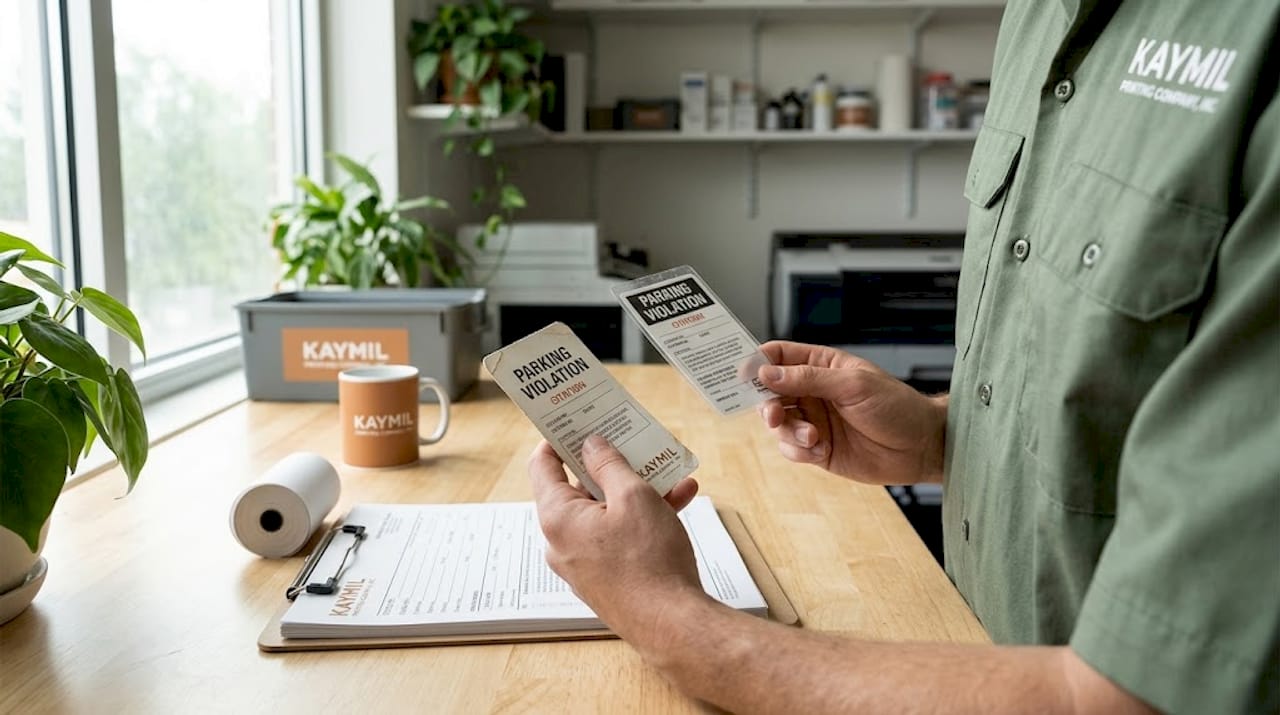
The trade-off is cost. Synthetic stocks run higher per unit than thermal paper, and they require compatible ink or printing processes since standard thermal heads don’t always activate synthetic coatings consistently. That said, the reduction in damaged, illegible, or destroyed tickets more than justifies the investment in high-stakes environments.
5. Multi-part carbonless ticket stock
Multi-part tickets use a no-carbon-required (NCR) paper system where writing or impact printing on the top sheet transfers simultaneously to each underlying part. Valet operations are the most common use case. A 2-part valet parking ticket gives the customer one copy and the attendant another, creating an immediate record without manual duplication.
Three-part and four-part formats extend this further, supporting cashier copies and management records. Each part can carry different printed information, such as terms, branding, or sequential numbering, making multi-part stocks one of the most functional parking ticket types for operations where accountability and chain of custody matter.
6. Barcode and QR code compatible materials
Not every ticket stock prints barcodes and QR codes with equal reliability. A barcode printed on low-contrast or textured stock can fail to scan consistently, which disrupts automated entry and exit workflows. The material surface needs to be smooth, uniform, and capable of producing sharp, high-density print at small sizes.
Barcode-compatible materials are particularly important as parking garages integrate automated systems from manufacturers like Amano, TIBA, SKIDATA, and FLASH Parking. Using the correct ticket stock for your system’s scanner type prevents read errors and reduces manual overrides at the gate.
7. Custom printed and branded ticket stock
Ticket design is a legitimate operational tool, not just an aesthetic choice. Premium ticket design with professional typography, brand colors, and logos reinforces facility identity, and it makes counterfeit or tampered tickets significantly easier to spot. A generic white ticket with black ink is easy to replicate. A custom ticket with specific color sequences, logos, and layout is not.
Upscale parking ticket customization options are particularly relevant for hotel garages, casino parking structures, and premium urban facilities where the physical ticket is part of the customer experience. Caymil produces fully custom-branded tickets with sequential numbering, color backgrounds, and logo printing that align with a facility’s broader brand standards.
8. Security-featured ticket materials
UV printing, watermarks, and specialized security inks add a layer of fraud resistance that plain stock simply cannot provide. These features are embedded in the material or applied during printing, making them difficult to reproduce without specialized equipment. For facilities that rely on physical tickets for revenue validation or access control, these security features protect against ticket duplication, alteration, and substitution.
The cost premium for security-featured stock is modest relative to the revenue exposure from fraudulent ticket use, particularly in high-volume or high-rate environments where a single fraudulent event can represent significant lost revenue.
9. Roll versus sheet ticket stock
The physical format of your ticket stock affects day-to-day operations more than most managers anticipate. Roll stock feeds continuously through dispensers and printers, making it the standard format for machine-issued tickets and high-speed parking systems. Matching roll width, diameter, and core size to your equipment prevents jams and misfeeds during peak traffic periods.
Sheet stock is more common for manually issued citations, valet tickets, and permits. It handles easily for attendants and allows for multi-part carbonless formats that rolls cannot accommodate. Understanding which format your equipment and workflow require should come before any other material decision.
Pro Tip: If your lot runs equipment from Amano, TIBA, SKIDATA, or similar manufacturers, confirm the exact roll specifications before ordering. Even minor deviations in roll width or core diameter cause feed issues that disrupt traffic flow at entry and exit lanes. Caymil stocks tickets compatible with major parking systems to remove the guesswork.
10. Eco-friendly and recycled ticket stock
Sustainability is no longer a secondary concern for many parking operators. Corporate campuses, university systems, and healthcare facilities often have environmental reporting obligations that extend to consumables. Eco-friendly ticket stock options made from recycled content or produced with reduced chemical processing are now widely available and perform comparably to conventional stock in most applications.
Selecting recycled or certified eco-friendly parking citation materials allows facilities to align procurement with corporate social responsibility goals without meaningfully compromising ticket quality or printer compatibility. The price difference has also narrowed considerably as demand has grown.
Comparison of ticket materials across key attributes
The table below compares the ten material types across the factors that matter most in real operations.
| Material | Durability | Cost per unit | Printer compatibility | Customization potential |
|---|---|---|---|---|
| Standard thermal | Low-medium | Low | Thermal printers | Limited |
| Premium coated thermal | Medium | Low-medium | Thermal printers | Moderate |
| Synthetic (polyester/polypropylene) | Very high | High | Specialized | High |
| Multi-part carbonless (2/3/4-part) | Medium | Medium | Impact/offset | Very high |
| Barcode/QR compatible | Medium-high | Medium | Thermal/laser | High |
| Custom branded stock | Varies | Medium-high | Varies by base | Very high |
| Security-featured stock | Medium-high | Medium-high | Offset/specialty | High |
| Roll stock | Varies by base | Low-medium | Dispenser/thermal | Moderate |
| Sheet stock | Varies by base | Medium | Manual/impact | High |
| Eco-friendly/recycled | Medium | Low-medium | Most standard printers | Moderate |
The clearest trade-off in this comparison is between synthetic stocks and thermal paper. Synthetic materials cost more per unit but last significantly longer in harsh conditions, which directly reduces reprint and replacement costs in outdoor or high-exposure environments. Standard thermal is the right answer for covered garages with controlled conditions and high throughput. Synthetic is the right answer for anywhere that isn’t.
How to choose the right material for your operation
Picking from this list gets easier when you apply a structured decision process. Here is a practical sequence:
- Assess your traffic volume. High-volume facilities running thousands of tickets per day need roll-format thermal stock optimized for speed and dispenser compatibility above all else.
- Evaluate your physical environment. Exposed outdoor lots, coastal climates, and high-humidity regions should prioritize coated or synthetic materials. Covered structures can use standard thermal more reliably.
- Define your durability requirement. How long does each ticket need to remain legible? A spitter ticket valid for two hours has very different needs than a monthly permit or a valet claim check held overnight.
- Identify your tracking and accountability needs. Operations that require duplicate records, multi-person handoffs, or dispute documentation should use multi-part carbonless formats.
- Account for your brand and security standards. Hotels, casinos, and premium facilities should factor in custom printing and security features as part of their standard specification, not as optional upgrades.
- Confirm system compatibility before bulk ordering. Verify roll specs, core sizes, and print surface requirements with your equipment manufacturer or a knowledgeable supplier like Caymil before committing to large quantities.
My perspective on what parking managers get wrong
I’ve seen facilities optimize for the cheapest per-unit cost on thermal stock and then spend twice as much reprinting faded tickets six months into a contract. The math never works out the way it looks on a purchase order.
What I’ve found is that durability almost always justifies its cost premium in real operations. A synthetic or premium coated stock that costs 20% more per thousand tickets but eliminates reprints and scanner failures at the gate pays for itself fast. Managers focus on the line-item cost, not the total operational cost. That’s the mistake.
The other thing I’ve learned is that ticket design is underused as a fraud deterrent. A facility running plain white thermal tickets with no customization is making it easy for someone to reproduce or alter a ticket. Security features like UV printing and watermarks cost relatively little to add and create meaningful friction for anyone attempting to game the system.
My honest take: most facilities need two specifications, one for their high-volume machine-issued tickets and a separate spec for their valet or attendant-issued tickets. One size does not fit the whole operation.
— Richard
Caymil’s parking ticket materials and solutions
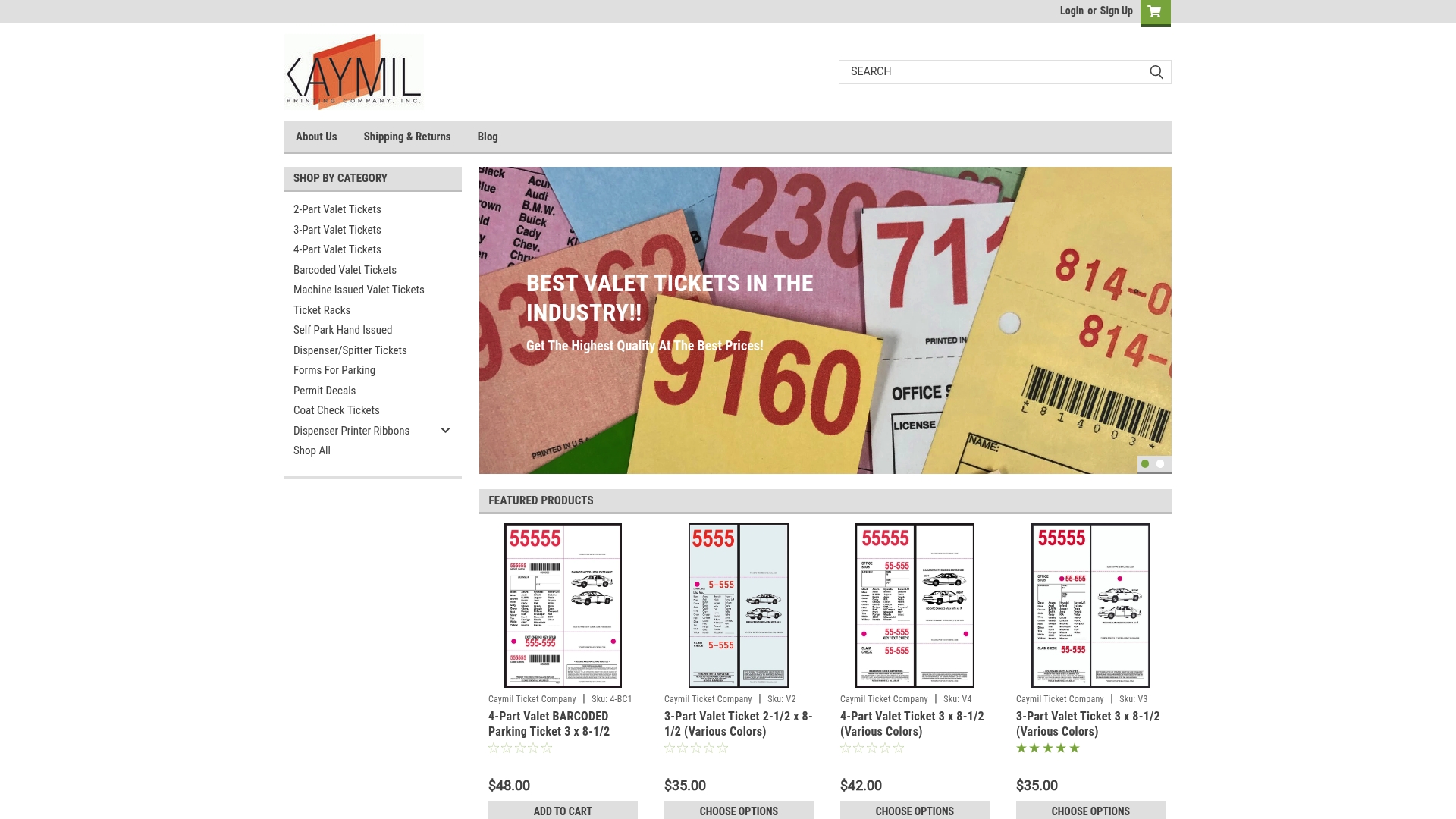
Caymil has manufactured and supplied parking tickets since 1937, which means the material decisions described throughout this article are ones the team has worked through across thousands of facility configurations. Whether you need standard thermal rolls for a high-volume garage, synthetic stock for an exposed outdoor lot, or custom-branded multi-part tickets for a hotel valet operation, Caymil produces and stocks options for all of it.
You can explore the full range of parking forms and ticket solutions on the Caymil website, including machine-issued tickets, 2-part valet tickets, custom printed formats, and barcode-ready stock compatible with major parking systems. Fast nationwide shipping and millions of tickets in stock mean short lead times, even for custom orders. Contact Caymil directly for material samples, specification guidance, or a quote tailored to your facility’s volume and equipment requirements.
FAQ
What is parking ticket paper made from?
Most parking tickets use a thermal paper base with a heat-sensitive coating that activates during printing. Premium versions add a topcoat for UV and moisture resistance, while synthetic options use polyester or polypropylene for maximum durability.
Which ticket material works best for outdoor parking lots?
Synthetic materials like polyester and polypropylene outperform standard thermal paper in outdoor environments because they resist moisture, tearing, and UV fading. Premium coated thermal stock is a cost-effective middle option for moderate exposure conditions.
Are eco-friendly parking ticket options reliable for high-volume operations?
Yes. Recycled and eco-certified ticket stocks have improved significantly in quality and are now compatible with most standard thermal printers and dispensers, making them a practical choice for facilities with sustainability requirements.
How do multi-part tickets support valet operations?
Multi-part carbonless tickets create simultaneous copies for the customer, the attendant, and management records in a single transaction. Two-part, three-part, and four-part formats can each carry different printed information to support tracking and accountability across complex valet workflows.
Do barcode tickets require a specific material?
Barcode and QR code tickets require a smooth, high-contrast print surface to scan reliably. Standard or premium thermal stock works well for most applications, but the material must be compatible with your parking system’s scanner type to avoid read errors at entry and exit points.