
Valet Ticket Liability: What Operators Must Know
Valet tickets are defined as legal documents that establish bailment, the formal transfer of vehicle possession from a guest to a valet operator, and they directly determine liability when damage or theft occurs. The role of valet tickets in liability extends far beyond a simple claim check. Under bailment law, recognized in all 50 U.S. states, handing over a vehicle creates a prima facie presumption of operator liability if damage is later reported. That means the ticket is not a receipt. It is the opening document in a potential legal case. Parking lot operators, hotel management teams, and event coordinators who treat valet tickets as administrative paperwork expose themselves to claims they cannot defend.
How valet tickets establish the bailment relationship and affect liability
Bailment is the legal relationship created when one party takes temporary possession of another’s property. In valet parking, the ticket is the primary evidence that bailment occurred, when it began, and who accepted the vehicle. Courts rely on tickets to establish the timeline of possession transfer, which is the foundation of any damage or theft claim.
Once a guest hands over keys and receives a ticket, the burden of proof shifts. In all 50 states, the delivery of a vehicle to a valet creates a prima facie case for liability if damage occurs. The valet operator must then prove they exercised due care. Without a ticket, that timeline collapses, and both sides lose their clearest piece of evidence.
Incomplete or missing tickets create serious problems for operators:
- A ticket without a timestamp gives no clear start point for the bailment period.
- A ticket without a vehicle condition note leaves the operator unable to rebut pre-existing damage claims.
- A ticket issued to the wrong party creates chain-of-custody gaps that courts treat as operator negligence.
- A lost or illegible ticket forces operators to reconstruct events from memory, which rarely holds up in litigation.
Pro Tip: Link every ticket to a pre-inspection record at the moment of vehicle acceptance. A timestamped photo tied to the ticket number is the single most reliable defense against disputed damage claims.
Without contemporaneous pre-inspection documentation linked to valet tickets, defending against damage claims becomes nearly impossible. Pre-check documentation is one of the only reliable tools to rebut negligence presumptions in court.
Are liability waivers on valet tickets enforceable?
Most valet tickets carry fine print on the back claiming limited or no liability for damage, theft, or loss. Operators often assume this language protects them. Courts disagree with that assumption far more often than operators expect.
Limitation-of-liability clauses printed on valet tickets are frequently unenforceable, especially when the customer had no meaningful opportunity to read or consent to the terms, or when gross negligence occurred. A guest who hands over keys in 10 seconds at a hotel entrance has not meaningfully consented to fine-print terms they never read.
Courts apply a two-part test to these waivers:
- Conspicuousness: The disclaimer must be clearly visible, not buried in small print on the reverse side of a stub.
- Meaningful consent: The guest must have had a real opportunity to read and accept the terms before the bailment began.
Standard fine print on tickets usually fails both tests. Courts often classify these waivers as contracts of adhesion and invalidate them entirely.
“The California Attorney General and courts across multiple jurisdictions have made clear that fine print cannot shield businesses from their own gross negligence. A valet operator who loses a car through reckless conduct cannot hide behind a disclaimer printed on a ticket stub the guest never read.”
Courts view valet ticket disclaimers skeptically and focus instead on the actual care exercised by the operator. The practical takeaway is direct: liability waivers on tickets are a weak defense. Operational care is the real protection.
How valet tickets affect insurance claims and damage disputes
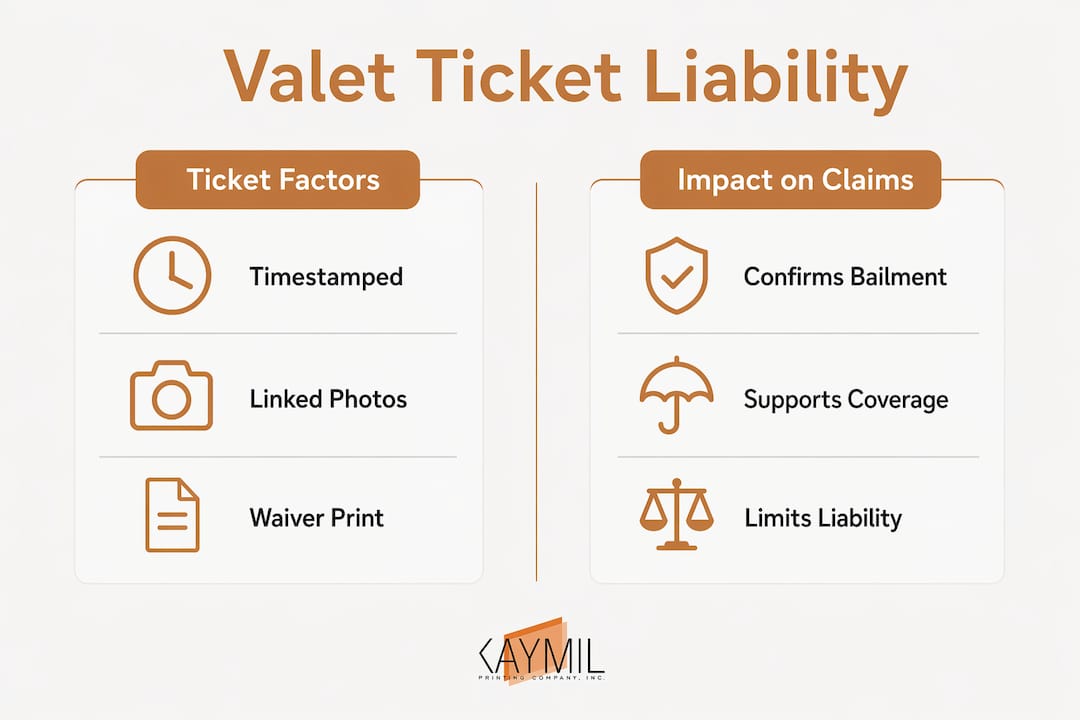
Valet tickets serve as the primary document in Garagekeeper’s Legal Liability insurance claims, the standard coverage for valet operators. The ticket establishes when the vehicle entered the operator’s care, which determines whether the insurer covers the loss.

| Claim factor | Impact on outcome |
|---|---|
| Ticket with timestamp | Confirms bailment period; supports coverage |
| Pre-inspection record linked to ticket | Rebuts pre-existing damage claims |
| Missing or incomplete ticket | Delays claim; may shift liability to operator |
| Employee admission of fault on-site | Can jeopardize insurance coverage |
Garagekeeper’s Legal Liability insurance typically pays for valet damage claims, which resolve within 2–6 weeks with proper evidence, with an average claim amount of about $2,000. That resolution timeline shortens significantly when the ticket record is clean and complete.
The most critical liability moment is the vehicle handoff, where employee conduct and immediate claim response matter greatly. Valet employees should respond to damage reports with empathy but without admitting fault. An on-site admission of liability can jeopardize insurance coverage even when the operator has a strong ticket record.
Pro Tip: Train valet staff to say “I understand your concern and we will document this immediately” rather than “I’m sorry, that was our fault.” The first response protects coverage. The second can void it.
Operators who maintain a valet parking log alongside their ticket records create a corroborating paper trail that insurers and courts both recognize as evidence of professional care.
How technology and compliance intersect with valet tickets in 2026
Valet operations in 2026 face liability risks that extend beyond classical bailment law. Integrated payment terminals at valet stands are subject to PCI DSS (Payment Card Industry Data Security Standard) requirements. A breach at that terminal creates a separate liability exposure that the valet ticket record alone cannot address.
Integrated valet ticket payment terminals are PCI DSS subject points, and noncompliance risks fines from $5,000 to $100,000 monthly, often exceeding the cost of a single vehicle damage claim. That means a valet operation with excellent ticket documentation can still face catastrophic financial exposure if its payment systems are not compliant.
Best practices for reducing liability through technology include:
- Use PCI PTS-approved terminals and inspect them quarterly for tampering or skimming devices.
- Link AI-generated or timestamped vehicle condition photos directly to the ticket number at check-in.
- Store ticket records digitally with access logs to prevent alteration or loss.
- Use barcoded valet tickets to create a scannable, time-linked chain of custody that supports both insurance claims and legal defense.
Integrating pre-inspection images with valet ticketing systems is the modern best practice to withstand legal scrutiny and reduce liability risks. AI-assisted documentation tied to a ticket number creates a record that is far harder to dispute than a handwritten note. Operators who invest in this integration now reduce their exposure across both bailment law and data security compliance.
The importance of valet tickets as legal documents grows when payment and documentation systems are integrated. A ticket that captures vehicle condition, timestamps the handoff, and links to a compliant payment record gives operators a complete defense package.
Key Takeaways
Valet tickets are the foundational legal document in bailment law, and their quality, completeness, and integration with inspection records directly determine an operator’s ability to defend against damage claims and insurance disputes.
| Point | Details |
|---|---|
| Tickets establish bailment | A valet ticket timestamps possession transfer and creates the legal basis for liability in all 50 states. |
| Waivers rarely hold up | Fine-print disclaimers on tickets are frequently invalidated by courts for lack of conspicuousness or meaningful consent. |
| Documentation wins claims | Pre-inspection records linked to ticket numbers are the most reliable defense against disputed damage claims. |
| Insurance depends on ticket quality | Garagekeeper’s Legal Liability claims resolve faster and more favorably when ticket records are complete and timestamped. |
| PCI compliance is a parallel risk | Payment terminals at valet stands carry separate liability exposure that ticket documentation alone cannot address. |
Why operators underestimate the ticket until it’s too late
I have seen the same pattern repeat across hotel valet programs and event venues: operators invest in trained staff, good uniforms, and fast service, then hand guests a flimsy ticket with no pre-inspection record and fine print that would not survive a single court challenge. The ticket is treated as a formality. Then a claim arrives.
The uncomfortable truth about valet ticket liability is that most operators do not discover their documentation gaps until they are sitting across from an insurance adjuster or an attorney. By then, the ticket is the only evidence they have, and if it is incomplete, they have almost nothing to work with. Courts do not give credit for good intentions. They look at what was documented at the time of handoff.
The operators who manage liability well share one habit: they treat the ticket as the first line of defense, not the last resort. They link every ticket to a photo record, they train staff on claim response, and they audit their ticket systems the same way they audit their payment terminals. That discipline is what separates operators who resolve claims in two weeks from those who spend months in disputes.
Relying on a liability disclaimer printed on the back of a ticket is the most common and most costly mistake in valet risk management. The disclaimer does not protect you. The documentation does.
— Richard
Valet tickets built for legal defensibility and operational control
Valet operators, hotel management teams, and event coordinators need tickets that hold up when it matters most. Caymil has manufactured valet ticketing solutions since 1937, and every product is designed to support the documentation standards that courts and insurers expect.
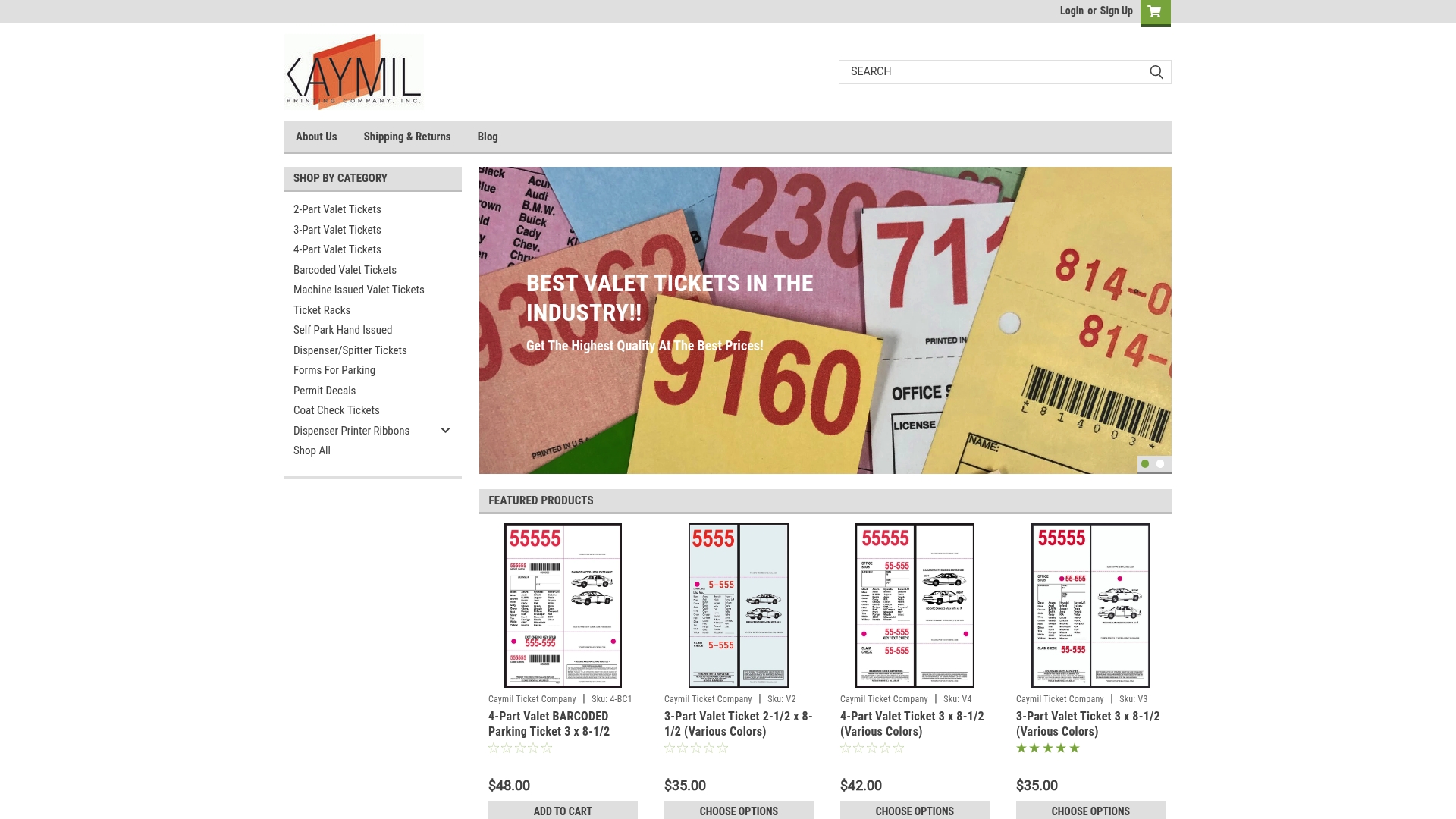
Caymil’s multi-part valet parking tickets create a carbonless paper trail that links the guest copy to the operator record at the moment of handoff. Machine-issued valet tickets add timestamps and sequential numbering that strengthen the chain-of-custody record. For operations that need barcode scanning and digital integration, Caymil’s barcoded ticket formats connect physical tickets to digital systems without gaps. Explore the full range of valet ticket formats and find the product that fits your operation’s liability management needs.
FAQ
What is the role of valet tickets in liability?
Valet tickets establish the bailment relationship by documenting when and from whom a vehicle was accepted. In all 50 states, this creates a prima facie presumption of operator liability if damage occurs.
Can a valet ticket waiver limit my liability?
Liability waivers printed on valet tickets are frequently unenforceable because courts require conspicuous placement and meaningful guest consent. Gross negligence voids these clauses entirely regardless of what the ticket states.
What insurance covers valet damage claims?
Garagekeeper’s Legal Liability insurance is the standard coverage for valet operators. Claims typically resolve within 2–6 weeks when ticket records and pre-inspection documentation are complete.
What happens if a valet ticket is lost or incomplete?
A missing or incomplete ticket removes the operator’s clearest evidence of the bailment timeline and vehicle condition at handoff. This makes it significantly harder to defend against damage or theft claims in court or with an insurer.
How do barcoded tickets reduce valet liability risk?
Barcoded valet tickets create a scannable, time-linked chain of custody that supports both insurance claims and legal defense. They reduce the risk of record alteration and make it easier to integrate ticket data with digital inspection and payment systems.