

5 Pressroom Controls to Stop Ink Set-Off on Tickets

Set-off, also called ink offsetting, occurs when wet ink from a freshly printed sheet transfers onto the back of the sheet stacked above it. Ticket stock is especially prone to it because of high solid coverage, small formats stacked tightly, and coated surfaces that slow drying. The fastest reliable fix for a live ticket run is to give the ink time to set, either through drying equipment or an air gap created with correctly matched anti-set-off powder and disciplined pile management.
TL;DR:
- Matching ink film thickness and tack to the stock and press speed before printing minimizes set-off risk more effectively than relying solely on spray powder.
- Coated stocks and dense ink zones like barcodes or logos increase drying time and the likelihood of ink transfer if not properly managed.
- Lowering pile height, slowing delivery, and inserting slip sheets during production help reduce pressure and moisture causing set-off.
- Testing for wet and dry transfer using rub tests on multiple sample positions identifies set-off issues early, preventing costly rework.
- High-volume or barcode-heavy jobs benefit from UV or LED-UV curing to reduce drying time and eliminate the need for powders or extensive pile management.
Table of Contents
- What set-off looks like and why it happens
- Why tickets are especially vulnerable
- Practical, prioritized prevention controls for ticket runs
- Testing and QC: how to verify a ticket run is safe to ship
- Caymil practitioner checklist for ticket jobs
- What to do when set-off appears mid-run
- The overrated fix and the one that actually matters
- How Caymil builds set-off resistance into ticket production
- Sources
- FAQ
What set-off looks like and why it happens
Set-off shows up as a mirror-image ghost of the printed image on the back of the sheet above it in the pile. In extreme cases, sheets stick together entirely, a condition often called blocking or bricking, which can tear stock apart when separated.
The mechanism is straightforward. Wet ink film sits on the surface of a freshly printed sheet. Once that sheet is stacked, the sheets above it press down with the weight of the pile, and ink that has not set migrates onto the sheet in contact with it. Sheets near the top and bottom of a pile often show the clearest transfer, since pressure and airflow are least uniform there.
Set-off is distinct from smearing, which happens on-press or during handling before ink has any chance to set, and from rub failure, which occurs after the ink has dried and relates to abrasion resistance rather than wet transfer.
- Mirror-image ghosting on the back of the sheet above.
- Sheets sticking together (blocking) under pressure or heat.
- Ink visibly wet or tacky to the touch immediately after delivery.
Why tickets are especially vulnerable
Ticket stock choices drive a lot of set-off risk before a single drop of ink hits the sheet. Coated stocks look sharper and hold barcodes and small type well, but they absorb ink more slowly than uncoated papers, leaving more ink sitting wet on the surface. Thermal receipt stock behaves differently again, since it relies on heat-reactive coatings rather than absorbing conventional ink, a distinction covered in more detail in our guide to parking ticket stock.
Tickets also concentrate ink in specific zones that work against fast drying. Sequential numbers, barcodes, and logos are often printed as solid blocks rather than fine screens, which means those zones carry a heavier, wetter film than the surrounding stock. A ticket with a dense barcode panel and a bold logo can carry noticeably more ink than a text-only sheet of the same size.
Finishing adds a second layer of risk. Varnish, lamination, and hot-foil stamping all depend on a clean, fully set ink layer underneath. Spray powder residue left on the surface can interfere with adhesive bonding during lamination or foil application, and incomplete drying under a laminate can trap solvents that soften the ink later.
- Coated stocks slow absorption and extend the time ink stays wet.
- Barcode, number, and logo panels carry heavier ink film than surrounding text.
- Spray powder and lamination or foil finishing can conflict if not sequenced correctly.
Practical, prioritized prevention controls for ticket runs
Controlling set-off on a ticket job comes down to a short list of decisions made before and during the run, roughly in this order of impact.
- Choose a drying method that fits the job. Conventional hot-air or infrared dryers extend set time gradually, while LED-UV and UV-EB systems cure ink almost instantly at speed. Dryer systems built into modern presses can shorten the wait before finishing, though UV curing requires specialty inks and a real capital commitment.
- Match spray powder particle size to the stock. Anti-set-off spray powder works by creating a microscopic air gap between stacked sheets, and the particle size should scale with substrate weight, being smaller for light stocks and larger for heavy boards. Coated, low-dust powders reduce housekeeping problems and are the safer default when a job will later be laminated.
- Get the ink film thickness right rather than chasing an ultrathin film. Guidance from TAGA notes that properly formulated ink run at the correct film thickness tends to hold color and set more predictably than ink forced down to an unrealistically thin layer to chase faster drying. Tack and viscosity should be checked against the press speed and stock, since ink that is too tacky for the run speed is a common, overlooked cause of set-off.
- Manage the pile physically. Lower pile heights reduce the weight pressing down on the bottom sheets, slower delivery speeds give ink more time before the next sheet lands on it, and slip sheets inserted at intervals interrupt direct sheet-to-sheet contact entirely.
- Delay finishing and packing until the ink has genuinely set, not just until it looks dry on the surface.
Pro Tip: When a ticket job includes a dense barcode panel, treat that panel like a separate ink zone: check its set time independently rather than assuming the rest of the sheet’s drying behavior applies to it.
The decision between accepting powder and investing in UV or quickset ink usually comes down to volume and finishing plans. A short valet ticket run with no lamination is often fine with well-matched powder and careful pile handling. A high-volume barcoded ticket program headed straight into foil stamping is a stronger case for UV or LED-UV curing, since it removes powder residue from the equation entirely.
Testing and QC: how to verify a ticket run is safe to ship
Rub and transfer testing turns “looks dry” into a measurable result. The Sutherland Ink Rub Tester is the standard instrument for this kind of check, and ASTM D5264 is the referenced practice for abrasion and rub resistance testing of printed materials.
- Pull samples from the top, middle, and bottom of the pile, since drying conditions differ across those positions.
- Run a dry-rub test to check abrasion resistance and a wet-rub or wet-transfer test to check how the ink behaves under moisture or light solvent contact.
- Log any visible transfer or ghosting immediately and hold the job before finishing rather than after.
- Escalate to the ink supplier or maintenance when the same failure shows up across multiple samples rather than one isolated sheet.
Caymil practitioner checklist for ticket jobs
Applying these controls to ticket production means checking a short set of items before and during make-ready rather than relying on a single fix.
- Confirm stock choice against expected ink coverage, referencing our parking ticket stock guide for absorbency differences between coated, uncoated, and thermal formats.
- Match spray powder particle size to the substrate weight rather than defaulting to whatever is on hand.
- Set pile-height limits before the run starts, not after set-off appears.
- Run a rub test on early sheets before committing to full-speed production.
- For machine-issued or dispenser-fed tickets, cross-check alignment and finishing readiness using the steps in our machine-issued ticket alignment checklist.
Most set-off complaints Caymil sees during order review trace back to one of two things: a heavier-than-expected ink zone on a barcode or logo, or a pile that sat too high before finishing. Both are catchable in preflight.
What to do when set-off appears mid-run
Stop stacking immediately and pull the top and bottom sheets from the last few piles for inspection. Run a quick rub test rather than guessing from appearance alone. If ink is still wet, lower the pile height, slow the delivery, and add slip sheets before restarting; if the film feels too heavy, check the offending plate’s ink film rather than assuming the stock is at fault. Call maintenance or the ink supplier when the same fix fails twice, and hold finishing until a fresh sample passes.
The overrated fix and the one that actually matters
Spray powder gets treated as the default answer to set-off, and it works, but it is a workaround for a drying problem, not a cure for it. The more durable fix is upstream: matching ink film thickness and tack to the stock and press speed before the sheet ever hits the pile. Operators who chase an ultrathin film to speed up drying often trade one problem for another, since underinked areas lose density and can still set off if the stock is slow to absorb.

The other place conventional advice falls short is treating all tickets the same. A plain valet ticket with light text coverage behaves nothing like a barcoded ticket with a solid logo block, yet both often get the same powder dose and pile height by habit. Ticket producers who separate their controls by ink coverage zone, not just by job, catch fewer problems at finishing.
If there is one place to start, it is film thickness and tack, checked against the actual stock and speed of the job, before reaching for powder as a patch.
— Richard
How Caymil builds set-off resistance into ticket production
The manufacturer has extensive experience producing valet, parking, and event tickets, so stock selection, ink coverage, and finishing sequencing are planned around set-off risk before a job ever reaches the press. That experience shows up most in barcode and logo-heavy formats, where ink zones are the biggest variable.
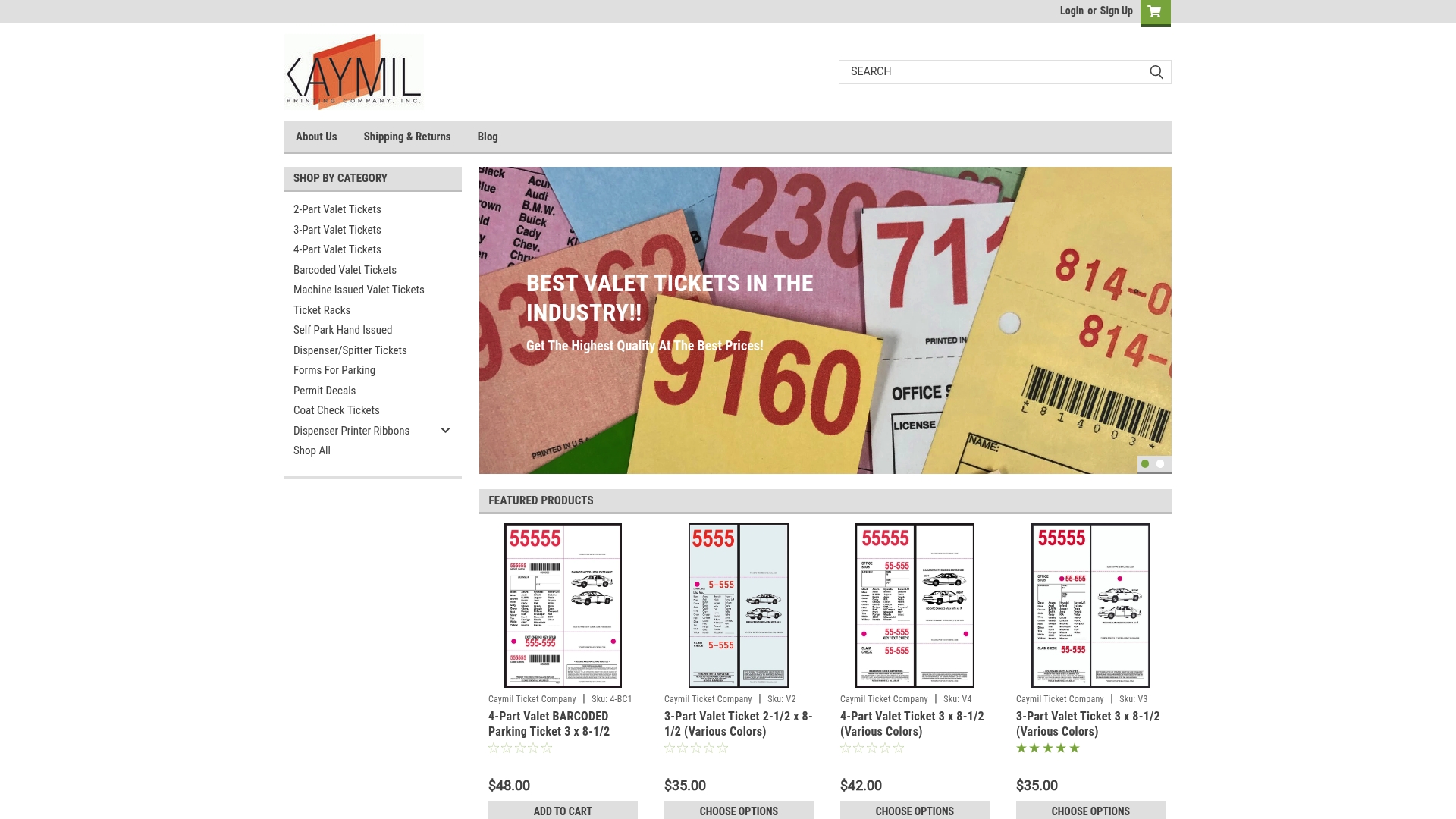
Depending on the job, a few product lines are worth a look:
- 2-Part Valet Tickets for straightforward valet runs with lighter ink coverage.
- 3-Part Valet Tickets for multi-copy operations that need consistent drying across carbonless layers.
- Barcoded Valet Tickets for programs with dense barcode panels that need extra attention to ink film.
- Machine Issued Valet Tickets for dispenser-fed formats with their own finishing timeline.
Browse the full range at Caymil’s shop or start a custom order for your next ticket run.
Sources
- Smearing, Rub, and Set-Off — PrinterArchive
- Anti-set-off spray powder — Wikipedia
- Dryer systems for Speedmaster | HEIDELBERG
FAQ
How much does offset printing ink cost?
Ink pricing varies widely by formulation, color, and supplier, and no single figure applies across the industry. Print buyers should request a quote directly from their ink supplier or printer based on the specific job.
How much does offset printing cost?
Offset printing costs depend on run length, stock, ink coverage, and finishing, so there is no fixed rate that applies to every job. Getting an accurate figure means requesting a quote for the specific ticket or print specification in question.
What is offset ink used for?
Offset ink is used in offset lithography, a printing process that transfers ink from a plate to a rubber blanket and then onto the printed sheet. It is common for high-volume print jobs including tickets, packaging, and publications where consistent color and detail matter.
What is an example of offset printing?
A common example is a printed valet or parking ticket with sequential numbering, a barcode, and a logo, all applied through offset lithography for consistent detail across a large run. Newspapers and magazines are also typically produced this way.