
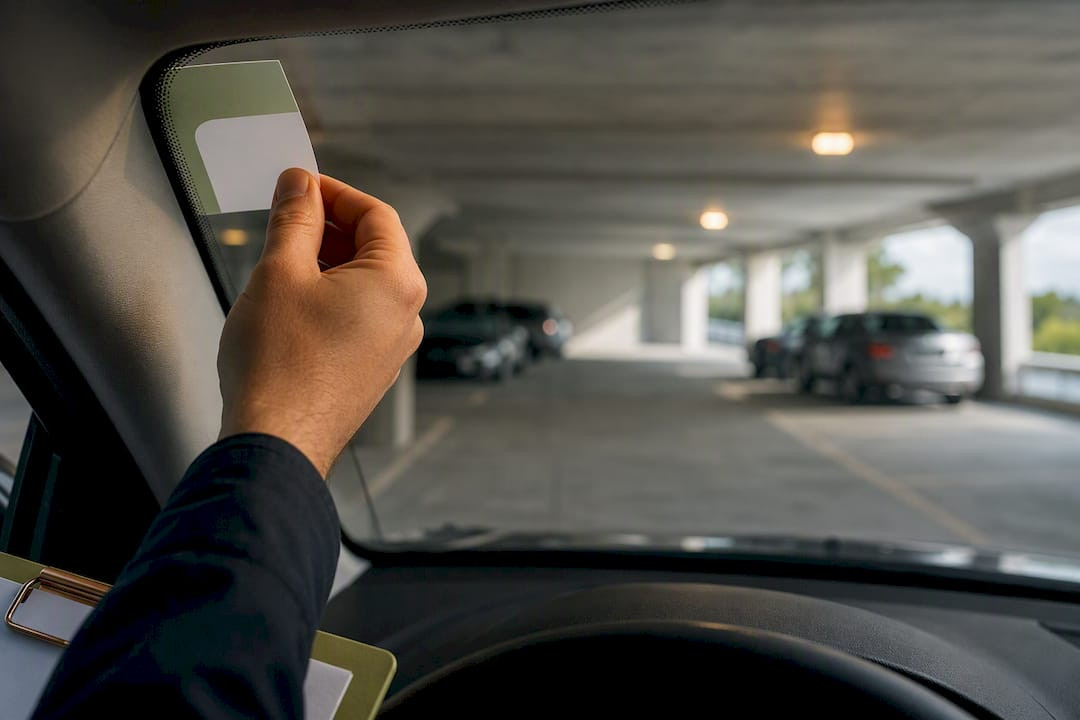
Enforcement First Monthly Parking Permit Design: Read in 3 Seconds

A functional monthly parking permit is built for one primary purpose: letting an attendant confirm validity in under three seconds without stepping out of a vehicle. That means high-contrast color, an oversized expiration month, and a rotating monthly palette come before any logo decision. Hang tags, decals, and static-cling stickers all satisfy this if the enforcement priority stays fixed. ADA-compliant accessible parking signage remains a completely separate, non-negotiable requirement.
TL;DR:
- Using distinct, high-contrast colors for each month in a fixed annual rotation improves enforcement speed and reduces expired permit violations at a glance.
- Designing permit elements so the expiration date and month are prominently large and placed where they are visible through tinted glass enhances quick inspection.
- Material choices like UV-stable vinyl and laminated finishes ensure permit durability and color retention in outdoor or sun-exposed environments.
- Combining visible serial numbers and barcodes creates a secure, scannable system that deters counterfeiting and expedites verification.
- Physical permits will always be necessary for visual enforcement and cannot replace official ADA signage for accessible parking compliance.
Table of Contents
- What Makes a Monthly Parking Permit Design Work for Enforcement?
- What Do Real Monthly Permit Design Templates Look Like?
- Which Materials Hold Up Best for Monthly Permits?
- How Do You Design Anti-Counterfeit Features Into a Permit?
- Are Parking Permits a Substitute for ADA Signage?
- How Do You Issue, Rotate, and Retire Monthly Permits?
- How Does Caymil Support Compliant, Secure Permit Design?
- What Size and Shape Should a Monthly Permit Be?
- How Durable Does a Permit Need to Be Outdoors?
- Can Digital Permits Replace Physical Ones?
- The Enforcement Trade-Off Nobody Talks About Enough
- Ready to Print Your Next Monthly Permit Batch?
- Where to Find the Official Rules and More Design Ideas
- Sources
- FAQ
What Makes a Monthly Parking Permit Design Work for Enforcement?
Every element on a monthly permit competes for a patrol officer’s attention for roughly two or three seconds. Design decisions that don’t serve that window are decoration, not function.
Color rotation solves the most common enforcement failure: expired permits that “look right” at a glance. Assigning each month a distinct, high-contrast color, then reusing that palette every year, trains enforcement staff to spot violations from a moving vehicle. Some facilities use a family-color approach, grouping winter months in cool tones and summer months in warm tones, which reduces confusion on large campuses running multiple permit types at once, similar to how parking na godziny services organize hourly parking effectively.
Font size on the month and year matters more than almost any other variable. Practical guidance from parking-industry sources recommends designing permits around how vehicles actually park, so the expiration date reads clearly through tinted glass at a normal walking pace, not just under direct light in a design proof.
A working checklist for any permit artboard:
- Use one dominant background color per month, rotated on a fixed annual schedule.
- Set the month/year in bold, sans-serif type at the largest size the layout allows.
- Place the permit where it’s visible without requiring the driver to move it, typically lower driver-side windshield or rear window depending on facility policy.
- Position barcodes or sequential numbers in a corner that clears window tint, defrost lines, and mirror obstruction.
- Keep logos and property branding secondary, usually a small mark in one corner rather than a dominant design element.
Pro Tip: Test your color rotation under parking-garage lighting before printing a full batch. Colors that read as distinct in daylight can look nearly identical under sodium-vapor or LED garage fixtures.
What Do Real Monthly Permit Design Templates Look Like?
A hang tag template typically divides into four functional zones: the top third for the property name or logo, the center for the oversized month and year, a side band for the permit type (resident, employee, visitor), and a bottom corner for the sequential number or barcode.
Rear-window decals get more real estate and sometimes carry a secondary color block indicating the parking zone or level.
Design motifs worth adapting:
- A bold numeral treatment for the month (large “03” rather than spelled-out “March”) speeds recognition for enforcement staff scanning multiple vehicles.
- A subtle background pattern, such as a faint diagonal line or property watermark, adds counterfeit resistance without competing with the primary text.
- Family-color sets (cool tones for one half of the year, warm for the other) work well for campuses issuing several permit categories simultaneously.
Campus design contests offer genuinely useful reference points here. The University of Texas at San Antonio’s 2025 permit design contest produced student submissions that kept the required fields, permit type, and expiration clearly dominant while still injecting real school identity into the graphic space around them. That balance, brand personality living in the margins rather than the center, is the template worth borrowing.
Which Materials Hold Up Best for Monthly Permits?
Material choice depends almost entirely on where the vehicle sits and for how long. A permit baking on a dashboard for 30 days in direct sun needs different specs than one clipped to a mirror in a covered garage.
- Vinyl decals with UV-stable inks handle open-air lots and long sun exposure well; they resist fading better than paper-based stock.
- Laminated cardstock hang tags suit covered garages and valet operations where weather exposure is minimal but handling durability still matters.
- Rigid plastic hang tags hold up across multiple rotation cycles if a facility reuses the same physical tag with swappable month inserts.
- Tamper-evident adhesive decals that fracture on removal work best for single-vehicle assignment where transferability is the main risk.
Foil stamping, spot varnish, and thermal printing all support security finishes without adding meaningful production time. Mounting hardware should match the use case: grommets and ribbon for hang tags that need to survive repeated removal, and high-tack adhesive only where permanent placement is intended for the full permit term.
How Do You Design Anti-Counterfeit Features Into a Permit?
Sequential numbering is the backbone of any enforcement-ready permit program. Every number issued should tie directly to a customer record, license plate, and issue date in your tracking system, so a quick lookup confirms whether that specific permit belongs on that specific vehicle.
Barcodes extend that same logic to handheld scanners, letting enforcement staff verify a permit against records instantly rather than relying on visual color checks alone. For higher-value facilities, foil stamping, holographic strips, or microprint text add a visible deterrent that’s difficult to replicate on a home printer, while barcode-only approaches work fine for lower-risk lots where scan-based verification does most of the work.
The strongest programs pair both layers: a visible security feature that discourages casual counterfeiting, backed by a barcode or number that catches anything more sophisticated.
Pro Tip: Keep your sequential number range internal. Publishing permit counts publicly, even indirectly through visible high numbers, tells would-be counterfeiters exactly how many valid permits are in circulation.
Are Parking Permits a Substitute for ADA Signage?
No. A windshield decal or hang tag, no matter how well designed, never satisfies accessible parking requirements. Federal guidance requires accessible spaces to display signs bearing the International Symbol of Accessibility, with the sign’s bottom edge mounted at least 60 inches above the ground, and van-accessible spaces must carry additional “van accessible” labeling.
Surface-level markings and vehicle permits don’t meet that standard under any circumstance. Facility managers should also avoid designing monthly permits that visually echo official ADA signage colors or symbols, since that similarity can create genuine confusion about which spaces require accessible credentials. Accessible space dimensions and access-aisle widths follow separate technical provisions, and local code can add requirements beyond the federal baseline, so always confirm both layers before finalizing a lot’s accessible signage plan.
How Do You Issue, Rotate, and Retire Monthly Permits?
A reliable permit program runs on a repeatable cycle, not ad hoc printing runs whenever a batch expires.
- Order and assign. Order the next month’s color batch in advance, then assign sequential numbers to registered vehicles as permits are issued.
- Record and distribute. Log the plate, customer name, and permit number together, then hand off the permit with a receipt confirming the assignment.
- Rotate on schedule. Announce the upcoming color and expiration date to permit holders at least a week before the switch, so enforcement doesn’t catch drivers off guard.
- Handle disputes and replacements. Keep barcode scan logs and issuance records on file so a disputed citation can be resolved by pulling the actual assignment history.
- Retire and archive. Once a month’s color cycles out, retire that batch’s records into an audit trail rather than deleting them, in case a dispute surfaces later.
This kind of structured hang tag rollout is what separates programs that scale smoothly from ones that generate constant customer service friction over “my permit looked fine” disputes.
How Does Caymil Support Compliant, Secure Permit Design?
Caymil has manufactured parking and ticketing products since 1937, which shows up in how the stock and custom permit decal lines handle the practical demands of enforcement-first design. Sequential numbering, barcoding, foil stamping, custom color rotations, and multi-part carbonless formats are all available as standard customization options, not special requests.
Facility managers evaluating layouts can review permit decal specifications directly or request a sample before committing to a full production run, which is the fastest way to confirm a color and font choice actually reads well before thousands of units go to print.
What Size and Shape Should a Monthly Permit Be?
There’s no single federal standard dictating permit dimensions, but industry convention has settled around a few practical shapes that work across most vehicle types and mounting methods.
Hang tags typically run 3.5 by 5.5 inches or 4 by 6 inches, small enough to hang from a rearview mirror without obstructing the driver’s view, but large enough to carry an oversized month field. Windshield decals tend toward 3 by 3 inches or 4 by 4 inches, sized to fit the lower corner of a windshield without covering the inspection sticker or registration tag many states require in the same location.

Rear-window decals get more flexibility, sometimes running as large as 5 by 5 inches since rear glass carries fewer regulatory placement conflicts. Shape matters almost as much as size: a square or rounded-rectangle format reads faster at a glance than an irregular die-cut shape, since enforcement staff pattern-match on silhouette before they even read the text.
Whatever dimensions a facility settles on, consistency across the full permit fleet matters more than any single measurement. Mixing tag sizes between vehicle classes or permit types slows down visual verification, because officers lose the instant recognition that comes from a uniform silhouette across the whole lot.
How Durable Does a Permit Need to Be Outdoors?
A permit sitting on an open-air dashboard faces a genuinely different environment than one issued for a covered valet operation, and material selection should follow that difference rather than defaulting to whatever’s cheapest per unit.
UV exposure is the primary threat to color-coded permits, since fading is exactly what undermines the whole enforcement-first system. A permit that starts as vivid orange in January and bleaches to pale yellow by June defeats the purpose of monthly color rotation, because officers can no longer distinguish it from a different month’s color at a glance. UV-stable vinyl inks resist that fade far longer than standard paper stock, which matters most for lots and open garages without cover.
Temperature swings compound the problem. Adhesive-backed decals baking through summer heat and contracting through winter cold can lift at the edges or crack along fold lines if the adhesive and base material aren’t rated for that range. Laminated finishes add a genuine layer of protection here, sealing the printed surface against both UV degradation and moisture intrusion from rain, condensation, or car washes.
Covered garages and valet operations have more flexibility, since hang tags and cardstock permits rarely face direct sun or precipitation. That’s exactly where a lower-cost laminated cardstock option makes financial sense instead of premium UV-rated vinyl, freeing up budget for security features that matter more in that context, like foil stamping or barcoding.

Can Digital Permits Replace Physical Ones?
Digital permits, typically tied to license-plate recognition or a mobile app registration, are gaining ground at facilities that already run automated license-plate recognition systems for gate access or citation issuance. The appeal is real: no printing costs, instant updates when a vehicle’s status changes, and no risk of a lost or stolen physical tag.
But physical permits still solve a problem digital-only systems don’t: instant visual verification without pulling out a scanner or checking a database. An enforcement officer walking a lot full of vehicles can clear dozens of cars by color and expiration date alone, while a fully digital system requires either fixed camera coverage or handheld lookups for every single vehicle. Physical permits remain a valuable visual layer even at facilities that also run automated license-plate recognition, precisely because the two methods cover different failure points.
The strongest setups combine both: a physical permit for instant visual triage, backed by an ALPR or broader parking access system for gate control, citation records, and audit trails. That hybrid model is where most mid-size and large facilities are heading, not because physical permits are becoming obsolete, but because they’re cheap insurance against the moments when a camera misreads a plate or a scanner loses signal.
The Enforcement Trade-Off Nobody Talks About Enough
Every facility eventually faces the same tension: the marketing team wants a permit that looks like a brand asset, and the enforcement team wants a permit that reads in half a second from ten feet away. Design the permit for enforcement first, and the branding still fits, just smaller and in the margins. Design it for branding first, and enforcement slows down, disputes climb, and the whole program gets harder to run. If you take one thing from this into tomorrow’s design review, make it this: shrink the logo before you shrink the month field.
— Richard
Ready to Print Your Next Monthly Permit Batch?
Custom sequential numbering, barcoding, foil stamping, and month-based color rotations are often included on stock and custom permit runs, not as pricey add-ons you have to negotiate for.
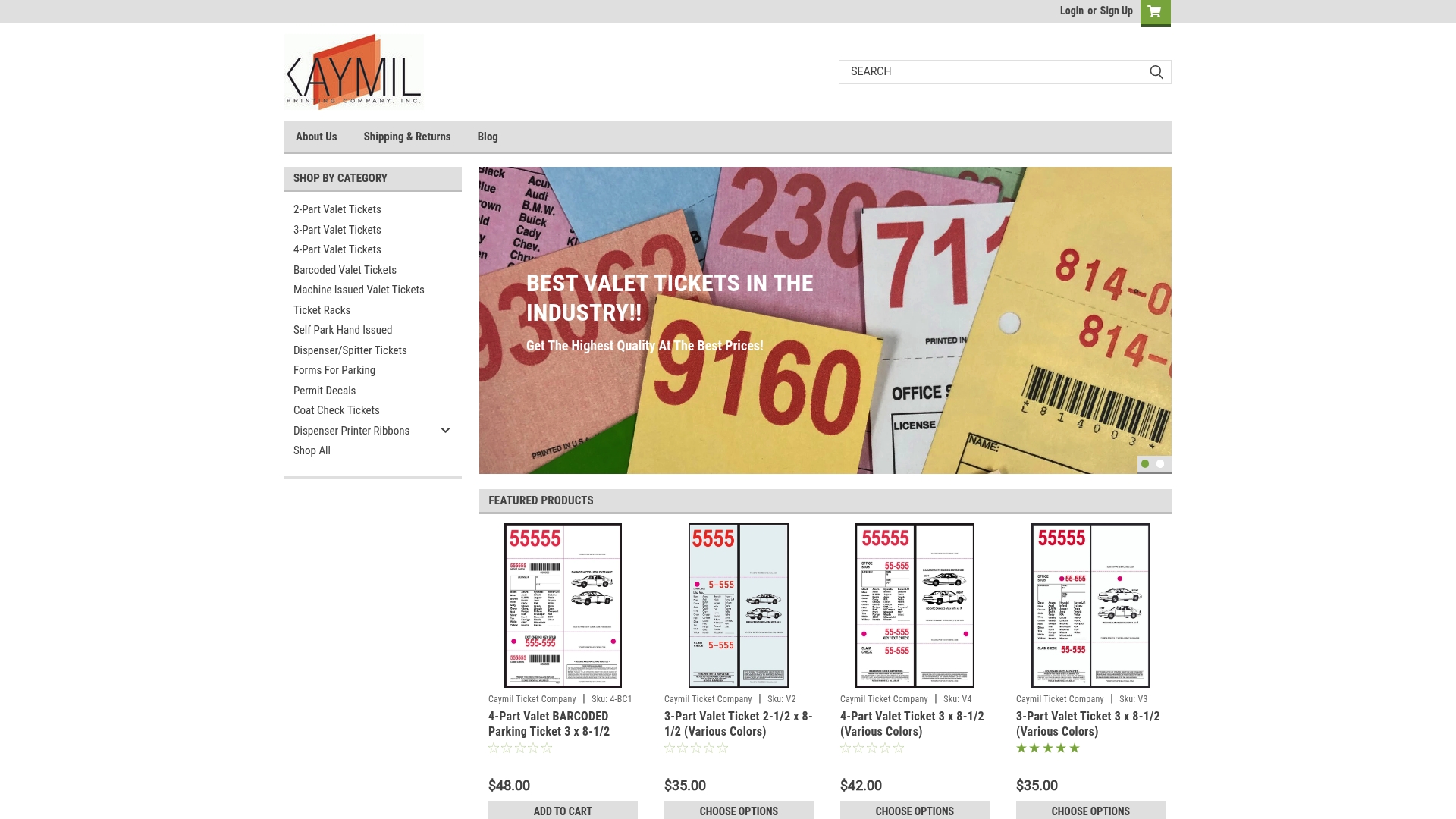
If you’re finalizing a hang tag program, start with the permit decal product line to compare material and finish options against your facility’s exposure level. Running a valet operation alongside your monthly permits? The barcoded valet ticket line covers sequential tracking for that side of the business too, and multi-part forms for registration and recordkeeping round out the paperwork trail auditors will eventually ask for. Request a sample or a custom quote directly through the site to see proof colors and security finishes before committing to a full production run.
Where to Find the Official Rules and More Design Ideas
- Access Board Chapter 5 guidance covers the federal ISA signage height requirement referenced above.
- AAMVA’s ALPR best-practices guide informs barcode and plate-placement guidance.
- UTSA’s 2025 design contest offers real creative reference points for balancing brand and enforceability.
Sources
- ADA accessibility guidance — Access Board (Chapter 5: Parking)
- AAMVA best practices for improving ALPR effectiveness
- UTSA campus services: 2025 parking permit design contest winners
FAQ
What Colors Work Best for Monthly Permit Rotation?
High-contrast, saturated colors that look distinct even in low light work best, since the goal is instant recognition from a moving vehicle. Many facilities use a 12-color annual rotation or group months into cool and warm “family” sets to reduce confusion across multiple permit types.
Do Parking Permits Need to Include a Barcode?
A barcode isn’t legally required, but it significantly speeds verification when paired with a scanner-based recordkeeping system. Facilities using barcoded ticket formats can confirm a permit’s validity against issuance records in seconds rather than relying on visual checks alone.
Can a Parking Permit Design Replace an ADA Sign?
No. Accessible spaces require dedicated signage bearing the International Symbol of Accessibility mounted at least 60 inches above the ground, and no vehicle permit or surface decal satisfies that requirement.
What Material Lasts Longest for Outdoor Monthly Permits?
UV-stable vinyl decals with laminated finishes hold color and structural integrity longest under direct sun and temperature swings. Covered garages and valet operations can use laminated cardstock hang tags instead, since they face far less environmental exposure.
How Much Do Custom Parking Permit Decals Cost?
Caymil’s permit decal line is priced at $88 per order, with sequential numbering, barcoding, and custom color options available. Custom parking ticket and hang tag pricing varies by specification and is available on request through Caymil’s site.