
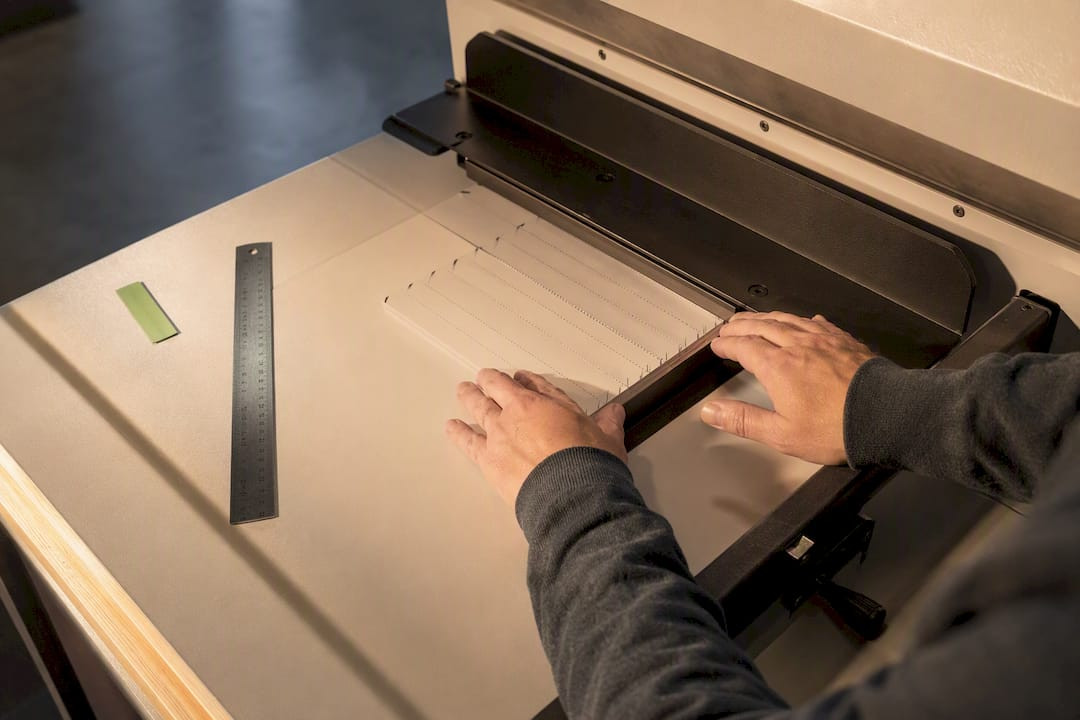
Keep Numbers 5mm Clear: Ticket Numbering and Imposition for Organizers
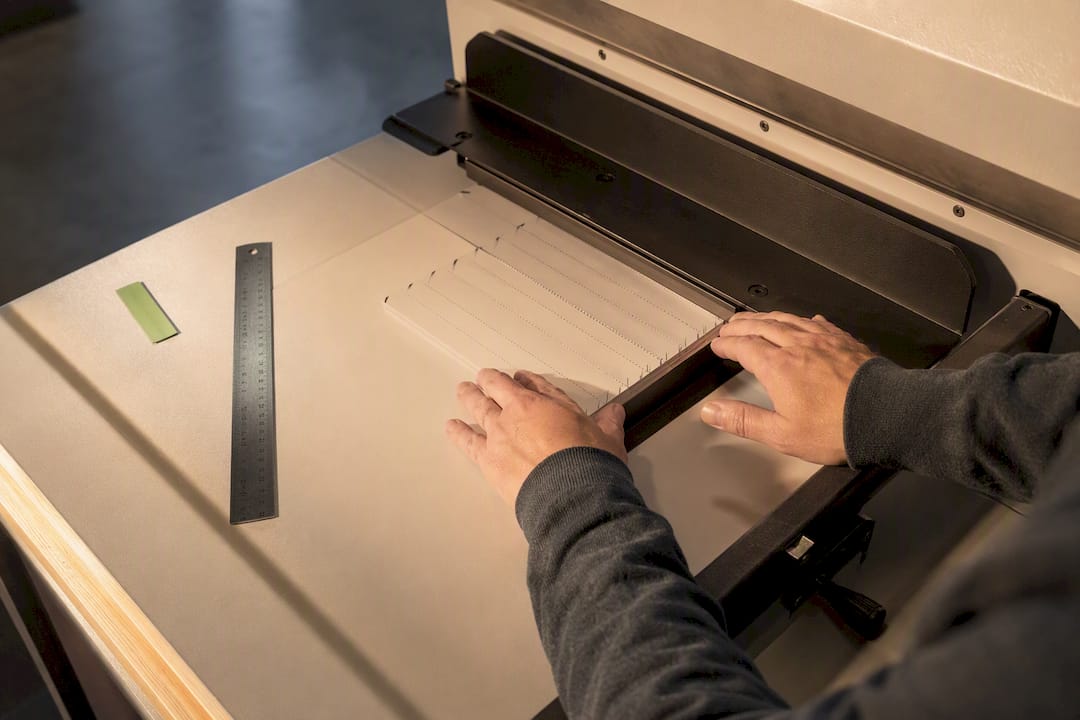
Place sequential numbers in the top corner, dead center, or bottom edge of the ticket, but the position matters less than one rule: the same number must appear on the ticket and its stub, and both must sit clear of the trim line, bleed area, and perforation. Pre-numbered PDF printing (variable data printing, or VDP) paired with cut-and-stack imposition is the most production-friendly way to guarantee that match. Get those two things right, and everything else in this guide is refinement.
TL;DR:
- Pre-numbered variable data printing paired with accurate cut-and-stack imposition ensures sequential tickets with matching stubs and minimizes registration errors.
- Ticket numbers should be placed at least 5 millimeters from edges, never cross perforation lines, and space should be reserved for barcodes or QR codes to prevent layout issues.
- For large runs, pre-numbered VDP is the most reliable method, while impact or laser overprint techniques may risk misalignment or skips as volume increases.
- Proper imposition distributes tickets so that slitting and stacking produce a perfect sequence, requiring precise perforation alignment and organized pad handling.
- Routine proofing with small test sheets verifying sequence, stub match, and proper placement can prevent costly reprints and fraudulent disputes later.
Table of Contents
- Common Ticket Numbering Positions and When to Use Each
- Pre-Numbered VDP vs. Crash Numbering vs. Laser Overprint
- Imposition Basics: Keeping Numbers Sequential After Cutting
- Formatting Ticket Numbers: Digits, Padding, and Fonts
- Proofing Your Numbered Tickets Before Full Production
- What Actually Matters in Ticket Numbering
- Sequential Ticket Printing Without the Guesswork
- Tools and Guides for Numbering Your Own Tickets
- Sources
- FAQ
Common Ticket Numbering Positions and When to Use Each
Top corner placement (usually top right) is the most common choice for a reason: it’s the first place a scanner, gate attendant, or raffle drawer looks, and it stays farthest from center folds or handling wear. Center placement works well on wide tickets where you want the number to double as a design anchor, but it puts the digits closer to any interior perforation, which raises the risk of a number getting sliced or partially obscured.
Bottom placement is common on stubs that get torn off and dropped into a drum, since it keeps the number readable even if the stub gets crumpled by the edges. Left and right placement (as opposed to top and bottom) shows up mostly on tickets with a vertical stub, where the number needs to run parallel to the tear line rather than across it.
Whatever position you choose, replicate it on both halves. Mismatched positions between ticket and stub don’t cause errors by themselves, but they make visual verification slower during a manual audit, and slower audits are where transposition errors slip through.
- Keep numbers at least 5 millimeters from any trim edge to avoid a guillotine cut clipping a digit.
- Never let a number’s baseline cross a perforation line.
- Leave enough clear space beside the number for a barcode or QR code if you’re adding one later. Retrofitting a barcode into a tight layout is a common and avoidable redesign.
If you can’t read the number instantly under normal light, your scanner and your gate staff won’t be able to either.
Pre-Numbered VDP vs. Crash Numbering vs. Laser Overprint
Your numbering method depends on run size, turnaround time, and how much you can risk a mismatched stub. Three methods dominate ticket production, and each fits a different job.
- Pre-numbered VDP builds a unique number directly into each ticket’s page in the print file, so the number is baked into the design before the file ever reaches a press. This is the method PDF Press recommends for eliminating post-press numbering entirely, because the ticket and its stub are generated as a single unit. There is no second pass, so there is no registration to miss.
- Crash (impact) numbering applies numbers mechanically after the base ticket is printed, using a numbering head on a press or a dedicated numbering machine. It’s still used for short runs, budget jobs, or when a printer needs to add numbers to stock that was printed without them. Its main weakness is precision: mechanical numbering heads can skip, double-strike, or drift slightly out of position over a long run.
- Laser or digital overprint runs numbers as a second pass through a digital press after the base ticket prints. It’s flexible and works well for mid-size runs, but registration (lining the overprint up with the pre-printed ticket) becomes harder as volume grows, and any sheet skew shows up as a numbering error.
Before you commit, run through a short checklist: How many tickets do you need? How fast do you need them? Do you have access to VDP software or a numbering press? And critically, does your event require guaranteed stub matching, or is approximate sequencing acceptable? For raffles, casino comps, and anything tied to a cash prize, guaranteed matching isn’t optional.
Imposition Basics: Keeping Numbers Sequential After Cutting
Numbering is only half the job. If your imposition (how tickets are arranged on the sheet before cutting) is wrong, you can print perfectly sequenced numbers and still end up with scrambled stacks after the guillotine runs. This is where cut-and-stack imposition, sometimes called shingled or “monkey” imposition, earns its keep.
The logic is simple: instead of numbering tickets left to right across a sheet, you distribute them so that after cutting and stacking each column, the piles land back in perfect sequence. PDF Press’s imposition guide breaks this down with a working formula: if you’re printing 8-up on a sheet and need 4,000 tickets, you calculate the sheets needed, then place numbers across the grid so that cutting each column and stacking the sheets in printed order reconstructs the 1 through 4,000 sequence.
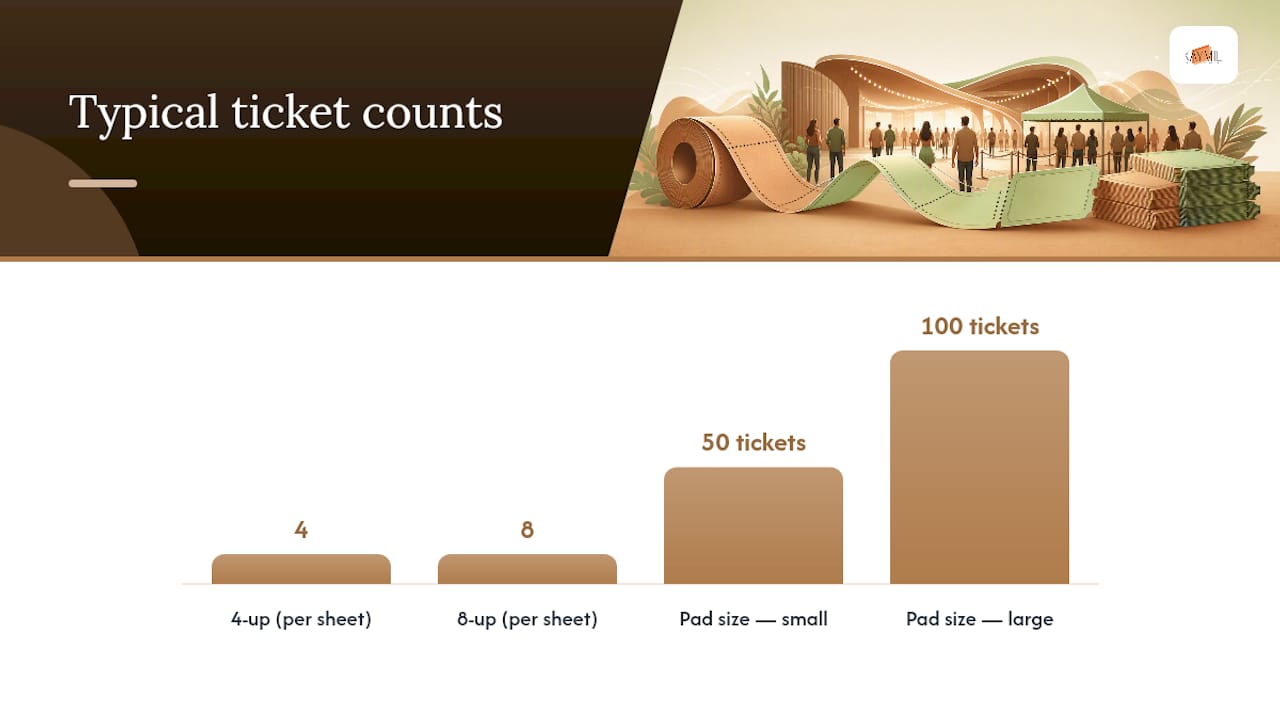
- A 4-up layout on letter-size stock is common for smaller runs and hand-cutting on a paper cutter.
- An 8-up layout on tabloid stock speeds up larger runs but demands more careful sheet-stacking discipline before cutting.
- Perforation must align identically across every sheet in the stack. A perforation that drifts even a millimeter between sheets throws off your stub tear line on every ticket beneath it.
- Pack finished pads (typically 50 or 100 tickets per pad) in the same sequential order they came off the stack. Once pads get shuffled, sequence is nearly impossible to recover by eye.
Get the math wrong on total sheets or tickets-per-page, and you’ll either come up short or waste stock. Round up every time.
Formatting Ticket Numbers: Digits, Padding, and Fonts
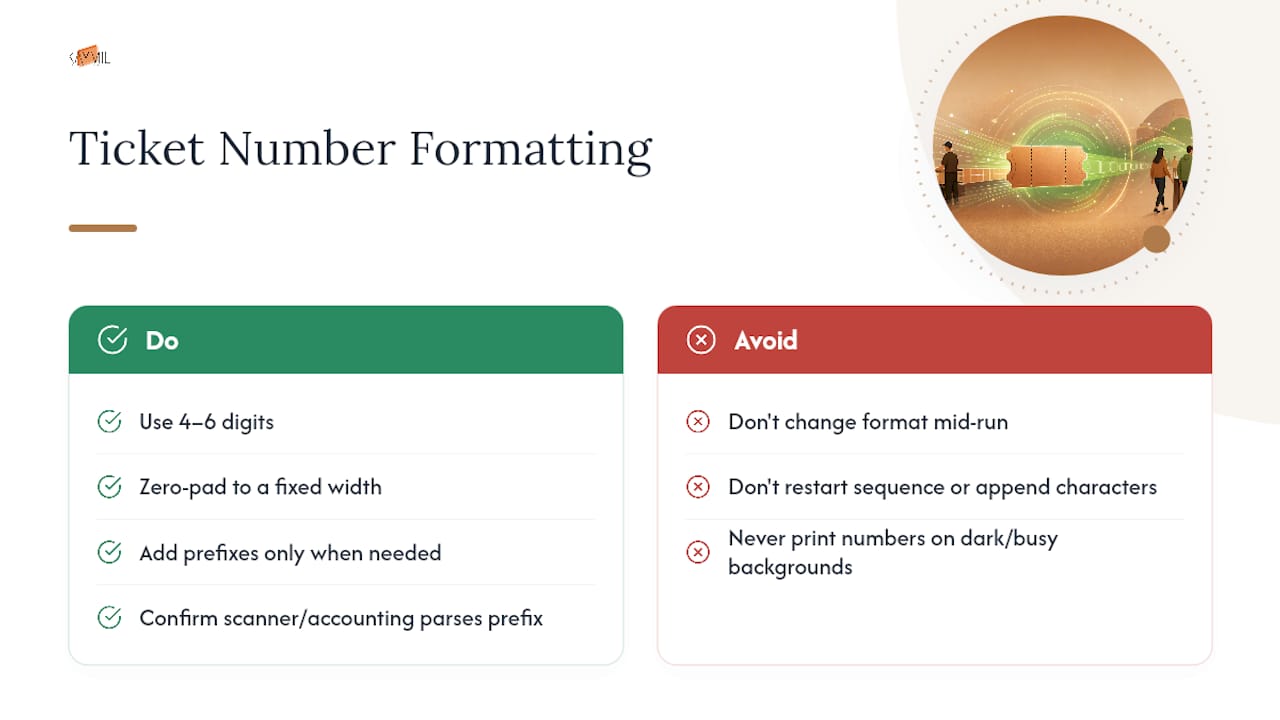
Most ticket runs use 4 to 6 digits, which covers anywhere from 9,999 to 999,999 unique tickets. Choose a digit count with headroom. Running out of digits mid-event means either restarting the sequence (a mismatch risk) or manually appending characters, which breaks whatever numbering schema you set at the start.
Zero-padding matters more than most organizers realize. Ticket numbers are usually stored and read as text strings rather than actual numbers, and Broadcom’s technical documentation on sequence formatting notes that inconsistent digit lengths sort incorrectly in most systems: “9” can sort after “89” instead of before it. Padding every number to a fixed width (0001, 0002, 0089) keeps sorting predictable whether you’re checking numbers by hand or scanning them into software.
Formatting checklist:
- Use 4 to 6 digits with zero-padding to a fixed width.
- Add prefixes only when you need to separate batches or venues, and confirm your scanner or accounting software can parse the prefix correctly.
- Set numbering in a monospaced font like Courier or OCR-B, since even digit spacing prevents misreads on partially worn tickets.
- Use a minimum 10 to 12 point size with strong contrast against the ticket background. Never print black numbers on a dark or busy pattern.
Lock the format (padding width, prefix, starting number) before you generate a single ticket. Ticket numbering documentation from Zammad’s admin guide warns that changing a numbering format mid-run breaks tracking systems that depend on consistent sequence structure. That warning applies just as directly to a raffle spreadsheet as it does to a support ticketing platform.
Proofing Your Numbered Tickets Before Full Production
A proofing pass catches the two errors that ruin ticket runs: off-by-one sequencing and stub mismatches. Both are invisible until someone tries to redeem a ticket, which is the worst possible time to discover them.
- Generate a small test PDF covering your full range and print 5 to 10 sheets, not the full run. PDF Press recommends this exact test-sheet approach before committing to production stock.
- Check your range math: total tickets equal your end number minus your start number, plus one. Pages needed equal that total divided by tickets-per-page, always rounded up, never down, as SnapToolSuite’s raffle ticket generator calculates automatically for print-and-cut jobs.
- Cut the test sheets and confirm each stack reads in true sequence, with no repeats or skips.
- Verify every stub number matches its ticket number exactly, digit for digit.
- Run a physical QA pass: confirm numbers sit at least 5 millimeters from the trim edge, test a barcode scan if you’re using one, and request that your vendor deliver pads pre-sorted in sequential order.
Pro Tip: Keep a signed production sheet noting your start number, end number, and pad count for every run. When a redemption dispute comes up six months later, that sheet is the only record that settles it.
What Actually Matters in Ticket Numbering
Most guidance on ticket numbering focuses on where to put the digits, and that’s the least risky part of the job. The real failure points are procedural: a numbering schema changed halfway through a run, a stub position that doesn’t mirror the ticket, or a page count rounded down instead of up. Placement mistakes are usually cosmetic. Sequencing mistakes are financial, especially in raffles or casino comp tickets where a mismatched stub means someone can’t claim what they won.
The conventional advice oversells font choice and undersells process. A monospaced font and 5 millimeters of trim clearance are worth doing right, but they won’t save a run where the start and end numbers were miscalculated or the imposition scrambled the stacks. If you take one thing from this guide, take the proofing pass. A five-sheet test run costs almost nothing and catches the errors that a full print run cannot undo.
Organizers who treat numbering as a design afterthought instead of a production step are the ones who end up reprinting. Treat the number the same way you’d treat a barcode: as functional data that has to survive cutting, handling, and scanning intact, not just as a design element that looks good on a mockup.
— Richard
Sequential Ticket Printing Without the Guesswork
A leading ticket manufacturer specializes in addressing major risks in numbered ticket production, such as mismatched stubs and inconsistent formatting. As a manufacturer, Caymil supplies pre-numbered and machine-issued tickets, barcode formats, and multi-part carbonless forms for parking operations, built with guaranteed stub matching and production QA on every pad before it ships.
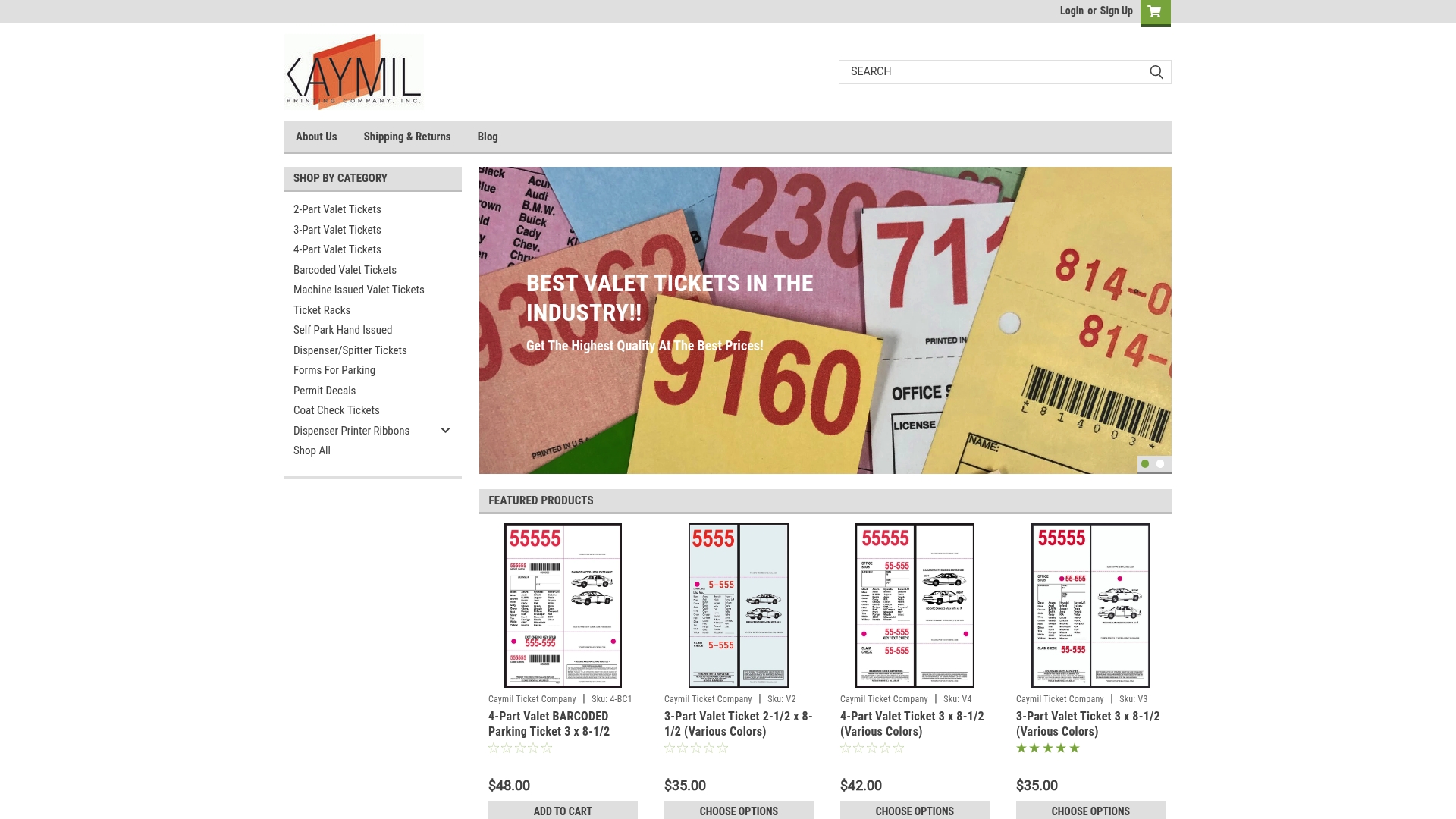
If your operation issues tickets through a printer at the gate, Caymil’s machine-issued valet tickets come sequentially numbered and ready to load. Need a physical dispenser for high-turnover lots? The ticket rack line is built for that exact workflow. And if your tickets need a scannable code alongside the sequential number, barcode valet parking tickets handle both in one print run.
Upload a pre-numbered PDF or request a free sample proof before committing to a full production run, and see the numbering, padding, and stub match exactly as they’ll print at scale.
Tools and Guides for Numbering Your Own Tickets
For quick print-and-cut jobs, SnapToolSuite’s raffle ticket generator builds a matched-number PDF automatically. For imposition logic, PDF Press’s ticket layout guide walks through cut-and-stack math in detail. For small home or office runs, Raffles for Less’s mail-merge tutorial covers the Excel and Word method step by step.
Sources
- How to print tickets: Numbered ticket imposition and layout — PDF Press
- Free raffle ticket generator — SnapToolSuite
- How to make raffle tickets with numbers — Raffles for Less
FAQ
What Is a Ticket Number?
A ticket number is a unique sequential identifier printed on both a ticket and its matching stub, used to track sales, verify redemption, and prevent duplication or fraud during an event or raffle.
How Many Digits Should a Ticket Number Have?
Most ticket runs use 4 to 6 digits with zero-padding to a fixed width, which covers up to 999,999 unique tickets while keeping the number set to sort correctly in most tracking software.
How Do You Find Your Ticket Number?
Your ticket number is printed on the ticket itself, typically in the top corner, center, or bottom edge, and it should appear in the identical position and value on your keeper stub.
What’s the Most Reliable Numbering Method for Large Runs?
Pre-numbered VDP combined with cut-and-stack imposition is the most reliable method for large runs, since it builds each unique number into the file before printing and eliminates the registration errors common with post-press numbering passes.
Can Caymil Print Tickets With Custom Sequential Numbers?
Yes. Caymil manufactures stock and custom tickets with sequential numbering, barcoding, and multi-part carbonless formats, including machine-issued and pad formats ready for immediate use.