

Valet Parking Supplies List: What Every Operation Needs

A complete valet parking supplies list covers six core categories: key management hardware, traffic control devices, communication tools, ticketing systems, consumables, and safety equipment. Operations that treat any one of these as optional discover the gap quickly, usually during a peak shift when a missing key tag or dead radio turns a smooth arrival experience into a liability event. Whether you manage valet at a hotel, a hospital, or a large event venue, the inventory you stock before opening determines the service quality your guests experience from the first handoff.
1. Core valet parking supplies list: equipment that forms the foundation
The backbone of any valet parking supplies list starts with key management. Numbered key tags matching claim tickets prevent the single most costly mistake in valet operations: releasing the wrong keys to the wrong guest. A locked key board or key lockbox, priced between $50 and $200, provides the physical security layer that no digital system can replace on its own.
Valet podiums serve as the operational command center for each shift. A quality podium, which runs between $200 and $800, holds tickets, pens, clipboards, and shift logs in one organized station. Without a dedicated podium, attendants scatter supplies across the lane and slow every transaction.
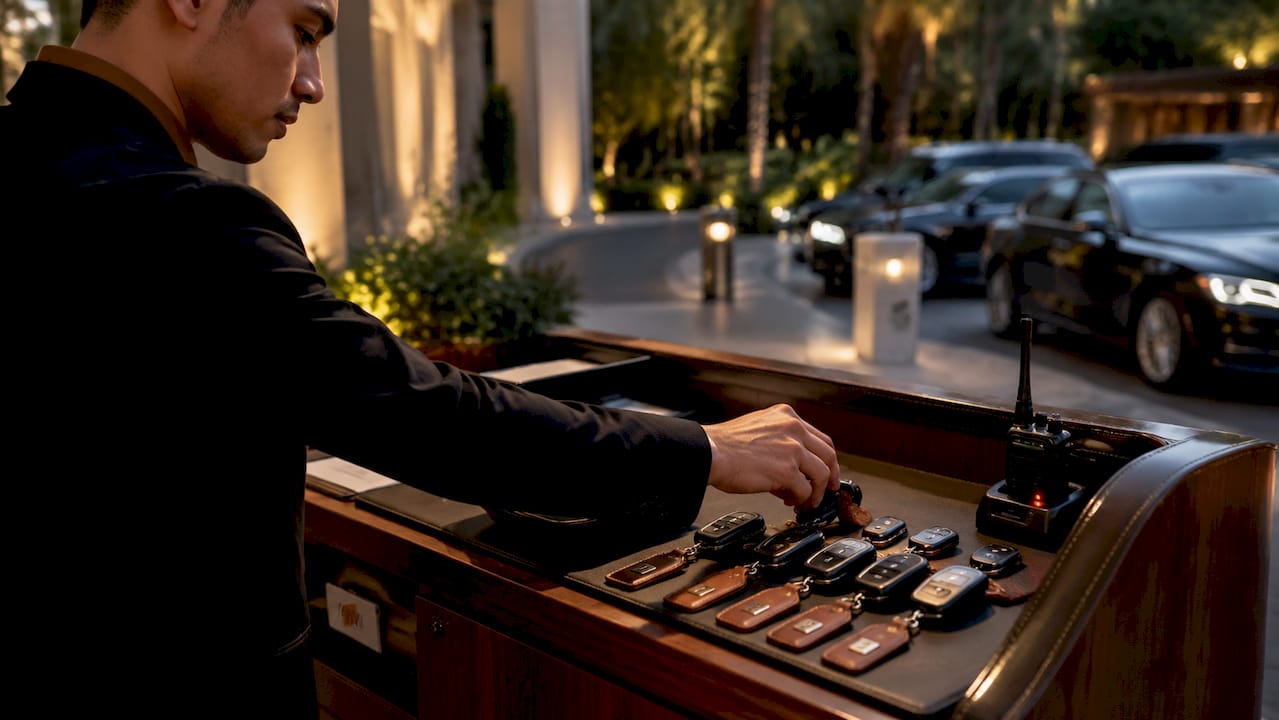
Communication devices are non-negotiable. Two-way radios outperform Bluetooth headsets in outdoor valet environments because of their range, clarity, and durability. Budget sets are available under $120 and hold up through weather and high-volume shifts far better than consumer-grade alternatives.
Traffic control equipment rounds out the core category. This includes traffic cones, directional signage, and LED traffic wands. Uniforms and appearance supplies, typically $50 to $100 per attendant, complete the professional presentation that guests associate with service quality.
- Key lockbox or board: $50 to $200
- Numbered key tags with matching claim tickets
- Valet podium or stand: $200 to $800
- Two-way radios or communication headsets: under $120 for budget sets
- Traffic cones, directional signage, and LED wands
- Uniforms per attendant: $50 to $100
Pro Tip: Order key tags and claim tickets with matching sequential numbers from the same print run. Mismatched numbering between tag sets and ticket books is a common source of retrieval errors that operators only notice after a guest complaint.
2. Ticketing systems: paper, digital, and everything in between
Valet ticketing is the paper trail that protects both the operator and the guest. The valet ticketing system you choose determines how fast attendants process arrivals, how accurately vehicles are retrieved, and how well your operation handles disputes. Paper ticket systems cost $50 to $200 for a supply run, while digital platforms run $50 to $200 per month.
Multi-part carbonless tickets, such as two-part, three-part, and four-part formats, give each stakeholder a copy at the point of intake. The guest keeps one stub, the attendant retains one, and the key board copy stays with the vehicle record. This redundancy is what makes paper ticketing resilient even when technology fails.
Barcoded valet tickets add a layer of speed and accuracy that paper-only systems cannot match. Scanning a barcode at retrieval eliminates manual number lookups and reduces the chance of human error during busy periods. Caymil’s barcoded valet tickets integrate with major parking management platforms, making them a practical upgrade for operations already using digital tracking.
Ticket racks keep claim stubs organized at the podium and in the key storage area. A disorganized ticket rack during a 200-car event is the fastest way to create a retrieval bottleneck that guests remember for the wrong reasons.
3. Consumable supplies that operators consistently understock
Consumables are the category most operators undervalue because the individual cost of each item is low. That logic breaks down the moment a shift runs out of claim tickets at 7 PM on a Friday. Shortages in consumables affect guest safety and service speed immediately, and restocking mid-shift is rarely possible.
The standard consumables checklist for daily valet operations includes:
- Paper claim tickets and carbonless ticket books
- Ballpoint pens (stock more than you think you need)
- Clipboards for intake forms and damage inspection sheets
- Reflective tape for marking lanes and curb edges
- Tire chocks for sloped parking areas
- Zip ties for temporary signage and cable management
- Rain ponchos and hand warmers for weather preparedness
- Cleaning supplies and microfiber cloths for vehicle care
- Small fuel cans for vehicles brought in on low fuel
Inventory discipline separates professional operations from reactive ones. Documented issuance logs for consumables, tracked at the shift level, give managers the data to set accurate reorder points before shortages occur.
Pro Tip: Set a minimum stock threshold for each consumable item and post it inside the supply cabinet. When any item drops to that threshold, it triggers a reorder automatically rather than waiting for a supervisor to notice the shortage.
4. How technology and tracking systems improve valet efficiency
Modern valet operations at hospitals, corporate campuses, and hotels increasingly use phone-based vehicle tracking and automated retrieval requests to reduce wait times and improve the guest experience. These tools do not replace physical supplies. They work alongside them.
Digital key tracking systems with barcode or RFID capabilities simplify retrieval and reduce human error. Advanced platforms include photographic vehicle records and audit trail logs that document every key transaction from intake to return. This level of accountability protects operators in damage disputes and speeds up end-of-shift reconciliation.
| Technology Item | Primary Benefit | Approximate Cost |
|---|---|---|
| Two-way radios | Reliable communication across the lot | Under $120 per set |
| Portable thermal printer | On-demand ticket printing at the lane | $150 to $400 |
| Lithium jump starter | Emergency vehicle assistance | $80 to $150 |
| LED traffic wands | Visibility and lane direction at night | $15 to $40 each |
| High-capacity power bank | Keeps tablets and phones charged on shift | $40 to $100 |
Portable thermal printers and tablets allow attendants to print tickets and log vehicle data at the lane rather than running to a fixed station. Power solutions, including portable chargers and battery banks, keep these devices operational through a full shift without access to an outlet.
5. Safety and compliance equipment every valet service needs
Traffic control devices used in valet operations on public roads or private roads open to public travel must comply with MUTCD Part 6F standards for size, spacing, and placement. The Federal Highway Administration’s MUTCD is the national standard, and non-compliant cones or signage expose operators to liability if an incident occurs.
The safety and compliance checklist for valet service supplies includes:
- MUTCD-compliant traffic cones in correct sizes for the application
- Reflective safety vests for all attendants working near traffic
- LED traffic wands for directing vehicles at night or in low-visibility conditions
- First aid kits stocked and accessible at the podium
- Disposable gloves and basic PPE for vehicle handling
- Proper disposal containers for hazardous materials such as used gloves and fuel spills
- Incident report forms and damage inspection sheets
Maintaining a written safety inventory log and reviewing it at each shift change is a practice that most operations skip until an OSHA inspection or an incident makes it mandatory. Treating safety documentation as a supply item, not an afterthought, is what distinguishes operations that hold up under scrutiny.
Pro Tip: Photograph the condition of every vehicle at intake using a tablet or smartphone and attach the image to the digital key record. This single practice resolves the majority of damage disputes before they escalate.
6. Customizing your supply list for events, hotels, and different operations
A startup valet operation and an established hotel valet program do not need the same inventory depth. The core equipment costs for a new operation, covering a key lockbox, podium, cones, tickets, uniforms, and radios, typically fall between $450 and $1,600 depending on quality tier. That range gives operators a realistic baseline for budgeting before the first shift.
For large events, surge resilience is the planning priority. High-capacity power banks, portable ticket printers, and additional radios prevent queueing and service delays during peak arrival windows. An event coordinator managing a 500-car gala needs a fundamentally different supply kit than a boutique hotel running 30 cars per night.
Customizing your parking valet checklist by venue type involves three decisions:
- Volume: How many vehicles per hour at peak? Scale ticket books, key tags, and attendant count accordingly.
- Duration: Is this a recurring daily operation or a single event? Disposable consumables make more sense for one-time events; durable equipment justifies the investment for ongoing programs.
- Guest profile: Luxury hotel guests expect branded tickets and polished uniforms. Hospital valet guests prioritize speed and clear communication. Match your supplies to the expectation your guests arrive with.
Reviewing your hotel valet integration strategy alongside your supply list ensures that the physical tools you stock align with the service workflow your team actually uses.
Key takeaways
A complete valet parking supplies list requires key management hardware, compliant traffic control devices, reliable communication tools, a ticketing system, and stocked consumables to operate without service failures.
| Point | Details |
|---|---|
| Key management is the priority | Numbered key tags matching claim tickets prevent retrieval errors and protect against liability. |
| Consumables cause the most disruptions | Low-cost items like tickets and pens cause immediate service failures when understocked. |
| Technology supplements, not replaces, basics | Digital tracking and thermal printers improve speed but depend on physical ticket and key systems. |
| Safety compliance is non-negotiable | MUTCD-compliant cones and reflective vests are legal requirements, not optional upgrades. |
| Customize by volume and venue type | Scale ticket books, radios, and power solutions to match peak vehicle count and guest expectations. |
What operators get wrong about valet supply management
Most operators build their initial supply list by copying what they saw at another operation. That approach works until it doesn’t. The supplies that look sufficient on a slow Tuesday become the exact bottleneck on a Saturday night with 300 cars in queue.
The mistake I see most consistently is treating consumables as a purchasing afterthought. Operators invest carefully in a quality podium and a solid radio set, then order the minimum quantity of ticket books to save $30. When those books run out mid-event, the cost of the delay and the guest complaints far exceeds what a full case of tickets would have cost.
The second pattern worth calling out is the assumption that a digital key tracking app eliminates the need for physical custody tools. It does not. A numbered key tag and a matching claim ticket are the physical proof of custody that holds up when a guest disputes a charge or a key goes missing. Technology adds speed and an audit trail. The physical ticket is still the legal record.
For hotel managers specifically, the supply list is also a brand statement. A guest who receives a crisp, professionally printed ticket with your hotel’s logo experiences a different arrival than one who gets a generic handwritten stub. That detail costs almost nothing per ticket and communicates care before the guest even reaches the front desk.
— Richard
Upgrade your valet ticketing with Caymil
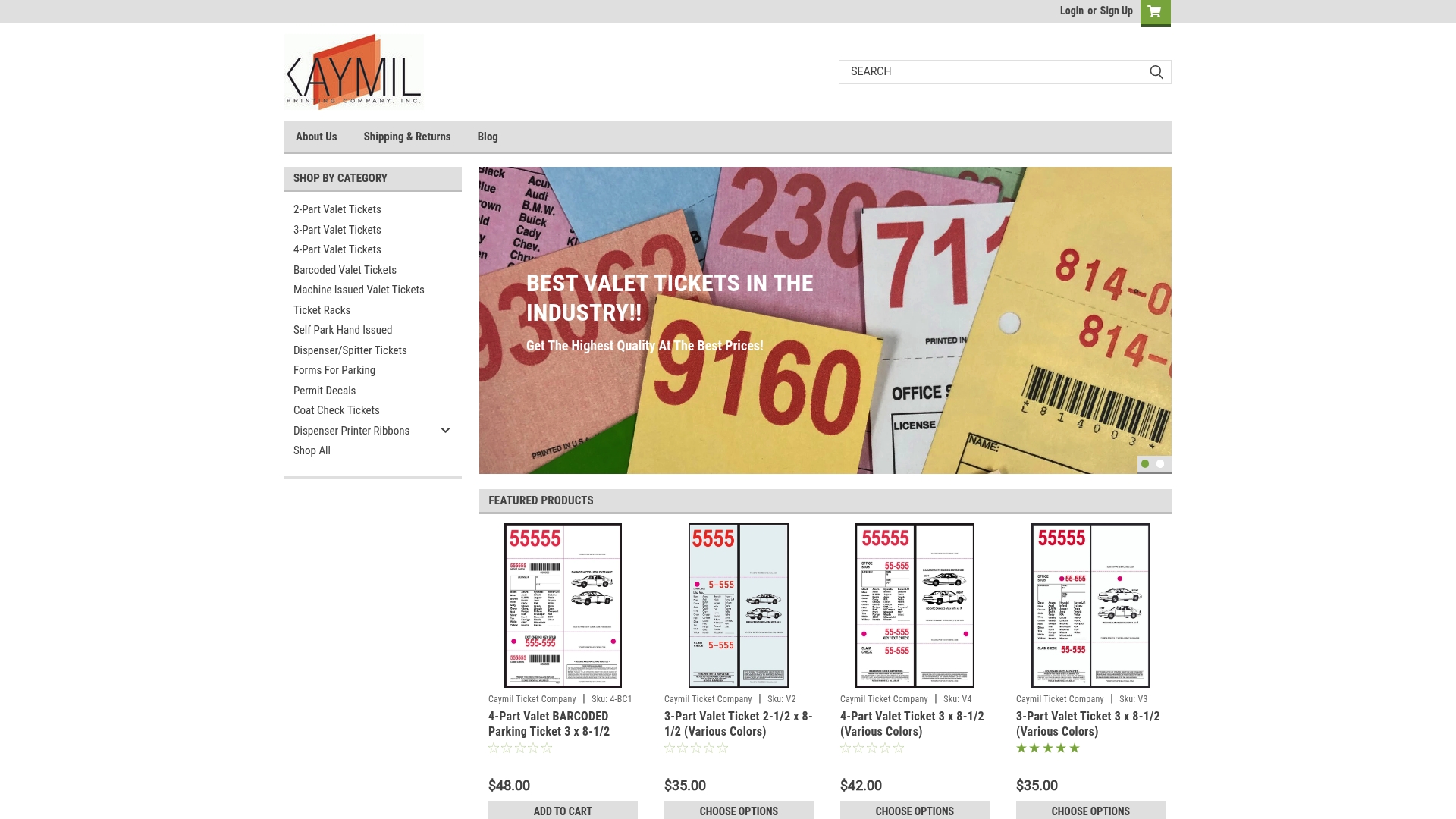
Caymil has manufactured valet parking tickets and parking forms since 1937, supplying operators, hotels, casinos, and event venues across the United States with tickets built to perform under real operational conditions. From 2-part carbonless valet tickets to machine-issued valet tickets compatible with high-volume dispensers, Caymil’s product line covers every format your operation requires. Custom options include sequential numbering, barcoding, logos, and security features that protect against fraud and simplify reconciliation. Ticket racks, parking forms, and multi-part formats are available in stock quantities with fast nationwide shipping. Contact Caymil for pricing, samples, or a custom quote tailored to your operation’s volume and format requirements.
FAQ
What supplies are on a basic valet parking supplies list?
A basic valet parking supplies list includes a key lockbox, numbered key tags, claim tickets, a valet podium, traffic cones, two-way radios, reflective vests, and consumables such as pens and clipboards. These items cover the core functions of secure key custody, traffic control, and guest communication.
How much does it cost to stock valet parking equipment?
Startup equipment costs for a valet operation typically range from $450 to $1,600, covering a key lockbox, podium, cones, ticket system, uniforms, and communication devices. Ongoing consumable costs depend on daily vehicle volume and shift frequency.
Do valet traffic cones need to meet specific standards?
Yes. Traffic cones used in valet operations on public or publicly accessible roads must comply with MUTCD and OSHA standards for size, spacing, and reflectivity. Using non-compliant devices creates legal exposure if an incident occurs in the controlled zone.
What type of valet ticket works best for high-volume operations?
Barcoded or machine-issued tickets work best for high-volume valet operations because they speed up retrieval, reduce manual lookup errors, and integrate with digital tracking platforms. Multi-part carbonless formats add a physical redundancy layer that protects both the operator and the guest.
How do operators prevent consumable shortages during peak shifts?
Shift-level inventory counts and documented reorder thresholds posted inside supply cabinets are the most reliable method for preventing consumable shortages. Setting a minimum stock level for each item and triggering reorders before that threshold is reached eliminates reactive restocking during busy periods.