
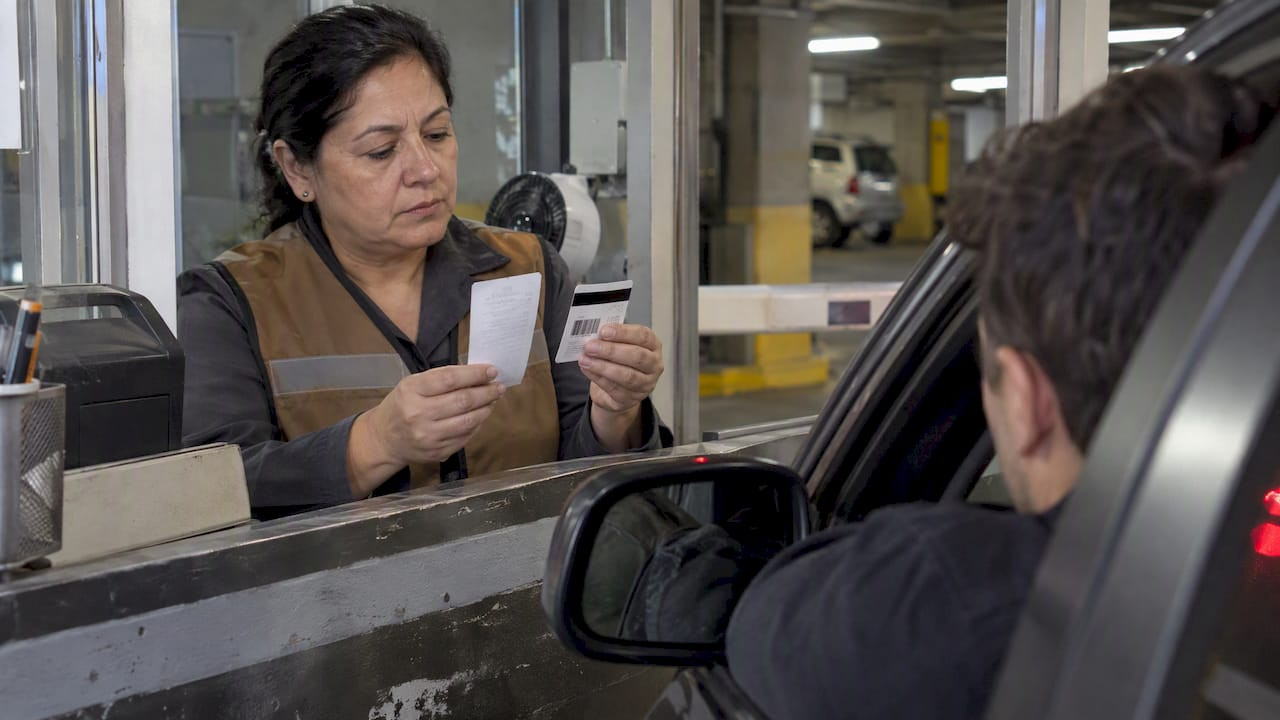
Validation Abuse in Parking: How to Spot and Stop It

In parking operations, validation abuse is the misuse of validation tickets, stamps, codes or stickers to give parkers free or discounted time they were never meant to receive. It happens when staff validate for friends, when tickets are copied or resold, and when one validation is applied to more than one stay. The fix is rarely a single product. It is a set of layered controls: traceable tickets, clear issuing rules, regular reconciliation and a culture where people know the numbers get checked.
A note for readers who landed here by another route: if you searched for validation in the emotional sense, meaning a partner who uses approval or dismissal of your feelings to control you, this guide is not the right page. The National Domestic Violence Hotline explains what emotional abuse looks like and offers free, confidential support around the clock. The rest of this article is written for parking operators, garage managers, hotel and hospital facility teams, and event venues.
TL;DR
- Validation abuse is any use of a validation that the issuer did not intend: unauthorized issuing, copying, resale, reuse, or stacking several validations on one stay.
- Unnumbered, generic stock is the easiest target. Sequential numbering, barcodes and custom design make each ticket traceable.
- Controls work in layers: ticket design, issuing rules, scanning or tracking, and routine audits that compare validations issued with validations redeemed.
- Most abuse is small and repeated, so it hides in the totals until someone reconciles by ticket number, by location and by shift.
- Caymil manufactures validation tickets, barcoded tickets, permit decals and related supplies that give operators the traceability these controls depend on.
Table of Contents
- What validation abuse looks like on the ground
- Why it goes unnoticed
- Build controls in layers
- Which Caymil ticket fits which risk
- Valet, hotel, hospital and event settings
- Accountability is a management habit
- A practical 30-day plan
- Perspective: what we see in the ticket business
- Ordering tickets built for traceability
- FAQ
- Sources
What validation abuse looks like on the ground
A validation is a promise: this stay is paid for, partly or fully, by someone else. A retailer, restaurant, hotel, clinic or event gives it to a guest, and the garage bills that business or discounts the parker at exit. Because the promise is handed over by many people in many locations, it has many places to leak.
The patterns below are the ones operators describe most often.
Unauthorized issuing by staff
The simplest form is an employee who validates tickets for friends, relatives or regular customers who do not qualify. Industry guidance on validation systems notes that with stamp-based validation, a dishonest employee can validate tickets for friends and family, and that stamps themselves can be lost, stolen or misused. A stamp or sticker that looks the same every time and carries no number leaves no trail back to the person who applied it.
Copying and counterfeiting
If a validation ticket is plain paper with a logo, anyone with a scanner and a printer can reproduce it. A copy that passes a quick glance at the exit lane costs the operator the same as a real one, and the tenant who is billed for validations pays for tickets it never issued. This is why design, numbering and barcodes matter more than the printing itself.
Piggybacking and reuse
One validation covering several stays is a long-standing problem. Records from a patented ticketing-management system describe how valet-type garages suffer losses from skimming, piggybacking of tickets, under-pricing and honest errors in computation. The same logic applies to validations: a ticket that is not tied to a date, a location or a single use can be handed to a second driver or used again next week.
Stacking and over-validating
Some parkers collect validations from several merchants or visits and present them together to wipe out a fee that was designed to be partly paid. Others receive a full-day validation where a two-hour one was intended. Without clear denominations printed on the ticket and rules at the booth, attendants have little basis to refuse.
Lost-ticket and cash handling overlap
Validation abuse often travels with other leakage. A validated ticket can be used to cover a cash transaction that never reaches the register. If an attendant can mark a ticket as validated and also take cash, the two controls cancel each other out. Separating those duties is as important as the paper itself.
Why it goes unnoticed
Validation abuse rarely shows up as one large loss. It appears as a slightly higher validation redemption rate on one shift, one entrance or one tenant. Three conditions let it persist:
- No unique identifier. If tickets are identical, you cannot tell which were issued, which were redeemed and which were never issued at all.
- No reconciliation by source. Totals can look reasonable while a single location or employee accounts for an outsized share.
- No consequence. When people know no one compares the numbers, small misuse grows.
The common thread is traceability. Each of the controls below exists to make one validation answer four questions: who issued it, for whom, for how much and whether it has been used.
Build controls in layers
No single feature stops every kind of abuse, and facilities differ. A hospital garage with patient and visitor validations has different risks than a casino valet stand or a downtown garage serving twenty retail tenants. Think in four layers and add what your risk justifies.
Layer 1: the ticket itself
The physical ticket is the cheapest place to build control, because every piece you print carries it.
- Sequential numbering. A unique number on every ticket lets you account for a full roll or book: issued, redeemed, voided, missing.
- Barcodes. A barcode lets your system or a handheld reader recognize a ticket and flag a repeat scan. Your barcode must match what your parking system accepts, so confirm the symbology with your equipment provider before ordering.
- Custom design. Logos, custom colors and security features make a copy easier to spot. A ticket that looks generic invites duplication.
- Printed value and expiry. If the ticket says what it is worth, which location it belongs to and when it expires, the attendant has a rule to apply without a debate.
- Multi-part carbonless forms. Two-, three- and four-part forms leave a copy with the issuer, a copy with the parker and, where needed, a copy for accounting. That second record is the one you reconcile against.
Layer 2: issuing rules
Controls on paper are only as good as the rules around them.
- Assign validation books or rolls to named individuals or posts and log the number range handed out.
- Keep unissued stock locked, and limit who can access it.
- Define who may validate, for whom and at what value. Write it down.
- Never let the person who handles cash also control validation stock for the same stay.
- Require voided tickets to be returned, not discarded.
Layer 3: scanning and tracking
If your equipment supports barcode validation, use it. A scan at exit can reject a ticket already redeemed, and it records the redemption for billing. Where equipment does not, a manual log by ticket number at the booth still works for smaller operations. It is slower, but it gives you the data to run audits.
Layer 4: reconciliation and audit
This is where abuse is found. At least monthly, and weekly when you suspect a problem, compare validations issued against validations redeemed, then break the results down by:
- Tenant or issuing business, to catch a merchant that is over-issuing or being billed for tickets it never gave out.
- Shift and attendant, to find unusual concentrations.
- Time of day and entrance, to spot patterns such as a burst of validations at closing time.
- Ticket number range, to find gaps, duplicates and numbers that appear in the wrong place.
A simple spreadsheet can do this. What matters is that the numbers exist and someone looks at them.
Which Caymil ticket fits which risk
The table below matches common abuse patterns to ticket features that help. It describes product capabilities, not guaranteed outcomes: controls only work when paired with the rules above.
| Abuse pattern | What helps | Where to look |
|---|---|---|
| Staff validating for friends | Sequential numbering, assigned books, copy kept by issuer | 2-part, 3-part and 4-part tickets |
| Copying or counterfeiting | Custom design, barcodes, security features | Barcoded valet tickets |
| Reuse and piggybacking | Barcode scanning, printed date and value | Barcoded and machine-issued formats |
| Machine-issued exit tickets | Printed formats compatible with your system | Machine-issued valet tickets, dispenser/spitter tickets |
| Permit sharing in lots and campuses | Numbered decals tied to a permit log | Parking permit decals |
Valet, hotel, hospital and event settings
The same principles apply everywhere, but the weak points shift.
Valet stands at hotels and casinos. Cash, claim tickets and validations meet at one podium. Multi-part carbonless claim tickets with sequential numbers let a manager match the guest copy, the key tag and the stand copy at the end of a shift. Our ticket racks keep stock organized and visible so books are not left loose on a counter.
Hospitals and clinics. Validation is often a courtesy for patients and visitors. Printed value, expiry and a number on every ticket help the facility show who authorized what, without making the process harder for families under stress.
Event venues. High volume over a short window makes manual checks impractical. Barcoded tickets that your scanner can recognize cut down on repeat use and reduce disputes at the gate.
Garages with tenant validation. Each tenant gets its own design or color, so redemptions can be billed back accurately and a ticket from one tenant cannot be passed off as another’s.
Campuses and municipalities. Permits are the main exposure. Numbered decals and a log that links each number to a plate and holder make sharing easier to detect.

Accountability is a management habit
Tickets create the data, but people have to act on it. Businesses that handle validations well tend to treat accountability as an everyday practice: named owners for stock, a regular review, and a clear response when numbers do not match. For a broader look at how to build that habit across a small business, see this guide on establishing accountability in your business.

When a discrepancy surfaces, start with the records, not with accusations. Check whether the problem is a training gap, an unclear rule or a deliberate act. Many early cases are the first: an attendant who was never told that a two-hour validation should not be applied to a full day. Fix the process, document the correction, and keep reconciling so the fix holds.
A practical 30-day plan
- Week 1: Inventory. Count what validation stock exists, where it is stored and who can access it. Record the number ranges in circulation.
- Week 2: Rules. Write a one-page validation policy: who may issue, for whom, at what value, and what happens to voided tickets.
- Week 3: Ticket upgrade. Order numbered, branded tickets in the format your system supports. Confirm barcode requirements with your equipment vendor first.
- Week 4: First audit. Reconcile issued against redeemed by tenant, shift and number range. Share the results with managers and set a recurring date.
Perspective: what we see in the ticket business
We have printed parking and valet tickets since 1937, and one pattern stays constant. Operators rarely lose money to a dramatic scheme. They lose it to ordinary tickets that nobody can trace. When every ticket looks the same, a validation is just paper with a logo, and no audit can tell a legitimate one from a misused one.
Our advice is to start with the ticket. Number it, brand it and, where your system allows, barcode it. Choose a carbonless multi-part form when you need a record that stays with the issuer. Then pair the ticket with simple habits: assigned stock, a written policy and a monthly reconciliation. None of this requires a large budget. It requires deciding that validations are money and treating them like it.
We also hear from operators who worry that stronger controls will slow service or irritate guests. In our experience, clear printed values and consistent rules make the booth faster, because the attendant no longer has to improvise. Guests who are told exactly what their validation covers rarely argue.
— Richard
Ordering tickets built for traceability
Caymil supplies stock and custom parking, valet, validation and hospitality tickets with options for sequential numbering, barcoding, logos, security features and multi-part carbonless formats, compatible with major parking systems including Amano, TIBA, SKIDATA, FLASH Parking, Scheidt & Bachmann and Flowbird. Our barcoded valet tickets are listed at $42-$48, and the 4-part valet tickets at the same $42-$48 range, as published on our site. For a custom validation design, forms and permit products, start at Caymil and tell us the system you run and the abuse you want to reduce.
FAQ
What is validation abuse in parking?
It is the use of a parking validation in a way the issuer did not authorize. Examples include staff validating tickets for friends, copied or resold validations, one validation covering several stays, and stacked validations that exceed the intended discount. It reduces revenue and can cause tenants to be billed for validations they never issued.
How can a parking operator prevent validation fraud?
Combine controls: numbered and barcoded tickets, assigned stock, written issuing rules, scanning where your system supports it, and regular reconciliation by tenant, shift and ticket number. No single measure covers every method, which is why layering matters.
Are stamps and stickers safe for validation?
They are the easiest to misuse. Industry guidance points out that stamps can be lost, stolen or misused, and a stamp carries no number to trace. Numbered tickets or barcoded validations give you a record that stamps cannot.
Does a barcode on a validation ticket stop abuse by itself?
No. A barcode helps only if your equipment reads it and your team acts on the data. Confirm the symbology your system accepts, scan at exit where possible, and review redemptions regularly so duplicates and unusual patterns are caught.
I searched “validation abuse” about a relationship. Where can I get help?
The National Domestic Violence Hotline offers free, confidential support at all hours, and its pages on emotional abuse and gaslighting describe tactics such as dismissing someone’s feelings. If you are in immediate danger, call 911.
Sources
- Parking Validation Systems: A Complete Guide, Parking Professional
- Computer-assisted system for ticketing management, U.S. patent record
- What is emotional abuse? The National Domestic Violence Hotline
- What is gaslighting? The National Domestic Violence Hotline