
What Is a Stock Parking Ticket? A Clear Guide
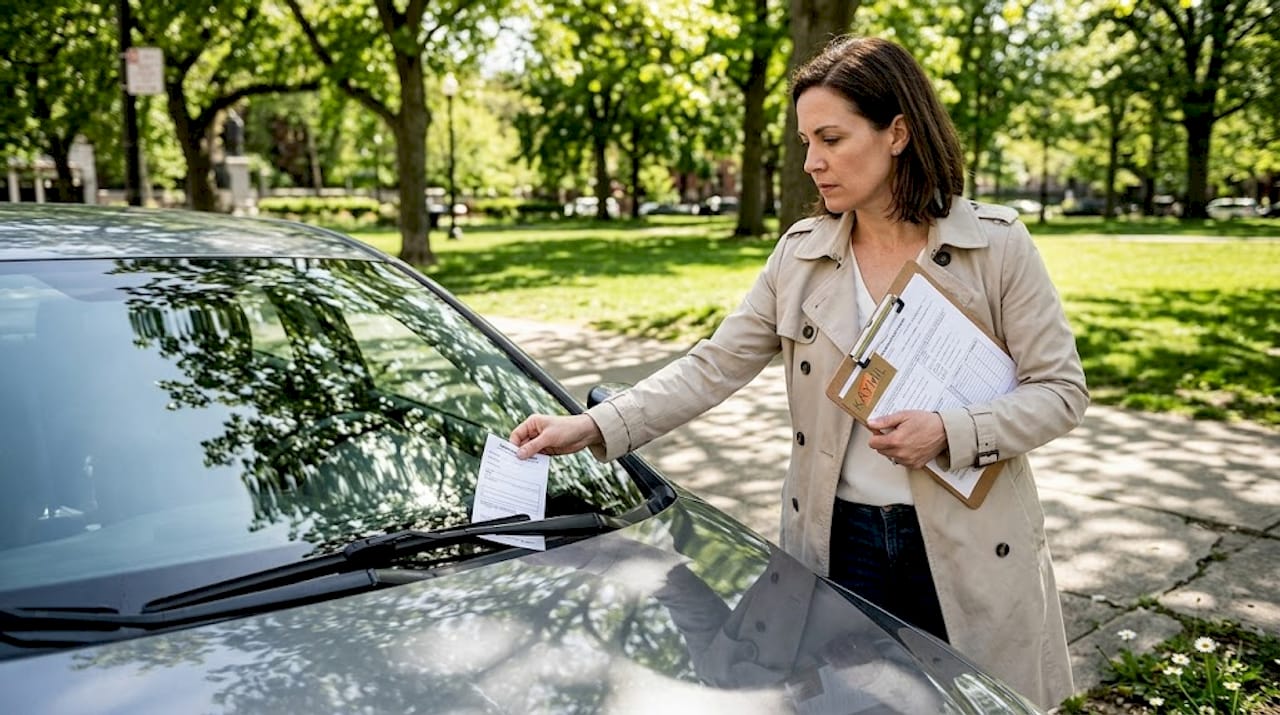
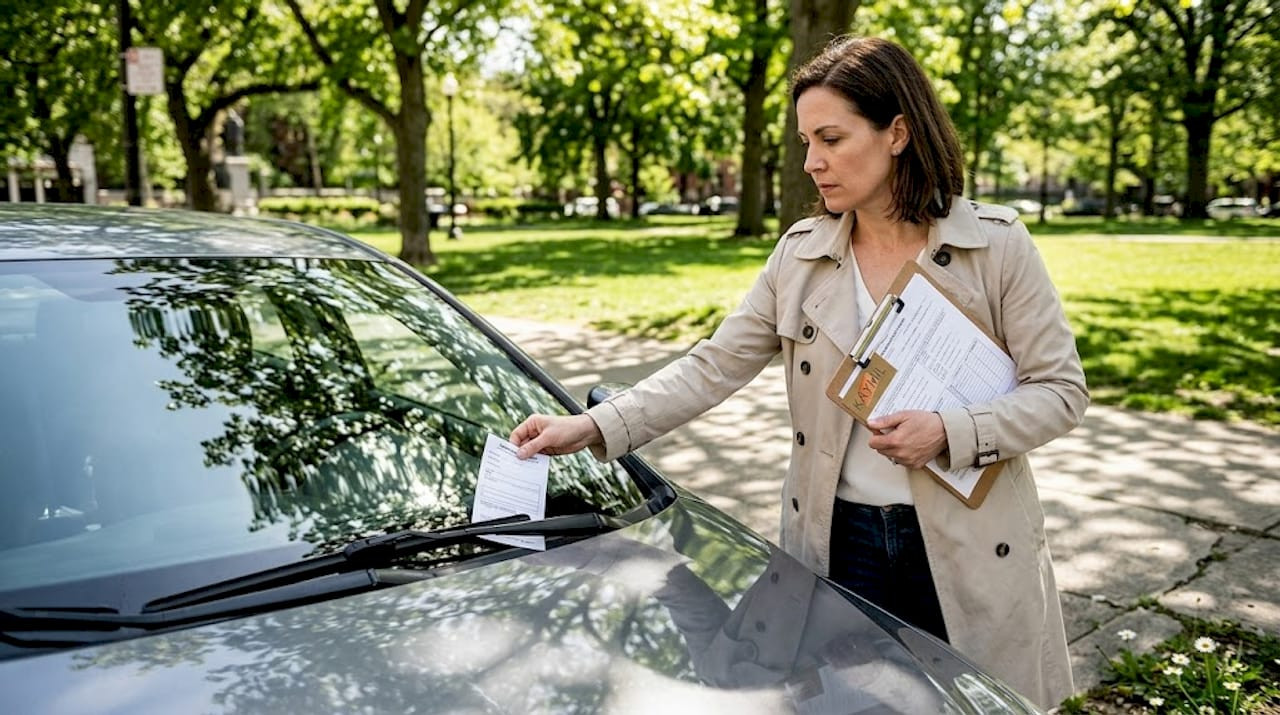
If you’ve ever found a paper notice on your windshield and immediately felt a knot in your stomach, you’re not alone. The question of what is a stock parking ticket trips up a lot of people because the term sounds official, even intimidating. The reality is more practical and far less alarming than most drivers assume. Stock parking tickets are physical forms used by private parking operators, property managers, and security personnel. They are not government citations. Understanding exactly what they are, who issues them, and what rights you have can completely change how you respond to one.
Table of Contents
- Key takeaways
- What is a stock parking ticket, exactly?
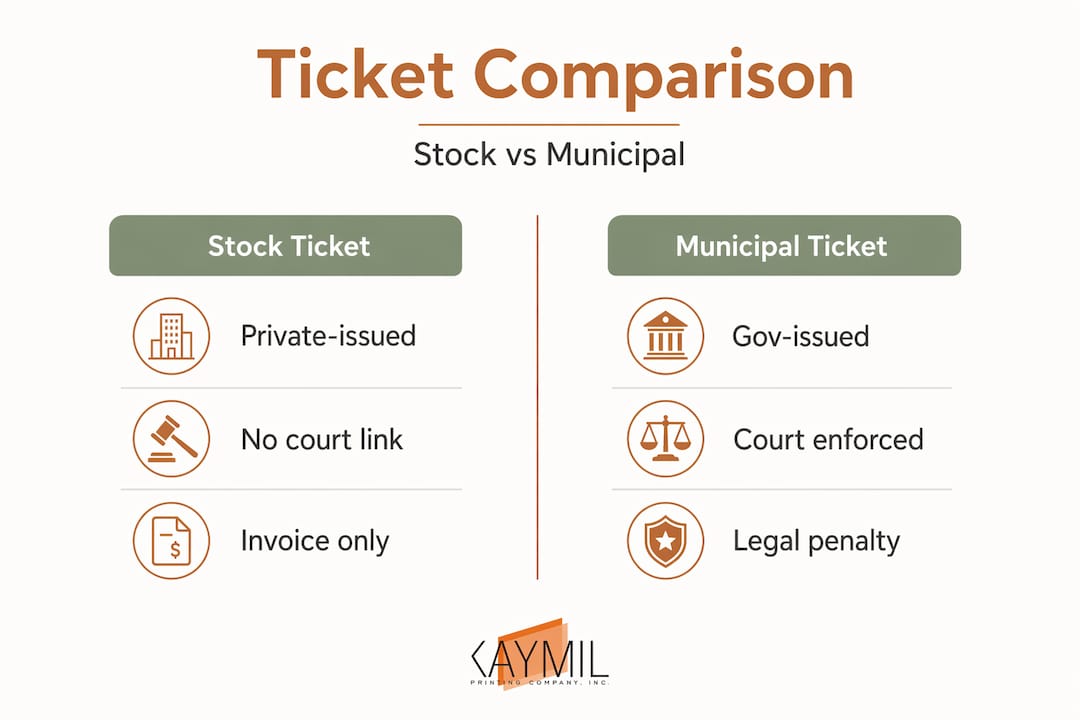
- How stock tickets differ from municipal fines and private invoices
- How private operators use stock tickets in enforcement
- Legal considerations and how to respond
- Automated enforcement and the future of stock tickets
- My take on stock tickets after years in this industry
- Get quality stock parking tickets from a trusted source
- FAQ
Key takeaways
| Point | Details |
|---|---|
| Stock tickets are private forms | They are blank preprinted paper forms sold in bulk to private operators, not government agencies. |
| No criminal penalties apply | Private parking notices lack court enforcement and criminal penalties under laws like Florida’s HB 271. |
| Municipal tickets are legally different | Government-issued fines can carry penalties up to $500 and involve court enforcement; private tickets cannot. |
| Physical tickets support tiered enforcement | Operators use stock tickets as documented first warnings before escalating to booting or towing. |
| You have the right to contest | Understanding disclaimers and signage requirements helps you determine when and how to dispute a notice. |
What is a stock parking ticket, exactly?
A stock parking ticket is a standardized paper violation form sold in bulk packs to private parking operators, property managers, security companies, and facility administrators. The word “stock” simply means off-the-shelf. These are ready-to-use forms, not custom-printed municipal citations.
Physically, they are small and designed to be conspicuous. Standard dimensions run 6.25" H x 3.125" W, with packs of 100 sheets being the most common quantity. They are typically printed in high-visibility colors like red, orange, or yellow so they are immediately noticeable when placed under a windshield wiper.
The printed fields on a stock parking ticket typically include:
- Vehicle make, model, and color
- License plate number and state
- Date, time, and location of the violation
- Violation type (no permit, expired permit, unauthorized zone, blocking access, etc.)
- Officer or attendant identification
- Remarks or additional notes
- Contact or payment instructions for the issuing entity
Pro Tip: If a ticket on your windshield does not identify a specific government agency, court address, or official seal, it is almost certainly a private stock ticket, not a municipal citation.
What you will not find on a stock parking ticket is a docket number, a court reference, or any language connecting the notice to a law enforcement agency. That distinction matters more than most people realize. Private facility managers use stock tickets specifically for on-site enforcement of their own parking rules, with no connection to municipal courts or state law enforcement.
How stock tickets differ from municipal fines and private invoices
This is where most of the confusion around stock parking fees explained comes from. There are three completely different things that people sometimes lump together: official municipal tickets, private parking invoices, and stock parking tickets. Each one works differently, carries different consequences, and requires a different response.
| Type | Issued by | Legal authority | Penalty range | Court involvement |
|---|---|---|---|---|
| Municipal ticket | Government agency | State or local law | Up to $500 or more | Yes, with license implications |
| Private parking invoice | Private company | Contract law only | Demand amount only | No criminal penalties |
| Stock parking ticket (form) | Private operators | No legal authority | N/A (just the form) | None |
Municipal tickets are backed by the full force of government. For example, Philadelphia commercial vehicle violations can reach $500 for parking infractions held past 15 days. Unpaid municipal fines can lead to license suspension, vehicle booting by city contractors, and negative entries in state records.

Private parking invoices are a different animal entirely. Many private parking “tickets” function as breach-of-contract invoices, not official fines. When you park in a private lot, you enter a contractual agreement by accepting the posted terms. If you violate those terms, the operator may issue a billing notice demanding payment. That notice has no criminal force behind it.
There is also a third source of confusion worth clearing up. In financial markets, “stock parking” refers to something else entirely. Financial stock parking involves concealing stock ownership through transfers designed to avoid disclosure requirements. It is an entirely unrelated concept with no connection to parking lot enforcement.
Pro Tip: Under laws like Florida’s HB 271, private parking invoices must include a disclaimer stating: “THIS INVOICE IS PRIVATELY ISSUED, IS NOT ISSUED BY A GOVERNMENTAL AUTHORITY, AND IS NOT SUBJECT TO CRIMINAL PENALTIES.” If your notice lacks this language, request it in writing.
To see a more detailed breakdown of these distinctions, the parking receipt vs. ticket difference is worth reviewing before deciding how to respond to any notice left on your vehicle.
How private operators use stock tickets in enforcement
Understanding parking fines from a private operator’s perspective helps explain why stock tickets still exist in a world of cameras and license plate readers. They serve a specific, practical function that technology alone cannot fully replace.
Parking operators use physical tickets as part of tiered enforcement strategies, starting with a written warning before escalating to booting or towing. That first step, the stock ticket, creates a paper trail. It documents the date, the vehicle, and the nature of the violation. Without it, an operator who later boots or tows a vehicle has no record of prior notice.
Here is how that tiered process typically works in a private parking operation:
- First violation: A stock ticket is placed on the windshield documenting the infraction. The vehicle owner is informed of the rule and given a chance to correct their behavior.
- Second violation: A second ticket is issued, often with escalating language or a warning that further violations will result in booting or towing.
- Third violation or ongoing offense: The vehicle is booted or towed at the owner’s expense.
- Non-payment of invoices: The operator may send the matter to a collections agency or pursue it through civil court, depending on the dollar amount involved.
“Physical tickets serve as warnings and documentation before escalating enforcement — a formal first step in the cycle that balances legality with effective revenue protection.” — Parking Asset Leasing Business Guide
This structure matters for property owners leasing parking assets as a revenue source. A poorly documented enforcement process creates liability and undermines the operator’s ability to collect on disputed invoices. The role of ticket dispensers and physical forms in managing this cycle is more significant than most outside the industry appreciate.
Legal considerations and how to respond
So you have a stock parking ticket in your hand. What now? Your response should depend on three things: who issued it, whether signage was clearly posted, and whether the operator has complied with applicable state laws.
Here is what to check before paying or ignoring any private parking notice:
- Check for a disclaimer. Under laws like Florida’s HB 271, effective July 2024, private invoices must state they are not government-issued and carry no criminal penalties. States across the country are moving toward similar requirements.
- Review the signage. Many states require that parking rules and fee structures be clearly posted at entry points. If no signage was visible, you have a strong basis for contesting the notice.
- Know the grace period rules. Numerous states mandate a minimum 15-minute grace period before a parking violation can be issued after a time limit expires. Check your local regulations.
- Assess the credit impact. An unpaid private parking invoice generally does not affect your credit unless the operator sells the debt to a collections agency. That step requires the operator to follow specific legal procedures.
- Understand the stock parking ticket appeal process. Most private operators include contact information on the ticket or an online dispute portal. Start there. If the operator is unwilling to engage reasonably, civil small claims court is an option in most jurisdictions.
What are parking ticket rules when it comes to types of parking violations on private property? The answer depends heavily on the state. In states where laws like HB 271 exist, operators must offer a neutral arbitration process. In states without such laws, your options are more limited but still real. Never ignore a notice entirely if there is any chance it is a legitimate municipal citation, since those carry legal weight that private notices do not.
Automated enforcement and the future of stock tickets
Technology is reshaping how parking violations are issued, and the shift raises real questions about the continuing role of physical stock tickets. Cities including Galveston, Texas moved from windshield tickets to automated camera-based mail-in systems, and the results were striking.
| Enforcement method | Violations issued | Unpaid ticket rate | Operator presence required |
|---|---|---|---|
| Physical windshield tickets | Lower volume | Lower unpaid rate | Yes |
| Automated camera mail-in | Higher volume | 615% more unpaid | No |
Automation increases ticket volume significantly but also increases the number of people who simply ignore or dispute notices. The impersonal nature of a mailed notice reduces the psychological weight that a windshield ticket carries. When an attendant places a visible form directly on your car, the encounter feels immediate and real.
For private operators, physical stock tickets remain the more effective tool for small and mid-size parking facilities. They are cost-effective, require no infrastructure investment, and create a documented record that holds up better in civil disputes than automated notices. The two approaches are not mutually exclusive. Larger operations increasingly use both, deploying automation for volume enforcement while relying on physical stock tickets for nuanced situations requiring human judgment.
My take on stock tickets after years in this industry
I’ve watched the parking industry evolve through every technology cycle you can imagine, and one thing has stayed constant: people react very differently to a slip of paper on their windshield than they do to a mailed notice. Fear drives an outsized share of compliance with private parking tickets. That’s not cynicism. It’s just how it works.
What I’ve seen most often is that the people who get burned are those who either pay every private notice out of fear without checking whether it’s legitimate, or those who ignore everything assuming none of it has teeth. Both extremes are wrong. A private stock ticket from a well-run operation is a real document with real consequences if you park there repeatedly. But it is not a government citation and should never be treated as one.
My honest advice: read the disclaimer, check the signage, and know your state’s rules. The stock parking ticket appeal process is simpler than most people expect, and operators who run legitimate facilities almost always have a reasonable dispute option. The ones who do not are usually the ones worth contesting hardest.
The physical stock ticket is not going away. It serves a purpose that cameras and license plate readers genuinely cannot replace at scale for smaller operators.
— Richard
Get quality stock parking tickets from a trusted source
When you need reliable forms for parking enforcement, the quality of your stock tickets directly affects how seriously violators take them and how well your documentation holds up in disputes. Caymil has been manufacturing high-quality parking forms since 1937, supplying operators, property managers, municipalities, and facility administrators across the United States. From standard stock parking violation forms to barcoded tickets, thermal rolls, and multi-part carbonless formats, Caymil provides solutions built for durability and clarity. For operations requiring more advanced valet or machine-issued formats, machine-issued valet tickets are also available with fast nationwide shipping and competitive pricing.
FAQ
What is a stock parking ticket used for?
A stock parking ticket is a preprinted blank form sold in bulk to private parking operators and property managers for issuing on-site parking violation notices. It documents vehicle details and violation types but carries no connection to municipal courts or criminal penalties.
Is a stock parking ticket legally enforceable?
Stock parking tickets issued by private operators function as invoices for breach of contract, not official government citations. They have no criminal force, but unpaid private parking invoices can be pursued through civil court or sent to collections.
How do I contest a private parking ticket?
Start by checking the ticket for a disclaimer confirming it is privately issued, then review whether proper signage was posted at the location. Most private operators provide a dispute contact or online portal, and many states now require a neutral arbitration option under laws similar to Florida’s HB 271.
How does a stock parking ticket differ from a municipal ticket?
Municipal tickets are issued by government agencies under state law and can lead to license suspension, court penalties, and fines up to $500 or more. Stock parking tickets are private forms issued by facility operators with no state enforcement authority behind them.
Can a private parking ticket affect my credit score?
A private parking ticket does not directly affect your credit. However, if the debt is sold to a collections agency after non-payment, that collections account can appear on your credit report and impact your score.