
What Is a Casino Valet Claim Check? A Buyer’s Guide
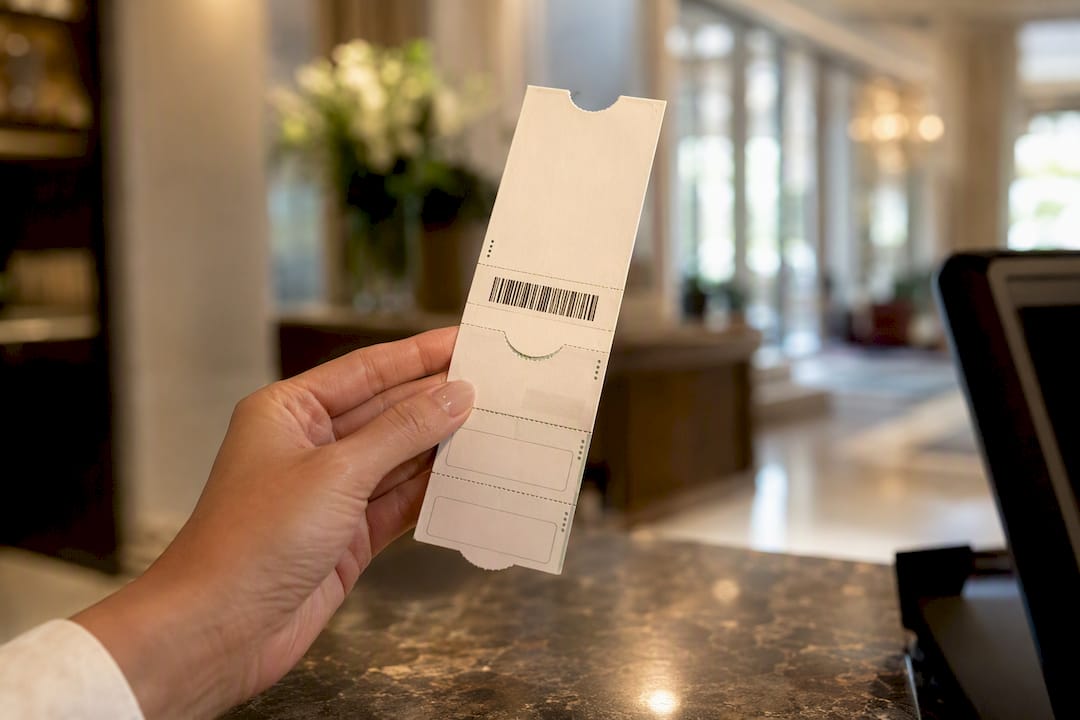
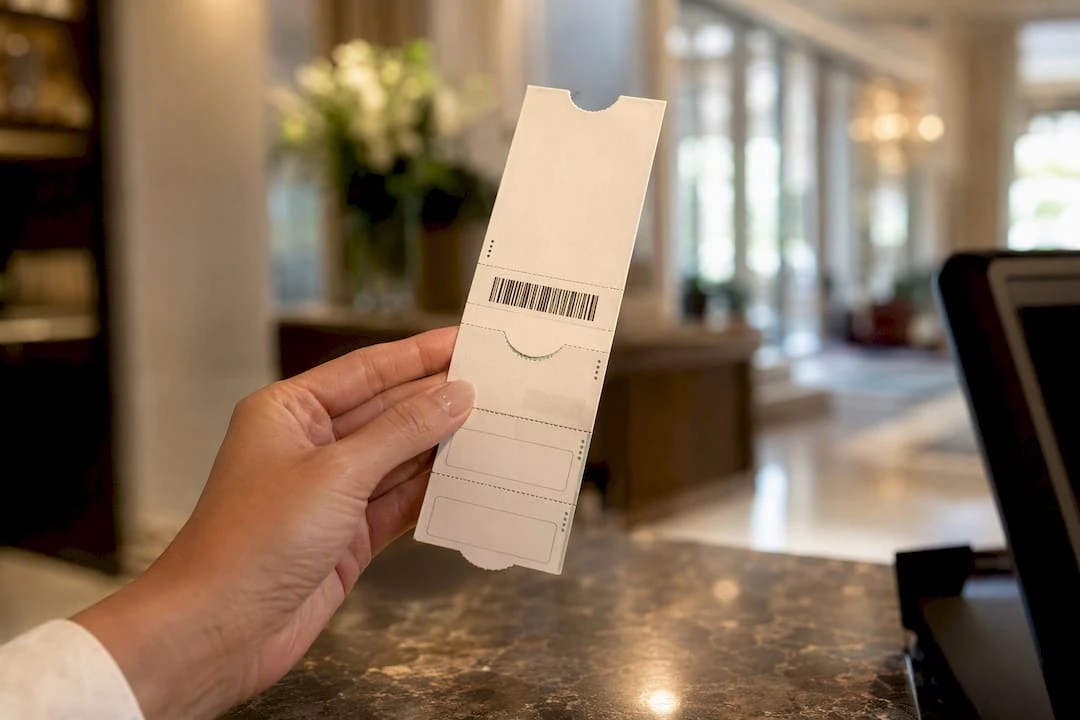
A casino valet claim check is a custom-printed ticket, typically sequentially numbered or barcoded, issued in multi-part (carbonless) or machine-issued roll formats to track vehicle retrieval, revenue, and disputes at high-volume valet operations. Casinos and hotel valet programs rely on these tickets because a manual stub with no numbering leaves no audit trail. For procurement teams, the buyer benefits show up fast:
- A verifiable audit trail for every vehicle in and out of the queue
- Fewer disputes over lost tickets or misattributed vehicles
- Compatibility with barcode scanning and validation systems already on the property
Caymil has manufactured parking and valet ticketing since 1937, and its casino and hotel ticket lines are built around exactly this problem: giving operators a paper trail that holds up under audit.
Key Takeaways
A casino valet claim check works because sequential numbering and barcoding turn a paper stub into an auditable record that reduces disputes and revenue slippage.
| Point | Details |
|---|---|
| Definition matters for specs | A claim check is a numbered or barcoded, multi-part or machine-issued ticket built for retrieval and revenue tracking, not a guest instruction card. |
| Format follows volume | High-throughput casino valets need machine-issued rolls; lower-volume hotel valets often do fine with 2-part or 3-part carbonless stubs. |
| Security features prevent fraud | Sequential numbering, barcodes, and security varnish close the gaps that ticket skimming and unreported cash exploit. |
| Compatibility outranks price | Confirm dispenser, printer, and scanner compatibility before ordering; a mismatched ticket costs more in downtime than it saves per unit. |
| Caymil supplies the full range | Caymil has manufactured valet and casino ticketing since 1937, with stock and custom formats compatible with major parking systems. |
Table of Contents
- Who Buys Claim Checks, and Where They Get Used
- What Ticket Format and Security Features Should You Specify?
- How Do Claim Checks Reduce Fraud and Revenue Loss?
- How Do Validation Workflows Connect to the Physical Ticket?
- Procurement Checklist for Ordering Casino Valet Claim Checks
- What Should You Expect From a Qualified Ticket Supplier?
- Why Guest-Facing Ticket Advice Misses What Buyers Actually Need
- Get Sample Proofs and Confirm Compatibility With Caymil
- Sources
- FAQ
Who Buys Claim Checks, and Where They Get Used
This is a supplier-side conversation, not a guest instruction sheet. Nobody handing a car key to a valet attendant needs to know how a claim check is manufactured. The people who do need to know are the ones specifying, ordering, and reconciling the tickets across a property.
Three buyer roles show up most often in procurement conversations:
- Casino valet managers, who need high-volume, machine-issued or barcoded tickets that keep pace with peak arrival windows during events and weekends.
- Hotel and event valet operators, who often run lower volume but require branding, security features, and compatibility with existing validation programs for restaurants and banquet partners.
- Central parking operations teams, overseeing multiple garages or valet stands under one procurement contract, standardizing on a single ticket spec for consistency across sites.
The form factors these buyers choose from break down into a short list: carbonless stub tickets in 2, 3, or 4 parts, machine-issued roll tickets fed through a dispenser, barcoded tickets for scan-based retrieval, and magnetic stripe tickets for properties running card-based access control. Which one fits depends on volume, staffing, and what parking system already sits behind the valet stand.
What Ticket Format and Security Features Should You Specify?
Multi-part carbonless tickets are the backbone of most valet programs, and each part has a job. A 2-part ticket typically splits between a customer stub and a valet or garage record. 2-part valet parking tickets work well for smaller properties with straightforward retrieval flows. A 3-part or 4-part format adds a dedicated accounting copy, which matters when a casino’s finance team needs an independent reconciliation record that never passes through a cashier’s hands.

Machine-issued roll tickets solve a different problem: throughput. During a packed Saturday night or a headline concert, a valet stand issuing stub tickets by hand becomes a bottleneck. Dispenser-fed roll formats, including machine-issued valet tickets, let attendants pull a numbered ticket in seconds without breaking stride.
Beyond format, the technical specs that actually protect revenue and reduce disputes include:
- Sequential or 6-digit numbering, sometimes with jumbo digits for fast visual matching
- 1D or 2D barcodes for scan-based validation and retrieval
- Perforations and keyhole punches for attaching stubs to keys or mirrors
- Carbonless copy stock heavy enough to transfer cleanly through 3 or 4 parts
- Security varnish or foil finishes that resist tampering and photocopying
Pro Tip: Ask any vendor for a physical sample under low light before ordering. A ticket that reads fine on a bright showroom counter can be nearly unreadable under the dim ambient lighting most casino porte cocheres use.
How Do Claim Checks Reduce Fraud and Revenue Loss?
Sequential numbering and barcoding exist for one core reason: they make it possible to reconcile every ticket issued against every vehicle retrieved. Without that chain, a valet operation is running on trust, and trust is exactly what fraud exploits.
The most common abuse patterns in valet operations include ticket skimming or duplication, where a reused or copied stub lets an attendant pocket cash without recording the transaction, unreported cash tips or fees that never reach the register, and false damage claims filed against vehicles with no documentation trail to dispute them. Traditional paper systems are especially vulnerable to under-reporting when tickets aren’t sequentially controlled, since a duplicate or reused ticket is nearly impossible to catch after the fact.
Digital ticketing, photo documentation, and automated reconciliation are the controls most often recommended to close these gaps, according to a valet security guide covering ticket manipulation and unreported cash.
Barcode scanning at retrieval, permissioned validation logins, and a photo log tied to each vehicle’s intake all work together with the physical ticket spec. The ticket is the foundation. Without sequential numbering and a scannable barcode on it, none of the downstream controls have anything solid to check against.
How Do Validation Workflows Connect to the Physical Ticket?
A claim check does more than get a car back to its owner. It’s the anchor point for every validation workflow a casino or hotel runs on top of its valet program, and the physical ticket has to support whatever digital system sits behind it, as explained in this hotel check-in process workflow guide.
Modern valet operations increasingly run app- or web-based validation alongside the printed ticket. Authorized-user validation systems typically include dedicated logins for staff, custom permission levels, and single-use validation codes, all logged for audit purposes. That log is only as good as the ticket number it’s tied to, which is why barcode accuracy and numbering consistency matter more than they might seem to on the surface.
Buyers should confirm a few things before ordering at scale:
- Whether validation stickers or provision codes need to be pre-printed on the ticket or applied separately
- Whether restaurant or retail partners on the property need master-account billing tied to validated tickets
- Whether the printer or dispenser hardware, such as roll-fed units built for the Intermec Printer 2100, matches the ticket stock being ordered
- Whether high-volume casino floors need single-use codes and detailed per-shift reporting rather than a simple daily total
Getting this alignment right before the first order ships is far cheaper than discovering a mismatch after 10,000 tickets arrive.
Procurement Checklist for Ordering Casino Valet Claim Checks
Before sending an RFP or placing an order, procurement teams need a spec sheet that covers both the ticket itself and how it fits into existing hardware. Missing one field here is how properties end up with tickets that look right on paper but jam a dispenser or won’t scan.
- Ticket construction: part count (2, 3, or 4), size, paper stock weight, and finish.
- Numbering and barcode scheme: sequential range, digit count, barcode symbology (1D or 2D), and whether jumbo numbering is needed for fast visual checks.
- Security and branding: varnish or foil finish, logo placement, and color rotation if multiple lots need to be visually distinct.
- Hardware compatibility: confirm the ticket stock matches your dispenser or printer model, and that any barcode is readable by your existing scanners.
- Ordering logistics: sample proof approval, minimum order quantities, and lead times, which typically run shorter for stock designs than for fully custom artwork.
Pro Tip: Order a small proof run before committing to a full print. Catching a numbering gap or a barcode misprint on 500 tickets is a minor fix. Catching it on 50,000 is a costly one.
Cost trade-offs usually come down to volume and speed. Stock tickets ship faster and cost less per unit for smaller operations, while custom machine-issued rolls make sense once a casino valet stand is processing enough vehicles per hour that hand-stamped stubs simply cannot keep pace.
What Should You Expect From a Qualified Ticket Supplier?
Not every ticket vendor understands casino-scale operations. The right supplier should be able to speak to volume, compatibility, and compliance in the same conversation, not just quote a per-unit price.
Caymil has specialized in valet, parking, and hospitality ticketing since 1937, supplying both stock and custom-printed formats compatible with major parking systems including Amano, TIBA, SKIDATA, FLASH Parking, Scheidt & Bachmann, and Flowbird. That track record matters because a ticket spec that ignores your existing hardware is a spec that fails on delivery day.
When evaluating a supplier, ask for:
- Sample proofs of the exact ticket format under consideration, including barcode readability under your venue’s lighting
- Written confirmation of compatibility with your dispenser, printer, or scanner hardware
- Realistic lead times for both stock and fully custom orders
- A clear explanation of how claim checks reduce disputes in comparable casino or hotel operations
A supplier who can answer all four without hedging is one worth building a long-term ordering relationship with.
Why Guest-Facing Ticket Advice Misses What Buyers Actually Need
Most articles about valet claim checks are written for the driver standing at the podium wondering how to get their car back. That’s a fine topic, but it tells procurement teams almost nothing about what they’re actually buying.
The conventional advice on valet tickets treats the physical stub as an afterthought, a formality between handing over keys and handing over cash. That framing misses where the real cost sits. A ticket without sequential numbering or a scannable barcode isn’t a minor inconvenience. It’s a gap that lets skimming, duplicate stubs, and unreported cash slip through unnoticed, and no validation app or reconciliation software can patch a hole in the paper trail itself.
What deserves priority first is compatibility, not price. A ticket that costs a few cents less per unit but doesn’t match your dispenser hardware or scanner format creates far more cost in downtime and reprinting than it ever saved. Buyers who lead with sample proofs and compatibility confirmation, then negotiate on volume and lead time, end up with fewer surprises than those who shop on unit price alone. The ticket is infrastructure, not a commodity line item.
Get Sample Proofs and Confirm Compatibility With Caymil
Caymil manufactures the exact ticket formats this guide covers: machine-issued rolls for high-throughput casino valet stands, 2-part and 3-part carbonless tickets for standard operations, and barcoded, thermal, and magnetic stripe options for properties running validation software.
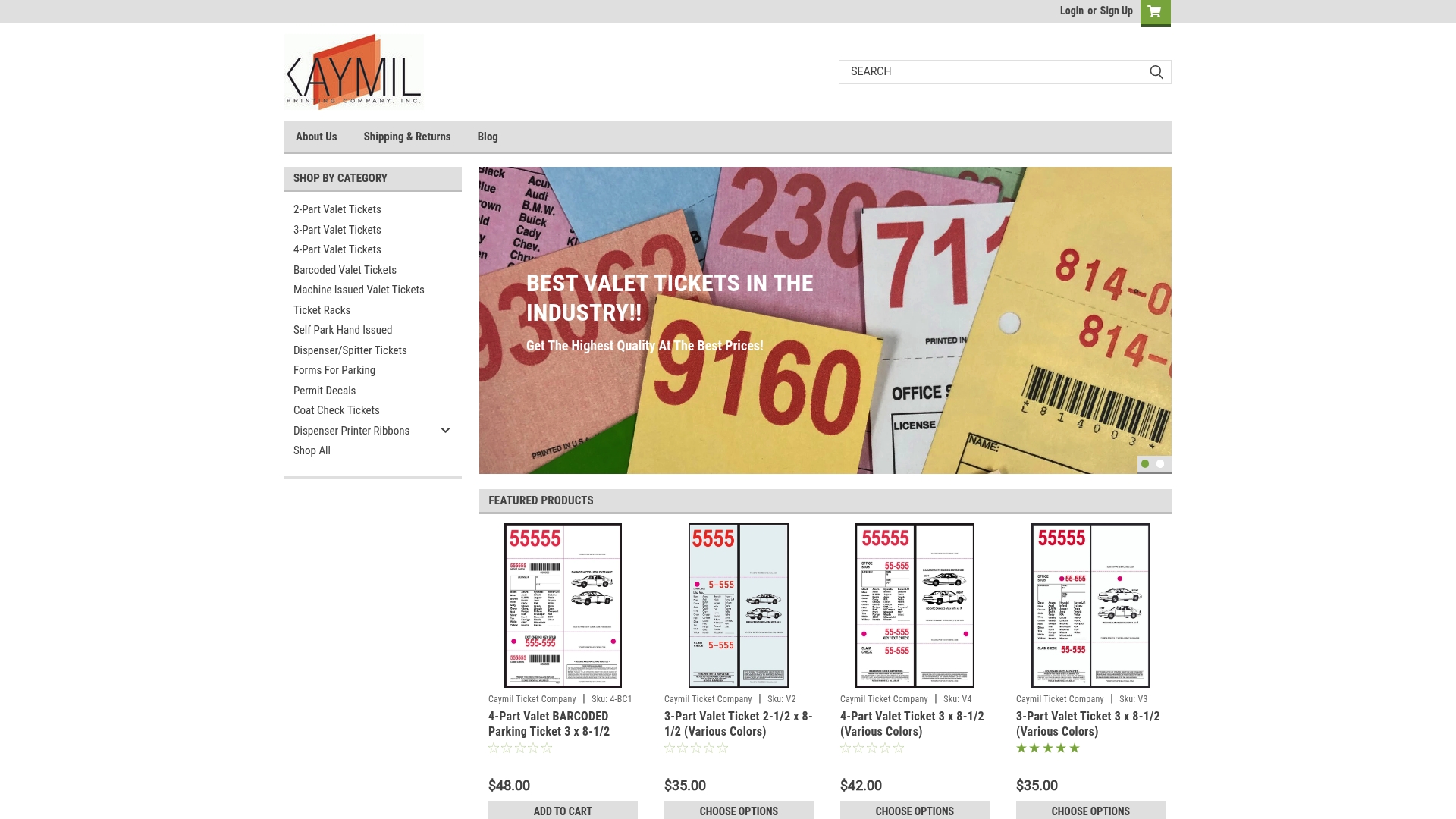
If your property is comparing formats, the fastest path forward is a direct conversation about your specific setup rather than a generic quote. Start by requesting a sample proof of the ticket format you’re considering, whether that’s machine-issued valet tickets for a casino floor running continuous peak traffic or a 3-part valet parking ticket for a hotel needing a separate accounting copy. Confirm your dispenser or printer model matches the stock you’re ordering, and ask for realistic lead times based on your quantity. Browse the full range of parking and valet ticket forms to see stock options ready to ship now, and request a quote before your next print run comes due.
Sources
- Prevent revenue slippage with Summon’s innovative ticketless valet system | Summon | Summon Inc.
- Efficient Parking Validations | Swyft Valet
- How to Prevent Valet Parking Fraud | Security Guide | PUR Valet
FAQ
What is a casino valet claim check used for?
It’s a custom-printed ticket used to match a parked vehicle to its owner, track valet revenue, and provide an audit trail that reduces disputes and reconciliation errors.
What’s the difference between a 2-part and 3-part valet ticket?
A 2-part ticket typically covers a customer stub and a valet or garage record, while a 3-part or 4-part format adds a separate accounting copy for independent financial reconciliation.
Are machine-issued roll tickets better than stub tickets for casinos?
For high-volume casino valet stands, machine-issued roll tickets reduce bottlenecks during peak traffic, while manual stub tickets work fine for lower-volume hotel or event valet operations.
How does barcoding reduce valet ticket fraud?
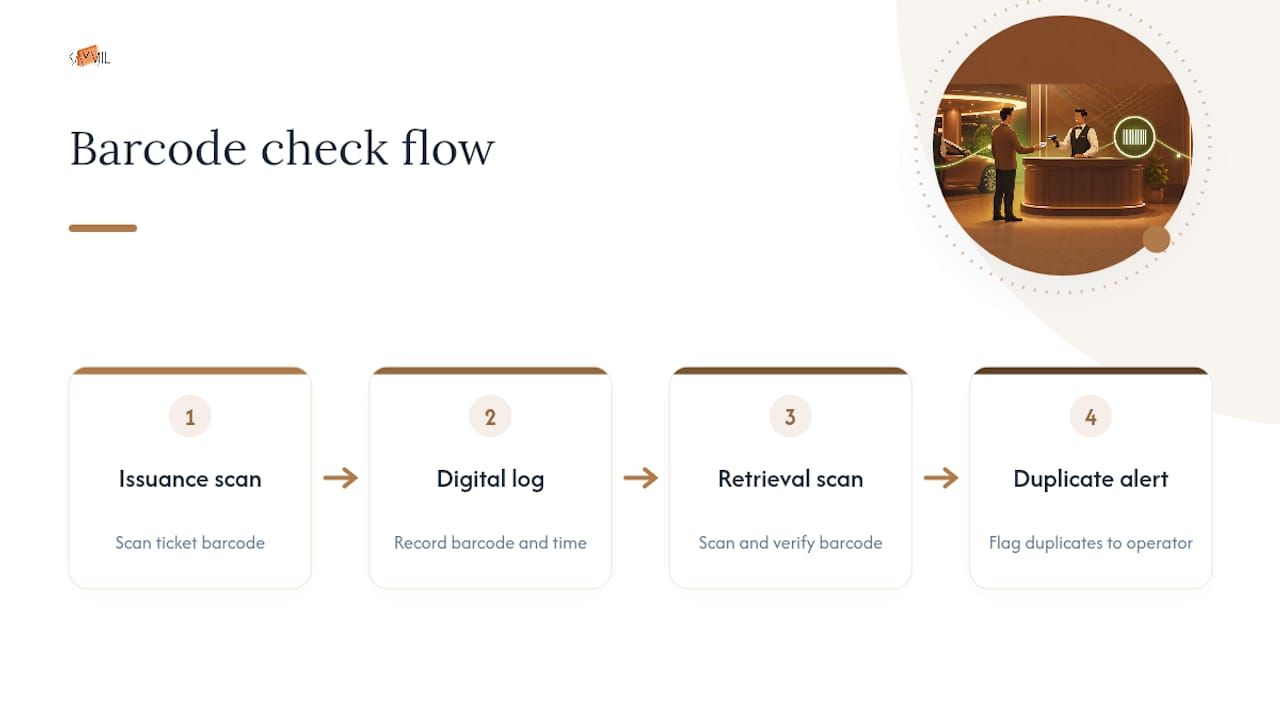
Barcoding lets operators scan tickets during issuance and retrieval, creating a digital log that flags duplicate or skimmed tickets far faster than a manual numbering check alone.
What should I confirm with a supplier before ordering claim checks?
Request a sample proof, confirm compatibility with your dispenser or printer hardware, and get a clear lead time and minimum order quantity before committing to a full print run.
Recommended
- Why Valet Operations Use Claim Checks: Reduce Disputes - Caymil Printing Co., Inc.
- Valet Tickets 101: The Simple System That Keeps Your Lot Moving - Caymil Printing Co., Inc.
- Luxury Hotel Valet Ticket Explained for Guests and Pros - Caymil Printing Co., Inc.
- What Is a Valet Parking Envelope? A Pro Guide - Caymil Printing Co., Inc.