
Why Valet Operations Use Claim Checks: Reduce Disputes
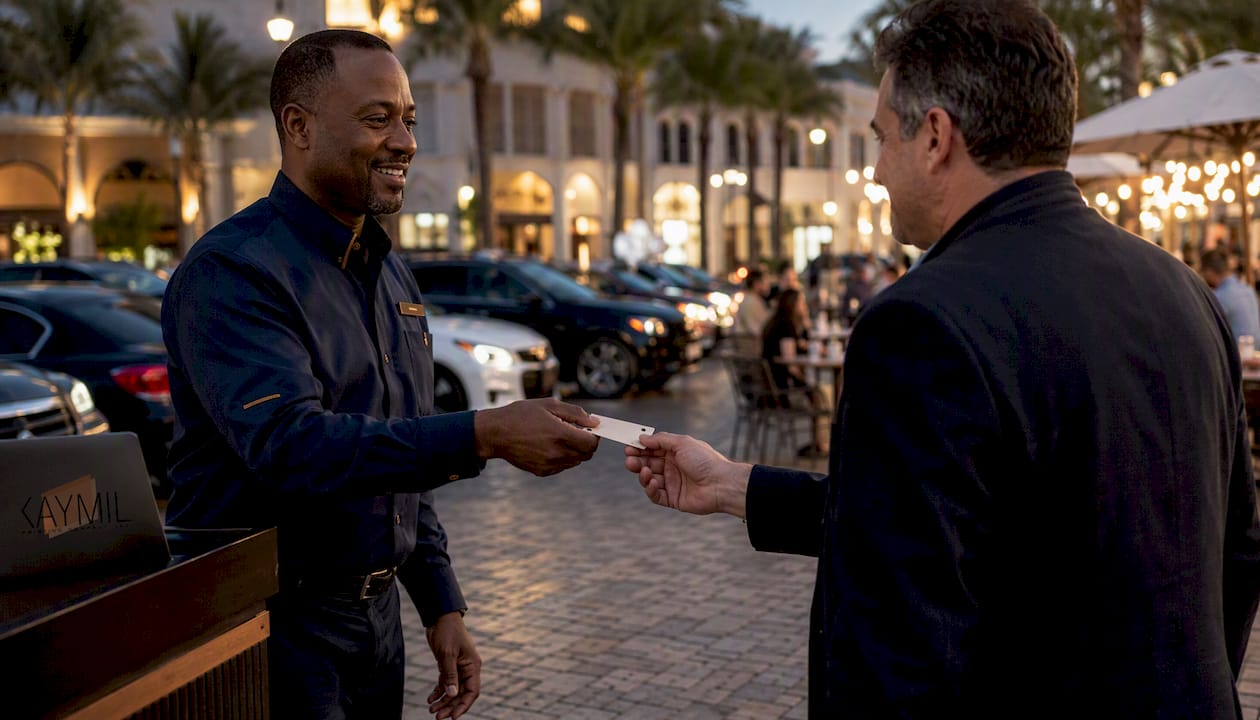
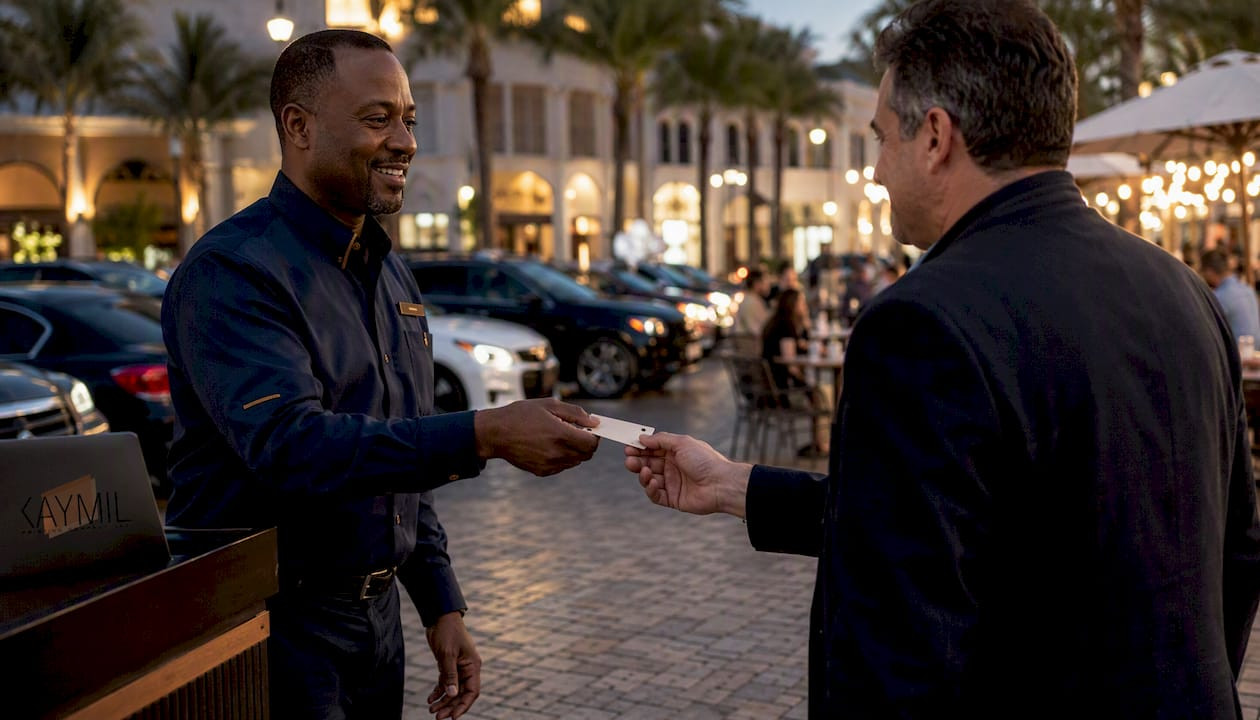
Valet operations use claim checks to create an auditable proof of custody that links a specific vehicle, key, and attendant to a unique ticket number the moment a customer hands over their keys. That single document is the foundation of every dispute resolution, insurance claim, and shift reconciliation that follows. Three benefits stand out immediately:
- Proof of custody for dispute resolution and insurers. A numbered claim check establishes the bailment relationship the moment keys change hands, giving both the operator and the insurer a documented chain of possession to reference.
- An audit trail for shift reconciliation and loss prevention. Sequential ticket numbers make it straightforward to account for every vehicle accepted during a shift, flag missing tickets, and identify discrepancies before they become disputes.
- Faster retrieval and fewer customer complaints. A unique ticket number eliminates guesswork at return, reducing wait times and the friction that leads to negative reviews.
Garagekeepers Legal Liability (GKLL) coverage, the specialty insurance line most valet operators carry, requires documented intake procedures. Caymil Printing Co. has supplied sequential and barcode-capable valet tickets to operators nationwide since 1937, making it a practical starting point for any operation building or upgrading its ticketing system.
Table of Contents
- Why claim checks are central to valet control
- What intake documentation must accompany every claim check
- What should a claim check include and how does ticket type affect operations?
- How claim checks enforce key custody and organization
- How claim checks support damage claims and insurer expectations
- Training staff and building SOPs around claim checks
- When does digital or hybrid ticketing improve on paper alone?
- What operators must know about disclaimers and state law
- What does standardized ticketing actually cost to implement?
- Key Takeaways
- The case for treating claim checks as risk management, not paperwork
- Caymil valet tickets: ready-to-order formats for every operation
- Useful sources
- FAQ
Why claim checks are central to valet control
Claim checks serve two distinct but overlapping functions: operational control and legal protection. On the operational side, a numbered ticket is the unique identifier that ties a vehicle to its key, its parking location, the attendant who accepted it, and the intake inspection record. Without that link, retrievals slow down, keys get mismatched, and shift-end reconciliation becomes guesswork. Unique, numbered tickets and digital logging are the standard method for ensuring accurate identification and retrieval.
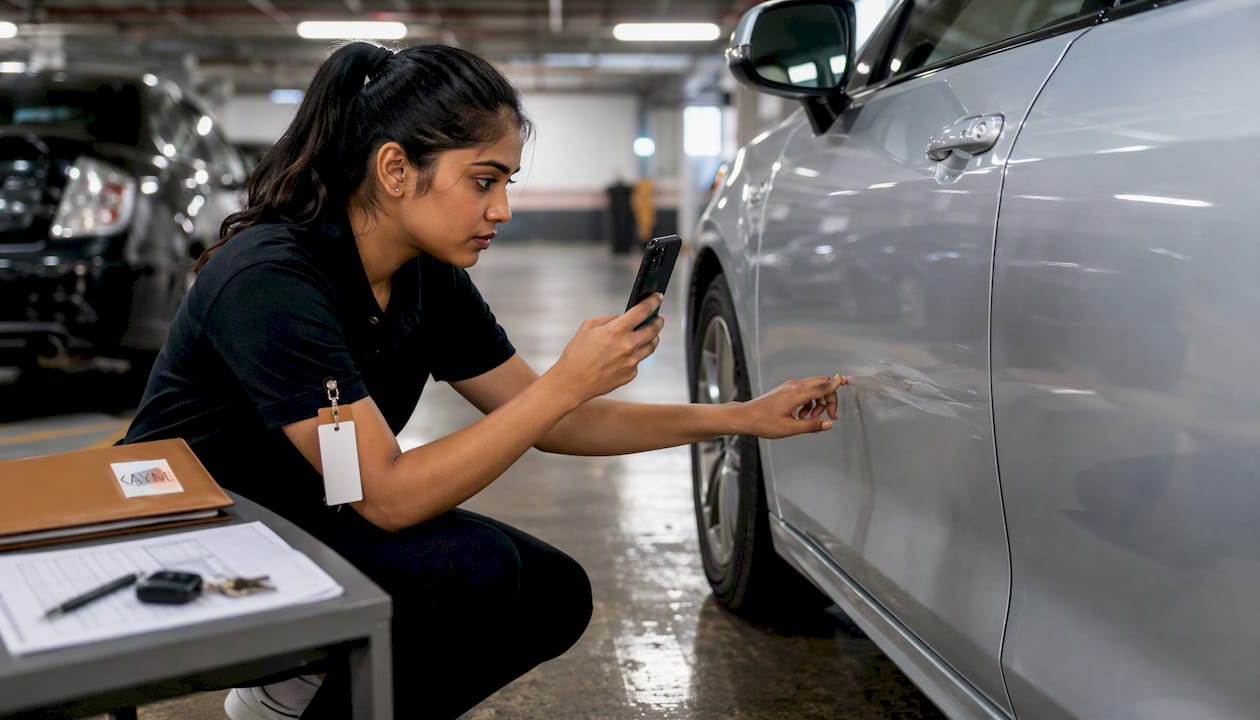
On the legal side, handing keys to an attendant creates a bailment. The operator assumes a duty of care for the vehicle, and that duty carries real liability. GKLL carriers and commercial auto insurers expect documented intake inspections, proof of custody, and prompt claim notification. Operations that treat claim-check procedures as bureaucratic overhead consistently experience higher damage claim rates than those that enforce standardized ticketing.

Consider a common scenario: a customer returns to collect their car and points to a scratch on the driver’s door, insisting it wasn’t there when they arrived. Without an intake record tied to a ticket number, the operator has no objective evidence either way. With one, the attendant pulls the ticket, retrieves the intake notes and timestamped photos, and either confirms the scratch was pre-existing or acknowledges it occurred in custody. That documentation either closes the dispute on the spot or gives the insurer exactly what it needs to process the claim. The ticket is what makes that resolution possible.
What intake documentation must accompany every claim check
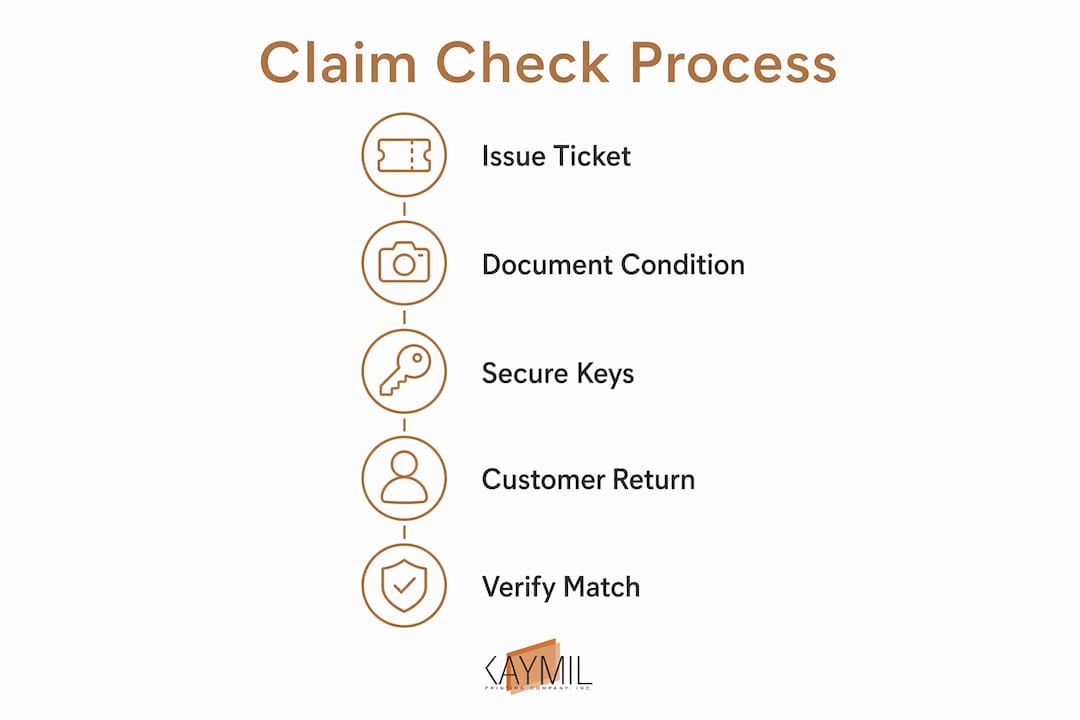
Every claim check should be issued alongside a documented vehicle inspection. The intake record and the ticket number are inseparable — one without the other leaves a gap that a claimant or insurer will notice.
360° walk-around checklist (front-captain acceptance):
- Front bumper: note scratches, chips, or cracks using standard codes (S = scratch, D = dent, C = chip)
- Hood and windshield: check for rock chips, cracks, and wiper condition
- Driver-side and passenger-side doors and panels: note any existing damage at each panel
- Rear bumper and trunk lid: document condition before the vehicle moves
- Wheels and tires: note curb rash or missing center caps
- Convertible tops or sunroofs: note tears, gaps, or mechanical issues
- Lights: flag any pre-existing broken lenses
Operators should document pre-existing damage on a printed vehicle diagram attached to or printed on the ticket itself. A diagram with marked damage positions is faster to complete than written descriptions and far easier to reference later.
Photo and timestamp best practices:
- Capture a minimum of three images: front, rear, and driver’s side
- File names should include the ticket number and timestamp (e.g.,
TKT-00412_2026-03-15_0847_front.jpg) - Store images in a cloud folder organized by ticket number so any manager can retrieve them within seconds
Pro Tip: Name your cloud folder structure by date and ticket range (e.g., 2026-03/TKT-00400-00499/) so that any photo is retrievable in under 30 seconds without searching by vehicle or customer name.
Show the customer the noted damage before they walk away. When possible, get a signature or initials on the ticket acknowledging the pre-existing condition. If a customer refuses to sign, note the refusal on the ticket with the attendant’s initials and the time. That notation alone carries weight if the claim goes to an insurer.
What should a claim check include and how does ticket type affect operations?
Core elements every ticket must carry
A well-designed claim check is more than a stub. Every ticket should include:
- Unique sequential number (pre-printed, not handwritten)
- Date and time of vehicle acceptance
- Location or site code for multi-site operators
- Vehicle description: make, model, color, and license plate
- Attendant initials at acceptance and return
- Disclaimer language reviewed by legal counsel or insurer for state-law consistency
- Vehicle diagram for damage notation
- Carbon copy or digital record linked to that ticket number
Sequential, pre-printed numbering is the single most important security feature on a physical ticket. It prevents duplicate issuance, simplifies end-of-shift reconciliation, and creates an audit trail that supports GKLL claims processing. Caymil’s multi-part valet tickets are available with sequential numbering and barcoding as standard options, covering operations that want physical records, hybrid workflows, or both.
Ticket format comparison
| Format | Best for | Key advantage | Main limitation |
|---|---|---|---|
| 2-part carbonless | Low-to-medium volume | Simple duplicate record; one copy stays with operator | No third copy for batch filing |
| 3-part carbonless | Medium volume, multi-department | Operator, batch file, and customer copies in one pull | Slightly slower to separate at peak |
| 4-part carbonless | High-volume or multi-location | Office, batch, attendant, and customer copies simultaneously | Higher per-ticket cost |
| Machine-issued / thermal roll | High-volume, dispenser-equipped | Fast issuance; integrates with printer hardware | Requires compatible printer; no built-in duplicate |
| Barcode-enabled | Hybrid or digital workflows | Ties physical ticket to digital photo and inspection record | Requires scanning infrastructure |
Pro Tip: For operations running more than 200 vehicles per shift, barcode-enabled tickets paired with a scanning app reduce retrieval errors and give managers a real-time dashboard of vehicles in custody — without replacing the physical stub the customer holds.
Common valet ticketing mistakes often trace back to ticket design: handwritten numbers, missing site codes, or disclaimer language that hasn’t been reviewed. Getting the format right before printing a large run saves significant rework.
How claim checks enforce key custody and organization
Keys are the physical link between the claim check and the vehicle. Losing that link means losing the chain of possession, and that gap is where wrong-vehicle releases and theft incidents originate.
Recommended hardware:
- Numbered key tags that match the ticket number exactly (not a separate numbering sequence)
- Lockable key cabinets or modular racks organized by ticket number range
- Key dispensers at shift-change handoff points to prevent loose key handling
- Tamper-evident bags for any keys transferred offsite or to a secondary lot
Operational controls:
- Attach the key tag to the key ring at the moment of vehicle acceptance, before the vehicle moves
- Store keys in the rack by ticket number so any attendant can locate them without asking
- At vehicle return, verify the ticket number against the key tag before pulling the vehicle
- At handoff, the outgoing attendant and incoming attendant both sign the key log, noting any discrepancies
Pro Tip: Cross-check key inventory against open tickets at every shift change. Any key without a matching open ticket — or any open ticket without a key on the rack — is an immediate flag for investigation. Logging discrepancies by ticket number makes it easy to identify whether the issue is a training gap or something more serious.
A valet parking log that records key movements alongside ticket issuance gives managers a complete chain-of-custody record that holds up in both internal audits and insurer reviews.
How claim checks support damage claims and insurer expectations
When a customer reports damage, the claim check and its associated records become the primary evidence. How quickly and completely an operator responds in the first 24 hours largely determines the outcome.
Incident-response checklist:
- Secure the vehicle immediately; do not move it until photos are taken
- Photograph all reported damage with timestamps, using the same camera or device used at intake
- Pull the intake record tied to the ticket number and compare it to the current condition
- Complete a written claim form: date, time, ticket number, attendant names, customer contact, and a description of the reported damage
- Collect names of any witnesses, including other attendants present at return
- Preserve the key and key log entry for that ticket number
Suggested response timeline:
- 0–24 hours: Document damage, pull intake record, photograph, complete claim form
- 24–72 hours: Notify insurer and submit claim documentation; communicate with customer
- 7–14 days: Follow up on investigation findings and communicate resolution
GKLL carriers and commercial insurers look for inspection notes, timestamped photos tied to the ticket number, and a documented chain of custody. Minor repairs — commonly those falling below $300–$500 — are often paid directly by the operator to preserve customer goodwill and avoid a formal claim that affects premium rates. That threshold should be defined in your SOP and reviewed with your insurer annually.
Training staff and building SOPs around claim checks
Consistent claim-check procedures depend on training, not just ticket design. A well-printed ticket does nothing if the attendant skips the walk-around or forgets to attach the key tag.
Sample SOP: vehicle acceptance to return (6 steps)
- Greet and record. Welcome the customer, confirm the site, and open a new claim check with the next sequential number.
- Walk-around inspection. Complete the 360° inspection checklist, mark the vehicle diagram, and note all pre-existing damage with standard codes.
- Photo capture. Take a minimum of three timestamped photos and file them under the ticket number.
- Issue the claim check. Give the customer their stub; retain the operator copy with the inspection record.
- Attach key tag and secure. Tag the key with the matching ticket number and place it in the rack immediately.
- Return procedure. At retrieval, verify the customer’s stub against the rack key tag and the intake record before releasing the vehicle; confirm no new damage is visible.
Training program elements to include:
- Initial competency check: attendant completes a supervised intake on a practice vehicle before working solo
- Role-play dispute scenarios: practice the conversation when a customer claims damage the intake record disproves
- Periodic audit of intake records: review a random sample of tickets each week for photo completeness and diagram accuracy
- Refresher training: quarterly for high-turnover operations, semi-annually for stable teams
Audit metrics to track:
- Percentage of tickets with photos tied to the ticket ID (target: 100%)
- Lost-ticket incident rate per 1,000 vehicles
- Damage claim frequency per 1,000 tickets
- Average retrieval time per vehicle
Tracking these metrics against ticket reconciliation data gives managers an objective view of where the SOP is holding and where it needs reinforcement.
When does digital or hybrid ticketing improve on paper alone?
Paper tickets remain reliable and cost-effective for many operations. Digital and hybrid systems add value when transaction volume, dispute frequency, or integration requirements outgrow what paper alone can support.
High-value digital features:
- Barcode or QR scanning that ties the physical ticket to a photo intake record in real time
- Timestamped audit trails accessible to managers from any device
- Real-time retrieval status so dispatchers know which vehicles are being pulled
- Text or email delivery of a digital ticket receipt to the customer at intake
- Reporting dashboards showing dispute rates, throughput, and average retrieval times by shift
Hybrid workflow example: An attendant issues a physical barcode claim check at intake, scans it to attach the timestamped photos and inspection notes in the system, and sends the customer a digital copy by SMS. At retrieval, scanning the customer’s digital ticket or physical stub pulls the full intake record instantly. Lost-ticket releases drop because the system can verify identity against the digital record even without the physical stub.
Criteria for choosing a system:
- Transaction volume above roughly 150–200 vehicles per shift often justifies a digital or hybrid platform
- Peak demand patterns: operations with sharp peaks (events, hotel check-in) benefit most from real-time retrieval status
- Integration needs: hotel and casino operations may need connection to a Property Management System (PMS)
- Staff tech literacy: a hybrid system that attendants find confusing will be used inconsistently, which defeats the purpose
At scale, paper tickets incur monthly printing costs and administrative hours for reconciliation that can be significant, requiring careful budgeting and staffing. Digital systems trade that recurring labor for an upfront integration cost, and reduced dispute-handling time usually closes the gap quickly. For hotel valet operations with PMS integration requirements, the case for a hybrid approach is particularly strong.
What operators must know about disclaimers and state law
Disclaimer language on a claim check can help set expectations and limit liability for personal property left inside vehicles. It cannot waive liability that state law or courts prohibit, and courts have voided disclaimers that were inconspicuous, ambiguous, or inconsistent with the applicable state’s bailment statutes.
Legal counsel or insurer review of disclaimer wording is not optional. It is the step that determines whether the language on your ticket actually protects you.
State-compliance checklist for disclaimer language:
- Conspicuous placement: disclaimer must be visible on the face of the ticket, not buried in fine print on the reverse
- Readable font size: courts have rejected disclaimers printed in fonts too small to read without magnification
- Clear scope: distinguish between liability for the vehicle itself and liability for personal property inside it
- Personal-property limits: many states allow operators to limit liability for items left in vehicles, but only with proper notice
- State-specific statutes: some states have specific bailment or parking-liability statutes that affect what disclaimers can and cannot say — confirm with counsel for each state where you operate
Good documentation combined with clear, legally reviewed disclaimers strengthens an operator’s defense in claims and when working with GKLL carriers. The disclaimer is one layer of protection; the intake record is another. Neither substitutes for the other. For a deeper look at how ticket language intersects with liability, valet ticket liability guidance is a useful starting point before the counsel conversation.
This article is general information, not legal advice. Confirm disclaimer language and liability limits with qualified legal counsel and your insurer for your specific state and operation.
What does standardized ticketing actually cost to implement?
Cost ranges vary by ticket type, volume, and whether the operation adds digital infrastructure. The figures below are illustrative ranges; request vendor quotes for your specific volume and format requirements.
| Tier | Ticket type | Estimated per-ticket cost | Setup notes |
|---|---|---|---|
| Low | Stock paper, 2-part carbonless | Low end of market | No custom setup; order and use |
| Medium | Custom sequential / barcoded, 3- or 4-part | Moderate premium over stock | Plate setup fee; proof approval required |
| Higher | Machine-issued thermal roll, integrated digital | Higher per-unit plus hardware | Printer compatibility and subscription fees apply |
Key cost drivers to budget for:
- Ticket material and print quality (carbonless paper vs. thermal stock)
- Number of parts (2-part vs. 3-part vs. 4-part)
- Sequential numbering and barcoding setup
- Machine compatibility for roll tickets (printer model determines roll spec)
- Digital platform subscription fees, if applicable
- Staff training time (typically 2–4 hours per attendant for a new SOP)
- Administrative labor saved by reducing manual reconciliation
Sample rollout timeline:
- Weeks 1–2: Vendor selection, sample review, and format approval
- Weeks 3–6: Pilot at a single site; measure dispute rate and retrieval time
- Week 7: Staff training and SOP finalization based on pilot findings
- Weeks 8–14: Full rollout across remaining sites, adjusted for scale
Key Takeaways
Valet operations use claim checks because a numbered, documented ticket is the only reliable way to establish proof of custody, support insurer expectations, and resolve damage disputes without guesswork.
| Point | Details |
|---|---|
| Proof of custody is the foundation | A numbered claim check establishes bailment and gives insurers the chain-of-possession evidence they require. |
| Intake photos must tie to the ticket | Minimum three timestamped images filed by ticket number make pre-existing damage disputes resolvable in minutes. |
| Sequential numbering prevents fraud | Pre-printed sequential numbers eliminate duplicate tickets and simplify shift-end reconciliation. |
| Disclaimer language needs legal review | State-law enforceability depends on conspicuous placement and counsel-reviewed wording — not boilerplate text. |
| Caymil supplies ready-to-order formats | Caymil’s stock and custom valet tickets include sequential numbering, barcoding, and multi-part carbonless options for any operation size. |
The case for treating claim checks as risk management, not paperwork
The valet industry has a persistent blind spot: operators invest in uniforms, training, and customer experience, then print the cheapest ticket they can find and skip the walk-around when it’s busy. That gap is where most damage disputes are born, and where most of the reputational and financial damage happens.
Standardized claim checks and documented intake procedures are not administrative overhead. They are the operational equivalent of a contract signed at the moment of bailment. Operations that enforce them consistently see fewer disputes, faster claim resolution, and lower insurance friction. Those that don’t tend to discover the cost of that shortcut when a $4,000 repair claim lands on a shift with no intake record.
The practical next step is straightforward: run a 30-day pilot that adds photo documentation to every intake and switches to sequential, barcode-capable tickets. Measure your dispute rate before and after. The data will make the case better than any policy memo.
Caymil valet tickets: ready-to-order formats for every operation
Operators who have read this far know what their tickets need to do. Caymil Printing Co. has manufactured valet ticketing supplies since 1937, and the product line covers every format discussed in this article: stock and custom options, multi-part carbonless copies, sequential numbering, barcoding, and roll tickets for dispenser printers.
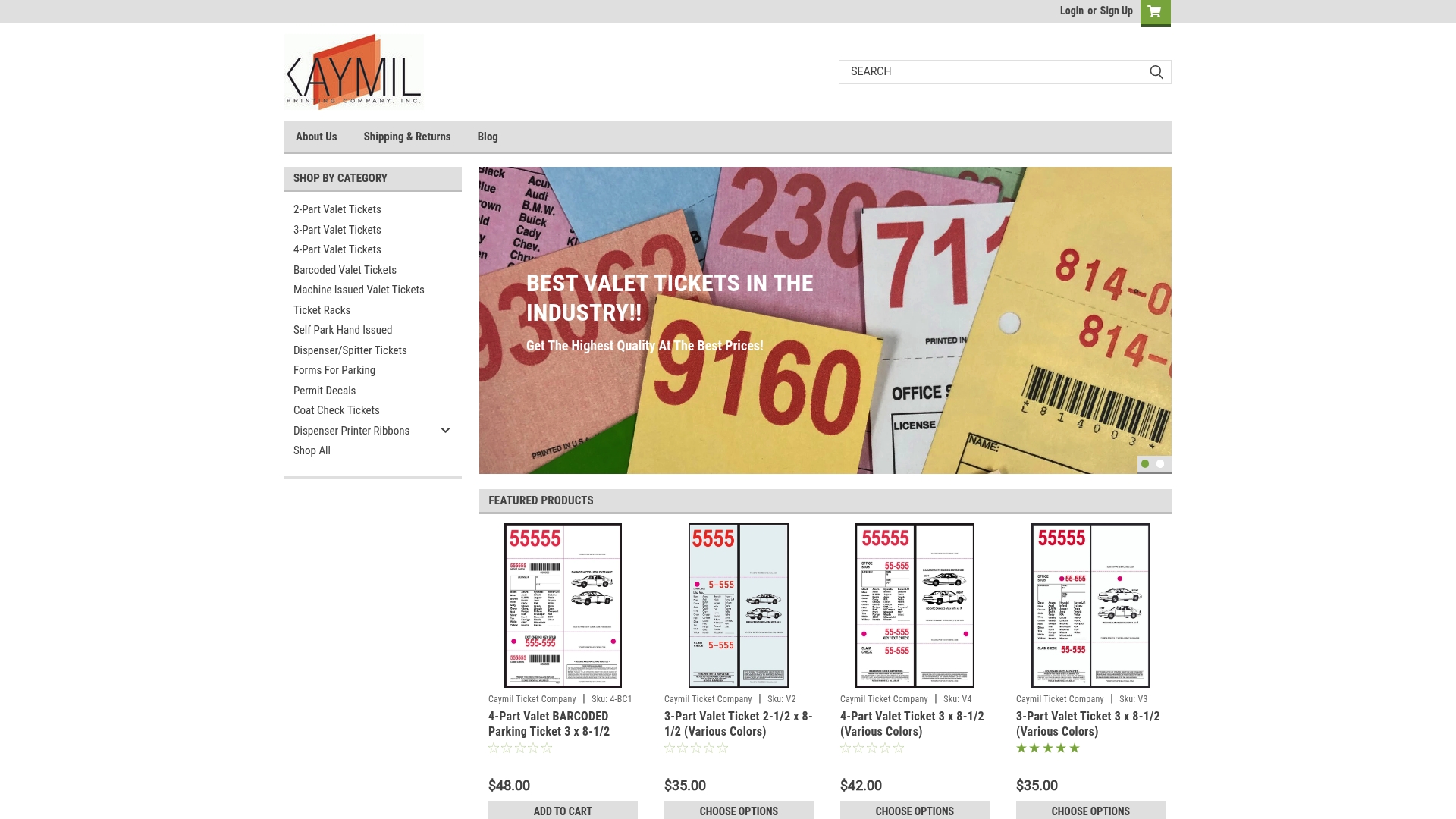
For operations building or upgrading their claim-check system, the most relevant formats are:
- 2-part carbonless valet tickets for straightforward duplicate-record workflows
- 3-part valet tickets for sites that need an automatic third copy for batch filing
- 4-part valet tickets for high-volume or multi-department operations
- Barcode valet tickets for hybrid digital workflows with scanning infrastructure
- Machine-issued valet tickets for high-volume operations using dispenser printers
All formats are available with sequential numbering, custom logos, and site-specific information. Caymil ships nationwide with millions of tickets in stock. View product specs and request samples at caymil.com to find the format that fits your operation’s volume and workflow.
Useful sources
Managers building or auditing their claim-check SOPs will find these resources worth bookmarking:
- Parking Valet Operations Manual (Parking Professional) — Covers intake inspection standards, key control, damage claim procedures, and insurer expectations in detail. The closest thing to an industry-standard operations reference.
- Valet Parking Safety (AF Group) — Insurer-produced guidance on disclaimer language, safety procedures, and what carriers look for in a well-run valet operation. Useful before any disclaimer review with counsel.
- Valet Parking Insurance (Insuranceopedia) — Plain-language overview of GKLL, general liability, workers’ compensation, and commercial auto coverage for valet operators.
- Caymil Printing Co. valet ticket products — Stock and custom ticket formats with sequential numbering, barcoding, and multi-part carbonless options for operations at any scale.
Always consult your insurer and qualified legal counsel to review ticket disclaimer language and confirm GKLL coverage specifics for your state and operation type.
FAQ
Are valet companies liable for vehicle damage?
Yes. When a customer hands over keys, a bailment is created and the valet operator assumes a duty of care for the vehicle. Documented intake inspections and claim checks are the primary tools for establishing what condition the vehicle was in at acceptance, which determines liability for any damage that occurs while in custody.
What insurance does a valet company need?
Most valet operations carry Garagekeepers Legal Liability (GKLL), general liability, workers’ compensation, and commercial auto coverage. GKLL is the specialty line that covers vehicle damage while in the operator’s custody, and insurers expect documented intake procedures and proof of custody as part of any claim submission.
How do claim checks help resolve damage disputes?
A claim check ties a specific vehicle to a timestamped intake inspection record and photos. When a customer reports damage at return, the operator pulls the intake record linked to that ticket number and compares it to the current condition. Pre-existing damage documented at intake is not the operator’s liability; damage that appears after acceptance is.
What should a valet claim check include?
Every claim check should carry a unique sequential number, date and time, site code, vehicle description, attendant initials, disclaimer language reviewed by counsel, a vehicle diagram for damage notation, and a carbon copy or digital record linked to that number.
How much do valet tickets cost to print?
Per-ticket costs vary by format and volume. Stock 2-part carbonless tickets are the most affordable entry point; custom sequential or barcoded multi-part tickets carry a moderate premium for setup and printing. At scale, paper tickets for 10,000 vehicles run approximately $600 per month in print costs alone, not counting administrative labor for reconciliation.
Recommended
- Common Valet Ticketing Mistakes Operators Must Fix - Caymil Printing Co., Inc.
- Valet Operation Efficiency Tips That Cut Wait Times - Caymil Printing Co., Inc.
- Valet Ticket Liability: What Operators Must Know - Caymil Printing Co., Inc.
- Why Sequential Valet Tickets Matter for Operators - Caymil Printing Co., Inc.