
Choosing the Right Apartment Parking Permits for Your Property
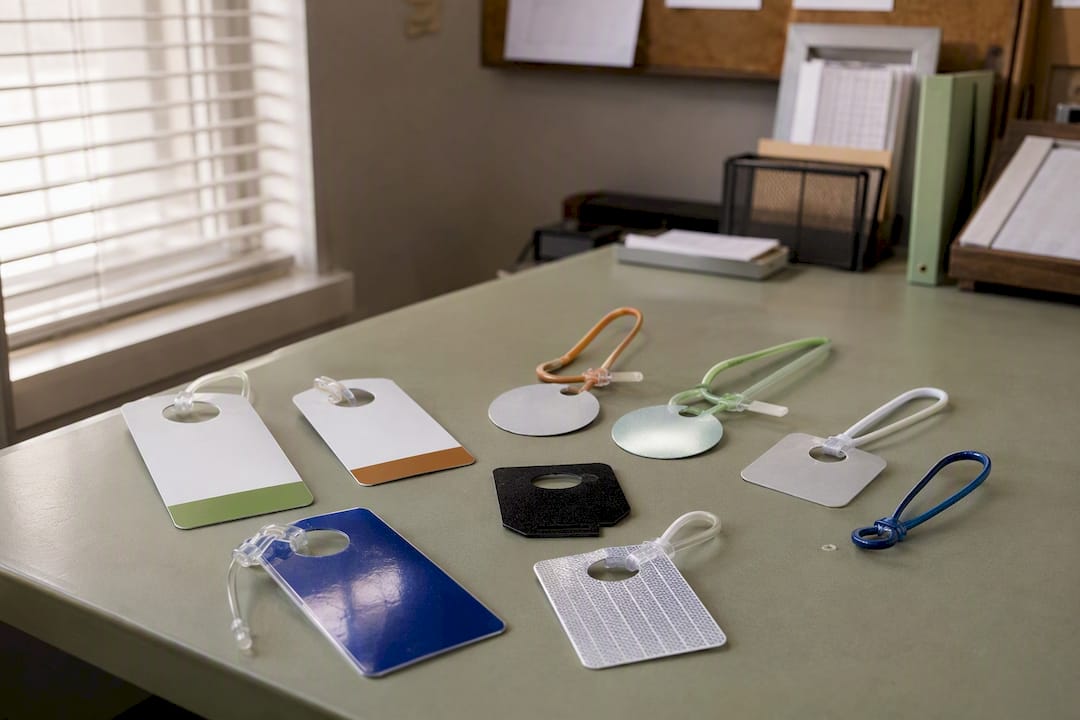
For most apartment properties, start with transfer-friendly hang tags for general resident parking and reserve decals for spots that must stay tied to one vehicle. Hang tags flex with move-ins, move-outs, and guest vehicles; decals lock down long-term enforcement where permanence matters more than convenience. If your gate system or valet operation requires serialization or barcode scanning, machine-compatible tickets close that gap. Stock designs work for smaller properties with simple needs; custom printing earns its cost once you need branding, lot codes, or security features. Whatever format you choose, a supplier with decades of production experience, like Caymil, keeps reorders fast and predictable.
Three things matter most before you place an order:
- Readability from a normal enforcement distance, day or night
- Print compatibility with your existing printer or ticket machine
- A reorder process that won’t leave you scrambling mid-lease-cycle
Key Takeaways
The right apartment parking permit format depends on whether your program needs flexibility or permanence, and durable, spec-matched printing reduces long-term enforcement and reorder costs more than the cheapest stock option ever will.
| Point | Details |
|---|---|
| Match format to program type | Use hang tags for flexible, transferable permits and decals for long-term, vehicle-specific spots. |
| Confirm specs before bulk orders | Size around 3 by 5 inches, readable typography, and print feed compatibility prevent production failures. |
| Add low-cost security features | Distinctive stock color, holographic stickers, or stamped seals cut down on casual counterfeiting cheaply. |
| Plan reorders around lease cycles | Set inventory triggers tied to turnover so mid-season stockouts don’t force rushed, premium-priced orders. |
| Work with an established supplier | Caymil’s decades of manufacturing experience and nationwide stock reduce compatibility and reorder risk. |
Table of Contents
- What Apartment Parking Permits Format Fits Your Program?
- What Specs Should Apartment Parking Permits Meet?
- Should You Order Stock or Custom Apartment Parking Permits?
- How Do You Roll Out and Enforce Apartment Parking Permits?
- Compliance With Local Parking Regulations
- Can Permits Work With Digital Parking Management Systems?
- What Do Apartment Parking Permits Cost to Manage?
- Why the Right Supplier Matters More Than the Right Design
- Order Apartment Parking Permits Built for Your Property
- Helpful Resources for Apartment Parking Permit Procurement
- Sources
- FAQ
What Apartment Parking Permits Format Fits Your Program?
Hang tags, decals, and machine-issued tickets solve different problems, and picking the wrong one creates enforcement headaches down the line. Hang tags hang from a rearview mirror and move with the resident, which makes them the right call when residents swap cars, add a second vehicle temporarily, or need guest permits that rotate. Decals bond to a windshield or bumper and stay put, which is exactly the point: they’re harder to lend to a neighbor or hand off when a lease ends, and they simplify enforcement because permanence removes ambiguity about which vehicle a permit belongs to.
Machine-issued and barcode tickets fit properties running gated access or integrated software, where a scan needs to pull up resident data instantly rather than relying on a visual check.
Here’s a quick way to match format to program type:
- Rotating residents, month-to-month leases, or frequent guest parking — choose hang tags.
- Assigned, long-term spots tied to a specific vehicle — choose decals.
- Gated garages or systems requiring scan-based verification — choose machine-compatible tickets.
Pro Tip: If your property runs both open lots and gated garages, don’t force one format across the whole site. Pair hang tags for surface parking with decals or barcode tickets for the controlled garage, and your enforcement staff will thank you.
What Specs Should Apartment Parking Permits Meet?
A permit that looks fine on a screen can still fail in the field if the size, material, or printed data doesn’t hold up to real conditions. Get these specs right before you approve a print run.
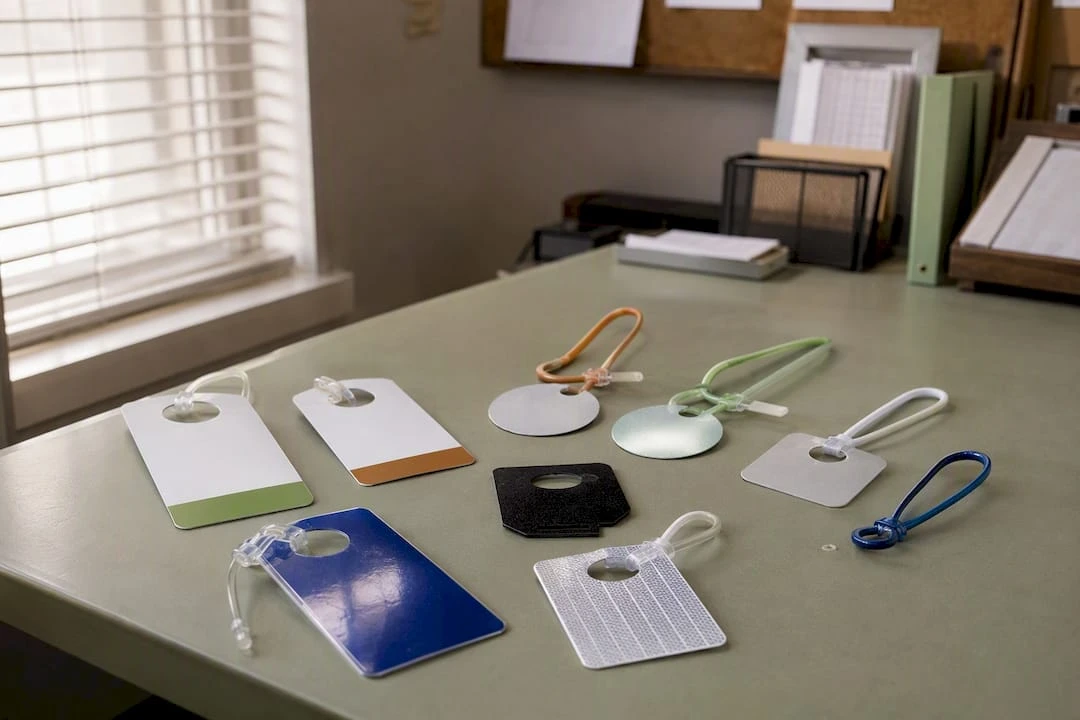
Size and legibility. A hang tag around 3 by 5 inches gives you enough surface for a lot number, building code, and expiration date, all legible to a patrol officer walking a row of cars without leaning into the windshield, like the sample on the PU Leather Sublimation Luggage tag – SubliBlanks Ltd page. Undersized tags force small type, and small type is the single fastest way to slow down enforcement.
Material choice. Standard cardstock works for short-term or seasonal permits. Synthetic stocks with lamination or UV coating hold color and resist fading, cracking, and moisture damage for permits meant to last a full lease term or longer, which matters most in properties with outdoor, uncovered parking.
Print compatibility. Confirm whether your printer or ticket machine runs laser, inkjet, or thermal, and whether it’s a sheet-fed or roll-ticket setup. Mismatched feed specs are a common cause of production failures and jammed runs, so confirm compatibility before ordering in bulk, not after.
Fields to print on every permit:
- Unique serial number
- Expiration date
- Property name or logo
- Lot, building, or unit code
- Optional barcode or QR code for scan-based systems
Simple security additions, like a distinctive stock color, a holographic sticker, or a stamped seal, cut down on casual counterfeiting without adding meaningful cost per unit.
Should You Order Stock or Custom Apartment Parking Permits?
Stock permits make sense for smaller properties or short-term programs where speed and low upfront cost outweigh the benefit of branding. You get a workable design fast, without setup fees or proof approvals. Custom printing earns its cost once your property needs a logo, property-specific color coding across multiple buildings, or extra data fields like unit number and lease expiration baked directly into the design.
When you’re comparing options, look for these customization features:
- Sequential numbering for clean recordkeeping and easy void tracking
- Barcodes or QR codes if you’re integrating with a scanning system
- Color-coding by lot, building, or resident type
- Multi-part carbonless sets when you need a paper record alongside the issued permit
Fulfillment realities matter just as much as the design itself. Ask about lead times, minimum order quantities, and whether the supplier sends a sample proof before running your full order. A predictable reorder process, meaning you can call in the same specs six months later and get an identical product, saves more operational stress than any single design feature.
Pro Tip: Before your first bulk order, request a spec sheet and a physical test proof, not just a digital mockup. A printed sample reveals color accuracy, stock weight, and legibility issues that a PDF never will.
If your property uses a gated system or specific ticket machine, confirm your supplier’s format works with that hardware before committing to volume. Caymil’s Forms For Parking line covers both stock and custom options built around exactly this kind of compatibility check.
How Do You Roll Out and Enforce Apartment Parking Permits?
A good permit design still fails operationally if distribution and tracking are sloppy. Build the rollout around a few repeatable steps.
- Log every issued permit against the resident record. Note the serial number, unit, and vehicle at the time of issue so a lost or disputed permit takes seconds to trace, not a search through paper files.
- Set a clear replacement policy. Void the original serial number the moment a resident reports a permit lost or stolen, and issue a temporary guest permit while the replacement prints.
- Train enforcement staff on visible checks. Whether that means a quick scan of a barcode or a glance at printed lot codes, consistency across shifts matters more than any single feature on the tag.
- Schedule periodic audits. Cross-check issued numbers against active leases every quarter to catch permits that should have been voided when a resident moved out.
- Plan reorders before you run out. Set a reorder trigger, commonly around 15 to 20 percent of remaining stock, so a busy leasing season never leaves your office without permits to hand out.
Compliance With Local Parking Regulations
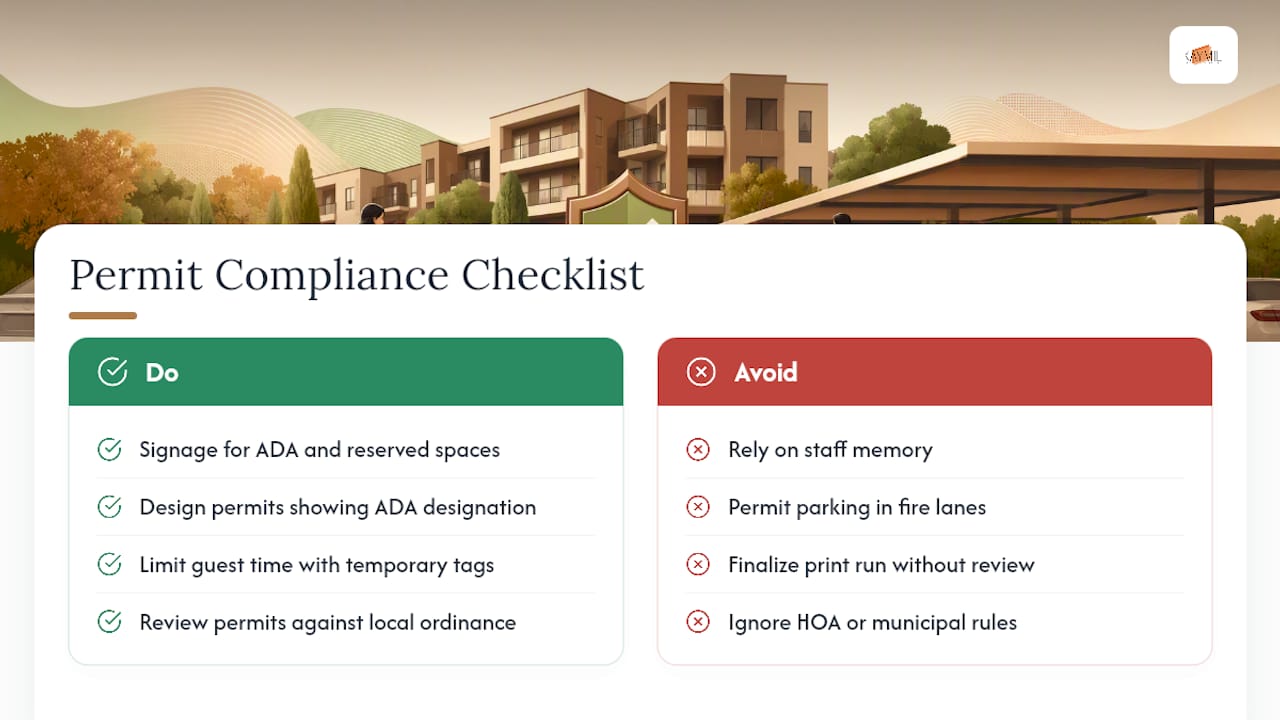
Local rules on visitor parking, accessibility requirements, and fire lane access all shape how apartment parking permits should be designed and enforced. Many municipalities require visible signage or reserved-space markings near ADA-compliant spots, and permits assigned to those spaces should reflect that designation clearly rather than relying on staff memory.
Some cities also regulate how long a vehicle can sit in a “guest” or “visitor” spot before it needs a resident permit, which affects how you design temporary or short-term tags. If your property sits within a homeowners’ association or a municipality with its own registration requirements, check whether local ordinances dictate specific permit language, such as a required disclaimer about towing rights or contact information for the property.
Fire code compliance is another area that gets overlooked. Fire lanes and emergency access routes typically can’t be used for resident parking regardless of what a permit says, and enforcement staff need permits designed to make that distinction obvious rather than relying on residents to know the rule. Building the fire lane restriction into your signage and staff training, not just the permit itself, closes that gap.
None of this replaces legal counsel review for your specific municipality. But building basic compliance checks into your permit design process, rather than treating it as an afterthought, prevents costly redesigns after your local code enforcement office flags an issue. Review your permit language and lot signage against your city’s current parking ordinance before finalizing a print run, especially if your property recently changed management or expanded its parking footprint.
Can Permits Work With Digital Parking Management Systems?
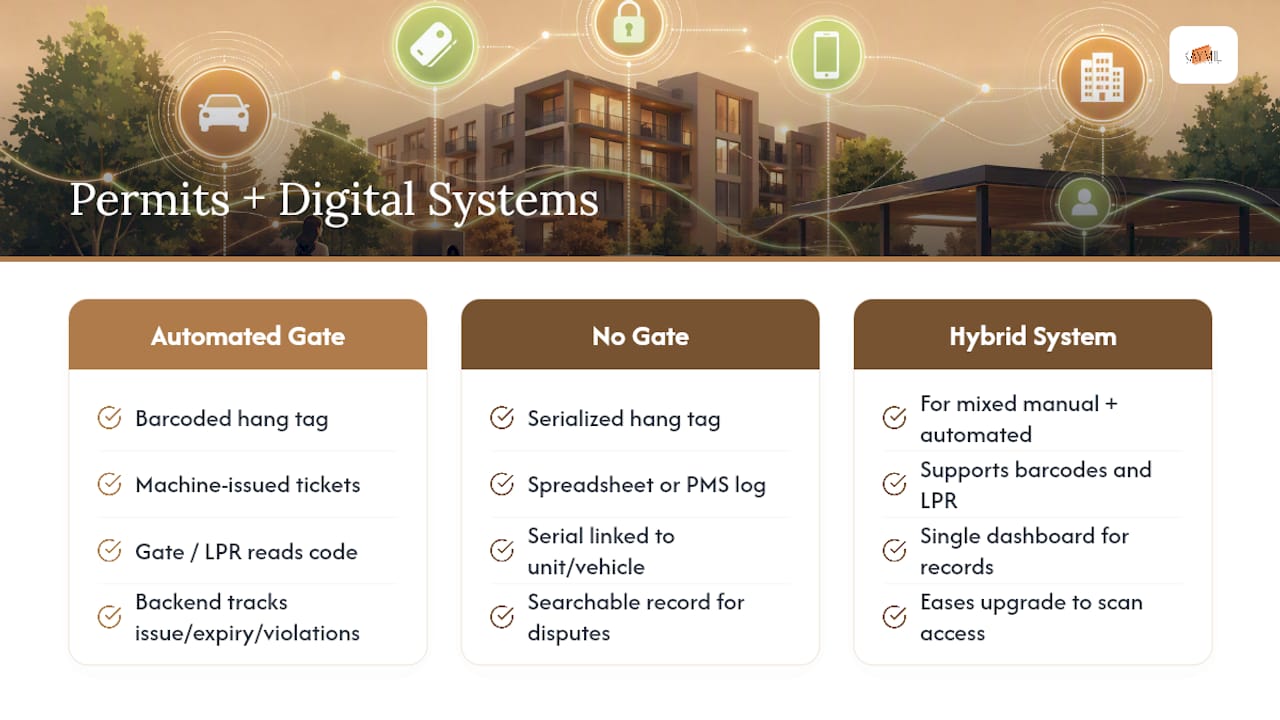
Physical permits and digital parking software aren’t competing systems. They work together when the permit carries data a scanner or camera-based system can actually read. A serialized number or barcode printed clearly on a hang tag or decal lets your gate software, license plate recognition camera, or handheld scanner confirm a vehicle’s status in seconds rather than relying on a staff member’s memory of who belongs where.
Properties running automated gate access typically pair machine-issued tickets or barcoded decals with backend software that tracks issuance, expiration, and violations in one dashboard. That combination cuts down on the manual cross-referencing that eats staff time during move-in season, when dozens of permits get issued in a short window.
Even properties without a formal gate system benefit from basic integration. A spreadsheet or property management platform that logs each permit’s serial number against a unit and vehicle turns a stack of printed tags into a searchable record. When a permit goes missing or a resident disputes a citation, that record settles the question in minutes instead of triggering a search through file cabinets.
The format you choose has to support whatever system you’re running now, and ideally whatever you might upgrade to later. A parking management system overview built for garages and lots that mix manual and automated enforcement gives a clearer picture of how permit data flows into daily operations, especially for properties weighing a move toward scan-based access.
What Do Apartment Parking Permits Cost to Manage?
Budgeting for permits involves more than the per-unit print price. Upfront costs include design setup fees for custom work, minimum order quantities, and any premium for security features like holographic elements or synthetic stock. A property ordering a few hundred stock hang tags a year spends far less upfront than one running a fully custom, multi-part barcoded system across several buildings.
The bigger cost driver, though, is often what happens after the first order. Cheap, thin stock that fades or cracks within a few months means more frequent reorders, more staff time spent reissuing permits, and more disputes over illegible numbers that enforcement can’t verify. For recurring, high-volume programs, a durable custom format frequently ends up cheaper over a full year than repeatedly replacing the lowest-cost stock tag, once you factor in labor and enforcement errors.
Build your budget around three line items: initial print run, expected replacement rate (lost, damaged, or expired permits), and staff time spent on distribution and audits. Properties that treat permits as a one-time purchase instead of an ongoing supply line tend to get caught mid-lease-cycle with no stock and a rush order at a premium price. Setting a standing reorder quantity, tied to your lease turnover calendar, avoids that scramble entirely.
Why the Right Supplier Matters More Than the Right Design
A well-designed permit still fails if the supplier can’t produce it consistently. Caymil has manufactured parking and ticketing products since 1937, with product lines built for compatibility across major gate and access systems including Amano, TIBA, SKIDATA, FLASH Parking, Scheidt & Bachmann, and Flowbird. That compatibility matters more than most buyers expect: a permit that scans cleanly on one system and jams on another isn’t a design flaw, it’s a specification mismatch caught too late.
Working with a supplier that keeps stock on hand and ships nationwide means a mid-season reorder doesn’t turn into a weeks-long wait. Correct feed compatibility and readable variable data aren’t extras. They’re the difference between a reorder that arrives on schedule and one that stalls your enforcement program.
— Richard
Order Apartment Parking Permits Built for Your Property
Caymil’s parking permit lineup covers the formats this guide walks through, so you don’t have to piece together specs from multiple vendors. The Parking Permit Decals page details material and adhesive options for vehicle-specific, long-term credentials, while Forms For Parking covers hang tags, custom fields, and sequential numbering for flexible resident programs. If your property runs a gated system, machine-issued ticket formats handle barcode and roll-ticket compatibility.
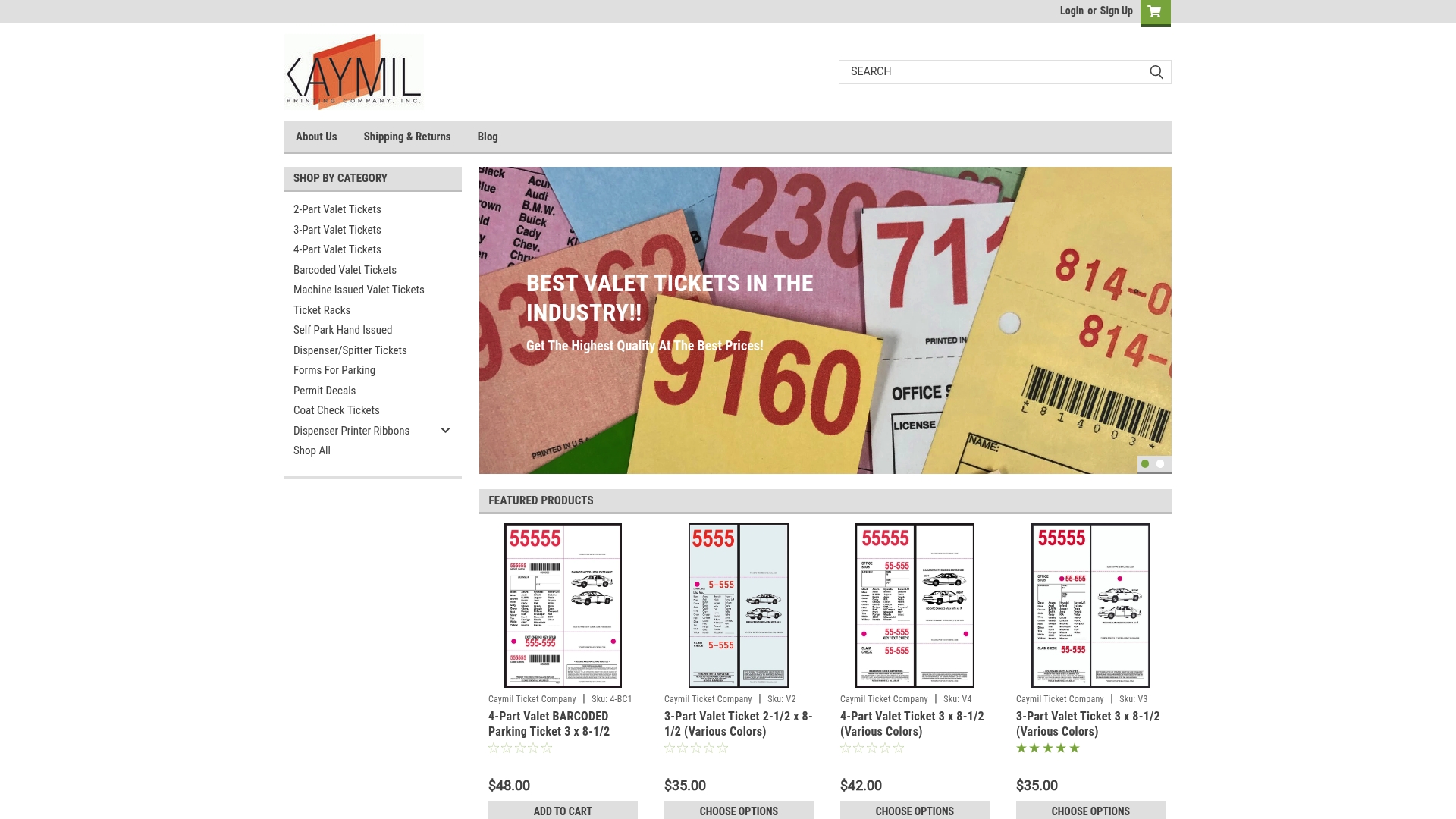
The real advantage of ordering through Caymil isn’t just the product catalog, it’s what happens after your first order: consistent stock, fast nationwide shipping, and reorders that match your original specs exactly, without renegotiating design details every time. Request a sample proof or a custom quote through Forms For Parking before your next print run, and get specs confirmed against your printer or gate system in advance rather than after a jammed batch arrives.
Helpful Resources for Apartment Parking Permit Procurement
- Parking Permit Decals — specs and options for permanent, vehicle-specific permits.
- How to launch a parking garage permit hang tag program — rollout guidance for new programs.
- Hang tags vs. parking decals comparison — format decision guide.
- Car hang tag template design guide — practical sizing and layout reference.
Sources
- Parking permit hang tags that hold up — USLabel blog
- Car hang tag template: design, print, and display it right — LegalClarity
- Hang tags vs. parking decals: Which one is right? — Threshold Security
FAQ
What size should an apartment parking permit hang tag be?
Most properties use hang tags around 3 by 5 inches, which gives enough space for a serial number, expiration date, and building code while staying legible from a normal enforcement distance.
Are hang tags or decals better for apartment parking permits?
Hang tags work best for flexible programs where residents change vehicles or need transferable permits, while decals suit long-term, vehicle-specific assignments where permanence simplifies enforcement.
What information should be printed on a parking permit?
Every permit should include a unique serial number, expiration date, property name or logo, and lot or building code, with an optional barcode for properties using scan-based systems.
How do I prevent apartment parking permit fraud?
Simple additions like a unique stock color, holographic sticker, or stamped seal make casual counterfeiting noticeably harder without adding significant cost per permit.
Should I order stock or custom parking permits?
Stock permits work for smaller properties needing a fast, low-cost solution, while custom printing pays off once you need branding, extra data fields, or color-coded lot assignments, and suppliers like Caymil support both paths.