
Hotel Parking Permit System Explained for Managers
A poorly managed parking lot sends guests the wrong message before they even reach the front desk. If your hotel still relies on paper hang tags, manual logs, or a staff member waving cars through, you already know the gaps: lost permits, unauthorized vehicles, overflow during events, and guests who checked out but whose cars are still occupying spaces. The hotel parking permit system explained in this guide covers everything from core hardware to digital enforcement strategies, so you can move from reactive to proactive with your parking operations.
Table of Contents
- Key takeaways
- Hotel parking permit system explained: core components
- Types of hotel parking permits and authorization models
- Operational best practices for enforcement
- Integrating permits with hotel operations and events
- Technology trends shaping hotel parking in 2026
- What I’ve learned about parking system rollouts
- How Caymil supports your parking permit operations
- FAQ
Key takeaways
| Point | Details |
|---|---|
| Systems combine hardware and software | Barriers, LPR cameras, pay stations, and cloud platforms work together to control access and track permits. |
| Digital beats paper every time | License plate-linked permits eliminate fraud and allow real-time validation without physical tokens. |
| PMS integration is a force multiplier | Connecting your permit system to your Property Management System automates guest registration and personalizes parking allocation. |
| Dynamic pricing controls demand | Adjusting rates by occupancy and guest segment optimizes revenue and discourages unauthorized overnight parking. |
| Physical tickets still play a role | Barcoded and multi-part valet tickets remain critical for hybrid systems, event management, and valet operations. |
Hotel parking permit system explained: core components
Hotel parking management systems combine hardware and software to control vehicle access and payments. Getting clear on what each piece does makes it much easier to choose the right configuration for your property.
The hardware side typically includes barrier gates at entry and exit points, ticket dispensers or license plate recognition cameras, pay stations, and intercom units for exceptions. The software side is where most modern systems have advanced dramatically. Cloud-based management platforms give your team real-time visibility into every space, every permit, and every transaction from a single dashboard, whether your parking facility holds 50 cars or 500.
Pro Tip: When evaluating systems, ask vendors whether their cloud platform integrates directly with your existing Property Management System. Systems that require manual data exports between platforms create exactly the kind of administrative friction you are trying to eliminate.
The biggest leap in capability comes from Automatic Number Plate Recognition, commonly called ANPR or LPR. Rather than issuing a paper hang tag or a physical ticket at the gate, the camera reads the vehicle’s license plate on entry. That plate number is matched against your permit database instantly. Authorized vehicles pass through. Unauthorized vehicles are flagged. The comparison below shows why so many hotels are making the switch.
| Feature | Paper permit system | Digital plate-based system |
|---|---|---|
| Fraud prevention | Low. Tags can be shared or photocopied. | High. Plate-linked permits cannot be transferred. |
| Enforcement speed | Slow. Requires manual patrol. | Real-time. Flags violations automatically. |
| Guest experience | Moderate. Requires physical handoff. | High. No token needed at entry or exit. |
| Administrative workload | High. Manual records and audits. | Low. Automated tracking and reporting. |
| Integration with PMS | Difficult. Usually disconnected. | Direct. API connection available. |
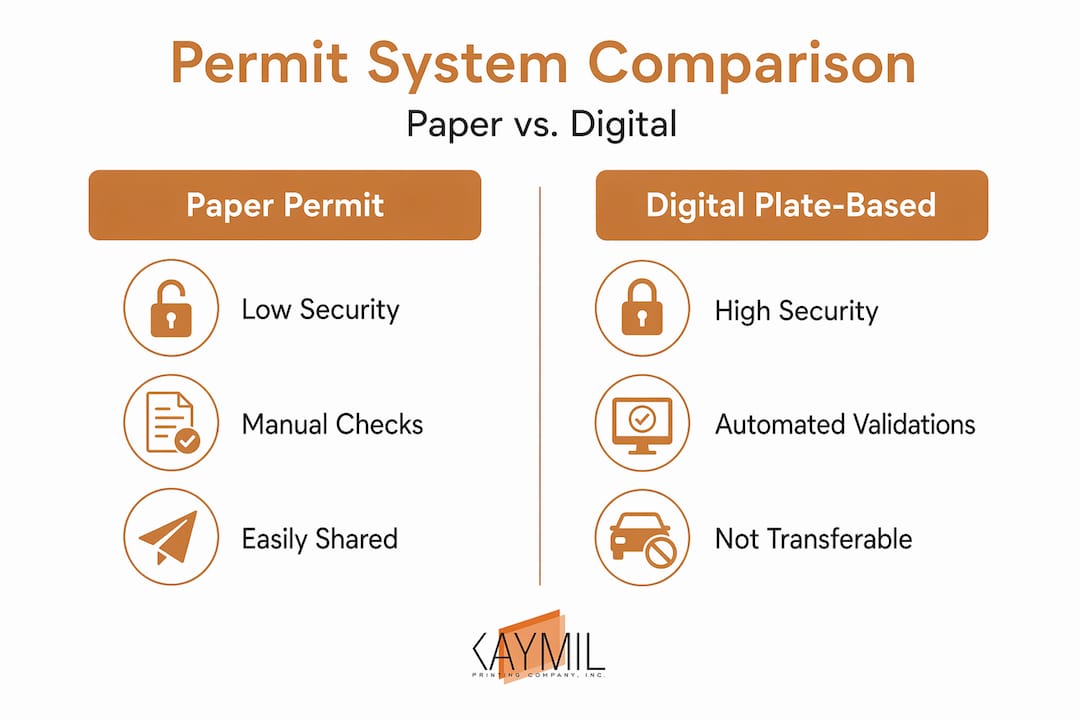
Digital records allow real-time validation and track specific vehicle registrations, preventing unauthorized sharing in ways paper simply cannot match.
Types of hotel parking permits and authorization models
Not all permits work the same way, and the authorization model you choose has a direct effect on both operational efficiency and guest satisfaction. Most hotels manage at least three distinct permit categories at any given time.
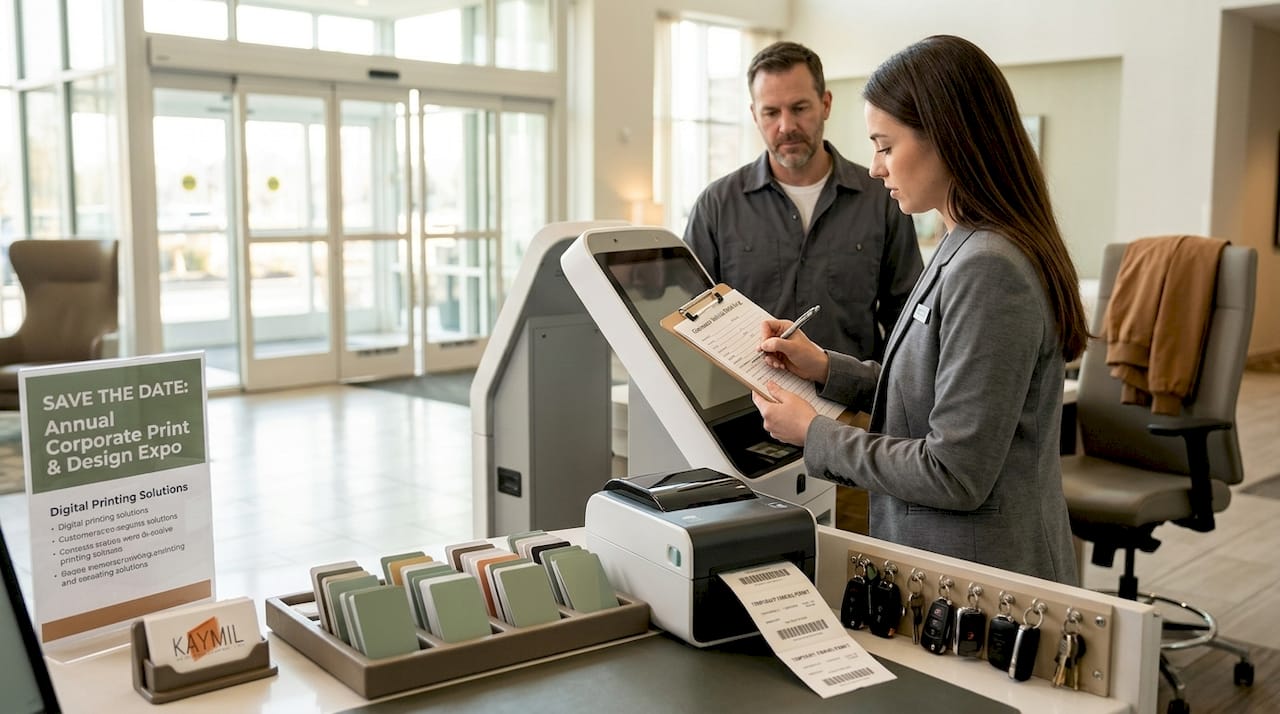
Guest permits are the most common. These are linked to a confirmed reservation, either through the guest’s license plate number provided during online booking or at check-in. The system validates the plate at the gate and grants access without any physical token changing hands. For properties that handle international guests or guests who arrive in rental vehicles with plates that differ from their registration, a lobby tablet or front desk override provides a simple workaround.
Temporary permits cover event attendees, contractors, delivery personnel, and visitors who are not overnight guests. These permits carry date and time restrictions. A permit issued for a Saturday wedding at your property, for example, should expire at a set hour that evening. Without time restrictions built into the system, those vehicles can return over the following days with no additional authorization.
Staff and VIP permits carry special access privileges, often with reserved spaces or 24-hour access. Managing these carefully matters because staff permit abuse, specifically employees allowing personal guests to use their designated spaces, is one of the most common sources of unauthorized parking at hotels.
On the billing side, hotels typically operate under one of these models:
- Complimentary: Parking is included with the room rate. The permit system still controls access but does not process a transaction.
- Prepaid: The guest pays at booking. The system validates the payment against the plate on arrival.
- Pay-on-exit: The guest pays at a pay station before leaving. Common in urban hotels where parking is a separate revenue line.
- Hybrid: Overnight guests receive a discounted or complimentary rate while day visitors and event attendees pay the posted rate.
Charging for parking after business hours discourages unauthorized overnight parking and frees spaces for legitimate users, particularly valuable for mixed-use properties near urban centers.
Operational best practices for enforcement
Transitioning from a manual system to a digital one is not a one-day project. Hotels that approach it in phases see better adoption from staff and fewer gaps in enforcement coverage during the cutover period.
Start with a data audit. Before you remove a single paper permit from circulation, document every permit category you currently issue, the volume per category per week, and the most common violation types you deal with. That baseline shapes your configuration decisions when setting up the digital system.
- Audit your current permit inventory. List every category, authorization rule, and billing model in use before migrating.
- Configure your permit database before going live. Import guest reservations, staff plates, and standing VIP records so the system is populated before the first car approaches the gate.
- Run parallel systems for two to four weeks. Keep paper permits available as a backup while staff builds confidence with the new process.
- Train front desk staff on plate registration workflows. The guest experience at check-in needs to be fast. Practice the exact steps for adding a plate, handling rental vehicles, and processing permit extensions.
- Set automated alerts for overstays. Define your overstay threshold (usually 30 to 60 minutes past checkout) and configure automatic Parking Charge Notices so enforcement does not depend on a staff member noticing the vehicle.
Clear guest communication and compliance with local parking laws prevent costly citations and neighbor complaints. Signage at every entry point, a brief parking policy note on the booking confirmation, and a printed card in the room all reduce the volume of confused guests contacting the front desk.
Pro Tip: Post your parking policy in plain language at the entry gate, not just in the fine print of your reservation confirmation. Guests who understand the rules before they park generate far fewer disputes.
ANPR systems automate overstay monitoring with automatic Parking Charge Notices generated for unauthorized vehicles, reducing the staff hours previously spent on manual patrols. When violations do occur, the system’s digital audit trail makes dispute resolution straightforward.
Integrating permits with hotel operations and events
The real payoff from a modern parking permit system comes when it talks directly to the rest of your hotel’s technology stack. Disconnected systems mean duplicate data entry, missed authorizations, and service gaps that guests notice.
Linking permit data to your Property Management System creates a feedback loop that benefits both operations and the guest experience. When a guest checks in, their plate is registered automatically. When they check out, their parking access is revoked on the same timestamp. Extensions for late checkout are handled at the front desk in seconds. Integration of permit systems with PMS and valet ticketing simplifies operations, improves guest satisfaction, and reduces retrieval times across the board.
For event-driven properties, flexible permit parameters matter as much as day-to-day management. Key integration points for events include:
- Temporary access windows: Set a permit start and end time for wedding guests, conference attendees, or private event parties without creating individual guest records.
- Waivable charge notices: Hotels hosting events benefit from flexible permit parameters with automated systems. Staff can waive a charge notice for an event guest who overstayed by minutes without going through a lengthy dispute process.
- Valet ticket integration: When valet service is part of the parking mix, barcoded valet tickets and multi-part carbonless formats connect valet records to the central permit system. This eliminates the common problem of a valet-parked vehicle being flagged as unauthorized by the automated system.
- Real-time occupancy data: Live space counts let your event coordinator tell guests how full the lot is before the event peaks, preventing the frustration of guests circling a full garage.
The combination of PMS integration, event-based temporary permits, and valet ticket compatibility makes a property genuinely ready to handle the full range of parking scenarios without improvising.
Technology trends shaping hotel parking in 2026
The technology available to hotel parking managers has changed significantly, and the properties that adopt these tools gain a real operational advantage.
AI-powered parking management can increase hotel parking occupancy from 65 to 70 percent to 90 to 95 percent by using ANPR to automate vehicle recognition, optimize capacity dynamically, and deliver a more personalized parking experience. That is not a marginal improvement. It represents a fundamental shift in how a parking facility performs as a revenue-generating asset.
Several trends are accelerating this shift in 2026:
- Predictive capacity management: AI analyzes historical occupancy patterns and upcoming reservations to pre-allocate spaces and adjust pricing before demand peaks.
- Mobile self-service portals: Guests purchase or register permits from their phones before they arrive. No queue at the pay station. No front desk handoff required.
- Dynamic pricing strategies applied to parking optimize revenue and manage demand by adjusting rates based on occupancy and guest segments. City hotels use this to charge different rates for registered guests, day visitors, and business users.
- Fraud detection in real time: Systems flag duplicate plate entries, mismatched vehicle types, and suspicious access patterns automatically. ALPR transforms every entry point into a data source enabling consistent, automated enforcement with a full audit trail for disputes.
- Barcode tickets in parking garages improve efficiency and reduce errors in hybrid environments where automated LPR and manual ticketing both operate.
For properties with casino components, the same framework applies. A casino parking permit system or casino self-park ticket system guide will point to the same core technologies, with additional considerations for high-volume, multi-entry facilities and validated parking for players.
What I’ve learned about parking system rollouts
Over years of working with hotels on parking and ticketing solutions, I’ve seen a consistent pattern. Properties that struggle most with their permit systems are not dealing with a technology problem. They are dealing with a policy problem.
The system is only as good as the rules it enforces. I’ve watched hotels invest in capable ANPR platforms and then configure them with so many exceptions, overrides, and manual holds that the automation is essentially bypassed within six months. The technology did exactly what it was built to do. The policies just were not ready for it.
My honest take: the hotels that get this right spend more time upfront defining their permit categories, authorization rules, and violation thresholds than they do evaluating vendor demos. A clear, written parking policy that covers guests, staff, contractors, and event visitors is the single most underrated prerequisite for a successful system implementation.
I also think the industry underestimates how much physical ticketing still matters in a hybrid operation. Digital permits handle the majority of cases, but valet events, temporary vendor access, and manual override situations all benefit from a reliable physical ticket format. Dismissing printed tickets as outdated misses the reality of how hotels actually operate on a busy Saturday night.
The goal is a system where 95 percent of cases are handled automatically and the remaining 5 percent have a clear, fast manual path. That balance requires both good technology and good ticket stock on hand.
— Richard
How Caymil supports your parking permit operations
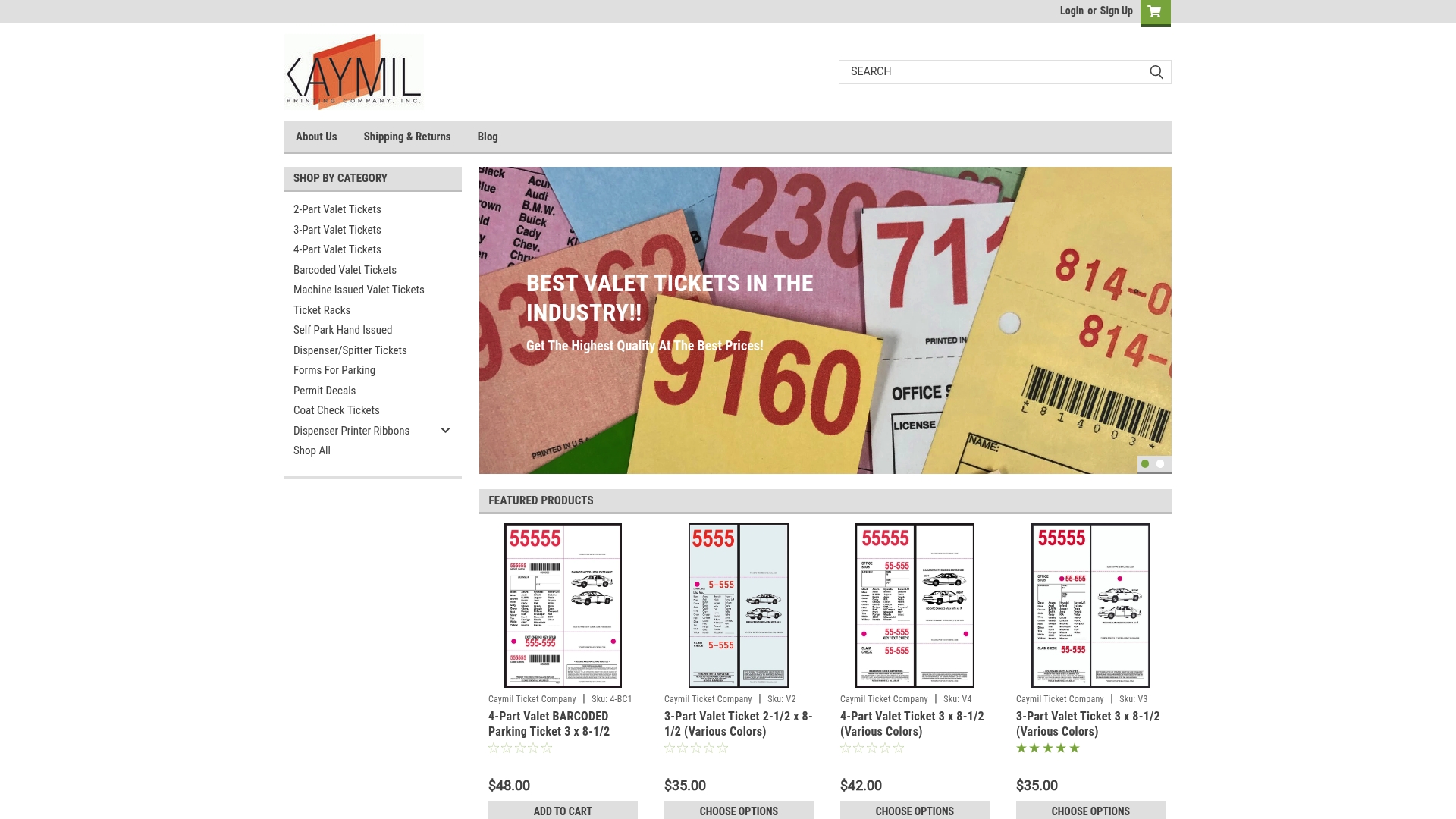
Whether your property is transitioning to a fully digital permit system or managing a hybrid setup that includes valet services and event parking, Caymil has the physical ticket solutions to support every scenario. Since 1937, Caymil has supplied hotels, casinos, and parking facilities nationwide with parking permit forms, barcoded valet tickets, multi-part carbonless formats, and machine-issued thermal tickets compatible with major systems including Amano, TIBA, SKIDATA, and FLASH Parking.
Caymil’s products are built for the operational realities hotels face: high volume, frequent guest turnover, and events that change your parking mix overnight. Custom numbering, logos, and security features are available on most formats. With millions of tickets in stock and fast nationwide shipping, Caymil makes it straightforward to get exactly what your operation needs. Contact Caymil directly to discuss a tailored solution for your property.
FAQ
What is a hotel parking permit system?
A hotel parking permit system controls vehicle access to a hotel’s parking facility by validating authorized guests, staff, and visitors through digital plate recognition, physical tickets, or a combination of both. Modern systems combine barriers, cameras, and cloud platforms to automate entry, payment, and enforcement.
How do hotels issue parking permits to guests?
Most hotels register the guest’s license plate at check-in via the front desk or a lobby tablet, linking the plate to the reservation in the system. Automated guest vehicle registration removes the need for physical hang tags and allows the parking gate to recognize the vehicle automatically on arrival.
How can hotels prevent parking permit fraud?
Digital permits tied to license plates prevent unauthorized sharing because the permit is validated against a specific plate rather than a physical token that can be passed to another driver. Combining plate-based permits with real-time ANPR monitoring and automated violation notices significantly reduces abuse.
What is the difference between a guest permit and a temporary parking permit?
A guest permit is linked to a confirmed room reservation and is valid for the duration of the stay. A temporary parking permit is issued for a specific date and time window, typically for event attendees, contractors, or visitors, and expires automatically when the window closes.
How does parking permit management work for casino properties?
A casino parking permit system operates on the same core principles as a hotel system but typically handles higher vehicle volumes and validated parking for players. A casino self-park ticket system uses machine-issued tickets at entry, with validation applied at a pay station or casino floor kiosk before exit, often integrating with player rewards programs to apply complimentary or discounted rates.
Recommended
- How to launch a parking garage permit hang tag program - Caymil Printing Co., Inc.
- Forms For Parking - Caymil Printing Co., Inc.
- Garage parking receipt explained for facility managers - Caymil Printing Co., Inc.
- Optimize hotel parking: Integration, valet, and guest experience - Caymil Printing Co., Inc.