
Casino High-Volume Parking Ticket Systems Explained
A casino high-volume parking ticket system is a structured access and payment framework that manages thousands of vehicles per day using ticket dispensers, license plate recognition (LPR), dynamic pricing, and validation technology. The term “high-volume parking ticket system” is the industry’s informal label for what operators formally call an automated parking access and revenue control system, or PARCS. Casino operators at properties like Caesars Entertainment and MGM Resorts rely on these systems to keep guests moving during peak events, concerts, and holiday weekends. Understanding how they work is the first step toward running a parking operation that supports guest satisfaction rather than undermining it.
What is a casino high-volume parking ticket explained in operational terms?
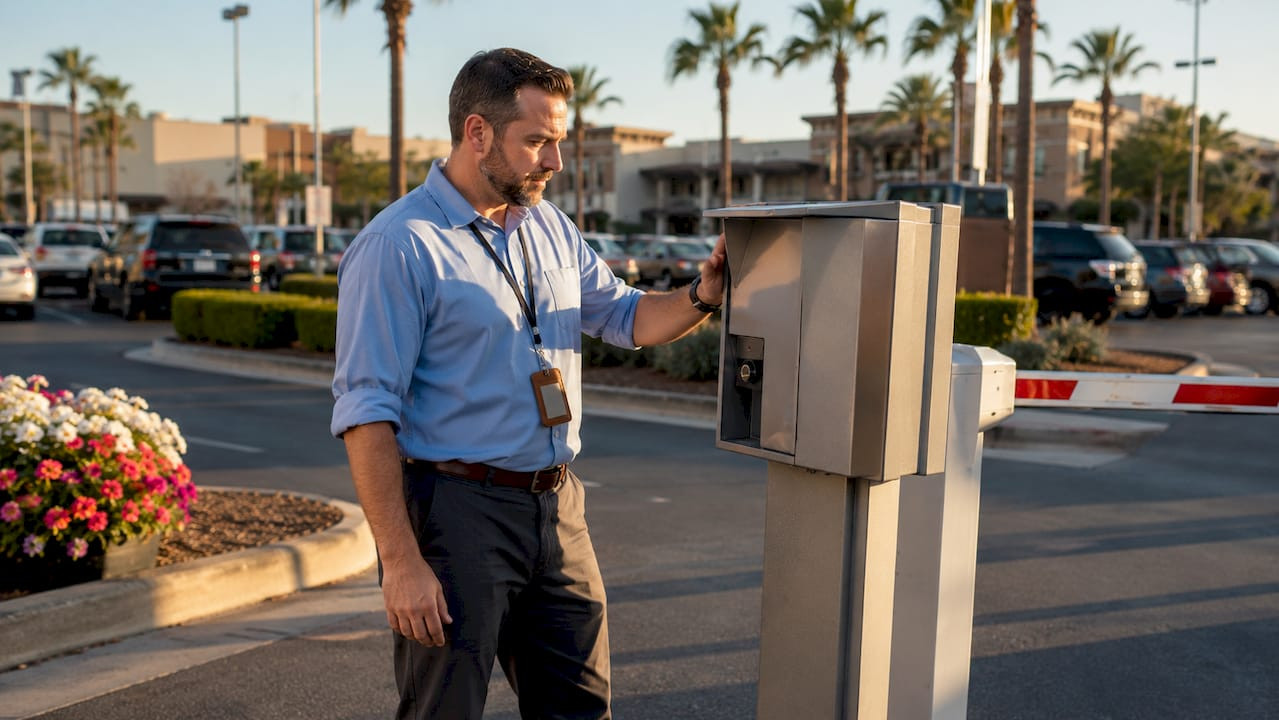
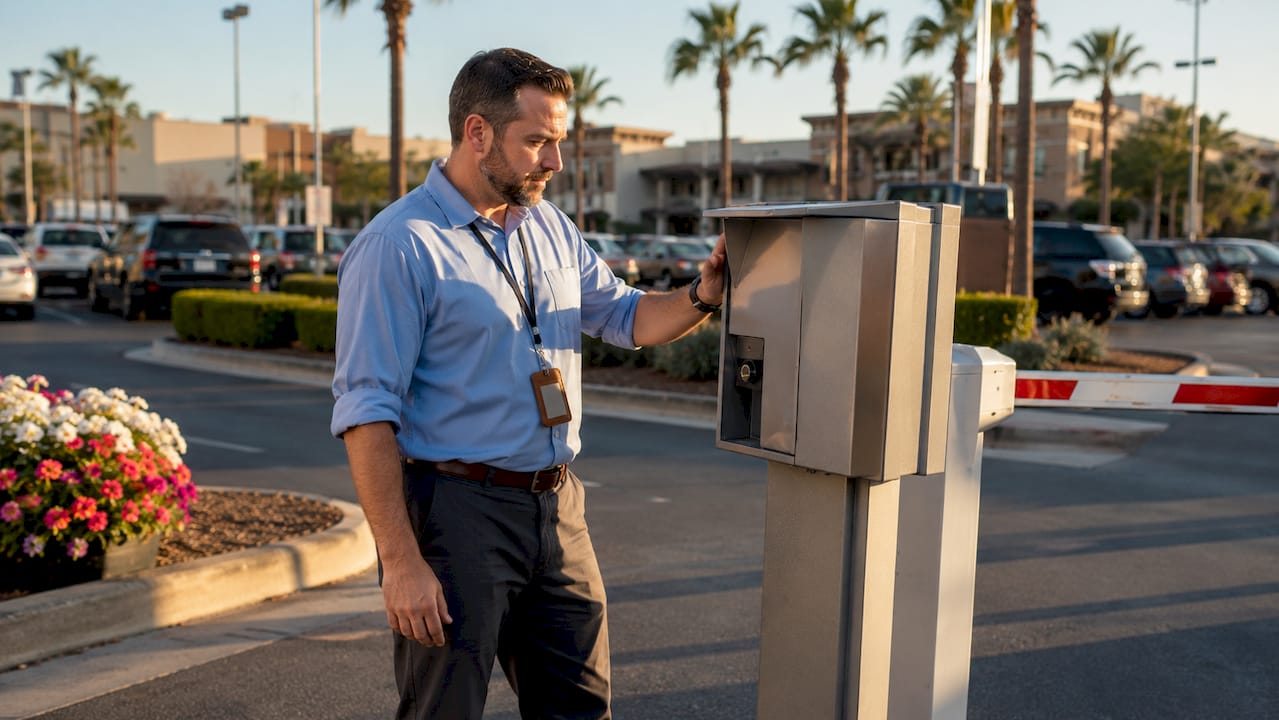
A PARCS installation at a casino combines three core components: a ticket dispenser at the entry lane, a payment station before exit, and a validation interface tied to the property’s loyalty or hotel system. Guests press a button at the entry gate, receive a time-stamped ticket, and present it at a pay station or cashier before driving to the exit. The gate reads the validated ticket and opens. This process sounds simple, but validation integration failure can cause exit delays of 30–90 minutes during peak events. That single failure point is why operators invest heavily in redundant validation paths and staff coverage at exits.
Physical ticket systems remain the backbone of many mid-size casino garages because they are reliable, auditable, and compatible with major platforms including Amano, TIBA, SKIDATA, FLASH Parking, Scheidt & Bachmann, and Flowbird. Each ticket carries a barcode or magnetic stripe that ties the vehicle’s entry time to its fee calculation. Caymil has manufactured compatible tickets for these systems since 1937, giving operators a dependable supply chain for the physical media that keeps gates moving. You can review parking system compatibility options to match ticket stock to your specific hardware.
How do ticket-based and ticketless systems work in casino parking management?
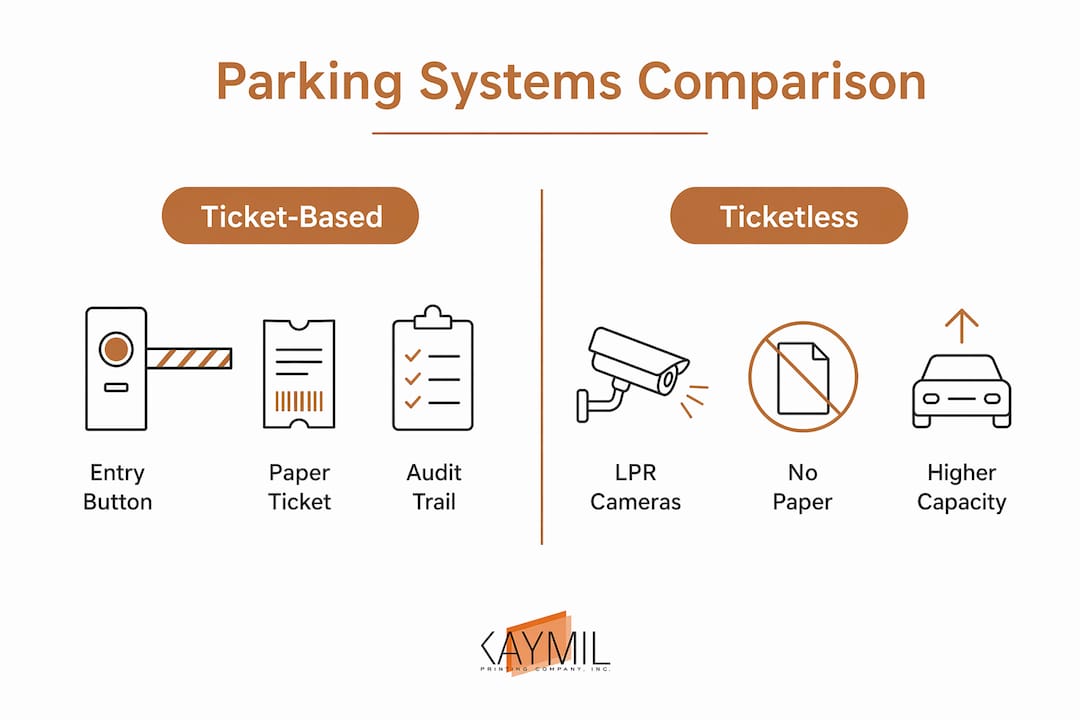
The two dominant approaches in casino parking are physical ticket dispensing and LPR-based ticketless entry. Each has a distinct operational profile, and many large properties now run both in parallel.
| Feature | Physical ticket system | LPR ticketless system |
|---|---|---|
| Entry method | Button press, ticket issued | Camera reads license plate |
| Payment trigger | Ticket barcode or magnetic stripe | Plate number tied to account |
| Lane capacity | Standard throughput | Capacity increase of 30–50% |
| Rental car handling | Reliable | Requires secondary validation |
| ROI timeline | Immediate on existing hardware | 18–36 months from labor savings |
| Best fit | Mid-size garages, retrofit installs | High-volume Vegas Strip properties |
LPR-based systems increase parking lane capacity by 30–50% by eliminating physical ticket dispensing. That capacity gain matters enormously on a Saturday night when 4,000 vehicles arrive within two hours. Mid-size garages see return on investment within 18–36 months from labor and maintenance savings alone.
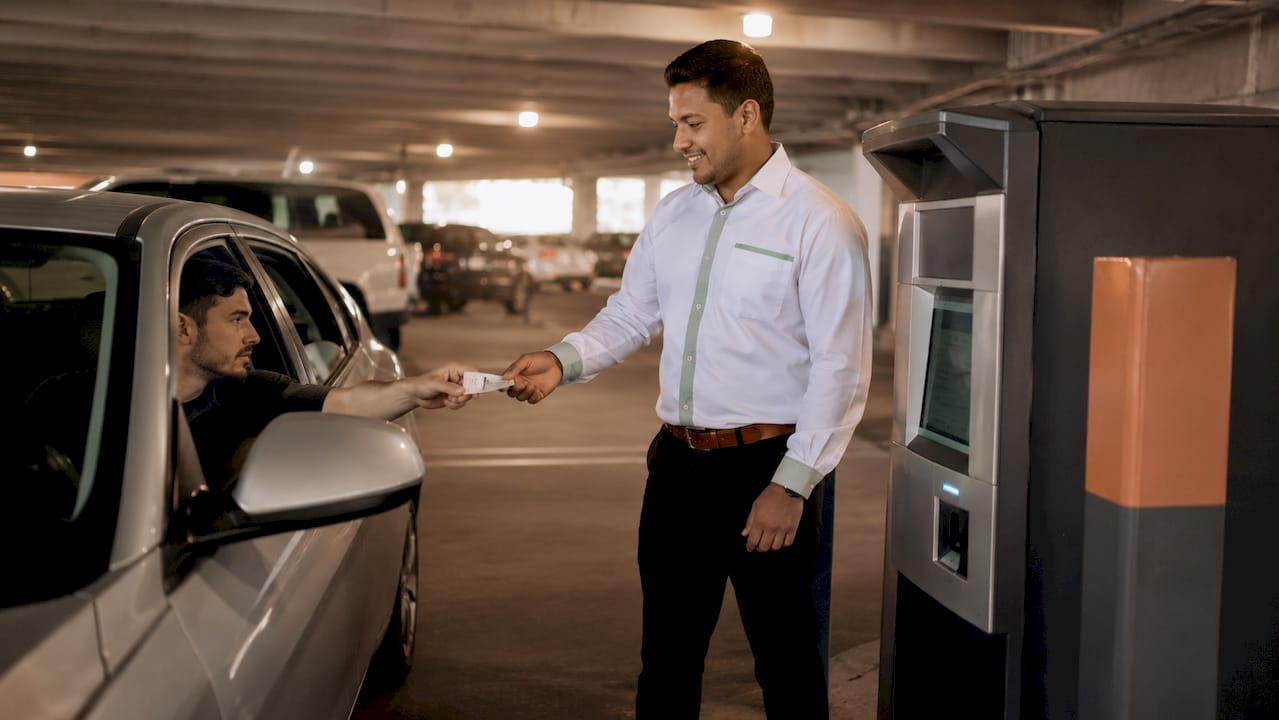
Physical ticket systems carry their own advantages. They produce a paper audit trail, work without cellular or cloud connectivity, and handle every vehicle regardless of plate readability. The role of ticket dispensers in high-volume environments is often underestimated. A well-stocked dispenser with durable thermal or barcode tickets keeps lanes moving even when software systems are under maintenance.
Pro Tip: Run a physical ticket dispenser as a fallback lane in every LPR-equipped garage. When a camera fails during a sold-out event, that single lane prevents a complete entry shutdown.
Rental cars present a specific challenge for LPR systems. Fleet plates from companies like Enterprise or Hertz rotate frequently, and the plate in the LPR database may not match the car a guest is driving. Vegas Strip casinos handle this by requiring guests to register their plate at the front desk or via a mobile app before parking. Without that step, the system cannot link the plate to a room or loyalty account.
What role do dynamic pricing and validation play in casino parking ticket systems?
Dynamic pricing is the practice of adjusting parking fees based on demand, time of day, or event type. Casinos implement fee models ranging from $10 to $50 per day, with rates climbing during concerts, boxing matches, and holiday weekends. Caesars Entertainment, MGM Resorts, and Great Canadian Entertainment each use tiered validation to waive or reduce those fees for qualifying guests. That tiering is where parking management becomes a loyalty marketing tool.
Validation works through several channels:
- Hotel room key: Guests insert or tap their key card at a pay station to receive a full or partial waiver.
- Players club card: Loyalty tier determines the discount. Diamond or top-tier members often park free.
- Minimum spend: Some properties validate after a guest spends a set amount at the casino floor or a restaurant.
- Comp dollars: Hosts can apply comp credits directly to parking fees for high-value players.
- Mobile app: Guests link their plate and loyalty account before arrival for automatic billing and waiver application.
Communicating fee waivers for loyalty tiers increases new program enrollments. That means a parking fee, properly framed, becomes a recruitment tool rather than a friction point. Operators who display validation instructions clearly at entry, at pay stations, and on digital signage convert more guests into loyalty members than those who bury the information in fine print.
Pro Tip: Place validation reminder signage at the elevator lobby inside the garage, not just at the pay station. Guests who learn about validation before they reach the exit have time to retrieve their room key or loyalty card.
The marketing opportunity extends to event planners. When a casino hosts a conference or concert, the event contract can include complimentary parking validation codes for attendees. That removes parking friction from the event experience and positions the property as a full-service host.
What are practical considerations and challenges when implementing high-volume parking ticket systems at casinos?
High-volume events expose every weakness in a parking system. Operators who plan only for average daily traffic will face bottlenecks, guest complaints, and revenue loss when demand spikes. The following challenges appear consistently across casino parking operations:
-
Gate throttling during surge arrivals. When vehicles arrive faster than lanes can process them, queues spill onto public roads. Operators must size entry capacity for peak demand, not average demand. Adding pre-pay kiosks in the garage reduces exit lane congestion by separating payment from gate operation.
-
Hybrid system confusion during technology transitions. Transitioning to LPR requires managing dual-system confusion with signage and staff training to avoid entry lane congestion. Guests accustomed to pressing a button for a ticket will stop at an LPR camera and wait for a ticket that never comes.
-
Rental car plate recognition failures. Hybrid ticket and plate recognition systems require fallback processes, especially when rental car plates are involved, to avoid costly guest frustration. Secondary validation via room key or loyalty card scanning resolves most failures quickly.
-
Capacity restrictions and access control during sold-out events. Entry throttling is a key guest frustration. Casinos often restrict garage access to pre-registered hotel guests after capacity is reached. This protects the hotel guest experience but damages reputation if guests are turned away without warning.
-
Staff training on manual overrides. Operators must train staff on manual gate overrides to maintain flow during severe bottlenecks. An untrained attendant facing a jammed gate during a 3,000-car event arrival will create a crisis. A trained one resolves it in under two minutes.
Proactive communication about parking capacity limits mitigates negative guest experiences during high-demand events. Sending a pre-arrival email or push notification that explains parking options, rates, and validation steps reduces confusion at the gate and at the pay station.
How do casinos optimize guest experience with integrated parking ticket technology during large events?
Technology integration turns a parking garage from a utility into part of the guest experience. The most effective tools deployed at large casino properties include:
- Automated parking guidance systems. These use sensors and digital signs to direct guests to open spaces in real time. Automated guidance systems improve parking speed by up to 63%, reducing the stress of circling a full garage during a peak event.
- Mobile app pre-registration. Guests register their license plate and payment method before arrival. The system bills automatically on exit, eliminating the pay station step entirely for enrolled guests.
- Loyalty program integration. Linking the parking system to the property management system allows automatic validation based on room status or loyalty tier without any guest action at a kiosk.
- Pre-paid event parking. Event planners can sell parking passes in advance through the casino’s ticketing platform. The pass links to a plate or a QR code that opens the gate on arrival.
These integrations reduce wait times, lower staffing requirements at pay stations, and generate data that operators can use to refine pricing and capacity planning. A casino that knows 80% of its Friday night concert attendees arrive between 6:00 p.m. and 7:30 p.m. can staff accordingly and open overflow lots proactively. Reviewing parking management system examples shows how operators are combining these tools in 2026 to handle event-day surges without adding lanes.
Key takeaways
A well-designed casino parking ticket system balances physical ticket reliability, LPR efficiency, dynamic pricing, and proactive guest communication to handle high-volume events without friction.
| Point | Details |
|---|---|
| Physical tickets remain essential | Ticket dispensers provide a reliable fallback when LPR cameras fail during peak events. |
| LPR expands lane capacity | Ticketless systems increase throughput by 30–50%, with ROI in 18–36 months. |
| Validation drives loyalty enrollment | Communicating fee waivers at entry and inside the garage converts guests into loyalty members. |
| Rental car plates need a fallback | Secondary validation via room key or loyalty card resolves LPR failures quickly. |
| Communication prevents reputation damage | Pre-arrival notifications about capacity limits and parking options reduce gate-level frustration. |
What operators often get wrong about casino parking systems
After years of working with casino and event venue operators, the pattern I see most often is this: properties invest heavily in technology and almost nothing in communication. A property can install the most sophisticated LPR system on the Strip and still generate a flood of one-star reviews because guests had no idea parking cost $30, or that their players card would have covered it.
The second mistake is designing for average traffic. A system that runs smoothly on a Tuesday night will collapse on a Saturday with a sold-out fight. Hardware sizing, staff scheduling, and overflow planning all need to be built around the worst-case scenario, not the median.
The third mistake is underestimating the rental car problem. A significant share of casino guests arrive in rental vehicles, and LPR systems struggle with fleet plates. Operators who do not build a clear secondary validation process into their workflow will spend event nights manually releasing gates.
The future of casino parking is not purely ticketless. The most resilient operations will keep physical ticket capability as a fallback while layering in LPR, mobile pre-registration, and loyalty integration on top. That hybrid approach handles the full range of guests, from tech-forward loyalty members to first-time visitors who just want to press a button and get a ticket.
— Richard
Caymil’s parking ticket solutions for casino operators
Casino operators managing high-volume events need ticket stock that performs under pressure. Caymil has supplied casinos, hotels, and event venues with durable parking and valet tickets since 1937.
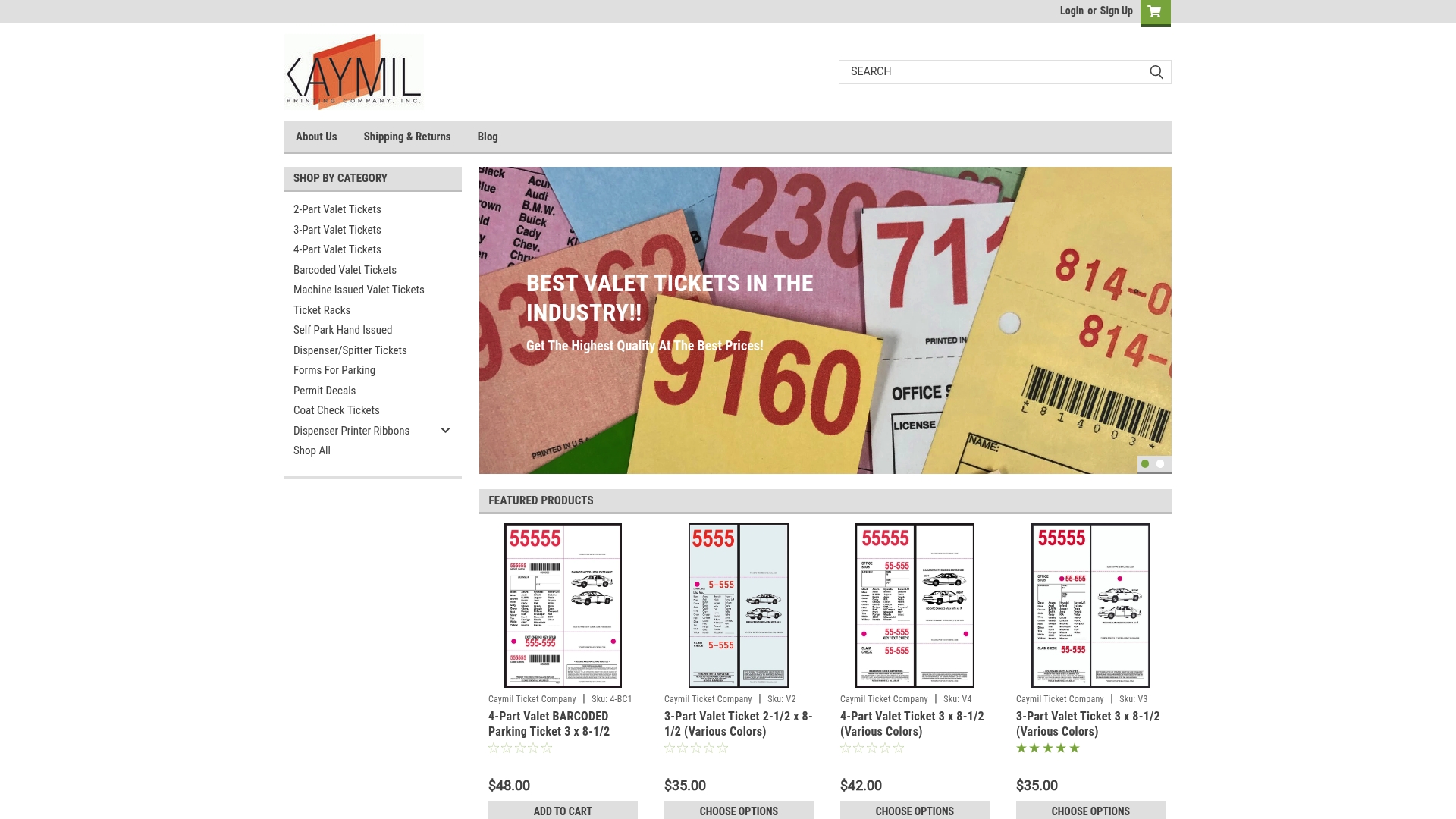
Caymil’s product line covers the full range of casino parking needs. Multi-part valet parking tickets in 2-part, 3-part, and 4-part formats give valet teams a clear paper trail for every vehicle. Barcode valet tickets integrate with SKIDATA, TIBA, Amano, and FLASH Parking systems for automated scanning. Dispenser spitter tickets are built for high-speed machine issuance in busy entry lanes. Custom logo printing, sequential numbering, and security features are available on all formats. Contact Caymil to match the right ticket format to your garage hardware and event volume.
FAQ
What is a casino high-volume parking ticket system?
A casino high-volume parking ticket system, formally called a PARCS installation, combines ticket dispensers, LPR cameras, pay stations, and validation interfaces to manage thousands of vehicles per day. It controls access, calculates time-based fees, and applies loyalty or hotel guest waivers automatically.
How does validation work at casino parking pay stations?
Validation applies a fee waiver or discount based on a guest’s hotel room key, players club card, minimum spend, or comp dollars. Guests present their credential at a pay station before exiting, and the system reduces or eliminates the parking fee based on their eligibility tier.
What causes long exit delays at casino parking garages?
Exit delays most often result from validation integration failures between the pay station and the property management system. These failures can hold guests at exit gates for 30–90 minutes during peak events if staff are not positioned to resolve them manually.
How do casinos handle rental car plates in LPR parking systems?
LPR systems struggle with rental car fleet plates because the plate in the system may not match the vehicle a guest is driving. Operators resolve this by requiring guests to register their plate at check-in or via a mobile app, and by maintaining secondary validation through room key or loyalty card scanning at the exit.
What parking ticket formats work best for casino valet operations?
Multi-part carbonless tickets in 3-part or 4-part formats work best for casino valet because each copy goes to a different party: the guest, the valet stand, and the vehicle record. Barcode-enabled formats add scanning speed for high-volume operations.