

Die Cut Hang Tags: Manufacturer Backed Specs for Parking Operators

Die cut hang tags are mirror-style parking permits used to authorize vehicles and simplify visual enforcement. Operators choose die cut, custom hang tags when they need durable, clearly displayed permits with options for sequential numbering and barcodes. Suppliers offer both stock and custom hang tags compatible with major parking systems, giving facility managers a straightforward path from design to distribution.
TL;DR:
- Custom die cut hang tags are best ordered with a specified size that remains visible and is compatible with vehicle mirror stems to prevent tearing or improper display.
- Lamination enhances durability for multi-season programs, but uncoated recycled materials may be suitable for short-term events to reduce environmental impact.
- Barcode quality depends on choosing a compatible symbology, maintaining a clear quiet zone, and verifying scanner functionality with printed proofs before full production.
- Standard hole size is about 5/16 inch and should be centered at least 3/8 inch from the top edge to fit most rearview mirror stems without tearing; testing samples is recommended.
- Ordering should include details such as sequential numbering or barcodes, specific shape, run size, and lead time, with a requirement for a physical proof and scanner test to avoid costly reprints.
Table of Contents
- Why die cut hang tags: operational benefits and common uses
- Design and technical specs to mandate: size, material, die-cut, hanger hole, and barcode rules
- Ordering and customization: what to specify to suppliers
- Implementation best practices: distribution, display, enforcement, and replacement
- Quick spec checklist and sample RFP-ready item
- Attachment methods and hardware options for hanging tags
- Environmental considerations and eco-friendly materials for hang tags
- Cost factors and pricing overview for die cut hang tags
- Manufacturer perspective: lessons from Caymil since 1937
- Get stock or custom hang tags built for your gates
- Sources
- FAQ
Why die cut hang tags: operational benefits and common uses
Hang tags earn their place in a parking operation wherever a permit needs to be seen at a glance and swapped out without hardware or adhesive. Valet companies use them for same-day vehicle authorization. Hotels and event venues issue them for guest and contractor access that expires after a stay or a shift. Universities and hospitals rely on them for seasonal parking, temporary employee access, and one-day visitor permits that departments hand out before arrival, a practice common enough that many medical center parking programs build it into their standard visitor workflow.
The appeal comes down to speed and cost. A patrol officer or valet attendant can confirm authorization from several feet away without approaching the vehicle, and a tag costs far less per unit than an electronic credential. Hang tags also survive multiple uses across a season, unlike single-use paper permits, and they pair cleanly with barcode scanning for facilities that want faster gate throughput.
Hang tags are not the right tool for every situation, though:
- Permanent resident or employee parking where plate-based enforcement is already in place often works better with a decal or a virtual permit tied to a license plate database.
- Facilities with high theft or resale risk for tags may prefer decals, since a hang tag can be lifted from one car and hung in another.
- Programs that already use license plate recognition cameras may find a hang tag redundant rather than additive.
Design and technical specs to mandate: size, material, die-cut, hanger hole, and barcode rules
Getting the specification right the first time avoids reprints and field complaints. Start with size. Most operators select a tag sized to stay visible without swinging into the driver’s line of sight or disappearing behind heavy window tint, generally choosing sizes common to hang tags. Larger vehicles and trucks with taller mirror stems sometimes call for a slightly bigger tag to stay legible from a distance.
Material choice determines how long the tag survives. A 14 to 18 point card stock holds up to daily handling, and a gloss or matte laminate adds tear resistance and protects printed numbers or barcodes from sun fading. Facilities running multi-season programs should specify lamination as standard rather than an upgrade.
The hanger hole matters more than most buyers expect. A hole that is too small binds on thicker mirror stems, and one positioned too close to the edge tears out within weeks. A hole sized and positioned to accommodate most rearview mirror stems without compromising the die cut edge is recommended, often around a quarter inch in diameter and slightly inset from the top edge.
Barcode tags need their own checklist:
- Choose a symbology your gate scanners already support rather than assuming compatibility.
- Leave a clear quiet zone, an unprinted margin around the barcode, since barcode quiet zone standards show that scanners fail to read codes crowded by nearby text or graphics.
- Request scanner testing on printed proofs, not just digital files, because lamination glare and ambient light change read rates at the gate.
Pro Tip: Ask your printer for a small batch of hanger-hole fit samples before committing to a full run so you can test them across your actual vehicle mix.
Ordering and customization: what to specify to suppliers
A clean order starts with a clean file. Give your printer bleed, a defined safe area, CMYK color builds, and artwork at full print resolution, then request a physical proof before the run goes to press rather than approving from a screen.
From there, four decisions shape the rest of the order:
- Variable data. Decide whether you need sequential numbering, barcodes, department codes, or a combination, and confirm the numbering range up front so ranges do not overlap across sites.
- Shape. Choose a stock die cut shape for faster turnaround or a custom die for a shape unique to your brand, keeping in mind that a custom die adds a one-time tooling step.
- Quantity and minimums. Ask about minimum order quantities and whether smaller test runs are available before you commit to a full season’s stock.
- Lead time and rush options. Confirm standard production time and ask what a rush option costs, since gate downtime from running out of tags is far more expensive than paying for faster shipping.
Keeping a buffer of extra stock on hand, beyond what a single event or season needs, avoids scrambling for a rush order when a program runs longer than expected or a batch gets damaged in transit.
Implementation best practices: distribution, display, enforcement, and replacement
How a hang tag gets issued and displayed matters as much as how it is printed. Issue tags to guests, contractors, and event attendees before arrival where possible, since handing someone a tag at the gate creates lines and confusion. For departments handling their own distribution, a simple log tying each numbered tag to a name or vehicle keeps accountability intact.
Display rules should be communicated, not assumed. Institutional guidance consistently directs drivers to hang the tag from the rearview mirror facing outward, with the dashboard, centered above the steering wheel, as the accepted fallback when a mirror is unavailable or the tag will not fit properly, a standard reflected in campus parking rules. Printed instructions on the tag itself, or in guest materials, cut down on improper display disputes before they start.
Enforcement runs smoother when staff know what counts as a violation. University parking policy pages are direct on this point: taping a tag to the glass, using magnets or string, or hiding a valid tag behind another one on the mirror are treated as improper display and can lead to a citation or a tow, according to Indiana University parking operations.
A hang tag hidden behind another permit on the same mirror is treated the same as no permit at all under most campus parking policies, which is why a one-tag-per-mirror rule is worth stating explicitly to guests and staff.
Replacement policy closes the loop:
- Set a flat replacement fee for lost tags to discourage casual reordering.
- For barcoded tags, deactivate the lost number in your system immediately rather than waiting for a report to be finalized.
- Some institutions waive the fee only with a police report on file for stolen tags, a documentation step worth adopting if theft is a recurring issue, as outlined in University of Michigan parking rules.
Quick spec checklist and sample RFP-ready item
A short, specific line item saves back-and-forth with vendors. At minimum, specify:
- Size: for example, 3.25 by 5.5 inches.
- Stock: 16 point card stock with gloss lamination.
- Hanger hole: 5/16 inch, centered 3/8 inch from the top edge.
- Identification: sequential numbering, a specific barcode symbology, or both.
- Finish: one-sided or two-sided print, standard colors or custom Pantone match.
- Quantity and lead time: run size plus standard versus rush turnaround.
A sample line might read: “3.25 by 5.5 inch die cut hang tag, 16pt stock, gloss lamination, 5/16 inch hanger hole, sequential numbers 00001 to 05000, Code 128 barcode with quiet zone, physical proof and gate scanner test required before production release.” Requiring a physical proof and a scanner test before the full run ships is the single line most likely to prevent a costly reprint.
Attachment methods and hardware options for hanging tags
Most die cut hang tags rely on a simple hole punched through the card stock, slipped directly over the mirror stem with no hardware needed. This remains the standard because it costs nothing extra, works across most mirror shapes, and lets a driver swap tags in seconds.

Some facilities add a reinforced or grommeted hole for tags expected to survive a full season of daily handling, since a plain punched hole in unlaminated stock can tear with repeated on-and-off use. A small metal or plastic grommet spreads the stress around the hole and extends the tag’s working life without changing the overall size or shape.
A few operators use an elastic loop or a plastic string ring instead of relying in the hole alone, particularly for tags issued to rental fleets or vehicles that see heavy turnover. These options add a small per-unit cost but reduce tearing on stems with unusual shapes, like the thick, molded stems found on some newer vehicle models.
For vehicles where a mirror tag genuinely will not sit right, a static cling or window cling permit designed for the windshield or a dashboard sleeve serves as a backup, though it changes the display method rather than the tag itself. Whichever attachment approach a facility chooses, consistency across a location matters more than the specific hardware: mixing hole sizes or attachment styles across a single lot makes visual enforcement slower, not faster.
Environmental considerations and eco-friendly materials for hang tags
Reusability is the biggest environmental advantage a hang tag already has over single-use paper permits. A laminated tag issued for a full semester or season replaces what would otherwise be dozens of one-day paper slips, cutting down on the volume of printed material a facility discards.
For operators who want to go further, uncoated or lightly coated card stocks made from recycled fiber are available as an alternative to standard laminated tags, though they trade some water resistance and tear strength for a lighter environmental footprint. This tradeoff makes more sense for short-term programs, like single-event permits, than for tags meant to survive months of daily use.
Lamination itself is a plastic film, so facilities weighing sustainability against durability sometimes split their order: laminated tags for long-term programs where reuse offsets the added material, and uncoated stock for short-run events where the tag has a shelf life of a day or a weekend. Either way, matching the material to how long the tag actually needs to last is the more meaningful environmental decision, more so than any single material claim printed on the tag itself.
Cost factors and pricing overview for die cut hang tags
Several variables drive the price of a hang tag order, and understanding them helps a buyer compare quotes on equal footing rather than by price alone. Stock die cut shapes cost less than a custom die, since a custom shape requires a one-time tooling charge before the first tag is even printed. Card stock weight and lamination add incremental cost per unit but extend how long each tag lasts, which often makes the heavier option cheaper per use over a full season.
Variable data adds cost in a different way. Sequential numbering is typically a small add-on, while barcoding with pre-production scanner testing adds a modest step to the process but prevents the far larger cost of a failed gate read during live operation. Run quantity affects unit price more than almost anything else: larger runs bring the per-tag cost down substantially, which is why buffer stock ordered alongside a main run is usually cheaper than a separate rush reorder later.
Rush turnaround carries its own premium, and it is often the most avoidable cost on the list. A facility that tracks its tag inventory and reorders before running low rarely needs to pay for expedited production. Caymil’s related permit decal and forms for parking product lines follow the same cost logic: material, customization, and run size drive the final number more than any single line item does on its own.

Manufacturer perspective: lessons from Caymil since 1937
The most common design mistake we see is a hole punched without accounting for the range of mirror stems a fleet actually has. A hole sized for a compact sedan often binds on a truck or an SUV stem, and the fix is cheap: test on a small sample run before committing to full production. We also see barcode tags rejected at the gate because the printed proof was never scanner-tested under the facility’s own lighting.
Our recommendation for multi-site operators is to standardize on one hang tag SKU across locations. It simplifies enforcement training, reduces reorder errors, and keeps a rotating stock buffer manageable instead of juggling several near-identical designs.
— Richard
Get stock or custom hang tags built for your gates
Stock and fully custom die cut hang tags are available with sequential numbering, barcoding, and finish options built to work with major parking systems, supported by nationwide shipping from ready inventory.
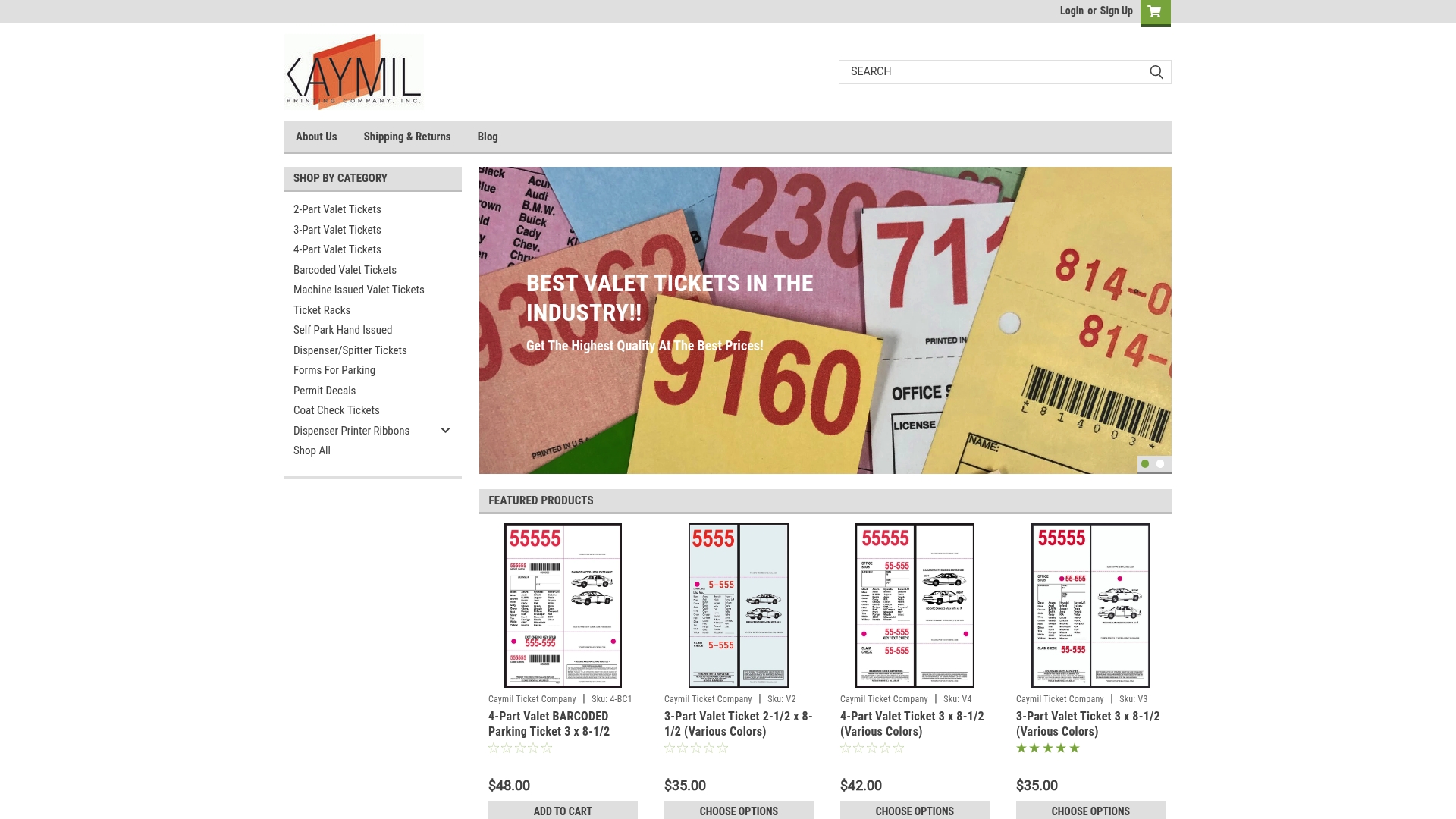
If your program needs barcode-ready ticketing to pair with hang tags at the gate, our barcoded valet tickets and 4-part valet tickets cover multi-copy and scanner-ready formats. Request a proof or a quote through our 2-part valet tickets page to get exact pricing for your run size and specs.
Sources
For display policy, see Indiana University’s permit guidance and OU Health Sciences Center’s parking rules. For barcode design, see the quiet zone reference. For sizing help, read Caymil’s guide to mirror hang tag sizes and launching a permit program.
- Displaying your permit — Indiana University parking operations
- Rules & Regs — OU Health Sciences Center parking operations
- U-M parking rules and regulations (excerpt) — University of Michigan
- Quiet zone in barcodes — Weber Marking Systems
- Single Day Hangtags — VUMC Parking and Transportation Services
FAQ
What size should a die cut hang tag be?
Most parking programs use a tag sized to stay visible without swinging into the driver’s line of sight or disappearing behind heavy window tint, generally choosing sizes common to hang tags. Larger vehicles with taller mirror stems sometimes need a slightly bigger tag for legibility.
Where should a hang tag be displayed in a vehicle?
The standard is hanging it from the rearview mirror facing outward, with the dashboard centered above the steering wheel as the accepted alternative when a mirror placement is not possible, as described in campus parking rules. Taping, using magnets, or hiding the tag behind another permit is treated as improper display under most institutional policies.
How big should the hanger hole be on a hang tag?
A 5/16 inch hole centered at least 3/8 inch from the top edge fits most rearview mirror stems without tearing the die cut edge. Requesting a small batch of fit samples before a full production run helps confirm the sizing works across your actual vehicle mix.
What should I check before ordering barcoded hang tags?
Confirm your gate scanners support the barcode symbology you choose, and leave a clear quiet zone around the code, since crowded designs cause read failures according to barcode quiet zone guidance. Always request scanner testing on the physical printed proof, not just the digital file, before production begins.
What happens if a hang tag is lost or stolen?
Most institutions charge a replacement fee for a lost tag and may waive it only with a police report on file for a stolen one, based on University of Michigan’s parking policy. For barcoded tags, deactivating the lost number in your system right away prevents unauthorized use before a replacement is issued.