Avoid Moiré: 6 Step Guilloche Security Printing for Designers

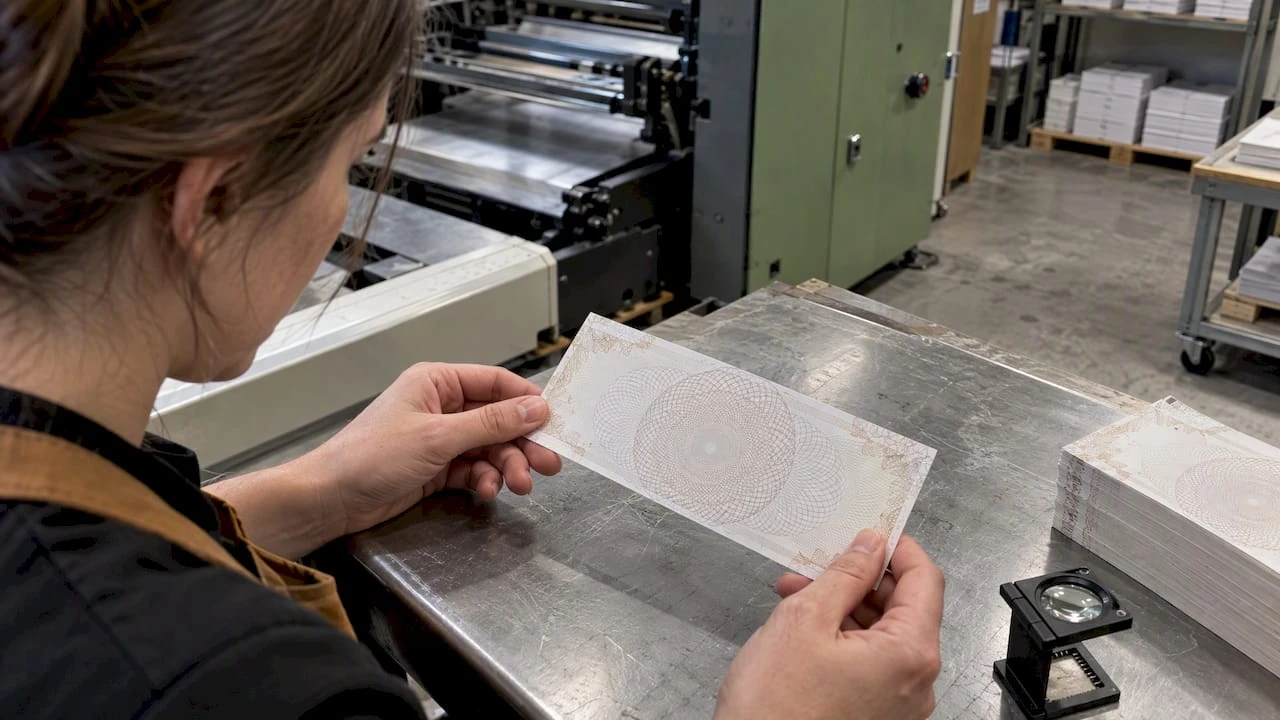
Guilloche security printing uses intricate, mathematically generated line patterns as a visible deterrent against counterfeiting. The core advantage lies in geometric complexity: when someone tries to scan, photocopy, or digitally reproduce a guilloche pattern, the fine interlaced curves break down into visible artifacts like moiré and blur, immediately flagging the copy as fraudulent. Designers apply these patterns to banknotes, certificates, valet tickets, and other documents that need overt, hard-to-fake visual authentication.
TL;DR:
- Guilloche patterns depend on high-resolution line density and color crossings to reveal mismatches or artifacts during copying attempts.
- Use dedicated guilloche software or vector design tools to create precise, scalable patterns that can be tested through proofing before production.
- Combining guilloche with microtext, fluorescent inks, or barcodes enhances layered security and complicates tampering or counterfeiting.
- Variable data guilloche assigns unique pattern parameters based on document-specific information, allowing digital verification of authenticity.
- Always perform small-scale physical proofs under magnification and UV light to detect weaknesses before full-scale printing runs.
Table of Contents
- How Guilloche Patterns Work: Math, Line Families, and Visual Effects
- Printing Methods and Limitations: Offset, Intaglio, and Digital Reproduction
- Step-by-Step Workflow for Generating Guilloche Patterns
- Best Practices for Layering Guilloche With Other Security Features
- Advanced Guilloche: Variable Data and Steganographic Approaches
- Visual Resources, Vectors, and Supplier Catalogs for Designers
- Our Experience Producing Security-Printed Tickets
- A Practical Recommendation for Security-Conscious Designers
- Ordering Guilloche-Equipped Tickets and Secure Printed Items
- FAQ
- Sources
How Guilloche Patterns Work: Math, Line Families, and Visual Effects
Guilloche patterns come from parametric curve families, most commonly spirograph-like hypotrochoids built from nested sinusoid additions. A designer frames a curve within inner and outer envelopes and controls its shape through a function expressed roughly as y = f(x, a, b), where the variables govern amplitude, frequency, and offset. Small changes to those variables produce entirely different visual results from the same underlying formula, which is part of what makes the patterns so hard to replicate by eye or by scanner.
Line density, stroke thickness, and the spacing between overlapping curves determine how the pattern behaves under reproduction. Guilloche patterns frame a curve within inner and outer envelopes and form through nested sinusoid additions, making accurate reproduction difficult. Tighter line spacing increases resolution demands on any copying device, and when a scanner or photocopier can’t match that resolution, the result is visible moiré interference or blurred, muddy lines where crisp curves should be.
Multi-color crossings add a second layer of difficulty. When two or more guilloche line families overlap in different inks, the crossing points must align precisely, and any shift in registration during an unauthorized reproduction attempt shows up as color fringing or misalignment. That combination of fine geometry and color interaction gives a trained eye, and increasingly a machine reader, two independent signals to check rather than one.

Printing Methods and Limitations: Offset, Intaglio, and Digital Reproduction
The printing method we choose for a guilloche design determines both its visual effect and its resistance to copying; for a comprehensive overview of security printing techniques, see What Is Security Printing? Techniques and Benefits - Print Cafe USA. Offset printing with rainbow color blending produces smooth, continuous color transitions across the pattern, and intaglio printing provides raised-ink tactile verification for high-security documents while offset with rainbow blends resists digital reproduction. Rainbow printing in particular works well against copiers, since continuous color shifts are difficult for standard reproduction equipment to match without visible banding.
Intaglio adds a tactile dimension, pressing ink into the substrate so the pattern can be felt as well as seen, but the engraving plates and specialized presses involved raise production costs and lead times compared to offset work.
Digital reproduction is where guilloche earns its keep as a security feature. Standard scanners and photocopiers introduce moiré patterns, line dropout, or soft blur when they attempt to capture fine interlaced curves, and those artifacts are often visible without magnification.

Step-by-Step Workflow for Generating Guilloche Patterns
Designers building a guilloche pattern from scratch benefit from a consistent workflow that moves from parameter selection to print-ready output.
- Choose a generation method. Dedicated guilloche generator software gives the most control, though Adobe Illustrator can produce usable patterns through blend tools, spiral distortions, and repeated transform effects.
- Select curve parameters. Set frequency, radius, and amplitude values for your chosen curve family, then preview how the lines nest within your target shape or border.
- Set stroke width and color layering. Keep strokes within printable-safe ranges for your chosen method, and plan color crossings where you want the extra verification layer.
- Convert strokes to outlines. This avoids rendering inconsistencies across different output devices and RIP software.
- Export in PDF/X format. Confirm registration marks, color separations, and bleed settings before sending files to print.
- Request a proof. Review the proof under magnification and in different lighting to check for unintended moiré or weak line reproduction.
Before sending files to a printer, confirm trapping settings, overprint behavior on color crossings, and that no stroke falls below the minimum width your press can hold reliably.
Pro Tip: Always test a small physical proof run before full production. A pattern that looks flawless on screen can blur or break apart on certain substrates or presses.
Best Practices for Layering Guilloche With Other Security Features
Guilloche works best as one layer in a broader security strategy rather than a standalone feature. Placement matters: borders, rosette seals, and areas that overlap key variable fields like ticket numbers or dates give the pattern maximum visibility while making tampering harder to disguise.
Combining guilloche with microtext and covert inks provides layered defenses, since microtext breaks or blurs under copying while covert inks remain machine-detectable under UV. Several pairings work consistently well in practice:
- Guilloche plus microtext along a border, since microtext degrades visibly under photocopying, reinforcing what the guilloche pattern already signals.
- Guilloche plus fluorescent ink, giving an invisible verification layer that surfaces only under UV light.
- Guilloche plus barcoding, pairing overt pattern security with machine-readable variable data for operational tracking.
Maintain a minimum printable stroke width appropriate to your substrate and press, and keep an eye on scale: a pattern that reads cleanly at full size can collapse into noise when reduced for a small ticket stub.
Advanced Guilloche: Variable Data and Steganographic Approaches
Variable guilloche takes the technique a step further by deriving pattern parameters directly from document-specific data, producing a unique visual fingerprint for every ticket or certificate printed. Modern digital variable guilloche systems use parameter-driven math to encode variable data into the pattern, enabling document-unique signatures, with some implementations providing 64 bits or more of variability. That variability comes from controlling spacing, line thickness, curve family, color, angle, and offset in combination rather than individually.
Parameterized generation allows deterministic verification when the same algorithm and key are available to both the issuer and the checker.
Implementing variable guilloche responsibly means treating the generation key with the same care as any cryptographic secret, since a leaked key undermines the entire batch of documents tied to it. Print drift is another practical concern: designers need to quantize parameter ranges to printable-safe intervals and account for registration variance on press, or verification thresholds become unreliable in the field.
Visual Resources, Vectors, and Supplier Catalogs for Designers
Stock guilloche vectors can save design time, but not every file is print-ready. Before using one on a secure document, check for:
- Editable stroke paths rather than flattened raster art, so you can adjust weight and color crossings.
- Clear layer separation, letting you isolate individual curve families for proofing.
- Stroke weights above your press’s minimum threshold, confirmed before final export.
Supplier design catalogs document parameter best practices for alignment, density, thickness, and microtext integration, giving designers a vetted starting point rather than building every pattern from zero.
Our Experience Producing Security-Printed Tickets
Our ticketing products have included security features like sequential numbering, barcoding, and custom color work across many printed tickets. Our products are designed to meet security and machine-readable requirements common in parking systems. Our production experience with high-quality ticket manufacturing covers proofing support, custom branding, and durable multi-part carbonless formats suited to high-volume operational use.
A Practical Recommendation for Security-Conscious Designers
Layered security beats any single feature working alone, and guilloche earns its place as the overt anchor that other elements, like microtext and fluorescent ink, reinforce rather than replace. Before committing to full production, prototype a guilloche rosette paired with microtext and a fluorescent ink pass in a short proof run, then inspect it under magnification and UV light. That proofing discipline catches weaknesses no amount of screen-based design review will reveal.
— Richard
Ordering Guilloche-Equipped Tickets and Secure Printed Items
We produce valet, parking, and event tickets with security features built in, and our design team can apply guilloche patterns, microtext, and fluorescent inks to the formats operators already trust. A typical order starts with a design consultation, moves to a digital proof, then a short sample run before full production, so every security feature gets tested before it ships at volume.
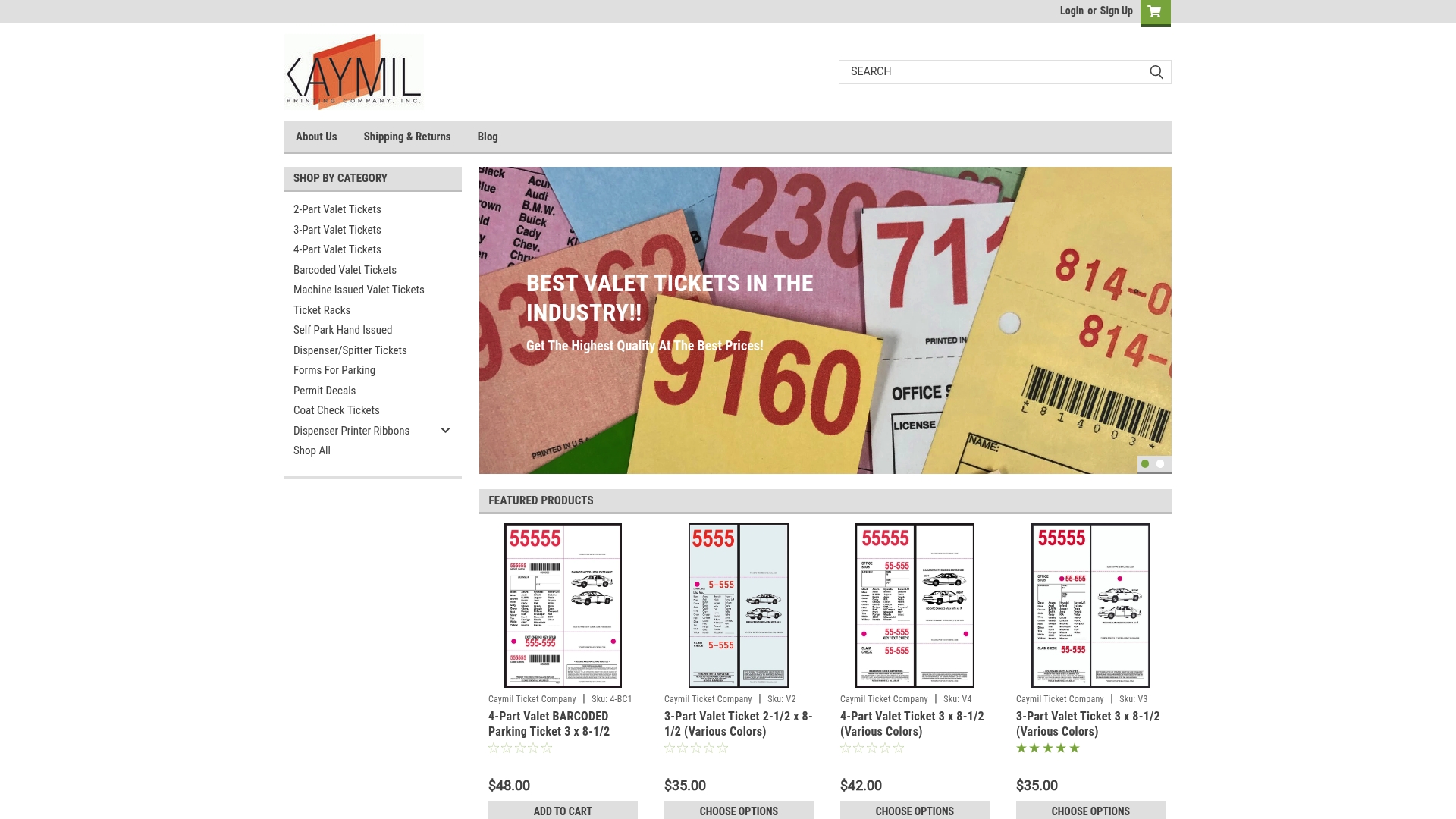
Several product lines are ready for custom security treatments:
- 2-Part Valet Tickets for straightforward valet operations.
- 3-Part Valet Tickets and 4-Part Valet Tickets for multi-copy tracking needs.
- Barcoded Valet Tickets for operations pairing overt and machine-readable security.
- Permit Decals for municipal and campus parking programs needing tamper resistance.
Reach out through our site to start a design consultation or request a proof for your next secure ticketing run.
FAQ
What is guilloché printing?
Guilloché printing is a security printing technique using intricate, interlaced geometric line patterns, typically generated from mathematical curve families, as a visible anti-counterfeiting feature. These patterns frame curves within inner and outer envelopes, making accurate reproduction difficult and causing visible artifacts when someone attempts to copy them.
What does “guilloché” mean in French?
“Guilloché” is a French past participle describing a decorative engraving technique that produces fine, repetitive geometric patterns, historically applied with mechanical lathes before becoming a digital design method. The term now refers broadly to the ornamental line art used across security documents and decorative engraving alike.
How does a guilloche pattern resist counterfeiting?
Guilloche patterns rely on geometric complexity and high-resolution requirements, so scanning or photocopying introduces moiré interference, blur, or other visible artifacts that reveal an unauthorized copy. Layering guilloche with microtext or fluorescent ink strengthens that defense further.
Can guilloche patterns encode variable data for each document?
Yes, variable guilloche systems derive pattern parameters from document-specific data, producing a unique fingerprint for each printed item. Some implementations achieve 64 bits or more of variability by controlling spacing, thickness, curve family, color, angle, and offset, enabling deterministic verification when the generation algorithm and key are known.
What software do designers use to create guilloche patterns?
Designers use dedicated guilloche generator applications for precise parametric control, or build patterns in Adobe Illustrator using blend tools and repeated geometric transforms. Supplier design catalogs also offer vetted parameter sets that shorten the design cycle while maintaining print reliability.
Sources
- Guilloche Pattern Generation for Digital Document Security
- US8289579B2 - Variable guilloche and method
- What is a guilloche pattern? — Microblink glossary
- Guilloches 2.0: Security Meets Design Diversity — Schreiner Group Forum