

How Bulk Parking Ticket Orders Work: A Pro Guide

Bulk parking ticket ordering is defined as the process of procuring large volumes of parking tickets through a formal supplier account, with customization options matched to your existing hardware. Parking management professionals and event organizers rely on this process to maintain inventory stability, reduce per-unit costs, and manage distribution through centralized digital portals. Understanding how bulk parking ticket orders work gives operations teams a clear path from initial account setup to final ticket distribution, without the delays and errors that come from ad hoc purchasing. Caymil has supported this process for parking garages, municipalities, hotels, and event venues across the United States since 1937.
How bulk parking ticket orders work: the full process
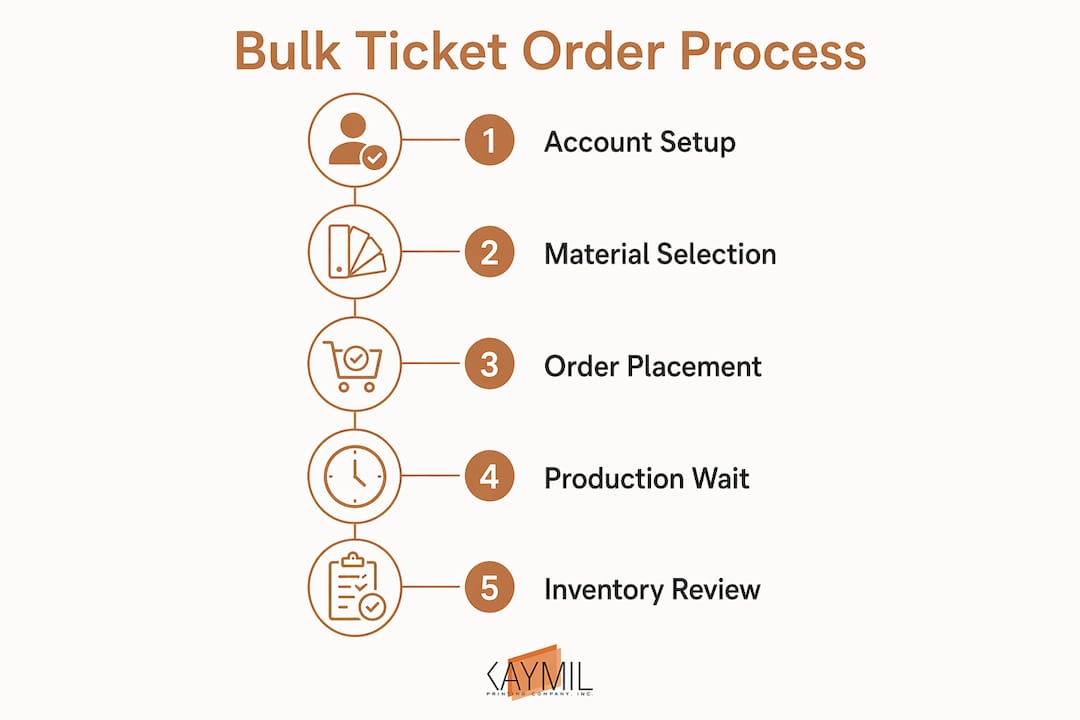
Bulk parking ticket ordering follows a defined sequence. Operators must establish a formal account such as a departmental account or group admin portal before placing any initial order. This account becomes the central hub for all procurement, invoice review, and distribution management going forward.
Once the account is active, the ordering process moves through five core stages.
-
Account setup and access. Create a group or departmental account with your supplier. Assign an account administrator who controls credentials, approves orders, and manages invoices. This single point of control prevents duplicate orders and billing errors.
-
Order placement and customization. Select your ticket type, whether thermal rolls, barcode tickets, multi-part carbonless valet tickets, or machine-issued spitter tickets. Specify sequential numbering, logo placement, custom colors, and any security features required. Caymil offers fully customized printing with options for barcoding, magnetic stripes, and multi-part carbonless formats to match specific operational needs.
-
Hardware compatibility verification. Before finalizing the order, confirm that your chosen ticket stock is compatible with your dispensers and printers. Systems from Amano, TIBA, SKIDATA, FLASH Parking, Scheidt & Bachmann, and Flowbird each have specific paper weight and thermal sensitivity requirements. Skipping this step is the most common cause of costly production errors.
-
Production and delivery. Standard lead times run 5–7 working days from order placement to delivery. Plan your reorder point to account for this window, especially ahead of peak seasons or large events.
-
Digital management and invoicing. A Group Admin Portal allows account managers to assign credentials to individual users, review invoices, process payments, and track distribution. This digital workflow replaces paper-based purchasing and reduces administrative errors across departments.
Pro Tip: Set a reorder alert at 20% of your standard inventory level. This gives you a full buffer before the 5–7 day production window closes in on your stock.
Why ticket material and hardware compatibility matter
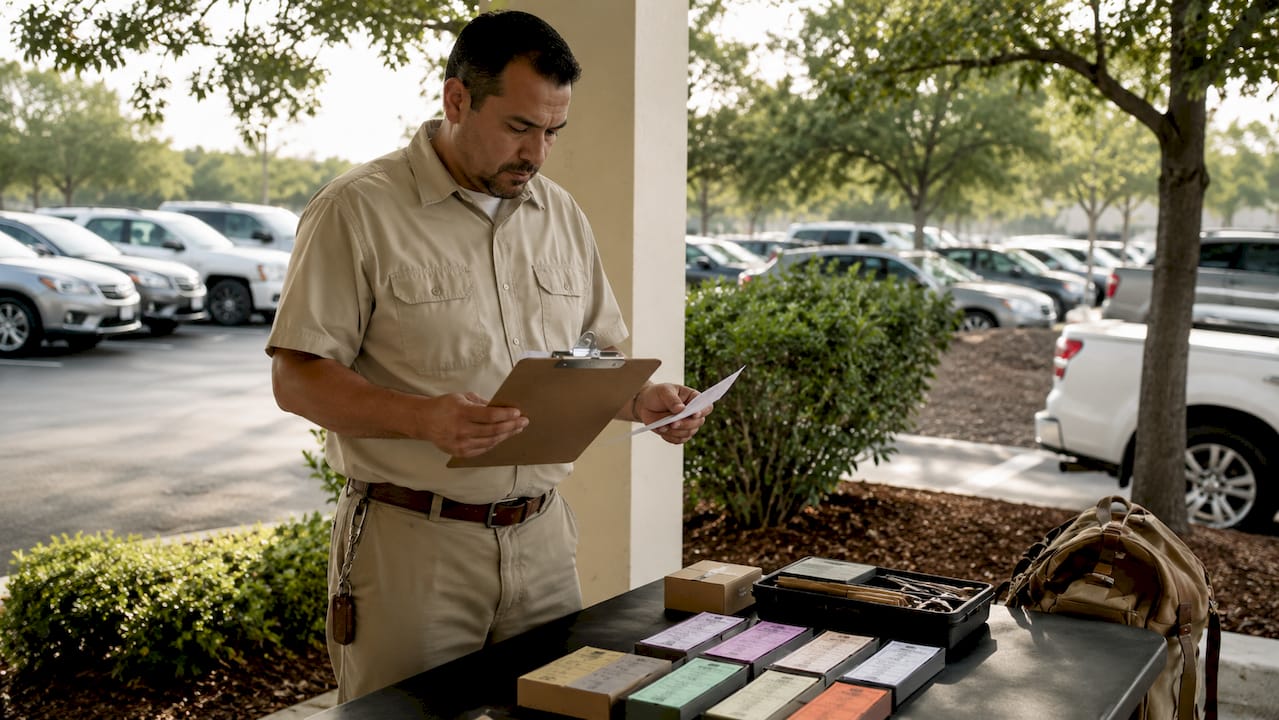
Selecting the wrong ticket stock is the fastest way to create operational downtime. Incorrect thermal sensitivity or paper weight causes frequent machine jams and drives up maintenance costs. A single jam during a peak event can back up an entire parking lane and generate real revenue loss.
The core compatibility factors to verify before placing any bulk order include:
- Thermal sensitivity: Thermal printers require a specific coating activation temperature. Stock that is too sensitive or not sensitive enough produces faded or blank tickets.
- Paper weight: Dispensers and spitter machines are calibrated for a defined paper weight range. Stock outside that range causes feed failures.
- Ticket dimensions: Width and length must match the dispenser’s feed mechanism exactly. Even a 1mm variance can cause repeated jams.
- Barcode type and placement: Barcode readers in automated systems require precise placement and print density. Confirm specifications with your hardware documentation before ordering.
- Magnetic stripe encoding: If your system uses magnetic stripe tickets, the stripe position and encoding standard must match your reader hardware.
Outdated or incompatible consumables cause machine jams, lost tickets, and revenue issues in parking lots and garages. The financial impact goes beyond repair costs. Lost tickets mean lost revenue records, which creates disputes and audit gaps.
Pro Tip: Keep a copy of your hardware’s technical specification sheet on file before every bulk order. Cross-reference paper weight, thermal sensitivity, and ticket dimensions against the supplier’s product specs. Caymil’s team can match stock to your system by model number.
Caymil manufactures tickets compatible with Amano, TIBA, SKIDATA, FLASH Parking, Scheidt & Bachmann, and Flowbird systems. Reviewing parking system ticket compatibility before ordering eliminates the guesswork and protects your equipment.
What are the real operational benefits of buying parking tickets in bulk?
Bulk purchasing delivers measurable advantages beyond a lower unit price. The primary advantage of bulk ordering is price reduction combined with operational stability through consistent inventory and centralized invoice management. That combination directly reduces the administrative burden on parking operations teams.
The core benefits break down as follows:
- Lower per-unit cost. Larger order quantities reduce the cost per ticket. For high-volume facilities processing thousands of vehicles per week, this difference adds up significantly over a fiscal year.
- Inventory stability. Maintaining a buffer stock prevents the scenario where a facility runs out of tickets mid-shift or mid-event. Running out of tickets during a sold-out concert or a hospital peak period creates immediate operational failure.
- Centralized invoice management. A single account portal consolidates all purchase records. This prevents duplicate billing and gives finance teams a clean audit trail.
- Reduced reorder frequency. Fewer individual orders mean less administrative time spent on procurement. Staff can focus on operations rather than purchasing logistics.
- Consistent ticket quality. Ordering from a single trusted supplier in bulk guarantees uniform print quality, dimensions, and material across every ticket in circulation.
Bulk ordering strengthens operational control and reduces administrative errors, improving overall parking management efficiency. For event organizers managing multiple venues or dates, this control is the difference between a smooth operation and a chaotic one.
Reviewing your ticket paper options before committing to a bulk order helps confirm that the material you select will hold up through the full duration of your event or operating season.
Best practices for managing bulk parking tickets and violations
Receiving a large shipment of tickets is only the first step. Effective management requires internal processes that keep distribution organized and violations handled efficiently.
-
Use batch naming conventions. Practitioners recommend batch naming using a format such as event date plus ticket type, for example “2026-07-04-VIP-Valet.” This makes it easy to trace any ticket back to its batch, identify distribution gaps, and reconcile inventory at the end of an event.
-
Assign proxy users for distribution. Large operations benefit from assigning proxy users within the account portal. Each proxy manages a specific zone, shift, or department. This prevents one administrator from becoming a bottleneck and keeps distribution records clean.
-
Integrate violation tracking with your operations. For fleets and commercial operators, parking violations are a real cost center. New York City’s Stipulated Fine Program offers commercial fleets weekly violation reports, consolidated monthly billing, and reduced fixed fine rates in exchange for waiving the right to contest individual tickets. This model shows how centralized violation management reduces both cost and administrative overhead.
-
Conduct regular inventory audits. Count physical stock against your digital records at least once per month. Discrepancies between issued tickets and inventory records signal either a distribution error or a loss that needs investigation.
-
Archive batch records after each event or period. Store batch records, invoices, and distribution logs in your account portal for a minimum of one fiscal year. This supports audits, budget planning, and reorder forecasting.
Effective bulk ticket management requires strict internal processes including batch labeling, proxy management, and software integration to maintain clarity and avoid operational chaos. Facilities that skip these steps often discover inventory discrepancies only after a problem has already affected operations.
Key Takeaways
A successful bulk parking ticket order depends on formal account setup, hardware-matched materials, and disciplined internal tracking from the moment tickets arrive.
| Point | Details |
|---|---|
| Set up a formal account first | Establish a group or departmental account before placing any bulk order to centralize invoicing and distribution. |
| Verify hardware compatibility | Match ticket stock type, thermal sensitivity, and dimensions to your dispensers before finalizing the order. |
| Plan for 5–7 day lead times | Order well ahead of peak events or seasons to avoid running out of stock during high-demand periods. |
| Use batch naming and proxy users | Assign batch labels and proxy managers to keep distribution organized and traceable across shifts or venues. |
| Centralize invoice and violation records | Use your account portal to consolidate all purchase and violation records for clean auditing and cost control. |
What I’ve learned after years of watching bulk orders go wrong
The biggest mistake I see parking operations teams make is treating a bulk ticket order like a commodity purchase. They focus entirely on price per unit and ignore the two factors that actually determine whether the order succeeds: hardware compatibility and internal tracking discipline.
I’ve watched facilities order tens of thousands of tickets, only to discover on delivery day that the thermal sensitivity was wrong for their dispensers. The tickets were technically correct on paper. The dimensions matched. But the coating was calibrated for a different printer model, and the result was a full shift of jammed machines and hand-written receipts. That error cost more in labor and lost revenue than any bulk discount could recover.
The second failure point is distribution. Facilities that assign one person to manage all ticket distribution across multiple zones or shifts create a single point of failure. When that person is unavailable, the system stops. Proxy user assignments and batch naming conventions are not bureaucratic overhead. They are the operational infrastructure that keeps a high-volume facility running when things get busy.
My honest recommendation: before you place any bulk order, spend 30 minutes with your hardware documentation and your account administrator. Confirm the specs, assign the roles, and set your reorder alert. The process itself is straightforward. The discipline around it is what separates facilities that run smoothly from those that scramble.
— Richard
Caymil’s bulk parking ticket solutions for professionals
Parking management professionals and event organizers who need reliable, hardware-matched tickets at volume have a direct resource in Caymil.
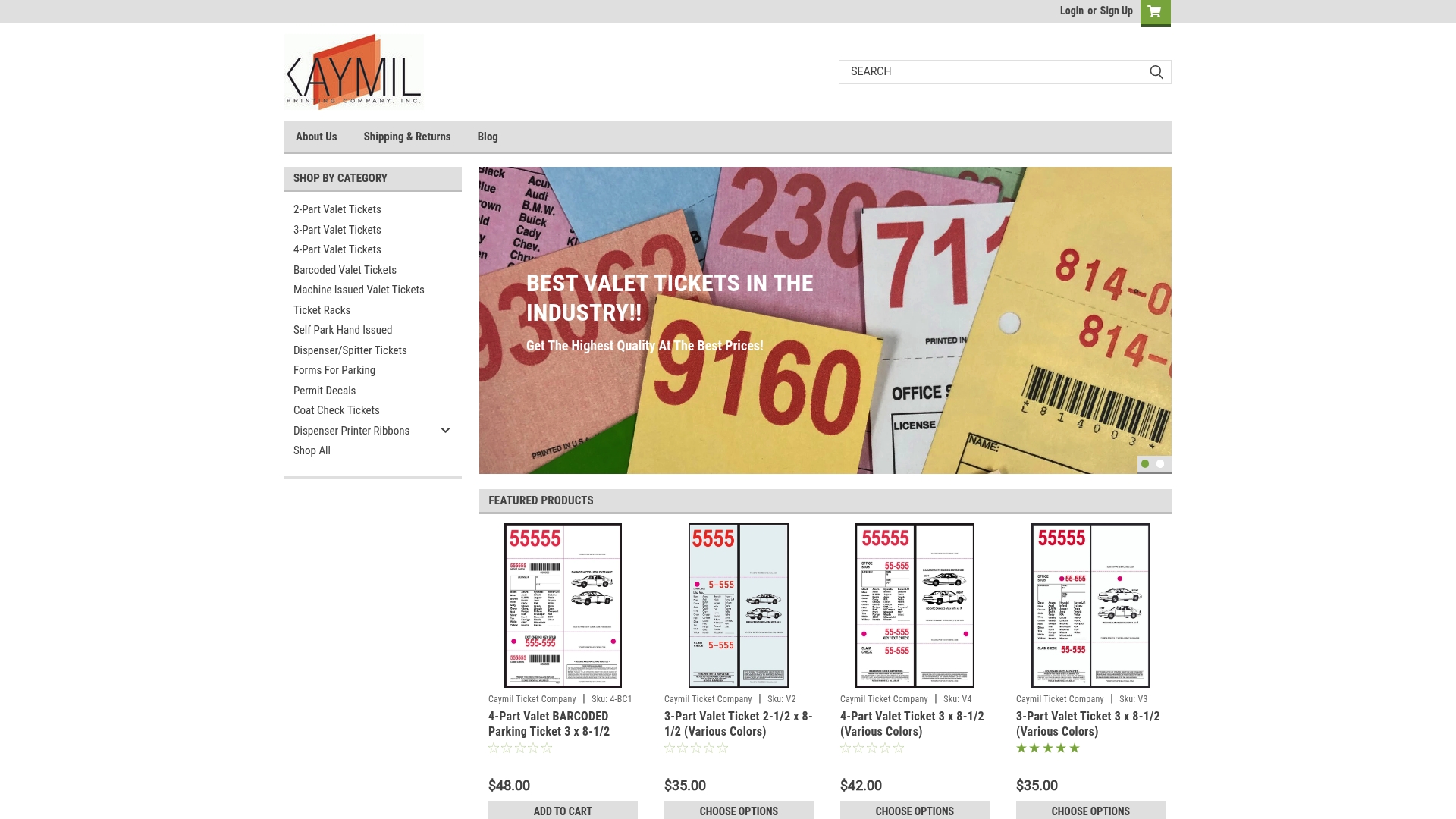
Caymil has manufactured custom parking tickets since 1937, with stock and fully customized options covering thermal rolls, barcode tickets, machine-issued valet tickets, dispenser spitter tickets, and multi-part carbonless formats. Every product is available with sequential numbering, custom logos, security features, and compatibility verification for major parking systems. Caymil ships nationwide with millions of tickets in stock, so lead times stay predictable even for large orders. For a full overview of available formats and bulk order options, visit Caymil’s parking forms and ticket catalog.
FAQ
How does the bulk parking ticket ordering process start?
The process starts by establishing a formal group or departmental account with your supplier. That account becomes the hub for placing orders, managing invoices, and tracking distribution.
What is the typical lead time for bulk parking ticket orders?
Production and delivery typically takes 5–7 working days after order placement. Plan reorders before your stock drops below a 20% buffer to avoid running out.
Why does ticket material compatibility matter for bulk orders?
Incorrect thermal sensitivity or paper weight causes machine jams, lost tickets, and higher maintenance costs. Always verify stock specifications against your hardware documentation before ordering.
What are the main benefits of buying parking tickets in bulk?
Bulk orders reduce per-unit cost, stabilize inventory, and centralize invoice management. These three factors together reduce administrative errors and protect operations during peak demand.
How should facilities track and manage bulk ticket distribution internally?
Batch naming conventions and proxy user assignments are the two most effective internal controls. They keep distribution traceable and prevent one administrator from becoming a bottleneck across multiple zones or shifts.
Recommended
- What Is a Stock Parking Ticket? A Clear Guide - Caymil Printing Co., Inc.
- Sequential Numbering Parking Tickets: A Practical Guide - Caymil Printing Co., Inc.
- Printed Parking Tickets: A Practical Guide for Operators - Caymil Printing Co., Inc.
- What Is a Flat-Rate Parking Ticket? A Clear Guide - Caymil Printing Co., Inc.