

What Is a Flat-Rate Parking Ticket? A Clear Guide

A flat-rate parking ticket is a fixed monetary charge for either a parking service or a parking violation, unlike hourly rates or escalating fines that grow with time. The term covers two distinct situations: a set fee you pay to park in a lot or garage for a defined period, and a stipulated fine you pay to resolve a parking violation without contesting it. Drivers, travelers, and event planners who understand this dual meaning avoid costly surprises. Caymil, a parking ticket manufacturer with roots going back to 1937, works with operators across both contexts daily.
What is a flat-rate parking ticket and how does it work?
A flat-rate parking ticket operates as a fixed charge tied to either access or enforcement. The fee does not change based on how many minutes you use. That simplicity is the core appeal.
Flat-rate service fees
A flat-rate service fee gives you parking access for a set duration at a fixed price. Auraria Campus in Denver, for example, charges consistent daily flat fees for its parking zones, with a $30 flat rate for night and weekend parking for non-registered vehicles. That structure removes the guesswork drivers face with metered or hourly lots.
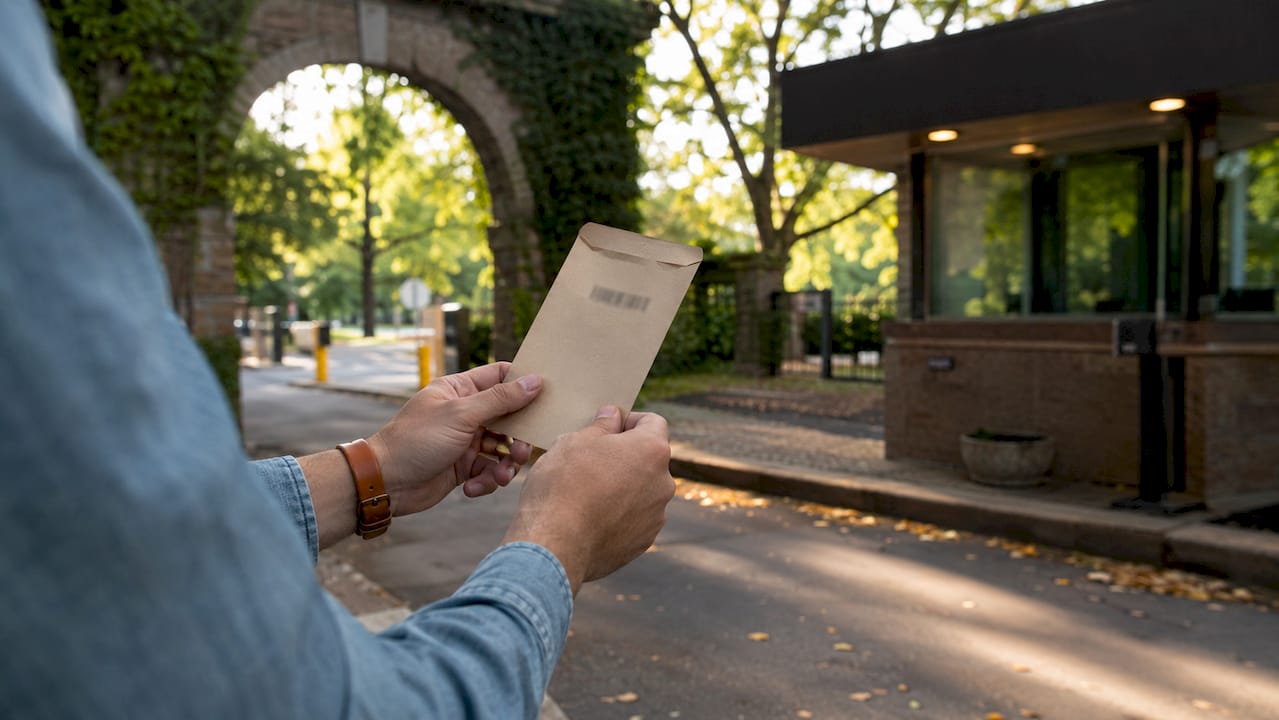
Vienna’s municipal parking system takes a similar approach. The City of Vienna allows drivers to pay parking fees upfront for short-term zones as a flat-rate payment, though compliance with parking discs and maximum duration rules still applies. A flat fee does not suspend the rules. It only simplifies the payment.
Flat-rate fines and stipulated programs
A flat-rate fine is a reduced, fixed penalty a driver or fleet operator pays to settle a parking violation quickly. New York City’s Stipulated Fine Program is the clearest American example. Under that program, commercial fleet operators pay reduced fines for common violations by waiving their right to contest the ticket. Double parking drops from $115 to $65. Street cleaning violations drop from $65 to $40, provided payment arrives within 45 days.
Tiered flat-rate fine systems add urgency to the equation. Dewan Bandaraya Kuala Lumpur uses a tiered penalty structure that increases from RM10 to RM50 based on how long payment is delayed past 30 days. The fine doubles or triples to push drivers toward prompt settlement. That model is a behavioral economic tool, not a permanent low-cost option.
Key conditions that govern flat-rate fines:
- Payment deadline: The reduced rate applies only within a defined window, often 30–45 days.
- Contest waiver: Accepting a stipulated fine means giving up the right to dispute the ticket.
- Violation type: Not all violations qualify. Programs typically cover common offenses like double parking or street cleaning.
- Fleet eligibility: Many stipulated fine programs target commercial fleets, not individual drivers.
Pro Tip: Set a calendar reminder the day you receive a parking fine. Missing the flat-rate payment window can double or triple your total cost.
How does flat-rate parking compare to hourly and variable-rate models?
Flat-rate pricing and variable-rate pricing serve different goals. Understanding the difference helps drivers and event planners choose the right lot and budget accurately.
| Feature | Flat-rate parking | Hourly/variable-rate parking |
|---|---|---|
| Fee predictability | Fixed, known at entry | Varies with time parked |
| Customer experience | Simple, no meter anxiety | Requires time tracking |
| Enforcement ease | Straightforward, one price | Requires time-stamped validation |
| Revenue stability | Predictable for operators | Fluctuates with demand |
| Best use case | Events, daily max caps | Short errands, metered zones |
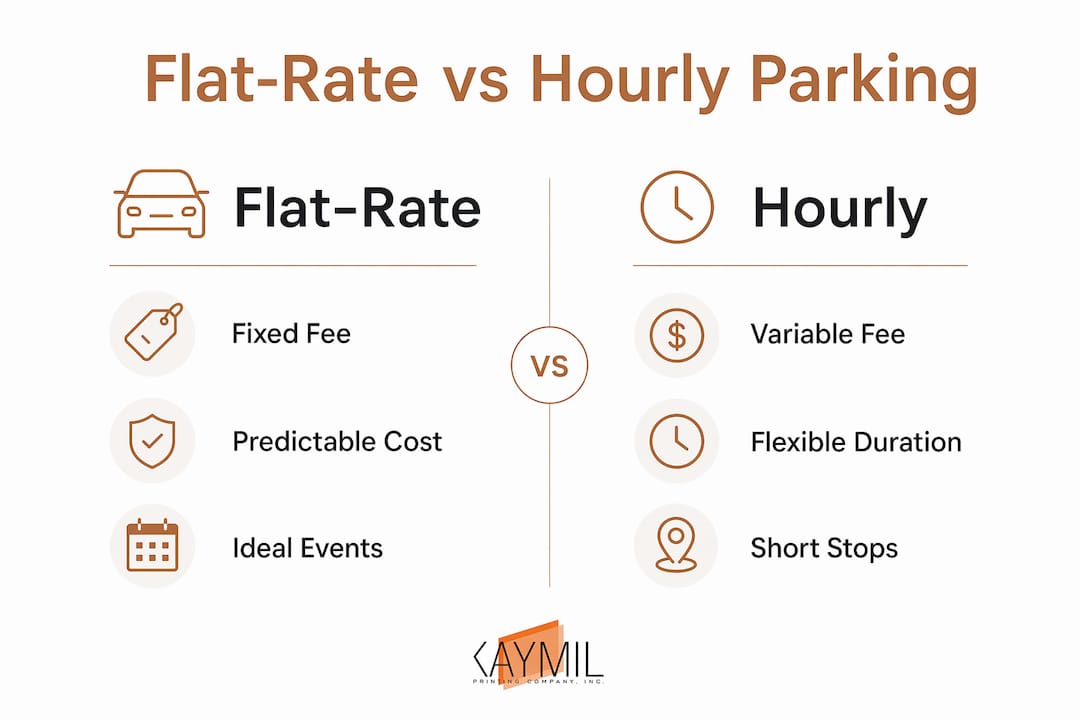
Flat-rate pricing removes hourly rate anxiety for drivers, which is why parking managers favor it during high-demand events and special-access periods. A driver attending a concert does not want to calculate whether they parked for two hours and fifteen minutes. A flat event rate solves that problem entirely.
Variable-rate parking works better for short, unpredictable stops. A 15-minute errand does not benefit from a flat daily fee. The mismatch costs the driver money. Knowing which model applies to your situation is the first step toward accurate budgeting.
One critical misconception deserves attention. Many drivers assume a “flat-rate fine” means a permanently low cost. That is wrong. Standard parking fines often escalate with late payments, and the flat rate is a limited-time early payment discount. Miss the deadline and the flat-rate benefit disappears entirely.
Pro Tip: When parking at an event venue, ask the attendant whether the flat rate covers the full event duration or caps at a specific hour. Some lots charge a second flat fee after midnight.
Practical implications for drivers, travelers, and event planners
Flat-rate parking policies affect three groups differently. Each group needs a specific approach to avoid unnecessary costs.
For drivers
Drivers benefit most from reading posted signage before pulling into a lot. A flat-rate lot near a stadium may charge $40 for an evening game but only $10 on a Tuesday morning. The rate is fixed within each pricing window, not across all times. Knowing that distinction prevents sticker shock.
If you receive a flat-rate fine, check whether your jurisdiction offers a stipulated program. Fleet operators evaluate stipulated programs by weighing reduced fines against the cost of contesting tickets. Individual drivers can apply the same logic. A $65 reduced fine paid promptly beats a $115 fine plus a day off work to appear at a hearing.
For travelers
Travelers visiting unfamiliar cities face the highest risk of misreading flat-rate policies. Airport parking lots frequently use flat-rate daily maximums, which reset every 24 hours. A traveler who parks for 25 hours pays two daily flat rates, not one. That detail rarely appears on the entry sign.
Checking the parking operator’s website before arrival takes two minutes and can save $20 or more. For event parking, tools like event parking calculators help travelers estimate total parking costs before committing to a lot.
For event planners
Event planners who implement flat-rate parking control crowd flow and simplify fee collection at the same time. A single fixed entry price eliminates the need for change, reduces transaction time at the gate, and gives attendees a clear cost expectation before they arrive.
Key considerations for event planners setting up flat-rate parking:
- Communicate the rate clearly on event websites, confirmation emails, and signage at lot entrances.
- Define the time window the flat rate covers. Open-ended flat rates invite disputes when attendees stay past closing.
- Use numbered, multi-part tickets to track vehicle counts and prevent fraud. Caymil’s barcode valet parking tickets support this directly.
- Plan for overflow by designating a secondary lot with its own flat rate and clear directional signage.
- Coordinate with enforcement staff so they understand which violations trigger fines versus which are covered by the flat service fee.
Reducing ticket fraud in parking lots is a direct benefit of well-designed flat-rate systems. When every driver pays the same fixed amount at entry, there is less opportunity for ticket manipulation or fee disputes.
How flat-rate ticket systems integrate with parking management technology
Flat-rate tickets do not exist in isolation. They connect to printed forms, barcode systems, and audit workflows that keep parking operations accurate and accountable.
Printed multi-part tickets are the foundation of most flat-rate systems. A two-part or four-part carbonless ticket gives the driver one copy and the operator another, creating an instant paper audit trail. Barcode systems improve enforcement and tracking accuracy in parking management by linking each ticket to a specific transaction record.
How flat-rate tickets integrate with parking management workflows:
- Issuance at entry: Attendants or machines issue a pre-printed flat-rate ticket at the point of entry, stamped with date and time.
- Revenue tracking: Sequential numbering on tickets lets operators reconcile daily revenue against tickets issued, catching gaps quickly.
- Audit support: Multi-part formats give enforcement officers and finance teams matching records for every transaction.
- Stipulated fine processing: Municipal programs that use flat-rate fines for enforcement rely on standardized printed forms to document violation type, fine amount, and payment deadline.
- System compatibility: Tickets designed for systems like Amano, SKIDATA, FLASH Parking, and Flowbird carry barcodes or magnetic stripes that feed directly into revenue management software.
Caymil manufactures parking forms and tickets compatible with major parking management systems, including options for sequential numbering, custom barcoding, and multi-part carbonless formats. That compatibility matters when operators need tickets that feed accurate data into their revenue tracking systems without manual re-entry.
Key Takeaways
A flat-rate parking ticket is either a fixed service fee for parking access or a stipulated fine for a violation, and confusing the two leads to missed deadlines and unexpected costs.
| Point | Details |
|---|---|
| Two distinct meanings | Flat-rate tickets cover both fixed parking service fees and reduced stipulated violation fines. |
| Deadline is critical | Flat-rate fine benefits expire after 30–45 days; late payment triggers escalating penalties. |
| Event planners benefit most | Fixed entry fees simplify collection, reduce transaction time, and improve attendee experience. |
| Printed tickets support audits | Sequential numbering and multi-part formats create reliable paper trails for revenue reconciliation. |
| Read the fine print | Flat-rate lots may reset daily or cap hours; travelers should verify terms before parking. |
Why flat-rate parking is more nuanced than it looks
The parking industry uses “flat rate” to mean two very different things, and that ambiguity causes real problems. I have seen event planners set up flat-rate parking without defining the time window, then spend the night arguing with attendees who expected to park until 2 a.m. for the same $15 they paid at 6 p.m. Clear policy language is not a courtesy. It is the entire system.
For commercial fleet operators, the calculus around stipulated fine programs is more interesting than most people realize. Accepting a flat-rate fine means waiving contest rights, which sounds like a loss. But when a fleet runs hundreds of vehicles across a city, the administrative cost of contesting every ticket far exceeds the savings. The flat-rate program is not leniency. It is a cost-management tool that benefits both the city and the operator.
The detail I find most underappreciated is the tiered penalty structure. Drivers who see a $10 fine and think they have time to deal with it later are often shocked when that fine becomes $50 a month later. Tiered flat-rate systems are designed specifically to exploit that delay. Pay promptly, or pay significantly more.
My practical advice: treat the payment deadline on any flat-rate fine as a hard financial deadline, not a suggestion. And for event planners, invest in properly printed, numbered tickets from the start. A handwritten receipt is not a flat-rate system. It is an invitation to revenue loss.
— Richard
Caymil’s parking ticket solutions for flat-rate operations
Caymil has manufactured parking and valet tickets for operators across the United States since 1937, and flat-rate parking systems are a core part of that work.
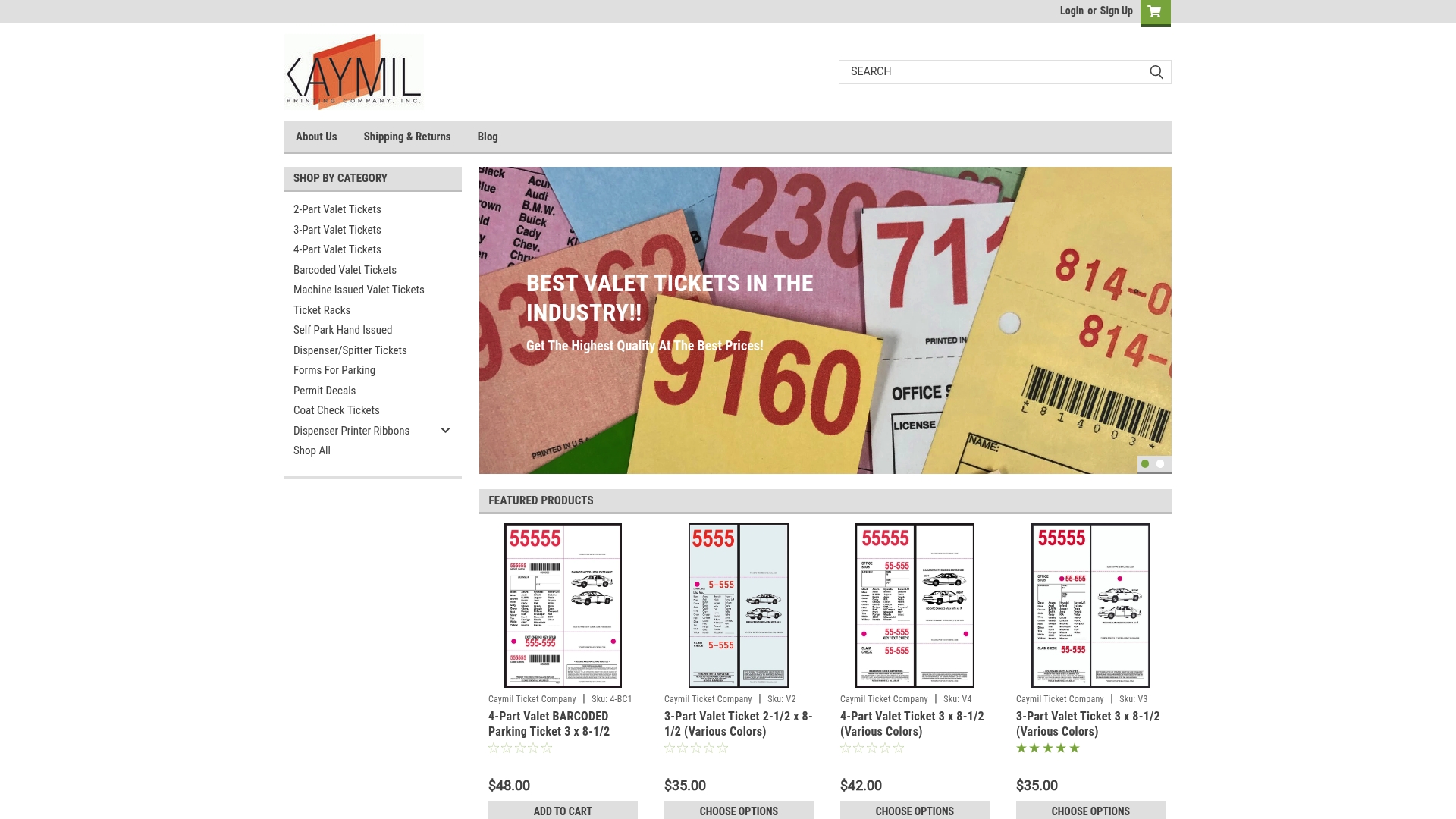
Whether you manage event parking, a commercial garage, or a valet program with fixed fees, Caymil’s parking forms and ticketing products are built to support accurate issuance, revenue tracking, and enforcement. Options include multi-part carbonless formats, sequential numbering, custom barcoding, and logo printing. Tickets are compatible with major parking management systems including Amano, SKIDATA, and Flowbird. Caymil also offers machine-issued valet tickets for high-volume flat-rate operations where speed and audit accuracy are both priorities. Contact Caymil to discuss the right ticket format for your operation.
FAQ
What is the flat-rate ticket meaning in parking?
A flat-rate parking ticket is a fixed charge for either parking access or a parking violation, with no variable component based on time or usage. The term applies to both service fees in lots and stipulated fines in enforcement programs.
How does flat-rate parking work at events?
Event flat-rate parking charges one fixed fee at entry, covering the entire event duration regardless of how long the driver stays. This removes hourly tracking and speeds up entry and exit.
What is the difference between flat-rate and regular parking tickets?
A regular parking ticket may escalate with late payment or accrue additional fees, while a flat-rate ticket sets a fixed amount that applies within a defined payment window. Missing that window converts a flat-rate fine into a standard escalating penalty.
Are flat-rate parking fines the same as reduced fines?
In stipulated fine programs like New York City’s, flat-rate fines are reduced amounts offered in exchange for waiving contest rights. Outside those programs, a flat-rate fine simply means a fixed penalty amount without automatic reduction.
Can event planners set their own flat-rate parking fees?
Event planners can set flat-rate parking fees for private lots or contracted parking facilities. The rate, time window, and enforcement terms must be communicated clearly to attendees before arrival to avoid disputes.
Recommended
- What Is a Stock Parking Ticket? A Clear Guide - Caymil Printing Co., Inc.
- Parking Machine Ticket: What Every Driver Should Know - Caymil Printing Co., Inc.
- What Is a Transient Parking Ticket? 2026 Guide - Caymil Printing Co., Inc.
- Parking Zone Designation Ticket: What It Means - Caymil Printing Co., Inc.