

Parking Zone Designation Ticket: What It Means

A parking zone designation ticket is an official citation issued when a vehicle is parked in violation of rules specific to a defined geographic or functional parking zone. These are not general traffic tickets. They enforce area-based restrictions tied to residential permit zones, commercial loading areas, metered blocks, or time-restricted curbs. In 2026, fines range from as low as $12 up to $115 in U.S. cities, with international equivalents reaching £160 in London. Understanding what is a parking zone designation ticket, and how it differs from other citations, is the first step toward managing compliance and avoiding unnecessary costs.
What is a parking zone designation ticket?
A parking zone designation ticket, known in formal enforcement contexts as a Penalty Charge Notice (PCN) or parking citation, is issued when a vehicle violates the posted rules of a specific designated parking area. The violation is zone-specific, not just a general parking offense. A driver parked legally on one block may receive a ticket on the next block simply because the zone designation changes.
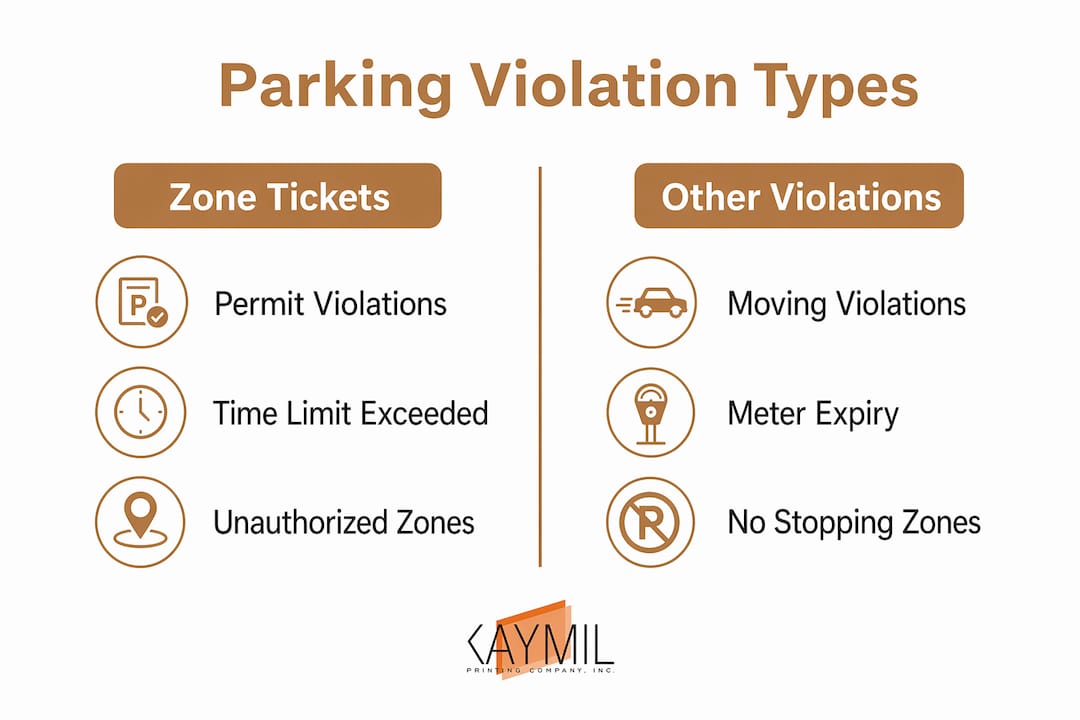
These tickets apply across several zone types. Residential permit zones restrict parking to residents with valid permits during posted hours. Commercial loading zones prohibit long-term parking to keep curb space available for deliveries. Metered zones require payment during enforcement windows. Time-limited zones allow short stays but penalize vehicles that overstay. Each zone type carries its own rules, and the ticket reflects which specific rule was broken.
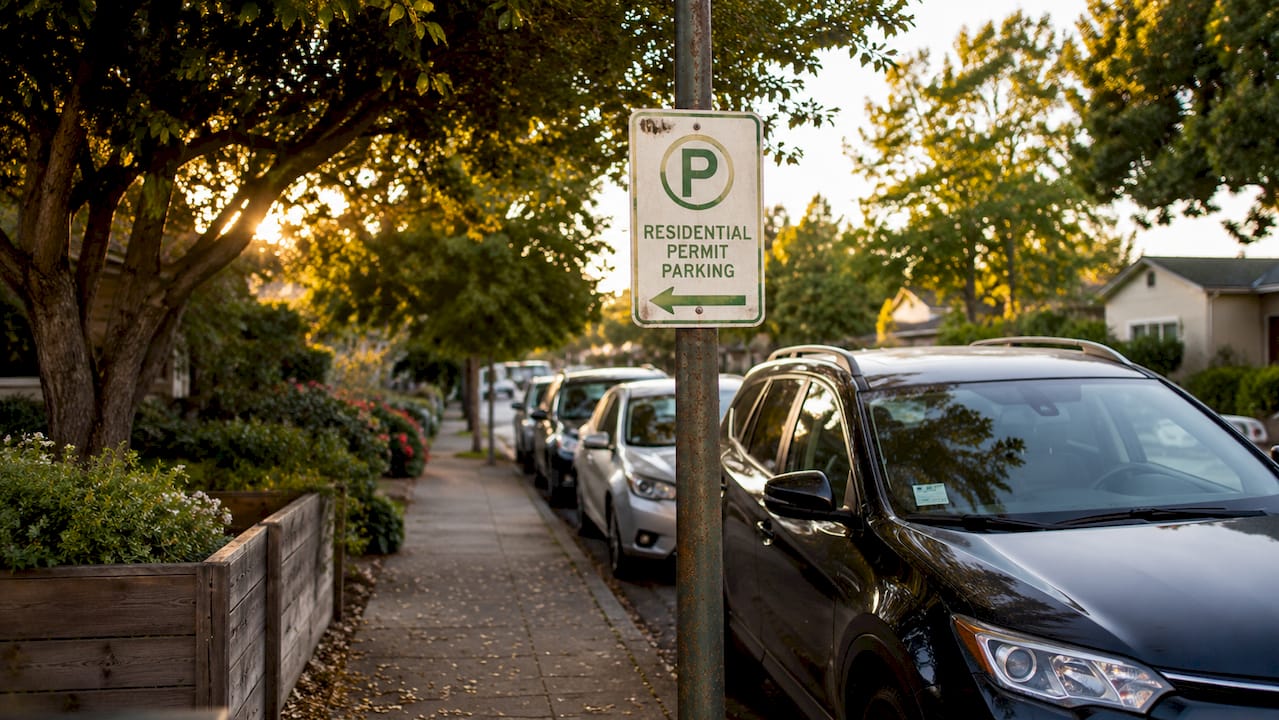
The parking zone ticket definition matters because it determines who issued the ticket, what authority backs it, and what your options are. A government-issued citation carries statutory weight. A private parking charge notice does not.
How do parking zone tickets differ from other violations?
Penalty Charge Notices come from government bodies with full legal enforcement power. Private parking charge notices come from companies managing private lots and are enforceable only as contracts. This distinction changes everything about how you respond.
Zone-based parking tickets also differ from moving violations. A moving violation involves a vehicle in motion, such as running a red light. A parking zone designation ticket involves a stationary vehicle in the wrong place or at the wrong time. The enforcement authority, appeal process, and fine structure are entirely separate.
The table below shows the key differences across the most common ticket types:
| Ticket Type | Issuing Authority | Legal Basis | Typical Fine Range |
|---|---|---|---|
| Parking Zone Designation Ticket | Municipality or government body | Statutory law | $12–$115 (U.S.) |
| Private Parking Charge Notice | Private parking company | Contract law | Varies by operator |
| Moving Violation Ticket | Police or traffic enforcement | Traffic code | Varies by offense |
| Expired Meter Ticket | Municipal parking authority | Local ordinance | $25–$65 (typical) |
Common violations that generate zone designation tickets include parking in a residential permit zone without a valid permit, parking in a loading zone beyond the posted time limit, and parking in a zone where the permit letter on the vehicle does not match the zone letter on the sign. That last one surprises many drivers. Drivers frequently focus only on main permit signs, missing the specific zone letter that must match their displayed permit exactly.
What signage requirements make a ticket legally valid?
A parking zone designation ticket is only enforceable if the signage meets legal standards. Signs must follow federal MUTCD standards, which stands for the Manual on Uniform Traffic Control Devices. This federal guide governs sign size, placement, color, and wording for all public roads. A sign that is obscured by a tree branch, faded beyond legibility, or placed at a non-standard height may be grounds for dismissal on appeal.
Key signage requirements for valid enforcement
For a parking zone designation ticket to hold up, the posted signage must meet these criteria:
- Visibility: The sign must be clearly visible from the driver’s position before parking.
- Legibility: Text and symbols must be readable in normal daylight conditions.
- Accuracy: The sign must correctly state the zone letter, hours of enforcement, and any permit requirements.
- Placement: Signs must be positioned within the regulated zone boundary, not outside it.
- Supplementary signs: Any exceptions, such as loading windows or holiday suspensions, must be posted as supplementary signs directly below the primary sign.
Supplementary signs are a frequent source of confusion. Enforcement officers and drivers often overlook supplementary signs, which may allow exceptions like loading or specific zone exclusions. These signs are legally binding. If a supplementary sign permits a 30-minute loading window and you were parked within that window, the ticket may be invalid.
Enforcement hours also matter. Some zones operate Monday through Friday during business hours only. Others run 24 hours, 7 days a week. A ticket issued outside posted enforcement hours is contestable on its face.
Pro Tip: When you park in an unfamiliar zone, photograph the nearest sign before walking away. That single image can be the difference between a dismissed ticket and a paid fine.
How to contest or manage a parking zone designation ticket
Contesting a parking zone designation ticket follows a defined process, and the outcome depends heavily on the evidence you gather at the time of the alleged violation. Triple evidence photos showing the vehicle, the nearest sign, and the curb markings give the strongest foundation for an appeal. Each element addresses a different part of the enforcement claim.
Steps to contest a ticket
- Photograph the scene. Capture your vehicle’s position, the closest parking sign, and any curb markings. Do this immediately if you return to find a ticket.
- Read the ticket carefully. Check the date, time, zone code, and violation description for errors. A wrong plate number or incorrect zone code can void the ticket.
- Research the zone rules. Look up the municipal code for the specific zone listed on the ticket. Confirm the enforcement hours and permit requirements.
- File your appeal within the deadline. Most municipalities require appeals within 14–30 days of the issue date. Missing this window typically removes your right to contest.
- Submit your evidence. Include photos, any permit documentation, and a written explanation. Keep copies of everything you submit.
- Attend a hearing if required. Some jurisdictions offer in-person or online hearings. Present your evidence clearly and stick to the facts.
Payment deadlines matter as much as appeal deadlines. Fines typically double after 14 days if unpaid, and unresolved tickets can escalate to collections. In New Jersey, license suspension occurs only after failure to appear or pay full fines through legal procedures. The initial ticket does not trigger suspension directly, but ignoring it long enough will.
For businesses managing parking in designated zones, proactive steps prevent most tickets. Issue visitor passes or parking vouchers to customers. Post clear internal signage directing employees to approved parking areas. Review your local Controlled Parking Zone rules annually, since municipalities update zone boundaries and hours.
Pro Tip: Businesses in permit zones should keep a log of visitor parking passes issued each day. That record can support a challenge if a customer’s vehicle receives a ticket while a valid pass was in use.
What are typical fines and enforcement practices?
Fine amounts for parking zone designation tickets vary significantly by city and offense tier. The table below shows representative examples from U.S. and international enforcement programs.
| Location | Low-Tier Fine | High-Tier Fine | Early Payment Discount |
|---|---|---|---|
| Bend, Oregon | $12 | $115 | Yes, within 14 days |
| London, UK | £110 | £160 | 50% within 14 days |
| New Jersey (general) | Varies by municipality | Varies | Varies |
“Enforcement prioritizes ADA-accessible spots and fire lanes with the highest fines. Permit zones regulate parking allocation for residents and businesses.” — City of Bend Parking Citations
Most cities offer a discount for early payment, typically within 14 days of the issue date. After that window closes, the fine increases, often doubling. Continued non-payment leads to collections referral, credit reporting in some jurisdictions, and eventually legal action. The enforcement window itself varies: some zones are enforced only during rush hours, others during business hours, and high-demand urban zones may operate 24 hours a day.
How do parking zone systems support urban planning?
Parking zone designations are tools for managing limited curb space, not just revenue sources. Municipalities use zone designations to manage public parking resources and ensure access for priority users including residents and emergency services. The revenue collected from fines funds enforcement operations, but the primary goal is access management.
Zone systems serve several distinct urban functions:
- Residential access: Permit zones protect neighborhood parking for residents who cannot use garages or driveways.
- Commercial turnover: Time-limited zones near retail areas keep spaces available for customers rather than all-day commuter parking.
- Emergency access: Fire lanes and ADA spaces carry the highest fines because blocking them creates direct safety risks.
- Freight and delivery: Loading zones protect curb space for commercial deliveries during peak business hours.
Businesses located within Controlled Parking Zones benefit from understanding the full zone map for their area. Issuing visitor passes and communicating zone rules clearly to customers reduces inadvertent ticketing and protects the business relationship. A customer who gets a ticket while visiting your location is unlikely to return. Treating zone compliance as part of your customer experience, not just a legal obligation, is the smarter approach.
Reviewing a parking management system that integrates with your zone requirements can also help operators track compliance across multiple locations.
Key takeaways
A parking zone designation ticket is a statutory citation tied to specific zone rules, and contesting or avoiding one requires understanding signage standards, fine timelines, and evidence requirements.
| Point | Details |
|---|---|
| Zone-specific enforcement | Tickets apply to violations of rules in a defined area, not general parking offenses. |
| Signage must meet MUTCD standards | Illegible or missing signs are valid grounds for dismissal on appeal. |
| Evidence determines appeal success | Photos of the vehicle, sign, and curb markings are the strongest defense. |
| Fines escalate quickly | Most cities double fines after 14 days; unresolved tickets can reach collections. |
| Businesses need proactive systems | Visitor passes and clear internal communication prevent most customer ticketing issues. |
The detail most people miss about zone tickets
After years of working alongside parking operators, municipalities, and enforcement professionals, I have seen one pattern repeat itself constantly. Most people who receive a parking zone designation ticket did not ignore the sign. They read the wrong part of it.
The main “Permit Parking” sign gets all the attention. The supplementary sign below it, the one that says “Zone C Only, 8am–6pm Mon–Fri,” gets ignored. That small sign is the one that determines whether the ticket is valid. I have seen appeals succeed on nothing more than a photograph showing that the supplementary sign was obscured by a utility box. I have also seen appeals fail because the driver photographed the wrong sign entirely.
For businesses, the challenge is different. The issue is not usually reading signs incorrectly. It is failing to communicate zone rules to employees and customers before a ticket is issued. A well-placed notice at your entrance stating the zone letter and permit requirements costs almost nothing. It prevents the kind of friction that damages customer relationships and creates administrative work for your team.
Treat parking zone compliance the way you treat any other operational detail: document it, communicate it, and review it when rules change. That approach costs far less than managing a stack of contested citations.
— Richard
Caymil supports parking operations with the right forms
Parking zone enforcement depends on accurate, durable documentation at every step. Whether you manage a municipal lot, a hotel parking facility, or a commercial garage, having the right forms in place protects your operation and your records.
Caymil has manufactured specialized parking forms and ticketing supplies since 1937, serving municipalities, garages, hotels, and valet operators across the United States. From parking forms and citation documentation to multi-part carbonless formats with sequential numbering, Caymil’s products are built for the demands of real enforcement environments. Fast nationwide shipping and millions of units in stock mean your operation never runs short. Explore Caymil’s full range of parking ticket products to find the right solution for your facility.
FAQ
What is a parking zone designation ticket exactly?
A parking zone designation ticket is an official citation issued when a vehicle violates the posted rules of a specific designated parking zone, such as a residential permit area or a commercial loading zone. It carries statutory authority when issued by a municipality.
How do i contest a parking zone designation ticket?
Gather three types of photographic evidence: your vehicle’s position, the nearest parking sign, and the curb markings. File your appeal within the deadline stated on the ticket, typically 14–30 days, and submit your evidence with a written explanation.
What makes a parking zone ticket invalid?
A ticket is invalid if the posted signage does not meet MUTCD standards, is illegible, obscured, or placed outside the zone boundary. Tickets issued outside posted enforcement hours are also contestable.
What happens if i ignore a parking zone ticket?
Unpaid tickets typically double after 14 days. Continued non-payment leads to collections referral and potential credit impact. In states like New Jersey, license suspension follows only after a formal failure to appear or pay through legal procedures.
How can businesses reduce parking zone violations for customers?
Businesses in Controlled Parking Zones should issue visitor passes, post clear signage at their entrance stating zone rules, and communicate permit requirements to employees and customers before violations occur.
Recommended
- Parking Machine Ticket: What Every Driver Should Know - Caymil Printing Co., Inc.
- Parking Receipt vs Parking Ticket: Know the Difference - Caymil Printing Co., Inc.
- What Is a Gate-Issued Parking Ticket? Explained - Caymil Printing Co., Inc.
- Branded Parking Ticket Examples for Lot Managers - Caymil Printing Co., Inc.