

What Is a Transient Parking Ticket? 2026 Guide

A transient parking ticket is a document or digital record issued to a driver at entry to track a short-duration parking session, typically hourly or daily, within a managed parking facility. The term “transient parking” is the recognized industry standard for any non-contract, pay-as-you-go parking use. Revenue tracking systems distinguish transient parking from monthly contracts, event parking, and validations, applying separate rate tables with taxes and fees to each category. For both drivers and parking operators, understanding how these tickets work, what rules govern them, and how they differ from municipal citations is the foundation of sound parking management.
What is a transient parking ticket and how does it work?
A transient parking ticket is the primary mechanism for tracking short-term parking customers and separating them from other revenue categories in a parking system. When a driver pulls into a managed garage or lot, a dispenser issues a ticket stamped with a unique ID and entry timestamp. That data is the starting point for every calculation that follows.
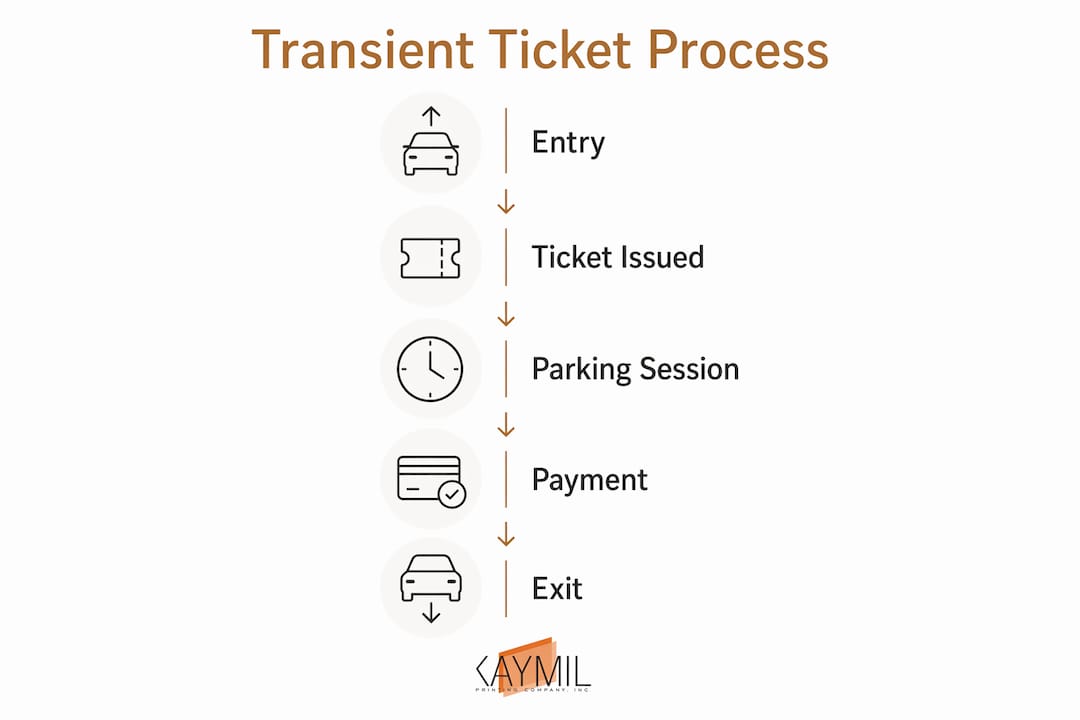
The standard process moves through five clear steps:
- Entry ticket issuance. The driver takes a ticket from a dispenser or spitter machine at the gate. The ticket encodes the entry time, location, and a sequential or barcode identifier. Systems compatible with Amano, TIBA, SKIDATA, and FLASH Parking all follow this basic model.
- Duration tracking. The parking management system logs the entry time against the ticket ID. Every minute the vehicle stays, the system is calculating the applicable rate from a preset rate table.
- Payment at a kiosk or pay-on-foot machine. Before returning to the vehicle, the driver inserts the ticket into a pay station. The machine reads the barcode or magnetic stripe, calculates the fee based on elapsed time and the rate table, and accepts payment.
- Ticket validation. In facilities that offer validation, a merchant or host can discount or zero out the fee before the driver pays. Barcode ticketing makes this process faster and reduces manual errors.
- Exit within the grace period. After payment, the driver has a limited window to reach the exit gate. Florida law mandates a minimum 15-minute grace period between payment and exit. Most facilities nationwide follow a similar standard.
Pro Tip: If you lose your ticket, expect to pay the maximum daily rate. Without the ticket’s barcode or digital record, the system cannot verify your actual entry time, so the lost ticket fee is set at the highest possible charge to prevent abuse.
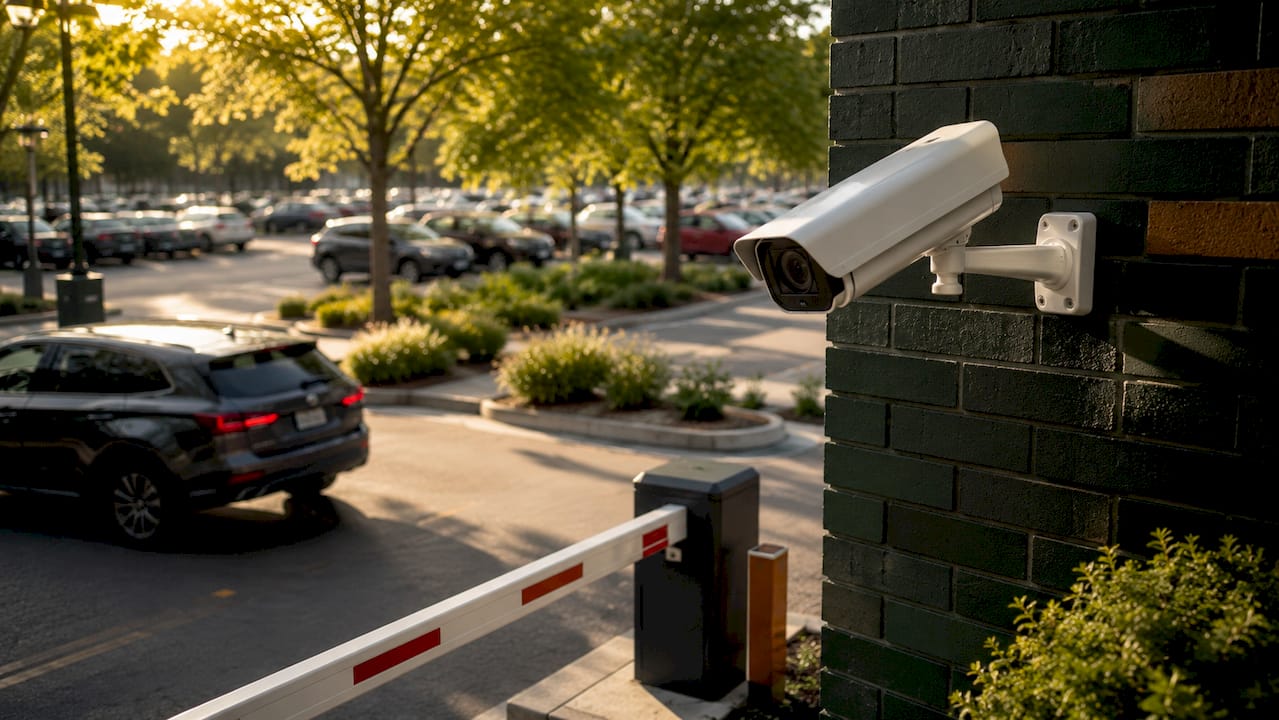
License Plate Recognition (LPR) technology now serves as a backup in many ticketed garages. The system photographs your plate at entry and links it to your session, which reduces lost ticket disputes significantly. This integration is one reason modern parking systems are becoming more reliable for both operators and drivers.
What rules apply to transient parking tickets?
Transient parking rules cover grace periods, fee structures, and lost ticket policies. These rules vary between public and private facilities, but several standards have become common across the industry.
Grace periods and legal mandates
The grace period is the time a driver has to exit after paying. Florida’s 2024 parking legislation set a statutory floor of 15 minutes, a benchmark that reflects broader industry practice. Operators who set shorter windows risk customer disputes and, in regulated states, legal exposure.
Fee components on a transient ticket
Transient parking fees are not always a single line item. A receipt or invoice can itemize several charges:
- Hourly parking rate. The base charge calculated from the rate table.
- Flat tax per time period. A fixed tax applied per hour or per day, separate from the rate.
- Percentage tax on parking fees. A percentage-based tax applied to the total parking charge.
- Credit card surcharge. An additional fee for card-based payment, disclosed at the kiosk.
- Lost ticket fee. Charged at the maximum daily rate when the original ticket cannot be produced.
The table below summarizes the most common fee components found on transient parking receipts:
| Fee component | Basis | Typical application |
|---|---|---|
| Hourly parking rate | Time elapsed | Applied per hour or fraction |
| Flat tax | Per time period | Fixed amount per hour or day |
| Percentage tax | Percentage of base fee | Applied to total parking charge |
| Credit card surcharge | Per transaction | Disclosed at point of payment |
| Lost ticket fee | Maximum daily rate | Charged when ticket is missing |
Public facilities operated by municipalities often follow local ordinance rate schedules, while private operators set their own rates within any applicable state guidelines. The key difference is not the fee structure itself but the legal authority behind enforcement, which the next section covers in detail.
How do transient tickets differ from municipal parking citations?
A transient parking ticket issued by a private facility is a contractual invoice, not a government citation. This distinction carries significant legal weight and is one of the most misunderstood points in parking enforcement.
A municipal parking citation is issued by a government authority, carries the force of law, and can result in fines, registration holds, or vehicle immobilization if unpaid. A private parking invoice has none of that authority. Private invoices cannot impose criminal penalties or suspend vehicle registrations. They are a civil matter between the driver and the property owner.
Florida’s HB 271, enacted in 2024, made this distinction explicit. Private parking companies must now print a disclaimer in all caps on any invoice stating that it is privately issued and not subject to criminal penalties. This requirement exists because users commonly confuse private parking invoices with government tickets, which leads to unnecessary payments and missed dispute opportunities.
The comparison below clarifies the key operational differences:
| Factor | Municipal citation | Private parking invoice |
|---|---|---|
| Issuing authority | Government agency | Private property owner or operator |
| Legal penalties | Fines, registration holds | Civil debt only |
| Dispute process | Government appeals process | Operator’s internal process |
| Disclaimer required | Not applicable | Required by law in regulated states |
| Signage requirements | Statutory | Contractual and statutory |
Pro Tip: Before paying any private parking notice, check whether it carries the required disclaimer language. If it does not, you may have grounds to dispute it under your state’s consumer protection statutes. Consulting resources on private parking enforcement can clarify your rights.
For operators, the lesson is equally clear. Signage must disclose that a lot is privately managed, and any invoice issued must meet disclosure requirements. Failure to comply exposes the business to regulatory complaints and legal challenges.
How is technology changing transient parking ticket management?
The parking industry is moving away from paper-based transient tickets toward electronic, LPR-based, and account-driven systems. This shift is driven by two pressures: revenue leakage from manual enforcement and rising customer expectations for frictionless payment.
Manual enforcement captures fewer than 10% of parking violations in high-turnover lots. AI-powered enforcement systems like those developed by WiseSight monitor all parked vehicles in real time, delivering near 100% violation capture rates. That gap between manual and automated enforcement represents direct revenue loss for any operator still relying on staff patrols alone.
The move to ticketless systems addresses a different problem. LPR-based transient parking eliminates the physical ticket entirely. The driver’s license plate becomes the session identifier. Payment happens through a web portal, a QR code posted at the lot, or a mobile app. Lost ticket fees disappear as a category because there is no ticket to lose.
Key technology trends reshaping transient parking management include:
- License Plate Recognition at entry and exit. Plates are photographed and matched automatically, removing the need for physical ticket exchange.
- Account-based parking. Registered users link a payment method to their plate. The system charges them automatically at exit.
- QR code payment stations. Drivers scan a code, enter their plate, and pay from their phone without visiting a kiosk.
- Real-time enforcement dashboards. Operators see occupancy, violations, and revenue data in one view, enabling faster responses to issues.
“The parking industry is rapidly adopting LPR and account-based, ticketless systems to enhance user experience and reduce enforcement gaps.” — Parkable
For facilities that still rely on physical tickets, the priority is ensuring those tickets are durable, accurately printed, and compatible with the parking system hardware in use. Caymil’s ticket dispenser guide covers how to match ticket stock to dispenser specifications for reliable performance.
Key takeaways
A transient parking ticket is a short-term parking authorization that drives revenue tracking, fee calculation, and enforcement in managed facilities, and understanding its rules protects both drivers and operators.
| Point | Details |
|---|---|
| Core definition | A transient ticket tracks hourly or daily parking sessions, separate from monthly or validated categories. |
| Grace period standard | Most facilities allow 15 minutes to exit after payment; Florida law mandates this minimum by statute. |
| Fee itemization | Receipts can include hourly rates, flat taxes, percentage taxes, and credit card surcharges as separate line items. |
| Private vs. municipal | Private parking invoices are civil matters; only government citations carry criminal penalties or registration holds. |
| Technology direction | LPR and ticketless systems are replacing paper tickets, closing enforcement gaps and reducing lost ticket disputes. |
The part most operators get wrong about transient tickets
After years of working closely with parking operators across the country, the pattern I see most often is not a technology problem. It is a communication problem. Drivers do not understand what they are holding when they take a ticket at entry, and operators do not explain it clearly enough.
A transient parking ticket is a contract. The moment a driver accepts it, they agree to the posted rates and rules. Yet most facilities post rate signs in small print near the gate and assume that is sufficient. When disputes arise, especially around lost tickets or grace period overruns, the operator has no clear paper trail showing the customer was informed.
The second issue I see is operators treating private invoices as if they carry the same weight as municipal citations. They do not. Operators who design their notices to look like government tickets are inviting regulatory scrutiny and eroding customer trust. Clarity in ticket design and invoice language is not just a legal requirement. It is good business practice.
My prediction for the next few years is straightforward. Paper transient tickets will remain in use at mid-size and smaller facilities for at least another decade, primarily because the capital cost of full LPR conversion is prohibitive for many operators. The smart move is to invest in high-quality, accurately printed ticket stock that works reliably with existing hardware while planning a phased transition to digital systems. Cutting corners on ticket quality creates more problems than it solves.
— Richard
Transient parking ticket solutions from Caymil
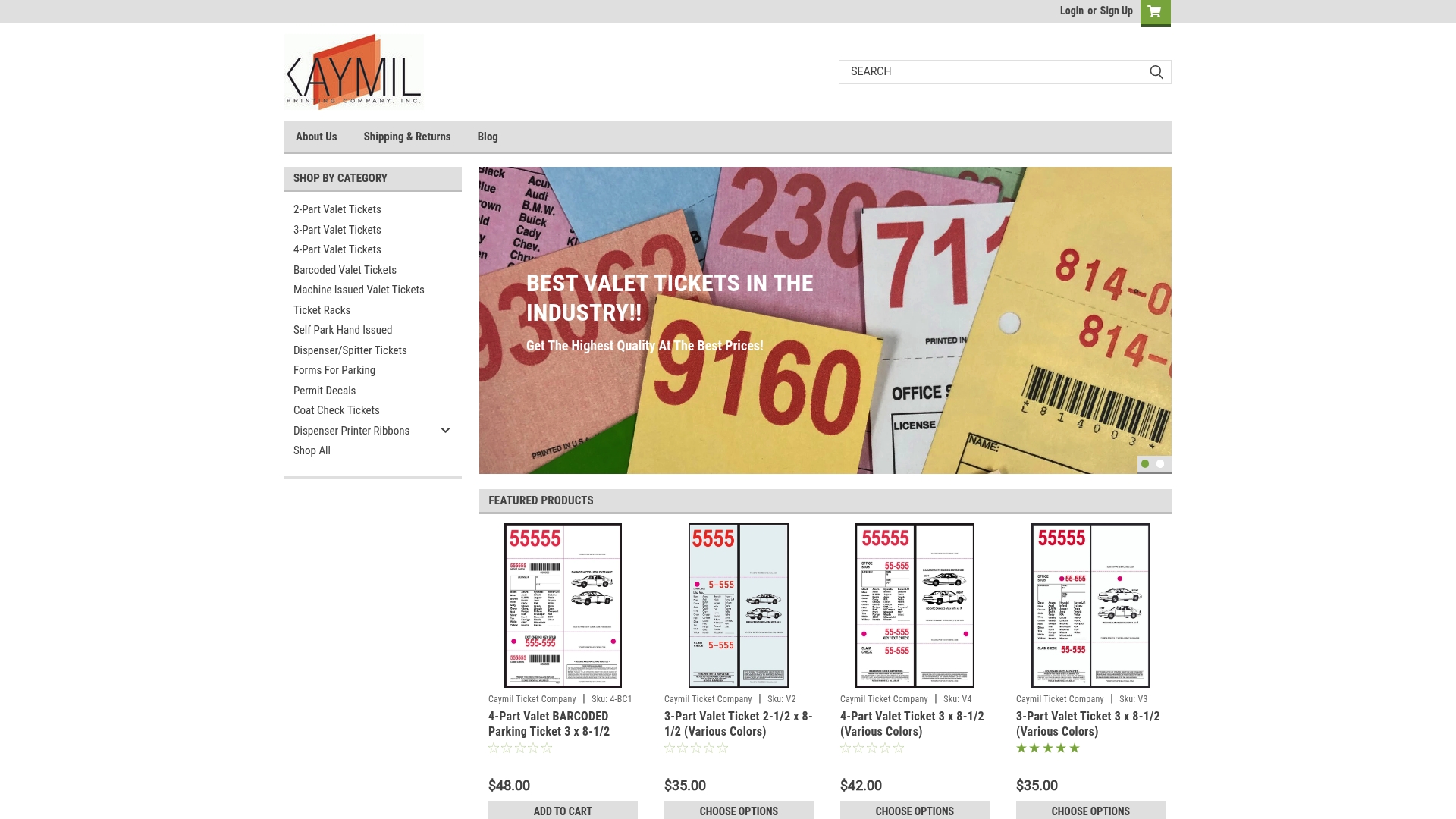
Caymil has manufactured parking tickets for managed facilities since 1937, and transient parking operations are at the core of what Caymil produces. Whether your facility uses a FLASH Parking, SKIDATA, Amano, or TIBA system, Caymil stocks and custom-prints ticket formats built to work with your hardware from day one.
For valet and transient operations, Caymil offers machine-issued valet tickets, barcode valet tickets, dispenser spitter tickets, and ticket racks for organized distribution. Every product is available with sequential numbering, custom barcodes, logos, and security features. For operators who need multi-part formats for revenue reconciliation, Caymil’s full range of parking forms covers every transient ticketing scenario. Fast nationwide shipping and millions of tickets in stock mean your operation never runs short.
FAQ
What does “transient parking” mean?
Transient parking refers to short-term, pay-as-you-go parking use, typically hourly or daily, as opposed to monthly contract or validated parking. It is the standard industry term for any non-reserved, non-contract parking session.
How is a transient parking fee calculated?
The system reads the entry timestamp from the ticket barcode or magnetic stripe, calculates elapsed time, and applies the facility’s rate table. Additional charges such as taxes and credit card surcharges are itemized separately on the receipt.
What happens if I lose my transient parking ticket?
Lost ticket policies require paying the maximum daily rate because the system cannot verify your actual entry time without the ticket’s data. LPR-equipped facilities may use your license plate record to resolve the dispute.
Is a private parking invoice the same as a parking ticket?
No. A private parking invoice is a civil debt, not a government citation. It cannot result in criminal penalties or a registration suspension. Under Florida’s HB 271 (2024), private invoices must state this distinction clearly in the notice text.
How do I contest a transient parking ticket from a private lot?
Contact the operator directly using the dispute process listed on the invoice. Review the posted signage at the facility for rate and rule disclosures. If the invoice lacks required disclaimer language, you may have grounds to challenge it under state consumer protection law.
Recommended
- What Is a Temporary Parking Permit? A Practical Guide - Caymil Printing Co., Inc.
- What Is a Stock Parking Ticket? A Clear Guide - Caymil Printing Co., Inc.
- What Is a Single-Use Parking Ticket? A Manager’s Guide - Caymil Printing Co., Inc.
- What Is a Gate-Issued Parking Ticket? Explained - Caymil Printing Co., Inc.