
What Is a Single-Use Parking Ticket? A Manager’s Guide
A single-use parking ticket is a one-time authorization token, either physical or digital, that validates a vehicle’s parking session and enables automated entry, payment processing, and exit at a parking facility. In the industry, these are also called temporary parking passes or session tickets, and the distinction matters: they authorize parking, not penalize it. Business owners evaluating parking management systems need to understand both the paper-based and digital forms of these tickets before committing to hardware, software, or ticket stock. This guide covers definitions, ticket types, technical workflows, operational trade-offs, and implementation steps.
What is a single-use parking ticket and how does it differ from other passes?
A single-use parking ticket is defined as a one-time parking authorization containing key session data including date, time, location, and vehicle information used exclusively for that parking session. Once the vehicle exits and the fee is paid, the ticket’s authorization is consumed. It cannot be reused for a second session.
This is a critical distinction for managers. Single-use tickets should not be confused with parking violation tickets, which are issued by enforcement authorities and carry legal penalties. A session ticket authorizes parking; a violation ticket penalizes an infraction. Conflating the two creates confusion at the point of customer inquiry, which is a preventable operational problem.
The term “single-use parking pass” also differs from a monthly permit or a multi-day pass. A monthly permit grants repeated access over a billing period. A single-use pass or temporary parking ticket covers one defined session or one calendar day. Operators at facilities like municipal garages, hotel parking structures, and hospital lots use single-use tickets precisely because they need per-session revenue tracking without issuing recurring credentials to transient visitors.
Pro Tip: Always define “single-use” explicitly in your customer-facing signage and staff training materials. The term varies by operator, and ambiguity leads to disputes at exit lanes.
What types of single-use parking tickets exist?
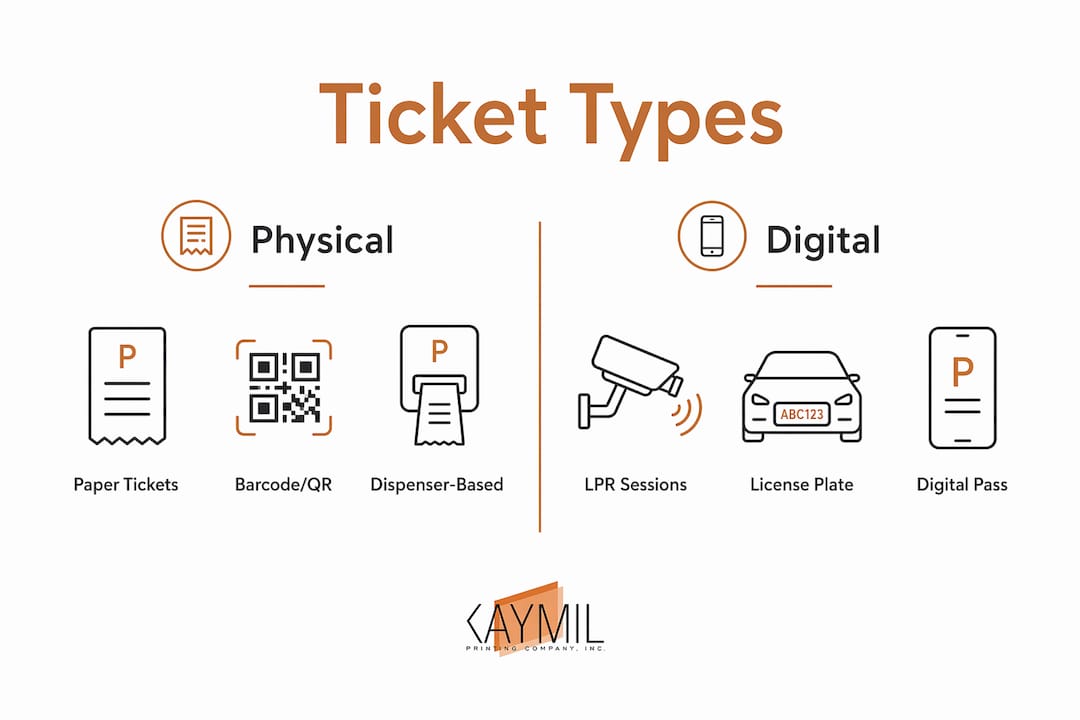
Three primary formats serve the single-use parking ticket market today, each with distinct hardware requirements, cost profiles, and use cases.
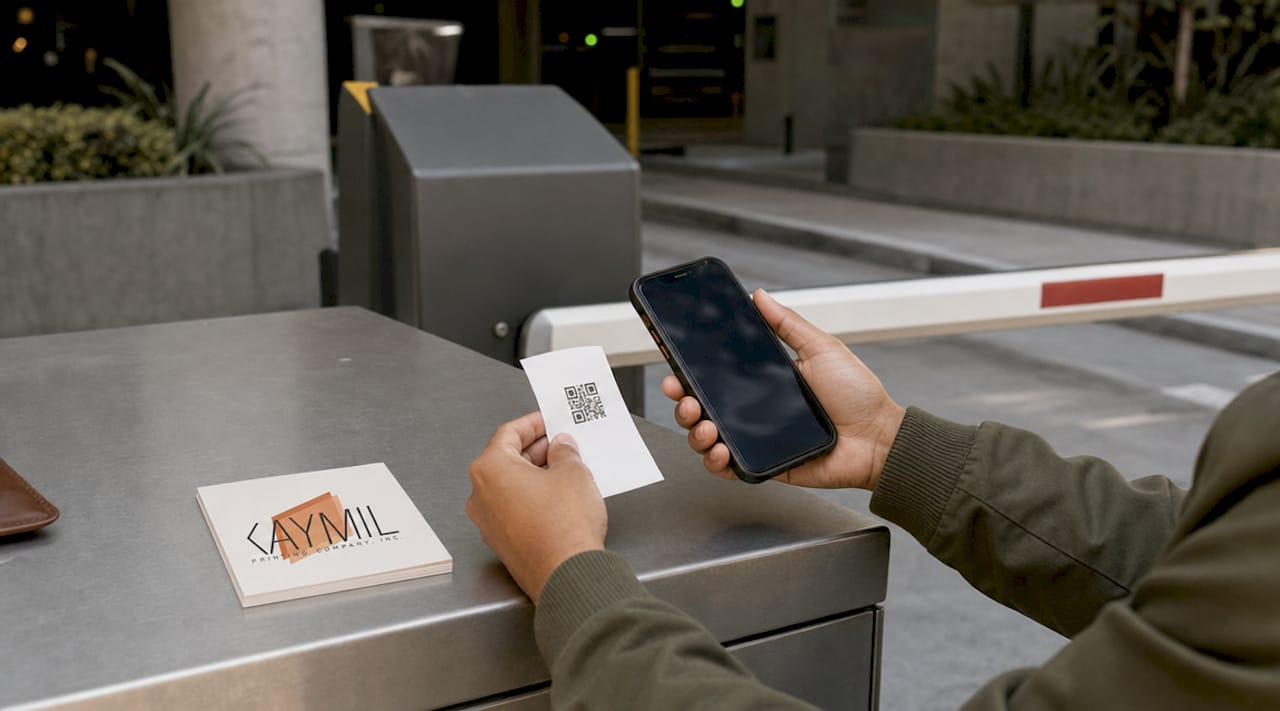
Paper tickets with QR codes or barcodes are the most widely deployed format in gated parking facilities. A dispenser at the entry lane prints a thermal ticket containing a plate number, entry code, and encrypted QR code the moment a vehicle is detected. The driver takes the ticket, parks, and presents it at a pay station or exit reader. This format works with systems from Amano, TIBA, SKIDATA, FLASH Parking, Scheidt & Bachmann, and Flowbird.
License plate recognition (LPR) ticketless sessions function as a digital single-use authorization. An entry camera records the plate and timestamp; the system links payment to that plate; an exit camera validates the fee and opens the gate. No physical ticket changes hands. LPR-based systems shift the transaction token from paper to plate recognition, which improves driver convenience but introduces camera accuracy requirements and privacy compliance obligations.
Single-day or short-duration digital passes tied to license plates represent a third category. These are common in municipal parks and recreation facilities. The City of San Diego, for example, issues single-day permits valid within specific date and time ranges, validated by LPR rather than a physical ticket. Visitors purchase online and the plate becomes the credential.
The table below summarizes the key differences:
| Ticket type | Physical token | Validation method | Best use case | Key challenge |
|---|---|---|---|---|
| Paper QR/barcode ticket | Yes (thermal paper) | Barcode/QR scanner at exit | Gated garages, high-volume lots | Printer maintenance, lost tickets |
| LPR ticketless session | No | License plate camera | High-throughput urban facilities | Camera accuracy, privacy compliance |
| Digital single-day pass | No (plate-based) | LPR or mobile check | Municipal parks, event venues | Requires online purchase capability |
How do single-use parking ticket systems work technically?
The workflow behind a paper-based single-use ticket follows a defined sequence that most gated parking systems execute automatically.
- Entry detection. A vehicle triggers an inductive loop or camera sensor at the entry lane. The system logs the timestamp and, if LPR is integrated, captures the plate number.
- Ticket issuance. A thermal ticket dispenser prints a ticket containing the entry time, location code, and an encrypted QR code or barcode encoding the session ID. Dispensers like the HKP01 combine LPR with thermal printing to cover unplated and temporary visitor vehicles simultaneously.
- Session storage. The parking management software records the session data independently of the physical ticket. This duplication is deliberate. Facilities that duplicate session data in their management systems can reconcile discrepancies between issued tickets and paid sessions during audits.
- Payment processing. At a pay station, the driver scans the QR code or barcode. The system retrieves the session, calculates the fee, and accepts payment. Multiple payment methods including coins, banknotes, credit cards, and mobile wallets integrate with ticket validation at modern pay stations.
- Exit validation. The driver presents the validated ticket at the exit reader. The gate opens automatically when the system confirms payment. No attendant is required for standard transactions.
- Exception handling. Smudged, damaged, or lost tickets require a manual review process. Staff access the session record using the entry timestamp or plate data captured at entry. Encrypted QR codes improve read reliability, but operational SOPs must address unreadable tokens to maintain lane throughput.
Pro Tip: Configure your parking management software to capture a plate image at every entry, even in paper-ticket facilities. This creates a fallback record for lost or damaged tickets and significantly reduces exception handling time.
What are the operational benefits and challenges of single-use ticket systems?
Single-use parking tickets deliver measurable operational advantages, but they also introduce maintenance and exception management responsibilities that managers must plan for before deployment.
Benefits worth quantifying
- Automated exit processing reduces the need for staffed exit booths. A driver scans a ticket, pays at a kiosk, and exits without attendant involvement. This directly lowers labor costs in facilities with high transient volume.
- Faster throughput at entry and exit lanes. Thermal ticket issuance takes under two seconds per vehicle. Barcode scanning at exit is comparably fast, which matters in facilities serving hospitals, airports, or event venues where peak-hour congestion is a revenue and reputation risk. Learn more about barcode ticket efficiency in gated operations.
- Revenue tracking accuracy. Every issued ticket creates a session record. Managers can reconcile issued tickets against paid sessions to detect revenue leakage, a process detailed in parking facility audit workflows.
- System compatibility. Paper tickets with barcodes or QR codes work across major parking platforms without requiring facility-wide hardware replacement.
Challenges to plan for
- Ticket damage and loss are the most common operational disruptions. Thermal paper is sensitive to heat, moisture, and direct sunlight. Tickets left on dashboards in summer can fade within hours.
- Printer maintenance is an ongoing cost. Thermal print heads wear over time and require regular cleaning and replacement. Consumable costs, including paper rolls and print heads, add up across a multi-lane facility.
- Exception handling volume scales with transaction volume. A facility processing 500 vehicles per day will handle more lost-ticket incidents than one processing 100. Staff must be trained and empowered to resolve these quickly without creating lane backups.
- LPR as an alternative eliminates consumables but introduces camera infrastructure costs, software licensing, and ongoing accuracy monitoring. Choosing between paper tickets and LPR involves trade-offs in hardware costs, integration complexity, and exception management that vary by facility size and budget.
How to implement single-use parking ticket solutions in your facility
Deploying a single-use ticket system requires decisions across hardware, software, ticket stock, and staff training. Working through these in sequence prevents costly mid-deployment changes.
- Define your facility’s ticket format. Decide between paper QR/barcode tickets, LPR-based ticketless sessions, or a hybrid. Facilities with unplated vehicles, such as rental fleets or temporary visitor lots, benefit from hybrid dispensers that print tickets for vehicles without readable plates.
- Assess hardware requirements. Ticket dispensers, entry and exit readers, pay stations, and gate barriers must all be compatible. Review ticket dispenser guidance before specifying equipment to avoid integration gaps.
- Evaluate software integration. Your parking management platform must support the ticket format you select. Confirm compatibility with your existing system, whether that is Amano, TIBA, SKIDATA, or another platform, before purchasing hardware.
- Procure ticket stock. Thermal paper rolls, barcode tickets, and RFID-integrated tickets each have different durability and compatibility profiles. Review parking ticket paper durability specifications to match stock to your climate, printer model, and session volume.
- Develop exception handling SOPs. Document the process for lost tickets, unreadable barcodes, and payment disputes before go-live. Train staff on these procedures and post clear instructions at pay stations for drivers.
- Plan for ongoing maintenance. Schedule printer head cleaning, paper roll restocking, and software updates as recurring operational tasks, not reactive ones.
Pro Tip: Source ticket stock from a supplier with direct experience in parking system compatibility. Caymil Printing has manufactured tickets compatible with Amano, TIBA, SKIDATA, FLASH Parking, Scheidt & Bachmann, and Flowbird systems since 1937, which means fewer compatibility surprises when you reorder.
Key takeaways
Single-use parking tickets are one-time session authorization tokens that enable automated, staffing-light parking operations when properly specified, integrated, and maintained.
| Point | Details |
|---|---|
| Definition clarity | A single-use ticket authorizes one parking session; it is not a violation notice or a recurring permit. |
| Three ticket formats | Paper QR/barcode, LPR ticketless, and digital day passes each suit different facility types and budgets. |
| Session data duplication | Recording session data independently of the physical ticket is the primary defense against lost-ticket disputes. |
| Paper vs. LPR trade-offs | Paper tickets require consumables and printer maintenance; LPR requires camera infrastructure and privacy compliance. |
| Procurement matters | Ticket stock must match your printer model, parking platform, and climate to perform reliably at scale. |
Why the “single-use” label deserves more operational attention than it gets
I have reviewed parking operations where the term “single-use ticket” meant three different things to three different staff members in the same facility. One thought it meant a ticket that expires after one day. Another thought it meant a ticket that cannot be validated twice. A third thought it referred specifically to paper tickets as opposed to digital passes. All three were partially right, and that ambiguity cost the facility real time in customer disputes and exception handling.
The technical definition is clear enough: one token, one session, consumed at exit. But the operational reality is messier. Drivers lose tickets. Thermal paper fades. LPR cameras misread plates in rain or low light. The facilities that handle these situations well are not the ones with the most sophisticated hardware. They are the ones that defined their processes before problems occurred.
My honest observation after years of working with parking operators is that most implementation failures trace back to procurement and training gaps, not technology gaps. A manager who selects the right ticket stock for their printer, trains staff on exception handling, and audits session records weekly will outperform a facility with newer hardware and no operational discipline. The technology is mature. The discipline is the differentiator.
— Richard
Source your single-use parking ticket stock from Caymil
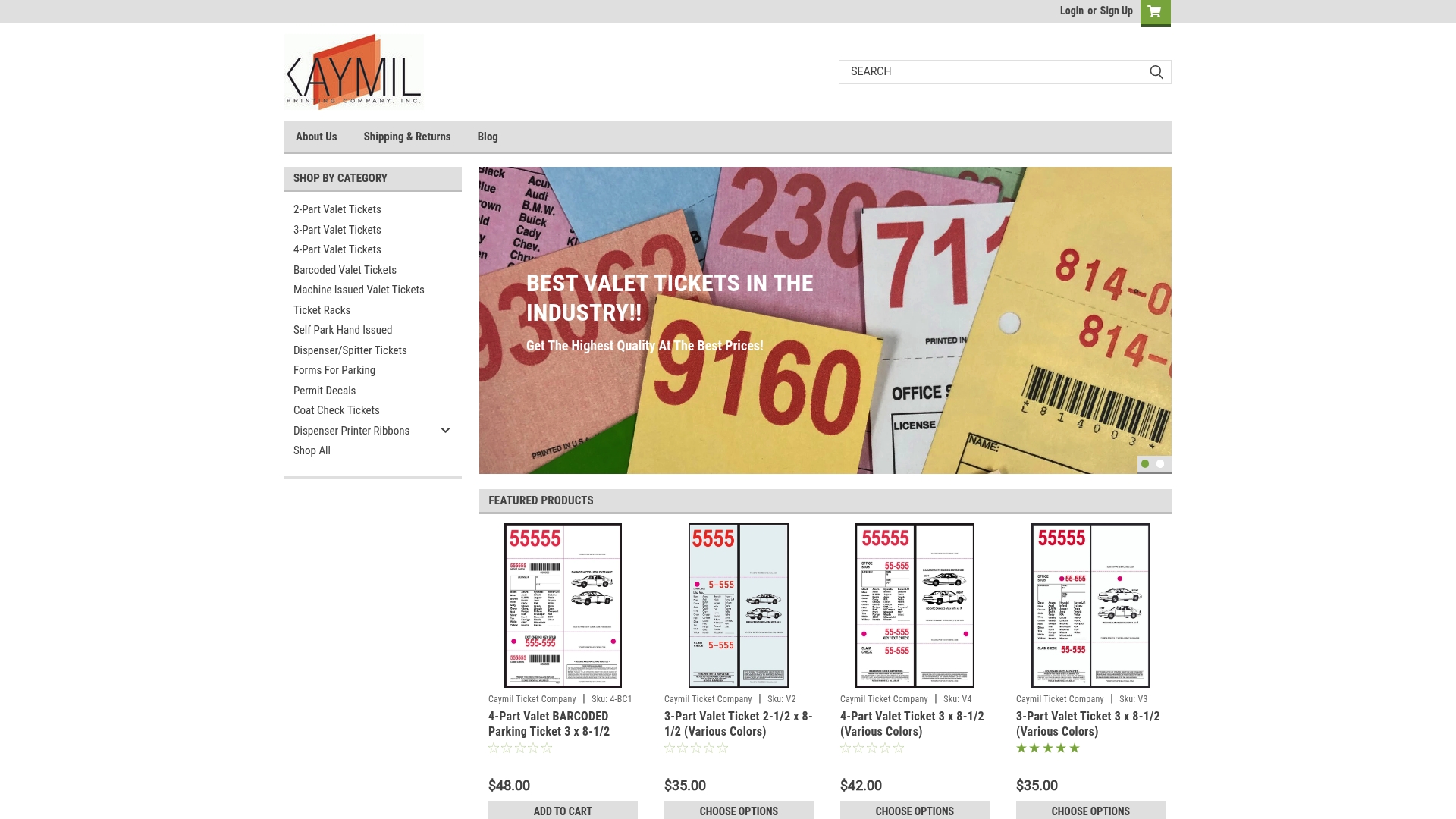
Caymil Printing has manufactured parking ticket stock for gated facilities, valet operations, and event venues since 1937. The full range of parking forms and tickets includes thermal rolls, barcode tickets, machine-issued spitter tickets, and RFID-compatible formats designed for compatibility with Amano, TIBA, SKIDATA, FLASH Parking, Scheidt & Bachmann, and Flowbird systems. Customization options include sequential numbering, barcoding, logos, security features, and custom colors. For facilities running automated dispensers, Caymil’s dispenser spitter tickets are manufactured to tight tolerances that prevent jams and misfeeds. Contact Caymil directly to discuss ticket specifications, volume pricing, and system compatibility for your facility.
FAQ
What data does a single-use parking ticket contain?
A single-use parking ticket typically contains the entry date and time, location code, and an encrypted QR code or barcode encoding the session ID. Some tickets also include the license plate number and entry lane identifier to support exception handling and auditing.
Can a single-use parking ticket be reused?
No. A single-use parking ticket is consumed at exit when the system validates payment and opens the gate. Attempting to reuse a validated ticket will result in a rejected scan, since the session record is marked as closed in the parking management system.
What is the difference between a single-use ticket and an LPR ticketless session?
A single-use paper ticket is a physical token the driver carries; an LPR ticketless session uses the vehicle’s license plate as the credential. Both authorize one parking session, but LPR eliminates the physical ticket entirely and relies on camera accuracy for validation.
Where can managers buy single-use parking tickets?
Managers can purchase single-use parking ticket stock from specialized parking ticket manufacturers. Caymil Printing supplies thermal rolls, barcode tickets, and machine-issued tickets compatible with major parking systems, with fast nationwide shipping and customization options for branding and security features.
How should staff handle a lost single-use parking ticket?
Staff should access the parking management system’s session log using the vehicle’s entry timestamp or plate image captured at entry. Most modern systems store session data independently of the physical ticket, allowing manual fee calculation and payment processing without the original token.
Recommended
- What Is a Stock Parking Ticket? A Clear Guide - Caymil Printing Co., Inc.
- Parking Ticket Dispenser Rolls: A Manager’s Guide - Caymil Printing Co., Inc.
- The role of ticket dispensers in parking: A manager’s guide - Caymil Printing Co., Inc.
- Sequential Numbering Parking Tickets: A Practical Guide - Caymil Printing Co., Inc.