
Parking Ticket Dispenser Rolls: A Manager’s Guide
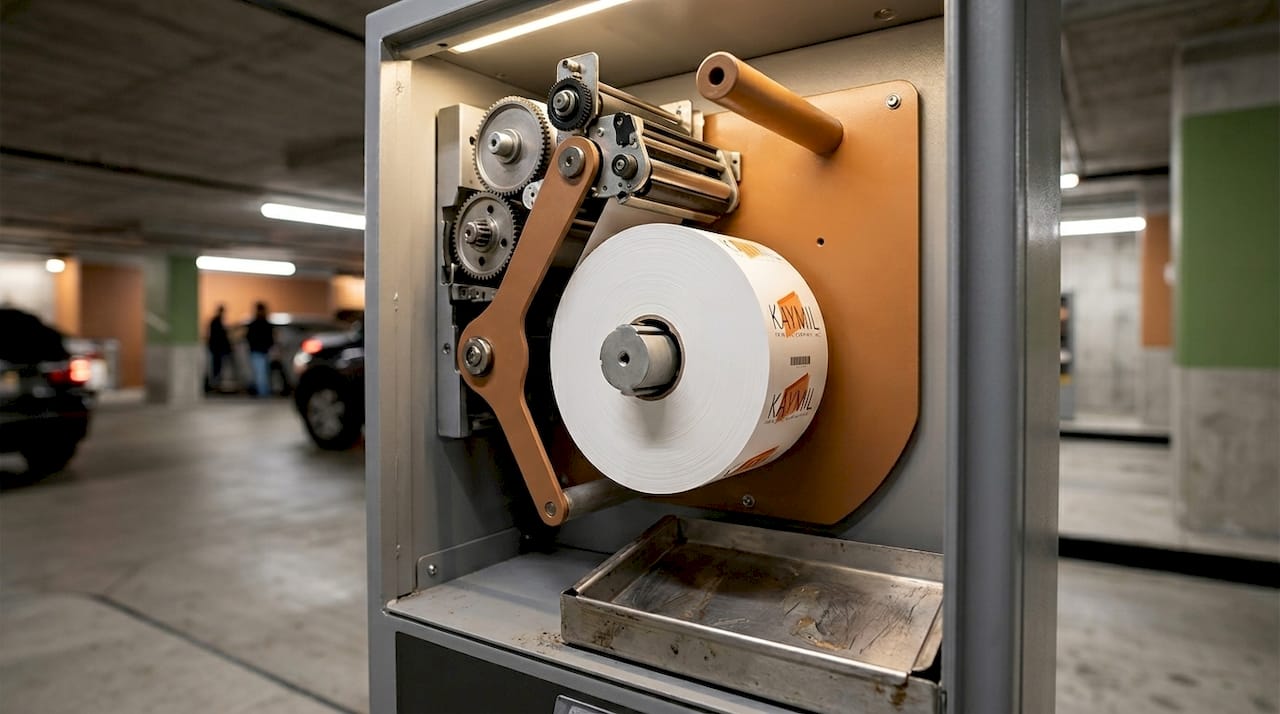
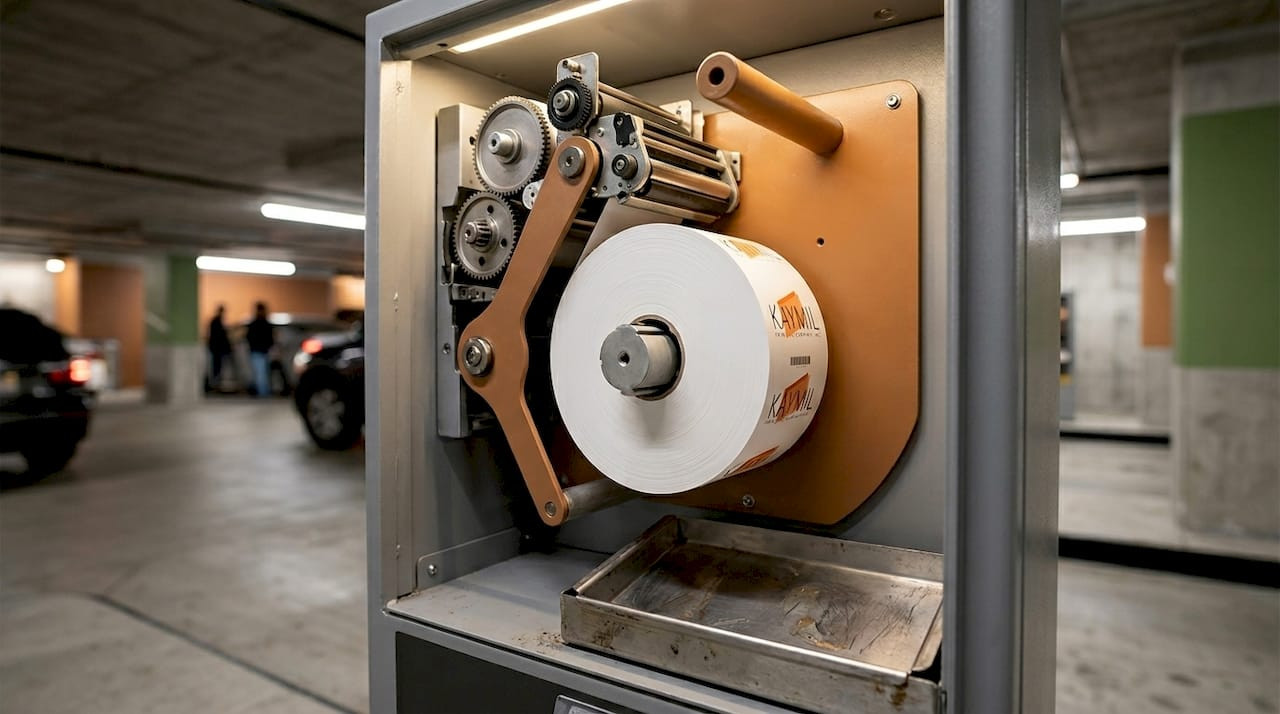
A parking ticket dispenser roll is a roll of thermal paper loaded into automated parking ticket machines to print and dispense time-stamped, machine-readable tickets for vehicle entry, exit, and citation purposes. In the industry, these are also called thermal ticket rolls or dispenser paper rolls. Every automated parking facility depends on this consumable to keep access control running without manual intervention. Understanding how these rolls work, what specifications matter, and how to manage them properly is the difference between a facility that runs smoothly and one that loses revenue to downtime.
What is a parking ticket dispenser roll and how does it function?
A parking ticket dispenser roll is the core print media inside any automated entry or exit terminal. The roll feeds through a thermal print head, which applies heat to the paper’s coating to produce text, barcodes, QR codes, and timestamps without ink or toner. This thermal printing method is the industry standard for parking applications because it produces output quickly, reliably, and at low cost per ticket.
The thermal paper itself is coated with heat-sensitive layers that react to precise temperature patterns from the print head, creating permanent, legible marks. This coating is what separates parking-grade thermal paper from ordinary receipt paper. Parking tickets must remain legible through weather exposure, handling, and scanning at exit, so the coating quality directly affects operational reliability.
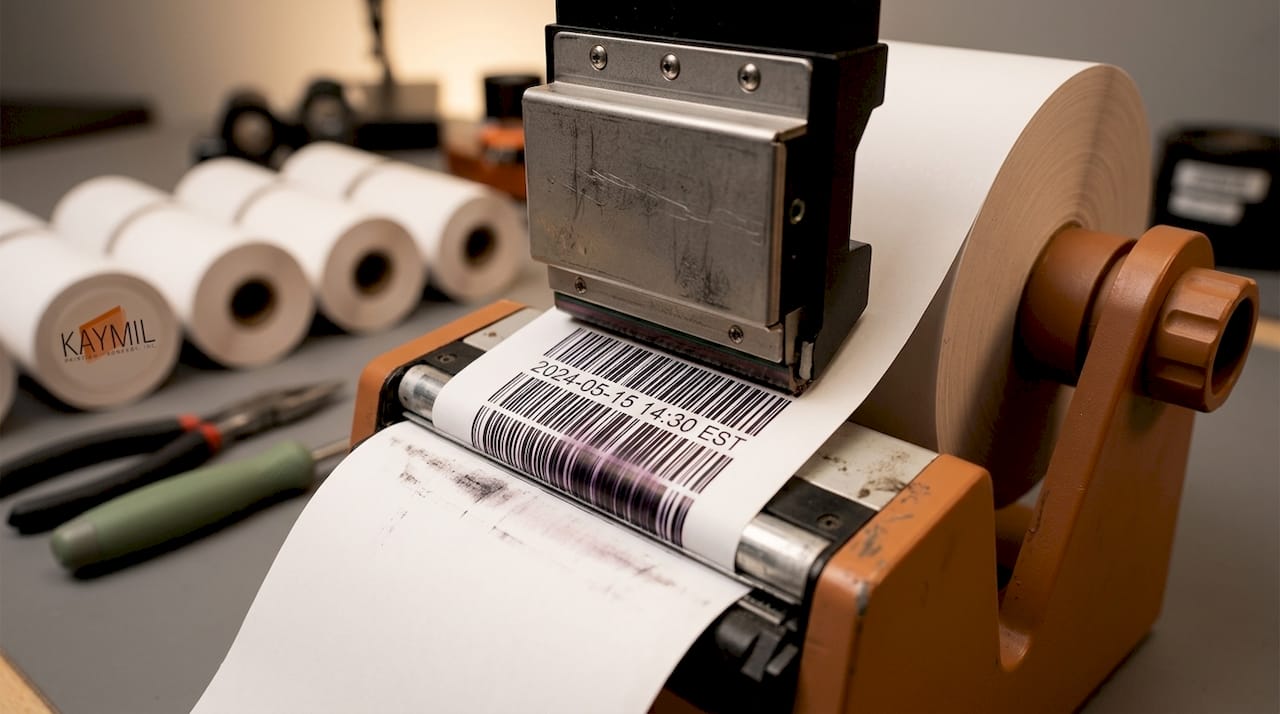
These rolls serve as more than printed receipts. They function as machine-readable tokens that carry unique identifiers linking each vehicle’s entry time to its payment and exit validation. Without the roll, the entire automated workflow stops.
How does a parking ticket dispenser work in entry and exit systems?
The parking ticket dispenser function follows a defined sequence that connects the physical ticket to the facility’s access control software. Here is how the workflow operates in a standard automated garage:
- Driver arrives at the entry lane. The vehicle triggers a sensor or the driver presses the ticket request button on the dispenser terminal.
- The dispenser prints the ticket. The thermal print head activates, printing the entry time, date, a unique barcode or QR code, and any facility branding onto the ticket as it feeds from the roll.
- The ticket is dispensed. The machine cuts the ticket and presents it to the driver through the output slot.
- The barrier opens. Once the ticket is removed, the access barrier lifts and the vehicle enters. In systems with license plate recognition (LPR), the plate is also captured and linked to the ticket’s unique code.
- Exit validation occurs. At the exit terminal, the driver inserts the ticket or scans the QR code. The system reads the barcode, calculates the fee based on entry time, processes payment, and opens the exit barrier.
This workflow is supported by systems from manufacturers including Amano, TIBA, SKIDATA, Scheidt & Bachmann, and Flowbird. Each platform reads the QR code for validation printed on the roll ticket to authorize exit. The roll’s print quality must meet each system’s scanning tolerances, which is why paper grade and print density matter operationally.
Pro Tip: If your facility uses LPR integration, confirm that your ticket roll supplier prints barcodes at a density compatible with your specific scanner hardware. A mismatch between print resolution and scanner sensitivity is a common but preventable source of exit lane errors.
Parking ticket roll specifications: what operators need to know
Selecting the right roll is not just about paper width. Several technical specifications directly affect how many tickets you get per roll, how long they last in the field, and whether they are compatible with your dispensers.
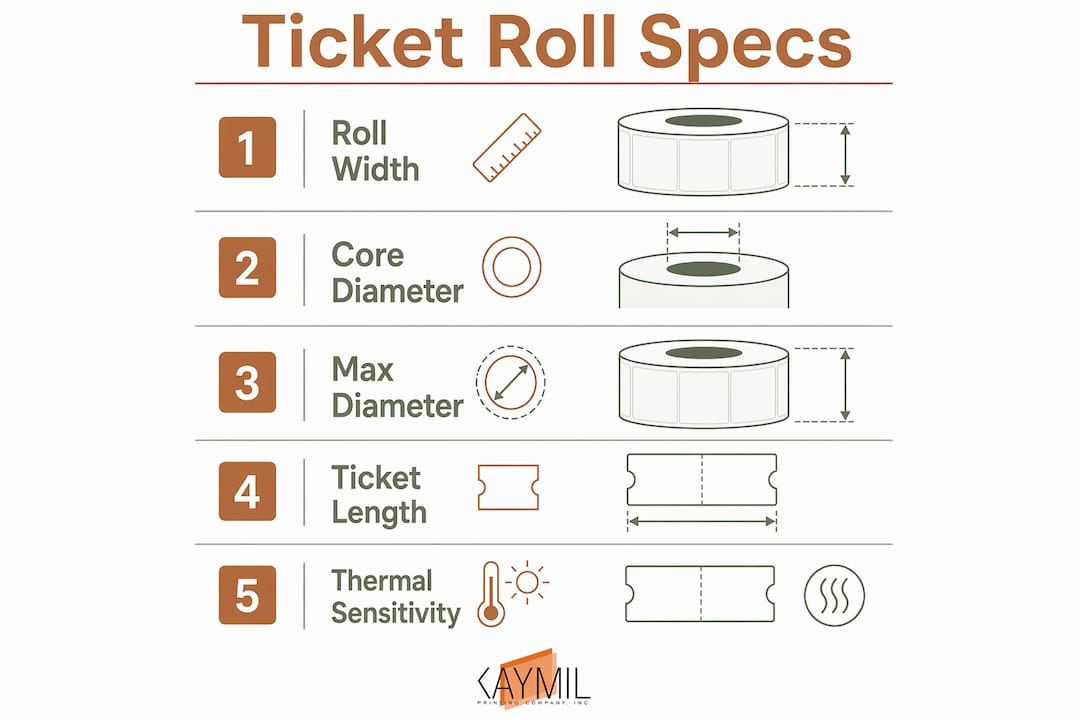
The table below covers the most common roll configurations used in automated parking systems:
| Specification | Common Range | Operational Impact |
|---|---|---|
| Roll width | 2.25 in to 3.125 in | Must match dispenser throat width exactly |
| Ticket length | 3.5 in to 6 in | Longer tickets reduce count per roll |
| Roll diameter | 3 in to 5 in | Larger rolls extend time between changes |
| Thermal sensitivity | Standard or high | High sensitivity suits outdoor or UV-exposed dispensers |
| Tickets per roll | 500 to 1,500+ | Depends on ticket length and roll diameter |
| Core size | 0.5 in to 1 in | Must match dispenser spindle specifications |
Thermal ticket rolls can provide over 1,000 tickets per roll depending on ticket length and roll diameter. That figure matters for capacity planning because a high-volume garage processing 800 vehicles per day will exhaust a 1,000-ticket roll in roughly 30 hours of operation. Facilities that do not track consumption rates will face unexpected downtime at the worst possible moments.
Most modern dispensers include low-ticket alert sensors that trigger a warning when the roll reaches a preset threshold, typically 50 to 100 tickets remaining. These alerts are the foundation of roll capacity planning and should be integrated into your facility management workflow rather than treated as a backup warning. Treat ticket consumption as a measurable system metric, not a supply afterthought.
Pro Tip: Run a two-week consumption audit at each entry lane before setting your reorder threshold. Divide total tickets dispensed by days of operation to get your daily burn rate, then set your reorder point at twice that number to account for shipping lead times.
Benefits of parking ticket dispenser rolls in automated facilities
The operational case for thermal ticket rolls in automated parking systems is grounded in measurable outcomes across throughput, revenue, and security.
- Faster lane throughput. Thermal printing produces a ticket in under two seconds. Manual ticket writing or paper log systems cannot match that speed, and lane delays compound quickly during peak entry periods.
- Accurate fee calculation. The barcode and QR code integration with parking management software eliminates manual time entry errors. The system reads the exact entry timestamp from the ticket and calculates fees automatically.
- Fraud prevention and revenue protection. Each ticket carries a unique identifier that cannot be duplicated without access to the dispenser system. Duplicate or counterfeit tickets are flagged immediately at exit validation, protecting revenue from ticket swapping schemes.
- Reduced labor costs. Automated dispensers with thermal rolls eliminate the need for staffed entry booths during off-peak hours. A single roll-fed dispenser can handle hundreds of transactions without human intervention.
- Improved customer experience. Drivers receive a physical ticket quickly, with clear printed instructions and facility information. Systems with HD display units and voice communication further reduce confusion at entry lanes.
- Customization for branding and compliance. Rolls can be printed with facility logos, legal language, payment instructions, and promotional messaging. Custom citation rolls can carry logos, barcodes, legal language, and city branding on both sides for field enforcement clarity.
The combined effect of these benefits is a parking operation that processes more vehicles, collects more revenue accurately, and requires less manual oversight per transaction. For facility managers responsible for multiple lanes or locations, that operational leverage is significant.
How to select and maintain parking ticket dispenser rolls
Choosing the right roll and maintaining your dispensers properly prevents the majority of operational failures that parking managers encounter. The following practices apply across most automated parking systems:
- Match roll specifications to your dispenser model. Confirm roll width, core diameter, and maximum roll diameter against the manufacturer’s specifications for your Amano, TIBA, SKIDATA, or Flowbird terminal before ordering. An incompatible roll causes jams and sensor errors.
- Prioritize thermal sensitivity for your environment. Outdoor dispensers in direct sunlight or high-heat environments require high-sensitivity thermal paper that resists premature darkening. Standard sensitivity paper is adequate for covered or indoor installations.
- Order custom-printed rolls for branding and security. Rolls printed with your facility’s logo, sequential numbering, and barcodes add a layer of fraud resistance and reinforce your brand at every transaction. Caymil produces custom parking ticket rolls with barcodes, sequential numbering, and facility branding compatible with major parking systems.
- Store rolls correctly. Thermal paper degrades when exposed to heat, humidity, or direct light. Store rolls in a cool, dry location away from windows and heating vents. Improper storage is a leading cause of faded or unreadable tickets.
- Establish a cleaning schedule for print heads. Dust and paper debris accumulate on thermal print heads and cause streaking or partial prints. Clean print heads with isopropyl alcohol and a lint-free swab every time you change a roll.
- Set automated reorder triggers. Use your dispenser’s low-ticket alert data to set a reorder point that accounts for your supplier’s lead time. Facilities that rely on visual checks alone frequently run out during high-volume periods.
Pro Tip: Keep one backup roll per active lane on-site at all times. A roll change takes under two minutes with a trained attendant, but a facility without a spare can face a 20-minute or longer delay waiting for a manager to locate stock.
Key takeaways
Parking ticket dispenser rolls are thermal paper consumables that directly control the reliability, security, and throughput of every automated parking transaction in your facility.
| Point | Details |
|---|---|
| Core function | Thermal rolls print unique barcodes and timestamps that drive automated entry, exit, and fee calculation. |
| Roll capacity | A single roll can yield 500 to 1,500+ tickets; daily consumption audits set accurate reorder thresholds. |
| Compatibility matters | Roll width, core size, and thermal sensitivity must match your specific dispenser model to prevent jams and errors. |
| Custom printing adds value | Logos, sequential numbering, and legal language on rolls improve security, branding, and enforcement clarity. |
| Maintenance prevents downtime | Regular print head cleaning and on-site backup rolls eliminate the most common causes of lane outages. |
What I’ve learned from watching facilities manage their rolls
After working with parking operators across garages, municipalities, and event venues, the pattern is consistent: facilities that treat ticket rolls as a managed consumable outperform those that treat them as a commodity. The operators who benchmark their daily ticket consumption per lane, integrate low-ticket alerts into their maintenance software, and order custom-printed rolls from a reliable supplier almost never experience dispenser downtime. The ones who order whatever is cheapest and reorder only when they run out spend far more time troubleshooting jams, faded prints, and incompatible paper than they save on unit cost.
The emerging trend worth watching is the hybrid thermal and RFID ticket. Several system manufacturers are testing rolls that embed a thin RFID layer within the thermal substrate, allowing the same ticket to serve both as a printed receipt and a contactless token. This eliminates the need for separate RFID cards at facilities that want both options. The thermal roll is not going away. It is getting more capable.
The practical advice I give every facility manager is this: treat your dispenser roll supply the way you treat fuel for your equipment. You would not let a generator run to empty before ordering more fuel. Apply the same logic to your ticket stock, and most of your consumable-related problems disappear.
— Richard
Source your parking ticket rolls from Caymil
Caymil has manufactured and supplied parking ticket rolls since 1937, serving garages, municipalities, hotels, hospitals, and event venues nationwide. Caymil’s parking ticket roll catalog includes stock thermal rolls and fully custom-printed options with barcodes, sequential numbering, logos, and security features compatible with Amano, TIBA, SKIDATA, FLASH Parking, Scheidt & Bachmann, and Flowbird systems. For facilities that also operate valet programs, Caymil’s machine-issued valet tickets are printed on thermal rolls designed for high-speed dispensers. With millions of tickets in stock and fast nationwide shipping, Caymil makes it straightforward to keep every entry lane running without interruption.
FAQ
What is a ticket roll for parking dispensers made of?
A parking ticket dispenser roll is made of thermal paper coated with heat-sensitive layers that react to the print head to produce permanent text, barcodes, and QR codes without ink or toner. The coating grade determines print durability and resistance to heat, UV exposure, and handling.
How many tickets does a parking dispenser roll hold?
Most thermal parking ticket rolls yield between 500 and 1,500 tickets per roll, depending on ticket length and roll diameter. Longer tickets reduce the count per roll, so facilities with detailed print layouts should account for this when setting reorder thresholds.
How does a parking ticket dispenser work with access control systems?
The dispenser prints a unique barcode or QR code on each ticket at entry, which the parking management software links to the vehicle’s entry time. At exit, the system scans the code, calculates the fee, and opens the barrier after payment, creating a fully automated transaction loop.
What roll specifications should I check before ordering?
Confirm roll width, core diameter, maximum roll diameter, and thermal sensitivity rating against your dispenser model’s specifications. Incompatible dimensions cause paper jams, and incorrect thermal sensitivity causes faded or over-darkened prints that scanners cannot read.
Can parking ticket rolls be custom printed?
Yes. Rolls can be printed with facility logos, sequential numbering, barcodes, legal language, and payment instructions on one or both sides. Custom printing improves fraud resistance, supports branding, and provides enforcement clarity for citation applications.
Recommended
- The role of ticket dispensers in parking: A manager’s guide - Caymil Printing Co., Inc.
- Printed Parking Tickets: A Practical Guide for Operators - Caymil Printing Co., Inc.
- Parking Ticket Paper: Stock, Thermal Rolls, and What Really Lasts - Caymil Printing Co., Inc.
- Parking Machine Ticket: What Every Driver Should Know - Caymil Printing Co., Inc.