
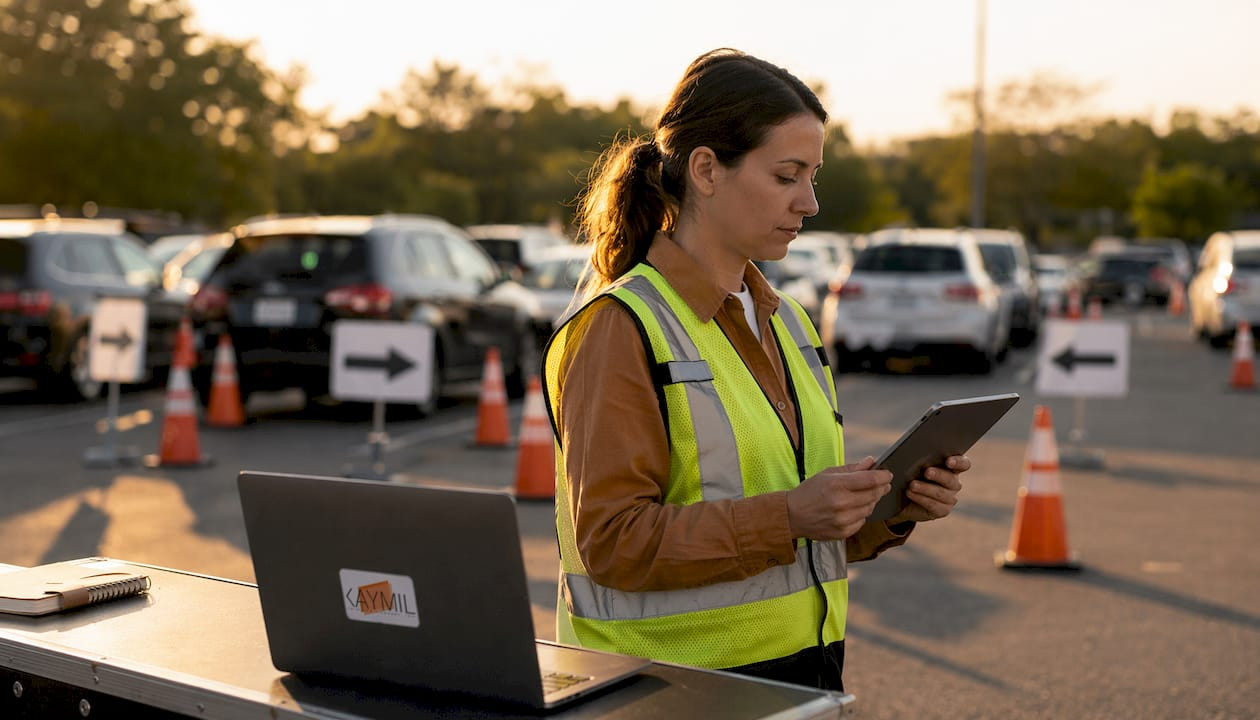
How Event Parking Lot Management Works in 2026
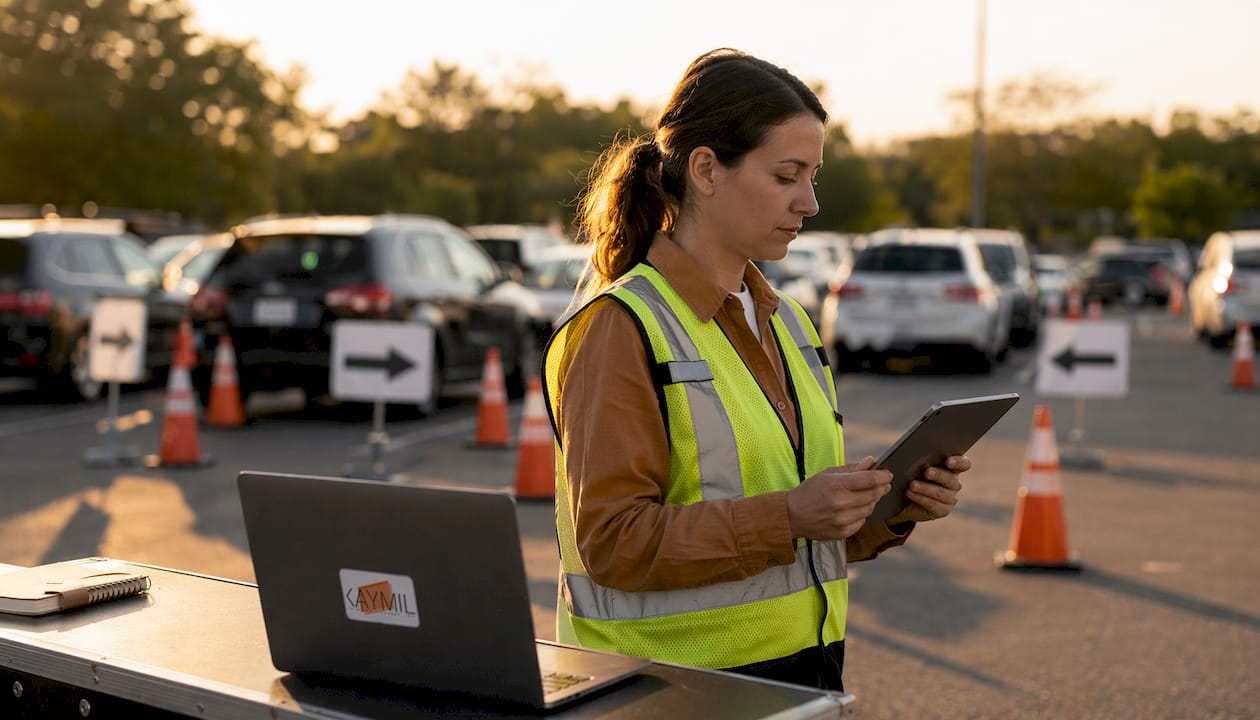
Event parking lot management is the coordinated process of planning, operating, and controlling parking logistics to handle concentrated vehicle demand during events efficiently. It covers everything from forecasting arrival waves and zoning lots to deploying technology, staffing decision points, and collecting revenue. Done well, it keeps attendees moving, reduces congestion, and protects your event’s reputation. Done poorly, it becomes the first and last thing guests remember.
How does event parking lot management work from the ground up?
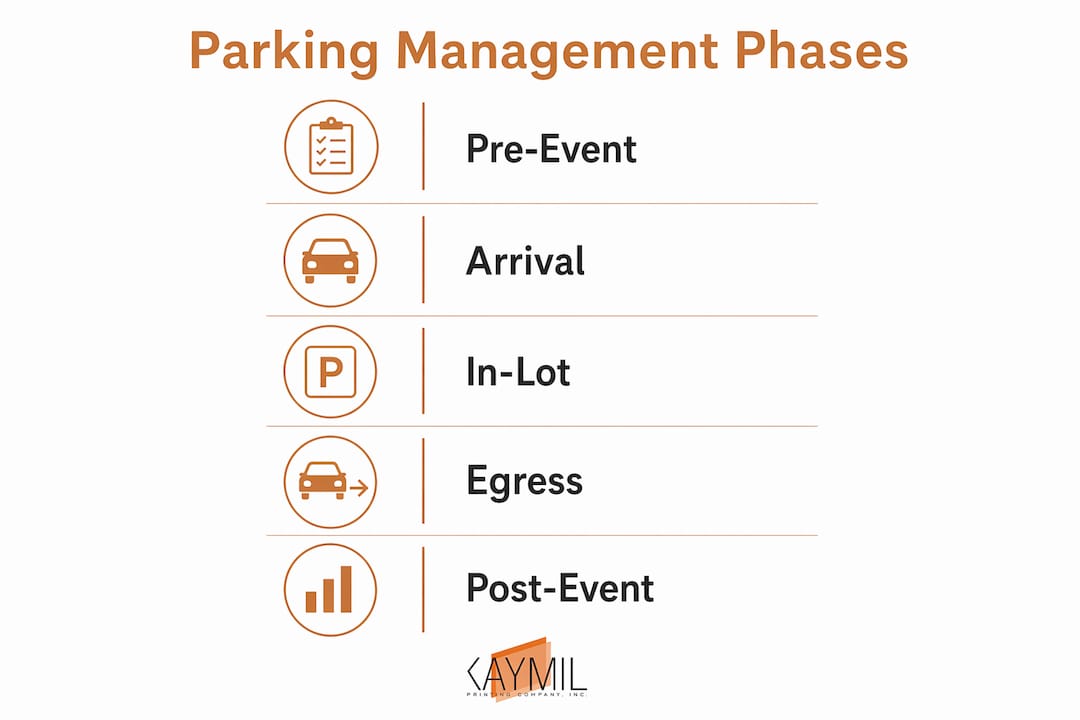
Event parking lot management works by breaking a complex, time-compressed operation into four phases: pre-event planning, arrival management, real-time monitoring, and post-event egress. Each phase depends on decisions made in the one before it. The industry term for this coordinated approach is parking operations management, though event organizers commonly refer to it as event parking control.
The core components are demand forecasting, zone allocation, staffing, signage, technology integration, and guest communication. Skipping any one of these creates a weak point that shows up as a queue, a conflict, or a revenue gap. The goal is to move vehicles from the public road to a parked position, and back out again, without bottlenecks at any stage.

How do event organizers forecast demand and allocate parking zones?
Demand forecasting is the foundation of effective parking management. Arrival wave data shows that roughly 30% of vehicles arrive within the first 20 minutes of popular events like galas and concerts. That single fact should drive every staffing and signage decision you make before the gates open.
Organizers use RSVP counts, ticket sales data, and historical records from prior events at the same venue to build arrival models. These models identify peak ingress windows and allow you to staff entrances before the surge, not during it.
Zone allocation follows directly from the forecast. A well-organized lot uses clearly separated zones:
- VIP and accessible parking closest to the entrance, with dedicated lanes
- Exhibitor and vendor parking in a separate section to avoid conflicts with general traffic
- General attendee parking divided into labeled sections (A, B, C) for easy wayfinding
- Overflow lots pre-designated with shuttle access for when primary lots fill
Pro Tip: Build your VIP parking zone before you finalize general lot layouts. VIP conflicts during ingress are the most visible failures and the hardest to fix in real time.
Walking distance matters more than organizers expect. Attendees tolerate longer walks when they know the distance in advance. Publish walking times in your pre-event communications, not just lot names.
| Zone type | Priority | Key consideration |
|---|---|---|
| VIP and accessible | Highest | Nearest to entrance, dedicated lane |
| Exhibitor and vendor | High | Separate from attendee flow |
| General attendee | Standard | Labeled sections, clear signage |
| Overflow | Contingency | Shuttle frequency determines satisfaction |
What technology and tools improve real-time parking lot management?
Real-time occupancy monitoring is the single biggest operational upgrade available to event parking managers today. Sensors and AI cameras feed live data to a central dashboard, showing lot-by-lot fill rates. When Lot A reaches 90% capacity and Lot B sits at 50%, staff can reroute vehicles instantly rather than waiting for a backup to form.
License Plate Recognition (LPR) is the fastest entry method available for pre-booked vehicles. LPR systems read plates automatically and lift barriers without manual scanning or payment, handling high volumes with minimal staff at the gate. This is especially valuable during the peak ingress window when every second of gate delay multiplies into a longer queue.
Pre-booking and digital permits reduce on-site uncertainty for both operators and attendees. When guests reserve a spot in advance, you gain accurate arrival forecasts and they gain confidence that a space exists. Mobile-friendly parking software centralizes reservations, occupancy tracking, dynamic pricing, and real-time alerts in one platform.
Key technology components for event parking operations include:
- Occupancy sensors or AI cameras for live lot fill data
- LPR systems for frictionless entry of pre-booked vehicles
- Central command dashboard for monitoring all lots and coordinating staff
- Mobile reservation platforms for advance booking and digital permits
- Push notification tools to communicate lot status and exit instructions to attendees
A central command center, even a simple laptop station near the entrance, gives your parking lead a single view of all operations. That visibility is what separates reactive management from proactive control. Caymil’s parking management system overview covers how these technology layers connect in practice.
How is staffing and communication managed for event parking operations?
Staffing for event parking follows a layered structure. A well-designed team includes a parking lead who owns the full plan, zone captains who manage specific lot sections, vehicle attendants who direct traffic, shuttle coordinators who manage remote lot flows, and safety officers who handle incidents. Each role has a defined area and a clear chain of communication.
The T-minus timeline is the most reliable framework for pre-event preparation. Experienced parking managers begin staff briefings, communication tests, and signage setup two hours before gates open. This window allows time to fix problems before attendees arrive, not while they are waiting in line.
Briefings at T-minus 2 hours should cover three things: the arrival wave forecast, each staff member’s assigned position, and the radio channel structure. Radios with labeled channels are the backbone of real-time coordination. Assign one channel per zone and one command channel for the parking lead. Never mix zone traffic with command traffic.
- Assign staff to decision points first: entrances, zone splits, and overflow transitions
- Conduct a full radio check at T-minus 90 minutes
- Walk the lot to verify all signage is visible and correctly placed
- Brief shuttle coordinators separately on frequency and capacity targets
- Confirm overflow lot readiness and shuttle timing before gates open
Pre-event communication with attendees is the most overlooked element in parking operations. Organizers who send digital arrival maps and clear routing instructions see higher compliance and fewer bottlenecks than those relying on signage alone. Send arrival instructions 48 hours before the event and again the morning of.
Pro Tip: Include your parking lot supplies checklist in your T-minus briefing packet. Staff who arrive with the right tools, cones, signs, and radios, perform better under pressure.
What strategies improve ingress and egress flow to prevent congestion?
Ingress flow management starts before the first car enters the lot. Boutique and constrained venues design their parking flow around three map overlays: peak ingress, peak egress, and emergency access. The target is to clear 90% of arriving vehicles within 5 minutes of arrival to prevent backup onto public roads. That benchmark is achievable only with pre-planned routing and staffed decision points.
One-way lane systems eliminate the most common source of internal congestion: vehicles turning against traffic. Pair one-way flow with left-turn restrictions at lot entrances to keep vehicles moving in a single direction. Clear, high-contrast signage at every decision point reduces hesitation, and hesitation is what creates queues.
Staggered arrival windows, communicated in advance to attendees, spread the ingress load across a longer window. This is especially effective for conferences and multi-session events where not all attendees need to arrive at the same time.
Egress is where most parking operations fail. Staged vehicle release using row-by-row or timed release methods, combined with push notifications and coordinated signal timing, prevents exit bottlenecks from spilling onto city streets. Staff control the release sequence; technology communicates it to attendees.
Rideshare and shuttle loops require their own designated lanes, separate from self-parking egress. Mixing these flows creates the worst congestion scenarios. Assign a dedicated coordinator to each loop and set a minimum shuttle frequency before the event ends.
How can event parking management optimize revenue collection and guest experience?
Revenue collection and guest experience are not competing goals. Dynamic pricing that adjusts fees based on proximity to the venue, demand timing, and booking method increases revenue while rewarding guests who plan ahead. Premium spots near the entrance command higher fees. Advance bookings are priced lower than drive-up rates, which incentivizes pre-booking and improves your arrival forecast accuracy.
Effective event parking revenue collection relies on these core tactics:
- Tiered pricing by zone proximity (premium, standard, overflow)
- Early-bird rates for advance purchases to shift demand earlier
- Bundled packages combining parking with event tickets for higher perceived value
- Automated payment systems at entry and exit to reduce gate staff and speed throughput
- Post-event data analysis to refine pricing tiers and staffing ratios for future events
Automated payment and access control systems handle high transaction volumes without adding gate staff. This matters most during the peak ingress window when manual payment collection creates the longest delays. Contactless payment and pre-authorized charges for pre-booked vehicles are the fastest options available.
Post-event data is where long-term revenue improvement happens. Occupancy curves, peak arrival times, and payment method breakdowns tell you exactly where to adjust pricing and staffing for the next event. Organizers who skip this step repeat the same inefficiencies year after year.
Key Takeaways
Effective event parking lot management requires demand forecasting, zone segmentation, layered staffing, real-time technology, and proactive guest communication working together before, during, and after the event.
| Point | Details |
|---|---|
| Forecast arrival waves | Anticipate 30% of vehicles arriving in the first 20 minutes to staff entrances before the surge. |
| Segment parking zones | Separate VIP, accessible, exhibitor, and general parking to prevent conflicts and improve flow. |
| Use real-time technology | LPR, occupancy sensors, and central dashboards enable dynamic rerouting and faster entry. |
| Staff with a T-minus timeline | Begin briefings and signage setup two hours before gates open to fix problems proactively. |
| Combine dynamic pricing with advance booking | Tiered rates and pre-booking improve revenue and give organizers accurate arrival forecasts. |
What I’ve learned from watching parking operations succeed and fail
The gap between a smooth parking operation and a chaotic one almost always comes down to one thing: how much work was done before the first car arrived. Teams that brief early, test their radios, and walk the lot catch problems when they are still fixable. Teams that set up at T-minus 30 minutes spend the entire event in reactive mode.
Technology gets a lot of attention, and it deserves it. LPR and real-time dashboards genuinely change what is possible. But I have seen technically sophisticated operations fall apart because staff did not know their assignments or attendees had no idea which entrance to use. The tools only work when the people using them are prepared.
The piece that consistently gets underinvested is pre-event communication with attendees. Sending a clear arrival map and parking instructions 48 hours out costs almost nothing. It reduces confusion at the gate, cuts entry time, and makes the entire operation run more smoothly. Most organizers treat it as optional. It is not.
Post-event data review is the other underused practice. Every event generates occupancy curves, peak arrival windows, and payment data. Organizers who analyze that data before the next event improve every time. Those who skip it book the same problems into their calendar repeatedly.
— Richard
Caymil’s parking tickets and permits for event operations
Event parking operations depend on physical documentation as much as digital tools. The right tickets and permits give your team control over access, revenue tracking, and zone enforcement from the moment gates open.
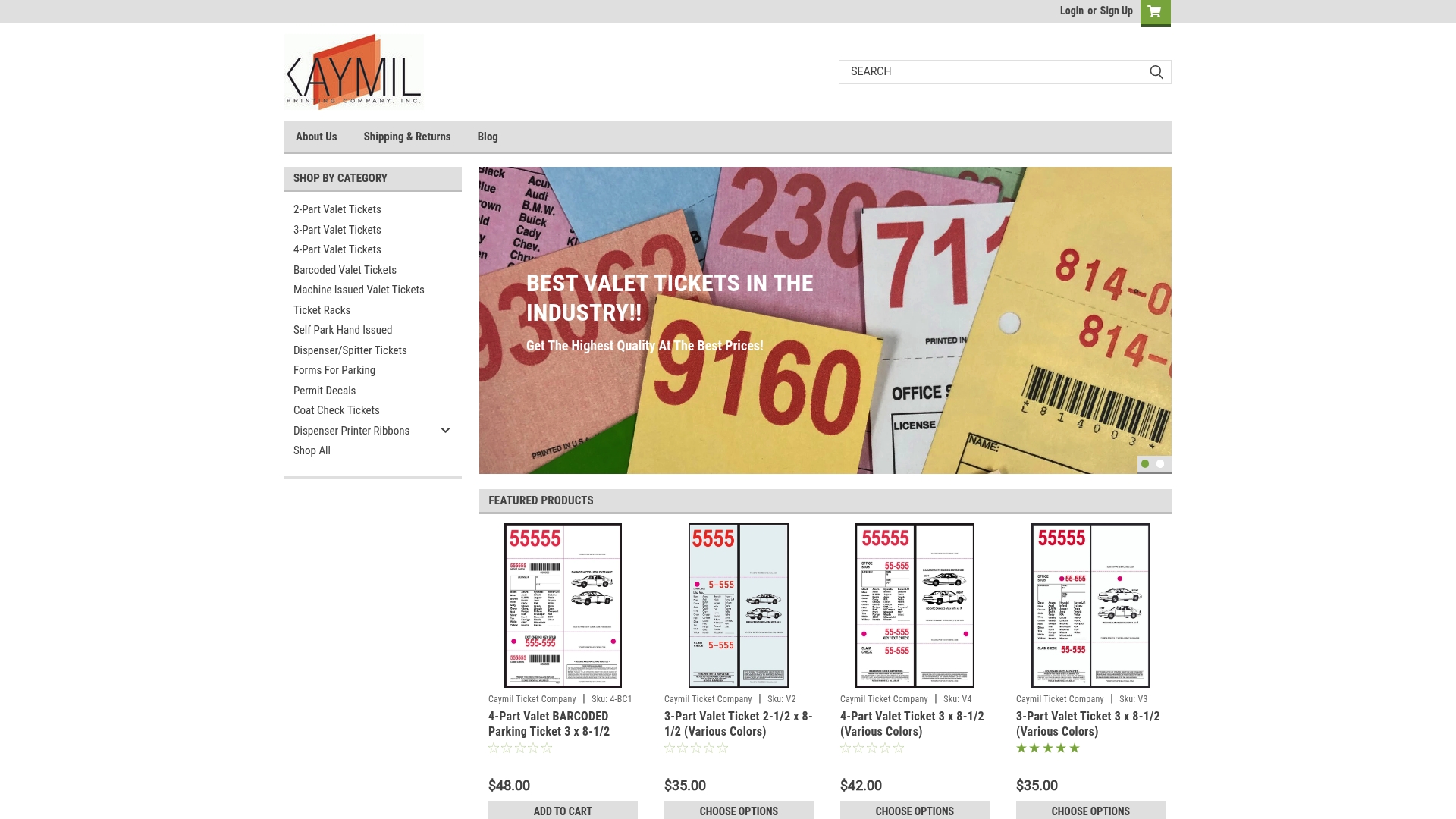
Caymil has manufactured parking forms and supplies for event venues, valet operators, and parking managers since 1937. From sequentially numbered event parking tickets to barcoded valet tickets compatible with Amano, TIBA, SKIDATA, and Flowbird systems, Caymil’s products integrate directly into existing parking workflows. Permit decals make zone enforcement visible and consistent across large lots. With millions of tickets in stock and fast nationwide shipping, Caymil keeps your operation supplied without delays.
FAQ
What is event parking lot management?
Event parking lot management is the coordinated planning and real-time control of parking logistics during an event, covering zone allocation, staffing, technology, and guest communication to move vehicles efficiently.
How do you handle peak arrival surges at events?
Roughly 30% of vehicles arrive within the first 20 minutes of popular events. Staff all entrance decision points before that window opens and use real-time occupancy data to reroute vehicles to less-full lots.
What technology speeds up event parking entry?
License Plate Recognition systems automate entry for pre-booked vehicles without manual scanning, reducing gate wait times significantly during peak ingress.
How does staged egress prevent post-event gridlock?
Row-by-row or timed vehicle release combined with push notifications and coordinated signal timing prevents exit congestion from spilling onto surrounding streets.
How does dynamic pricing improve event parking revenue?
Dynamic pricing charges higher fees for premium proximity spots and lower rates for advance bookings, increasing total revenue while encouraging pre-booking that improves arrival forecast accuracy.
Recommended
- Parking Management System Examples for Operators in 2026 - Caymil Printing Co., Inc.
- Parking Lot Supplies Checklist for Managers in 2026 - Caymil Printing Co., Inc.
- What is an event parking ticket? The pro’s guide - Caymil Printing Co., Inc.
- Parking Facility Audit Using Tickets: 2026 Guide - Caymil Printing Co., Inc.