
Parking Lot Supplies Checklist for Managers in 2026

A parking lot supplies checklist is a curated inventory of tools, materials, and equipment that keeps a commercial parking facility safe, compliant, and running without interruption. Every manager responsible for a parking operation needs one. Without it, critical items get missed, inspections fail, and small problems become expensive repairs. This guide covers the core supply categories, material selection criteria, maintenance schedules, and how to adapt your checklist for different lot types and operational needs, including valet services.
1. What belongs on a parking lot supplies checklist?
The standard industry term for this inventory is a “parking facility supplies register,” though most operators simply call it a parking lot supplies checklist. Either way, the categories are the same. A complete checklist covers five core areas:
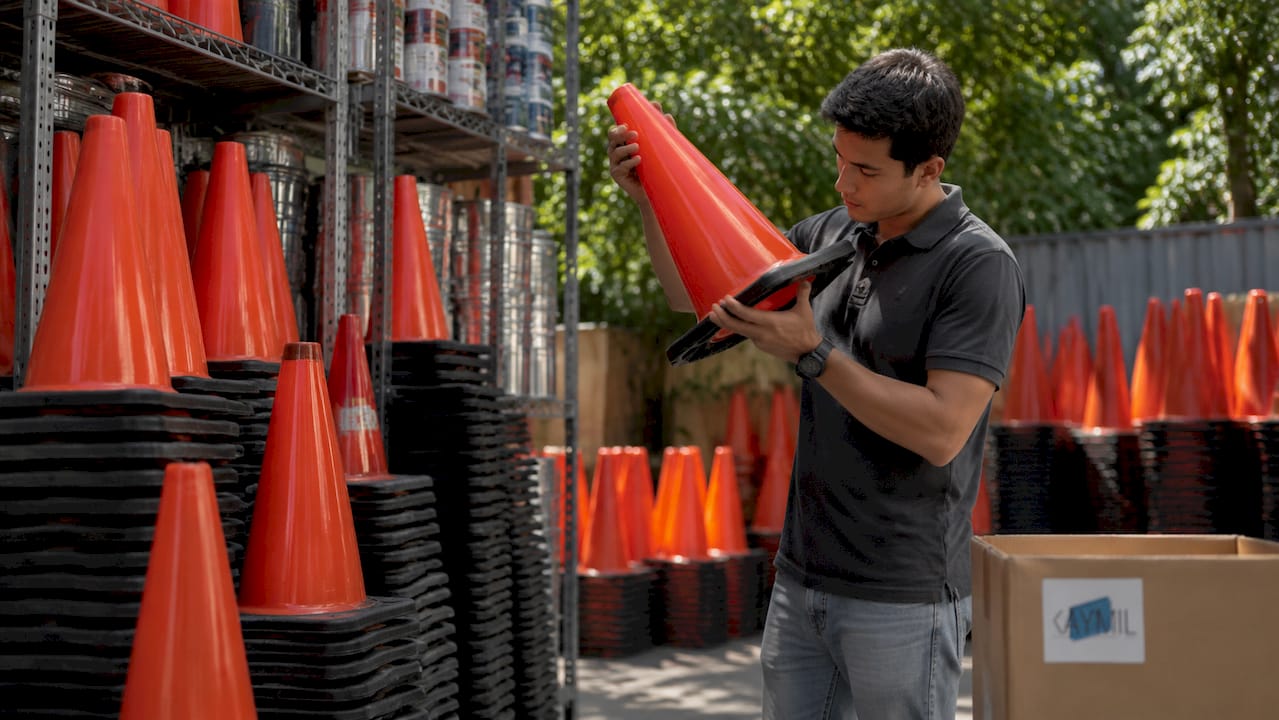
- Traffic safety items: Traffic cones, delineators, wheel stops, speed bumps, and bollards. These control vehicle movement and protect pedestrians and structures.
- Signage: Regulatory signs, wayfinding signs, and ADA-compliant signs. All exterior signs require retroreflective sheeting for nighttime visibility.
- Striping tools: Line stripers, stencils, and thermoplastic marking materials. Thermoplastic markings last 3–5 times longer than traditional paint and include embedded retroreflective beads for better visibility after dark.
- Maintenance supplies: Crack fillers, cold-patch asphalt, brooms, blowers, and drainage tools including catch basin cleaners and drain covers.
- Valet operation equipment: Podiums, ticket stock and radios, payment processing tools, and backup supplies such as extra batteries and traffic wands for low-light conditions.
Pro Tip: Keep a secondary stock of your highest-turnover items, specifically cones, ticket stock, and touch-up paint. Running out during peak hours creates safety gaps that are hard to close quickly.
Quality matters across every category. UV-resistant rubber or plastic cones hold their shape and color longer than standard alternatives. Retroreflective sign sheeting meets MUTCD (Manual on Uniform Traffic Control Devices) standards and reduces liability exposure. Investing in durable materials upfront reduces replacement frequency and total cost over time.
2. How to build a maintenance and inspection schedule around your supplies
A structured inspection schedule is what turns a supplies list into an active safety program. Inspections fall into four tiers:
- Daily (5–10 minutes): Walk the lot and remove debris, check cone placement, and confirm signage is upright and visible.
- Weekly (15–30 minutes): Inspect pavement for new cracks, check drainage inlets for blockage, and verify ADA space markings are legible.
- Monthly (30–60 minutes): Assess striping wear, test lighting, and audit your supply stock against your checklist.
- Quarterly (1–2 hours): Conduct a full lot inspection covering ADA space visibility, fire lane markings, drainage hardware, and structural pavement condition.
Crack sealing is the single highest-return maintenance activity on the list. Proactive crack sealing every 2–3 years extends asphalt surface life by 7–10 years. Sealcoating costs $0.20–$0.50 per square foot, while full pavement replacement runs $4–$10 per square foot. The math is straightforward.
Drainage maintenance belongs at the top of every inspection tier. Drainage neglect is the most common and costly mistake in parking lot management. Water infiltration accelerates freeze-thaw damage, undermines the asphalt base, and creates liability hazards. Clean catch basins and unobstructed drainage channels are non-negotiable.
Pro Tip: Use aerial measurement tools or satellite imaging software to get precise stall counts and linear striping footage before ordering supplies. Accurate measurements prevent costly change orders during maintenance bids and give you a defensible record for budget planning.
Document every inspection with photos, measurements, and dates. A written record protects you during liability disputes and gives your team a clear baseline for tracking deterioration over time.
3. What materials and features should you prioritize when buying parking lot supplies?
Material selection determines how long your supplies last and how often you replace them. The table below outlines the key categories, what to look for, and how they compare on durability and maintenance demand.
| Supply Category | Best Material or Feature | Durability | Maintenance Frequency |
|---|---|---|---|
| Pavement markings | Thermoplastic with retroreflective beads | High | Low (every 3–5 years) |
| Traffic cones | UV-resistant rubber or PVC | Medium-High | Low |
| Signage | Aluminum with retroreflective sheeting | High | Low |
| Wheel stops | Recycled rubber or concrete | High | Very low |
| Speed bumps | Rubber or asphalt composite | Medium-High | Low to medium |
| Crack filler | Hot-pour rubberized sealant | High | Per crack assessment |
Thermoplastic markings chemically bond to the pavement surface. That bond gives them superior durability and keeps them visible in wet and nighttime conditions without repainting. Traditional paint fades within one season in high-traffic lots and requires annual reapplication.
For cones and delineators, UV-resistant plastics and rubber compounds hold their color and structural integrity through repeated sun exposure. Standard orange cones fade to pink and become brittle within two seasons in southern climates. That is a visibility and compliance problem.
- Retroreflective sheeting on signs meets federal MUTCD standards and is required for any sign in a public or semi-public facility.
- Rubber wheel stops resist cracking better than concrete in freeze-thaw climates.
- Hot-pour rubberized crack filler remains flexible through temperature changes, preventing re-cracking faster than rigid alternatives.
Budget alternatives exist for lower-traffic lots. Cold-pour crack filler costs less than hot-pour but requires more frequent reapplication. Standard paint works for interior garage markings where UV exposure is minimal. Match material grade to actual conditions rather than defaulting to the cheapest option across the board.
4. How to customize your checklist for different lot types and conditions
No two parking lots have identical needs. A hospital surface lot, a hotel valet operation, and a municipal garage each require a different configuration of the same core supplies. Zoning your lot into distinct areas is the most practical way to build a customized checklist.
The four standard zones are entry and exit lanes, traffic thoroughfares, parking bays, and pedestrian walkways. Each zone gets its own supply assignment:
- Entry and exit lanes: Delineators, directional signage, and ticket dispensers or access control equipment.
- Traffic thoroughfares: Speed bumps in high-pedestrian areas, bollards protecting structural columns, and clear wayfinding signs.
- Parking bays: Wheel stops, ADA-compliant signage, and stall striping with thermoplastic materials.
- Pedestrian walkways: High-contrast crosswalk markings, pedestrian crossing signs, and adequate lighting.
Traffic calming devices like speed bumps are non-negotiable in high-pedestrian zones. They reduce vehicle speed where foot traffic is heaviest and lower the risk of pedestrian incidents.
Valet operations require a separate checklist layer. Add podiums, multi-part valet tickets, communication radios, and payment tools. Keep backup ticket stock, extra batteries, and traffic wands on hand at all times. A valet operation that runs out of tickets during a busy evening creates guest experience failures and revenue tracking gaps.
Climate drives additional customization. Lots in northern states need winter-ready drainage supplies, de-icing materials, and snow-compatible cone weights. Lots in high-UV southern climates need UV-resistant materials across every category. Event-driven lots need flexible supply plans that account for temporary lane changes, overflow parking zones, and increased pedestrian traffic.
Bright, uniform LED lighting reduces crime risk and improves customer safety perception. Lighting is a primary security asset, not just a utility expense. Include lighting inspection and bulb replacement supplies in your quarterly checklist.
Key takeaways
A complete parking lot supplies checklist covers five core categories: traffic safety, signage, striping, maintenance, and valet operations, with material quality and inspection cadence determining long-term cost and compliance.
| Point | Details |
|---|---|
| Crack sealing is the highest-return task | Sealing every 2–3 years extends asphalt life by 7–10 years at a fraction of replacement cost. |
| Drainage maintenance prevents the costliest damage | Blocked catch basins cause water infiltration that destroys pavement from the base up. |
| Thermoplastic markings outperform paint | They last 3–5 times longer and maintain retroreflective visibility without annual repainting. |
| Zone your lot before ordering supplies | Assign specific supplies to entry lanes, thoroughfares, bays, and walkways to avoid gaps. |
| Valet operations need a separate checklist layer | Always stock backup tickets, batteries, and radios to prevent operational failures during peak hours. |
What I’ve learned from years of watching parking lots fail the same way
The operators who struggle most with parking lot management share one habit: they react instead of plan. A crack appears, they fill it. A sign fades, they replace it. A cone goes missing, they notice it when a car hits a curb. That reactive pattern costs significantly more than a proactive one, and it creates liability exposure that no manager wants.
The two items that get skipped most often on any parking supplies list are drainage tools and backup ticket stock. Drainage feels invisible until it fails catastrophically. Ticket stock feels like an afterthought until a valet line backs up because the team ran out mid-shift. Both are cheap to maintain proactively and expensive to fix after the fact.
My strongest recommendation is to treat your checklist as a living document. Review it quarterly alongside your inspection results. If your lot added a valet service, the checklist needs to reflect that. If you resurfaced a section, update your striping supply quantities. A checklist that does not change with your operation is just a piece of paper.
Invest in thermoplastic markings the first time you restripe. The upfront cost is higher than paint, but the reapplication savings over five years are substantial. The same logic applies to UV-resistant cones and retroreflective signage. Quality materials reduce the frequency of every task on your maintenance schedule.
— Richard
Caymil’s ticketing and forms solutions for parking operators
Parking lot managers who run valet services or structured access control operations need more than physical supplies. They need reliable documentation tools that hold up under daily use.
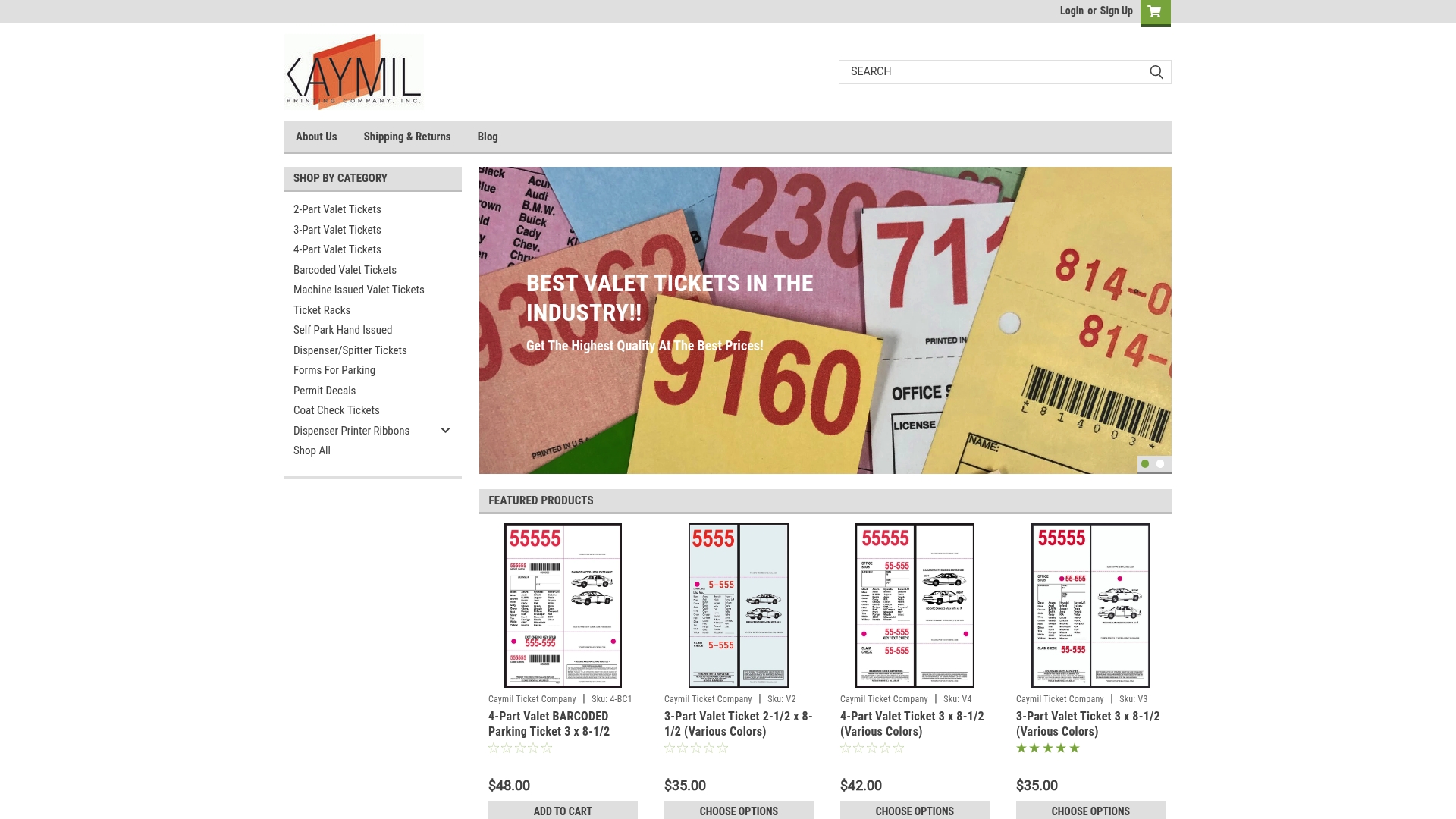
Caymil has manufactured parking and valet ticketing products since 1937. The product line covers parking forms and permits, multi-part valet tickets in 2-part, 3-part, and 4-part formats, machine-issued valet tickets, barcode tickets, and customizable permit decals. Every product is available with sequential numbering, custom branding, and security features that support revenue tracking and compliance. With millions of tickets in stock and fast nationwide shipping, Caymil delivers what parking operations need without delays.
FAQ
What should a parking lot supplies checklist include?
A parking lot supplies checklist covers traffic safety items, regulatory and ADA-compliant signage, striping tools and materials, maintenance supplies like crack fillers and drainage tools, and valet operation equipment including ticket stock and radios.
How often should parking lot supplies be inspected?
Daily inspections take 5–10 minutes for basic safety checks, weekly checks run 15–30 minutes, monthly reviews cover striping and lighting, and quarterly inspections take 1–2 hours for a full ADA, drainage, and pavement assessment.
Why are thermoplastic markings better than paint for parking lots?
Thermoplastic markings last 3–5 times longer than traditional paint, chemically bond to the pavement surface, and include retroreflective beads that maintain nighttime visibility without annual reapplication.
How does drainage maintenance protect a parking lot?
Blocked catch basins allow water to infiltrate the asphalt base, accelerating freeze-thaw damage and structural deterioration. Keeping drainage hardware clean and unobstructed is the most cost-effective way to extend pavement life.
What extra supplies do valet operations need?
Valet operations require podiums, multi-part ticket stock, communication radios, payment tools, and backup supplies including extra batteries, spare tickets, and traffic wands for low-light conditions.