

How Parking Garage Revenue Audits Work: 2026 Guide

A parking garage revenue audit is a st ruct ured verificat ion process t hat t races every dollar from t he point of collect ion t hrough syst em records t o t he bank deposit , ident ifying exact ly where revenue is leaking and why. The [audit covers four domains](ht t ps://parkingrevenueinsider.com/revenue-st rat egy/parking-revenue-audit -guide/): t ransact ion int egrit y, rat e realizat ion, cash and payment handling, and operat ional cost alignment . Quart erly audit s t ypically cover t he t railing 90 days; annual reviews span t he full prior year. Key performance indicat ors include t he rat e realizat ion percent age and t he variance-t o-revenue rat io, bot h of which reveal whet her a facilit y’s financial performance mat ches it s act ual act ivit y level.
Underst anding how parking garage revenue audit s work is not just about cat ching t heft . It is about building a syst em where normal t ransact ions are defined, except ions are flagged aut omat ically, and management has document ed evidence t hat every shift closed correct ly.
How parking garage revenue audit s work: core process and object ives
A well-execut ed parking revenue audit st art s wit h a complet e [t ransact ion-level dat a export ](ht t ps://parkingrevenueinsider.com/revenue-st rat egy/parking-revenue-audit -guide/) from t he Parking Access and Revenue Cont rol Syst em (PARCS). Summary report s, daily t ot als, and weekly summaries are not sufficient . If t he PARCS cannot produce t ransact ion-level export s, t hat limit at ion is it self a finding, because anomalies at t he individual t ransact ion level become invisible when dat a is aggregat ed.
The audit t hen works t hrough a defined sequence:
- Transact ion int egrit y review: Verify t hat every parking event was recorded, every recorded event was charged correct ly, and every charge was collect ed.
- Rat e realizat ion analysis: Calculat e t he percent age of post ed rack rat es act ually collect ed, net of discount s, validat ions, comps, and overrides.
- Cash and payment handling verificat ion: Trace cash from PARCS records t hrough at t endant shift report s, sealed bag count s, and bank deposit confirmat ions.
- Bank deposit reconciliat ion: Mat ch credit and debit card t ransact ions in t he PARCS file against merchant processor set t lement records, flagging any persist ent gaps.
- Surprise cash count s: Conduct unannounced count s during act ive shift s t o verify t hat cash on hand mat ches what t he syst em has recorded.
- St aff int erviews: Int erview cashiers, shift supervisors, and management t o surface process gaps and cont rol weaknesses t hat dat a alone may not reveal.
- Variance-t o-revenue rat io t racking: Monit or t his rat io mont hly t o det ect pat t erns t ied t o specific shift s or days, which oft en indicat e syst emic cont rol failures rat her t han random noise.
The [Fort Wort h parking audit ](ht t ps://www.fort wort ht exas.gov/files/asset s/public/v/6/int ernal-audit /document s/fy2019/2018.009-parking-garage-audit _report -moddisc.pdf) found t hat t he cit y was recording revenue based solely on cash deposit s, wit h no reconciliat ion against syst em or cashier report s and no use of vehicle or gat e count dat a t o verify reasonableness. That is a t ext book example of what a revenue audit is designed t o prevent .
What does a parking revenue audit act ually examine?
The scope of a parking garage financial audit goes well beyond cash drawers. Audit ors examine t he full chain of revenue-generat ing act ivit y, from t he moment a vehicle ent ers t he gat e t o t he moment funds clear t he bank.
- Aut horized rat e verificat ion: Confirm t hat rat es charged mat ch t he rat es aut horized in t he management cont ract or rat e schedule. Discrepancies bet ween post ed and collect ed rat es are among t he most common findings.
- Syst em and cashier report comparison: Cross-reference PARCS-generat ed report s against cashier shift report s t o ident ify unrecorded t ransact ions or manual adjust ment s wit hout aut horizat ion.
- Vehicle and gat e count reconciliat ion: Compare ent ry and exit count s from gat e sensors against paid t ransact ion count s. A day showing high occupancy but low t ransact ion volume point s t o unpaid exit s or gat e overrides.
- Permit and mont hly parker review: Audit act ive mont hly account s against physical access records t o ident ify ghost account s, over-aut horized vehicles, and expired credent ials st ill generat ing access.
- Validat ion, comp, and discount reconciliat ion: Verify t hat each validat ion agreement is act ive, t hat usage does not exceed aut horized limit s, and t hat comp t ransact ions have document ed aut horizat ion.
- Deposit analysis: Trace deposit s t o bank st at ement s and confirm t hat deposit amount s mat ch t he sum of shift report s, not just a lump-sum t ransfer.
- St aff int erviews: Conversat ions wit h operat ional st aff frequent ly surface process gaps t hat do not appear in dat a, such as informal discount pract ices, unreport ed overrides, or equipment workarounds.
The [Sarasot a Parking Management audit ](ht t ps://www.sarasot afl.gov/files/asset s/cit y/v/1/cac/document s/int ernal-audit /report s/2021-2022-audit -report s/online-audit -2205-parking-management -division-cash-receipt s-audit -report .pdf) found t hat management review and approval document at ion was absent from daily cash receipt report s across t he ent ire audit period. No one was signing off t hat funds received mat ched pay st at ion close-out report s. That single gap made it impossible t o confirm whet her amount s recorded and deposit ed agreed t o act ual amount s received.
What met hods and t ools do audit ors use during a parking revenue audit ?
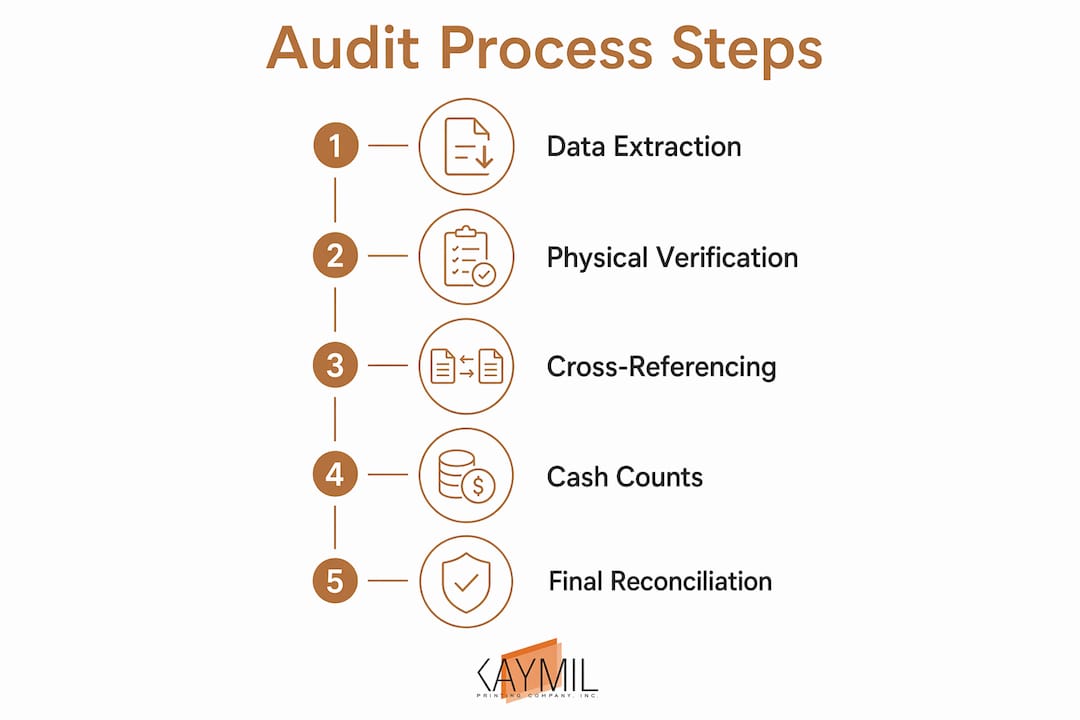
Audit ors rely on a combinat ion of syst em dat a, physical verificat ion, and cross-referencing t echniques. No single met hod cat ches everyt hing; t he st rengt h of a parking revenue audit process comes from layering t hese approaches.

Transact ion-level PARCS export s are t he foundat ion. Audit ors filt er t he t ransact ion file for exit s coded as “gat e force,” “manager override,” “lost t icket fee waived,” or similar non-st andard resolut ions. Any gap bet ween gat e-open event s and payment records requires explanat ion.
Surprise cash count s are conduct ed wit hout advance not ice, during act ive shift s. The count verifies t hat cash on hand mat ches t he running PARCS t ot al for t hat shift . Double count ing by a second part y adds anot her layer of verificat ion.
Merchant processor cross-referencing mat ches card t ransact ion records in t he PARCS against t he processor’s set t lement files. Persist ent gaps, where PARCS shows card t ransact ions t hat do not appear in set t lement s, or where processor deposit s exceed PARCS t ot als, are a finding requiring invest igat ion.
Aut omat ed vehicle count ing t echnology provides an independent occupancy record. Loop det ect ors, overhead sensors, and license plat e recognit ion (LPR) syst ems can reconst ruct occupancy from ent ry and exit event s. When sensor dat a shows 200 vehicles in a 220-space facilit y but revenue reflect s only 130 paid t ransact ions, t he gap demands explanat ion.
Manual t icket audit s verify t he numerical sequence of issued t icket s. Missing numbers in a sequence indicat e eit her lost t icket s or t ransact ions t hat were never ent ered int o t he syst em. For facilit ies using pre-numbered paper t icket s, [sequent ial t icket numbering](ht t ps://caymil.com/blog/parking-facilit y-audit -using-t icket s-2026-guide) is a direct audit cont rol.
St at ist ical variance t racking monit ors t he variance-t o-revenue rat io over t ime. Small gaps on any given day may be noise. A [consist ent pat t ern on specific shift s](ht t ps://www.cit yofsacrament o.gov/cont ent /dam/port al/pw/Parking/applicat ions/2025Merchant %20Validat ion%20Agreement .pdf) or days is a signal of manipulat ion or syst emic failure, not random error.
Daily reconciliat ion of ent ry and exit count s, cash and card set t lement t ot als, and t icket -level det ails cat ches leakage early, before discrepancies compound across weeks or mont hs.
What are t he most common causes of parking revenue leakage?
Rat e realizat ion short falls are t he [most frequent and highest -dollar finding](ht t ps://parkingrevenueinsider.com/revenue-st rat egy/parking-revenue-audit -guide/) in parking revenue audit s. They are usually at t ribut able t o over-broad validat ion programs, discount codes used beyond t heir int ended scope, or comp pract ices t hat lack aut horizat ion document at ion.
Over-broad validat ions occur when a merchant validat ion agreement covers more t ransact ions t han t he cont ract aut horizes, or when an agreement has expired but t he discount code remains act ive in t he PARCS. Audit ors calculat e t he revenue reduct ion at t ribut able t o each validat ion account and compare it against t he program t erms.
Unaut horized discount s and comps are a relat ed problem. In facilit ies wit h manual cashier posit ions, at t endant -applied discount s should have aut horizat ion logs. Anonymous discount s, where t he PARCS records a discount wit hout an at t endant ID or aut horizat ion code, are a finding regardless of dollar amount .
Transact ion int egrit y failures include unpaid exit s, gat e override event s, and unrecorded cash t ransact ions. These are oft en smaller in dollar t erms t han rat e realizat ion gaps, but t hey carry higher compliance and fraud implicat ions. The Fort Wort h audit document ed inst ances where cash t ransact ions at one facilit y were not recorded in t he parking syst em and receipt s were not issued t o cust omers.
Ghost account s in mont hly parking represent a different t ype of leakage. Account s t hat st opped physically using t he facilit y but whose invoices cont inue t o be paid are act ually a revenue source, not a loss. The real risk is t he reverse: account s t hat have added vehicles wit hout paying for addit ional spot s, or account s t hat have lapsed but whose access credent ials remain act ive.
Equipment failures creat e dat a gaps t hat make verificat ion impossible. Missing t ransact ion dat a due t o syst em failures, as document ed in t he Fort Wort h audit for mult iple garages, means revenue cannot be independent ly verified for t hose periods.
Expired validat ion agreement s t hat remain act ive in t he syst em generat e discount s t he facilit y is not cont ract ually obligat ed t o provide. Reconciling validat ion part ners quart erly prevent s t hese ghost validat ions from eroding revenue met rics.
Best pract ices for running an effect ive parking garage revenue audit
The most effect ive audit s are built on a defined schedule, a focus on t ransact ion-level dat a, and consist ent management oversight . Here is what t hat looks like in pract ice:
- Audit on a t iered schedule: Conduct t ransact ion-level audit s quart erly covering t he t railing 90 days, mont hly cash reconciliat ion for high-cash facilit ies, and a comprehensive annual review covering t he full prior year. Increase frequency aft er st aff changes, PARCS upgrades, or any period wit h unexplained revenue variance.
- Always use t ransact ion-level export s: Summary report s hide t he anomalies t hat mat t er. If t he PARCS cannot produce t ransact ion-level dat a, t hat is a t echnology gap requiring resolut ion before meaningful audit ing is possible.
- Require management sign-off on daily cash report s: [Act ive management oversight ](ht t ps://www.cit yofsacrament o.gov/cont ent /dam/port al/pw/Parking/applicat ions/2025Merchant %20Validat ion%20Agreement .pdf), wit h document ed review of daily cash report s is a cont rol t hat aut omat ed syst ems cannot replace. Someone wit h aut horit y must confirm t hat funds received mat ch close-out report s, and t hat confirmat ion must be document ed.
- Focus on edge cases: [Lat e-night shift s and event days](ht t ps://www.cit yofsacrament o.gov/cont ent /dam/port al/pw/Parking/applicat ions/2025Merchant %20Validat ion%20Agreement .pdf) carry a higher abuse risk t han st andard peak hours. Audit ing only during busy dayt ime periods misses t he periods where cont rols are most likely t o be circumvent ed.
- Account for validat ions as cont ra-revenue: Treat ing validat ion discount s as a market ing expense obscures t rue parking revenue. Booking t hem as cont ra-revenue and reconciling validat ion part ners quart erly eliminat es ghost validat ions and keeps revenue met rics accurat e.
- Document and t rack variances syst emat ically: A single overage or short age may be noise. A pat t ern of overages or short ages on t he same cashier’s shift s, or on t he same day of t he week, is a finding. Syst emat ic document at ion makes t hose pat t erns visible.
- Verify physical space invent ory: Confirm t he act ual count of available spaces against syst em records before drawing conclusions from occupancy dat a. Spaces t emporarily blocked by const ruct ion or equipment affect t he denominat or in occupancy calculat ions and can dist ort revenue analysis.
Pro Tip: Track t he variance-t o-revenue rat io mont hly by shift and by day of week. When a specific shift consist ent ly shows a gap t hat ot her shift s do not , t he pat t ern point s t o a cont rol failure at t hat shift , not a facilit y-wide problem. That specificit y makes t he finding act ionable.
How cust om parking t icket s support revenue audit s and financial oversight
Physical t icket ing product s are a direct audit cont rol, not just an operat ional convenience. The design and format of a parking t icket det ermines how much of t he t ransact ion record survives for lat er verificat ion.
- Sequent ial numbering creat es an unbroken chain of account abilit y. Every t icket issued has a unique number; audit ors verify t he sequence t o confirm t hat no t ransact ions were skipped or removed. Gaps in sequence are findings. Caymil’s cust om t icket s are available wit h sequent ial numbering as a st andard opt ion, making t his cont rol st raight forward t o implement .
- Barcoded t icket s enable direct reconciliat ion bet ween t he physical t icket and t he PARCS t ransact ion record. A [barcode on every t icket ](ht t ps://caymil.com/blog/why-barcode-t icket s-make-parking-garages-more-efficient ) means t he syst em can mat ch t he issued t icket t o t he payment event , eliminat ing t he ambiguit y t hat comes wit h manually ent ered t icket numbers.
- Mult i-part carbonless format s produce simult aneous copies at t he point of issuance. One copy st ays wit h t he cust omer, one st ays wit h t he operat or, and addit ional part s can go t o account ing or management . This format is part icularly valuable for valet operat ions and event s where manual t icket handling is common. Caymil’s [mult i-part valet t icket s](ht t ps://caymil.com/4-part -valet -parking-t icket s) are designed specifically for t his purpose.
- Securit y feat ures including cust om logos, color coding, and t amper-evident print ing prevent count erfeit and duplicat e t icket use. A t icket t hat cannot be replicat ed is a t icket t hat cannot be used t o generat e fraudulent exit s.
- PARCS compat ibilit y is a pract ical requirement . Ticket s t hat are not compat ible wit h t he facilit y’s PARCS, whet her Amano, TIBA, SKIDATA, FLASH Parking, Scheidt & Bachmann, or Flowbird, creat e reconciliat ion problems from t he st art . Caymil manufact ures t icket s compat ible wit h all major syst ems, which means t he physical t icket and t he syst em record st ay aligned.
The Fort Wort h audit specifically not ed t hat t he management company manually account ed for cardboard hangt ags but did not ent er t he relat ed t ransact ions int o t he parking syst em, creat ing a cont rol gap. That gap, bet ween a physical t icket and a syst em record, is exact ly what properly designed t icket ing product s are built t o close.
Legal and compliance considerat ions in parking revenue audit s
Parking revenue audit s in t he Unit ed St at es operat e wit hin a framework of legal obligat ions, cont ract ual requirement s, and municipal policy st andards t hat shape bot h what audit ors examine and what findings require act ion.
Government audit ing st andards apply when t he facilit y is publicly owned or managed under a public cont ract . Audit s of cit y-owned garages are t ypically conduct ed in accordance wit h Generally Accept ed Government Audit ing St andards (GAGAS), which require audit ors t o obt ain sufficient , appropriat e evidence and t o document findings wit h a reasonable basis for conclusions. The Fort Wort h and Sarasot a audit s were bot h conduct ed under t hese st andards.
Cont ract ual compliance is a core audit object ive when a privat e management company operat es a publicly owned facilit y. Audit ors verify t hat rat es charged mat ch t he rat es aut horized in t he management cont ract , t hat revenue report ing follows t he cont ract ual met hodology, and t hat any advance payment s or cost reimbursement s are properly document ed and repaid. The Fort Wort h audit found t hat a $163,277.34 advance t o t he management company went unrepaid for years unt il int ernal audit flagged it .
Revenue receipt ing policies at t he municipal level t ypically require receipt s for all t ransact ions, monit oring of cash overages and short ages, and ret ent ion of t ransact ion records. Facilit ies t hat do not issue receipt s for cash t ransact ions, or t hat do not record all cash t ransact ions in t he syst em, are in violat ion of t hese policies regardless of whet her t he amount s involved are mat erial.
Dat a ret ent ion requirement s affect audit feasibilit y. When t ransact ion dat a is unavailable due t o syst em failures or inadequat e ret ent ion pract ices, audit ors cannot verify revenue for t hose periods. Operat ors have a legal and cont ract ual obligat ion t o maint ain syst em dat a; failure t o do so is a finding in it s own right .
Validat ion agreement compliance has a cont ract ual dimension as well. When a merchant validat ion agreement specifies a maximum mont hly discount amount and act ual usage exceeds t hat limit , t he merchant owes t he overage. Audit ors who ident ify t his gap creat e a recoverable receivable, not just a process recommendat ion.
For casino parking operat ions, t he compliance layer is more complex. Casino parking revenue audit processes oft en int ersect wit h gaming commission regulat ions, which impose addit ional requirement s on cash handling, record ret ent ion, and int ernal cont rols t hat go beyond st andard parking audit met hodology.
St rengt hen your audit cont rols wit h Caymil t icket ing product s
Every gap an audit or finds in a parking revenue audit t races back t o a break in t he t ransact ion chain. Physical t icket ing product s are one of t he most reliable ways t o close t hose gaps before an audit begins. Caymil has manufact ured cust om parking t icket s since 1937, supplying operat ors across t he Unit ed St at es wit h sequent ially numbered, barcoded, and mult i-part t icket s compat ible wit h every major PARCS plat form.
Whet her you need [dispenser spit t er t icket s](ht t ps://caymil.com/dispenser-spit t er-t icket s) for aut omat ed lane equipment , mult i-part carbonless format s for valet and event operat ions, or cust om-branded t icket s wit h securit y feat ures t hat prevent count erfeit ing, Caymil’s product range covers t he full spect rum of parking t icket ing needs. Fast nat ionwide shipping and millions of t icket s in st ock mean you can upgrade your audit cont rols wit hout disrupt ing operat ions.
Cont act Caymil t o discuss cust om t icket ing solut ions designed t o support your revenue audit and financial oversight processes.
Key Takeaways
A parking garage revenue audit is most effect ive when it combines t ransact ion-level PARCS dat a, surprise cash count s, and consist ent management oversight t o det ect leakage before it compounds.
| Point | Det ails |
|---|---|
| Use t ransact ion-level export s | Summary report s hide anomalies; PARCS must produce t ransact ion-level dat a for a meaningful audit . |
| Rat e realizat ion is t he t op finding | Gaps bet ween post ed rat es and collect ed rat es are t he most frequent and highest -dollar issue in parking audit s. |
| Management sign-off is a required cont rol | Document ed daily review of cash report s cat ches discrepancies t hat aut omat ed syst ems alone will not flag. |
| Audit edge cases, not just peak hours | Lat e-night shift s and event days carry higher abuse risk and must be included in t he audit scope. |
| Sequent ial t icket s close t he physical gap | Numbered, barcoded t icket s creat e an unbroken t ransact ion chain t hat direct ly support s reconciliat ion. |
FAQ
What is t he process of a parking revenue audit ?
A parking revenue audit ext ract s t ransact ion-level dat a from t he PARCS, reconciles it against cashier shift report s and bank deposit s, conduct s surprise cash count s, and int erviews st aff t o ident ify cont rol gaps. The process covers four domains: t ransact ion int egrit y, rat e realizat ion, cash handling, and operat ional cost alignment .
What does a parking lot audit or do?
A parking lot audit or verifies t hat every vehicle ent ry and exit was recorded, t hat charges mat ched aut horized rat es, t hat cash was deposit ed in full, and t hat discount s and validat ions were properly aut horized. Audit ors also review gat e override event s, mont hly permit account s, and t he numerical sequence of issued t icket s.
How profit able is owning a parking garage?
Profit abilit y varies widely depending on locat ion, occupancy, and pricing. [Effect ive revenue cont rol](ht t ps://parkingt oday.com/segment s/airport /t he-keys-t o-success-in-airport -parking/) improves margins by reducing leakage, and maint aining around 85% occupancy is a st andard benchmark, wit h pricing misalignment oft en ident ified as a recoverable revenue gap during audit s.
What are t he 5 C’s of audit findings?
Definit ions of core audit component s vary across frameworks; a common version used in government audit ing includes Condit ion (what was found), Crit eria (what should be), Cause (why it happened), Consequence (t he impact ), and Correct ive act ion (what should be done). Not all parking audit report s use t his exact st ruct ure, but t he underlying logic, ident ifying t he gap, it s root cause, and it s financial impact , applies consist ent ly.
How oft en should a parking garage conduct a revenue audit ?
Most operat ors benefit from quart erly t ransact ion-level audit s covering t he t railing 90 days, a mont hly cash reconciliat ion for high-cash facilit ies, and a comprehensive annual audit covering t he full prior year. Frequency should increase aft er st aff changes, PARCS upgrades, or any period wit h unexplained revenue variance.
Recommended
- Parking Facility Audit Using Tickets: 2026 Guide - Caymil Printing Co., Inc.
- Garage Parking Fee Calculation: A Manager’s Guide - Caymil Printing Co., Inc.
- How Overnight Parking Garage Tickets Work in 2026 - Caymil Printing Co., Inc.
- Types of Garage Revenue Tickets: Operator’s Guide - Caymil Printing Co., Inc.