
How Overnight Parking Garage Tickets Work in 2026
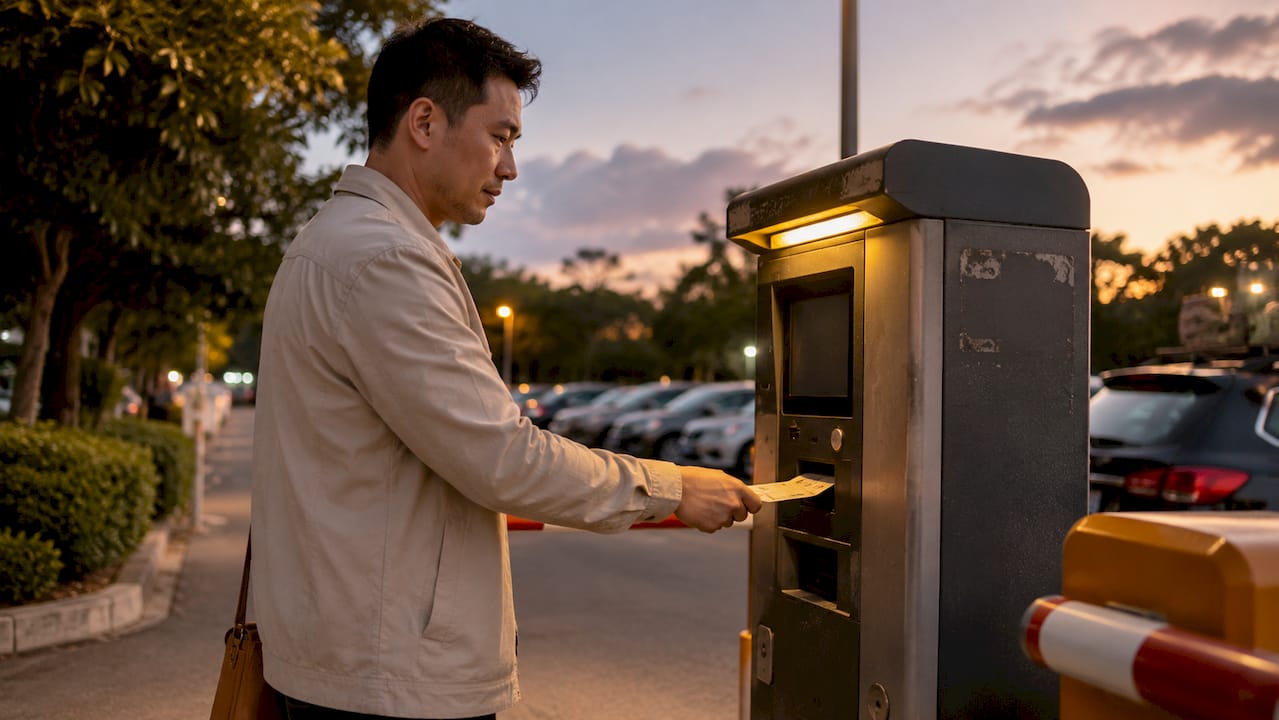
Overnight parking garage tickets are time-based billing instruments that record your vehicle’s entry and exit to calculate fees under a facility’s posted rate schedule. Understanding how overnight parking garage tickets work saves you from surprise charges, lost ticket penalties, and billing disputes that catch travelers off guard every day. Modern garages use three main systems to track your stay: paper spitter tickets issued by machines like those from Amano and SKIDATA, license plate recognition (LPR) cameras, and app or QR code reservations. Each method ties your vehicle to a timestamp, and that timestamp drives every dollar you owe.
How do overnight parking garage tickets actually work?
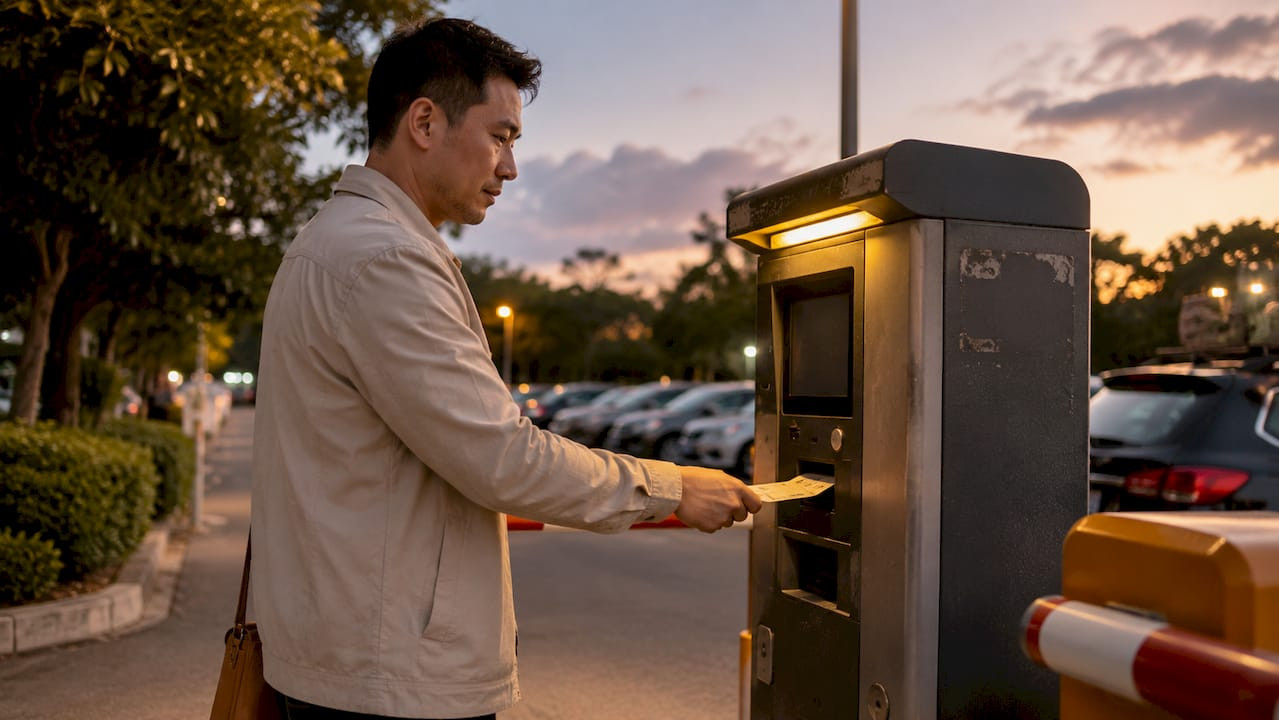
A parking garage ticket is a time-stamped record, not a receipt. When you pull into a garage, the entry machine prints a paper ticket or logs your plate. That record starts a billing clock. When you exit, the system reads your ticket or plate again, calculates elapsed time, and applies the facility’s rate schedule to produce your fee.
Many garages have shifted to automated, ticketless systems in 2026, with vehicle plates or entry times serving as the billing key. That shift means the physical ticket you hold is no longer the only proof of your stay, but it remains the most reliable one in a dispute.
The industry term for the paper machine-issued ticket is a “spitter ticket,” named for the way dispensers eject them at entry. Caymil has manufactured these dispenser spitter tickets for decades, and the format has remained consistent because it works. The ticket carries a printed entry time, a sequential number, and often a barcode that the exit reader scans to pull up your record instantly.
Pro Tip: Photograph your ticket immediately after pulling it from the dispenser. If the print fades or you lose the ticket, that photo is your proof of entry time.
What methods do garages use to issue and track parking tickets?
Garages in 2026 rely on three distinct systems, each with real advantages and real failure points.
- Paper spitter tickets: The entry machine prints a ticket with a barcode or magnetic stripe. You pay at a pay-on-foot kiosk before returning to your car, then insert the validated ticket at the exit gate. Systems from Amano, TIBA, SKIDATA, FLASH Parking, and Scheidt & Bachmann all use this format. It is the most common method in structured garages nationwide.
- License Plate Recognition (LPR): Cameras photograph your plate at entry and exit. No physical ticket changes hands. Billing is automatic. The drawback is that automated systems can fail to log a vehicle exit properly, resulting in maximum daily fees being charged. Always photograph the entry camera and your plate position as backup.
- App or QR code reservations: You book a spot through a parking app, receive a QR code, and the gate opens on scan. This method locks in a rate at booking, which is a genuine advantage for overnight stays at busy airports or urban garages.
Each method affects how you prove your stay and how you dispute a billing error. Paper tickets give you a physical record. LPR systems give you nothing tangible unless you photograph the entry point. App reservations give you a digital receipt. Understanding which system a garage uses before you park is the first step toward managing your overnight parking fees without surprises. For a broader look at how these systems compare, Caymil’s overview of parking management system examples covers the operational differences in detail.
How do overnight parking rates and fee structures work?
Overnight parking rates follow one of two billing models: rolling 24-hour cycles or calendar day resets. The difference matters more than most travelers realize.
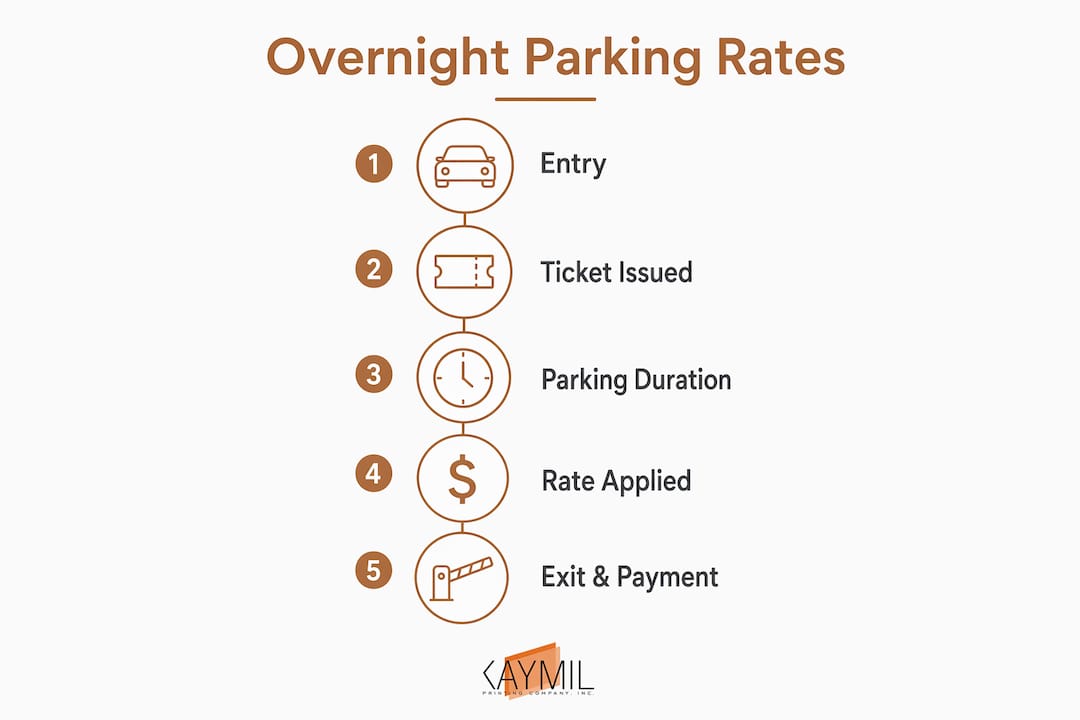
A rolling 24-hour cycle charges you for each hour from the moment you enter. Dulles Airport charges $7 per hour up to a $21 maximum per 24-hour period, billing based on actual hours stayed. That structure prevents a full-day charge for a short overnight stay. A calendar day reset, by contrast, charges a new daily rate the moment midnight passes, regardless of when you arrived.
Airport parking lots offer tiered overnight options from economy lots at $15 per day to premium valet exceeding $100 per day. The spread reflects location, amenities, and demand. Municipal garages in city centers typically fall between those extremes, often charging $20–$40 per night with a posted daily maximum.
One fact most travelers miss: the overnight period can start as early as 9 or 10 p.m. at many facilities. That means leaving before midnight does not guarantee you avoid an overnight fee. The facility defines its own overnight window, and that definition is posted on the rate sign at the entrance.
| Facility Type | Typical Overnight Rate | Billing Model | Overnight Window |
|---|---|---|---|
| Airport economy lot | $15–$25/day | Rolling 24-hour | Varies by airport |
| Airport premium/valet | $50–$100+/day | Calendar day | Varies by airport |
| Municipal garage | $20–$40/night | Calendar day reset | Often 10 p.m.–6 a.m. |
| Hotel garage | $30–$60/night | Flat nightly fee | Check-in to check-out |
| Urban commercial garage | $15–$35/night | Hourly up to daily max | Facility-specific |
Pro Tip: Always check whether the garage uses a rolling 24-hour cycle or a midnight reset before you park. That single detail can mean the difference between a $21 charge and a $42 charge for the same physical stay.
Rate signage posted at facility entrances is legally binding, making it worth two minutes of your time to read it carefully before pulling through the gate.
What rules and common issues affect overnight parking ticket use?
Parking garage ticket rules govern everything from how long you can stay to what happens when things go wrong. Knowing these rules before you park removes most of the risk.
- Lost ticket fees: Lost ticket fees often equal the maximum daily rate or more. The garage cannot verify your entry time without a ticket, so it defaults to the worst-case charge. Keep your ticket in one place from entry to exit.
- Payment deadlines for citations: Unpaid parking fines must be paid or appealed within 14–21 days or late fees and collection penalties escalate. Local regulations may add up to 25% in collection fees, and repeated non-payment can result in vehicle immobilization or towing.
- Dispute process: Disputing unexpected overnight charges works best when you ask the operator to cite the exact posted rate or rule that triggered the fee. That request forces clarity and gives you a factual basis to contest the charge.
- Rental car rules: Parking ticket validation rules are separate from rental agreements. Rental car renters must pay the parking facility directly and follow that facility’s specific payment and validation rules. Your rental contract does not cover parking fees or lost ticket penalties.
- Restricted overnight access: Some garages restrict overnight access to permit holders or residents. Confirm that the facility allows public overnight parking before you leave your vehicle.
Understanding lost ticket fee policies in advance is especially useful for travelers planning multi-night stays, where the risk of misplacing a ticket increases.
What practical tips help travelers manage overnight parking tickets?
Managing overnight parking tickets well comes down to a few consistent habits. Follow these steps every time you park overnight.
- Photograph the rate sign at the entrance. Capture the posted overnight rate, the billing model, and the defined overnight window. This photo is your reference if a charge looks wrong at exit.
- Photograph your ticket immediately. Taking photos of entry tickets or QR codes provides a fail-safe record for disputes or billing verification with automated systems.
- Confirm the overnight hours at entry. Ask the attendant or read the posted sign to verify when the overnight rate activates. Do not assume it starts at midnight.
- Reserve in advance when possible. App-based reservations through parking platforms lock in a rate and guarantee your spot. This is especially useful at major airports like Hartsfield-Jackson Atlanta International, where pay-on-foot machines and contactless payments are standard but rates fluctuate by demand.
- Pay before returning to your car. Most modern garages use pay-on-foot kiosks. Pay at the kiosk, then you have a short window (typically 15–20 minutes) to reach the exit gate before your validated ticket expires.
- Store your ticket in one dedicated place. Put it in your wallet or a specific pocket the moment you receive it. Do not leave it in the car, on the dashboard, or loose in a bag.
- Know your payment options before exit. Most garages accept credit cards, mobile payments, and cash at kiosks. Confirm this at entry so you are not scrambling at the gate.
For travelers preparing for extended trips, the guide on how families prepare cars for cruises covers long-term parking options and overnight parking costs in practical detail.
Pro Tip: If you are staying multiple nights, check in with the garage attendant on day one to confirm the daily maximum applies across your full stay. Some facilities reset the maximum each calendar day, which can significantly change your total cost.
Key takeaways
Overnight parking garage tickets function as time-stamped billing records, and the fee you pay depends entirely on the system type, rate structure, and overnight window the facility has defined.
| Point | Details |
|---|---|
| Ticket types determine proof | Paper spitter tickets, LPR cameras, and app QR codes each require different backup strategies for disputes. |
| Overnight windows start early | Many facilities define overnight as beginning at 9 or 10 p.m., not midnight, triggering fees before you expect them. |
| Lost tickets cost maximum rates | Losing your entry ticket typically results in a charge equal to the full daily maximum, regardless of actual stay length. |
| Billing models vary widely | Rolling 24-hour cycles and calendar day resets produce very different totals for the same physical overnight stay. |
| Disputes require posted rate proof | Requesting the exact posted rule that triggered a charge is the most effective way to contest an unexpected overnight fee. |
What i’ve learned after years of watching travelers get burned by overnight parking
The most common mistake I see is the assumption that “overnight” means after midnight. It does not. Facilities set their own overnight windows, and a driver who leaves at 11:45 p.m. can still owe an overnight fee because the window opened at 10 p.m. That detail is always on the rate sign. Most people walk past it without reading it.
The second mistake is treating the physical ticket as disposable. I have seen travelers fold it into a receipt, leave it on the dashboard, or stuff it in a shopping bag. When it is gone, the garage charges the maximum. That is not a policy designed to punish you. It is the only defensible position the operator has when there is no entry record to verify.
Technology is improving the experience in real ways. LPR systems and app reservations reduce friction at entry and exit. But they also create new failure points. An LPR camera that misreads a plate, or an app that fails to log your exit, can generate a maximum charge with no paper trail to counter it. The travelers who handle these situations best are the ones who photograph everything, read the posted signs, and ask one direct question at entry: what is the overnight rate and when does it start?
My honest advice is this: spend three minutes at the entrance of any garage before you park overnight. Read the rate sign, photograph your ticket, and confirm the billing model. That three minutes eliminates the vast majority of billing surprises I have seen travelers face.
— Richard
How Caymil supports parking facilities with reliable ticketing solutions
Parking facilities depend on accurate, durable tickets to run overnight operations without billing errors or disputes. Caymil has manufactured parking tickets since 1937, supplying garages, airports, hotels, and valet operators nationwide with the physical ticketing products that make these systems work.
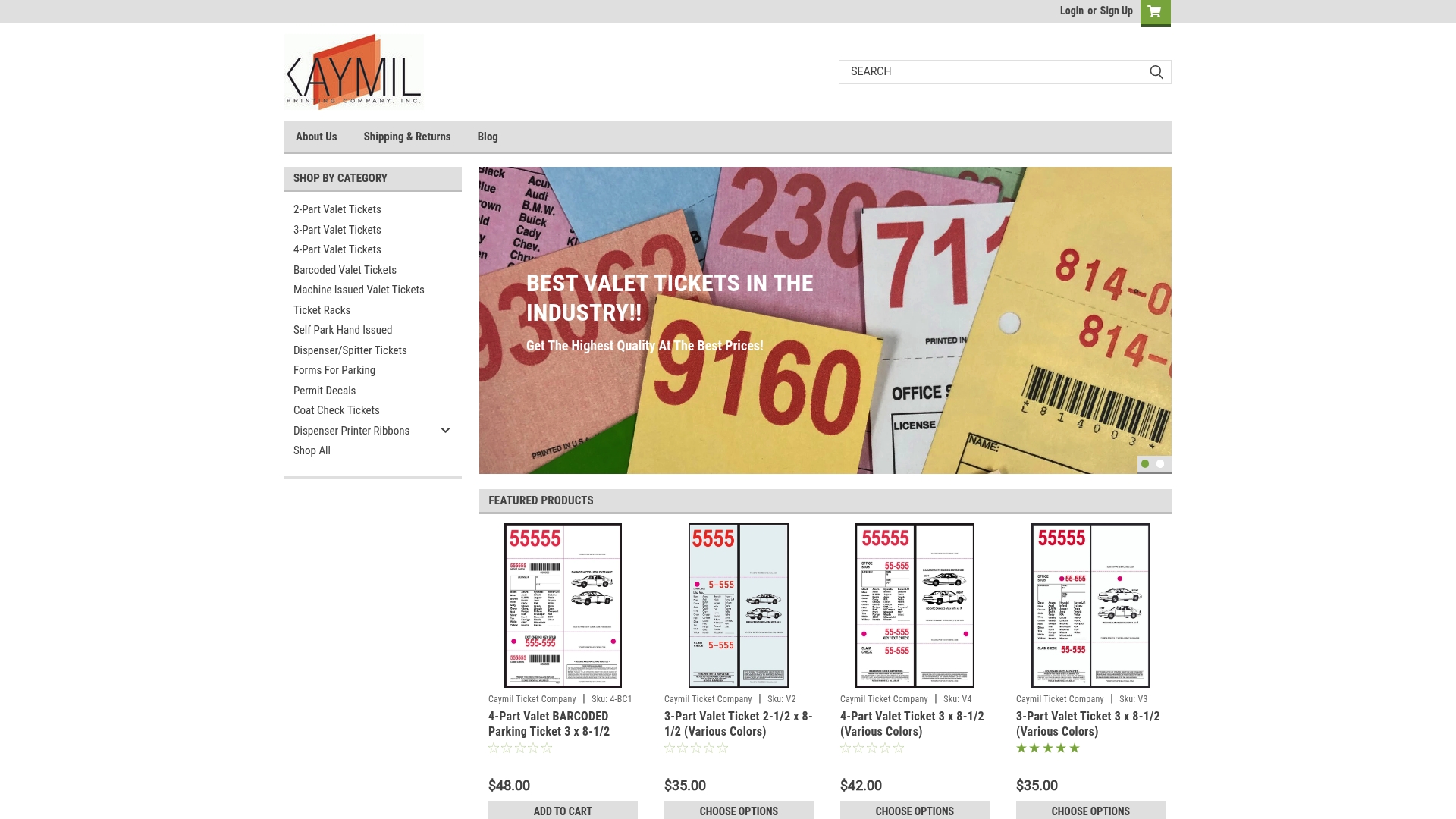
Caymil’s product line covers every format a facility needs, from machine-issued valet tickets and barcode valet parking tickets to multi-part carbonless formats for complex overnight operations. All tickets are available with sequential numbering, custom branding, and security features that reduce fraud and improve revenue tracking. Facilities looking for a complete range of parking forms and ticket rolls will find stock and custom options ready for fast nationwide shipping.
FAQ
What is a spitter ticket in a parking garage?
A spitter ticket is a machine-issued paper ticket dispensed at a garage entry lane. It records your entry time and carries a barcode or magnetic stripe that the exit system reads to calculate your fee.
How is an overnight parking fee calculated?
Overnight parking fees are calculated based on elapsed time between your recorded entry and exit, applied against the facility’s posted rate schedule. Some garages use rolling 24-hour cycles; others reset charges at midnight.
What happens if you lose your parking garage ticket?
Lost ticket fees typically equal the maximum daily rate, since the garage cannot verify your actual entry time without the ticket. Keeping a photo of your ticket on your phone is the simplest way to avoid this charge.
Can you dispute an unexpected overnight parking charge?
Yes. Request the exact posted rate or rule the operator used to apply the charge. Rate signage at the entrance is legally binding, and operators must justify fees against what was posted when you entered.
Do overnight parking rules apply to rental cars?
Parking ticket rules apply to the vehicle and the facility, not the rental agreement. Rental car drivers must follow the parking garage’s specific payment and validation rules and pay any fees or penalties directly to the facility.
Recommended
- Parking Facility Audit Using Tickets: 2026 Guide - Caymil Printing Co., Inc.
- Garage Parking Ticket Durability Tips for Operators - Caymil Printing Co., Inc.
- Why barcode tickets make parking garages more efficient - Caymil Printing Co., Inc.
- Parking Management System Examples for Operators in 2026 - Caymil Printing Co., Inc.