
Tamper Evidence for Parking Permits: Apply Right, Check in Seconds

For long-term parking permits, we recommend destructible vinyl tamper-evident decals with pre-printed expirations and serialized IDs. This combination fragments on removal, blocks easy date alterations, and gives enforcement staff a fast visual check. These permits are available as stock or custom orders for operators who need reliable, verifiable access control.
TL;DR:
- Transferable hang tags suit shared vehicles and temporary visitors, while permanent destructible decals fit fixed assignments such as reserved parking, staff lots, and disability permits.
- Destructible vinyl fragments on removal, while VOID polyester leaves adhesive text behind; holograms add counterfeit resistance but raise costs per permit.
- Match adhesive to each mounting surface, test samples on actual materials, and allow at least 24 hours for the bond to cure before inspection.
- Stock decals start at $88; custom shapes, barcodes, and weather resistant finishes add cost, so specify them only when placement, verification, or exposure requires them.
- RFID or NFC adds database checks at gates, but reader costs favor automated, multi site facilities over a single lot program.
Table of Contents
- 1. What Tamper-Evident Permits Are and When to Use Them
- 2. Materials and Security Features That Actually Stop Tampering
- 3. Getting Application Right: Surface Prep, Temperature, and Cure Time
- 4. Choosing Stock vs. Custom Permits for Your Facility
- 5. Checking Permits in the Field and Building an Enforcement Routine
- 6. Regulatory Standards That Shape Permit Design
- 7. How Different Industries Put Tamper-Evident Permits to Work
- 8. Budgeting for a Tamper-Evident Permit Program
- 9. Weather, UV Exposure, and How Long a Permit Actually Lasts
- 10. Where RFID and NFC Fit Alongside Physical Permits
- Supplier Perspective: What We See Operators Get Wrong
- How We Supply Tamper-Evident Permits, and How to Order
- FAQ
- Sources
1. What Tamper-Evident Permits Are and When to Use Them
A tamper-evident permit is built to show visible damage, usually fragmentation or a “VOID” pattern, the moment someone tries to peel, lift, or transfer it. That destruction is the point: it turns an attempted theft or resale into something an inspector can spot in seconds.
Permanent, destructible permits work best where nontransferability matters most: monthly reserved parking, disability placards tied to a specific plate, staff lots with strict access tiers, and healthcare or campus facilities where fraud risk runs high. Transferable formats, like suction-cup placards or rearview hang-tags, fit situations where a vehicle changes within a household or a visitor needs temporary access, such as event parking or short-term construction passes.
- Permanent destructible decals suit fixed assignments where the permit must die with the vehicle.
- Transferable hang-tags suit shared vehicles, visitor programs, and short-duration events.
- Disability permit programs benefit from permanent, pre-printed formats because best-practice recommendations flag resale and date alteration as recurring fraud patterns.
- Pre-printed expirations and serialized IDs remove the guesswork from manual checks and cut down on handwritten edits.
Choosing between these two formats early saves an operator from reissuing permits mid-cycle or explaining a workaround to an unhappy tenant.
2. Materials and Security Features That Actually Stop Tampering
Destructible vinyl and VOID polyester do the same core job in different ways. Destructible vinyl is engineered to shatter into small fragments the instant someone tries to lift it from glass or painted metal, so reapplication is not an option. VOID polyester instead leaves a legible “VOID” message embedded in the adhesive layer, which stays behind on the surface even if the facestock comes off cleanly. 3M’s destructible vinyl label material is built to exhibit this kind of immediate destructibility across a range of surfaces, with adhesive options suited to difficult substrates.
Holograms and foil elements add a second layer of authentication. They are harder to replicate on a home printer, and some university parking programs have reported fewer counterfeit permits after adding holographic validation stickers alongside serialized numbering. The trade-off is cost: foil and holographic stock run higher than plain destructible vinyl, so the decision usually comes down to how much fraud exposure a facility actually has.
- Destructible vinyl fragments on removal and cannot be smoothed back into place.
- VOID polyester leaves adhesive text behind even when the top layer peels cleanly.
- Holograms and foil raise the bar for counterfeiting but add per-unit cost.
- Sequential numbering and barcodes or QR codes let staff cross-check a permit against a log during spot checks.
Pro Tip: Pair a visible security feature (hologram or VOID pattern) with a hidden one (sequential serial tied to a log) so a fraudster has to defeat two systems, not one.
Adhesive selection matters as much as the facestock. A permit designed for painted metal will underperform on textured plastic dashboards, and glass needs a different adhesive aggressiveness than a windshield with a tinted film. Permit decals are built around the substrate an operator indicates they are using, which is the detail most procurement conversations skip.
3. Getting Application Right: Surface Prep, Temperature, and Cure Time
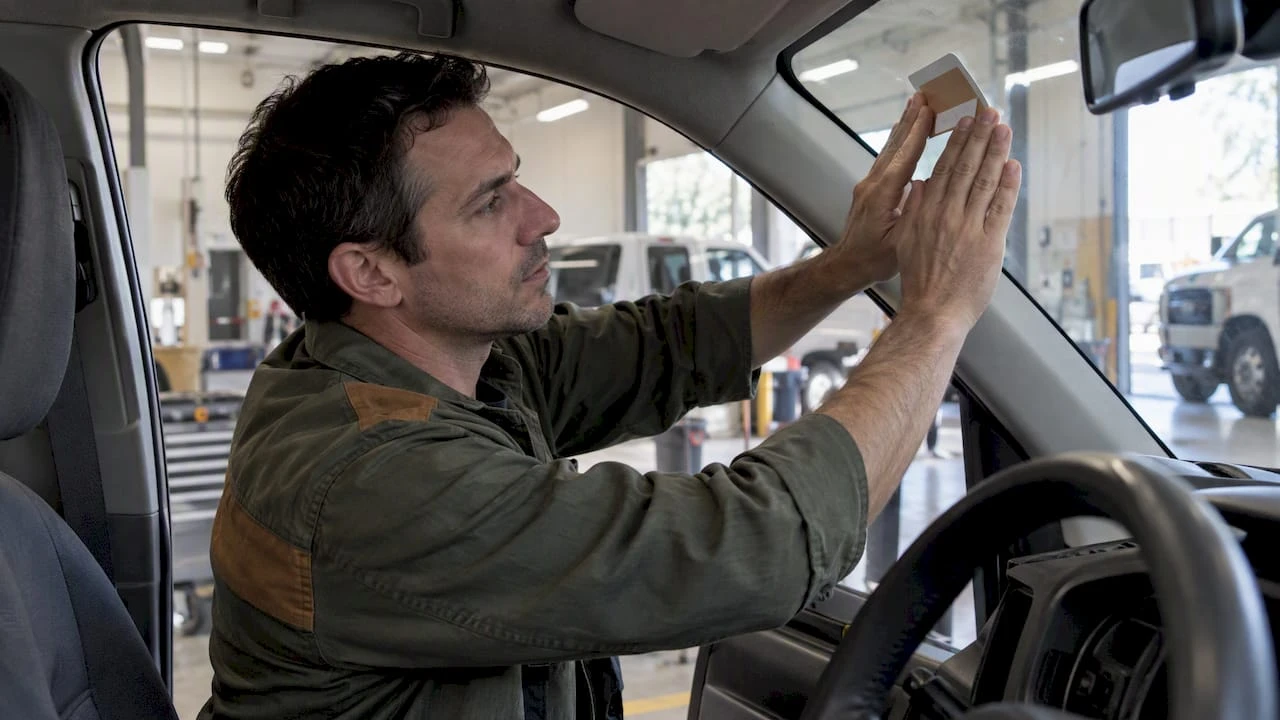
A tamper-evident decal is only as good as its bond, and most “failed” permits trace back to application errors rather than bad material. Getting this right is a short, repeatable process.
- Wipe the mounting surface with isopropyl alcohol to remove road film, wax, and dust before applying anything.
- Apply within the manufacturer’s recommended temperature range; technical guidance from label manufacturers notes that contaminants and low temperatures both reduce adhesion strength.
- Use firm, even pressure with a squeegee rather than a quick press, working from the center outward to avoid trapped air.
- Let the adhesive cure before exposing the permit to weather or an enforcement check. Avery’s destructible label guidance recommends allowing the adhesive to set, often citing a full cure window before the label is considered fully bonded.
- Store unused rolls or sheets in a climate-controlled area; manufacturer datasheets for destructible vinyl typically note a shelf-life window of about two years under proper storage.
Pro Tip: Wait the full recommended cure window before relying on a permit for enforcement, and log first-week inspections so any early failures get caught while they are still easy to trace.
Before rolling out a new permit across a fleet or facility, test it on the actual substrates in use, a painted bollard, a tinted windshield, a textured dashboard, rather than assuming one surface behaves like another.
4. Choosing Stock vs. Custom Permits for Your Facility
Stock decals cover most standard needs quickly: common sizes, pre-set layouts, and fast turnaround for operators who need volume without a design cycle. Custom die-cuts and hang-tags make sense when a facility has an unusual mounting surface, a branding requirement, or a specific placement rule that a stock shape cannot satisfy.
- Stock sizes work well for straightforward monthly or reserved parking programs with no special shape requirements.
- Custom die-cuts fit odd mounting locations, specific branding, or multi-tier access systems.
- Variable data, pre-printed expirations, sequential serials, barcodes, and QR codes, turns a static sticker into a checkable record.
- Bold colors and high-contrast layouts speed up visual enforcement from a patrol vehicle or on foot.
- Laminates, UV-resistant inks, and foil accents add longevity and counterfeit resistance, at a modest cost increase per unit.
We keep both stock and custom permit decals in production, with quick-ship options for facilities that cannot wait on a long print run and custom serialized or barcoded runs for operators building a verification system around their permits.
5. Checking Permits in the Field and Building an Enforcement Routine
A permit is only useful if staff know how to read it. A short, consistent process beats an elaborate one that gets skipped during a busy shift.
- Look first for fragmentation or a visible VOID pattern, either signals an attempted removal.
- Match the printed serial number or barcode against the issuance log or a quick phone scan.
- Photograph and log anything that looks altered, mismatched, or reapplied, rather than relying on memory.
- Escalate suspected counterfeits through a defined chain, not an ad hoc conversation with the driver.
- Keep replacement, expiration, and revocation procedures documented so enforcement staff apply penalties consistently.
Programs with higher fraud exposure often layer a barcode or QR scan into daily rounds rather than relying on visual checks alone, which shortens the gap between a stolen permit and its removal from circulation. Our guide on fake parking permit detection walks through this visual checklist in more depth for field officers.
6. Regulatory Standards That Shape Permit Design
Most tamper-evident permit requirements come from program-specific policy rather than a single federal rule, which means the strongest guidance usually sits at the state or institutional level: disability parking programs, municipal permit systems, and hospital or university access policies each set their own issuance and renewal requirements. What ties these programs together is a shared concern about alteration and resale.
The Accessible Parking Coalition’s best-practice recommendations call out counterfeiting, expiration-date alteration, and unauthorized resale as the main failure points in disability placard and permit programs, and recommend pre-printed expirations, double-sided printing, and stronger issuance verification as countermeasures. Operators running their own permit programs, whether for staff lots, reserved spaces, or patient parking, can apply the same logic even without a formal mandate: a pre-printed expiration date and a serialized ID close off the easiest forms of tampering before a bad actor even tries.
Facilities operating under a government contract or a healthcare compliance framework should confirm their specific program’s documentation requirements with their governing body or legal counsel, since those requirements vary by jurisdiction and by institution. The physical security features covered here (destructible vinyl, VOID patterns, serialization) support compliance goals but do not replace a program’s own issuance and recordkeeping rules.

7. How Different Industries Put Tamper-Evident Permits to Work
Healthcare facilities often run layered parking programs: staff, patient, and visitor access all need different permit types, and patient lots in particular carry a higher fraud incentive because parking can be expensive by the visit. A permanent, serialized decal tied to a specific vehicle cuts down on the informal “pass it to a friend” transfers that erode revenue in these settings.
Casinos and hospitality venues deal with high vehicle turnover and valet operations where a permit or claim ticket might change hands multiple times in an evening. Here, destructible or VOID-pattern stock paired with sequential numbering gives valet staff a fast way to confirm a ticket matches the vehicle it was issued for, which matters when tickets double as the only record of a claim.
Event venues face a different pressure: short-duration, high-volume permit issuance where counterfeiting even a small percentage of passes can cost real revenue over a single event weekend. Holographic or foil elements, as some university programs have found, make quick counterfeiting harder without slowing down issuance at the gate.
University and municipal lots sit somewhere between these models, often running long permit cycles (a semester or a year) where a destructible decal with a pre-printed expiration is the simplest way to prevent a permit from outliving its intended holder.
8. Budgeting for a Tamper-Evident Permit Program
Permit pricing scales with the features a program actually needs, not every security feature is worth paying for in every setting. A straightforward decal order runs modestly, while serialized printing, barcoding, holographic elements, and custom die-cuts each add incremental cost per unit.
Our permit decals start at $88 as a stock item, with custom options, serialized or barcoded runs, and specialty finishes quoted based on the specifics of an order. Operators evaluating a budget should weigh the cost of the permit itself against the cost of the fraud it prevents: a lot of losing even a small share of its reserved spaces to unauthorized transfers over a year often outweighs the price difference between a basic decal and one with sequential numbering and a VOID pattern.
Facilities with high turnover, like event venues or valet operations, may find it more economical to order in bulk with longer lead times, while operators with smaller, steadier programs can lean on quick-ship stock sizes to avoid overordering. Either way, the per-unit cost of a security feature is almost always smaller than the operational cost of chasing down a counterfeit permit after the fact.
9. Weather, UV Exposure, and How Long a Permit Actually Lasts
A permit that looks secure on day one is only useful if it survives the conditions it is exposed to. Windshield-mounted decals face direct UV exposure, temperature swings, and in many regions, months of rain, snow, or road salt. Facestock and adhesive choices both affect how well a permit holds up over that stretch.
Destructible vinyl with a UV-stable ink set resists fading better than uncoated stock, which matters for permits meant to last a full semester or year rather than a single event weekend. Low application temperatures and surface contaminants are the most common causes of early adhesive failure, according to manufacturer technical guidance, which is part of why surface prep and application temperature deserve more attention than they usually get.

Laminate overlays add a layer of weather resistance without compromising the destructible property underneath, since the fragmentation happens at the adhesive and facestock layer, not the laminate itself. For facilities in climates with heavy freeze-thaw cycles or intense summer sun, specifying a weather-rated facestock up front avoids mid-cycle permit replacements that cost more than the original order.
10. Where RFID and NFC Fit Alongside Physical Permits
RFID and NFC chips add an electronic verification layer that a purely visual permit cannot offer on its own. A chip embedded in a hang-tag or windshield sticker lets a reader confirm authenticity at a gate or during a patrol scan, which speeds up high-volume access points like garage entries or event parking lots.
These technologies work best as a supplement to physical tamper evidence rather than a replacement for it. A destructible decal still shows visible damage if someone tries to transfer it, while an embedded chip adds a verification step that a visual inspection alone cannot replicate, confirming the permit against a database in real time rather than relying on a staff member’s eye. For facilities running automated gate systems or high-security access tiers, pairing serialized barcodes with an RFID or NFC option gives enforcement staff two independent checks instead of one, which matters most where a single compromised permit could expose a large number of parking spaces at once.
Operators considering this layer should weigh the added hardware and reader costs against their actual fraud exposure. A single-lot monthly program may never need it, while a multi-site facility with automated access control often finds the investment pays for itself in reduced manual verification time.
Supplier Perspective: What We See Operators Get Wrong
The most common mistake we see is skipping substrate testing: a decal that bonds perfectly to glass can underperform on a textured dashboard, and operators find out only after a batch starts peeling. A close second is rushing the cure window, applying permits right before a weather event or an inspection instead of giving the adhesive time to set. Handwritten expiration dates are a third recurring issue, since they are trivial to alter compared to pre-printed ones.
Before ordering, confirm adhesive type against your actual mounting surface, request a sample for testing, and specify serialized printing from the start rather than retrofitting it later. Our blog on parking ticket security covers more of these procurement questions for operators building a program from scratch.
— Richard
How We Supply Tamper-Evident Permits, and How to Order
Both stock and custom tamper-evident permit decals are offered, with serialized printing, barcoding, and rapid nationwide shipping available. The printing process is handled in-house.
If you are ready to specify a permit for your facility, request samples or a quote through our permit decals page, or browse our full parking ticket and supply catalog to see stock options available for immediate shipping.
FAQ
What makes a parking permit tamper-evident?
A tamper-evident permit uses a facestock or adhesive designed to fragment, fade, or leave a visible VOID pattern when someone tries to remove or alter it. This visible damage makes attempted tampering obvious during a routine inspection rather than something staff would otherwise miss.
How long should I wait before testing a new permit’s bond?
Manufacturer guidance for destructible vinyl labels generally recommends allowing the adhesive to cure for at least 24 hours, as noted in Avery’s destructible label specifications, before subjecting the permit to weather or enforcement checks. Testing too early can produce misleading results about how well the permit will actually hold.
Are holograms necessary for every parking permit program?
Holograms add a counterfeiting deterrent and have helped reduce fake permits in some university programs, but they are not required for every setting. Lower-risk programs often do fine with destructible vinyl and serialized numbering alone, reserving holographic or foil elements for facilities with higher fraud exposure.
What is the difference between destructible vinyl and VOID polyester?
Destructible vinyl physically fragments into small pieces when someone tries to peel it off, making reapplication impossible. VOID polyester instead leaves a legible “VOID” message in the adhesive residue on the surface, even if the top facestock lifts away cleanly.
Does Caymil offer custom serialized permit decals?
Yes, we produce both stock and custom permit decals with sequential numbering, barcoding, and security features suited to an operator’s fraud risk and budget. Pricing varies by quantity, finish, and customization, with stock decals starting at $88.
Sources
- 3M™ Tamper Evident Label Material 7613, White Destructible Vinyl, Roll, Config | 3M United States
- 3M Destructible Vinyl Label Material technical guidance (Tekra PDF)
- Persons with disabilities: Best practice recommendations | Accessible Parking Coalition