

Ticket Stock Storage: 23±5°C/50±10% RH, FIFO for Parking Managers

Store ticket stock in stable, moderate conditions: roughly 23±5°C and 50±10% relative humidity, away from direct light. Stack boxes no more than four rows high, keep them at least 10 cm off the floor and away from exterior walls, and never let RFID stock sit near electromagnetic fields. Pair those physical rules with basic inventory tracking and clear labeling, and shortages during peak events become far less likely.
TL;DR:
- Storing ticket stock at 23±5°C and 50±10% humidity in original packaging reduces fading and deterioration caused by light and moisture.
- Limit stacking to four boxes high and keep them at least 10 centimeters off the floor to prevent physical and moisture damage.
- Handle boxes gently during receiving and avoid exposing RFID and contactless tickets to electromagnetic fields or vibrations, which can damage the embedded components.
- Regularly monitor storage conditions with a datalogger or hygrometer, and maintain accurate inventory logs to prevent shortages and waste.
- Use clearly labeled storage zones and organize stock to enable quick access and accurate rotation, especially for high-turnover or sensitive formats.
Table of Contents
- What Are the Recommended Storage Conditions for Ticket Stock?
- How Should You Stack and Handle Ticket Boxes?
- How Do Storage Rules Differ by Ticket Media Type?
- What Inventory Tracking Practices Prevent Ticket Shortages?
- Which Organization Tools Keep Ticket Stock Accessible?
- What’s a Simple Daily and Weekly Storage Checklist?
- Why Storage Discipline Beats Reactive Fixes
- How Caymil Supports Better Ticket Stock Storage
- Sources
- FAQ
What Are the Recommended Storage Conditions for Ticket Stock?
Temperature swings and humidity are the two biggest threats to a box of tickets sitting in a warehouse. Manufacturer guidance for thermal ticketboard consistently points to a range of about 23±5°C and 50±10% relative humidity, with strong light and aggressive chemicals kept far away, according to SIHL’s TICKETTHERM ST 100 UV-F specifications.
Humidity does the most damage over time. Excess moisture softens paper fibers, weakens adhesives on multipart carbonless sets, and can degrade the thermal coating that makes barcode tickets scannable months later. Dry conditions cause the opposite problem: brittle stock that cracks or curls when it feeds through a printer or dispenser.
Light exposure matters more than most operators assume. Thermal-reactive coatings and printed inks fade under prolonged UV or fluorescent exposure, which is why stock should stay in its original packaging until it reaches the printer or dispenser. A box left open under warehouse skylights for weeks will show visible fading before it ever reaches a valet stand.
Monitoring doesn’t need to be elaborate:
- Place a low-cost datalogger near the ticket storage area to track temperature and humidity trends over weeks, not just a single moment.
- Do a manual spot check with a hygrometer once a week if you don’t have automated logging.
- Confirm your HVAC setpoints actually match your storage room, since many facilities cool the office but leave the stockroom unconditioned.
Pro Tip: Keep a printed log of monthly humidity readings taped inside the storage room door. When a batch of tickets starts curling or misfeeding six months from now, that log tells you whether the environment was ever the problem.
Under these conditions, some thermal boards carry manufacturer image durability claims of a decade or longer, according to SIHL, which matters if you’re archiving validated tickets for dispute resolution or audit trails.
How Should You Stack and Handle Ticket Boxes?
Physical handling causes more damage than most operators expect, and the fixes are simple once you build them into daily routine.
- Limit stacking to four rows. Piling boxes higher puts sustained pressure on the bottom cartons, which causes curling, edge crushing, and permanent imprinting on the tickets closest to the weight.
- Keep boxes 10 cm off the floor and away from walls. Concrete floors and exterior walls both transfer moisture into cardboard, even in a climate-controlled building, according to ChaseCorp’s paper storage guidance.
- Use pallet racks or steel shelving, not floor stacks. This single change eliminates most moisture-related damage before it starts.
- Handle boxes gently during receiving. Dropped cartons and forklift strikes crush ticket edges even when the outer box looks fine.
- Keep stock away from vibration and electromagnetic sources. This rule matters most for RFID and magnetic stripe tickets, covered in more detail below.
How Do Storage Rules Differ by Ticket Media Type?
Not every ticket format behaves the same way in storage, and treating them identically is where a lot of operators lose stock unnecessarily.
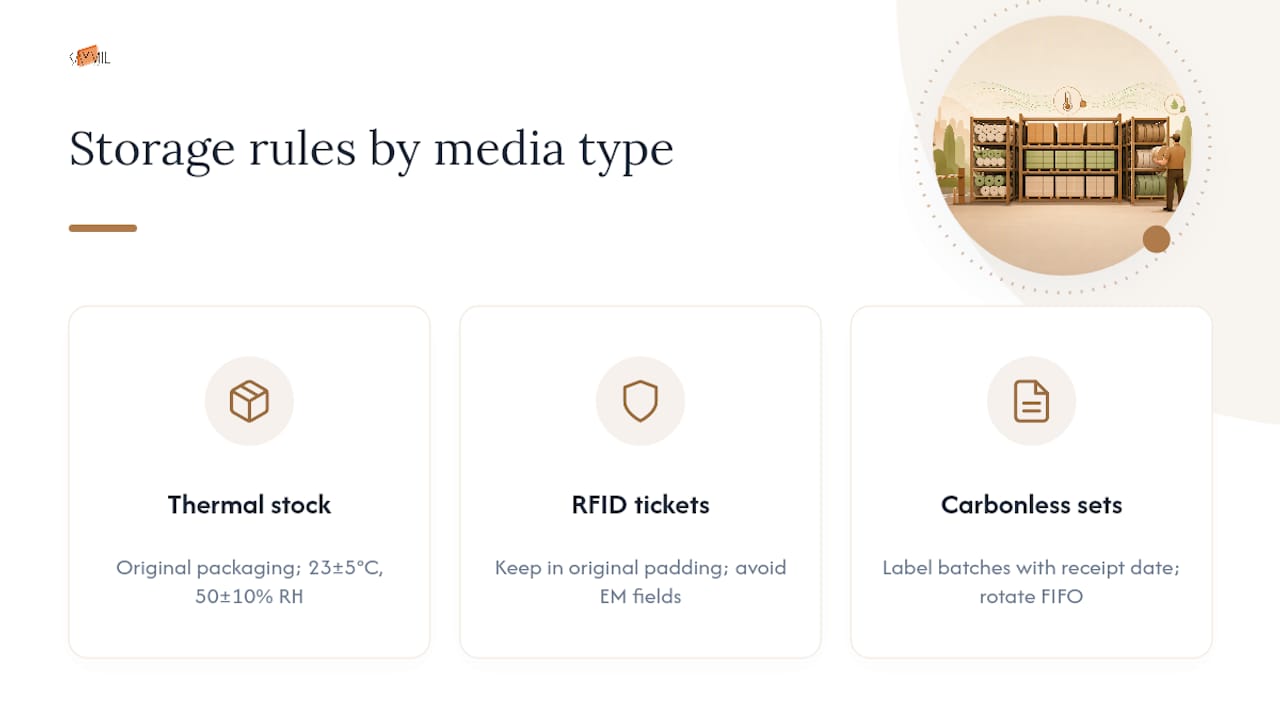
Thermal rolls and fanfold stock need to stay in original packaging until use. Manufacturer pages for boards like SIHL’s TICKETTHERM PRO 220 reinforce the same 23±5°C and 50±10% RH range, and some product lines claim image durability of at least 10 years under adequate storage. Rotate strictly first in, first out, since older rolls closer to their coating’s chemical limits should be issued before newer stock.
RFID and contactless tickets carry the strictest handling rules of any format. They should remain in original padding, get used within the manufacturer’s recommended window, and stay clear of electromagnetic fields and aggressive solvents, per TLS/BOCA Systems’ storage instructions. Vibration and physical shocks can damage the embedded antenna or chip long before the paper itself shows wear.
Carbonless multipart sets are sensitive to both humidity and solvent exposure, since the coating that creates the copy reacts chemically. Label every batch with its receipt date so staff naturally rotate stock instead of grabbing whatever box sits at eye level.
What Inventory Tracking Practices Prevent Ticket Shortages?
Physical storage only solves half the problem. The other half is knowing exactly how much stock you have and when to reorder, before a Friday night valet shift runs dry.
- Set a firm reorder point for every ticket SKU, whether that’s a printed count or a threshold inside your ticketing software.
- Maintain a simple ledger, or better, use a system that tracks batches, counts, and consumption automatically.
- Separate global stock from event-level stock where your operation runs multiple simultaneous events, since event inventory platforms use this distinction specifically to prevent overselling one location while another sits overstocked.
- Write physical location codes on every box (aisle, shelf, row) and match those codes to your inventory entries.
- Run cycle counts on your fastest-moving SKUs weekly rather than waiting for a full warehouse count.
Pro Tip: Log every print run against your inventory count, not just your sales count. A mismatch between tickets printed and tickets sold is usually the first sign of a leak, whether that’s waste, theft, or a miscount somewhere upstream.
Many ticketing modules let you set a reorder level that triggers a low stock warning automatically once remaining count drops below a set number, according to Theatre Manager’s ticket stock warning documentation. That single feature, paired with a structured inventory routine, removes most of the guesswork from reorder timing.
Which Organization Tools Keep Ticket Stock Accessible?
Good storage conditions mean nothing if staff can’t find or verify stock quickly during a rush. A ticket rack mounted near the valet stand keeps active rolls visible and within reach, while durable adhesive label pockets on shelving let you see counts and barcodes without opening every box, an approach echoed by warehouse label accessory guidance.
- Sleeve or box loose rolls and small-format tickets to cut down on dust and edge abrasion.
- Set up three staging zones: incoming stock, quarantine for damaged goods, and ready-to-issue inventory.
- Record each zone’s location in your inventory system so a new hire can find any SKU without asking.
This kind of layout also protects dispenser roll formats, which tend to get damaged fastest when stored loose on open shelving.
What’s a Simple Daily and Weekly Storage Checklist?
- Daily: Spot check temperature and humidity readings, and confirm ticket counts against the day’s expected volume.
- Weekly: Run cycle counts on your highest-turnover SKUs and verify that reorder alerts and shelf labels are still accurate.
- Monthly: Reconcile full inventory against sales and print logs, rotate any aging stock forward, and confirm supplier lead times ahead of your next peak event.
Why Storage Discipline Beats Reactive Fixes
Decades of supplying parking and valet operators has shown a consistent pattern: the facilities that never run out of tickets are the ones that treat storage as prevention, not damage control. A reprint order under deadline pressure costs more than a shelf and a hygrometer ever will.
Supplier relationships matter as much as the storage room itself. When a printer needs specific thermal stock or a dispenser needs an exact roll width, the operators with a reliable restock channel absorb a surprise weekend event without scrambling. Train staff on these routines, and write down exceptions when stock arrives damaged or humidity spikes, because that record is what tells you whether the problem was your process or your supplier.
— Richard
How Caymil Supports Better Ticket Stock Storage
Reliable ticket providers support operators by aligning storage practices with product supply. Every order, from barcoded valet tickets to 2-part and 3-part valet tickets, ships in original packing designed to support the FIFO rotation and humidity control covered above, so batches arrive ready for labeling and shelving without extra repackaging on your end.
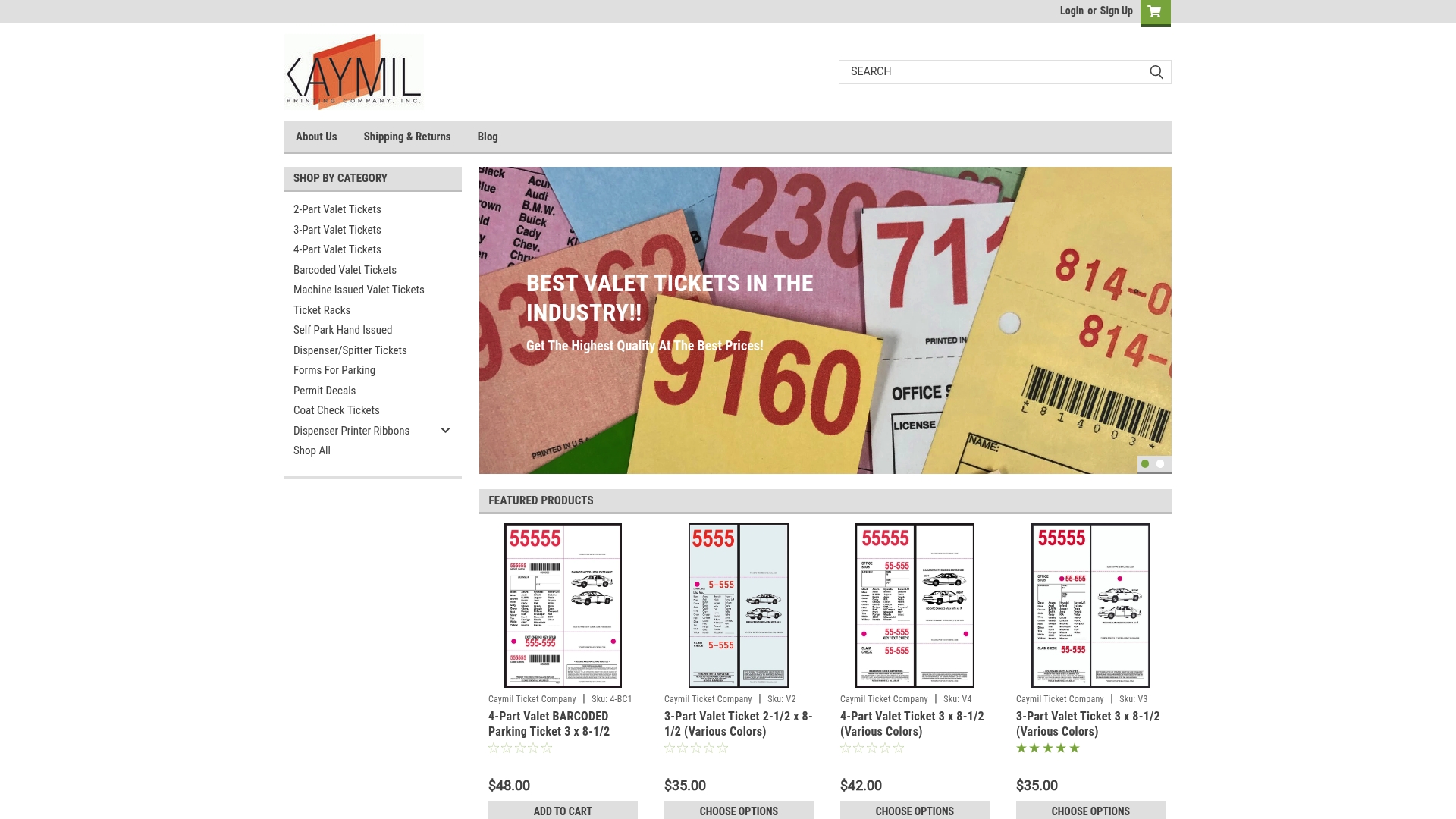
Large inventories with fast nationwide shipping help keep reorder points filled before peak weekends. Pair a ticket rack built for dispenser compatibility with custom or 4-part multipart formats, and your storage room and your front-line operation finally run off the same playbook. Operators managing multiple parking systems may consider suppliers offering stock or custom ticket formats compatible with leading brands.
Sources
For product-specific specs and inventory workflows beyond this guide, consult SIHL’s TICKETTHERM ST 100 UV-F page for thermal storage ranges, TLS/BOCA Systems’ RFID storage instructions for contactless media, Ticketsolve’s inventory management writeup for event-level stock logic, and real-time inventory tools for teams ready to move past spreadsheets.
- Inventory management in action (Ticketsolve blog)
- TICKETTHERM ST 100 UV-F (SIHL)
- RFID tickets storage recommendation (TLS/BOCA Systems)
- Ticket stock warning guidance (Theatre Manager help)
FAQ
What Temperature and Humidity Is Best for Ticket Stock?
Aim for roughly 23±5°C and 50±10% relative humidity, storing tickets in their original packaging away from direct light. This range is the standard manufacturer recommendation for thermal ticketboard products, and it applies to most paper and carbonless ticket stock as well.
How High Can You Stack Ticket Stock Boxes?
Limit stacks to no more than four rows to avoid curling, crushing, or permanent imprinting on the bottom cartons. Boxes should also sit at least 10 cm off the floor and away from exterior walls to prevent moisture transfer.
How Long Does Thermal Ticket Stock Last in Storage?
Some thermal ticketboard manufacturers claim image durability of at least 10 years when tickets are stored under proper conditions, according to SIHL. Actual shelf life depends heavily on humidity control and light exposure, so rotating stock FIFO still matters even with a long durability claim.
Where Can I Order Stock or Custom Parking Tickets?
Caymil manufactures and ships stock and custom parking, valet, and event tickets, including barcoded, thermal, and multipart carbonless formats compatible with major parking systems. Current pricing and product options are available directly on the Caymil website.
How Do I Know When to Reorder Ticket Stock?
Set a reorder level in your ticketing system or a simple ledger, so you get a low-stock alert well before you run out. Many box-office and parking ticketing modules include this feature natively, according to Theatre Manager’s documentation.