
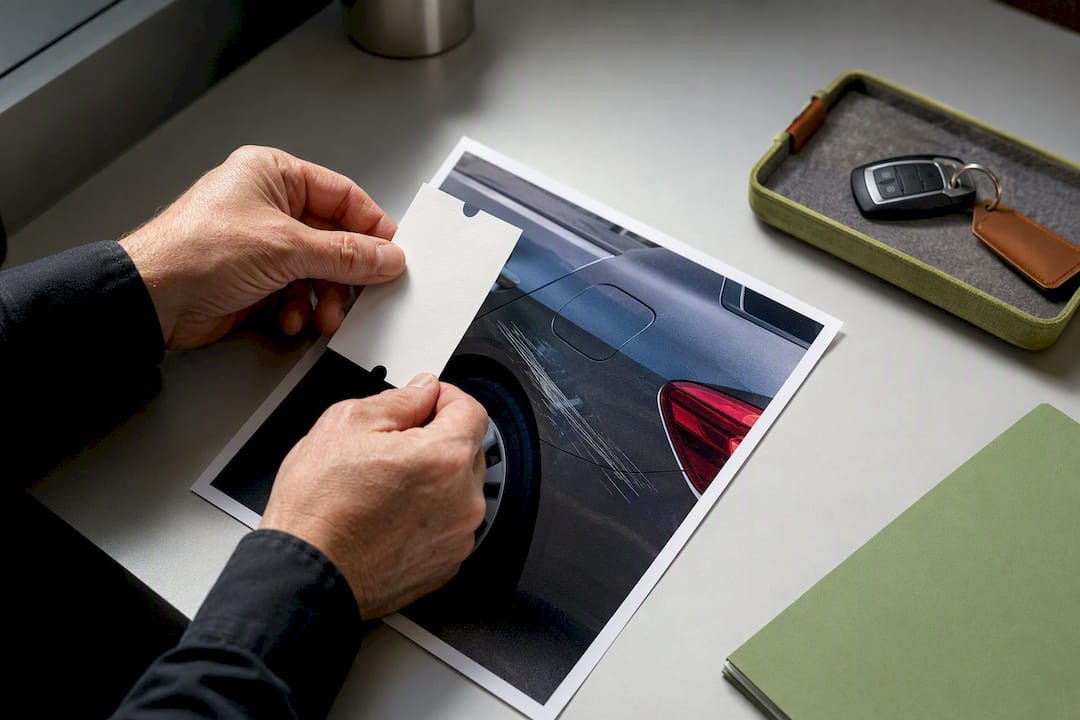
5 Step Valet Damage Claim Ticket Checklist for Operators
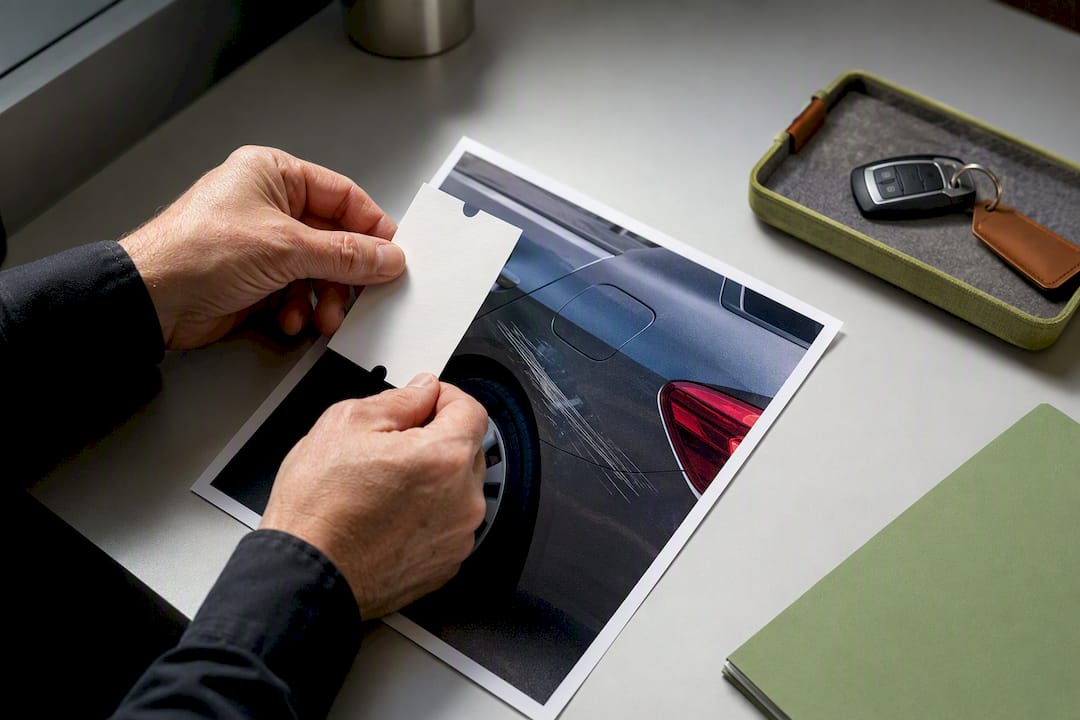
A valet damage claim ticket is the physical, numbered or barcoded claim check an attendant hands a driver at drop-off, linking a specific vehicle and key set to a matching stub retained by the valet operation. For damage-claim readiness, order durable, sequentially numbered or barcoded multi-part tickets, and pair them with a consistent ticket-logging workflow before an incident ever happens.
TL;DR:
- Using 3-part or 4-part tickets is advisable for operations handling damage claims, as they provide multiple independent records for verification.
- UV-stable ticket stock is essential when tickets are left in vehicles, resisting fading from sun and heat during the claim investigation process.
- Sequential numbering is crucial to detect skipped or duplicated tickets, maintaining an accurate audit trail for dispute resolution.
- Barcodes and QR codes enhance traceability by linking physical stubs to digital logs and photos, especially in high-volume operations.
- Proper staff training on issuing, logging, and photographing tickets at drop-off significantly reduces the risk of claim disputes and documentation gaps.
Table of Contents
- What Do Valet Ticket Formats Mean for Damage-Claim Documentation?
- Which Ticket Materials Hold Up Long Enough to Support a Claim?
- What Security Features Make a Ticket Usable as Evidence?
- How Should You Issue, Log, and Retain Claim Tickets?
- What Specs Should You Send Your Ticket Supplier?
- How Do You Report and Process a Damage Claim With Valet Tickets?
- How Should Ticket Data Connect to Insurance and Liability Systems?
- How Should You Train Staff on Damage-Claim Ticket Handling?
- Why Caymil’s Ticket Formats Line Up With What Damage Claims Actually Require
- Ready to Order Tickets Built for Damage-Claim Documentation?
- Sources
- FAQ
What Do Valet Ticket Formats Mean for Damage-Claim Documentation?
Format determines how many people touch a record before a claim gets filed, and each extra copy is one more chance to catch a discrepancy early.
2-part tickets split into an attendant stub and a customer copy. They work for smaller operations with light volume, but they leave no separate office record unless someone transcribes the number manually.
3-part tickets add an office or accounting copy, so a manager can reconcile issued tickets against vehicles on the lot without pulling the customer’s stub. This format has become the practical minimum for any operation that expects to face a damage dispute.
4-part tickets go further, with a dedicated copy for accounting or insurance file-building, separate from daily operational reconciliation. Caymil’s 2-part valet parking tickets and multi-part formats both use carbonless construction so every copy carries the same number without a second write-up.
Machine-issued and roll tickets suit high-volume garages and kiosk dispensers where an attendant never hand-writes anything. Because thermal kiosk printers skip ink and toner entirely, they hold up better under constant use, and pre-printed stock still outperforms purely digital ticketing for hospitality operations juggling hundreds of vehicles a night.
- 2-part: low volume, budget-conscious lots
- 3-part: standard for any operation handling claims
- 4-part: hotels, casinos, and venues needing a dedicated insurance-file copy
- Machine-issued/roll: automated dispensers and high-throughput garages
Which Ticket Materials Hold Up Long Enough to Support a Claim?
A ticket that fades before a claim is filed is worse than no ticket at all, because it creates a false sense of documentation.
Standard thermal paper is fast to print and inexpensive, but it degrades under sun and heat. That matters directly for valet operations, since a customer copy often sits on a dashboard for hours in direct sunlight.
UV-stable stock resists that fade and stays legible for the days or weeks a claim investigation can take. Supplier guidance on parking ticket paper specifically recommends UV-stable stocks for tickets that will be left inside vehicles, rather than standard thermal rolls meant for short-lived receipts.
Statistic Callout: Standard thermal paper is known to fade and become unreadable when exposed to sun and heat, which is why UV-stable stock is the recommended choice for any ticket that might sit on a dashboard rather than in an office drawer.
Before you place an order, confirm these four things with your supplier:
- Coating rated for UV exposure if tickets travel with the vehicle
- Paper weight heavy enough to resist creasing and tearing in a pocket
- Clean perforation so multi-part copies separate without tearing the printed number
- Bond or carbonless stock matched to how the ticket will actually be stored
What Security Features Make a Ticket Usable as Evidence?
A ticket only helps a damage investigation if it can be traced back to a specific vehicle, time, and attendant without dispute.
Sequential numbering is the foundation. It creates an audit trail that shows whether a ticket was skipped, duplicated, or issued out of order, which matters enormously if a claim ever needs to hold up against a challenge.
Barcodes and QR codes extend that trail into digital systems. Scanning a code at drop-off and pickup ties the physical stub to a timestamped log or a photo taken at handoff, and smart ticket management approaches recommend pairing barcodes with pre-printed stock rather than choosing one over the other.
Magnetic stripes and encoded fields support operations already running integrated parking management platforms, where the ticket needs to trigger a gate, a payment system, or a customer database entry automatically.
- Sequential numbering: catches gaps and duplicates before they become disputes
- Barcodes/QR codes: link a physical stub to digital photos or logs
- Magnetic stripes: feed data directly into gate and payment systems
- Combination formats: common in hospitality settings juggling volume and traceability
Pro Tip: Before committing to a barcode format, test scanner read rates on the actual stock and coating you plan to order. A code that scans fine on a sample sheet can fail on UV-coated or textured paper if the contrast is too low.
How Should You Issue, Log, and Retain Claim Tickets?
The value of a well-made ticket depends entirely on what happens the moment it’s handed over, not just what’s printed on it.
- Inspect the vehicle before issuing the ticket. A quick walk-around, noting existing scratches or dents, gives you a baseline before you take custody.
- Issue the numbered ticket and record it immediately. Log the ticket number against the vehicle description, customer name, and time of drop-off, either in a mobile app or a physical ledger.
- Photograph the vehicle with the ticket number visible. This single step does more to resolve disputes than almost anything else in the process, since it timestamps the vehicle’s condition against a specific claim number.
- Retain the office or accounting stub separately from the customer copy. This is exactly why 3-part and 4-part formats exist: one copy stays with the operation no matter what the customer does with theirs.
- Store the retained stub and photo evidence for a defined period, commonly around 90 days or per your company’s own policy, so a delayed claim doesn’t arrive after the record has been discarded.
Common mistakes that quietly undermine this process include skipping numbers when tickets run out mid-shift, letting thermal print fade before anyone photographs the stub, and handwriting corrections over a misprinted number instead of voiding and reissuing. Caymil’s guide on common valet ticketing mistakes walks through how each of these errors tends to surface during an actual claim.
Pro Tip: Train attendants to treat the ticket number the way a bank teller treats a receipt number: it’s not paperwork, it’s the only thing standing between your operation and an unresolved dispute weeks later.
What Specs Should You Send Your Ticket Supplier?
Ordering the wrong format wastes both money and time, especially if a printer’s minimum run locks you into stock that doesn’t match your dispenser.
Hand your supplier this list before requesting a quote:
- Format and part count (2-part, 3-part, 4-part, or machine-issued roll)
- Ticket size and whether it needs to fold or fanfold for a dispenser
- Starting number and sequence range for numbering
- Barcode or QR symbology, if your parking system requires one
- Stock type: thermal, bond, or UV-stable coated
- Imprint colors and any preprinted fields (logo, terms, liability language)
- Compatibility with your dispenser or printer model, including systems like Amano, TIBA, SKIDATA, FLASH Parking, Scheidt & Bachmann, or Flowbird
| Decision point | Stock option | Custom option |
|---|---|---|
| Speed to deploy | Ships fast, ready to use | Requires proofing and lead time |
| Branding needs | Minimal to none | Logo, colors, liability text included |
| Volume flexibility | Best for smaller or seasonal operations | Best for consistent, high-volume use |
Kiosk printers built for thick or folded ticket media need stock rated for that mechanism specifically, so confirm paper thickness tolerances before ordering machine-issued rolls.
How Do You Report and Process a Damage Claim With Valet Tickets?
The ticket number is the anchor for everything that follows once a customer reports damage. The moment a claim is raised, the first step is pulling the retained stub or office copy and matching its number against the logged entry, including the drop-off photo and attendant record.
From there, most operations follow a consistent sequence: confirm the ticket number matches the customer’s copy, cross-reference the timestamped photo taken at handoff, and check the attendant log for who had custody of the vehicle and when. If a walk-around inspection was documented at drop-off, compare it directly against the reported damage to establish whether the condition predates valet custody.
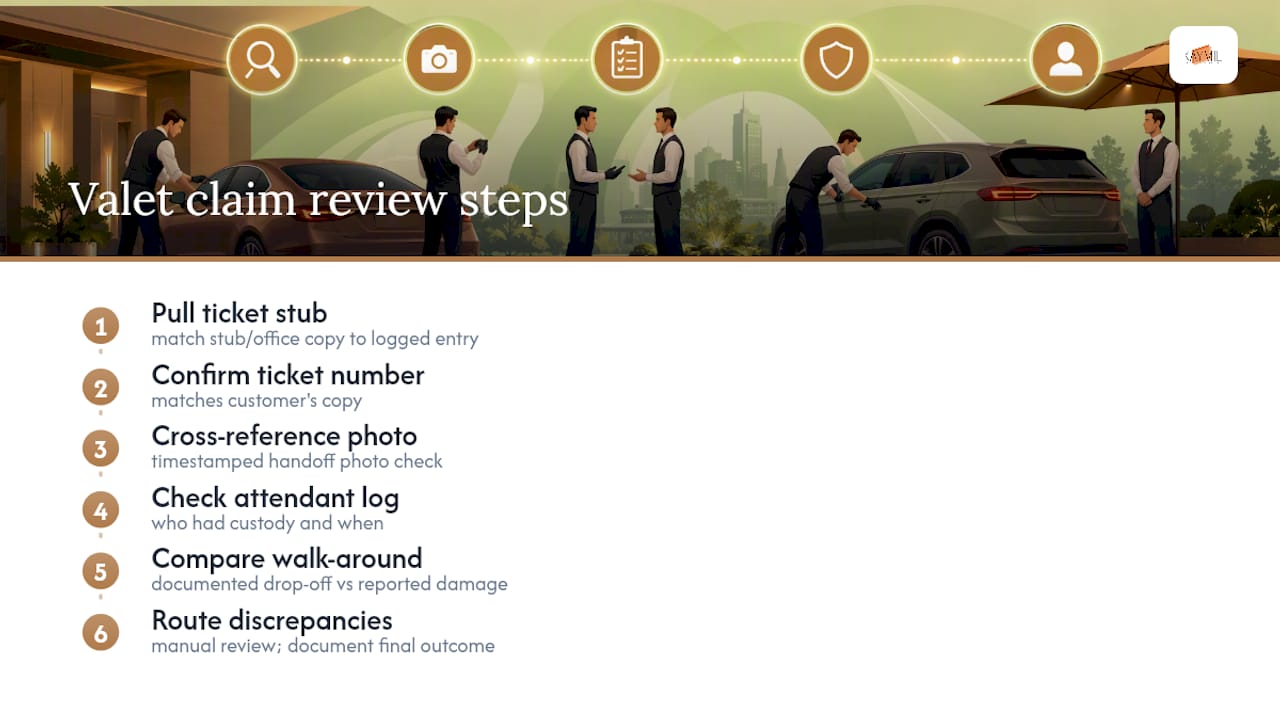
Any discrepancy, a missing ticket number, an illegible print, or a gap in the log, should trigger a manual review rather than an automatic denial or approval. This is where retained stubs and photo evidence carry the most weight: a claim with a clear, matched ticket number and timestamped photo resolves in a fraction of the time a claim with incomplete paperwork does. Caymil’s overview of why valet operations use claim checks breaks down how this matching process typically unfolds in practice.
Document the outcome regardless of which way the claim resolves. A denied claim with no written record of why it was denied creates just as much liability exposure as an approved one with no supporting paperwork.
How Should Ticket Data Connect to Insurance and Liability Systems?
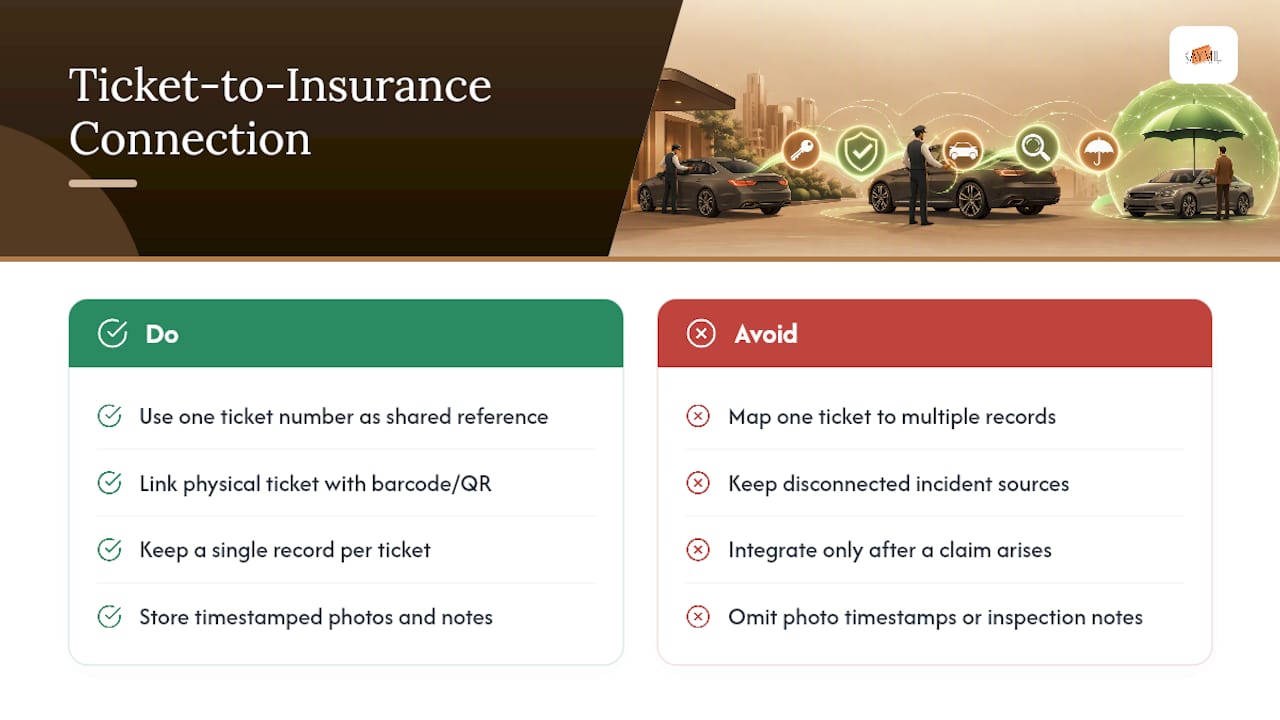
Ticket records only protect an operation if insurers and liability reviewers can actually access them when a claim escalates. That means the ticket number needs to function as a shared reference point across every system involved, not just the valet log.
When a barcode or QR code links a physical ticket to a digital record, that same code should tie into whatever system houses incident reports, photos, and attendant logs. This is the practical reason barcode and QR integration matters beyond convenience: an insurance adjuster reviewing a claim needs to trace one ticket number to one complete file, not five disconnected sources.
For operations without a fully integrated digital system, a simple spreadsheet or shared drive indexed by ticket number accomplishes much of the same goal. The key is consistency: every ticket number issued should map to exactly one record containing the vehicle inspection notes, timestamped photos, and any incident report filed.
Liability insurers reviewing a claim will typically ask for the physical stub or a clear copy of it, the digital log entry, and any photo evidence tied to that same number. Operations that can produce all three quickly tend to resolve claims faster and with fewer disputes over what actually happened at handoff. Building that connective tissue between the physical ticket and the insurance file is worth doing before a claim arrives, not while one is already in progress.
How Should You Train Staff on Damage-Claim Ticket Handling?
Most ticketing failures aren’t printing problems. They’re training gaps.
Attendants need a standard routine drilled in from day one: inspect the vehicle, issue the ticket, log the number immediately, and photograph the vehicle with that number visible. Skipping any one step under time pressure, especially during a rush at a hotel or casino entrance, is where most claim disputes originate.
New hires should practice the full sequence on slow shifts before they’re handling drop-offs during peak volume. Pair that with a short reference card at the valet stand covering what to do when a ticket misprints, when a customer disputes existing damage at drop-off, and who to notify immediately if damage is discovered during parking or retrieval.
Managers should audit ticket logs weekly, not just after a claim surfaces, checking for skipped numbers, missing photos, or handwritten overwrites. Caymil’s breakdown of valet ticket liability covers how gaps in this routine tend to shift liability back onto the operation rather than protecting it. Documentation practices used in other handoff-heavy industries, like the condition-reporting steps outlined in this transport documentation guide, follow the same underlying logic: the record only works if it’s created at the moment of custody, not reconstructed afterward.
Why Caymil’s Ticket Formats Line Up With What Damage Claims Actually Require
Valet and parking tickets have been manufactured since 1937, so the multi-part and machine-issued formats sold today reflect decades of watching which formats actually hold up in a claim dispute and which ones fall apart under real operational pressure.
Every recommendation in this guide traces back to product realities: 2-part, 3-part, 4-part, and machine-issued formats built with sequential numbering and barcode options, compatible with major parking systems including Amano, TIBA, SKIDATA, FLASH Parking, Scheidt & Bachmann, and Flowbird. That compatibility isn’t incidental. It’s what lets an operation adopt the logging workflow this article describes without fighting its own hardware.
— Richard
Ready to Order Tickets Built for Damage-Claim Documentation?
A direct path is available to the ticket format this guide recommends, without wading through a generic printing catalog that treats valet tickets like ordinary receipts. Every product page is built around the same priorities that matter for damage claims: sequential numbering, durable multi-part construction, and compatibility with the parking systems you already run.
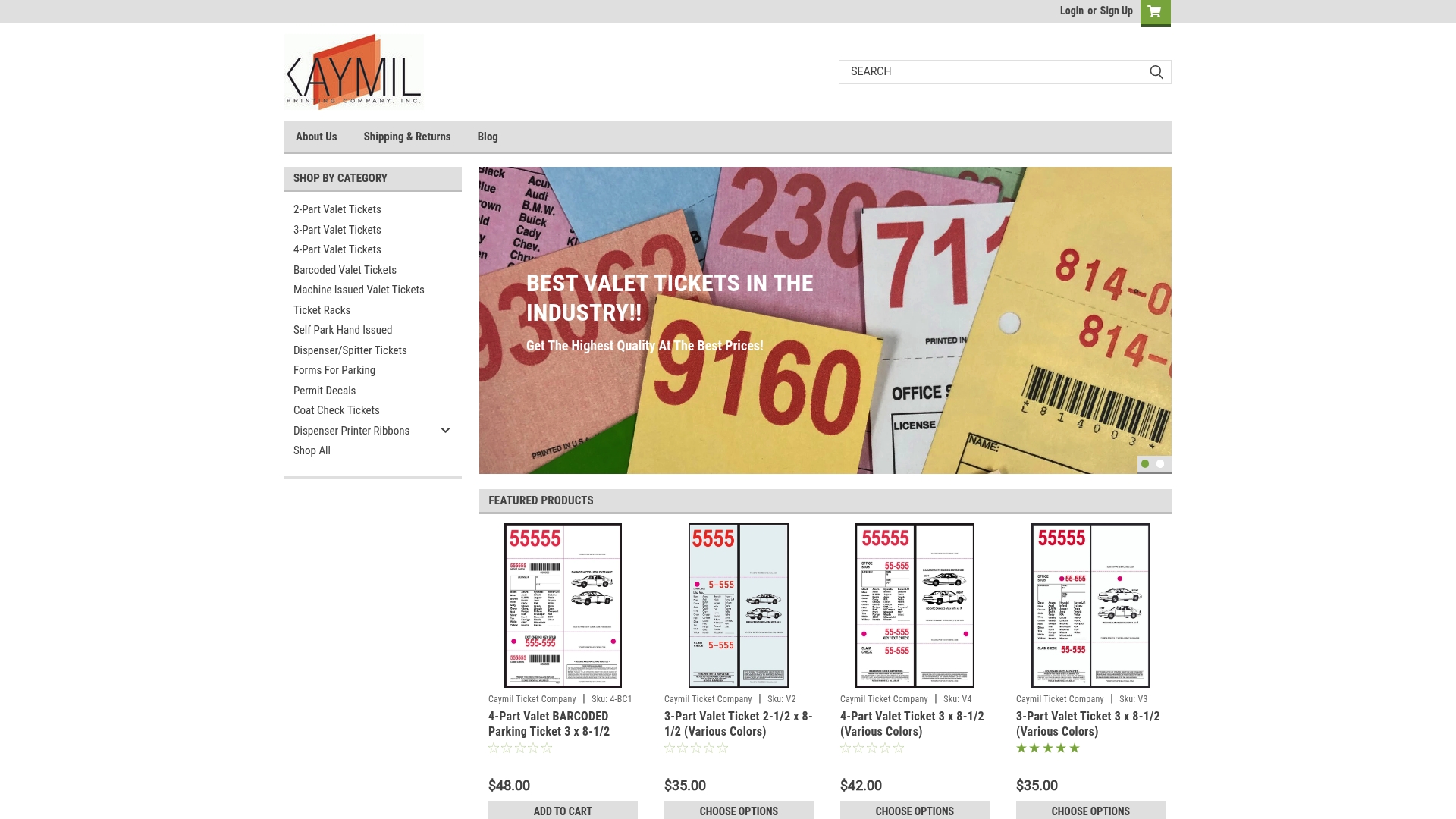
Start by deciding which format fits your volume: 2-part valet parking tickets for smaller lots, 3-part or 4-part valet parking tickets for operations that need a dedicated office or insurance copy, or machine-issued valet tickets if you’re running a dispenser. If your parking system requires scan-based tracking, look at barcoded valet parking tickets instead of adding a separate manual log.
Once you’ve picked a format, confirm your numbering sequence and barcode requirements, request a sample, and approve artwork before your run goes to press. The full catalog of stock and custom options lives at Forms For Parking, where you can request a quote and a compatibility check against your existing dispenser or printer model.
Sources
For deeper detail on ticket stock durability, the Paper Roll Products parking supply guide covers UV-stable stock and thermal fade risks directly. For printer and kiosk compatibility, the APS thermal printer overview and SNR-KP801-VX thick ticket printer page both explain hardware requirements for durable, folded, or high-volume ticket media. On the operational side, Caymil’s own posts on claim checks and ticket liability walk through how ticket records hold up during real disputes.
- Parking ticket paper, pay station rolls, and enforcement supplies — Paper Roll Products
- Thermal printers and mechanisms for parking ticket kiosks - APS
- Smart Ticket Management Solutions | Swyft Valet
- SNR-KP801-VX Thick Ticket Thermal Printer | Folded Paper Kiosk Printer Module
FAQ
What Format of Valet Ticket Is Best for Damage Claims?
A 3-part or 4-part ticket is generally best, since it keeps a separate office or insurance copy alongside the customer stub and attendant record, creating three independent points of reference for a claim.
Does Barcode or QR Tracking Replace the Need for a Paper Ticket?
No. Barcodes and QR codes extend a paper ticket’s traceability into digital systems, but pre-printed stock remains the more reliable base for high-volume valet and hospitality operations.
How Long Should Valet Operations Keep Retained Ticket Stubs?
Most operations retain stubs and matching photo evidence for a defined period, often based on company policy, to cover the typical window in which a delayed damage claim might surface.
What Stock Should I Use for Tickets Left in a Customer’s Vehicle?
UV-stable coated stock is the right choice, since standard thermal paper fades under sun and heat when left on a dashboard for extended periods.
Can Caymil Match My Existing Parking System?
Caymil’s ticket formats, including 2-part and machine-issued options, are built for compatibility with major parking systems including Amano, TIBA, SKIDATA, FLASH Parking, Scheidt & Bachmann, and Flowbird.