Why Hotels Need Custom Parking Solutions That Work
Custom parking solutions are defined as purpose-built systems that manage vehicle flow, pricing, ticketing, and guest segmentation within a hotel’s specific operational context. Hotels need custom parking solutions because a generic approach leaves revenue on the table, frustrates guests at the first point of contact, and creates labor costs that erode margins. Parking revenue at U.S. hotels grew approximately 23% from 2019 to 2023, with profits increasing about 32% over the same period. That growth rate outpaces most ancillary hotel services, making parking one of the most underleveraged assets in hospitality today.
Why hotels need custom parking solutions for guest experience
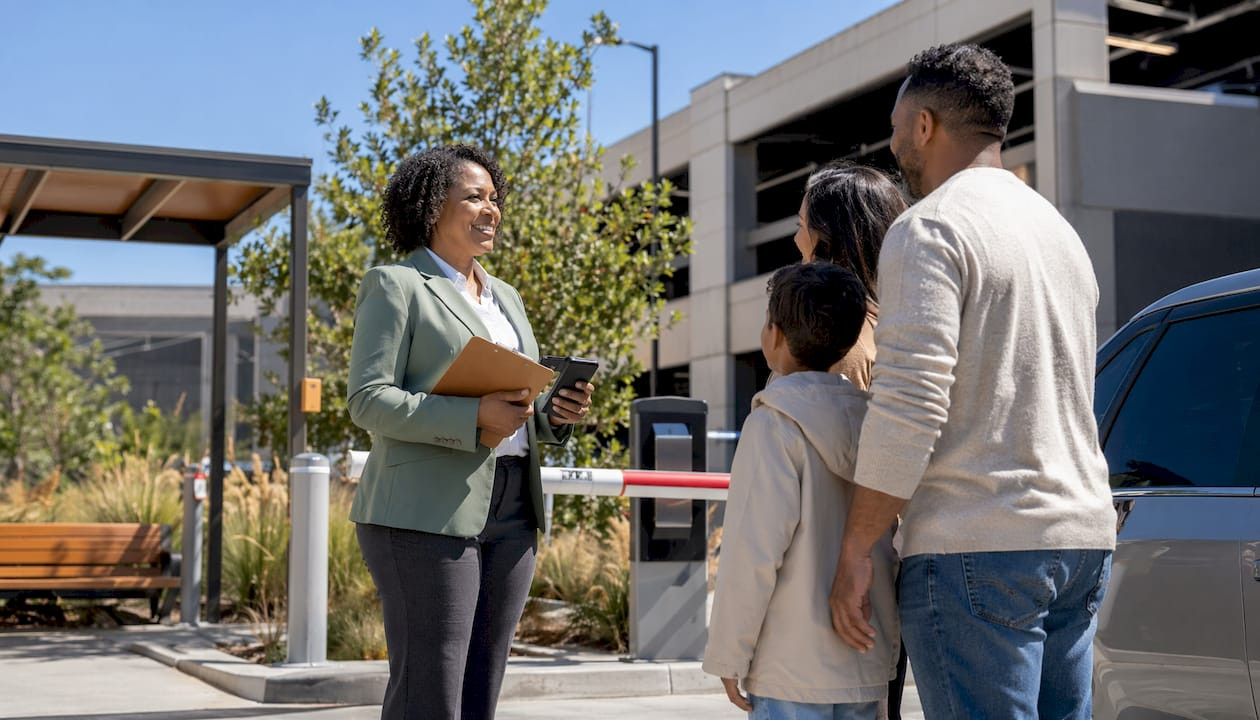
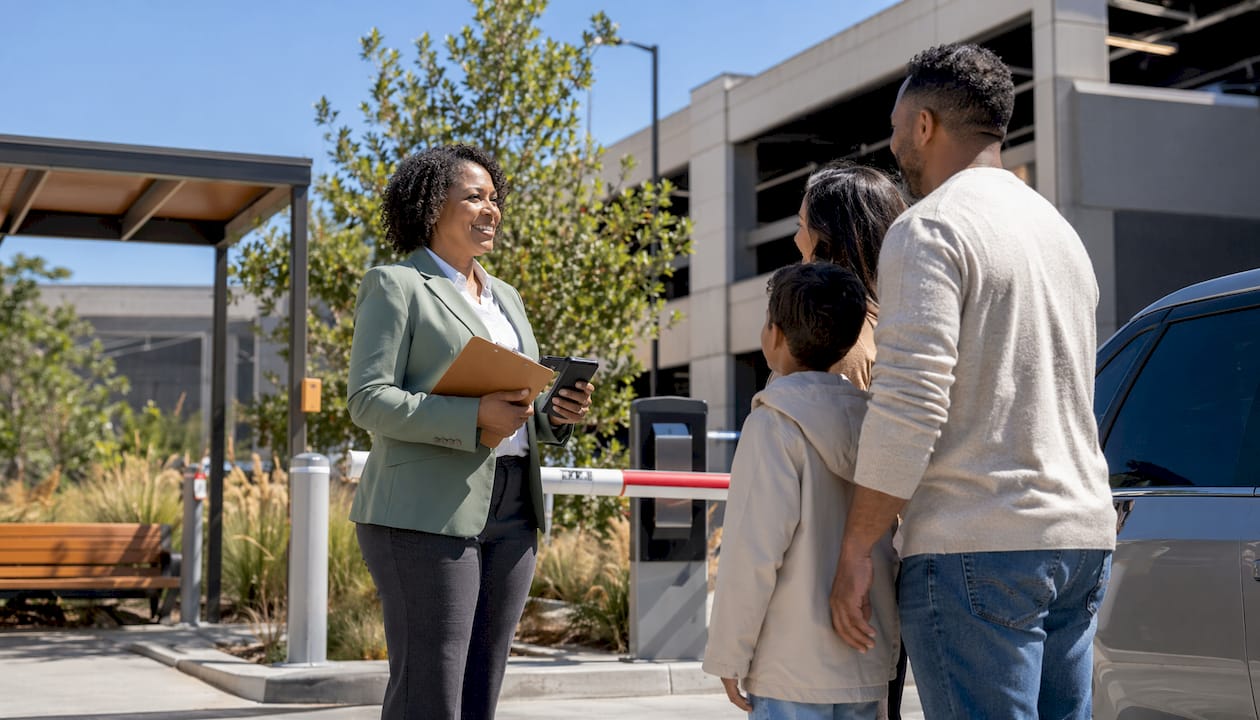
Parking is the guest’s first physical interaction with your property. Most hotels manage parking as a patchwork of manual workarounds, creating friction before a guest ever reaches the front desk. That friction sets a negative tone that is difficult to reverse, regardless of how good the room or service is.
Traditional parking setups create several predictable pain points for guests:
- Long wait times at entry and exit barriers with no clear communication
- Paper tickets that get lost, smudge, or jam in validation machines
- Confusing signage that sends guests to the wrong level or zone
- No differentiation between overnight guests, day visitors, and event attendees
- Manual valet processes that slow retrieval and create vehicle damage disputes
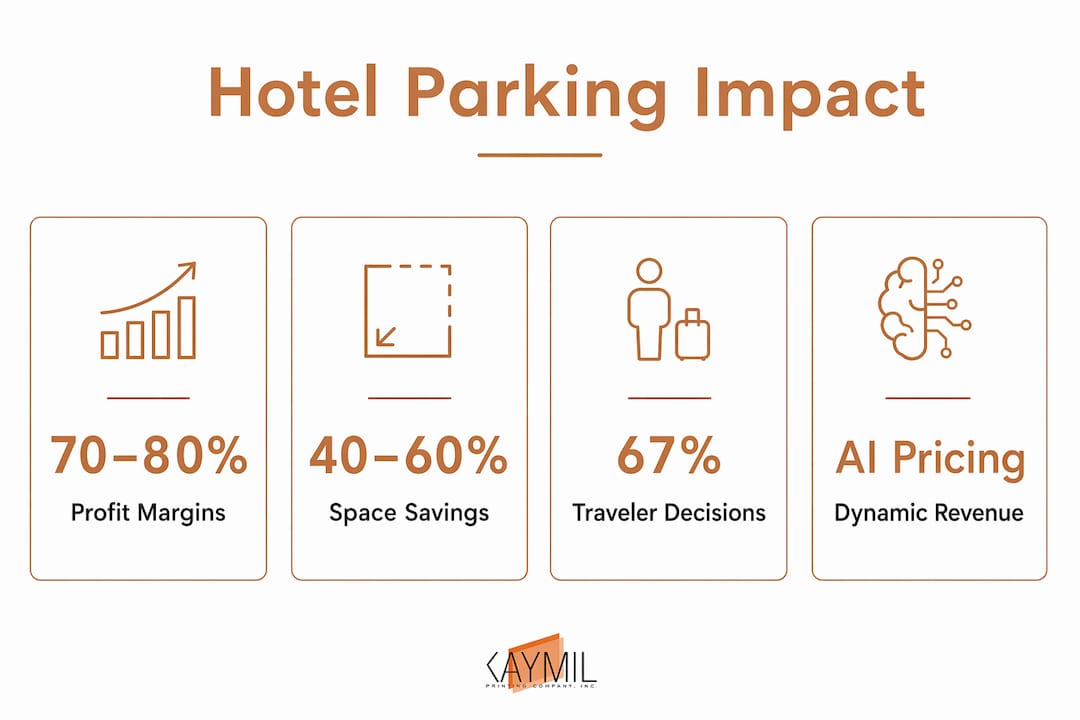
Automatic Number Plate Recognition (ANPR) technology eliminates the paper ticket entirely for many guest categories. A guest’s license plate becomes their credential. The system logs arrival, links the vehicle to the reservation, and opens the barrier without any staff intervention. Parking complaints reduce hotel ratings by 0.3 to 0.8 stars, and 67% of travelers check reviews before booking. A single friction point at the barrier can cost you a five-star review and the next booking.
Differentiated treatment matters as much as speed. An overnight guest should receive a different parking experience than a day-spa visitor or a conference attendee. Custom systems assign access levels, pricing tiers, and retrieval priorities based on guest type. That segmentation makes every guest feel the parking was designed for them, not bolted on as an afterthought.

Pro Tip: Design your parking entry sequence the same way you design your lobby check-in. Map every step from the moment a guest turns into your driveway, and eliminate any moment that requires them to stop, search, or ask for help.
How customized hotel parking management drives revenue and cuts costs
Hotel parking is the highest-margin ancillary service most properties offer, yet few treat it with the same discipline as room pricing. Hotels optimizing parking pricing and distribution achieve profit margins of 70–80%, compared to spa margins of 30–50% and food and beverage margins of 10–30%. That gap is significant. A 200-room hotel leaving parking on a flat-rate, first-come basis is effectively ignoring its most profitable product line.
The financial case for custom hotel parking management rests on three pillars:
- Dynamic pricing. AI-powered revenue management systems allow hotels to price parking inventory by demand, time of day, and event calendar. A hotel near a stadium can charge peak rates on game nights without manual intervention.
- Labor reduction. Automated parking eliminates valet staffing needs, reducing annual labor costs by up to $300,000 and delivering return on investment within 3–6 years. Staff previously assigned to valet can be redeployed to guest-facing roles.
- Non-guest revenue capture. Custom systems open parking inventory to day visitors, commuters, and event guests through real-time availability feeds and third-party booking platforms.
| Revenue driver | Impact |
|---|---|
| Dynamic pricing via AI-driven RMS | Captures demand spikes without manual rate changes |
| Valet automation | Saves up to $300,000 annually in labor costs |
| Non-guest inventory sales | Fills unused capacity during low-occupancy periods |
| PMS integration | Eliminates billing errors and reduces disputes at checkout |
Integrating parking inventory into hotel revenue management systems allows pricing to respond to occupancy forecasts, local events, and competitor rates in real time. That is the same logic that drives room revenue management, and it works just as well for parking.
Pro Tip: Pull a 12-month parking revenue report and compare it against your occupancy calendar. If your parking revenue does not spike on your highest-occupancy nights, you are leaving money on the table with static pricing.
How do automated systems maximize hotel parking space?
Space is the scarcest resource in hotel development, and parking consumes a disproportionate share of it. Automated parking systems increase vehicle storage capacity by 40–60% within the same footprint by eliminating driving lanes, turning radii, and ramps. That reclaimed space translates directly into development potential.
The three main system types each suit different property profiles:
- Mechanical automated systems. Robotic platforms move vehicles on pallets within a steel structure. These work best for new builds or properties with a dedicated parking tower footprint.
- Puzzle parking systems. Vehicles are shifted horizontally and vertically on a grid. These retrofit into existing low-clearance garages and are common in urban properties with constrained footprints.
- Hybrid solutions. A combination of automated retrieval for high-demand zones and conventional self-park for overflow. These suit large resort properties where full automation is cost-prohibitive.
Modern automated systems convert wasted space by removing driving lanes and ramps, enabling 40–60% more cars in the same footprint. For a hotel planning an expansion, that reclaimed square footage can support additional guest rooms, a fitness center, or a rooftop amenity. The financial return on space recovery often exceeds the return on the parking system itself.
Retrofitting an existing garage is more complex than a new installation, but it is not uncommon. Puzzle systems in particular are designed for existing structures. The key variable is ceiling height and column spacing. A structural assessment before procurement prevents costly redesigns mid-project.
Automated systems also reduce liability. Automated parking reduces liability risks associated with traditional valet services by removing human drivers from the equation entirely. Fewer vehicle damage claims mean lower insurance costs and fewer guest disputes.
What does implementing a custom hotel parking system involve?
Deploying a custom parking system requires more than selecting hardware. Technology, integration, and guest segmentation all need to work together from day one. Modern parking systems integrate with hotel PMS and valet platforms to synchronize vehicle retrieval with guest check-in and checkout, eliminating the manual handoffs that cause delays.
The core components of a well-deployed system include:
- ANPR cameras at entry and exit points for license plate recognition and automatic guest identification
- AI-driven revenue management software connected to the hotel’s property management system for real-time pricing and availability
- Mobile app retrieval that lets guests request their vehicle from their room, reducing lobby congestion at checkout
- Centralized management dashboards showing real-time occupancy, revenue by zone, and exception alerts for staff
- Segmented access controls that assign different entry credentials, pricing rules, and retrieval priorities to overnight guests, day visitors, staff, and event attendees
Guest segmentation is where many properties fall short. A conference guest arriving at 8:00 AM needs a different experience than a leisure guest arriving at 11:00 PM. Custom systems handle both without manual configuration at the barrier. Pricing rules, access zones, and retrieval queues are all set in advance and applied automatically.
Minimizing disruption during implementation requires a phased rollout. Start with one entry lane and one guest segment, validate the integration with your PMS, and expand from there. Trying to cut over all lanes simultaneously on a busy weekend is the most common implementation mistake. For hotels managing valet and self-park operations side by side, a phased approach also lets staff adapt to new workflows without service gaps.
Physical ticketing remains part of the system for many hotels, particularly in valet operations. Custom-printed valet tickets with sequential numbering, barcodes, and multi-part carbonless formats provide a paper audit trail that digital systems alone cannot always replace. Caymil has supplied hotels with these ticketing products since 1937, and the need for accurate, durable physical tickets has not disappeared even as digital systems have advanced.
Key Takeaways
Custom parking solutions transform hotel parking from a cost center into a high-margin revenue asset by combining dynamic pricing, automation, and guest segmentation into one integrated system.
| Point | Details |
|---|---|
| Parking is high-margin | Optimized hotel parking achieves 70–80% profit margins, outperforming spa and F&B. |
| Guest experience starts at the barrier | Parking complaints reduce hotel ratings by up to 0.8 stars, directly affecting bookings. |
| Automation cuts labor costs | Eliminating valet staffing saves up to $300,000 annually with ROI in 3–6 years. |
| Space efficiency unlocks development | Automated systems increase parking capacity 40–60% in the same footprint. |
| Integration drives performance | Connecting parking to your PMS and revenue management system captures demand and reduces billing errors. |
Parking is the front door, not the back lot
I have reviewed hotel operations where the revenue management team had sophisticated room pricing models, a polished spa menu, and a carefully curated F&B program. Then I looked at their parking. Flat rate, cash only, no connection to the PMS, and a valet operation running on handwritten claim tickets. The contrast was striking.
The mistake I see most often is treating parking as a utility rather than a product. A utility gets maintained. A product gets managed, priced, and improved. Hotels that make that mental shift start asking different questions: Who is parking here tonight? What are they willing to pay? How do I retrieve their car faster than the hotel down the street?
Static pricing is the single biggest missed opportunity. A hotel that charges the same rate on a sold-out Saturday night as on a quiet Tuesday morning is not managing parking. It is just collecting it. Dynamic pricing tied to your occupancy forecast is not complicated to implement, but it requires the will to treat parking as a revenue line that deserves the same attention as rooms.
The labor savings from automation are real, but the quality improvement is what I find more compelling. Removing human drivers from the vehicle custody chain reduces damage claims, speeds retrieval, and frees your best staff for guest interaction. That is a better use of your payroll than having someone drive a car 50 feet into a garage. For hotels serious about optimizing parking operations, the investment in custom systems pays back faster than most capital projects on the property.
— Richard
Caymil’s custom ticketing solutions for hotel parking
Hotel parking systems depend on accurate, durable ticketing at every touchpoint, from valet claim tickets to permit hang tags and validation receipts. Caymil has manufactured custom parking and valet ticketing products for the hospitality industry since 1937, supplying hotels with solutions that integrate with major parking systems including Amano, TIBA, SKIDATA, FLASH Parking, Scheidt & Bachmann, and Flowbird.
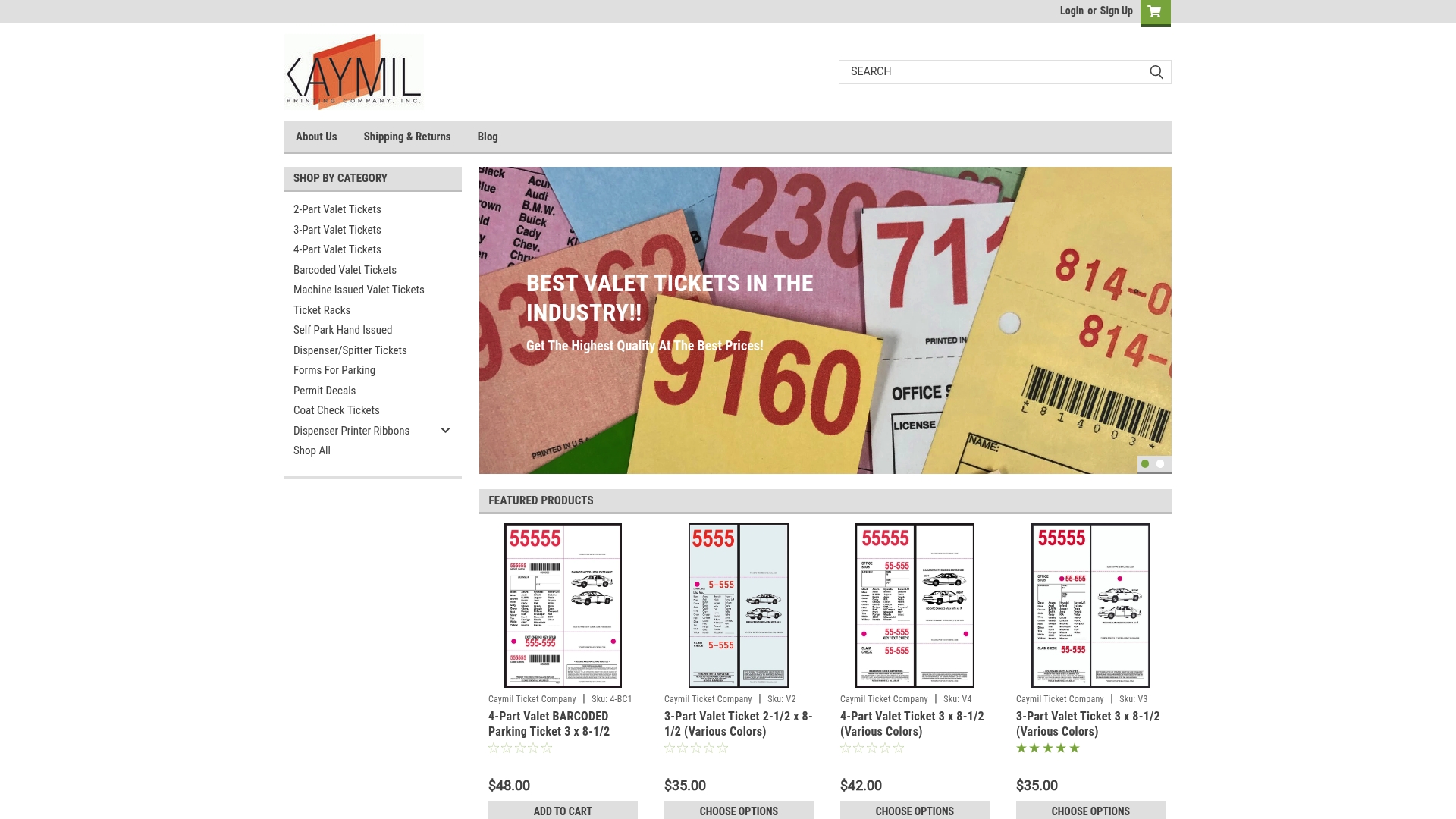
Caymil’s custom parking forms cover the full range of hotel parking needs, from multi-part carbonless valet tickets with sequential numbering and barcodes to parking permit decals and validation tickets. For valet operations specifically, Caymil’s barcode valet parking tickets support automated check-in and checkout workflows, reducing manual errors and speeding vehicle retrieval. Contact Caymil directly to discuss custom printing options that align with your property’s parking management system and brand standards.
FAQ
What are custom parking solutions for hotels?
Custom parking solutions are purpose-built systems that manage vehicle access, pricing, ticketing, and guest segmentation based on a hotel’s specific operational needs. They differ from generic parking setups by integrating with hotel PMS platforms, applying dynamic pricing, and differentiating between guest types.
How do hotel parking systems improve guest satisfaction?
Parking complaints reduce hotel ratings by 0.3 to 0.8 stars, directly affecting booking decisions for 67% of travelers who check reviews. Custom systems using ANPR and automated barriers eliminate wait times and paper ticket failures, the two most common sources of parking complaints.
What profit margins does hotel parking generate?
Hotels that optimize parking pricing and distribution achieve profit margins of 70–80%, which outperforms spa margins of 30–50% and food and beverage margins of 10–30%. That makes parking the highest-margin ancillary service most hotels offer.
How much space can automated parking systems save?
Automated parking systems increase vehicle storage capacity by 40–60% within the same footprint by removing driving lanes, turning radii, and ramps. That reclaimed space can be converted to guest rooms, amenities, or other revenue-generating uses.
How does hotel parking integrate with property management systems?
Modern parking platforms connect directly to hotel PMS software, automatically logging vehicle arrivals against reservations and triggering retrieval requests at checkout. This integration eliminates manual handoffs, reduces billing errors, and synchronizes parking with the overall guest stay.
Recommended
- Optimize hotel parking: Integration, valet, and guest experience - Caymil Printing Co., Inc.
- Hotel Parking’s Role in the Guest Experience - Caymil Printing Co., Inc.
- How Hotel Valet and Parking Integrate for Better Results - Caymil Printing Co., Inc.
- Hotel Parking Permit System Explained for Managers - Caymil Printing Co., Inc.