

Hotel Parking’s Role in the Guest Experience

Parking is the first physical touchpoint a hotel guest encounters, and it shapes every impression that follows. The role of parking in hotel guest experience is foundational: a smooth arrival sets a positive tone for the entire stay, while a frustrating one plants doubt before the guest reaches the front desk. 70% of guest perception forms within the first 10 minutes of arrival, with parking frustration ranking as the top complaint. Hotels with valet services report 12% higher average guest ratings and a 60% reduction in arrival complaints. For hotel managers, parking is not a logistical afterthought. It is a direct driver of satisfaction scores, online reviews, and ancillary revenue.
How does parking impact guest satisfaction and hotel reputation?
Parking frustration is the single most common arrival complaint in full-service hotels. Guests who circle a garage, wait at a broken gate, or receive no guidance at drop-off arrive at the front desk already irritated. That emotional state colors every subsequent interaction, from room check-in to restaurant service.
The data is clear. Hotels offering valet services report 12% higher average guest ratings compared to properties without structured parking programs. That gap reflects more than convenience. It reflects the psychological effect of feeling welcomed and cared for from the moment a car pulls up.
Valet parking also drives measurable loyalty outcomes. Guests who experience a professional valet arrival are more likely to leave positive reviews mentioning staff attentiveness, which directly influences booking decisions for future travelers. A single negative parking review on a major travel platform can suppress conversion rates for weeks.
“Parking barriers should be treated as an extension of the front desk, with expectations for seamless entry via plate recognition or virtual valet hand-offs.” The World of Hospitality
Self-parking, when managed poorly, creates the opposite effect. Unclear signage, full lots with no overflow guidance, and long walks with luggage all register as failures of hospitality. The hotel parking impact extends well beyond the garage. It reaches into the guest’s overall perception of the property’s quality and management competence.
Key factors that determine whether parking helps or hurts guest satisfaction:
- Arrival clarity: Signage, staff presence, and drop-off zone management
- Wait time: Queue length for valet retrieval or gate access
- Transparency: Clear communication of fees before arrival
- Safety perception: Lighting, surveillance, and vehicle condition at return
- Staff professionalism: Greeting quality and ticket handling accuracy
What operational models and technologies optimize parking for guest experience?
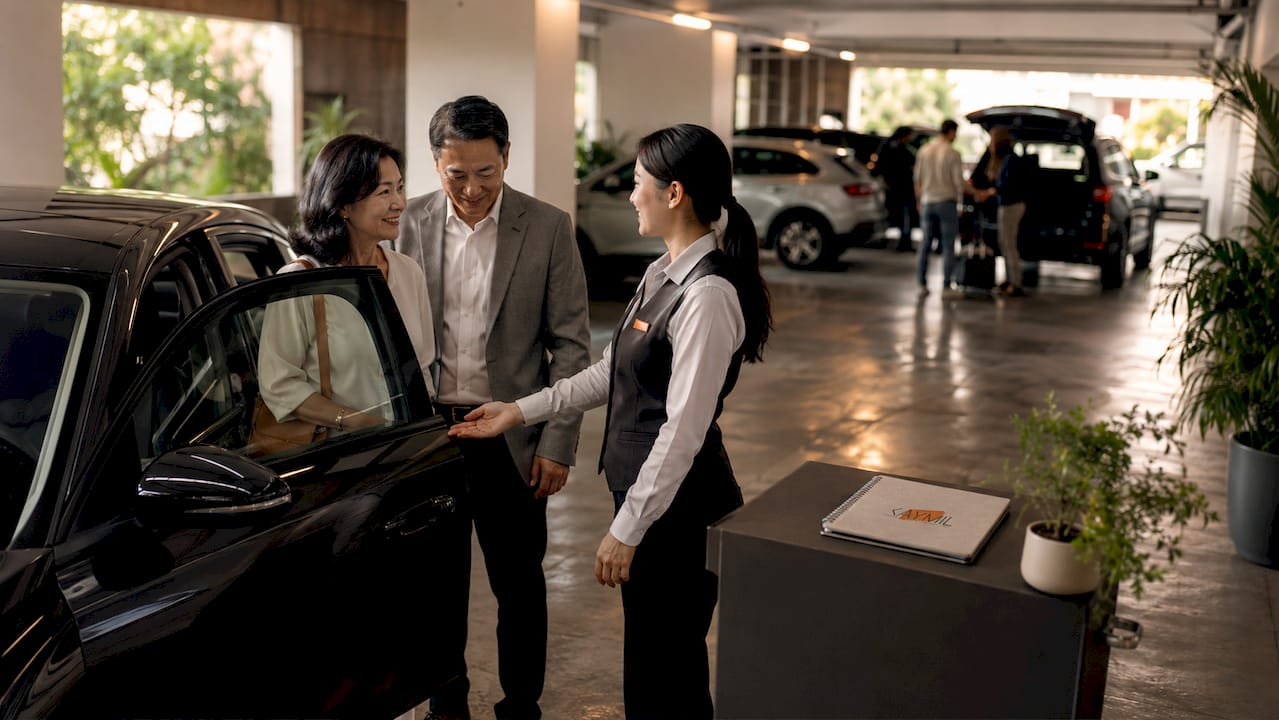
Valet operations depend on defined roles and repeatable protocols. The podium attendant serves as the control point for valet operations, managing ticket issuance, vehicle assignment, and retrieval coordination. Without a structured podium workflow, busy arrival periods collapse into confusion, delayed retrievals, and guest frustration.
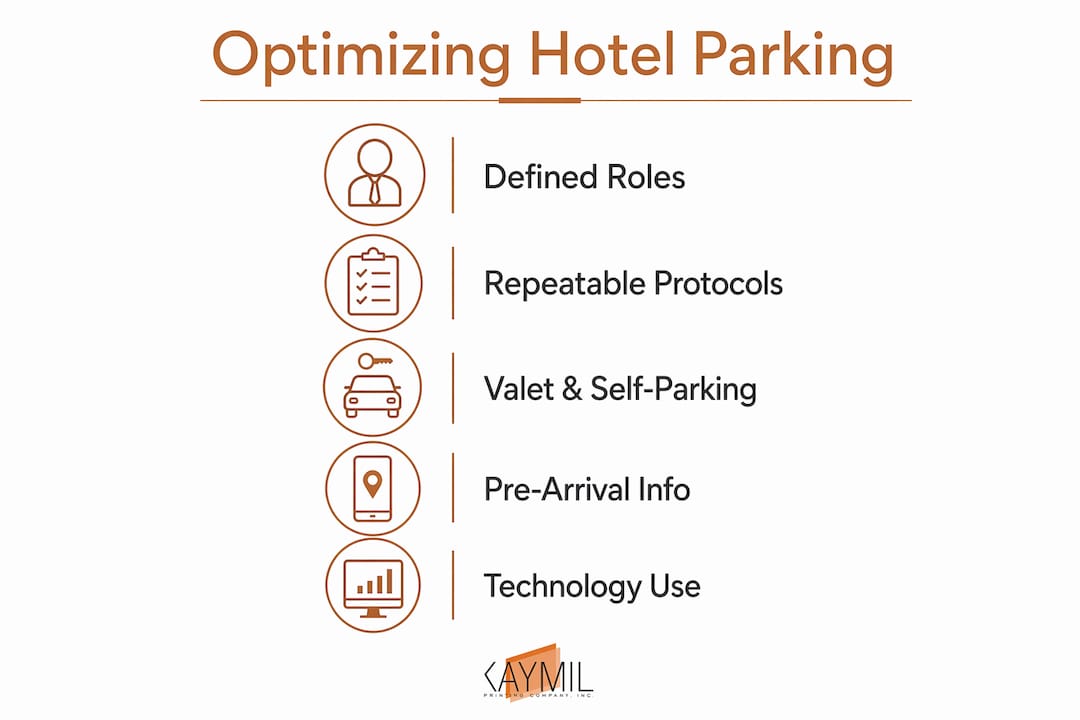
Vehicle damage claims represent the largest valet liability in lodging. Systematic damage documentation at intake, including pre-existing condition records and photo logs, reduces hotel liability exposure significantly. Every valet operation should treat damage reporting as a non-negotiable protocol, not an optional step.
Technology has changed what guests expect from parking facilities. Plate-based access systems using ANPR (Automatic Number Plate Recognition) synchronize with the hotel’s Property Management System to eliminate ticket queues and gate delays entirely. A guest whose plate is registered at booking simply drives in. No ticket. No barrier. No wait.
- Pre-arrival registration: Collect plate numbers during online booking or pre-arrival messaging
- PMS synchronization: Link plate data to the guest folio for automatic billing and access
- Podium check-in: Assign valet drivers and document vehicle condition at intake
- Digital retrieval requests: Allow guests to request their vehicle via app or SMS
- Folio settlement: Charge parking fees automatically at checkout with no manual reconciliation
Offering both valet and self-parking options serves a wider range of guest preferences and reduces friction for guests who prefer independence. Business travelers often want speed. Leisure guests may prefer the prestige of valet. Communicating both options clearly during the booking process prevents confusion and sets accurate expectations before arrival.
Pro Tip: Send a pre-arrival email that specifies parking options, fees, and the drop-off location with a map link. Guests who arrive informed arrive calmer.
How can hotels unlock parking as a revenue-generating asset?
70% of guests consider on-site parking a critical booking factor. That demand creates real pricing power. Hotels that treat parking as a fixed-rate amenity leave significant revenue on the table.
Dynamic pricing adjusts parking rates based on occupancy, day of week, local events, and demand signals. A hotel near a convention center can charge premium rates during peak conference days and lower rates on slow midweek nights to attract commuters or day visitors. Dynamic demand management increased one full-service hotel’s parking revenue by $10,000–$15,000 monthly within 75 days of implementation. That result came from yield management, not from adding parking spaces.
A common concern among hotel managers is that charging for parking will reduce occupancy or damage guest satisfaction. The evidence contradicts that assumption. Transparent parking fees do not reduce occupancy or satisfaction when they are communicated clearly and integrated into the service model. Guests accept fees they understand. They resent fees that surprise them at checkout.
| Revenue strategy | Best application |
|---|---|
| Dynamic pricing | Peak event periods, weekends, high-demand seasons |
| Non-guest monetization | Commuter lots, event overflow, daytime availability |
| Valet premium tier | Upscale properties seeking ancillary revenue per stay |
| Validation programs | Retail, restaurant, or spa guests billed separately |
AI-powered yield management systems allow hotels to sell idle parking capacity to non-guests during low-occupancy periods without displacing registered guests. The system reserves a defined inventory block for hotel guests and opens remaining spaces to the public market. Parking revenue management can boost profit margins up to 70% of ancillary income streams when managed with yield discipline.
Pro Tip: Set a guest-priority buffer in your parking management system. Reserve a fixed percentage of spaces exclusively for registered guests, regardless of external demand. This protects satisfaction while maximizing non-guest revenue.
What are best practices for integrating parking into hotel operations?
Parking management works best when it connects directly to front desk operations, not when it runs as a separate department. Guest validation integration at check-in with digital parking passes or plate verification reduces front desk workload and eliminates the friction of manual ticket stamping. Folio billing integration supports registered guests, event attendees, and spa patrons with the same system.
Clear communication before arrival is the single highest-leverage action a hotel can take to improve the parking experience. Guests who know what to expect arrive prepared. Guests who discover parking policies at the gate arrive frustrated.
Best practices for integrating parking into hotel operations:
- Booking confirmation: Include parking options, fees, and reservation instructions in every booking confirmation email
- Pre-arrival messaging: Send a reminder 24 hours before check-in with drop-off instructions and a map
- Front desk coordination: Train front desk staff to confirm parking status at check-in and issue temporary parking passes proactively
- Valet staff briefings: Hold daily shift briefings to align valet and front desk teams on group arrivals, VIP guests, and event schedules
- Dispute resolution protocol: Establish a clear process for handling parking fee disputes, damage claims, and lost ticket situations
Hotel valet and parking integration requires consistent ticket handling at every touchpoint. Multi-part carbonless valet tickets create a paper trail that protects both the guest and the hotel. Each part of the ticket serves a distinct function: one stays with the vehicle, one goes to the guest, and additional copies support damage documentation or billing. Accurate ticket management reduces disputes and builds guest confidence in the operation.
A hotel parking permit system adds another layer of control for properties managing multiple guest categories simultaneously. Hang tags, temporary permits, and validation tickets allow staff to distinguish registered guests from event attendees, day visitors, and employees without relying on digital systems alone.
Key Takeaways
Parking is a measurable driver of guest satisfaction, hotel revenue, and operational efficiency. Hotels that treat it as a strategic asset outperform those that treat it as a utility.
| Point | Details |
|---|---|
| First impressions start at the curb | 70% of guest perception forms within the first 10 minutes, making parking the first real test of hospitality. |
| Valet service lifts satisfaction scores | Hotels with valet programs report 12% higher average guest ratings and 60% fewer arrival complaints. |
| Transparent fees protect revenue and satisfaction | Clear parking fee communication prevents checkout surprises and does not reduce occupancy. |
| Dynamic pricing unlocks significant revenue | Yield management increased one hotel’s monthly parking revenue by $10,000–$15,000 within 75 days. |
| Ticket accuracy reduces disputes | Multi-part valet tickets and permit systems create accountability and protect both guests and hotel operations. |
Parking as the new front desk: a perspective
Parking has quietly become the most underinvested touchpoint in hotel operations. Hotels spend millions on lobby renovations and room upgrades, then leave the arrival experience to a poorly lit garage and a broken ticket machine. That disconnect is a real problem, and I’ve seen it cost properties repeat business they never knew they lost.
What strikes me most is how few hotel managers think about parking as a brand statement. The valet attendant who greets a guest by name, the clean and well-lit garage, the pre-arrival email that explains exactly where to go: these details signal that the hotel is run by people who care about the details. Guests notice. They may not articulate it in a review, but they feel it.
The shift toward contactless and plate-based parking is accelerating faster than most properties are prepared for. Guests who experience frictionless entry at one hotel will expect it everywhere. Hotels that still rely on manual ticket machines and paper validation stamps are already behind the curve. The technology exists. The barrier is organizational will, not budget.
Parking also has an untapped role in loyalty programs. Complimentary or discounted parking for loyalty members is a low-cost benefit with high perceived value. A guest who saves $25 on parking feels rewarded. That feeling drives repeat bookings more reliably than points systems that take years to redeem.
The hotels winning on parking right now are the ones treating it as a guest experience function, not a facilities function. That shift in ownership changes everything from staffing decisions to technology investment to how parking is communicated during booking.
— Richard
Caymil’s ticketing solutions for hotel parking operations
Professional parking operations require reliable ticketing at every stage of the guest journey. Caymil has manufactured high-quality valet and parking tickets since 1937, serving hotels, valet operators, and hospitality venues across the United States.
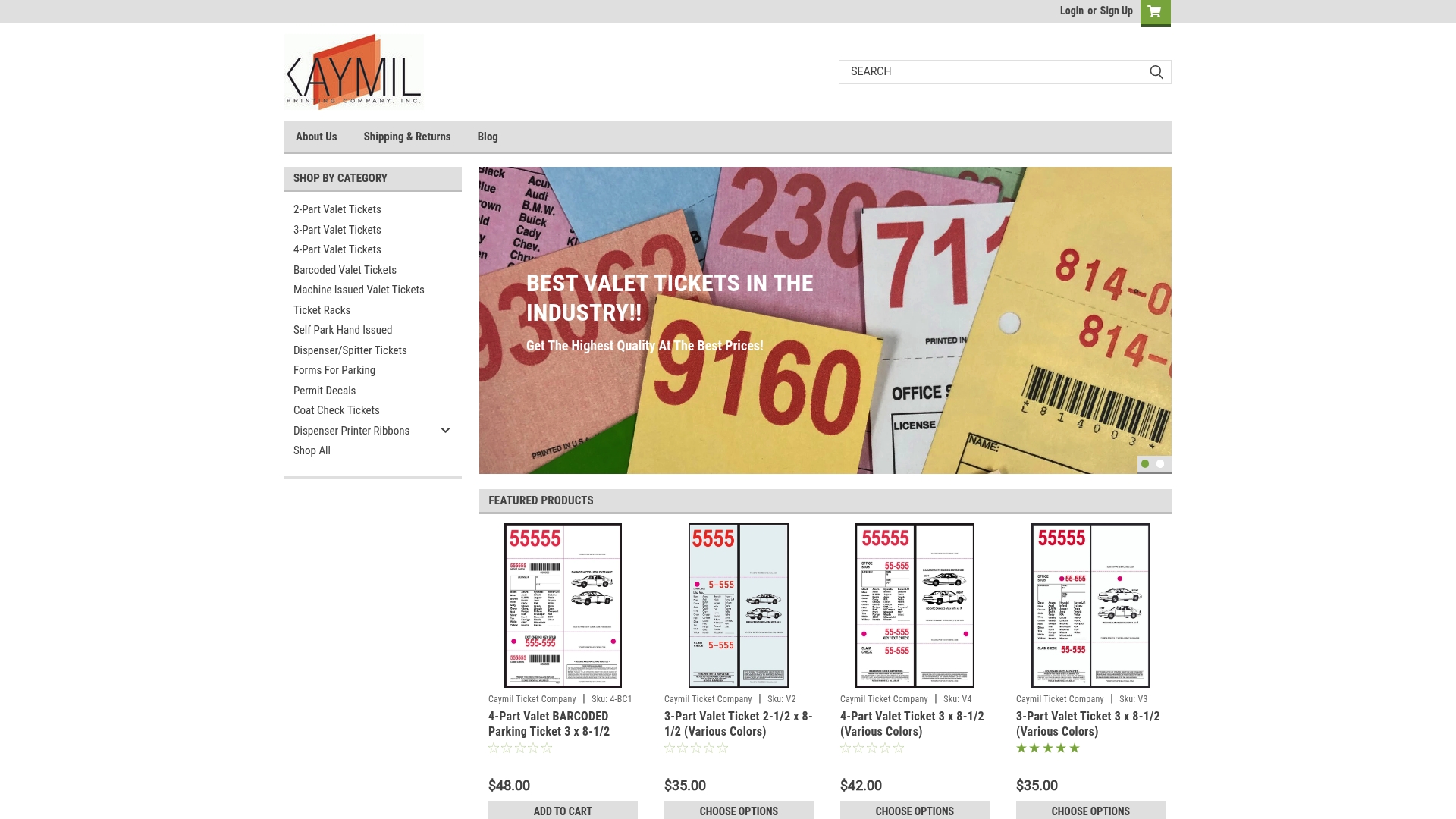
Caymil’s product line covers the full range of hospitality ticketing needs. 4-part valet parking tickets provide comprehensive documentation for premium operations, while 3-part valet parking tickets balance detail and simplicity for mid-tier properties. Barcoded valet parking tickets integrate with digital tracking systems to reduce disputes and speed up vehicle retrieval. All tickets are available with custom branding, sequential numbering, and security features tailored to hospitality operations. Fast nationwide shipping and millions of tickets in stock mean your operation never runs short during peak season.
FAQ
How does parking affect overall hotel guest satisfaction?
Parking is the first physical experience a guest has with a hotel. Hotels with structured valet programs report 12% higher average guest ratings and 60% fewer arrival complaints compared to properties without them.
What is the difference between valet and self-parking for hotel guests?
Valet parking offers a managed, attended experience that suits guests prioritizing speed and service. Self-parking gives guests direct control over their vehicle and suits those who prefer independence. Offering both options and communicating them clearly during booking serves the widest range of guest preferences.
Does charging for hotel parking reduce guest satisfaction?
Transparent parking fees do not reduce guest satisfaction or hotel occupancy when communicated before arrival. Guests accept fees they expect. Surprise charges at checkout are the primary source of parking-related complaints.
How can hotels increase revenue from parking without hurting the guest experience?
Dynamic pricing and AI-powered yield management allow hotels to sell idle parking capacity to non-guests during low-occupancy periods. Reserving a defined inventory block for registered guests protects the guest experience while maximizing revenue from available spaces.
What ticketing systems work best for hotel valet operations?
Multi-part carbonless valet tickets, including 2-part, 3-part, and 4-part formats, provide the documentation trail needed for damage management, billing, and dispute resolution. Barcoded tickets add digital tracking capability for higher-volume operations.
Recommended
- Optimize hotel parking: Integration, valet, and guest experience - Caymil Printing Co., Inc.
- How Hotel Valet and Parking Integrate for Better Results - Caymil Printing Co., Inc.
- Hotel Parking Permit System Explained for Managers - Caymil Printing Co., Inc.
- Hotel Self-Park vs Valet: What Travelers Need to Know - Caymil Printing Co., Inc.