

How Parking System Compatibility Works for Managers

Parking system compatibility is defined as the ability of diverse parking hardware and software components to communicate and share data through standardized integrations, enabling unified control over access, payment, and enforcement. For facility managers, understanding how parking system compatibility works is the difference between a facility that runs itself and one that demands constant manual intervention. The industry now recognizes three primary architectural patterns, point integrations, platform integrations via middleware, and ecosystem integrations through open APIs, as the foundation for any reliable, scalable parking operation. Caymil has worked alongside parking operators for decades and sees these integration decisions shape outcomes every day.
How parking system compatibility works: core architectural patterns
Three primary architectural patterns define how parking systems interact at scale: point integrations, platform integrations via middleware, and ecosystem integrations through open APIs. Each pattern suits a different operational size and growth ambition.
Point integrations connect two specific systems directly, such as a gate controller linked to a payment terminal. They are fast to deploy and cost-effective for small facilities, but they create a web of dependencies that becomes difficult to manage as the facility grows. Adding a third system means building two more direct connections, and the complexity compounds quickly.

Platform integrations use a middleware layer as a central hub. All systems connect to the middleware, which translates data and routes it between components. This pattern suits mid-size and multi-site operators because adding a new system requires only one new connection to the hub rather than connections to every existing system.
Ecosystem integrations rely on open APIs that allow any certified third-party application to connect. This pattern gives operators the most flexibility and supports new sales channels, mobile apps, and enforcement tools without replacing core infrastructure.
| Pattern | Best for | Key advantage | Main limitation |
|---|---|---|---|
| Point integration | Small, single-site facilities | Low setup cost | Scales poorly |
| Platform/middleware | Mid-size and multi-site operators | Centralized data management | Middleware vendor dependency |
| Ecosystem/open API | Large or growth-focused operations | Maximum flexibility | Requires strong API governance |
Pro Tip: Before committing to any integration pattern, map every system you currently operate and every system you plan to add within three years. The right pattern today may be the wrong one after your next expansion.
How do hardware and software components communicate?
Hardware compatibility is not automatic. Even open standards like OSDP and Wiegand require protocol converters or specific firmware configurations to achieve full interoperability between devices from different manufacturers. Facility managers who assume that two “compatible” devices will simply work together often discover the gap during installation, not during procurement.
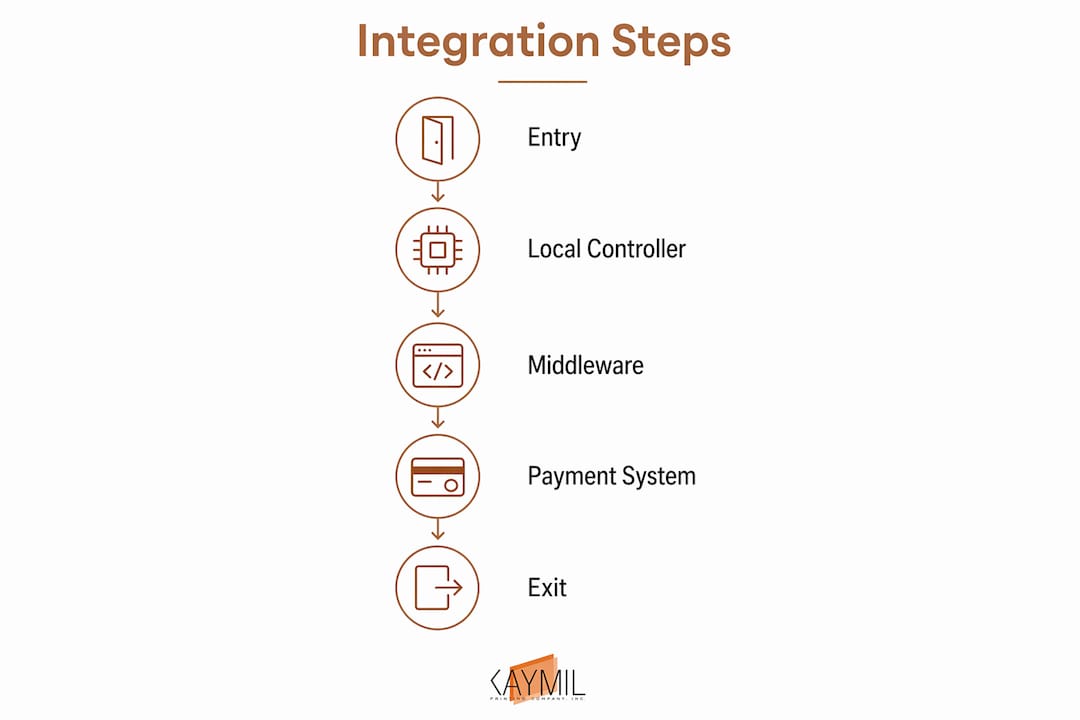
The communication chain in a typical parking facility runs from entry and exit terminals through local controllers to a central management platform. Local controllers are the most underappreciated component in this chain. Local controllers maintain offline functionality during cloud outages, processing transactions and gate operations locally so that a network disruption does not shut down your facility. That resilience is a direct product of good compatibility planning.
Security adds another layer of complexity. Payment terminals must use point-to-point encryption (P2PE) to limit PCI compliance scope. P2PE encrypts cardholder data at the point of capture so that the parking management software never handles raw card data. This protects operators from liability and reduces the cost of annual PCI audits.
Key hardware compatibility factors to verify before procurement:
- Protocol support: Confirm whether devices use OSDP, Wiegand, or proprietary protocols, and identify which converters are needed.
- Firmware version alignment: Mismatched firmware between a gate controller and its management software is a common source of failures.
- P2PE certification: Verify that payment terminals carry a current P2PE certification from the PCI Security Standards Council.
- Offline transaction capacity: Confirm how many transactions a local controller can store and process during a connectivity loss.
Pro Tip: Request system architecture diagrams and documented hardware-software handshake proofs from every vendor during procurement. A vendor who cannot produce these documents is signaling an integration risk.
What are the operational benefits of compatible parking systems?
Disconnected parking systems create manual data reconciliation burdens, revenue gaps, and tariff inconsistencies that compound over time. When a payment system and an access control system do not share data automatically, staff must export reports from one platform and import them into another. That process introduces errors and delays that directly affect revenue certainty.
Compatible systems eliminate that overhead. When a tariff changes, a connected platform pushes the update to every terminal simultaneously. A disconnected setup requires a manager to log into each system separately and apply the change manually. In a multi-level garage with six entry points, that manual process is a real operational risk.
Real-time data synchronization is a specific advantage worth understanding precisely. Many operators confuse integration with real-time synchronization. Integrated systems share data but may still operate on batch exports, meaning enforcement data can be minutes or hours old. Truly connected systems share a single live database, so an enforcement officer checking a plate sees the same data the payment terminal just recorded. That distinction matters most in high-turnover facilities where a vehicle can pay and exit within the window of a batch delay.
The operational benefits of compatible parking solutions, ranked by impact:
- Eliminated manual reconciliation: Shared data removes the need to cross-reference reports from separate systems.
- Consistent tariff management: One update propagates across all terminals instantly.
- Accurate enforcement: Live database access means enforcement data reflects the current state of the facility.
- Reduced revenue leakage: Closed data gaps between payment and access systems prevent unpaid exits from going undetected.
- Faster deployment: Initial cloud provisioning can complete in as few as 7 working days, though a fully instrumented site typically requires 4–6 weeks. Compatibility planning before deployment shortens that timeline.
What is middleware and why does it future-proof your parking operation?
Middleware is a neutral software layer that sits between existing parking hardware and modern digital services, translating data formats and routing communications without requiring operators to replace proven infrastructure. Middleware platforms enable existing parking infrastructure to interoperate with mobility apps, reservation platforms, and third-party enforcement tools without a full hardware replacement. That preserves the capital investment operators have already made.
The practical value of middleware goes beyond cost savings. Operators who connect their facilities to mobility apps through a middleware layer gain new sales channels without changing how the core system operates. A driver using a parking reservation app completes a transaction that flows through the middleware and updates the access control system automatically. The operator controls access rules and data ownership throughout that process.
Middleware also protects operators from platform dependency. When a single vendor controls both the hardware and the management software, switching costs are high. A middleware layer gives operators the ability to swap out individual components without rebuilding the entire system. That flexibility is a direct advantage of prioritizing interoperability over convenience.
Key advantages middleware delivers for parking operators:
- Hardware longevity: Existing gates, terminals, and controllers connect to new digital services without replacement.
- New revenue channels: Mobility app integrations and reservation platforms become accessible without core system changes.
- Vendor independence: Operators can replace individual components without disrupting the broader system.
- Data ownership: Operators retain control over transaction data rather than ceding it to a single platform vendor.
- Extensibility: New services, such as EV charging management or license plate recognition, connect through the same middleware layer.
Exploring parking system integration examples from 2026 shows how operators across different facility types are applying these middleware strategies in practice.
Key Takeaways
Parking system compatibility depends on choosing the right integration pattern, verifying hardware communication protocols, and using middleware to connect legacy infrastructure with modern services without replacing it.
| Point | Details |
|---|---|
| Three integration patterns | Point, platform, and ecosystem integrations each suit different facility sizes and growth plans. |
| Hardware is not plug-and-play | OSDP and Wiegand protocols require converters or firmware alignment to achieve real interoperability. |
| Local controllers protect revenue | Offline transaction processing prevents gate failures during cloud outages. |
| Middleware extends infrastructure life | A neutral middleware layer connects legacy hardware to mobility apps without capital replacement. |
| Connected beats integrated | A shared live database eliminates enforcement data delays that batch-export integrations cannot solve. |
Why I prioritize integration reliability over every other feature
The most common mistake I see facility managers make is evaluating parking systems by their front-end dashboards. A clean interface is easy to demo. What you cannot see in a demo is whether the API documentation is complete, whether the vendor supports webhooks for real-time event exchange, or whether they offer a sandbox environment for testing before go-live.
Integration reliability, including documented API patterns and webhook support, is the single most critical technical factor in a parking system purchase. A system with a beautiful interface that cannot reliably push data to your enforcement platform or your accounting software will cost you more in staff time and revenue leakage than you saved on the purchase price.
Legacy systems deserve more patience than most operators give them. A gate controller that has run reliably for eight years is not a liability. It becomes a liability only when you try to connect it to a new management platform without verifying protocol compatibility first. Incremental upgrades, adding a middleware layer, updating firmware, replacing one terminal at a time, are almost always more cost-effective than a full system replacement. The operators who manage this well are the ones who treat hotel valet and parking integration as an ongoing discipline rather than a one-time project.
My practical advice: before signing any vendor contract, ask for three things. Ask for the full API documentation, not a summary. Ask for a list of facilities currently running the integration you are buying. And ask for a sandbox environment where your team can test the connection before it goes live. A vendor who hesitates on any of those three requests is telling you something important.
— Richard
Caymil’s ticketing products built for integrated parking operations
Parking system compatibility extends to the physical ticketing layer. When your management software, gates, and payment terminals are aligned, the tickets and permits moving through that system need to match the same standards.
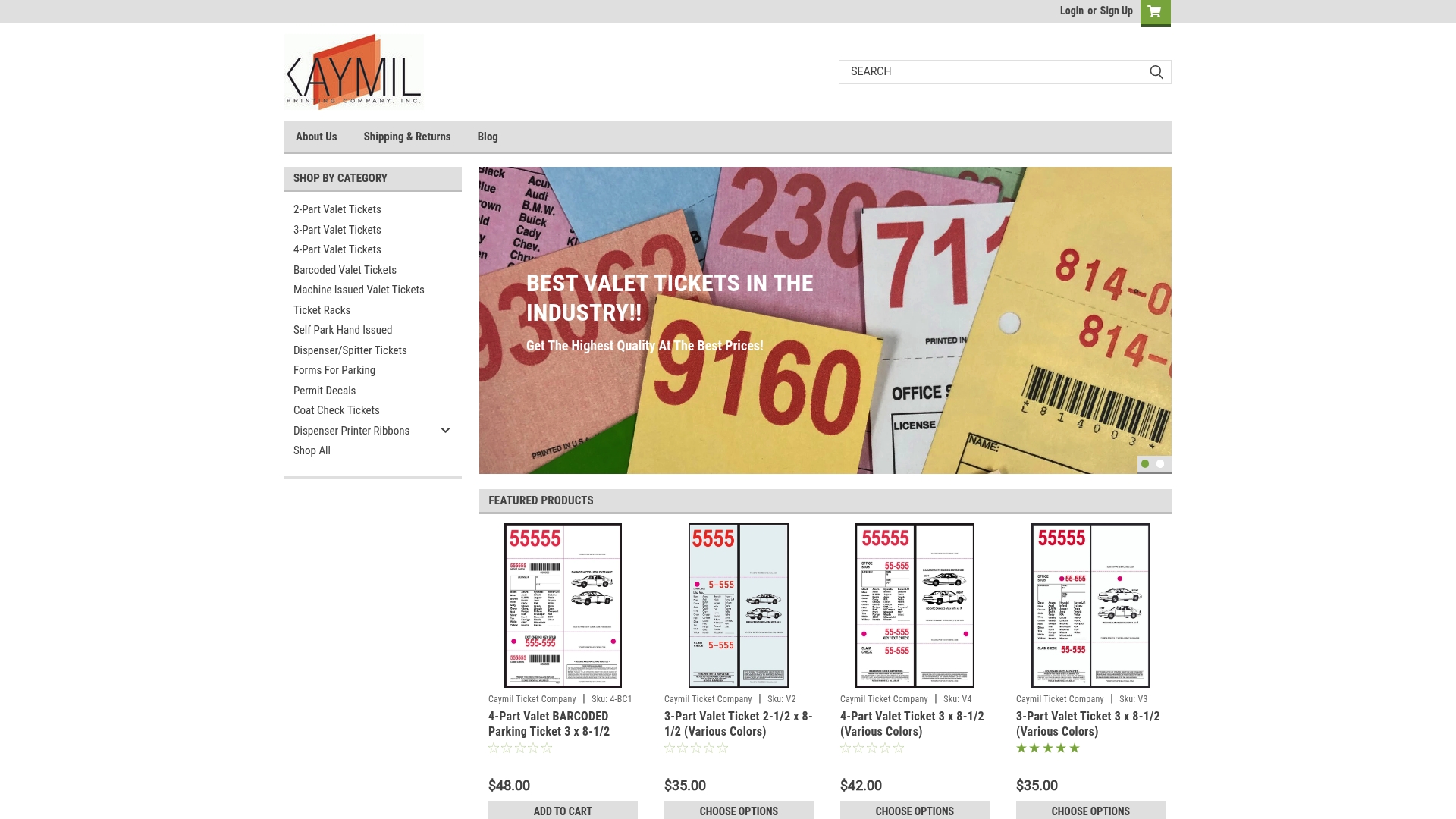
Caymil manufactures parking forms and ticketing products compatible with major parking systems including Amano, TIBA, SKIDATA, FLASH Parking, Scheidt & Bachmann, and Flowbird. Every product, from barcode parking tickets to multi-part valet tickets to thermal spitter tickets, is available with sequential numbering, custom barcodes, security features, and branded printing that fits directly into your existing workflow. Caymil’s barcode valet parking tickets are built to scan reliably in high-speed environments where a misread costs time and trust. With millions of tickets in stock and fast nationwide shipping, Caymil keeps your operation running without delays.
FAQ
What does parking system compatibility mean?
Parking system compatibility means that different hardware and software components, such as gates, payment terminals, and management platforms, can exchange data reliably through standardized protocols and integrations. It enables unified control over access, payment, and enforcement from a single operational framework.
What are the three main parking integration patterns?
The three main patterns are point integrations, platform integrations via middleware, and ecosystem integrations through open APIs. Each suits a different facility size, with middleware and open API patterns offering the most scalability for growing operations.
Why do compatible parking systems reduce revenue leakage?
Disconnected systems force manual data reconciliation between payment and access platforms, creating gaps where unpaid exits go undetected. Compatible systems share data automatically, closing those gaps and giving operators accurate revenue reporting in real time.
What is the difference between integrated and connected parking systems?
Integrated systems share data through batch exports, which can leave enforcement data minutes or hours out of date. Connected systems share a single live database, so every component reflects the current state of the facility at all times.
How does middleware help with parking system compatibility?
Middleware acts as a neutral layer that translates data between legacy hardware and modern digital services, allowing operators to add mobility apps and new platforms without replacing existing infrastructure. It also protects operators from vendor lock-in by keeping individual components replaceable.
Recommended
- Parking Management System Examples for Operators in 2026 - Caymil Printing Co., Inc.
- Hotel Parking Permit System Explained for Managers - Caymil Printing Co., Inc.
- Optimize hotel parking: Integration, valet, and guest experience - Caymil Printing Co., Inc.
- The role of ticket dispensers in parking: A manager’s guide - Caymil Printing Co., Inc.