
Luggage Claim Mismatches at Hotels: Causes and Fixes

A luggage claim mismatch happens when the bag a guest hands over and the claim ticket, the bag tag or the log entry no longer describe the same item. At a hotel bell desk, a casino or an event venue, nearly every mismatch traces back to one weak link: a ticket system that does not tie one number to one bag, one guest and one hand-off. Fix that link and most disputes never start. Below you will find where mismatches begin, a routine that closes each gap, and a script for the few that still happen.
TL;DR
- Most mismatches come from duplicate or missing numbers, handwritten details, and tickets that do not travel with the bag.
- A multi-part, sequentially numbered claim ticket gives the guest, the bag and the desk log the same number.
- Barcoding adds a scan check at hand-over, so a wrong bag is caught before it leaves the desk.
- When a mismatch does occur, record it on a written report the same hour, with names, times and ticket numbers.
- If the guest’s bag was mishandled by an airline, the guest’s claim runs through the airline, and federal rules set the refund and reporting clocks.
Table of Contents
- What a luggage claim mismatch means at a hotel desk
- Where mismatches start
- A matching routine that closes each gap
- When a mismatch happens anyway
- When the guest’s bag was mishandled by an airline
- Matched tickets for your desk
- Our view: the ticket is the control
- FAQ
- Sources
What a luggage claim mismatch means at a hotel desk
Guests use the phrase for several different problems, and each needs a different response:
- Number mismatch: the stub the guest holds does not match the tag on the bag in storage.
- Count mismatch: the guest dropped off four bags and the log shows three.
- Identity mismatch: two guests hold similar bags, and the wrong one is released.
- Condition mismatch: the bag comes back with damage the guest says was not there at drop-off.
The first three are control failures. The fourth is a record failure: without a note of the bag’s condition at intake, nobody can prove either side. All four are cheaper to prevent than to settle, because every disputed bag costs staff time, a guest’s goodwill and sometimes a payout. Our guide on why valet operations use claim checks covers the same principle for vehicles, and it applies to luggage without change: one numbered check, issued once, redeemed once.
Where mismatches start
Handwritten tickets and reused numbers
A blank pad where staff write a number by hand invites repeats. Two bags receive “112” on a busy checkout morning, and the error surfaces hours later when the second guest returns. Pre-printed sequential numbering removes the decision from the attendant: the number is already on the ticket, and it cannot be skipped or repeated without leaving a visible gap in the sequence.
Tickets that do not travel with the bag
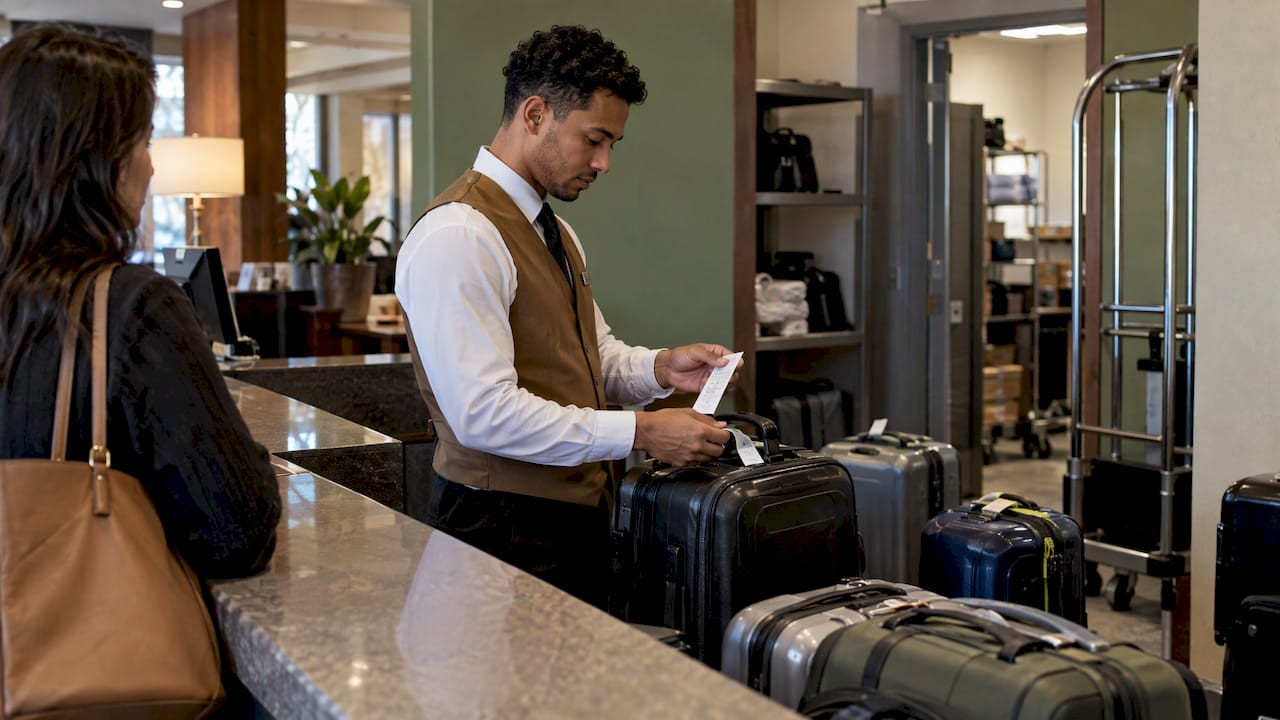
If the only record of a bag is a line in a notebook, the bag itself carries no identity. A tag torn off in a luggage cart, or one that falls off a strap, leaves an anonymous bag in the storage room. A multi-part ticket solves this by splitting one write-up into copies: one for the guest, one for the bag, and one for the desk. All carry the same printed number.
Rushed hand-offs at peak times
Checkout at 11 a.m., a convention letting out, a casino shift change: these are the moments when attendants release bags on a glance at the stub. Without a quick second check, such as comparing the number on the stub to the tag or scanning a barcode, a wrong release is only a matter of time.
No condition note at intake
A guest who says the zipper was fine at drop-off and an attendant who remembers it was already broken have nothing but memory to settle the matter. A line on the ticket for bag count, description and visible condition turns a disagreement into a record.
Several staff, several shifts
Bags left overnight pass from one shift to the next. If each shift uses its own pad or its own habit, the handover loses information. One standard ticket format used by every attendant keeps the record readable by anyone who picks it up.
A matching routine that closes each gap
This is the process we would put in front of a bell desk manager. Each step names the failure it prevents.
- Issue a pre-numbered ticket for every drop-off. Use sequential numbers printed in the factory, never handwritten. Our 3-part valet tickets and the tickets in our bell desk and luggage claim range are made with sequential numbering, and we offer multi-part carbonless formats so every copy carries the same number without a separate write-up.
- Write the count and description on the ticket in front of the guest. Number of bags, type, color, and any visible damage. Have the guest see it. This prevents both count and condition disputes.
- Attach the bag copy and give the guest the stub. The bag copy should be fixed to the handle in a way that survives a cart ride. Log the number against the room or guest name on the desk copy.
- Store by number, not by guest name. Shelves or racks organized in number order make a wrong pick obvious. Our ticket racks keep stubs and desk copies in order at the station.
- Match on release. The attendant compares the stub to the bag tag aloud and checks the bag count. Where tickets carry a barcode, a scan does the comparison. We make barcoded valet tickets with barcoding as an option for operations that want a scan check at that point.
- Collect the stub and file the desk copy. A ticket redeemed once is closed. Keep desk copies for the period your insurer or counsel specifies.
- Audit the sequence daily. With sequential numbers, a missing number in the log is an immediate flag. Check at shift change, not at the end of the week.
For luxury properties, the ticket is also the guest’s first impression of the service. Custom logos and colors on the ticket let the property present a branded, consistent hand-off. Our overview of luggage claim ticket systems for luxury hotels goes deeper on that setup, and our explainer on the bell desk ticket shows guests what the stub is for, which cuts lost-stub situations.
When a mismatch happens anyway
Even a good system meets a guest who lost the stub, or a bag that came back scratched. Handle it in this order.
The guest has no stub
Do not release on description alone. Ask for photo ID and the room number or reservation, compare to the desk copy, and have the guest describe the contents and count before you open or hand over anything. Note the release, the ID checked and the attendant’s name on the desk copy.

The number does not match the bag
Stop the release. Check the sequence log for the adjacent numbers, since transposed tags are the most frequent cause. Look at the bags tied to those numbers before concluding anything is lost. Keep the guest informed with a specific time for the answer, not a vague promise.
The guest reports damage
Compare to the condition note written at intake. If the note exists and shows no damage, the record supports the guest and the claim goes forward. Complete a written incident report the same day; our incident accident report form is a two-part form made for this, so the guest and the property each keep a copy. Our valet damage claim ticket checklist walks through the evidence an operator should gather, and the article on valet ticket liability explains what the wording on the ticket means for the operator.
Close the loop
Whatever the cause, write down what went wrong and which step failed: the missing count, the reused number, the rushed release. A short log reviewed monthly shows which shift or station needs the routine tightened.
When the guest’s bag was mishandled by an airline
Sometimes the guest at your desk is not disputing your ticket at all. They arrived without their luggage, or their bag came off the carousel damaged, and they want help. Your desk can be a calm first stop, but the claim belongs to the airline, and a few federal rules shape what the guest should do.
The U.S. Department of Transportation tells passengers whose checked bag does not arrive to file a baggage claim with the airline as soon as possible, use the airline’s tracking app, and stay in contact during the search. For a bag that arrives damaged, the DOT advises reporting the problem before leaving the airport, getting a written report with a copy, and noting the agent’s name and a follow-up number.
Two more points are worth knowing so you can point guests in the right direction:
- Fee refunds. Under 14 CFR 260.5, a carrier must promptly refund a checked-bag fee when a bag is lost or significantly delayed and a mishandled baggage report is filed. “Significantly delayed” means 12 hours on domestic flights, 15 hours on international flights of 12 hours or less, and 30 hours on longer international flights. The rule was added by a Federal Register final rule effective June 25, 2024.
- Interim expenses and lost status. The DOT says airlines must reimburse reasonable, verifiable, actual expenses while a bag is delayed, and may not set an arbitrary daily cap. Most U.S. airlines declare a bag lost between five and fourteen days after the flight, depending on the airline and itinerary.
Airline deadlines for damage reports are short and vary by carrier. One major U.S. airline, for example, requires damage to be reported within 6 hours of arrival on domestic tickets, so the guest should file at the airport, not after the taxi ride to your lobby. Guests should keep itemized receipts and the file reference number from the report. The guest should read the carrier’s own page for current terms.
The practical lesson for your desk: give the guest a written record of the bags you take in. A guest who later claims against an airline for a bag stored at your hotel will need clean documentation of what was in your custody and when.

Matched tickets for your desk
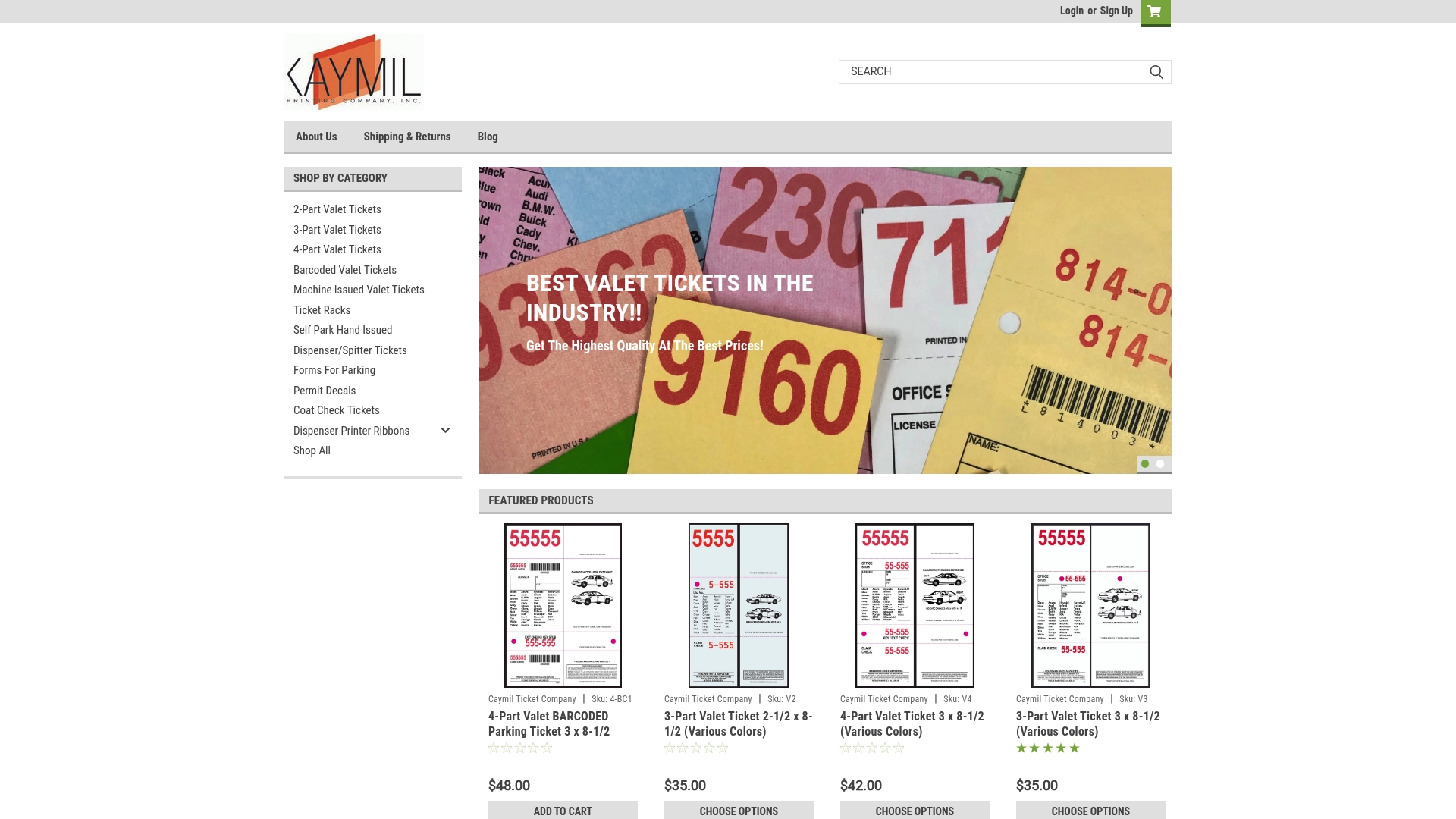
If your hotel, casino, venue or garage handles guest luggage or coats, the ticket should do three jobs: carry one unique number across all copies, record count and condition, and let staff verify a release in seconds. We manufacture custom and stock luggage claim, bell desk, coat check and valet tickets in sequential numbering, multi-part carbonless and barcoded formats, with logos and custom colors, and we ship nationwide.
Published prices on our site include barcoded valet tickets at $42-48 and 3-part valet tickets at $35-250, depending on the product listed. Coat check and custom tickets are available through our main site, where you can start a stock or custom order.
Our view: the ticket is the control
Operators often treat the claim ticket as paperwork. We treat it as the control that decides whether a hand-off can be proven. Since 1937 we have printed tickets for hotels, casinos, garages and venues, and the pattern is consistent: the properties with the fewest disputes are the ones where every bag, coat or vehicle gets a pre-numbered, multi-part ticket, every time, from every attendant.
A sequential number cannot be forgotten, and a carbonless copy cannot differ from the original. A barcode makes the final check automatic when the desk is busiest. These are small details, and they are exactly what separates a two-minute release from a forty-minute search.
Our advice to a bell desk manager is to standardize one ticket format across shifts, print the property’s name and logo on it so guests recognize it, and give staff a short routine they can repeat without thinking. We build tickets to fit that routine, in stock or custom formats, so the system supports the people using it.
Richard
FAQ
What is the most common cause of a luggage claim mismatch at a hotel?
Reused or handwritten numbers and tags that separate from the bag are the usual causes. Pre-printed sequential numbering with a copy fixed to the bag removes both. A daily check of the number sequence shows any gap quickly.
How do we handle a guest who lost their claim stub?
Verify identity with photo ID and the reservation or room number, then match the guest’s description of the bags and count to the desk copy. Release only when the details agree, and record the ID check and attendant’s name on the desk copy. A branded ticket that explains its purpose helps guests keep the stub.
Do barcoded tickets help with luggage and coat check?
Yes, where your desk wants a scan at release. A barcode lets staff confirm the ticket against the record instead of reading numbers aloud during a rush. We offer barcoding as an option on custom tickets, and our machine issued valet tickets suit operations that print tickets on demand.
What should a guest do if an airline delays or damages their bag?
The guest should report it to the airline before leaving the airport and keep the written report and file reference. Under federal refund rules, a bag-fee refund requires a mishandled baggage report on file. For anything else, the guest should read their airline’s current baggage terms or contact the airline directly.
Sources
- Lost, Delayed, or Damaged Baggage, U.S. Department of Transportation
- Plane Talk: Tips on Avoiding Baggage Problems, U.S. Department of Transportation
- 14 CFR Part 260, Refunds for Airline Fare and Ancillary Service Fees
- Refunds and Other Consumer Protections, Federal Register
- Damaged, Delayed or Lost Baggage, Delta Air Lines