
Bell Desk Ticket Explained: A Hotel Guest’s Guide

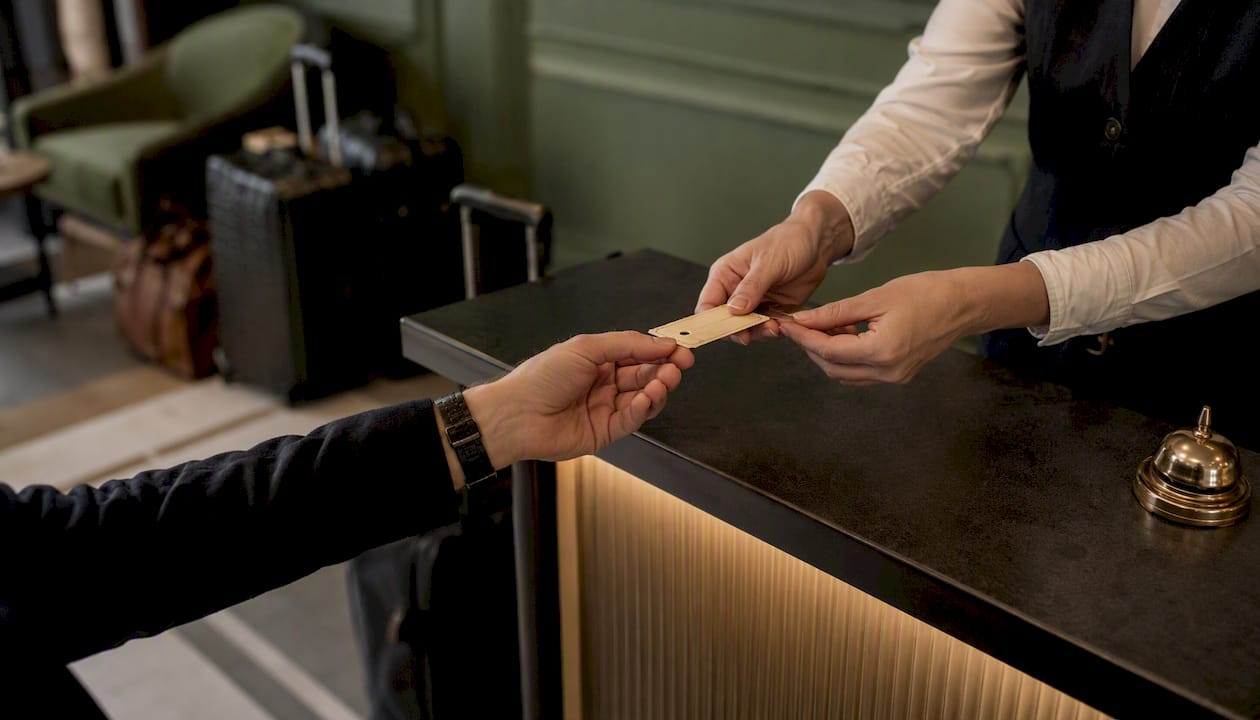
A bell desk ticket is a numbered claim check issued by a hotel’s bell desk when a guest leaves luggage for temporary storage. The workflow is straightforward: a bell attendant logs your bags, hands you a numbered stub, and you present that stub — along with photo ID at most properties — to retrieve your luggage later. Caymil Printing Co. has manufactured these luggage claim tickets and related hospitality ticketing supplies since 1937, serving hotels across the United States.
Here is what a bell desk ticket does in practice:
- Identifies your luggage with a unique number tied to the hotel’s storage log
- Serves as your claim check at pickup, replacing memory-based retrieval
- Creates an accountability record for the hotel (ticket number, storage location, staff initials, date and time)
- Protects both guest and property in the event of a dispute over lost or damaged items
The Hospitality Institute describes the bell desk as the lobby hub that receives, tags, stores, and delivers luggage while coordinating with the front office for arrivals and departures. That coordination is only possible when every bag has a ticket attached to it.
Key Takeaways
A bell desk ticket is a numbered claim check that creates a documented chain of custody between a guest’s luggage and the hotel’s storage log — and the ticket’s format directly determines how fast and reliably that chain holds.
| Point | Details |
|---|---|
| Definition | A bell desk ticket is a numbered claim check issued at luggage drop-off and required for retrieval. |
| Keep the stub | Present your stub plus photo ID at pickup; photograph it immediately as a backup. |
| Tipping norms | $1–$2 per bag is the U.S. baseline when an attendant provides personal assistance. |
| Lost ticket recovery | Bring photo ID and your reservation reference; digital systems resolve lost-ticket claims faster. |
| Caymil ticket formats | Caymil supplies machine-issued, barcoded, and multi-part carbonless bell desk tickets with sequential numbering for U.S. hotels. |
Table of Contents
- How does the bell desk luggage drop-off and pickup process work?
- Does the bell desk charge, and how much should you tip?
- What formats do bell desk tickets come in, and what security features matter?
- What happens if you lose your bell desk ticket?
- What are the storage limits and liability rules you should know?
- A quick checklist for using bell desk luggage services without problems
- Caymil supplies bell desk and luggage claim tickets for U.S. hotels
- Sources
- FAQ
How does the bell desk luggage drop-off and pickup process work?
The process follows a consistent sequence at most U.S. hotels, whether the property uses paper stubs or a digital ticket board system.
- Arrival and intake. You bring your bags to the bell desk. The attendant assigns a ticket number, records your name or reservation reference, notes the storage location (room number, bin, or rack position), and logs the date and time.
- Stub issued. You receive the guest portion of the ticket — a numbered stub, sometimes stamped or initialed. Keep it with you.
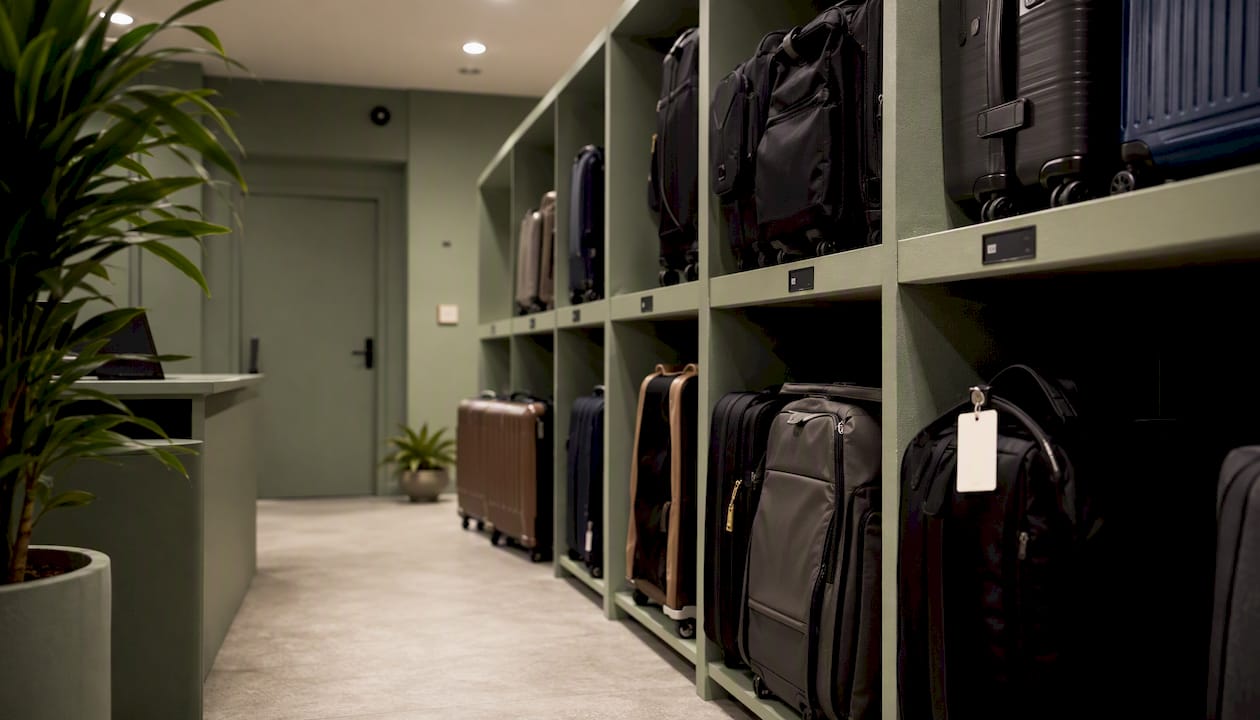
- Bags stored. The hotel retains the matching copy or logs the ticket in its system. Bags are placed in a secure storage area, often organized by ticket number or last-digit bin.
- Retrieval request. When you return, present your stub at the bell desk. Staff match the number to the storage log and locate your bags.
- Identity confirmation. Most properties ask for photo ID alongside the stub, especially for extended holds or high-value items.
- Bags released and log updated. The attendant marks the ticket as claimed, notes who retrieved the bags, and closes the record.
Typical holds run from a few hours (early check-in or post-checkout) to a full day. Extended storage beyond 24 hours is less common and may require a separate arrangement with the property.
Pro Tip: Write your name and cell number on a luggage tag before handing bags over. If the stub gets separated from your bag during a busy check-in rush, the tag gives staff a second way to match the bag to you.
A practical example: you arrive at 9:00 AM, check-in is at 3:00 PM, and you want to explore the city. The bell desk takes your two bags, issues ticket #0847, and you head out. At 4:00 PM you return, present stub #0847 and your ID, and your bags are waiting. That six-hour window is exactly what the bell desk ticket system is built for. Guest forum discussions on platforms like TripAdvisor confirm this is the standard experience guests encounter at most major U.S. hotels.
Does the bell desk charge, and how much should you tip?
Short-term luggage storage is usually complimentary. Most hotels treat a same-day hold — before check-in or after checkout — as a standard guest service with no fee attached. The American Hotel & Lodging Association (AHLA) notes that tipping is customary in the United States for bell attendants who provide personal assistance, while short-term luggage hold is often treated as a complimentary service, though policies vary by property.
Situations where a fee may apply:
- Overnight or multi-day storage beyond the standard same-day window
- Oversized or specialty items (bicycles, surfboards, large equipment cases)
- Premium or secured storage for high-value items requiring a separate locked area
- Resort or conference properties that charge a flat daily rate for extended luggage programs
On tipping: $1–$2 per bag is the widely accepted baseline for bell attendants in the U.S. For attentive service, special handling of fragile items, or delivery to your room, $3–$5 per bag is appropriate. You are not obligated to tip for a simple drop-off at the desk with no personal assistance, but it is a recognized courtesy when an attendant carries bags or goes out of their way.
Always confirm the property’s specific policy when you drop off. Asking takes ten seconds and prevents surprises at pickup.
What formats do bell desk tickets come in, and what security features matter?
Bell desk tickets come in several physical formats. The right choice depends on the property’s volume, tracking needs, and whether staff use a digital log or a manual system.
- Two-part carbonless tickets: The most common format for mid-size hotels. One copy stays with the bag (or in the hotel’s file), the other goes to the guest. Multi-part carbonless formats provide an instant duplicate without a printer or scanner.
- Machine-issued spitter tickets: Printed on demand by a dispenser unit. Fast, consistent, and ideal for high-volume lobbies where manual writing slows intake. Caymil’s machine-issued ticket line covers this format.
- Barcoded tickets: Carry a scannable barcode tied to a digital record. Staff scan at intake and again at retrieval, creating a full audit trail with timestamps. Barcoded formats are the strongest option for dispute resolution.
- Sequentially numbered stubs: Even without a barcode, sequential numbering prevents duplication and makes manual log searches faster.
Core data fields every bell desk ticket should include:
| Field | Why It Matters |
|---|---|
| Ticket number (sequential) | Unique identifier; prevents duplicate claims |
| Guest name or reservation ID | Secondary verification when stub is lost |
| Date and time of intake | Establishes storage duration and liability window |
| Storage location | Speeds retrieval in large or multi-room storage areas |
| Staff initials | Creates accountability for who accepted the bags |
Ticket board software captures all five fields digitally, recording ticket number, guest ID, storage location, and the employee who handled intake — then logs who retrieved the bags and when. That audit trail is what separates a professional bell desk operation from one that relies on memory.
Applying ticketing best practices from help-desk operations — status updates, tagging, and predefined retrieval actions — translates directly to bell desk workflows, reducing the chance that a bag gets overlooked during a busy checkout rush.
What happens if you lose your bell desk ticket?
Losing the stub is inconvenient but not a crisis. Hotels have standard procedures for verifying identity and releasing bags without the physical ticket.
- Go to the bell desk immediately and explain the situation calmly.
- Present a government-issued photo ID — a driver’s license or passport is standard.
- Provide your reservation reference or room number so staff can cross-check the intake log.
- Describe your bags (color, brand, approximate size) to help staff locate them in storage.
- Wait for a supervisor if needed. High-value or disputed claims may require a manager’s sign-off before release.
Properties using digital tracking can resolve lost-ticket claims significantly faster. When the system holds a record of ticket number, guest ID, and storage location, staff search by name or reservation rather than physically scanning every bag in storage. Manual systems that organize bags by last-digit bin sections are slower and more error-prone in this scenario.
Pro Tip: Photograph your ticket stub on your phone the moment you receive it. If the physical stub is lost, the photo gives staff the exact ticket number and speeds the lookup considerably. Some guests also avoid common ticketing mistakes by writing their name directly on the stub before handing it over.
What are the storage limits and liability rules you should know?
Hotels are not unlimited storage facilities, and their liability for stored items is typically limited by property policy and, in some states, by statute.
- Liability disclaimers are standard. Most hotels limit their financial responsibility for lost or damaged stored items. The ticket itself or a posted notice at the bell desk usually states the cap. Read it before you hand over anything valuable.
- High-value items require special handling. Jewelry, electronics, and documents should stay with you or go into the in-room safe. If you must store them, ask for a written acknowledgment from a manager.
- Prohibited items are common. Hotels routinely refuse to store hazardous materials, perishable food, live animals, and items that exceed size or weight limits.
- Extended storage may require a signed waiver. Overnight or multi-day holds at some properties require the guest to sign a form acknowledging the liability limits and any applicable fee.
- Refusal is within the hotel’s rights. A property can decline to store luggage if the item is prohibited, if storage is at capacity, or if the guest cannot provide adequate identification.
Understanding why claim checks reduce disputes is useful context here: the ticket creates a documented moment of transfer, which is the clearest evidence available if a dispute arises over condition or loss.
A quick checklist for using bell desk luggage services without problems
Follow these steps and the process stays smooth from drop-off to pickup.
- Label every bag with your name, cell number, and hotel reservation number before arriving at the desk.
- Keep the stub in a secure place — a wallet or phone case, not a loose pocket.
- Photograph the stub immediately after receiving it.
- Confirm the bell desk hours at drop-off, especially if you plan a late pickup.
- Ask about fees upfront for any hold extending past checkout or involving oversized items.
- Tip appropriately when an attendant provides personal assistance ($1–$2 per bag as a baseline).
- Describe special handling needs at intake — fragile items, electronics, or bags that must stay upright.
Pro Tip: At high-volume properties, barcoded or machine-issued tickets speed retrieval because staff scan rather than search. If your hotel uses paper stubs, ask the attendant to note your name on the hotel’s copy in addition to the ticket number. That second identifier is what saves time when the desk is busy.
For operators managing valet and luggage flows at high volume, the same principles apply: clear labeling, sequential numbering, and a consistent intake log are the three factors that prevent retrieval errors.
The ticket is the system — and the system only works when the ticket is right
Bell desk operations look simple from the lobby. A guest drops bags, gets a stub, comes back later. What guests rarely see is the accountability chain behind that stub: the intake log, the storage location code, the staff initials, the timestamp. When any link in that chain is weak — a ticket with no sequential number, a log entry with no guest ID, a stub that smears — the whole system slows down or fails.
Caymil has been manufacturing hospitality and parking tickets since 1937, which means the company has seen every format variation that hotels have tried. The properties that handle luggage most efficiently are the ones that treat the ticket as a document, not a receipt. Sequential numbering, a legible guest ID field, and a durable print surface are not premium features — they are the baseline a professional operation requires.
Caymil supplies bell desk and luggage claim tickets for U.S. hotels
Hotels that process dozens of luggage holds per day need tickets that hold up physically and create a reliable paper trail. Caymil’s hospitality ticket line covers the formats that matter most for bell desk operations:
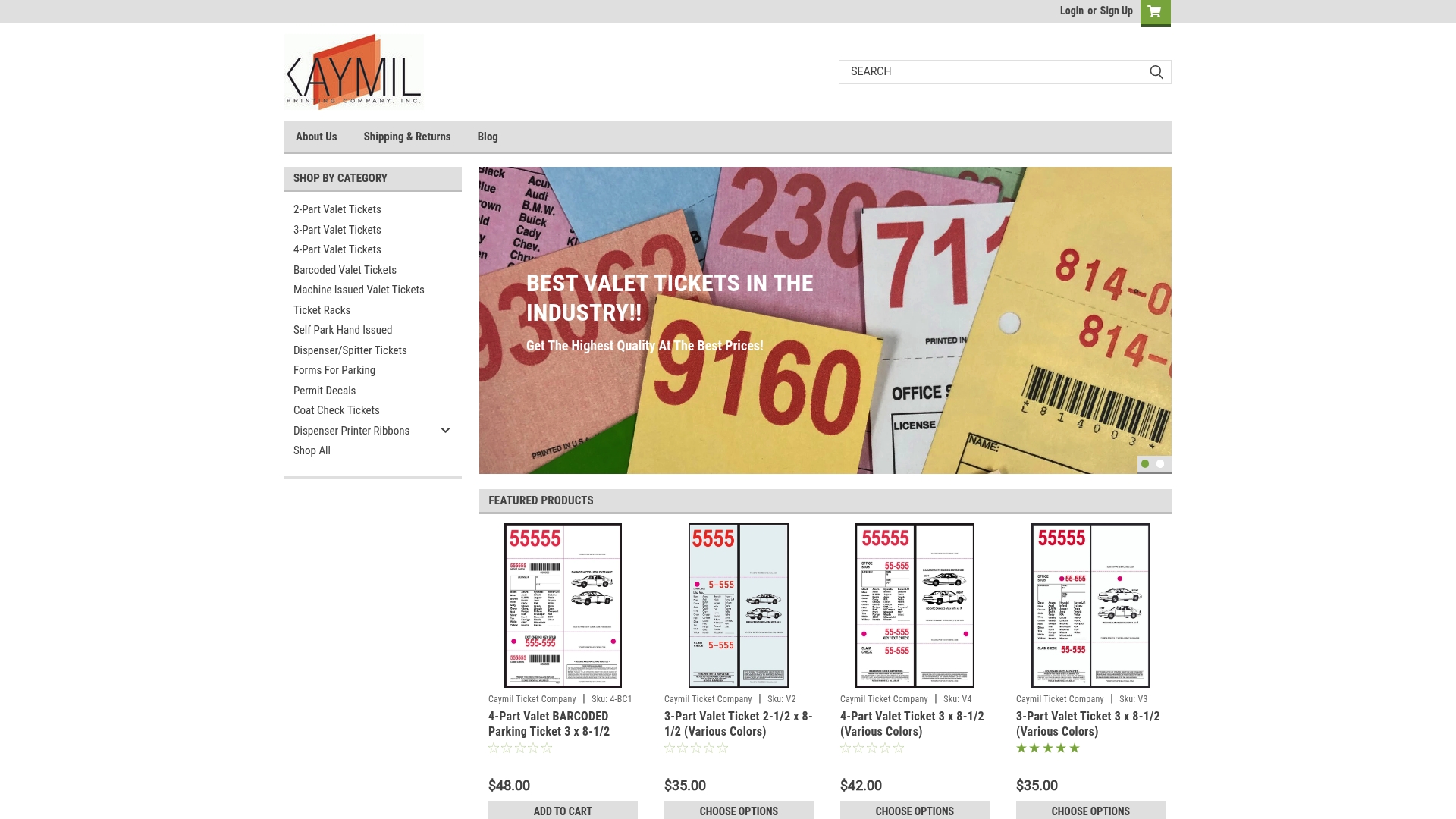
Machine-issued spitter tickets print on demand for fast, consistent intake at busy lobbies. Two-part and multi-part carbonless formats give the hotel an operator copy and the guest a durable stub in a single motion. Barcoded tickets connect physical stubs to digital logs for full audit-trail retrieval. All formats are available with sequential numbering, custom branding, and security features designed for hospitality use.
Caymil ships nationwide with millions of tickets in stock, so lead times stay short even for large orders. Hotel operators and purchasing managers can browse the full range of hospitality and parking ticket formats at caymil.com or contact the team directly for a custom quote.
Sources
- American Hotel & Lodging Association (AHLA)
- Ticket Board | Welcome
- Ticket Board | Using
- Ticketing system tips (Zendesk)
- We’re here to help - Find Answers (Caesars)
- Hospitality
FAQ
What does “bell desk” mean?
The bell desk is the hotel lobby station staffed by bell attendants who handle luggage storage, delivery, and guest assistance. The Hospitality Institute describes it as the lobby hub coordinating luggage intake, storage, and delivery for arrivals and departures.
Does the bell desk charge a fee?
Short-term same-day luggage storage is usually complimentary at U.S. hotels, as confirmed by property help pages like Caesars Entertainment’s. Fees may apply for overnight holds, oversized items, or premium secured storage — always confirm at drop-off.
Do you need to tip the bell desk?
Tipping is customary in the U.S. when a bell attendant provides personal assistance such as carrying bags. The AHLA recognizes tipping as a standard part of bell-desk interactions; $1–$2 per bag is the accepted baseline for attentive service.
Why is it called a bell desk?
The name comes from the bell — historically, hotel staff were summoned by a desk bell, and the attendants who responded became known as bellhops or bellmen. The desk they operated from took the same name, and the term has remained standard in U.S. hospitality.
What happens if you lose your bell desk ticket?
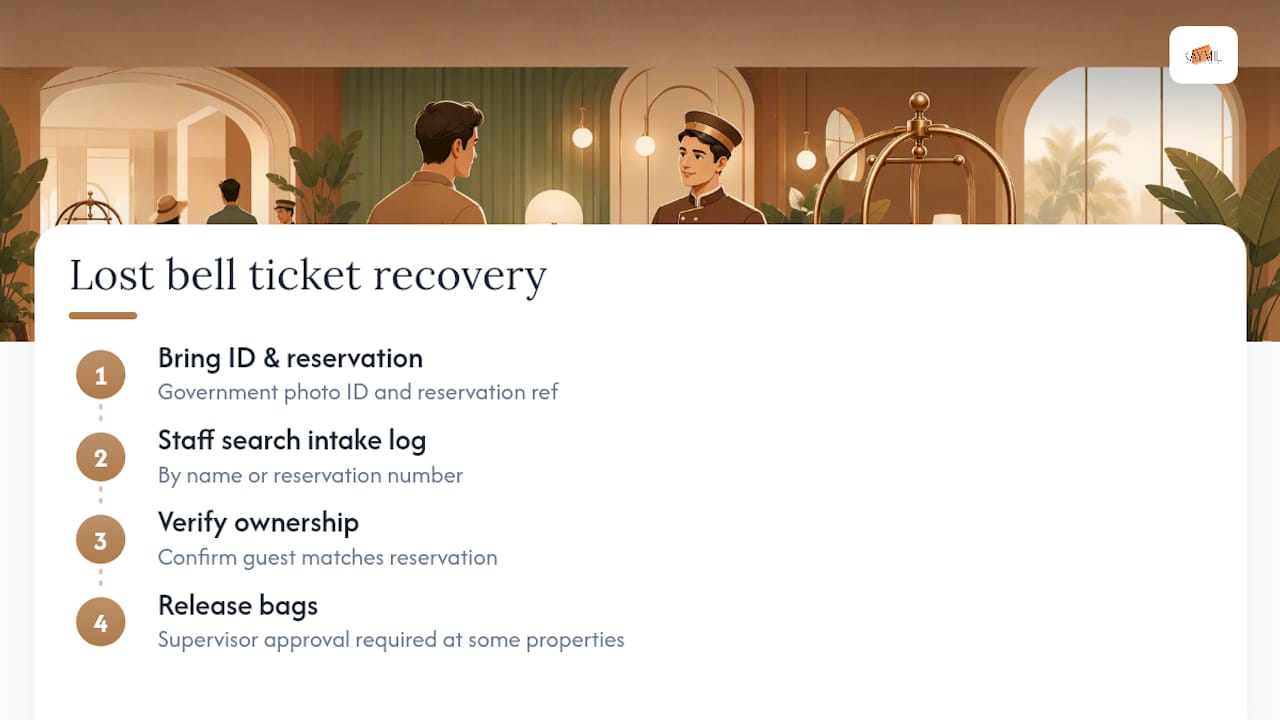
Bring a government-issued photo ID and your reservation reference to the bell desk. Staff will search the intake log by name or reservation number to verify ownership and release your bags, with a supervisor’s approval required at some properties.