

Parking Access Control Explained for Facility Operators

A parking access control system is an electronic solution that manages vehicle entry and exit in parking facilities based on predefined credentials, validations, or payment status. The industry term for the full category is Parking Access and Revenue Control Systems, or PARCS. Understanding how these systems work gives facility operators the foundation to reduce unauthorized access, cut staffing costs, and improve throughput. Technologies like License Plate Recognition (LPR), RFID tags, and boom barriers each play a distinct role. Platforms from providers like SDLC Corp, Avigilon, and Reliant Parking show how far parking control systems have evolved beyond a simple gate and a ticket machine.
How does parking access control work?
Modern PARCS systems automate entry and exit by combining detection hardware with policy enforcement software. The process follows a clear sequence: a vehicle approaches, a sensor or camera detects it, credentials are validated against the system database, and the barrier opens or stays closed. No attendant needs to be present for any of those steps.
The hardware layer includes LPR cameras, RFID readers, inductive loop sensors, and boom barriers. The software layer handles the rules: who is authorized, at what times, under what payment conditions. These two layers must communicate in real time. A delay of even two seconds between a camera read and a gate action creates a queue that frustrates drivers and reduces throughput.
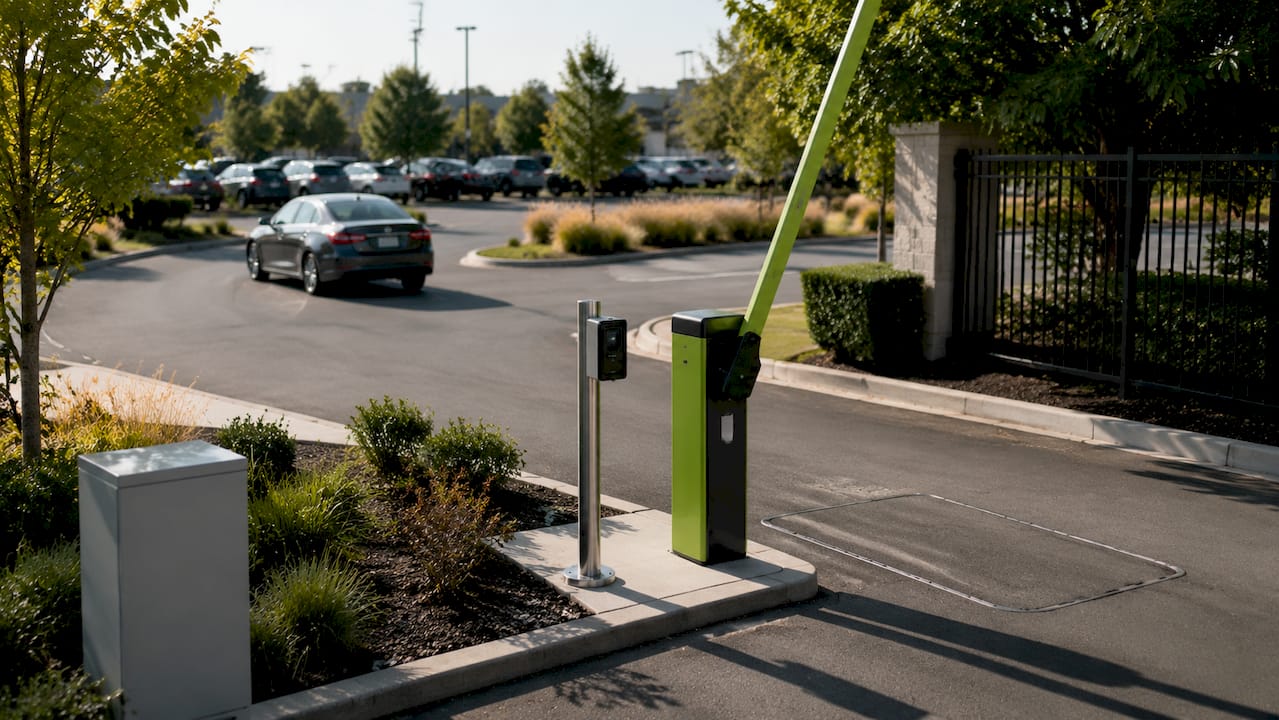
Enterprise PARCS platforms can be provisioned in as few as seven business days, though full hardware rollout typically takes four to six weeks. That timeline reflects the physical work of mounting cameras, wiring barriers, and calibrating sensors. Operators who underestimate the hardware phase often face delays that push their go-live date back by weeks.
Deployment steps for a standard PARCS installation:
- Site survey to map camera mounting points, lighting conditions, and lane configurations
- Software provisioning and policy configuration (access rules, pricing, enforcement triggers)
- Hardware installation: cameras, readers, barriers, and loop sensors
- Integration testing between hardware and software, including gate response timing
- Staff training on the remote monitoring dashboard and exception handling workflows
- Go-live with a parallel manual override process for the first two weeks
Pro Tip: Run a full exception simulation before go-live. Trigger a failed LPR read, a denied credential, and a barrier malfunction. Confirm that each scenario routes correctly to your remote monitoring dashboard before removing manual backup staff.
RFID vs. LPR: which access control type fits your facility?
The two dominant technologies in parking access control are RFID and License Plate Recognition. They solve the same problem differently, and the right choice depends on your facility’s user mix, security requirements, and budget.
RFID systems issue physical credentials, typically a windshield tag or key fob, to each authorized user. The reader at the entry lane detects the tag and triggers the gate. The system is reliable for a closed population of known users, such as monthly permit holders in a corporate garage. The problem is scalability. RFID struggles with visitor management because every guest needs a physical credential issued in advance. Real-time occupancy enforcement is also weak in traditional RFID setups, and integration with broader management platforms is limited.
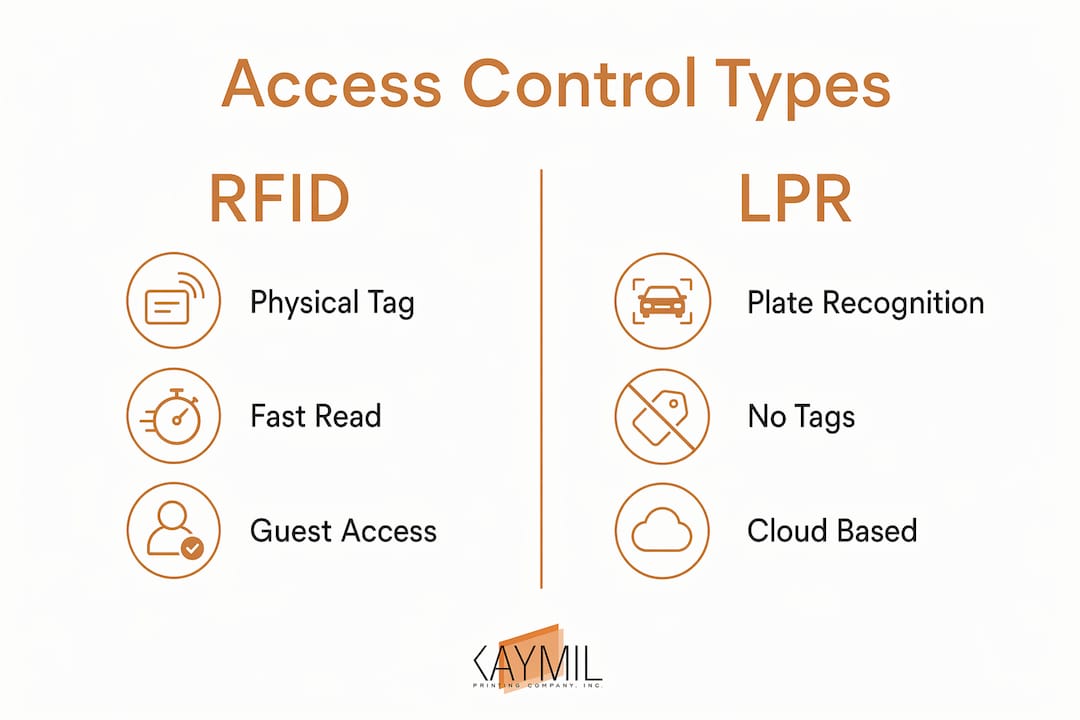
LPR systems read a vehicle’s license plate and link it to a digital session. Drivers enter without stopping, pay through an app or pay station, and exit automatically when the system validates the plate against the payment record. There is no physical credential to manage. The tradeoff is that LPR accuracy depends heavily on camera quality, positioning, and lighting conditions.
| Feature | RFID | LPR |
|---|---|---|
| Credential type | Physical tag or fob | License plate (digital) |
| Guest access | Difficult, requires pre-issued tag | Easy via app or plate registration |
| Read reliability | Very high for valid tags | 95–98% under good conditions |
| Operational complexity | Low for closed populations | Moderate, requires exception handling |
| Integration with software | Limited in legacy systems | Strong in cloud-based platforms |
| Cost to scale | High (credential issuance) | Lower (no physical credentials) |
Cloud-based access solutions are now replacing traditional RFID in many facilities. These platforms support guest access via QR codes or plate registration, which removes the credential issuance bottleneck entirely. RFID systems are being replaced by cloud-based, plate recognition, and QR code entry in facilities that need flexible visitor management.
Pro Tip: High-security facilities do not have to choose one technology. Avigilon and similar providers support multi-layer validation combining LPR with RFID for a layered approach where the threat level justifies the added friction.
What are the real benefits of access control for parking operators?
The operational benefits of a modern parking access control system extend well beyond keeping unauthorized vehicles out. Modern platforms support residents, employees, and visitors with regulated entry, digital permits, visitor validation, enforcement, and live space tracking in a single unified system. That consolidation is where the efficiency gains become measurable.
Key benefits parking operators gain from deploying a PARCS system:
- Reduced unauthorized access. Automated credential checks at every entry point remove the human error that comes with staffed gates.
- Real-time occupancy data. Operators can see live space counts by zone, which supports dynamic pricing and prevents overselling.
- Lower staffing costs. Automation shifts workload from onsite gate attendants to a smaller remote monitoring team managing exceptions via dashboard.
- Flexible guest and temporary access. Cloud-based systems issue time-limited digital credentials without requiring physical tag distribution. Hotel and hospitality operators benefit significantly from this capability, as shown in hotel parking integration workflows.
- Revenue protection. Automated enforcement closes the gap between vehicles entering and revenue collected, reducing drive-offs and unpaid exits.
- Customer satisfaction. Frictionless entry and exit reduce wait times and eliminate the frustration of staffed lane bottlenecks.
Successful operators focus on software for dynamic pricing, enforcement, and occupancy management. Hardware alone cannot deliver these outcomes. A gate that opens and closes is only as useful as the data and rules behind it.
Deployment challenges and best practices for parking access systems
The most common failure point in a parking access control deployment is not the technology. It is the physical installation. LPR read accuracy depends on camera mounting height, angle, and lighting. A camera mounted too high, aimed at the wrong angle, or positioned where headlights cause glare will consistently miss plates. Best-in-class LPR systems achieve 95–98% read rates under good conditions. That means even a well-configured system will fail to read two to five vehicles out of every hundred. Operators need an exception handling workflow before day one.
Legacy hardware integration introduces latency between software reads and gate actions. This happens because boom barrier brands use different communication protocols, and older hardware often cannot keep pace with modern software response times. The result is a gate that hesitates, which creates driver confusion and lane backups. Operators upgrading from older systems should budget for protocol translation middleware or plan to replace barrier hardware alongside the software.
Remote monitoring is the operational backbone of an automated facility. Without effective software dashboards, staff must manually override gates, which eliminates the efficiency gains that justified the system investment. A well-configured dashboard surfaces failed reads, unauthorized attempts, and barrier faults in real time. Staff can resolve most exceptions remotely without sending someone to the lane.
Privacy and data compliance add another layer of complexity. LPR systems capture and store plate data, which is subject to state-level privacy regulations in several U.S. states. Operators should confirm that their platform vendor maintains data retention policies that align with local requirements before deployment.
Pro Tip: Treat your parking ticket security strategy as part of your access control plan. Physical tickets with sequential numbering and barcodes create an audit trail that supports enforcement and fraud prevention alongside your digital system.
What I’ve learned from watching operators get this wrong
The operators who struggle most with parking access control are the ones who buy hardware first and figure out the software later. I have seen facilities install high-end LPR cameras and boom barriers, then spend months trying to find a software platform that integrates cleanly with what they already bolted to the wall. The integration tax is real. Protocol mismatches between barrier brands and management software create latency that frustrates drivers and erodes the efficiency gains the system was supposed to deliver.
The facilities that get it right start with the software decision. They define their access rules, pricing logic, and exception workflows first. Then they select hardware that the software vendor has already certified. That sequence sounds obvious, but the pull of a hardware demo is strong. A gate that opens smoothly in a showroom does not tell you anything about how it behaves when it is talking to a cloud-based PARCS platform over a spotty network connection at 7 a.m. on a Monday.
The other thing I would push back on is the assumption that automation means less oversight. The best-run facilities I have seen treat their remote monitoring dashboard as a live operations center. They staff it during peak hours, they review exception logs daily, and they treat a spike in failed reads as an early warning signal, not a background noise problem. Automation does not eliminate the need for attention. It changes where that attention goes.
Parking management system examples from 2026 show that the gap between operators who invested in software-first deployments and those who did not is widening. The facilities with unified platforms are running leaner, collecting more revenue per space, and handling visitor access without issuing a single physical credential.
— Richard
How Caymil supports parking access control operations
Parking access control systems manage the digital side of vehicle entry and exit. The physical side still depends on reliable ticketing products that integrate with those systems.
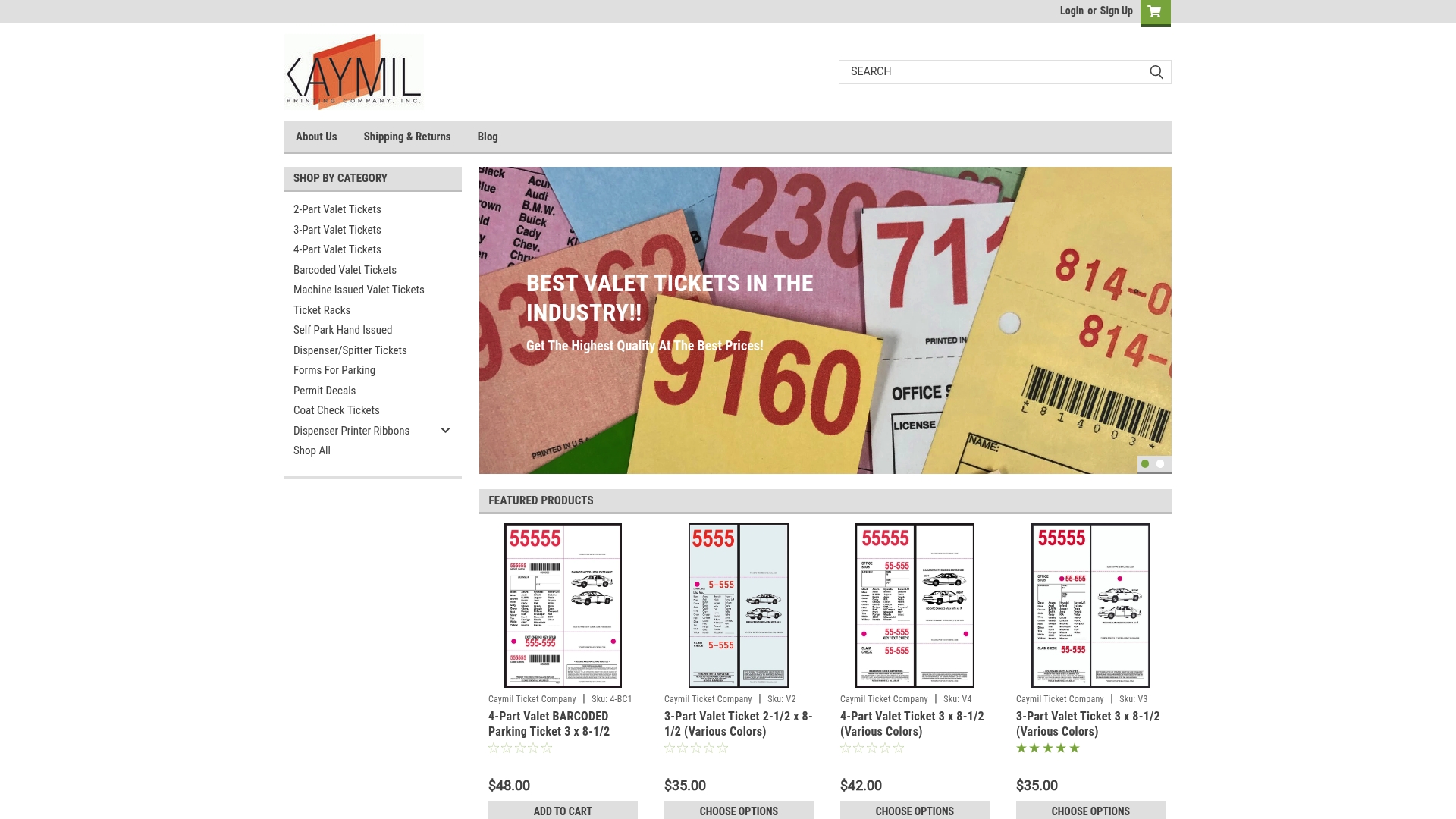
Caymil has manufactured parking tickets and forms compatible with major PARCS platforms since 1937. Products like barcoded valet parking tickets and dispenser spitter tickets are built to work with systems from Amano, TIBA, SKIDATA, FLASH Parking, Scheidt & Bachmann, and Flowbird. Caymil also offers a full range of parking forms and enforcement documents with options for sequential numbering, barcoding, and custom branding. Operators who need customized solutions can contact Caymil directly for a quote tailored to their facility’s volume and system requirements.
FAQ
What is parking access control?
Parking access control is an electronic system that manages vehicle entry and exit in a parking facility using credentials, payment validation, or license plate recognition. The full category is called Parking Access and Revenue Control Systems (PARCS).
How does LPR differ from RFID in parking?
LPR reads a vehicle’s license plate and links it to a digital session, requiring no physical credential. RFID requires a physical tag or fob issued to each user, which limits flexibility for guest and visitor access.
What read rate should operators expect from LPR systems?
Best-in-class LPR systems achieve 95–98% read rates under good conditions. Camera positioning, lighting, and weather are the primary factors that reduce accuracy below that range.
How long does it take to deploy a parking access control system?
Software provisioning can be completed in as few as seven business days. Full hardware installation, including cameras, barriers, and sensors, typically takes four to six weeks.
Can modern parking systems handle guest and visitor access?
Cloud-based PARCS platforms support visitor access via QR codes or license plate registration, eliminating the need for pre-issued physical credentials. Traditional RFID systems cannot match this flexibility.
Key takeaways
A parking access control system delivers measurable efficiency and security gains only when software policy and hardware installation are planned together from the start.
| Point | Details |
|---|---|
| Software drives outcomes | Define access rules, pricing, and exception workflows before selecting hardware. |
| LPR suits mixed-use facilities | LPR handles guest and visitor access without physical credential issuance. |
| RFID fits closed populations | RFID is reliable for monthly permit holders but struggles with visitor management at scale. |
| Exception handling is non-negotiable | Even 95–98% LPR read rates mean failures occur daily; operators need a clear resolution workflow. |
| Remote monitoring replaces gate staff | Automation shifts oversight to dashboards; facilities must staff remote monitoring during peak hours. |