

Buyers: Cut 2–5 Days From Parking Ticket Turnaround Time

Stock valet and parking tickets typically ship in 1 to 3 business days, while custom orders run anywhere from 3 to 10 or more production days depending on quantity, finishing, and proof approval speed. Total delivery time always includes proofing and shipping, not just press time. A manufacturer with a long history in parking and valet tickets shapes every lead time estimate below.
TL;DR:
- Stock valet tickets can ship within 1 to 3 business days, making them the fastest option for urgent needs, while custom orders typically require 3 to 10 days depending on complexity and size.
- Proofing delays caused by file issues or design revisions can add a full day or more to the overall timeline, especially for complex finishes like foil stamping or barcoding.
- Ordering pre-configured stock SKUs and confirming machine specifications upfront can trim 1 to 5 days from the total turnaround, with rush services reducing production time by about one business day.
- Larger custom orders, especially those with finishing steps or high quantities, tend to have extended lead times, sometimes exceeding a week, depending on printer queue and demand.
- Proper planning, including quick approval of artwork and decisions on necessary finishes, is essential for meeting tight deadlines and avoiding costly delays.
Table of Contents
- Turnaround at a Glance: Typical Lead Times by Product Type and Quantity
- What Factors Affect Parking Ticket Turnaround Time?
- How to Shorten End-to-End Turnaround
- Ordering Checklist and a Sample Milestone Timeline
- Shipping, Receiving, and Fulfillment After Production
- How Caymil Meets Tight Turnaround Needs
- An Editorial Perspective on Cutting Turnaround Risk
- Selected Sources and Further Reading
- FAQ
Turnaround at a Glance: Typical Lead Times by Product Type and Quantity
The clearest way to estimate parking citation processing time is to match your order type against production bands most printers use. Stock items move fast because they skip design and proofing. Custom jobs scale with quantity, and finishing steps like numbering or foil stamping add days on top of the base print run.
Small in-stock quantities of valet tickets commonly ship within 1 to 2 business days, while custom orders in similar volumes often need 3 to 5 business days once artwork is approved. Larger custom runs push that window further, and multi-part carbonless sets or barcoding add their own time on top.
| Order type | Quantity | Typical production time | Notes |
|---|---|---|---|
| Stock valet tickets | Small (in-stock) | 1–3 business days | Fastest option; no proofing delay |
| Custom tickets | Small (≤5,000) | 3–5 business days | After proof approval |
| Custom tickets | Mid | several business days | Press scheduling factors in |
| Custom tickets | Large | over a week of business days | May require staggered runs |
| Multi-part/carbonless sets | Any quantity | +1–3 days | Added collating and numbering steps |
These are production windows only. Add proofing time on the front end and shipping transit on the back end to get your true delivery date.
What Factors Affect Parking Ticket Turnaround Time?
Several variables push a job faster or slower than the baseline ranges above, and most of them are within a buyer’s control once you know where to look.
- Artwork and proof delays. Files missing bleed, low-resolution logos, or unclear numbering sequences bounce back for correction, and each round can cost a full day or more.
- Paper and substrate choice. Heavier card stock or recycled substrates sometimes require a press changeover, which adds handling time compared with standard stock.
- Finishing operations. Numbering, perforation, barcoding, laminating, and foil stamping are separate machine passes. Special finishes like foil or die-cutting commonly add one to three production days beyond a basic single-color print run.
- Multi-part carbonless sets. Collating and sequential numbering across carbonless layers adds finishing steps that single-sheet tickets don’t need.
- Press scheduling and quantity. Larger runs queue differently than short jobs, and a printer’s current workload affects where your order lands in that queue.
- Machine-issued formats. Roll tickets and dispenser or “spitter” formats need exact machine specifications confirmed before production starts, which can add setup time if specs arrive late.
- Inventory and seasonal demand. Peak event seasons strain press capacity across the industry, so ordering during high-demand months without buffer time is risky.
- Shipping cutoffs. Missing a carrier’s daily pickup window by even an hour can push delivery back a full day.
How to Shorten End-to-End Turnaround
You don’t have to accept the slowest estimate in the range above. A few procurement habits consistently shave days off total ticket processing time.
- Default to stock or pre-configured SKUs when the calendar is tight. Pre-numbered or pre-barcoded stock formats skip an entire finishing pass compared to adding those features after the fact.
- Deliver press-ready artwork on the first submission. Confirm bleed, color mode, and numbering sequence before you send files, and agree on a proofing service-level agreement with your printer up front.
- Skip finishing options you don’t strictly need. Foil stamping and lamination look sharp, but if they’re not required for durability or fraud prevention, cutting them from the order removes one to three days.
- Stagger shipments on large runs. Ask for an early partial shipment of your first-needed batch while the remainder finishes production.
- Reserve rush production ahead of your event date. Rush service typically shortens production by about one business day compared with standard queue placement, but eligibility depends on the finishes and quantity you’ve selected, so confirm it early rather than at the deadline.
Pro Tip: Missing machine specs on dispenser or roll-ticket orders is one of the most common causes of delay. Confirming the part number and core size before you submit the order can save two to five days of back-and-forth.
Ordering Checklist and a Sample Milestone Timeline
Before you submit an order, gather these details so your printer can quote an accurate delivery date instead of a padded worst-case estimate.
File and data checklist:
- Final artwork in the correct file format with bleed marks included
- Sequential numbering scheme and starting number
- Barcode specification (symbology, data format, placement)
- Machine format compatibility confirmed for any machine-issued tickets
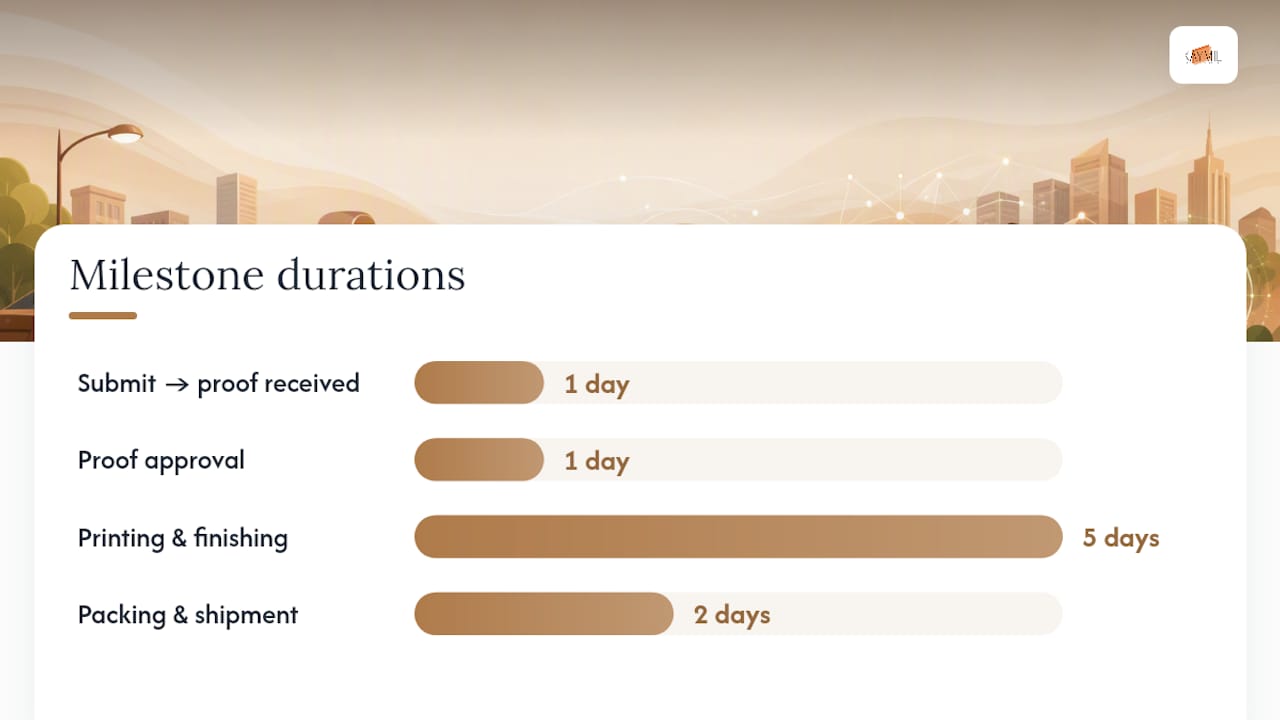
Proofing step: A digital proof for review typically takes one business day to prepare and one business day for internal approval. A rapid proof workflow can deliver a sample within about 8 business hours of file submission, which is worth asking about if your event date is close.
Sample milestone timeline for a mid-size custom order:
- Day 1: Submit final artwork and order specs
- Day 2: Receive digital proof
- Day 3: Proof approved, production begins
- Days 4 to 8: Printing and finishing (numbering, perforation, barcoding)
- Days 9 to 10: Packing and shipment
If a proof is rejected, add one to two days for revisions and a second review cycle. If you need a rush, confirm eligibility on day one rather than after production has already started.
Shipping, Receiving, and Fulfillment After Production
Production finishing your tickets is not the same as tickets arriving at your loading dock. Fulfillment adds its own timeline.
- Carrier transit windows vary by service level; ground shipping across multiple time zones commonly adds two to five days beyond expedited air options.
- Carrier cutoffs matter more than most buyers expect. Missing a same-day pickup deadline by even an hour bumps your shipment to the next business day.
- Multi-destination orders for chains with several garages or hotel properties need extra sorting and labeling time before the carrier ever picks up the freight.
- Kitting and labeling services, if you request tickets pre-sorted by location or shift, typically add a day to standard packing.
- Receiving QC should be planned on your end too. Inspect numbering sequences and barcode scans against a sample immediately on arrival, not after your first event.
How Caymil Meets Tight Turnaround Needs
Caymil is built for exactly this kind of deadline pressure. With decades of manufacturing history behind it, The company maintains in-stock SKUs and ships nationwide, so buyers who need speed without sacrificing durability have a real stock option instead of waiting on a full custom production cycle.
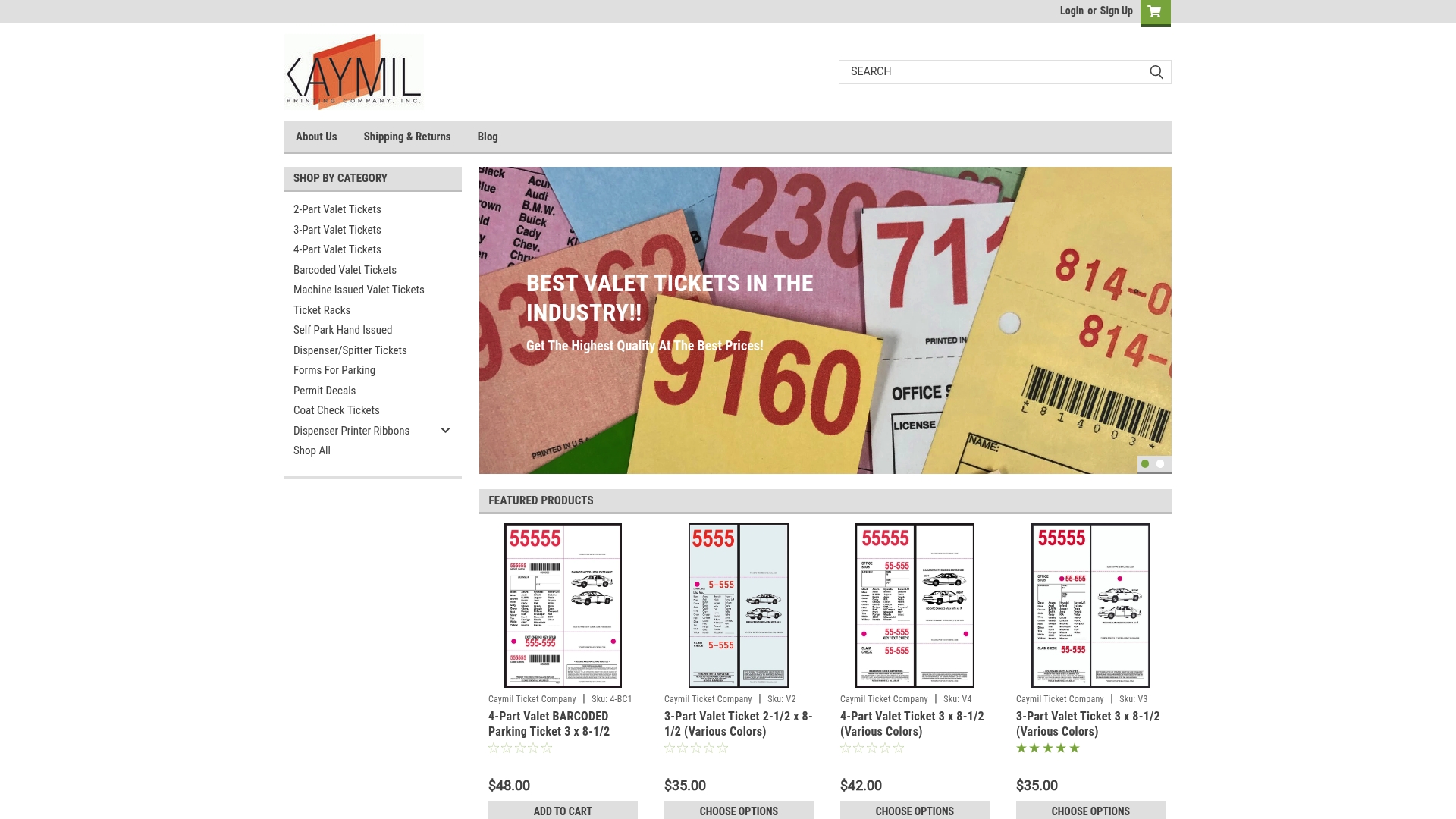
If your operation runs on standard valet workflows, Caymil’s 2-Part Valet Tickets and 3-Part Valet Tickets cover the most common formats garages and hotels order every week, with 4-Part Valet Tickets available when you need an extra copy for accounting or insurance records. Need scan compatibility with your existing system? Barcoded Valet Tickets are built to work with major parking platforms. And if your lot runs machine-issued formats, Caymil’s Dispenser/Spitter Tickets and roll tickets for Intermec printers are manufactured to the exact machine specifications your equipment requires. Every custom order runs through a proof approval step before production, so you see exactly what you’re getting before the presses run. Request a sample or start a rush order quote directly on the product page for your ticket type.
An Editorial Perspective on Cutting Turnaround Risk
Buyers who plan around a single “worst case” turnaround number usually end up either overpaying for rush service they didn’t need or scrambling when a proof gets rejected. The smarter move is prioritizing three things, in this order: nail the file specs before you submit, agree on a proof turnaround time with your printer in writing, and only add finishing features that serve a real operational purpose. Skip foil stamping on tickets nobody will ever hold up to the light. If you run a recurring event or a seasonal property, keeping a modest safety stock of core SKUs on hand avoids the worst of peak-season press congestion entirely. None of this requires guesswork, just a calendar and a checklist.
— Richard
Selected Sources and Further Reading
For deeper operational planning, see Caymil’s guide on bulk parking ticket orders and its resource on parking ticket security. Browse related parking ticket topics or check Forms For Parking for supplemental order items. For an operational example outside the U.S. market, see Parking Sopot’s booking notes.
FAQ
How Long Does a Custom Parking Ticket Order Take?
Most custom orders take 3 to 10 or more business days depending on quantity and finishing, on top of proof approval time. A small custom run of 5,000 or fewer tickets typically ships within 2 business days of proof approval, while larger runs commonly need 5 business days or more.
What’s the Fastest Way to Get Parking Tickets?
Ordering pre-configured stock SKUs is the fastest route since it skips artwork proofing and custom press setup entirely. Caymil keeps common stock formats on hand for exactly this reason, often shipping within 1 to 3 business days.
Does Adding a Barcode Slow Down Ticket Production?
Barcoding adds a finishing pass if it’s applied after the base print run, but ordering pre-barcoded stock avoids that extra step. Caymil’s Barcoded Valet Tickets are manufactured with the barcode built into the production run rather than added afterward.
How Much Does Rush Production Actually Save?
Rush service typically shortens production by about one business day compared to the standard queue, though eligibility depends on your finishes and order size. Confirming rush availability at order entry, not the week before your event, is what actually makes that day count.
What Information Do I Need Before Ordering Machine-Issued Tickets?
You need the exact machine part number and roll core specification before production can start. Missing these details on dispenser or spitter ticket orders is one of the most common causes of a 2 to 5 day delay.